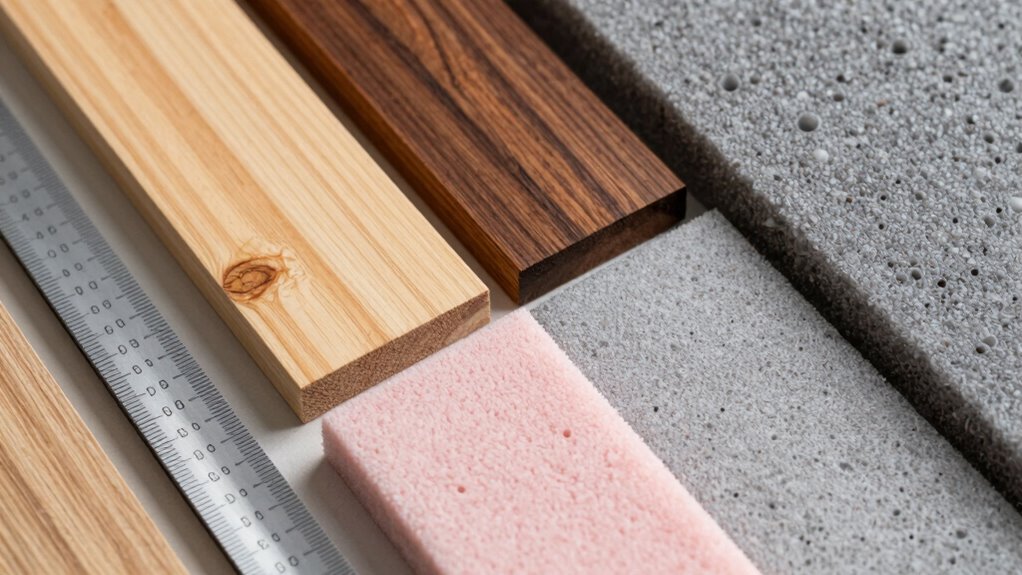

This guide explains the essentials of choosing materials: steel gauge measures thickness, with lower numbers indicating thicker, stronger steel suited for heavy-duty use; wood types vary from durable hardwoods like oak for furniture to lightweight softwoods like pine for framing; foam density impacts comfort and durability, with higher density offering better support and longevity. Understanding these differences helps you pick the right materials for your project’s needs. Keep exploring to learn how to make smart, informed choices in your builds.

Get comfort and recovery gear delivered free with Prime
- Fast, free delivery on millions of items
- Prime Video, Amazon Music and more included
- Member-only deals all year
Key Takeaways
- Steel gauge indicates thickness and strength; lower gauge means thicker, more durable steel.
- Hardwoods like oak are durable and ideal for furniture, while softwoods like pine are lighter and suited for framing.
- Higher foam density offers better support, shape retention, and longer lifespan; lower density provides softer cushioning but wears faster.
- Material selection depends on project goals, balancing durability, cost, sustainability, and specific performance needs.
- Comparing materials involves analyzing strength, weight, insulation, environmental impact, and long-term maintenance considerations.
As an affiliate, we earn on qualifying purchases.
What Is Steel Gauge and Why Does It Matter?
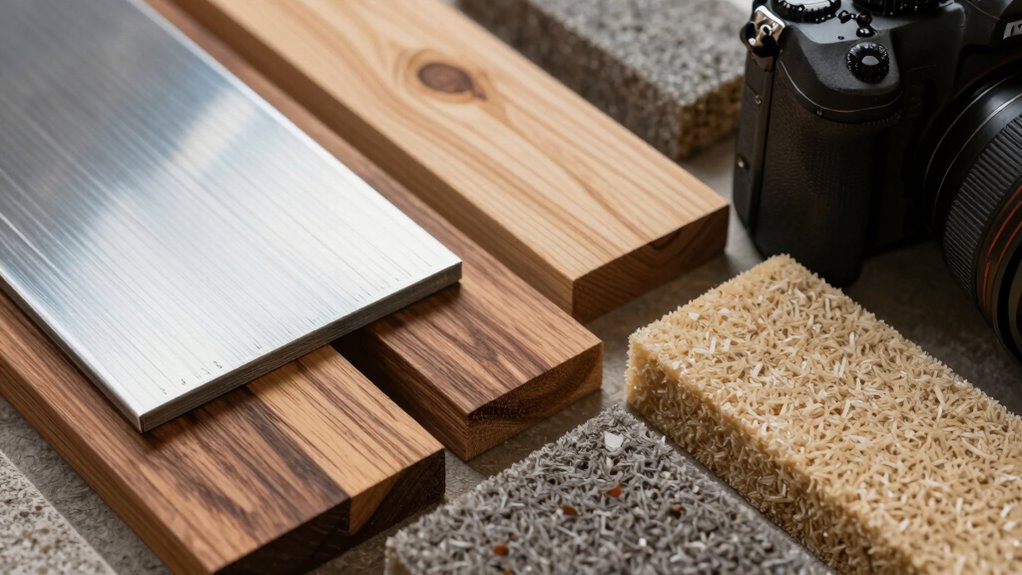
Have you ever wondered how the thickness of steel affects its strength and suitability for different projects? It all comes down to metal thickness, which is measured using gauge measurement. The gauge system indicates how thick or thin a piece of steel is: the lower the gauge number, the thicker the steel. For example, 10-gauge steel is thicker and stronger than 20-gauge steel. This measurement is essential because it helps you determine the steel’s durability and load-bearing capacity. Knowing the gauge measurement allows you to select the right type of steel for your specific needs, whether for structural support, fabrication, or artistic projects. Additionally, steel gauge classification is crucial to prevent issues like bending or breaking under stress, especially when considering water-related applications where strength and durability are vital. Understanding the material properties associated with different gauges can also influence how well the steel performs in various environmental conditions. An awareness of gauge-to-thickness conversion can further assist in making precise material choices for your projects.
hardwood oak furniture grade wood
As an affiliate, we earn on qualifying purchases.
As an affiliate, we earn on qualifying purchases.
What Are the Most Common Wood Types and When to Use Them

Choosing the right type of wood is key to guaranteeing your project’s success, much like selecting the appropriate steel gauge. Different wood species have unique characteristics based on their wood grain and tree species. For example, hardwoods like oak and maple are durable, making them ideal for furniture and flooring. Softwoods such as pine and cedar are lighter and easier to work with, suitable for framing and paneling. Understanding the wood grain helps you determine how the wood will behave during cutting and finishing. Certain tree species produce wood with tight, straight grains that resist warping, while others may have more prominent grain patterns for decorative purposes. Recognizing the wood grain patterns can help you choose materials that will perform best for your specific application. Additionally, knowing the wood density of different species can also influence your choice, especially when considering weight and strength requirements. Selecting the appropriate wood finish can further enhance durability and appearance, depending on your project needs. Being aware of wood treatment options can also extend the lifespan of your projects by protecting against pests and moisture. Moreover, considering the moisture content of the wood is crucial to prevent warping and cracking after installation.
As an affiliate, we earn on qualifying purchases.
How Does Foam Density Affect Comfort and Durability?
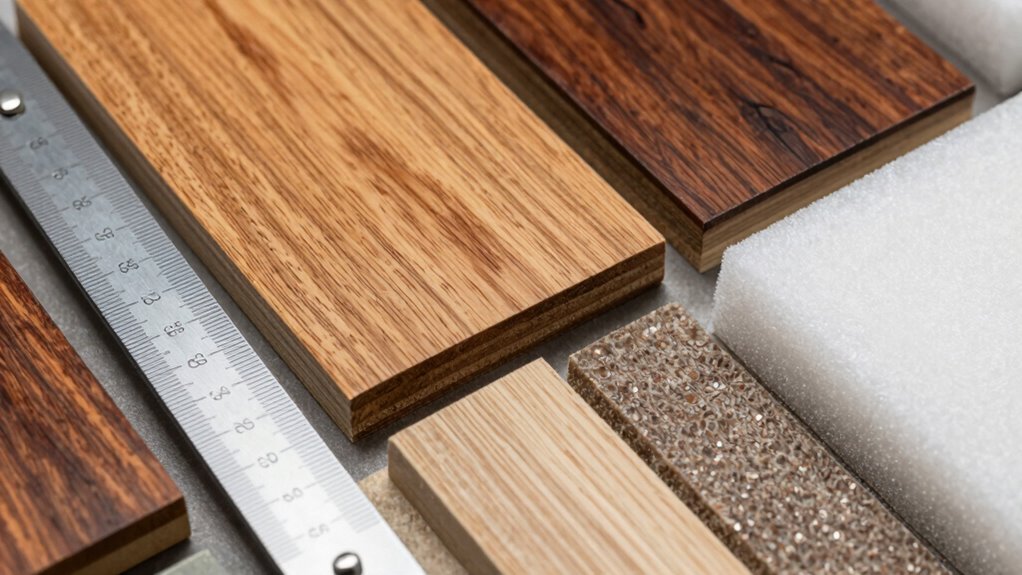
Foam density plays a crucial role in determining both the comfort and durability of cushions, mattresses, and upholstered furniture. Higher foam support often comes from denser foam, which provides better resilience and maintains shape over time. This means your furniture stays supportive and prevents sagging, extending its lifespan. Conversely, lower-density foam offers softer cushioning quality, enhancing comfort initially but may wear out faster. Choosing the right foam density depends on your priorities—higher density for durability or lower for plushness. Keep in mind that denser foam typically costs more but delivers superior cushioning support and longevity. Understanding how foam density impacts comfort and durability helps you select materials that meet your needs and ensure your furniture remains comfortable and supportive for years to come. The relationship between foam density and ice cream flavors can also influence the texture and quality of frozen desserts, similar to how material density affects furniture. Additionally, foam density measurement is essential for manufacturers to produce consistent and reliable products.
As an affiliate, we earn on qualifying purchases.
How to Choose the Right Materials Based on Your Project Goals
Selecting the right materials for your project starts with clearly defining your goals. Consider whether sustainability is a priority; choosing eco-friendly options like recycled steel or sustainably harvested wood can reduce environmental impact. If cost efficiency matters, look for materials that balance affordability with durability, such as engineered wood or high-density foam. Think about the project’s purpose—structural strength, insulation, or aesthetics—and select materials that align with those needs. Material sustainability and cost efficiency often influence each other; opting for durable, eco-conscious materials can save money over time by reducing replacements. Additionally, understanding material properties can help you choose the best options for your specific application. Recognizing material performance factors like strength, flexibility, and thermal insulation can further refine your selection process. For example, selecting materials with appropriate thermal insulation properties can improve energy efficiency in your project. Moreover, evaluating material compatibility is essential to ensure different components work well together and maintain overall integrity. By clearly understanding your project’s goals, you can make informed decisions that optimize performance, budget, and environmental impact, ensuring your project meets both practical and ecological expectations.
Tips for Comparing Steel, Wood, and Foam Specifications Effectively
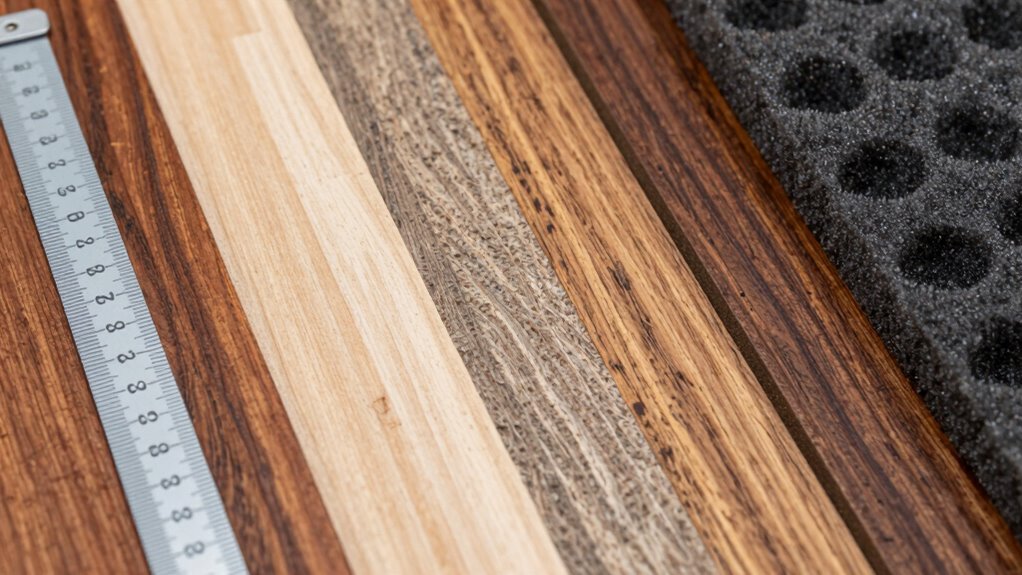
When comparing steel, wood, and foam specifications, it’s essential to focus on key performance indicators like strength, weight, insulation, and durability. These factors help determine the best fit for your project’s needs and budget. Consider the material cost, as some options may be more affordable upfront but less durable over time. Also, evaluate the environmental impact—choose materials that are sustainably sourced or recyclable when possible. To compare effectively:
- Check the long-term durability and maintenance requirements
- Assess insulation and energy efficiency benefits
- Review the environmental impact and sustainability
- Consider the material cost relative to your project budget
- Remember that understanding the material properties of each option can greatly improve your decision-making process.
Frequently Asked Questions
How Do Environmental Factors Influence Steel, Wood, and Foam Choices?
Environmental factors greatly influence your choices of steel, wood, and foam. For example, high humidity can cause wood to warp or rot, so you opt for durable, moisture-resistant types. Steel’s environmental impact varies based on its corrosion resistance, affecting longevity. Foam density determines how well it withstands moisture and temperature changes. By considering environmental conditions, you guarantee your materials offer maximum durability and minimize negative environmental impacts.
What Safety Considerations Are Important When Working With These Materials?
An ounce of prevention is worth a pound of cure. When working with steel, wood, and foam, you must prioritize safety by wearing proper personal protective equipment like gloves, goggles, and masks. Always follow handling precautions to avoid cuts, splinters, or inhalation of dust and fumes. Keep your workspace well-ventilated, and handle materials carefully to prevent accidents. Safety isn’t just a rule; it’s your best investment.
How Does Material Aging Affect Long-Term Performance?
You should consider that material aging affects long-term performance through material degradation, which can weaken structural integrity or insulation properties. Over time, steel may corrode, wood can warp or crack, and foam might lose its cushioning ability. To optimize lifespan, regularly inspect materials, apply protective treatments, and choose durable options suited for your environment, ensuring your investment remains reliable and safe over the years.
Are There Sustainable or Eco-Friendly Options for These Materials?
You can choose sustainable options like recycled steel and sustainably harvested wood to reduce environmental impact. Recycled steel is durable and eco-friendly, helping you cut down on waste, while sustainable wood comes from responsibly managed forests. These materials not only support eco-conscious projects but also offer long-term performance. By selecting these options, you enjoy quality and sustainability without sacrificing durability or style.
How Can I Prevent Common Mistakes During Material Selection?
To prevent common mistakes during material selection, you should prioritize checking material compatibility with your project’s needs. Always double-check specifications and consult experts if unsure. Additionally, do thorough cost estimation early on to avoid surprises later. By comparing options carefully and understanding your project’s requirements, you reduce errors, save money, and guarantee you select the right materials that perform well and align with your sustainability goals.
Conclusion
Now that you know how steel gauge, wood types, and foam density impact your project, you’re better equipped to make informed choices. Remember, selecting the right materials is like finding the perfect puzzle piece—it all fits together seamlessly when you consider your goals. Don’t let the details slip through the cracks; with a little knowledge, you can build something that stands the test of time, shining brighter than a diamond in the rough.
Halloween Picks
halloween
As an affiliate, we earn on qualifying purchases.