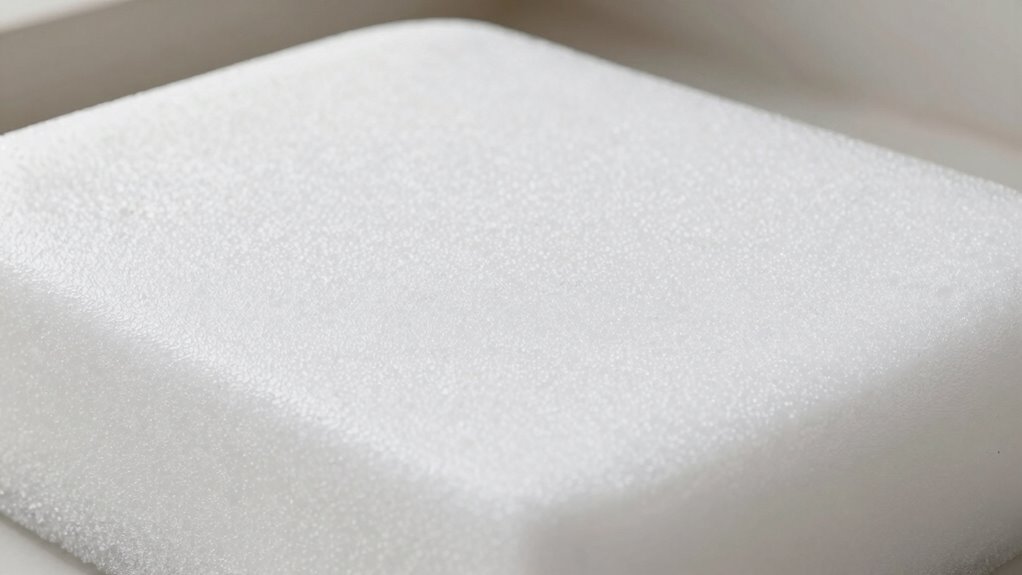

Foam density tells you how much material is packed into a certain volume, measured in pounds per cubic foot. Higher density foam offers better support, durability, and resists sagging over time, while lower density foam feels softer but wears out faster. Choosing the right density depends on your needs for comfort and longevity. To learn how foam density impacts performance and longevity, keep exploring the details below.
Key Takeaways
- Foam density measures weight per cubic foot, indicating support, durability, and resistance to sagging.
- Higher density foam (3.0 lb/ft³ or more) generally offers better support and longer-lasting shape retention.
- Density affects foam resilience, with denser foam recovering faster and resisting compression over time.
- Accurate foam density ratings help predict longevity, but other factors like chemical composition also impact sagging.
- Understanding foam density guides better choices for support, comfort, and long-term performance in cushions and mattresses.
What Is Foam Density and Why Is It Important?

Have you ever wondered what foam density actually means and why it matters? Foam density measures how much foam material exists in a given volume, usually expressed in pounds per cubic foot. During foam manufacturing, controlling density ensures the foam performs as expected in insulation or cushioning applications. Higher density foam provides better support, durability, and resistance to sagging, while lower density foam offers more flexibility and softness. Knowing the foam density helps you choose the right product for your needs, whether for thermal insulation or soundproofing. It also indicates the quality and longevity of the foam, making it a vital factor in selecting foam insulation that will last and perform reliably over time. Understanding foam density can also help you assess how well the foam will maintain its shape under load, which is crucial for many applications. Additionally, density ratings are often used to compare different foam products and ensure you select the most suitable option for your specific requirements. Recognizing foam density standards can further aid in determining the appropriate foam for specialized uses or regulatory compliance. Moreover, manufacturing consistency plays a critical role in ensuring that foam products meet their specified density and performance expectations. When evaluating foam options, considering density uniformity can help ensure consistent quality across batches and applications.
How to Read Foam Density Numbers and What They Mean
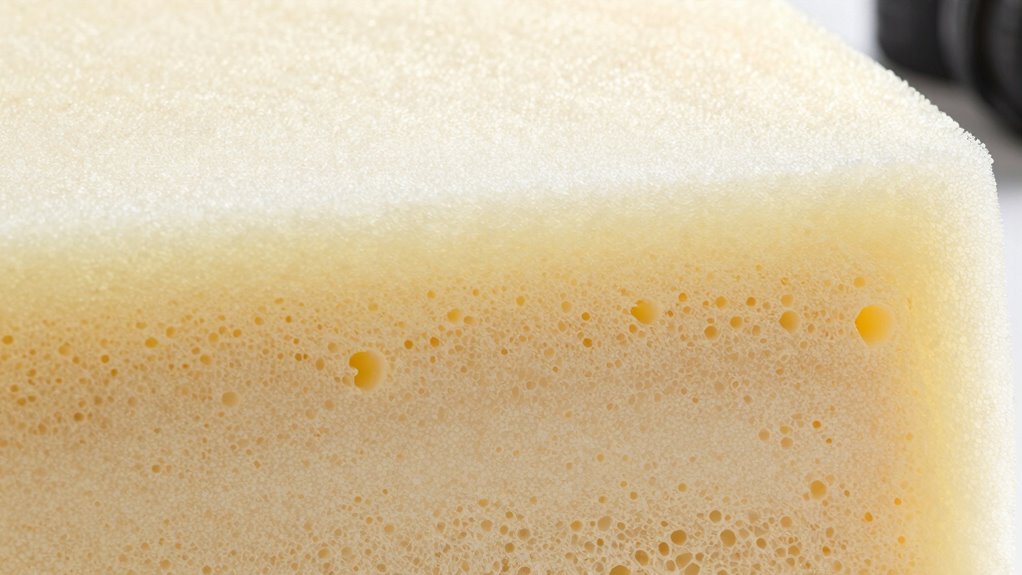
Understanding how to read foam density numbers helps you evaluate whether a particular foam will meet your needs. Foam density is measured in pounds per cubic foot (lb/ft³), with higher numbers indicating denser, often more durable foam. For memory foam, a density of 3.0 lb/ft³ or higher suggests good support and longevity, while lower densities may feel softer but wear faster. When reviewing foam labels, check for fire retardants, which are added for safety and can influence density ratings. Denser foam generally provides better support and resists sagging, but it’s essential to balance density with comfort preferences. Knowing these numbers helps you choose foam that aligns with your durability expectations and safety standards, ensuring your investment lasts longer. Additionally, understanding foam testing methods can give you better insight into quality and performance metrics. Being aware of performance testing results can help compare different foam options more effectively. Recognizing proper labeling practices can also ensure you receive accurate information about foam specifications and safety features. Moreover, reviewing material certifications can confirm that the foam complies with safety and environmental standards.
How Foam Density Affects Comfort, Support, and Durability
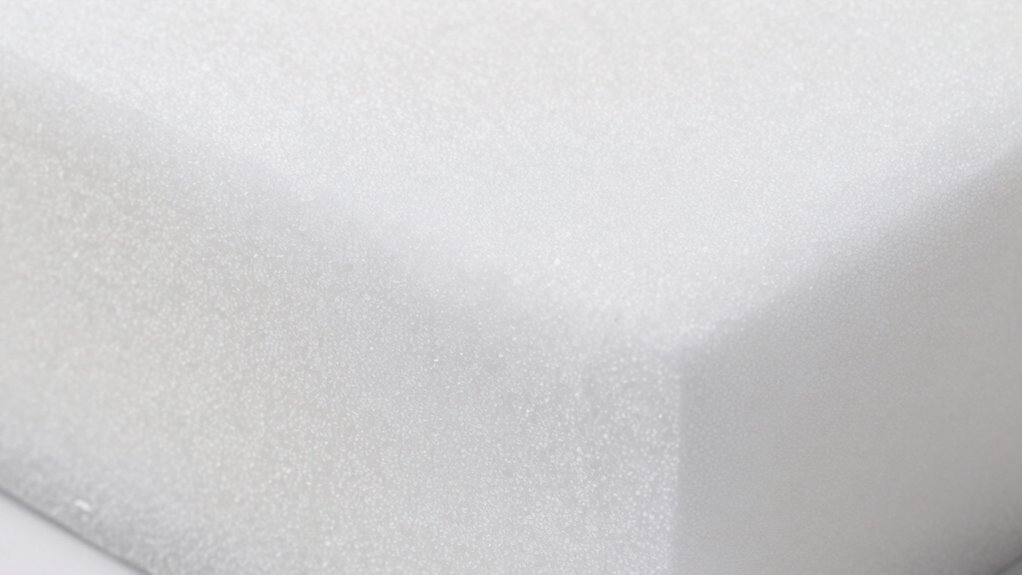
Higher foam density can make your mattress feel firmer and more supportive, enhancing comfort for different sleeping preferences. It also tends to last longer, maintaining its shape and support over time. Additionally, denser foam generally offers better wear resistance, helping your mattress stay in good condition longer. Foam density is a key factor in determining the overall longevity and performance of your mattress. Recognizing the importance of material quality can help you choose a mattress that maintains its benefits over the years. For example, some foams with higher density incorporate advanced manufacturing techniques that improve durability. Understanding material properties can assist you in selecting foam that balances comfort and longevity effectively. Moreover, high-density foam often features improved resilience, which contributes to its ability to recover quickly after pressure is applied.
Comfort Level and Density
Foam density plays a crucial role in determining how comfortable and supportive a mattress or cushion feels. Higher-density foam typically offers better support, contouring to your body’s shape, which enhances comfort. It also tends to be more durable, maintaining its feel over time. However, comfort isn’t just about support; fabric breathability matters too. Lower-density foams often allow better airflow, reducing heat buildup and increasing comfort during sleep. Additionally, foam eco-friendliness varies with density—more sustainable options are often made from eco-friendly materials, but sometimes at the expense of softness. Store return policies and hours can also influence your purchasing decisions if you need to exchange or return a product. Balancing foam density with your comfort preferences ensures a better sleep experience. Choosing the right density can help you find a mattress that feels just right, supporting you without sacrificing breathability or environmental considerations.
Support and Longevity
Ever wondered how foam density impacts the support and durability of your mattress? Higher-density foam provides better support by resisting sagging and maintaining shape over time. It also tends to last longer, making your investment worthwhile. Keep in mind, denser foams often offer improved fire resistance, reducing safety concerns. However, they can sometimes trap allergens more easily, so allergy concerns might be higher with lower-quality dense foams. To maximize support and longevity, look for foam that balances density with appropriate safety features. Additionally, selecting the right body jewelry materials can influence comfort and allergen risks associated with foam density. Understanding credit card security measures can also help protect your investment in high-density foam products from potential damage or theft. Moreover, choosing foam manufacturing standards can ensure you get a quality product with predictable support and durability. Being aware of foam testing procedures can further help in evaluating the overall quality and safety of the foam used. When shopping for foam, considering certified foam products can give you added assurance of quality and safety standards compliance.
Wear Resistance Properties
Have you noticed that denser foam tends to stay firm and supportive over time? That’s because higher-density foam offers better wear resistance, reducing sagging and indentations. It maintains its shape longer, giving you consistent comfort and support. Additionally, dense foam often enhances fabric breathability, preventing heat buildup and moisture retention. When considering chemical safety, look for foams with low VOC emissions, ensuring safer indoor air quality. The density level of foam also influences its weight, making installation or handling easier or more challenging depending on the application. The durability of high-density foam means fewer replacements, saving you money and reducing waste. Moreover, foam density plays a crucial role in predicting foam performance over time in various applications. Here’s a quick comparison:
| Density Level | Wear Resistance | Fabric Breathability | Chemical Safety |
|---|---|---|---|
| Low | Less durable | Less breathable | Higher VOC |
| Medium | Moderate | Moderate | Moderate |
| High | Very durable | Good | Low VOC |
| Very High | Extremely durable | Excellent | Very low VOC |
Choosing the right foam density balances support, safety, and longevity. Additionally, foam density is a key factor in predicting how well a foam will perform over time in various applications.
How to Choose the Right Foam Density for Your Project
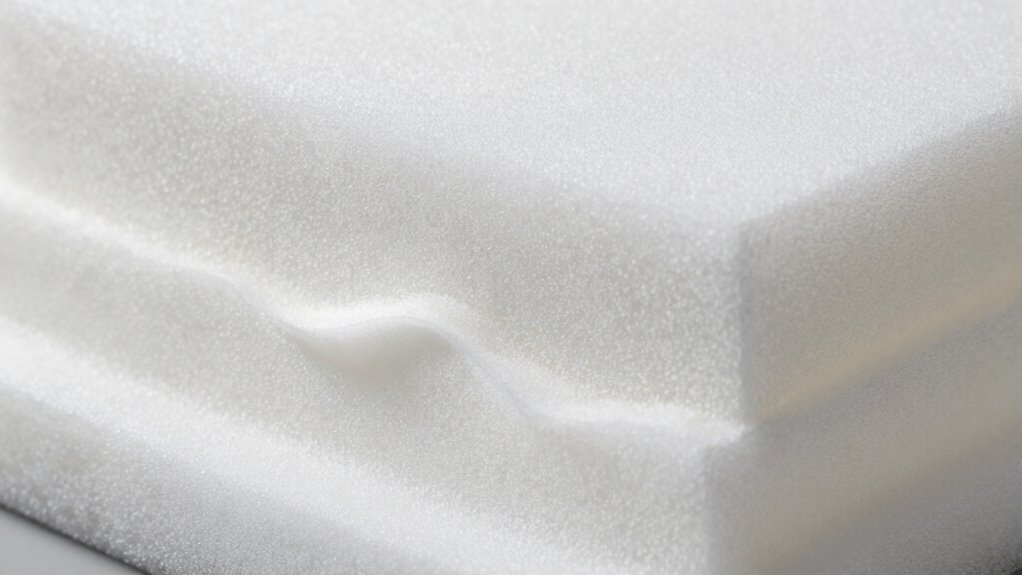
Choosing the right foam density is crucial to ensuring your project’s success. To do this effectively, consider how polymer chemistry influences foam characteristics and how manufacturing processes impact density consistency. Higher densities offer durability but may reduce flexibility, while lower densities provide softness but less support. Think about your end use, load requirements, and longevity. When selecting, keep these factors in mind:
- Application durability and support needs
- Flexibility and comfort requirements
- Manufacturing process quality control
- Compatibility with foam formulation and polymer chemistry
Common Mistakes When Selecting Foam by Density and How to Avoid Them
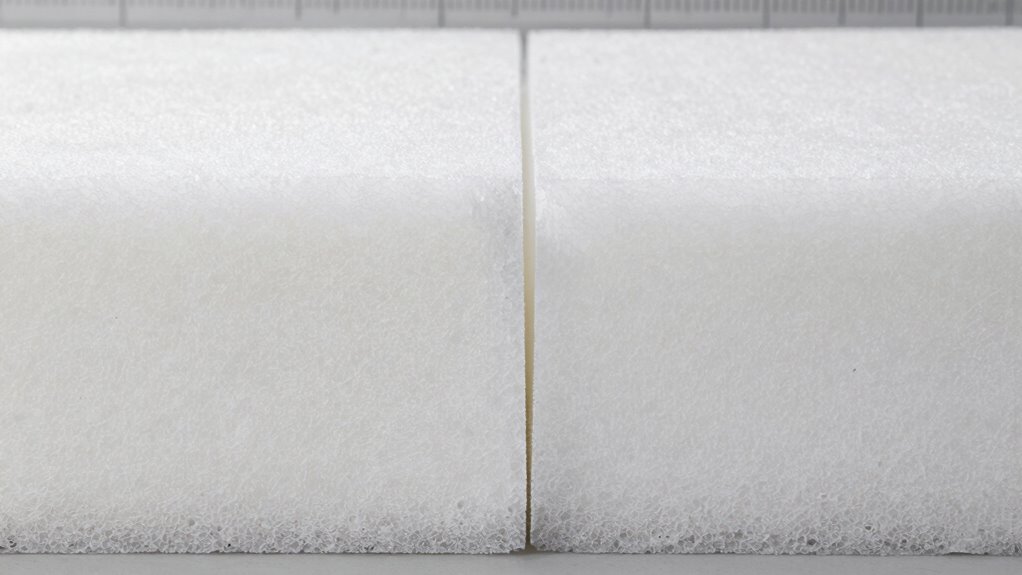
Many people misinterpret foam density ratings, leading to choosing the wrong material for their needs. Overlooking factors like foam quality and the specific application can also cause issues down the line. To avoid these mistakes, you need to understand what the density ratings truly mean and consider the overall foam quality and purpose. Additionally, understanding how different product roundups relate to foam density can help ensure you select the best material for your particular project.
Misinterpreting Density Ratings
Understanding foam density ratings is essential, but it’s easy to misinterpret what these numbers truly mean. Many assume higher density always equals better quality, but that’s not the case. For example, focusing solely on density can lead you to overlook other factors like fabric softness and aesthetic appeal. Here are common mistakes to avoid:
- Assuming density directly correlates with comfort or softness
- Ignoring how density affects fabric softness and overall look
- Overlooking the type of foam, which impacts sagging more than density alone
- Choosing based on density numbers without considering actual usage or environment
To make smarter choices, look beyond the numbers. Balance density with fabric softness and aesthetic appeal to select foam that performs well and looks great in your space.
Overlooking Foam Quality Factors
While focusing solely on foam density can seem like a straightforward way to select quality, it often causes you to overlook other essential factors that determine a foam’s overall performance. Foam manufacturing processes and chemical composition profoundly influence durability, comfort, and sag resistance. For instance, two foams with the same density might perform differently because of variations in chemical additives or production techniques. Ignoring these aspects means you could choose a foam that doesn’t meet your needs or wears out quickly. To avoid this mistake, ask manufacturers about their foam’s chemical makeup and manufacturing standards. Understanding how these factors affect foam quality helps ensure you select a product that offers long-lasting support and resists sagging, beyond just its density rating.
Ignoring Application Needs
Selecting foam solely based on its density without considering your specific application can lead to poor results. Different application environments and manufacturing processes demand tailored foam properties. Ignoring these needs may cause sagging, premature wear, or failure. To avoid this, evaluate factors like load, exposure to moisture, or temperature variations.
Consider these points:
- Match foam density to the weight and stress of your application environment
- Choose foam that withstands your manufacturing process conditions
- Assess if your application requires extra durability or flexibility
- Guarantee the foam’s properties align with long-term performance expectations
How Foam Density Predicts Sagging and Longevity Over Time
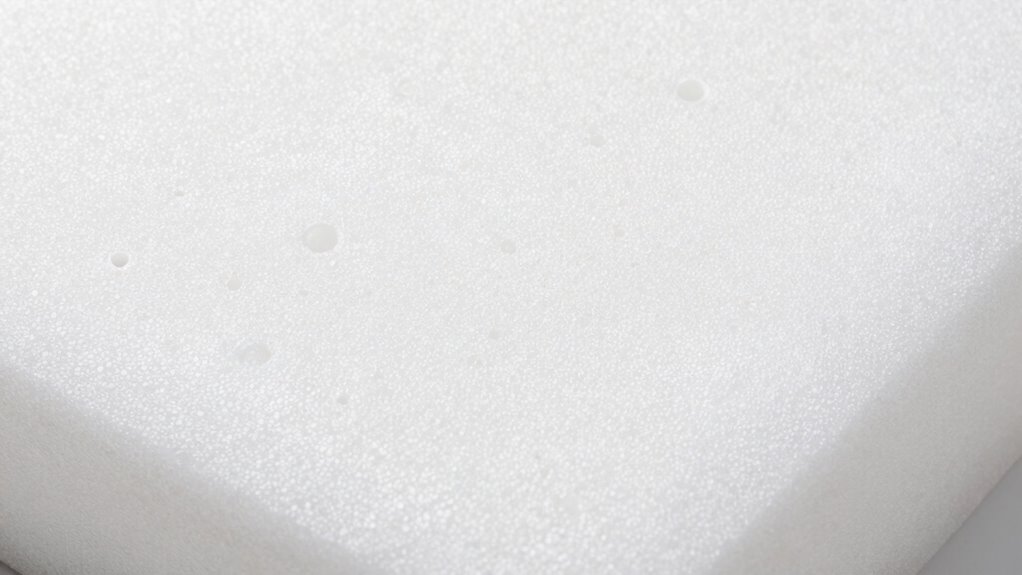
Foam density plays a essential role in determining how well a mattress retains its shape over time. Higher-density foam resists foam compression better, meaning it’s less likely to sag prematurely. During density testing, manufacturers measure the foam’s weight per cubic foot, which predicts its durability. When foam has a higher density, it generally withstands repeated pressure without losing support, extending the mattress’s longevity. Conversely, low-density foam compresses more easily and is prone to sagging sooner. By understanding foam density, you can anticipate how long your mattress will maintain its shape and comfort. This predictive ability helps you choose a product that offers lasting support, saving you money and frustration down the line.
Frequently Asked Questions
Can Foam Density Change Over Time With Use?
Yes, foam density can change over time with use due to foam aging and density fluctuation. As you use your foam, it may lose some of its firmness and resilience, causing a slight decrease in density. Factors like weight, temperature, and moisture contribute to these changes. Over time, your foam may sag or become less supportive, but proper care and choosing high-density foam can help prolong its lifespan.
Is Higher Foam Density Always Better for Durability?
Higher foam density isn’t always better for durability, despite common foam density myths. While denser foam generally offers more support, it can also be less breathable and heavier. Durability misconceptions often lead people to assume the highest density is always best, but factors like foam quality, construction, and usage matter more. You should choose foam based on your needs, considering comfort and longevity rather than just density alone.
How Does Foam Density Impact Allergy or Asthma Concerns?
Higher foam density can reduce allergy triggers by creating a denser, less dust-collecting surface, making it easier to keep clean and allergen-free. It also enhances asthma safety because tightly packed foam minimizes dust mites and mold growth. However, if not properly maintained, dense foam might trap allergens. To guarantee comfort, choose high-density foam with hypoallergenic and antimicrobial treatments, and regularly clean your bedding.
Are There Environmental Factors Affecting Foam Density Stability?
Environmental effects, like temperature fluctuations and humidity, can impact foam density stability over time. Moisture impact is especially significant, as excess humidity can weaken foam structure, leading to sagging or deterioration. You should guarantee proper ventilation and keep the foam in a controlled environment to maintain its density. By managing these environmental factors, you help preserve foam integrity, ensuring it remains supportive and durable for longer periods.
Can Foam Density Be Customized for Specific Applications?
Imagine designing your perfect mattress or cushioning, where you can tailor foam density for your needs. Yes, you can customize foam by adjusting its density to suit specific applications. Custom foam allows for precise density adjustment, ensuring ideal support, comfort, or durability. This way, you get a product that perfectly matches your requirements, whether it’s for industrial use, furniture, or specialty padding.
Conclusion
Understanding foam density helps you make smarter choices, ensuring your project stays comfortable and durable. Don’t let confusing numbers overwhelm you—knowing what to look for can prevent sagging and extend your foam’s lifespan. If you think higher density means less comfort, remember it’s about balance. With the right knowledge, you’ll pick foam that lasts longer and performs better, saving you time and money in the long run.