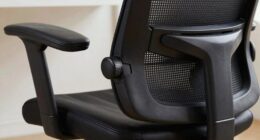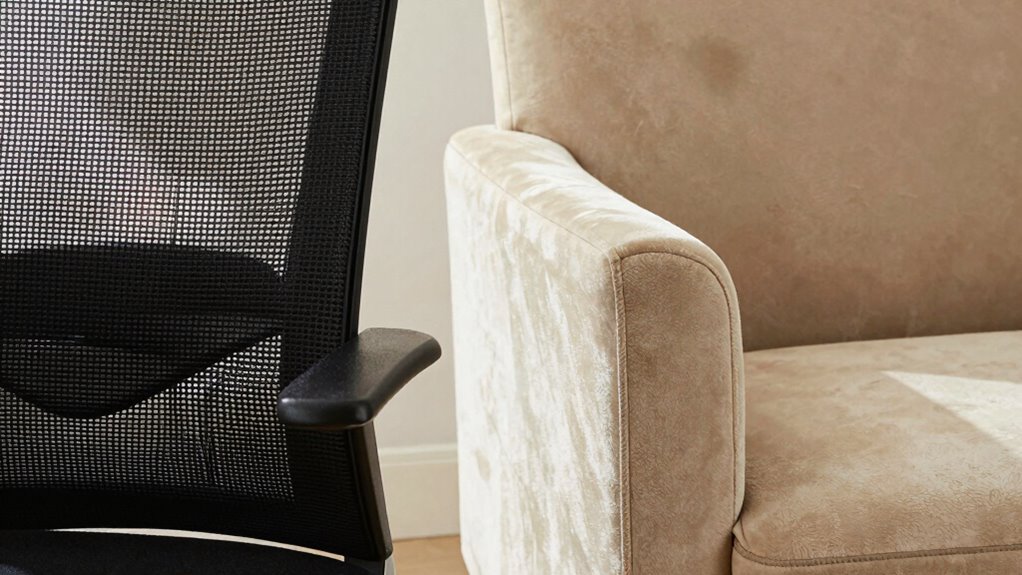
If you sit in a mesh chair, you’ll notice better airflow, helping you stay cool and comfortable during long hours, while foam chairs offer a plush, cozy feel but tend to trap heat and cause sweating. Mesh provides firm, flexible support, whereas foam feels softer but may lack lasting support. Choosing between them depends on your comfort preferences and needs—if you want detailed insights, there’s more to discover below.
Key Takeaways
- Mesh chairs provide better airflow, keeping you cooler and reducing sweat during long sitting sessions.
- Foam chairs offer plush cushioning, delivering immediate comfort but may trap heat over extended periods.
- Mesh supports ergonomic posture with firm, flexible feel; foam offers softer support that conforms to your body.
- Mesh chairs are more breathable and easier to maintain, while foam cushions may degrade faster without proper care.
- The choice affects comfort: mesh suits breathability-focused users, foam favors plush, cozy seating experiences.
What Are the Main Differences Between Mesh and Foam Chairs?
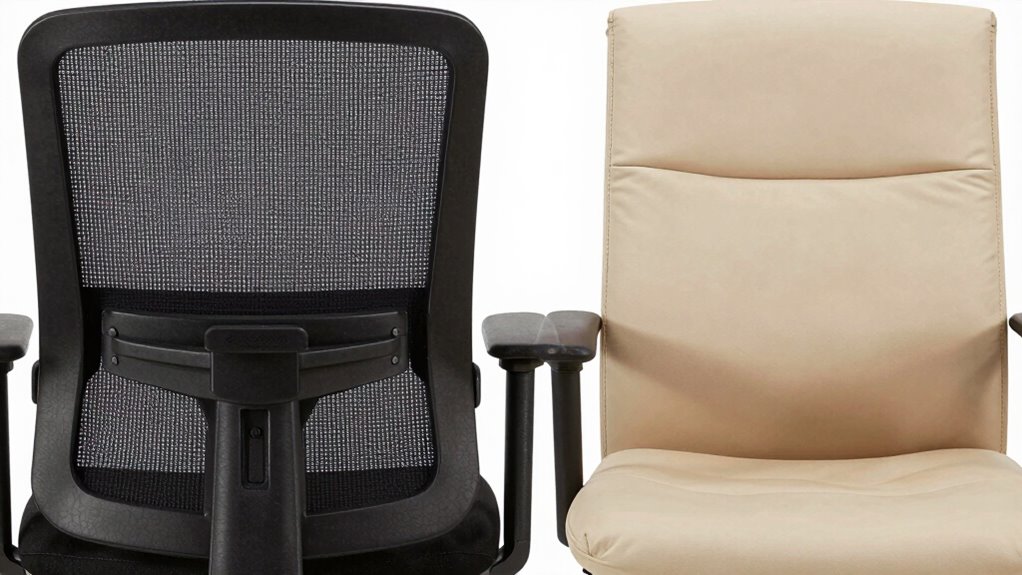
When choosing between mesh and foam chairs, understanding their main differences can help you make an informed decision. Mesh chairs excel in ergonomic design, offering flexible support that promotes airflow and keeps you cool during long hours. Their open structure conforms to your body, providing comfort and reducing pressure points. Foam chairs, on the other hand, emphasize aesthetic appeal with plush cushioning and a softer feel. They often have a more traditional look, adding warmth and style to your space. While foam offers a cushioned experience, mesh prioritizes breathability and support. Your choice depends on whether you value ergonomics and airflow or prefer a cozy, stylish seat. Both types serve different needs, so knowing these key differences guides you to the right fit. Additionally, considering product safety and quality can ensure your chair provides long-lasting comfort and support. Recognizing material durability can help you select a chair that maintains its comfort over time. Being aware of ergonomic features can further enhance your seating experience and prevent discomfort during extended use. Furthermore, paying attention to adjustability options can improve overall comfort and accommodate different body types.
How Do Mesh and Foam Chairs Feel When You Sit in Them?
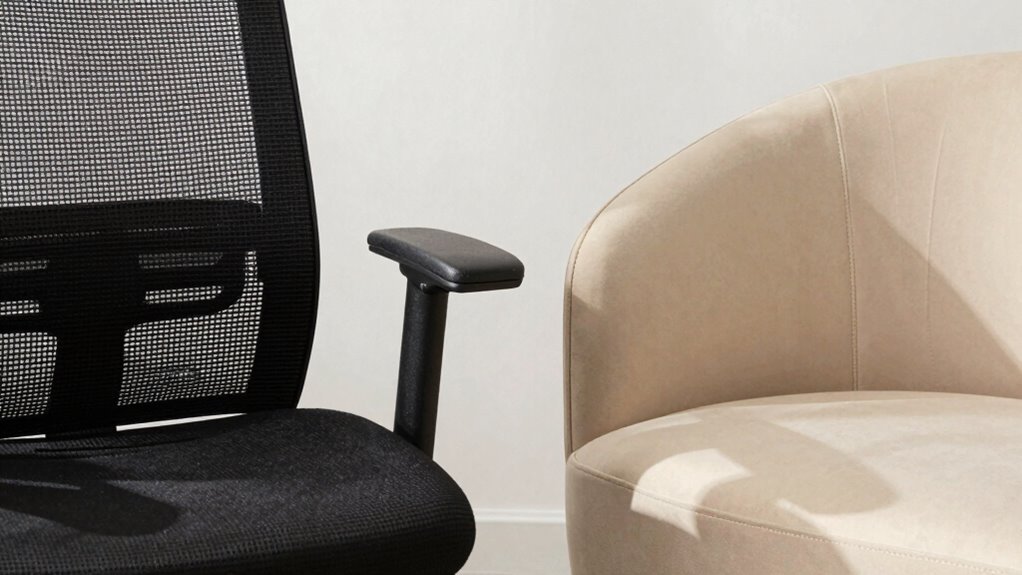
When you sit in a mesh or foam chair, you’ll notice how each material affects your comfort. Mesh chairs tend to offer better breathability and airflow, keeping you cooler, while foam chairs often feel firmer and provide more support. Your temperature regulation experience also varies, with mesh chairs helping you stay comfortable during long periods. Additionally, support networks for new fathers can influence overall comfort, especially when managing extended sitting sessions. Incorporating ergonomic design principles can further enhance the comfort and support offered by your chair. Considering material ventilation properties can help you choose the right chair for prolonged use and optimal comfort. Understanding fabric breathability can also guide you in selecting materials that promote better airflow and reduce heat buildup. Recognizing the importance of seat cushioning materials can help you determine which chair type will better meet your comfort needs over time.
Breathability and Airflow
Mesh chairs excel in breathability and airflow, making them feel cooler and less stuffy during long periods of sitting. Their mesh breathability allows air to circulate freely, preventing heat buildup and sweat. This keeps you more comfortable, especially in warm environments or when working for extended hours. Foam chairs, on the other hand, typically offer limited foam airflow due to their dense padding, which can trap heat and moisture. As a result, foam chairs tend to feel warmer and may cause you to sweat more over time. If airflow and staying cool are priorities for you, mesh chairs provide a significant advantage. Their design encourages continuous air circulation, ensuring you remain comfortable even during long, demanding work sessions. Additionally, choosing a chair with high-quality materials can further enhance ventilation and durability.
Firmness and Support Feel
The way a chair feels beneath you considerably impacts your comfort during long hours at your desk. With mesh chairs, you’ll notice a firm yet flexible support that adapts to your movements, thanks to their ergonomic design. Foam chairs, on the other hand, often deliver a plush, cushioned feel that offers immediate comfort but may lack long-term support. Here’s what you’ll experience:
- Mesh chairs provide a consistent, supportive firmness that keeps your spine aligned. Their ergonomic support is designed to promote proper posture and reduce fatigue over extended periods.
- Foam chairs offer a softer, sinking sensation that can make you feel cozy initially.
- The aesthetic appeal of mesh chairs is sleek and modern, emphasizing ergonomic support.
- Foam chairs tend to look plush and inviting but may sacrifice some structural support.
- When considering your long-term comfort, supportive design becomes an essential factor to evaluate.
Temperature Regulation Experience
If you tend to work in warm environments or get hot easily, you’ll notice a clear difference in how mesh and foam chairs handle temperature. Mesh chairs promote breathability, helping heat escape and keeping you cooler during long hours. Foam chairs, on the other hand, retain heat longer, which can make you feel sweaty or uncomfortable. This difference in temperature regulation can significantly impact your comfort during extended periods of sitting. Additionally, the material composition of each chair influences how effectively they manage heat and airflow, further affecting your overall comfort. The structural design of mesh chairs often allows for better airflow, enhancing their cooling properties compared to dense foam options. The air permeability of mesh material plays a crucial role in maintaining a comfortable sitting environment, especially over extended use. Moreover, moisture wicking properties of mesh fabrics can help prevent sweat buildup, improving comfort during prolonged use.
Does Breathability Make a Difference in Chair Comfort?
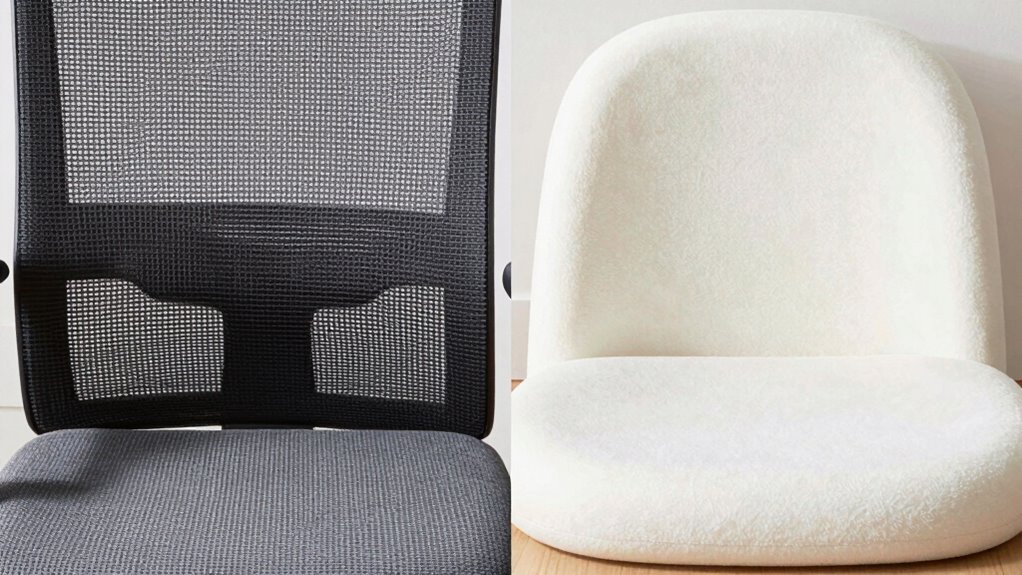
Does breathability truly impact how comfortable a chair feels during extended use? Absolutely. When a chair allows air to circulate, you’ll notice a difference in comfort, especially over long hours. Consider these benefits:
- Reduced sweating, keeping you dry and focused.
- Improved fabric durability, preventing material breakdown caused by moisture.
- Enhanced aesthetic appeal, maintaining a fresh, modern look.
- Less discomfort, so you stay productive without constant shifting.
- Additionally, choosing a breathable material can contribute to the overall performance of your workspace, much like selecting the right automotive parts can optimize your vehicle’s efficiency. Breathable mesh chairs excel here, offering superior airflow compared to foam options. This ventilation keeps you cooler and prevents heat buildup, making your workspace more inviting. As ventilation becomes a key factor, it’s clear that breathability makes a real difference, especially if comfort and durability are priorities. For instance, material breathability influences how well a chair maintains its shape and longevity over time. Moreover, good airflow can help reduce the buildup of bacteria and odors, further enhancing your chair’s lifespan and hygiene. Proper air circulation can also prevent mold and mildew growth in damp environments, ensuring a healthier sitting experience.
How Does Cushion Firmness Impact Long-Term Comfort?
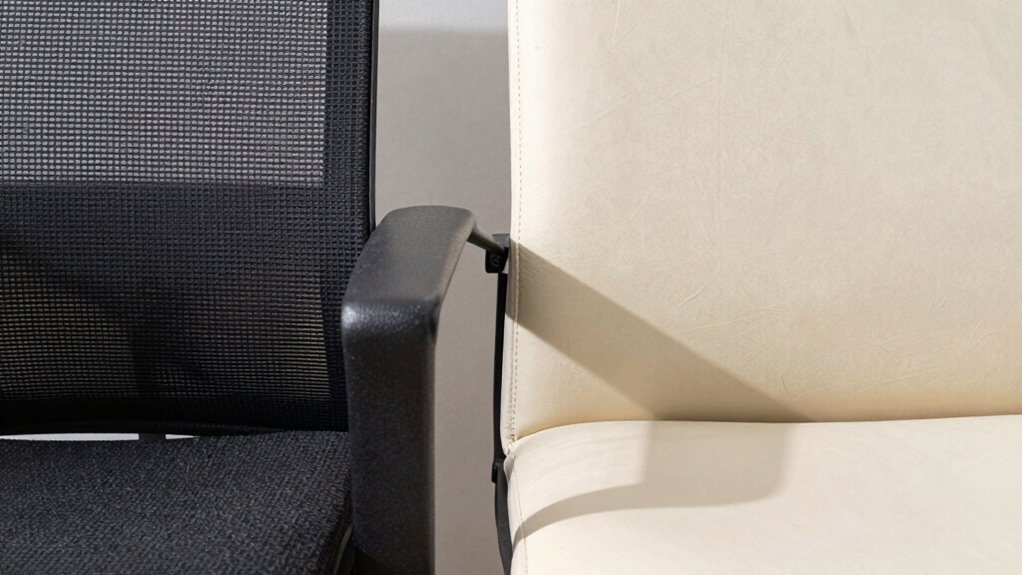
Have you ever experienced discomfort after sitting in a chair for several hours? Cushion firmness plays a key role in long-term comfort by providing consistent ergonomic support. Too soft, and you might feel unsupported, leading to poor posture; too firm, and pressure points cause discomfort. The right level of cushion firmness balances softness and firmness, maintaining spinal alignment and reducing fatigue. Consider this table:
| Cushion Firmness | Effect on Support | Long-Term Comfort Impact |
|---|---|---|
| Soft | Less support | Short-term comfort, less support over time |
| Medium | Balanced support | Sustains comfort and ergonomic support |
| Firm | High support | May cause pressure points if excessive |
| Very Soft | Minimal support | Leads to poor posture quickly |
| Very Firm | Excessive firmness | Can cause discomfort and fatigue |
Additionally, selecting the appropriate cushion firmness can prevent postural issues and enhance overall sitting experience. To ensure sustained comfort, it’s important to consider how cushion firmness interacts with other ergonomic features of your chair. Choosing the right cushion firmness enhances ergonomic support and promotes comfort during extended sitting.
How Do Mesh and Foam Chairs Fit Different Body Types?
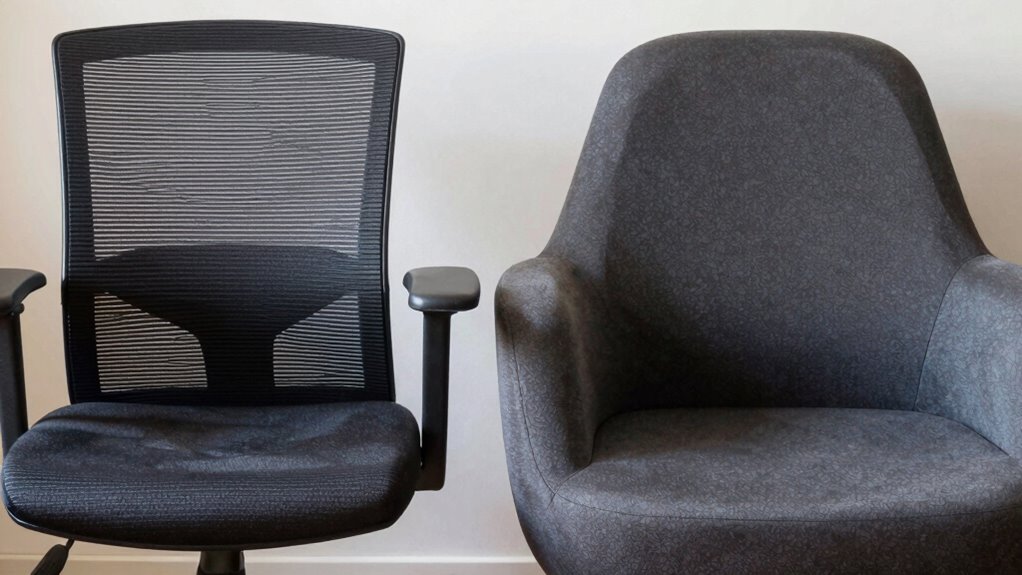
Your body type influences how comfortable your chair feels and performs. Adjustable support features, flexibility, and movement range help both mesh and foam chairs accommodate different sizes and shapes. Understanding these points guarantees you pick a chair that fits just right.
Adjustable Support Features
Since comfort and support vary based on body type, understanding how mesh and foam chairs adapt to different physiques is essential. Both offer ergonomic adjustments, but they differ in how they cater to your unique needs. Here’s what you should look for:
- Lumbar support customization: Ensures your lower back feels supported, reducing strain.
- Height adjustments: Helps align your hips and knees for proper circulation.
- Armrest positioning: Prevents shoulder tension and improves posture.
- Tilt and recline controls: Allow you to find your ideal angle, easing pressure throughout your spine.
Mesh chairs often excel with dynamic ergonomic adjustments, while foam chairs provide stable, plush support. Your choice hinges on how these features cater to your body’s needs and comfort preferences.
Flexibility and Movement Range
Mesh and foam chairs differ markedly in how they accommodate various body types through their flexibility and range of movement. Mesh chairs offer more adaptability due to their breathable, elastic material, allowing you to lean and shift comfortably. Foam chairs tend to be more rigid but provide firm support with less give.
| Feature | Mesh Chairs | Foam Chairs |
|---|---|---|
| Flexibility | High, molds to your movements | Moderate, supports but limited |
| Ergonomic adjustments | Easier to fine-tune for comfort | Less adjustable |
| Aesthetic appeal | Modern, sleek look | Classic, plush appearance |
| Movement range | Wide, encourages natural motion | Restricted, more static |
| Fit for body types | Versatile, suits various shapes | Better for standard builds |
Suitability for Diverse Sizes
Choosing the right chair depends largely on how well it accommodates your body size and shape. Both mesh and foam chairs vary in their suitability for diverse sizes, influenced by their ergonomic design and aesthetic appeal.
- Mesh chairs often feature flexible, breathable materials that adapt easily, providing comfort for a range of body types.
- Foam chairs typically have thicker padding that offers additional support for larger frames.
- The ergonomic design of foam chairs can be customized to fit different sizes, enhancing comfort.
- Mesh chairs promote better airflow, preventing overheating during long hours, regardless of size.
Ultimately, your choice hinges on how well the chair contours to your body, ensuring support and comfort without sacrificing style.
Which Chair Feels Cooler During Extended Use?
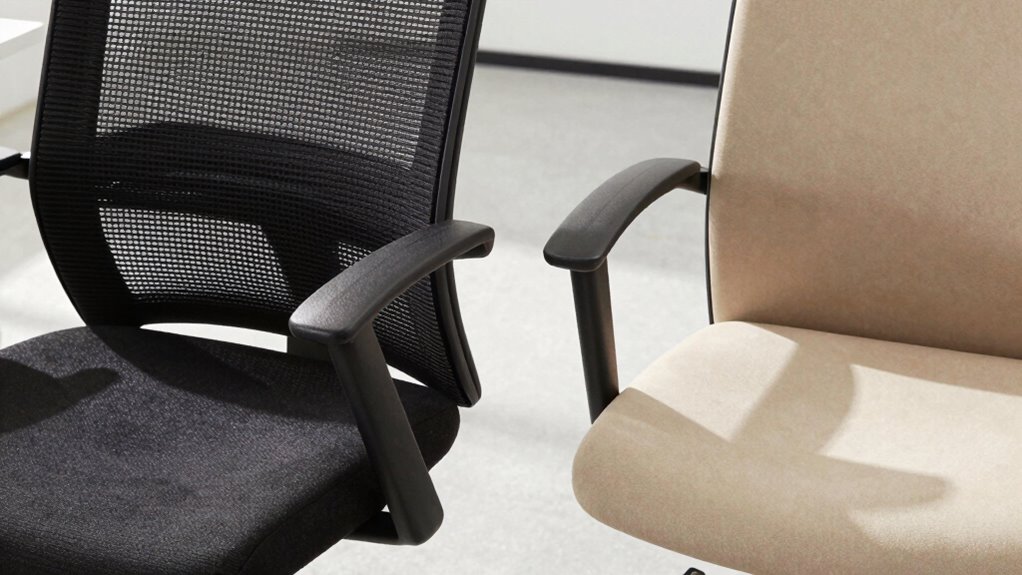
Have you ever noticed how your skin feels after sitting in a chair for hours? If so, you’ve likely experienced the difference in temperature regulation between mesh and foam chairs. Mesh chairs are designed with an ergonomic design that promotes airflow, helping you stay cooler during long periods of sitting. The open structure allows heat and moisture to escape, reducing sweat and discomfort. Foam chairs, on the other hand, tend to trap heat because of their dense padding, which can make you feel warmer over time. Plus, mesh chairs often have a sleek aesthetic appeal that complements modern workspaces. If staying cool is a priority for extended use, a mesh chair generally offers better temperature regulation, keeping you more comfortable throughout the day.
How Do Mesh and Foam Chairs Handle Weight and Pressure?
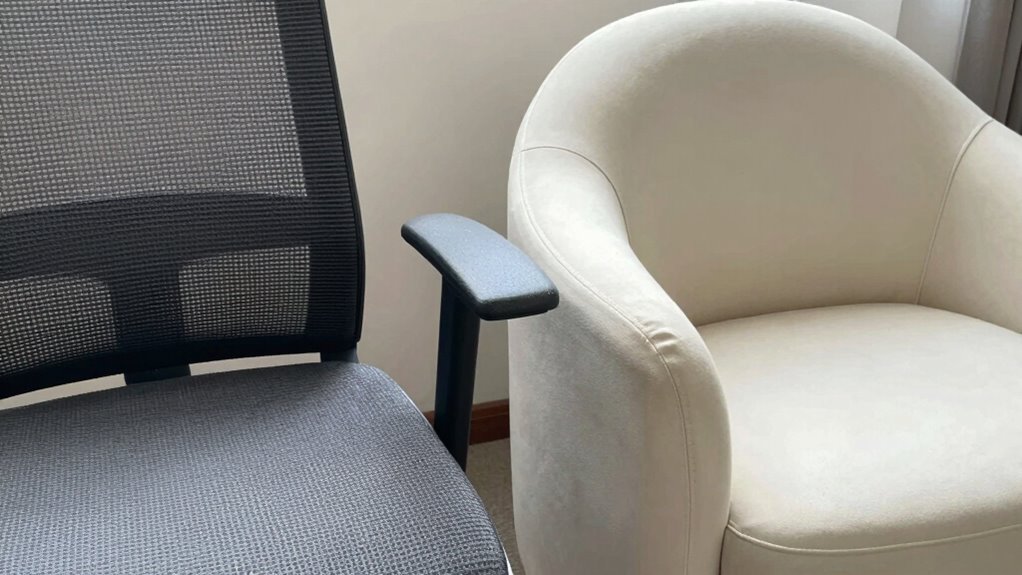
When it comes to handling weight and pressure, mesh and foam chairs respond quite differently. Mesh chairs distribute pressure evenly, offering superior ergonomic benefits that reduce fatigue during long hours. Foam chairs, on the other hand, contour to your body, providing personalized comfort but may compress over time under heavy weight. Here’s what you’ll notice:
- Mesh chairs maintain their shape, ensuring consistent support.
- Foam chairs mold to your body, enhancing comfort but potentially losing support.
- Aesthetic appeal matters—mesh chairs often look sleek and modern, boosting your workspace vibe.
- Foam chairs offer a plush, inviting look that adds coziness to any room.
Your choice impacts both ergonomic benefits and aesthetic appeal, shaping your overall sitting experience.
How Do Durability and Maintenance Affect Comfort Over Time?
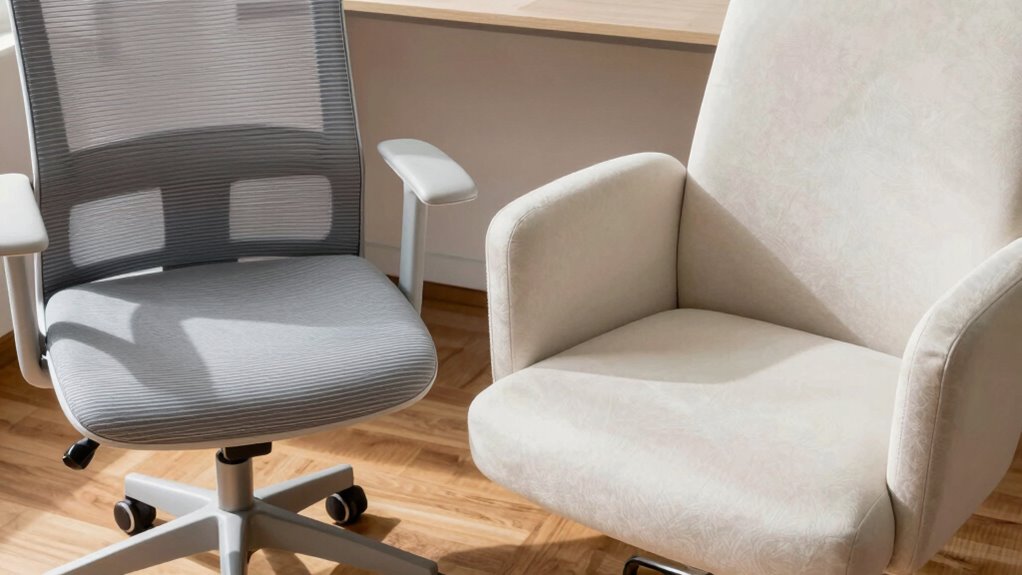
Durability and maintenance play essential roles in how long your chair remains comfortable and supportive. If you choose a fabric with high durability, it resists wear and tear, maintaining comfort over years. Regular maintenance, like cleaning and tightening screws, prevents deterioration and deformation. The maintenance impact on foam chairs is significant; neglect can cause sagging and loss of support, reducing comfort. Mesh chairs, with their sturdy materials, often require less upkeep. Here’s a quick comparison:
| Feature | Mesh Chairs | Foam Chairs | Maintenance Impact |
|---|---|---|---|
| Fabric durability | Usually high, resistant to tearing | Varies, may degrade faster | Regular cleaning extends lifespan |
| Support over time | Maintains shape more consistently | Sagging can occur | Proper upkeep prevents sagging |
| Ease of cleaning | Easy, wipeable surfaces | Stains may set in, harder to clean | Regular cleaning preserves comfort |
Which Chair Material Is Better for All-Day Comfort and Support?
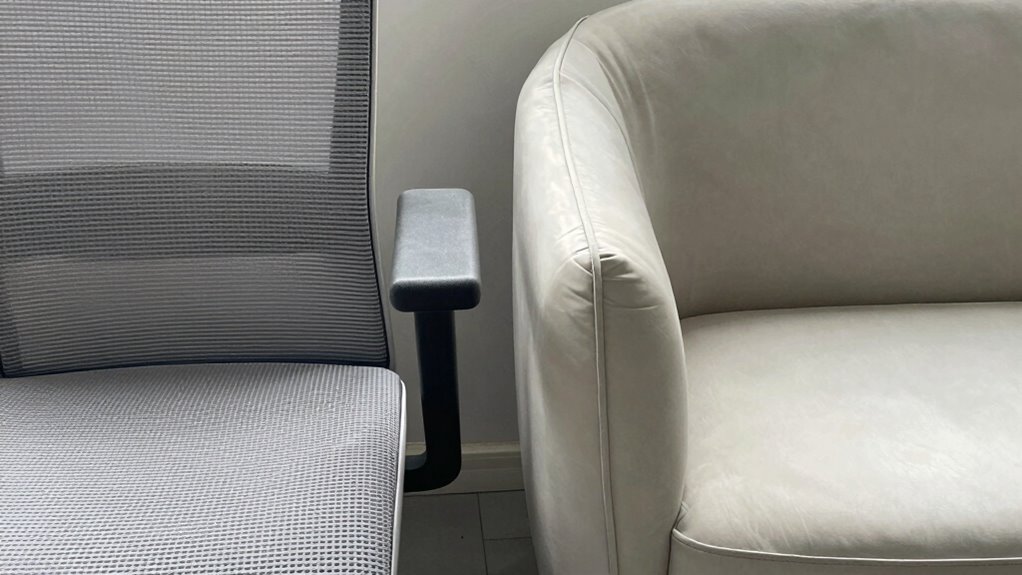
If you’re spending long hours at your desk, choosing the right chair material becomes essential for all-day comfort and support. Mesh chairs often feature an ergonomic design that promotes airflow, keeping you cool and comfortable throughout the day. Foam chairs, on the other hand, offer plush support and contour to your body, enhancing comfort. Consider these factors:
- Breathability: Mesh keeps you cool, preventing discomfort from overheating.
- Support: Foam provides cushioning that molds to your shape, reducing pressure points.
- Aesthetic appeal: Mesh chairs give a modern, sleek look, while foam chairs often exude cozy sophistication.
- Durability: Foam tends to maintain comfort longer, but mesh’s breathability supports prolonged use.
Choosing between them depends on your ergonomic needs and style preferences for all-day support.
Frequently Asked Questions
Are Mesh or Foam Chairs More Suitable for Lumbar Support?
Mesh chairs are more suitable for lumbar support because their ergonomic design promotes better airflow and conforms to your back’s natural curve. They often feature adjustable lumbar support, enhancing comfort during long hours. Foam chairs can provide cushioning, but they may lack the structured support you need for your lower back. Plus, mesh chairs offer a modern aesthetic appeal, making them a stylish and functional choice for maintaining proper posture.
How Does Chair Weight Influence Long-Term Comfort?
Your chair’s weight plays a significant role in long-term comfort, affecting material durability and mobility flexibility. Heavier chairs often indicate sturdy materials that last longer and provide better support, but they may reduce mobility flexibility, making movement less effortless. Lighter chairs offer easier mobility but might compromise durability over time. Choose a balance that suits your needs, ensuring both comfort and longevity for extended use.
Can Foam Chairs Cause Heat Buildup During Extended Use?
Ever wondered if foam chairs cause heat buildup? They can, especially during extended use, because foam often lacks proper ventilation, leading to ventilation issues and poor temperature regulation. You might find yourself sweating or feeling uncomfortable after hours. Foam’s dense material traps heat, making it less ideal if you need long-term comfort. To stay cool and focused, consider chairs with breathable features or switch to mesh options for better airflow.
Are Mesh Chairs Better for People With Allergies?
Yes, mesh chairs are better for people with allergies because they promote better air filtration and airflow, reducing dust buildup and allergens. You’ll notice allergy relief since mesh material doesn’t trap as much dust, mold, or pet dander as foam. This helps keep your seating area cleaner and minimizes allergy symptoms. Choosing a mesh chair can improve your comfort and health, especially if allergies are a concern for you.
How Do Adjustable Features Differ Between Mesh and Foam Chairs?
You’ll find adjustable features differ mainly in ergonomic adjustments and material flexibility. Mesh chairs typically offer more flexible support, allowing for better customization of lumbar and back support to fit your body. Foam chairs often have simpler adjustments, like height and tilt, but lack the same flexibility. This means mesh chairs can adapt more comfortably to your movements, providing enhanced ergonomic support tailored to your preferences.
Conclusion
Choosing between mesh and foam chairs is like picking your favorite song—you’ll find what suits your rhythm best. I once sat in a mesh chair during a long workday, feeling surprisingly cool and comfortable, while a foam chair felt cozy but stuffy after hours. Ultimately, your perfect chair depends on your body and habits. Think of it as finding the right pair of shoes—you want support, comfort, and a fit that keeps you moving happily all day.