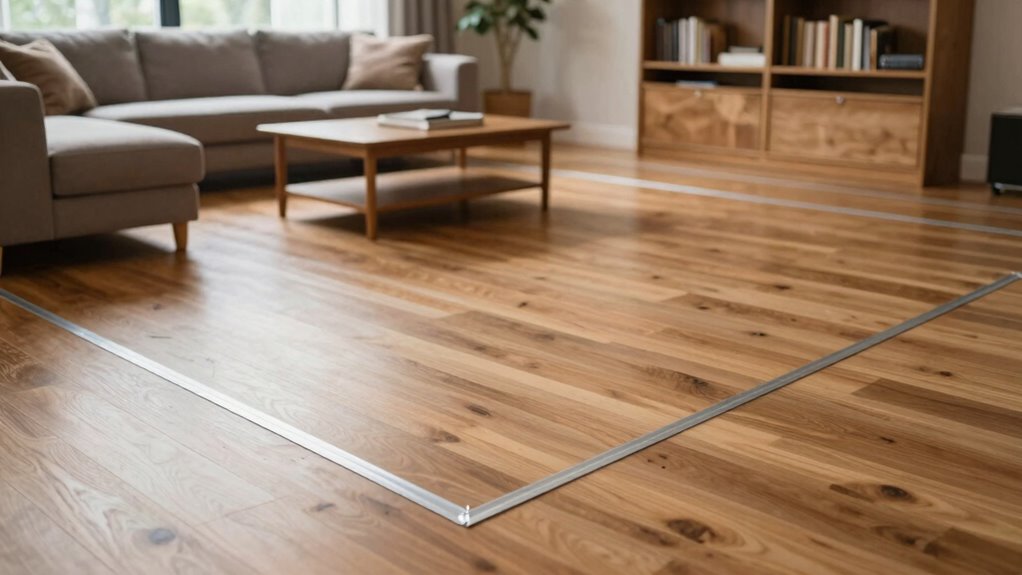
Using tape on the floor offers a simple, cost-effective way to visualize how furniture will fit in your space before buying. Measure your room and furniture accurately, then outline pieces with painter’s tape to see how everything interacts. This method helps prevent under- or over-sizing and improves your shopping confidence. If you want tips on creating the perfect layout and avoiding common mistakes, keep exploring to make smarter furniture choices.
Key Takeaways
- Use painter’s tape to outline furniture dimensions on the floor, visualizing how pieces will fit in your space.
- Measure your room accurately and replicate measurements with tape to test layout options before buying.
- Apply different colored tape for each furniture piece to easily experiment with various arrangements.
- Adjust tape placements to optimize traffic flow, space utilization, and overall room aesthetics.
- This method prevents costly mistakes by revealing potential layout issues before making purchases.
Tools and Materials Needed for Floor Planning
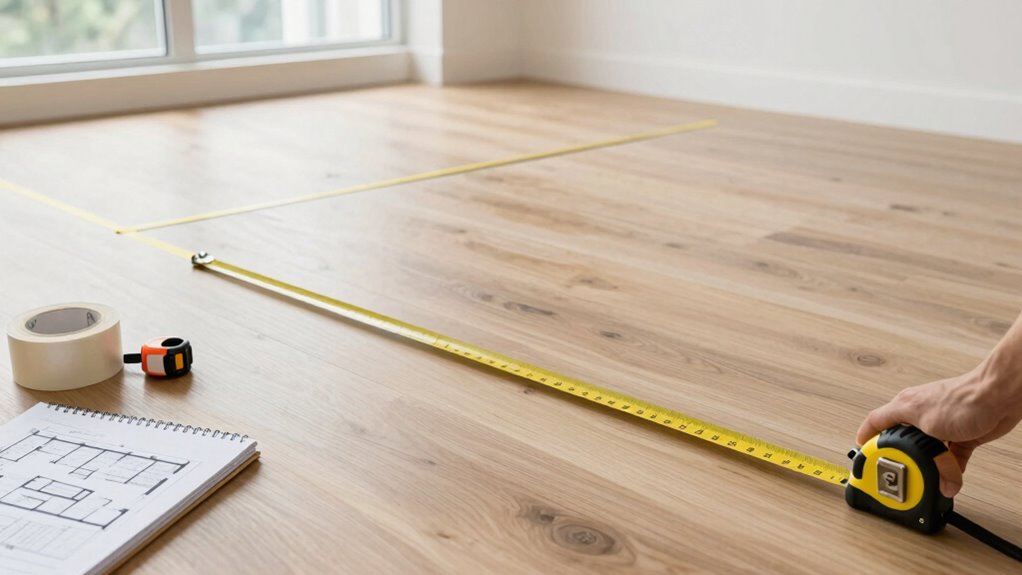
To create an effective floor plan, you’ll need a few essential tools and materials. Start with painter’s tape, which helps you visualize furniture placement without permanent commitment. Measure your space accurately with a tape measure or laser distance finder to ensure your plan is precise. Select a color scheme for your walls and decor that complements your lighting options, whether natural or artificial, to see how different lighting impacts the room’s vibe. Use a notepad or digital app to record measurements and ideas. Consider gathering sample swatches of paint or fabric to test color schemes in the space. Having a ruler or straightedge helps draw to scale. Additionally, understanding the importance of space planning can help you optimize your layout for both functionality and style. Incorporating visualization techniques can further enhance your planning process. Utilizing digital design tools can streamline adjusting your layout and exploring different options before making any purchases or changes. These tools make it easier to experiment with layout options before making any purchases or changes. Engaging in accurate measurements ensures your furniture and fixtures will fit as intended, preventing costly mistakes later on. For added confidence, researching local furniture stores or online retailers can help you find pieces that match your planned layout and style preferences.
How to Use Tape on the Floor to Visualize Furniture Fit
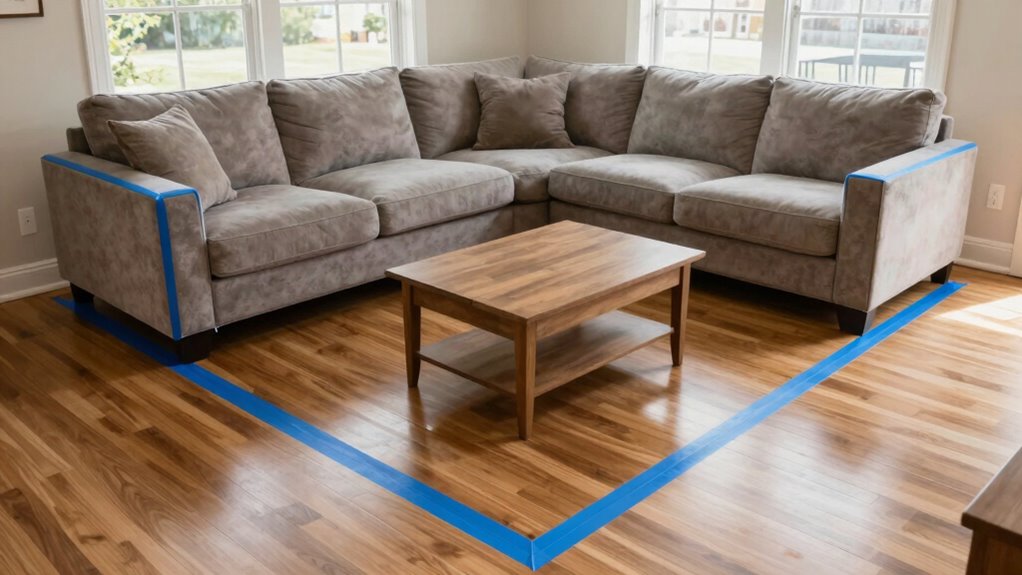
Using tape on the floor is an effective way to see how furniture will fit in your space before making any purchases. This simple method enhances your visualization techniques by providing a clear, physical outline of each piece’s size and shape. It helps boost your spatial awareness, allowing you to understand how furniture interacts with existing elements. Start by measuring your furniture and marking its footprint with tape. Arrange the tape outlines on the floor, experimenting with different layouts to find the most functional and appealing setup. This hands-on approach minimizes the risk of purchasing unsuitable pieces and gives you a realistic sense of scale. Tape on the floor turns abstract measurements into tangible visuals, making your space planning more precise and confident. Incorporating digital content exploration techniques can further refine your planning process and adapt to evolving design ideas. Additionally, experimenting with proportional ratios using tape can help you achieve balanced and harmonious arrangements within your space. Being mindful of visualization techniques can also help you better anticipate how your furniture will look once in place.
Step-By-Step: Creating Your Space Plan With Tape
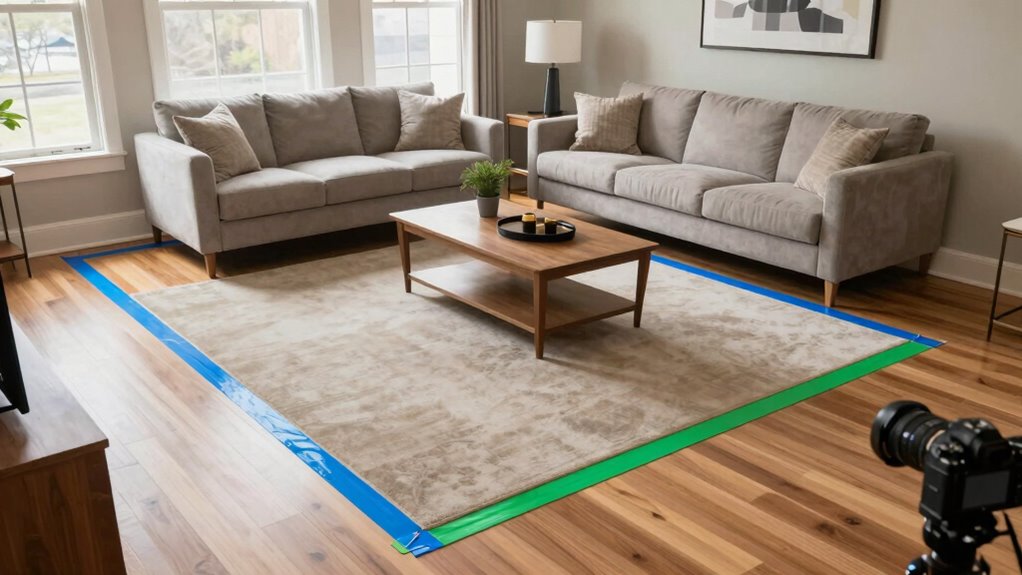
Creating your space plan with tape involves a straightforward, step-by-step process that transforms abstract measurements into a clear visual layout. Start by measuring your room’s dimensions and mark these on the floor with painter’s tape, ensuring each line corresponds to actual walls and openings. Then, use different colors of tape to represent various furniture pieces—this aids in color coordination and helps visualize how different items will work together. As you place each tape outline, consider your budgeting strategies by prioritizing essential furniture first and adding accessories later. This hands-on approach allows you to see how much space each item requires and how your overall design flows. Adjust tape placements as needed to refine your plan, minimizing surprises before making any big purchases.
Tips for Visualizing Different Furniture Sizes and Arrangements
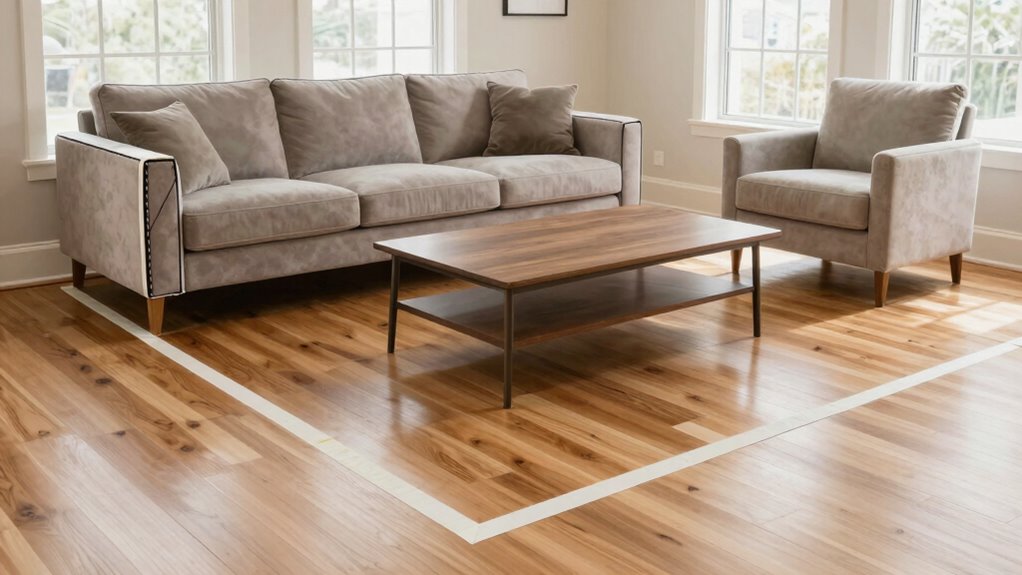
Using masking tape shapes on the floor helps you see how different furniture pieces will fit and look in your space. Creating full-size floor plans allows you to test arrangements before making any purchases. These visual tools make it easier to compare sizes and find the best layout for your needs. Additionally, understanding cabling failures can help you plan for proper equipment placement and avoid future issues.
Use Masking Tape Shapes
To effectively visualize how furniture will fit in your space, start by outlining their shapes with masking tape. This simple step enhances your space perception and helps you gauge furniture scale accurately. Use masking tape to create shapes representing different pieces, and compare them to your room’s actual dimensions.
Consider these tips:
- Place tape outlines for various furniture options to see how they interact with existing space.
- Adjust tape shapes to explore different arrangements without physically moving heavy furniture.
- Use different colors for each piece to easily differentiate scales and configurations.
This method allows you to experiment with size and layout, ensuring furniture fits comfortably before making any purchases. It’s a cost-effective way to avoid mismatched scales that can make a room feel cramped or awkward.
Create Full-Size Floor Plans
Making full-size floor plans allows you to see exactly how different furniture pieces will fit and work together in your space. By creating scale models on paper or using digital tools, you can visualize furniture dimensions in real size, helping you identify potential issues before purchasing. This process helps you experiment with different arrangements and ensures sufficient walking space, sightlines, and balance. Using scale models makes it easier to compare furniture sizes directly, avoiding surprises after delivery. It also allows you to tweak layouts quickly, saving time and money. Whether drawing by hand or using software, creating full-size plans gives you confidence in your choices and helps you make informed decisions about which pieces truly suit your space.
Avoid These Common Tape-Measure Mistakes
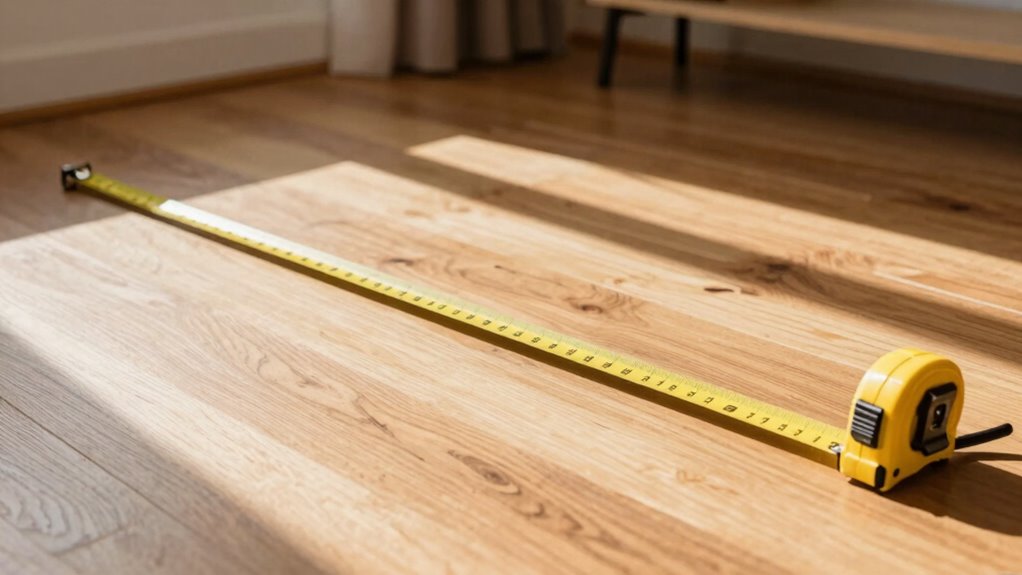
Even seasoned DIYers can fall into common tape-measure mistakes that lead to inaccurate measurements and costly errors. To guarantee measurement accuracy, watch out for these pitfalls:
- Incorrect tape placement – place the tape flat against surfaces, avoiding slack or twists.
- Not accounting for tape hook movement – remember the hook’s slight shift when measuring from the end or inside.
- Rushing measurements – take your time to ensure the tape is straight and secure.
- Ignoring the importance of free floating features – understanding how the tape’s design affects measurement consistency can help prevent errors.
These mistakes often cause discrepancies, especially in tight spaces or when measuring for big purchases. Proper tape placement is vital for precise results. Double-check your measurements before marking or purchasing, saving you time and money in the long run. Accurate measurements start with mindful tape use.
Why Tape-on-the-Floor Planning Helps You Shop Smarter

Using tape-on-the-floor planning allows you to visualize how furniture and other elements will fit in your space before making any purchases. This simple step helps you shop smarter by preventing impulse buys that don’t align with your decorating styles or available space. It also supports budget planning, as you can test different layout options without additional costs. To streamline your process, consider this table:
| Furniture Piece | Space Needed | Placement Idea |
|---|---|---|
| Sofa | 6 ft. | Against the wall |
| Coffee table | 3 ft. | Centered in room |
| Bookshelf | 2 ft. | Near window |
| Dining table | 5 ft. | Adjacent to kitchen |
| Armchair | 3 ft. | Corner nook |
This approach guarantees your choices match both your style and space constraints, making your shopping more efficient. Space planning is an essential step to ensure your furniture fits comfortably and enhances your overall living environment.
Troubleshooting: What to Do If Your Furniture Doesn’t Fit
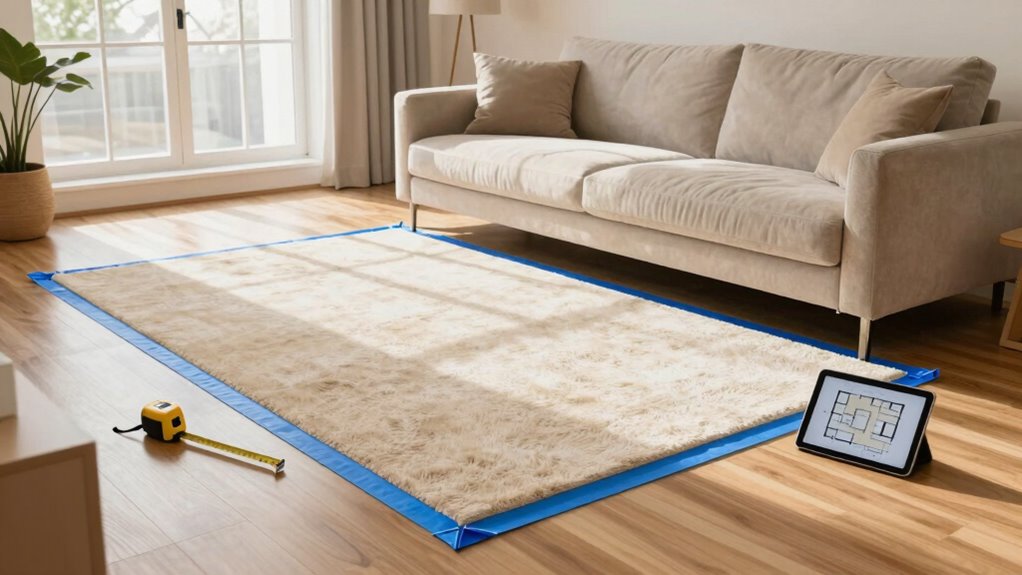
If you find that your furniture doesn’t fit after trying out different layouts with tape-on-the-floor planning, don’t worry—there are practical solutions. First, double-check your room measurement techniques to ensure accuracy, including wall-to-wall distances and doorways. Next, compare your furniture dimensions with your space to identify where conflicts occur. Finally, consider these options:
- Adjust your furniture placement based on your measurements.
- Look for furniture with smaller dimensions or modular pieces.
- Reevaluate your room layout to maximize open space and traffic flow.
Frequently Asked Questions
Can Tape-On-The-Floor Planning Work for Outdoor Spaces?
Yes, tape-on-the-floor planning can work for outdoor spaces using weather-resistant tapes. You can create temporary outdoor layouts by taping out furniture arrangements, pathways, or designated zones. Just make sure to choose tapes designed for outdoor use to withstand rain, sun, and wind. This method helps you visualize the space, test different configurations, and make better decisions before making any big purchases or permanent changes.
How Long Does Tape Remain Effective for Multiple Planning Sessions?
Think of tape as your planning partner—its durability lifespan varies, but usually, you get about one to two weeks of effective use before it starts to fade. I once used painter’s tape for a month-long outdoor project; it remained clear enough to keep planning sessions consistent. Reusability potential depends on tape quality; high-quality tape can be removed and reused multiple times, making your planning adaptable and eco-friendly.
Is There a Recommended Tape Type for Different Flooring Materials?
For different flooring materials, you should select tape with appropriate adhesive strength and color. For delicate surfaces like hardwood or tile, opt for painter’s or painter’s tape, which offers gentle adhesion and easy removal. For carpet or vinyl, use stronger, low-residue tape in neutral colors. This guarantees your tape stays effective during planning sessions without damaging your floors, making your layout process seamless and stress-free.
How Accurate Is Tape-On-The-Floor Planning Compared to Digital Tools?
Tape-on-the-floor planning is like sketching with a shaky hand—useful but not perfectly precise. It offers good measurement accuracy for visualizing space, helping you grasp how furniture fits and impacts the room. However, it can slightly distort spatial perception, especially in complex layouts. Digital tools, on the other hand, provide more exact measurements and a clearer view of spatial relationships, making them better for detailed planning before major purchases.
Can Tape-On-The-Floor Planning Accommodate Irregularly Shaped Rooms?
Yes, tape-on-the-floor planning can accommodate irregular shapes by carefully adjusting tape to match unique room outlines. You can create custom layouts by measuring and shaping the tape to fit angles, curves, or unusual corners. While it takes more effort than in rectangular rooms, this method lets you visualize how furniture fits in irregular spaces, helping you make better decisions before purchasing big items.
Conclusion
Using tape on the floor is a simple, effective way to bring your space to life before making big purchases. It helps you see exactly how furniture will fit and flow, saving you time and money. Don’t you deserve a home that feels just right? Give this trick a try—your perfect layout is closer than you think. After all, isn’t creating a space you love worth a little tape?