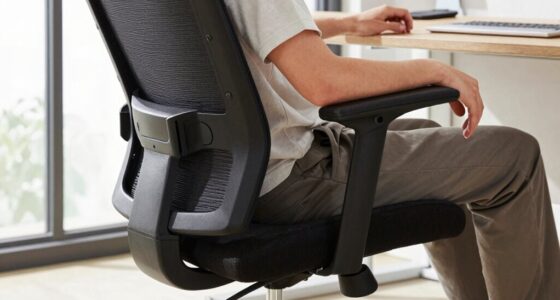

Incorrect armrest height can cause shoulder tension, fatigue, and long-term strain by disrupting your natural posture. If your armrests are too high, your shoulders will lift, leading to discomfort, while too low can cause your shoulders to slump forward, stressing muscles. Adjusting armrests to elbow height and maintaining proper support is essential. Keep your setup aligned; otherwise, you risk ongoing shoulder issues. Keep going to discover how to avoid these common mistakes and protect your shoulders.
Key Takeaways
- Setting armrests too high causes shoulders to lift, increasing tension and risking shoulder strain.
- Adjusting armrests too low leads to slumping shoulders, promoting poor posture and muscle fatigue.
- Failing to align armrests with elbow height forces unnatural arm and shoulder positions.
- Neglecting regular checks and support quality results in uncomfortable, misaligned armrest setups over time.
- Resting shoulders on armrests during long periods can cause muscle tension and shoulder discomfort.
Why Proper Armrest Height Matters for Shoulder Comfort
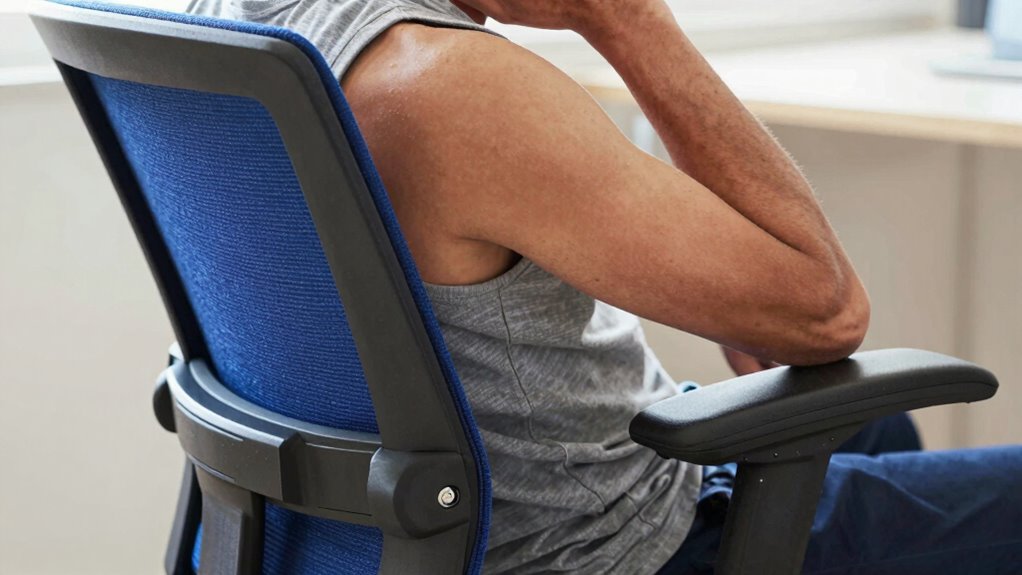
Proper armrest height is essential because it directly affects your shoulder comfort. When your armrests are at the right level, they support your arms without causing strain or forcing your shoulders upward or downward. An ergonomic design ensures that the armrests promote natural posture, reducing muscle tension and fatigue. The materials used in the armrests also play a role; soft, cushioned surfaces can lessen pressure points, while sturdy materials provide better support. If your armrests are too high, your shoulders may hunch, leading to discomfort and long-term strain. Conversely, if they’re too low, you might overreach, causing unnecessary stress on your shoulders. Properly designed armrests with suitable materials help maintain relaxed shoulders, ultimately enhancing your overall comfort during extended periods of sitting. Additionally, adjusting your armrest height to match your ergonomic principles can optimize comfort and prevent strain.
How to Properly Adjust Your Armrest for Better Posture

To modify your armrest for better posture, start by finding the correct height so your elbows rest comfortably at a 90-degree angle. Keep checking and refining this position regularly to prevent strain and guarantee proper support. Remember, small adjustments can make a big difference in your comfort and alignment. Additionally, being mindful of home organization can help create a more ergonomic environment that supports good posture throughout your day. Incorporating natural light and wellness touches into your workspace can also enhance overall comfort and reduce fatigue. Paying attention to ergonomic principles can further optimize your workspace setup for long-term health benefits. Recognizing individual differences in body size and shape can help tailor your adjustments for maximum comfort and support. Moreover, understanding ergonomic standards can guide you in achieving an optimal setup tailored to your specific needs.
Find Correct Height
Have you ever wondered if your armrests are set at the right height? To find out, start by sitting comfortably with your shoulders relaxed. Your elbows should rest at a 90-degree angle, with your forearms parallel to the ground. Adjust the height of your armrests so they support your arms without pushing your shoulders up or letting them sag. Using ergonomic accessories like armrest padding can provide extra comfort and help maintain proper alignment. If your chair doesn’t have adjustable armrests, consider adding padding or using adjustable accessories to fine-tune the height. The goal is to keep your shoulders relaxed and your arms supported, reducing strain and promoting better posture throughout your work or leisure activities.
Maintain Elbow Angle
Adjusting your armrests to maintain the correct elbow angle is key to supporting good posture. Proper elbow flexion ensures your arms are comfortably supported without strain on your shoulders or neck. When your elbows are at about a 90-degree angle, your arm support is perfect, reducing fatigue and promoting alignment. To achieve this, adjust your armrests so they match your natural arm position. Keep in mind:
- Ensure your elbows are close to your sides
- Avoid overextending or slumping
- Set armrests at a height that maintains 90-degree elbow flexion
- Confirm your forearms rest comfortably on the supports
- Regularly check that your elbows stay in a neutral, supported position
- Using anti-fatigue mats can help improve overall comfort and reduce fatigue during long periods of standing
- Adjusting ergonomic features properly can further enhance comfort and prevent strain
- Incorporating proper posture habits throughout your day can help sustain ergonomic benefits and reduce discomfort
- Maintaining ergonomic alignment is essential for long-term shoulder health and overall comfort
Maintaining proper ergonomic alignment can significantly reduce the risk of shoulder strain and long-term discomfort.
Regular Adjustment Checks
Regularly inspecting your armrest settings guarantees they stay aligned with your body’s needs. Use ergonomic accessories that support proper posture and ensure your armrests are at the right height and position. Check the armrest materials for wear and tear, as damaged or worn-out padding can affect comfort and support. Make adjustments frequently, especially if you notice shoulder tension or discomfort. Properly aligned armrests help reduce strain on your shoulders and neck, preventing long-term injuries. Keep in mind that your body changes over time, so what worked initially might need tweaking later. Additionally, ergonomic accessories can be used to enhance your workspace setup and improve overall comfort. Regular posture assessments help identify when adjustments are needed to maintain optimal support. Staying aware of body mechanics ensures your adjustments remain effective and prevent discomfort over the long term. Incorporating risk management strategies can further protect your shoulder health during prolonged sitting periods.
Common Armrest Adjustment Mistakes That Cause Shoulder Pain
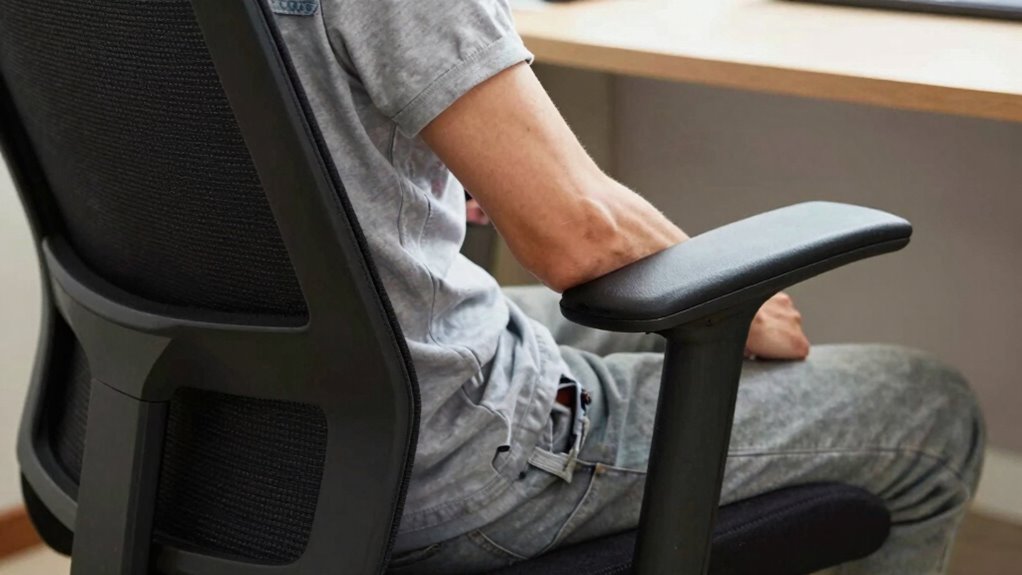
If your armrests are set too high or too low, you might strain your shoulders without realizing it. Neglecting proper support can lead to discomfort and long-term pain. Making sure your armrests are correctly adjusted helps prevent these issues before they start.
Incorrect Armrest Height
When your armrests are set too high or too low, they can force your shoulders into awkward positions, leading to discomfort and pain. Incorrect armrest height disrupts armrest ergonomics and prevents proper shoulder relief, causing unnecessary strain. If your armrests are too high, your shoulders lift toward your ears, increasing tension. If too low, your shoulders slump forward, stressing neck and shoulder muscles. To optimize your setup, ensure your elbows are roughly at a 90-degree angle when resting on the armrests. Proper adjustment supports natural shoulder positioning and reduces fatigue. Remember, small changes can make a big difference. Pay attention to how your shoulders feel during long periods of sitting and adjust accordingly for maximum comfort.
- Keep armrests aligned with your elbows
- Maintain a slight downward slope
- Avoid armrests that push shoulders up or down
- Ensure armrests don’t interfere with desk height
- Regularly revisit armrest ergonomics for comfort
Neglecting Proper Support
Neglecting proper support from your armrests can quickly lead to shoulder pain, even if the height is correct. The armrest material and design play a vital role in providing adequate support. If your armrests are made of hard or uncomfortable material, they won’t cushion your arms properly, causing strain over time. Similarly, poorly designed armrests that don’t contour to your arms or lack padding can force your shoulders into awkward positions. Even if you’ve adjusted the height correctly, ignoring the importance of supportive armrest material and thoughtful design can lead to unnecessary tension and discomfort. Make sure your armrests are sturdy, well-padded, and ergonomically designed to support your arms comfortably throughout the day. Proper support is essential for preventing shoulder pain and maintaining good posture. Additionally, choosing high-quality materials can further enhance comfort and durability, ensuring sustained support during extended use. Paying attention to ergonomic design principles can also help optimize armrest positioning and reduce strain. Incorporating adjustable features allows for a more personalized fit, further minimizing discomfort during prolonged use. Recognizing the connection between ergonomic support and overall well-being can motivate better adjustments and choices. Being aware of posture habits and making small adjustments can significantly improve comfort and prevent long-term issues.
How Incorrect Armrest Height Leads to Shoulder Strain
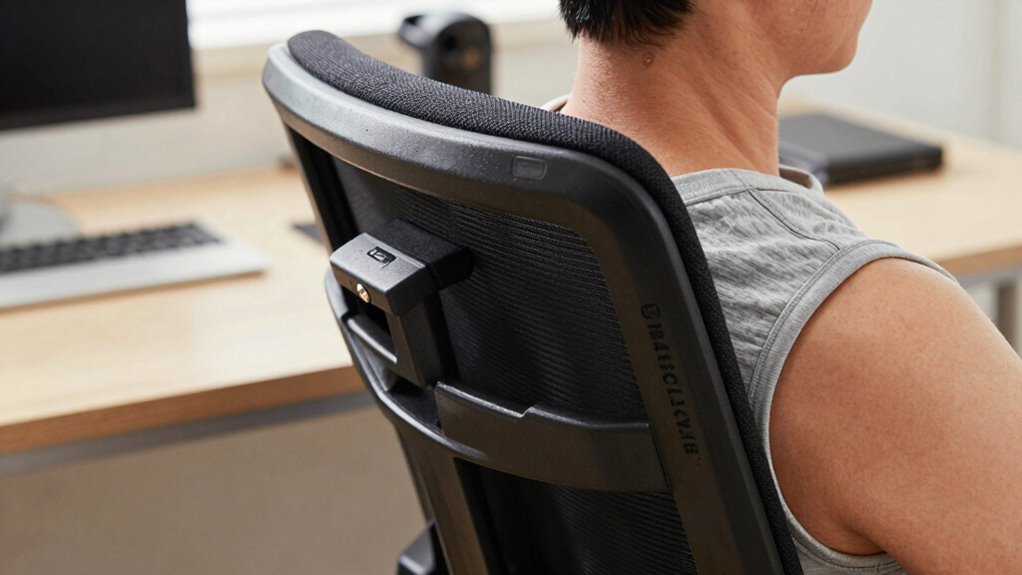
Incorrect armrest height can directly cause shoulder strain, especially when they’re set too high or too low relative to your arm position. When armrests aren’t aligned properly, your shoulders may hunch or droop, leading to tension and discomfort over time. This misalignment can also cause you to adopt poor posture, increasing the risk of long-term issues. Using ergonomic accessories can help, but proper armrest height remains essential. To prevent strain, incorporate shoulder exercises that strengthen and stretch these muscles. Be mindful of these points:
- Keep armrests at elbow level to maintain natural shoulder position
- Avoid resting your shoulders on armrests for extended periods
- Use ergonomic accessories to fine-tune arm support
- Regularly stretch and strengthen shoulder muscles with targeted exercises
- Adjust your chair and armrests frequently for maximum comfort
- Maintaining proper ergonomic alignment is crucial for long-term shoulder health.
- Proper armrest positioning helps prevent unnecessary muscle tension and fatigue.
- Ensuring correct ergonomic setup can significantly reduce the risk of developing shoulder pain.
Proper armrest height minimizes shoulder strain and promotes healthier posture.
Easy Steps to Find Your Ideal Armrest Position

Finding your ideal armrest position is simple when you follow a few easy steps. First, sit comfortably with your shoulders relaxed and forearms parallel to the ground. Adjust your armrests so your elbows form a 90-degree angle, promoting proper wrist alignment. Use ergonomic cushions if needed to support your arms without forcing them upward or downward. To help visualize, consider this table:
| Step | Action |
|---|---|
| 1 | Adjust armrests height to match elbow level |
| 2 | Add ergonomic cushions if arms sag or lift |
| 3 | Ensure wrist stays straight when resting arms |
These steps ensure your shoulders stay relaxed, reducing strain and promoting healthy posture. Remember, proper armrest positioning is key to preventing discomfort.
Tips to Keep Your Armrest Properly Positioned Throughout the Day
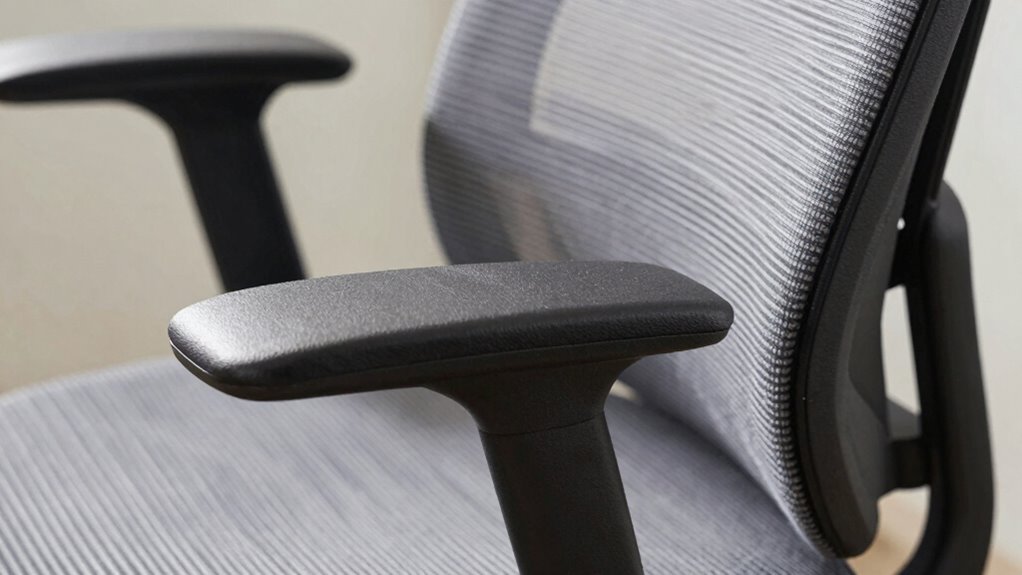
To keep your armrest properly positioned throughout the day, make a habit of checking and readjusting it regularly as you work. Using ergonomic accessories can help maintain correct alignment and comfort. Be mindful of armrest materials; softer padded options can reduce pressure and strain on your shoulders. Adjust your armrest height whenever you notice discomfort or if your posture shifts. Keep a small toolkit or adjustable tools nearby to make quick tweaks. Incorporate reminders to check your setup, especially during long work sessions. Regular adjustments prevent muscle tension and fatigue. Remember, consistency is key to maintaining ergonomic benefits. Staying proactive with small tweaks ensures your shoulders stay relaxed, and your workspace remains supportive and comfortable all day long.
Signs Your Armrest Setup Is Wrecking Your Shoulders: And How to Fix It
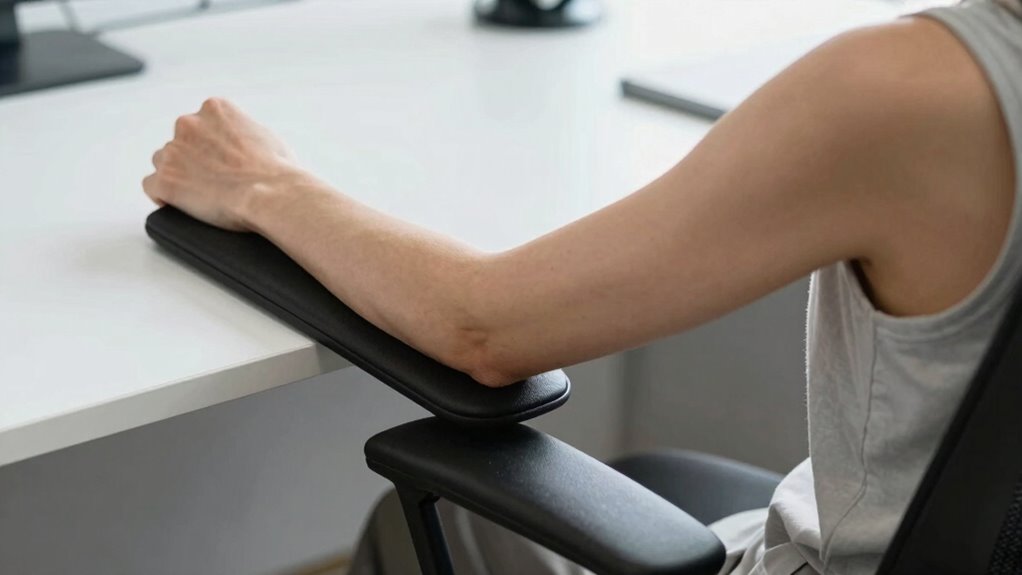
If your shoulders start feeling tense, achy, or fatigued after a day at your desk, your armrest setup might be to blame. Poor alignment can violate ergonomic principles, leading to unnecessary strain. Signs include elevated or lowered shoulders, rounded postures, or persistent discomfort in your neck and upper back. These issues often stem from improper seating ergonomics, where armrests are too high, too low, or uneven. To fix this, adjust your armrests to support your arms comfortably without elevating your shoulders. Verify your elbows are at a 90-degree angle and your shoulders stay relaxed. Regularly check your setup and maintain proper posture. Correct armrest positioning helps protect your shoulders and promotes healthier seating ergonomics.
Frequently Asked Questions
Can Armrest Height Affect Neck and Back Health Too?
Yes, armrest height can affect your neck and back health too. In ergonomic desk setups, properly adjusted office chair features, including armrests, help maintain good posture. If your armrests are too high or low, you may hunch or strain, leading to neck and back discomfort. Adjusting your armrest height to support your arms comfortably reduces tension and promotes better alignment, preventing long-term pain.
What Are Signs My Armrest Is Too High or Low?
If your armrest is too high, you’ll notice shoulder strain and tension, making your shoulders lift or hunch. If it’s too low, you might feel discomfort or fatigue in your neck and shoulders from poor arm support. Good armrest ergonomics mean your arms rest comfortably at a 90-degree angle without causing strain. Pay attention to how your shoulders feel—any pain or tension signals your armrest height needs adjustment.
How Often Should I Adjust My Armrest During the Day?
You should adjust your ergonomic armrests with adjustable height at least once every hour. Studies show frequent adjustments can reduce shoulder strain by 30%. Keep your elbows close to your body and your forearms parallel to the ground. Regularly tweaking your armrests helps maintain proper posture, preventing discomfort and long-term injury. Make it a habit to check and adjust your armrests throughout the day to stay comfortable and supported.
Are Armrest Adjustments Different for Sitting vs. Standing Desks?
Yes, armrest adjustments differ for sitting versus standing desks. For sitting desks, follow ergonomic standards by setting armrests at elbow height to reduce shoulder strain, considering armrest materials like cushioned or padded options for comfort. When using standing desks, lower or remove armrests if adjustable, so your shoulders stay relaxed. Always prioritize maintaining proper arm support to prevent discomfort and guarantee a good ergonomic fit, regardless of your setup.
Does Armrest Padding Influence Shoulder Comfort and Posture?
Coincidentally, padded armrests and their material markedly influence your shoulder comfort and posture. Padded armrests provide cushioning that prevents pressure points, reducing shoulder strain. Soft, supportive materials like foam or gel conform to your arms, encouraging better alignment. Without proper padding, you might unconsciously hunch or tense up, leading to discomfort. So, choosing armrests with quality padding and suitable material helps keep your shoulders relaxed and your posture healthy throughout your workday.
Conclusion
If you’ve ever felt that nagging shoulder ache after a long day, it’s like carrying an invisible weight you didn’t realize was there. Fixing your armrest height can lighten that load, much like adjusting a sail to catch the wind just right. Take a moment to check your setup—you deserve comfort that lets you focus on what matters most, not on battling unnecessary pain. Small adjustments can make a world of difference for your shoulders’ well-being.