
Your discomfort may not be from the chair itself but from how your seat depth affects your posture and blood flow. An incorrect seat depth causes pressure behind your knees or lack of thigh support, leading to soreness and poor alignment. Adjusting or choosing a chair with the right depth improves comfort and promotes healthy sitting habits. Keep exploring to learn practical tips on measuring and optimizing your seat depth for better support.
Key Takeaways
- Proper seat depth ensures thigh support without pressure behind the knees, improving comfort and circulation.
- Incorrect seat depth causes poor posture, leading to slouching or leaning forward, regardless of chair quality.
- Adjusting seat depth to match your body proportions promotes spinal alignment and reduces fatigue.
- Measuring your thigh length and maintaining a 2-3 inch gap from knees to seat edge optimizes support.
- Regularly evaluating and modifying seat depth enhances ergonomic support, preventing discomfort from structurally sound chairs.
Why Seat Depth Matters for Comfort and Posture
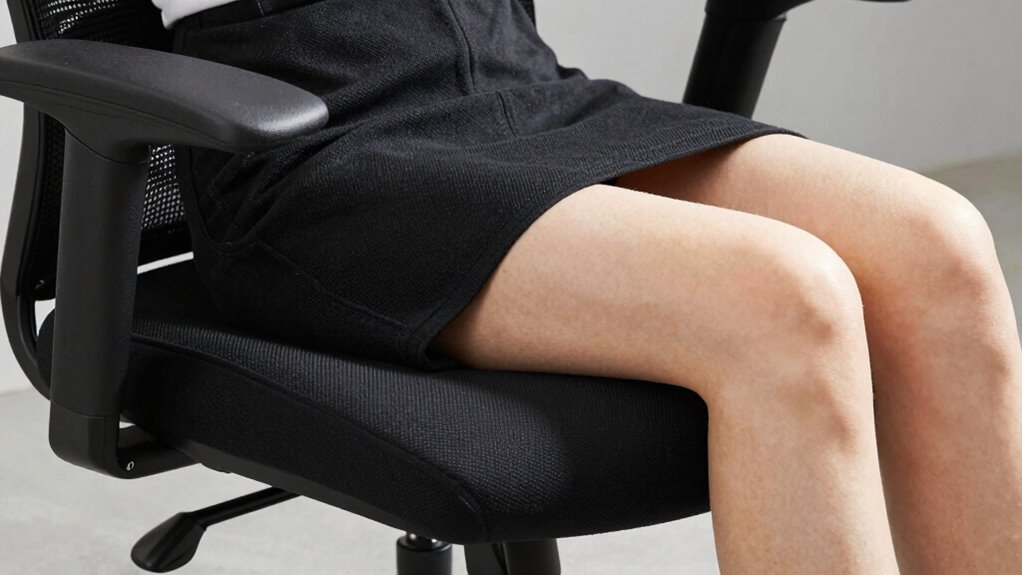
Your seat depth plays a crucial role in ensuring both comfort and proper posture. According to ergonomics principles, the right seat depth supports your thighs without putting pressure on the backs of your knees. If it’s too deep, you might find yourself slouching or leaning forward, causing strain over time. Conversely, a seat that’s too shallow won’t provide enough thigh support, leading to discomfort. Choosing the correct seat cushion types can help you achieve ideal depth, ensuring your hips are fully supported while maintaining proper spinal alignment. Proper seat depth helps distribute your weight evenly, reducing pressure points and encouraging healthier sitting habits. When your chair fits well, you’ll feel more comfortable and less prone to fatigue during long periods of sitting. Additionally, selecting appropriate cushion types can further enhance support and comfort, especially for extended sitting sessions. Ensuring proper seat depth is essential for maintaining ergonomic alignment and preventing long-term musculoskeletal issues. Proper ergonomic design can also contribute to improved circulation and reduced fatigue during prolonged sitting.
How Improper Seat Depth Causes Discomfort and Posture Problems
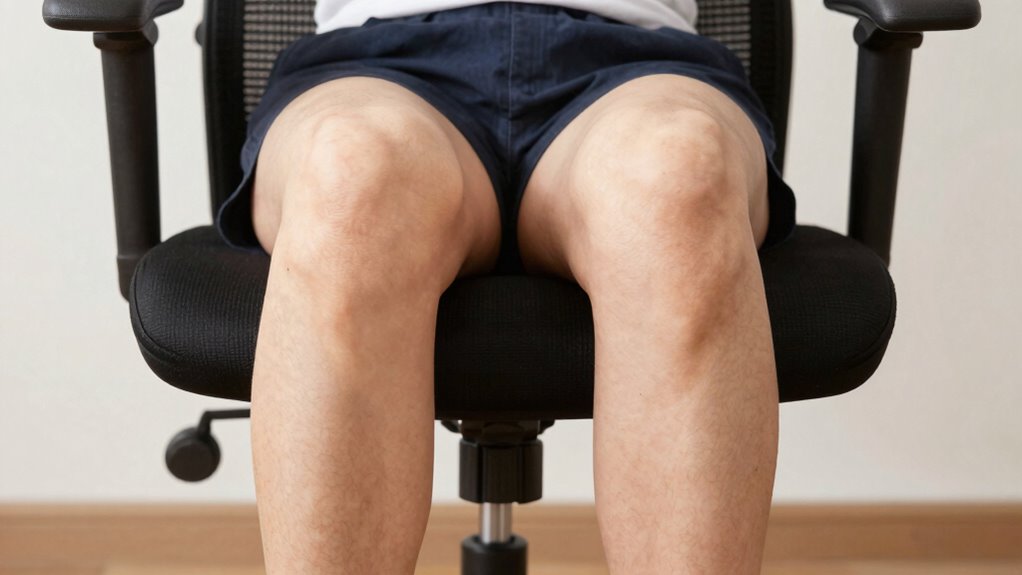
When the seat depth is too deep or too shallow, it can lead to significant discomfort and posture issues. An improper seat depth disrupts your ergonomic design, causing pressure points and limiting proper support. A seat that’s too deep may push against the backs of your knees, restricting circulation, while one that’s too shallow leaves your thighs unsupported. Cushion firmness also plays a role—too soft, and your hips sink, misaligning your spine; too firm, and it becomes uncomfortable. To visualize this, consider the table below:
| Seat Depth Issue | Effect on Posture | Solution Tip |
|---|---|---|
| Too deep | Strains lower back, poor support | Adjust cushion firmness or height |
| Too shallow | Causes slumping, pressure points | Opt for ergonomic design |
| Incorrect cushion firmness | Discomfort, misalignment | Choose appropriate firmness |
| Excessive depth | Restricts movement | Use adjustable features |
| Insufficient depth | No thigh support | Proper measurement |
Additionally, understanding ergonomic principles can help you make better choices for comfort and support. Incorporating proper seat measurements is essential to ensure optimal seating ergonomics and avoid discomfort over time.
What Factors Affect Your Ideal Seat Depth
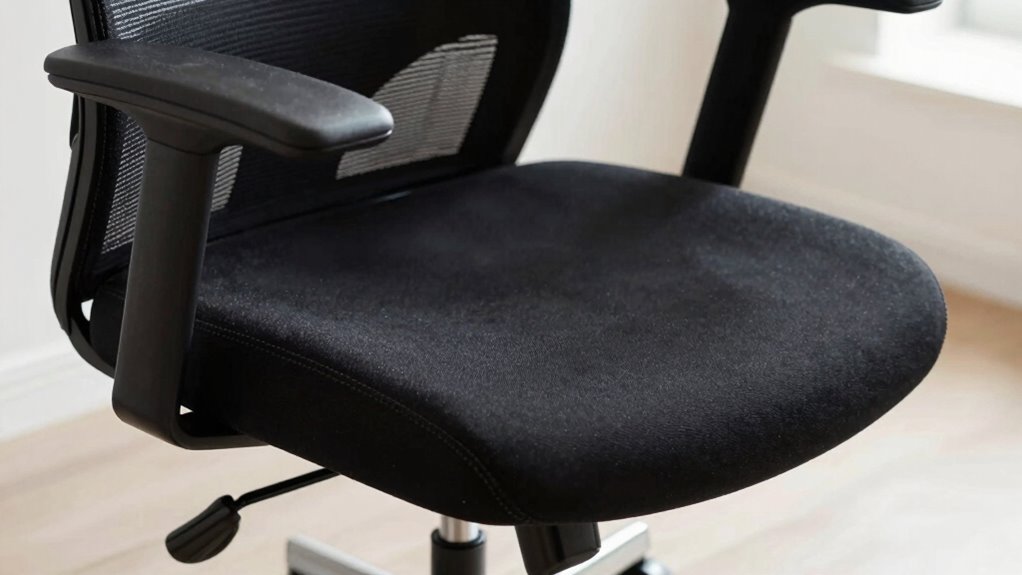
Several factors influence your ideal seat depth, ensuring that it provides proper support and comfort. Ergonomic principles emphasize the importance of fitting the seat to your body’s proportions, especially the length of your thighs and lower back. Your height, leg length, and sitting habits all play a role in determining the right depth. Additionally, the material durability of the chair affects how well it maintains its shape over time, impacting comfort and support. A durable material prevents sagging or indentations that can disrupt proper posture. Comfort also depends on how well the seat accommodates your specific body features. Proper seat depth is essential for maintaining healthy sitting habits and preventing discomfort. Selecting a chair with adjustable features can further enhance ergonomic support and accommodate individual differences. Considering supportive seating options can help optimize your sitting experience. Recognizing the importance of ergonomic design can help you choose a chair that supports long-term health and comfort. Ensuring the correct fit of your seat is fundamental to achieving optimal ergonomic benefits and reducing strain.
How to Measure Seat Depth at Home
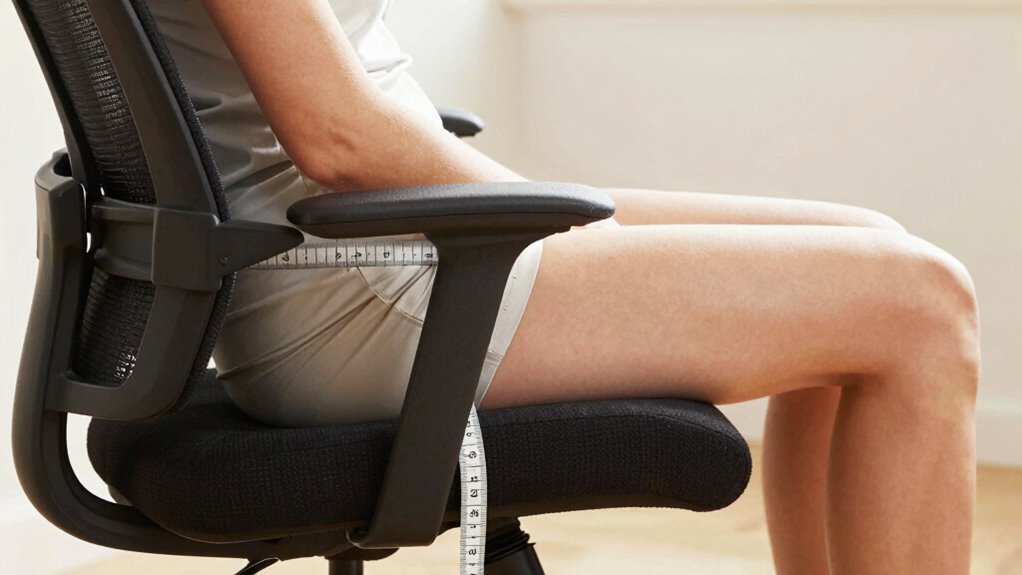
To measure your seat depth at home, start by gathering a tape measure and a sturdy chair. Sit comfortably with your back against the chair’s backrest and your feet flat on the floor. Then, measure from the back of your knee to the front edge of the seat to find your ideal seat depth. For optimal comfort, consider adjusting your sitting posture to ensure proper support and alignment. It’s also important to choose a seat depth that complements your body proportions for better ergonomic support, especially when integrating connected fitness equipment into your home setup. Being aware of your ergonomic needs can help you select the most suitable seating for long-term comfort, just as understanding nail biology aids in maintaining healthy nails for daily hygiene and appearance.
Gather Necessary Tools
Have you gathered the tools you’ll need before measuring your seat depth? To get accurate results, you’ll need a tape measure or ruler, a mirror, and a pen and paper to record measurements. Consider the ergonomic design of your chair and seating materials, as these can influence how you sit and measure comfortably. A flexible tape measure works best for capturing the precise distance from the backrest to the front edge of your seat. Make sure your chair is on a flat, stable surface for consistency. Using a proper measurement technique can help you avoid common errors and improve accuracy. Having these tools ready guarantees a smooth measuring process. Taking accurate measurements helps you select the right seat depth for comfort and support. Proper seat adjustment like seat cushions and ergonomic adjustments can further enhance your seating experience. Additionally, understanding ergonomic principles can help you make more informed decisions about your seating setup. Double-check your tools to avoid errors, and ensure you understand proper measurement techniques to achieve the most accurate results. You’re ready to proceed with confidence.
Find Proper Sitting Position
Before measuring your seat depth, sit in your chair with your back resting comfortably against the backrest. Make certain your posture is upright and relaxed to get an accurate fit. Focus on maintaining proper posture alignment, which is key to ergonomic design. Position yourself naturally, as if you’re about to work or relax, without slouching or leaning forward. This helps identify the ideal sitting position that promotes comfort and reduces strain. Keep your feet flat on the ground and your hips aligned with your knees. Your goal is to find a position where your thighs are fully supported without pressure behind your knees. This natural posture will guide you toward the correct seat depth, ensuring your chair supports your body’s ergonomic needs effectively. Proper posture is essential for achieving a comfortable and supportive seating arrangement. Additionally, considering your ergonomic needs can help prevent long-term discomfort and promote better health.
Measure Seat Depth
Measuring your seat depth at home is straightforward if you follow a few simple steps. Start by sitting upright in your chair with your back fully supported. Use a measuring tape to determine the distance from the back of your pelvis to the back of your knee. Keep in mind that proper ergonomic design depends on this measurement for comfort and support. When selecting materials, consider how padding and fabric affect your sitting experience. To guarantee accuracy, focus on these points:
- Sit with your back against the chair’s backrest
- Measure from the back of your pelvis to the back of your knee
- Adjust for material thickness and cushioning
This simple process helps you choose a seat with the right depth, promoting better posture and comfort.
How to Adjust Your Chair for the Perfect Seat Depth

To adjust your chair for the perfect seat depth, start by measuring your thighs accurately to determine the right fit. Then, move the seat forward or back until there’s a small gap between your knees and the edge of the chair. Make sure the adjustment feels comfortable and supports proper posture.
Measure Your Thighs Correctly
Ensuring you measure your thighs correctly is key to adjusting your chair for ideal comfort and support. Proper thigh measurement helps you determine the right seat depth, which impacts your sitting posture and prevents discomfort. To do this accurately:
- Sit on a flat surface with your back straight and feet flat on the ground.
- Use a ruler or measuring tape to measure from the back of your knee to the top of your thigh.
- Keep your legs relaxed and avoid squeezing or tensing muscles during measurement.
Adjust Seat Depth Properly
Adjusting your chair’s seat depth correctly is essential for maintaining proper posture and comfort throughout the day. Follow ergonomic principles by ensuring the seat depth allows your back to stay supported while your thighs rest comfortably on the cushion support. Move the seat forward or backward until you can sit with about 2-3 inches of space between the edge of the seat and the back of your knees. This position distributes your weight evenly and reduces pressure on your thighs. Proper adjustment helps prevent discomfort and promotes good circulation. Remember, the goal is to achieve a balance where your hips are aligned, and your thighs are fully supported without feeling cramped or overly stretched. Fine-tuning your seat depth is key to ergonomic sitting.
Common Seat Depth Mistakes and How to Fix Them
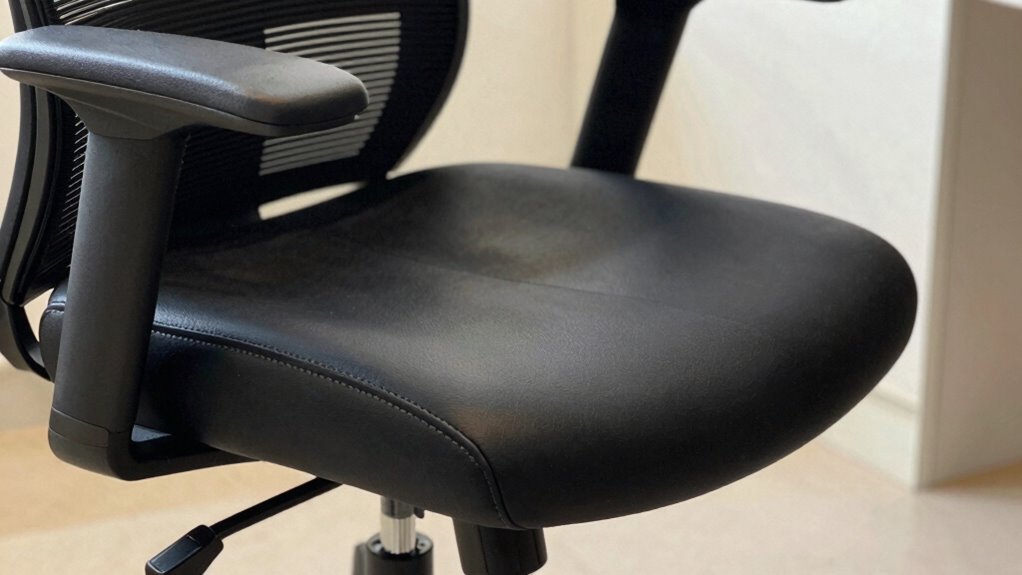
Are you making common mistakes with your seat depth that could be affecting your comfort or posture? Many people overlook proper seat depth, leading to discomfort and long-term issues. To fix this, avoid these mistakes:
- Setting the seat too deep, causing pressure behind your knees
- Using a chair with an aesthetic design that sacrifices support
- Ignoring ergonomic accessories that help customize fit
Ensure your seat depth allows about 2-4 inches of space between the edge of the seat and the back of your knees. Proper adjustment enhances comfort and promotes good posture. Remember, an ergonomic chair isn’t just about looks; it should support your body’s natural position. Correct seat depth reduces strain, improves circulation, and complements your overall ergonomic setup. Focus on these details to turn your chair into a true support system.
When to Consider Replacing Your Chair Because of Seat Depth Issues
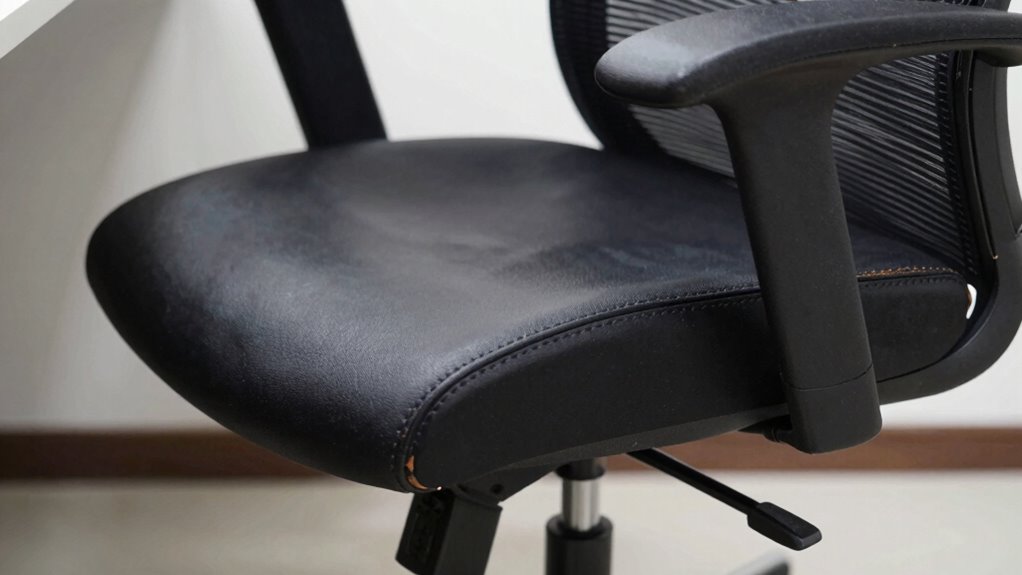
If you notice persistent discomfort, numbness, or circulation issues despite adjusting your seat depth, it may be time to contemplate replacing your chair. No matter how many ergonomic accessories you add, an ill-fitting seat can cause ongoing problems. When your current chair fails to support proper posture or causes persistent pain, it’s a clear sign it’s time for an upgrade. Don’t prioritize aesthetic design over comfort and function—your health comes first. A new chair with appropriate seat depth ensures better blood flow, reduces strain, and promotes overall comfort. Investing in a chair that fits well can make a significant difference in your daily productivity and well-being. Recognizing these signs early helps you avoid long-term health issues.
Choosing a Chair With Adjustable Seat Depth Features
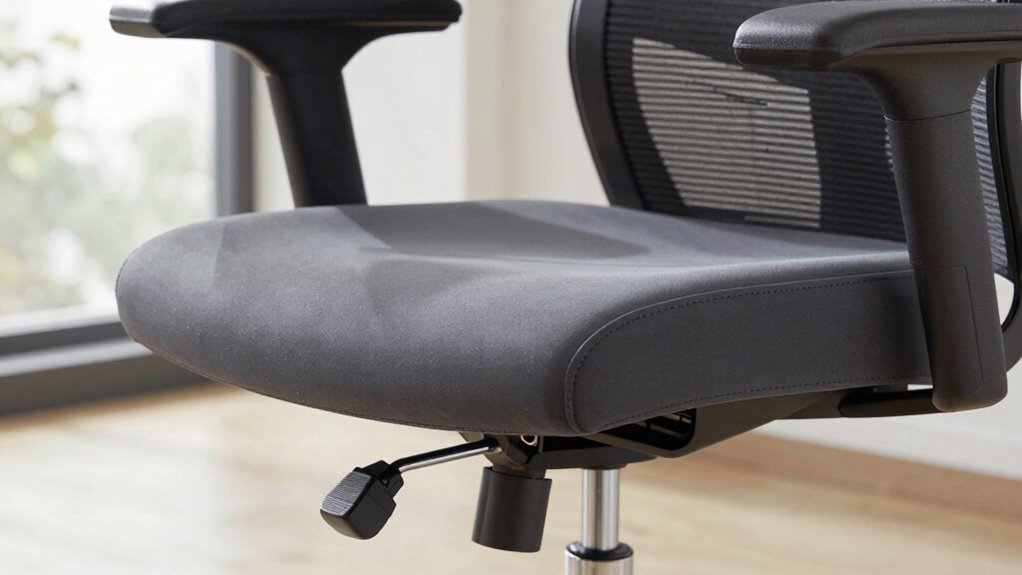
Have you considered choosing a chair with adjustable seat depth features? This flexibility aligns with ergonomic principles, guaranteeing your legs and back are properly supported. An adjustable seat depth allows you to customize your chair to fit your body, promoting better posture and reducing discomfort. When selecting such a chair, keep these ideas in mind:
- Look for smooth, easy-to-use adjustment mechanisms
- Ensure the adjustment doesn’t compromise the chair’s aesthetic design
- Confirm the range of depth adjustment suits your body size
Choosing a chair with these features not only enhances comfort but also maintains the visual appeal of your workspace. By prioritizing adjustable seat depth, you invest in ergonomic support that adapts to your needs without sacrificing style.
FAQs: Finding, Measuring, and Maintaining Your Perfect Seat Depth
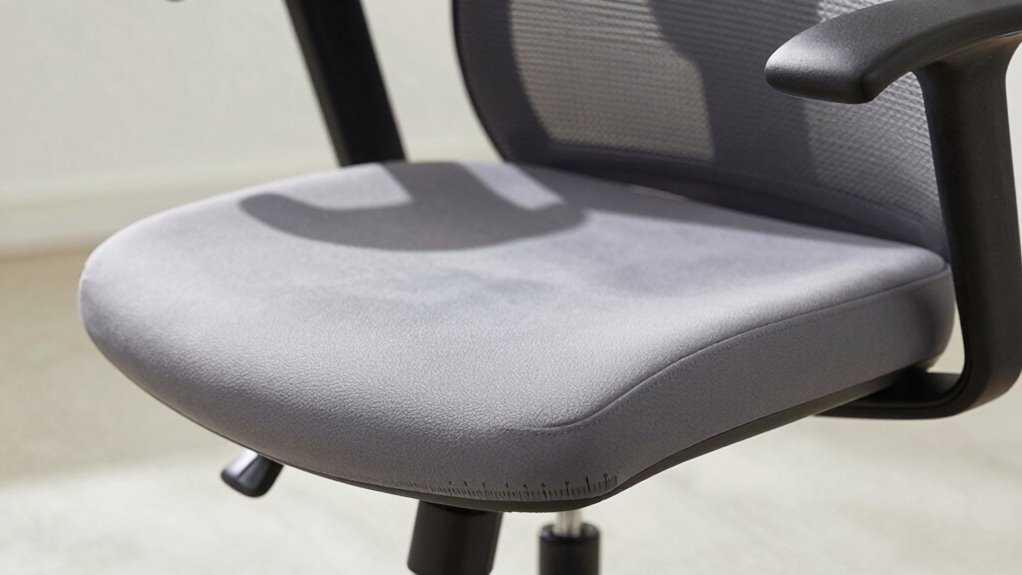
Finding the perfect seat depth starts with understanding how to measure your body accurately and selecting a chair that matches those measurements. Proper ergonomic tips guarantee your seating posture stays healthy and comfortable. To measure, sit upright with your back supported and measure from the back of your knee to your hip. Adjust your seat so there’s a small gap (about 2-3 inches) between your knee and the chair edge. Maintain correct seating posture by regularly checking your alignment and making necessary adjustments. Remember, maintaining your seat depth is an ongoing process.
| Tip | Emotion Evoked |
|---|---|
| Measure accurately | Confidence in your choice |
| Adjust seat depth regularly | Comfort and relief |
| Keep ergonomic tips in mind | Empowerment |
| Prioritize your seating posture | Well-being |
Frequently Asked Questions
Can Seat Depth Affect Circulation and Leg Fatigue?
Yes, seat depth can affect circulation and leg fatigue. If your seat is too deep, it may restrict blood flow by pressing against your thighs, leading to discomfort and increased muscle strain. Conversely, a properly fitted seat allows blood to circulate freely, reducing fatigue and muscle tension. Ensuring your seat depth supports your legs without cutting off circulation helps you stay comfortable and focused throughout the day.
Are There Specific Ergonomic Standards for Seat Depth?
Yes, ergonomic standards specify that your seat depth should allow you to sit comfortably with about 2-4 inches of space between the edge of the seat and the back of your knees. This guarantees proper circulation and reduces fatigue. When choosing a chair, look for adjustable seat depth features that meet these ergonomic guidelines, helping you maintain good posture and avoid discomfort during long periods of sitting.
How Often Should I Reassess My Seat Depth?
Studies show that ergonomic design can boost comfort and productivity by up to 25%. You should reassess your seat depth every 6 to 12 months, or whenever you notice discomfort or changes in your body. Regularly checking guarantees your chair aligns with ergonomic standards, preventing strain and promoting good posture. Staying proactive helps maintain ideal support tailored to your needs, keeping you comfortable and healthy over time.
Can Seat Depth Influence Long-Term Spinal Health?
Yes, seat depth can influence your long-term spinal health. When your seat isn’t properly adjusted, it affects your posture correction efforts and lumbar support. An incorrect seat depth can cause you to slouch or strain your lower back, leading to discomfort or injury over time. Ensuring your seat supports your lumbar area and allows for proper posture helps maintain spinal health and prevents long-term issues.
What Materials Best Support Adjustable Seat Depth Features?
Imagine sitting on clouds—your ideal seat comfort begins with the right materials. For adjustable seat depth, choose cushion materials with high padding density for support and durability. Memory foam offers contouring, while dense foam provides firm support. Mesh and gel-infused layers also help regulate temperature and add flexibility. These materials guarantee your seat adjusts smoothly, offering long-lasting comfort and proper spinal alignment, making your sitting experience truly supportive and pain-free.
Conclusion
Remember, your chair isn’t just a piece of furniture—it’s the foundation of your comfort and well-being. When seat depth aligns with your body, it’s like a gentle hug that supports your every move. Don’t settle for discomfort or posture struggles; instead, tune into your body’s needs. By finding that perfect fit, you’ll turn your workspace into a sanctuary of ease and confidence, where every moment feels just right—like a seat made for you.