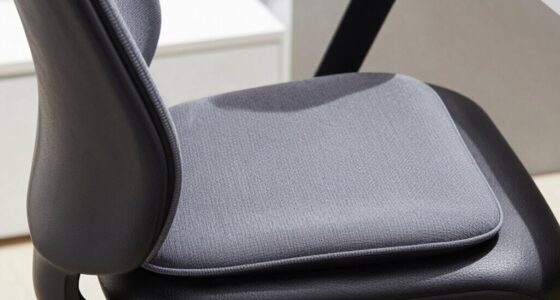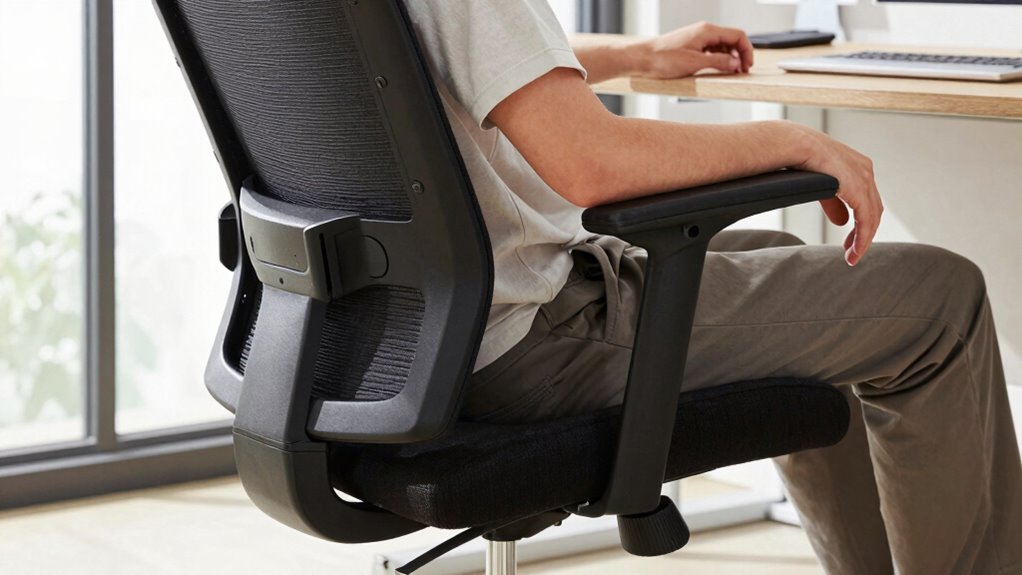
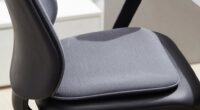
To stop sliding forward in your chair, you should adjust the seat height so your feet rest flat and knees are at 90°, and add non-slip mats or seat grips for extra stability. Tighten loose parts and choose chairs with locking mechanisms and textured surfaces for better grip. Using lumbar support and taking breaks also help you stay centered. Keep exploring for more pro tricks to maintain steady seating all day.
Key Takeaways
- Adjust your chair height so feet are flat and knees are at 90° to maintain stability.
- Use non-slip mats or seat pads to increase grip on smooth chair surfaces.
- Tighten all loose screws, bolts, and levers to ensure the chair remains stable during use.
- Incorporate lumbar support to help maintain proper posture and prevent sliding forward.
- Choose chairs with textured or rubberized surfaces and secure locking mechanisms for added stability.
Why Sliding Forward Hurts Your Comfort and Posture

Sliding forward in your chair might seem minor, but it actually undermines both your comfort and your posture. When you slide, your chair’s ergonomics become compromised, making it harder to maintain proper posture alignment. This misalignment puts strain on your neck, shoulders, and lower back, leading to discomfort and fatigue over time. Poor posture also reduces circulation, causing numbness or tingling in your limbs. Additionally, sliding forward shifts your weight, increasing pressure on specific areas and risking long-term issues like muscle imbalance or joint pain. By staying properly seated, you support your spine’s natural curves and keep your muscles engaged. Maintaining correct ergonomic positioning is essential for preventing long-term health issues. Proper posture awareness helps you recognize and correct misalignments early, further protecting your health. Being mindful of your seating habits can help reinforce good posture and prevent unnecessary strain. Developing habits that promote good chair ergonomics can significantly improve your overall comfort and help prevent injuries associated with poor posture and improper chair ergonomics. Remember, adjusting your seat and posture regularly can also help prevent pressure points from developing and causing discomfort.
What Causes Your Chair to Slide?
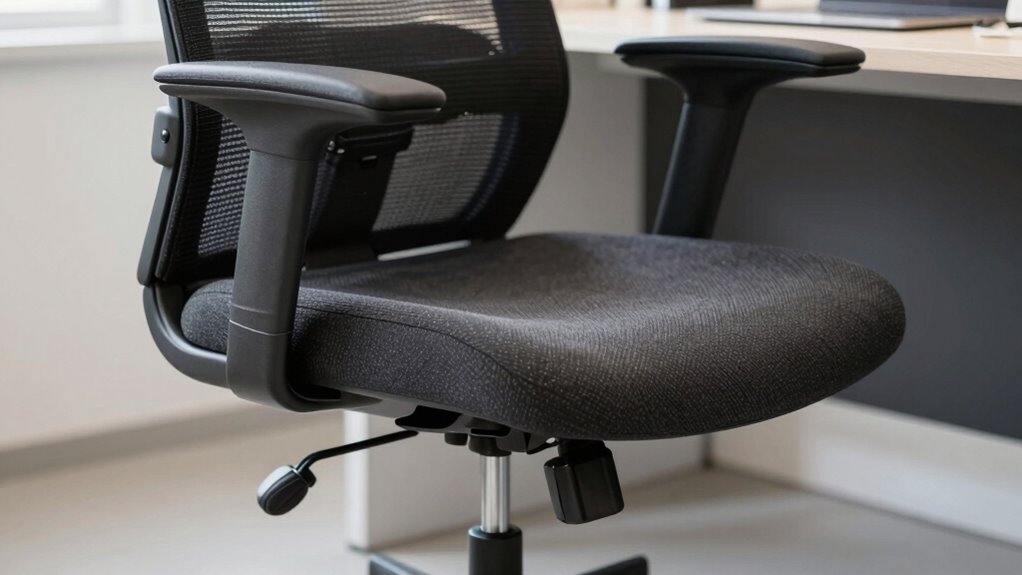
Have you ever wondered why your chair keeps shifting out of place? The main culprits are cushion firmness and chair material. If your cushion is too soft, it doesn’t provide enough grip, causing you to slide forward easily. On the other hand, very firm cushions can also be slippery if they lack texture. The chair material plays a role too—smooth surfaces like plastic or polished wood tend to be slick, making it easier to slide. Even fabric chairs with low-friction textures can contribute to movement if the fabric is slippery. Additionally, your clothing or the type of shoes you wear can reduce friction, adding to the problem. Understanding these factors helps you identify why your chair slides and points to ways you can improve stability. For optimal results, consider exploring wall surface finishes that can enhance grip or applying anti-slip treatments to your chair. You may also want to check the chair design features that influence stability and prevent sliding. Incorporating friction-enhancing materials into your chair or flooring can significantly reduce unwanted movement, especially when combined with proper flooring surfaces that maximize grip. To further improve stability, selecting appropriate seat cushions or adding anti-slip pads can also make a difference.
Easy Adjustments to Keep You in Place
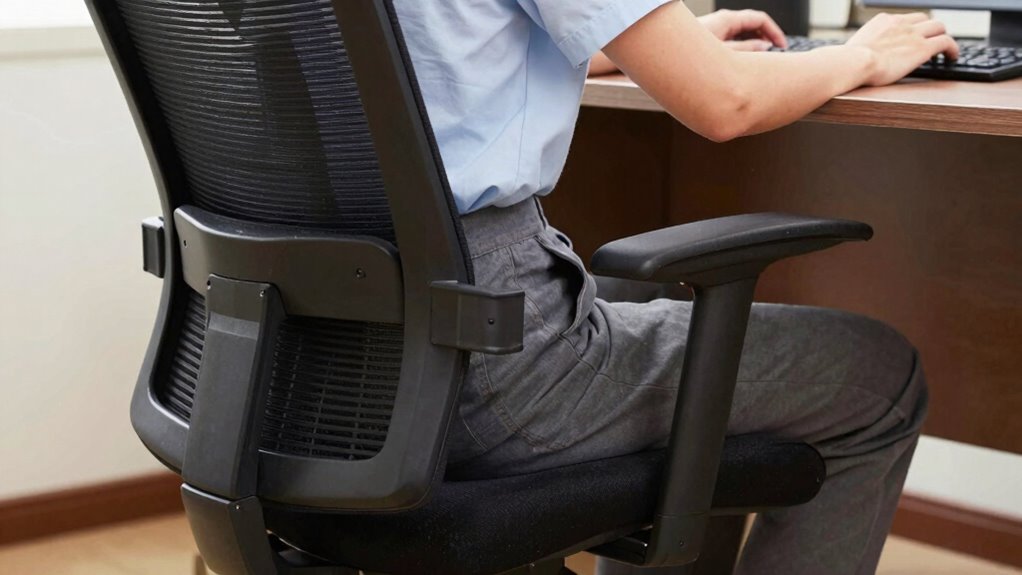
You can prevent sliding by making simple adjustments to your chair. Try changing the seat height, adding non-slip mats, or tightening loose parts. These quick fixes can help keep you comfortably in place all day long. Incorporating non-slip materials into your chair setup can further enhance stability and prevent unwanted movement. Additionally, ensuring your chair has a sturdy base and wheels can provide extra support and stability during use. Being mindful of proper ergonomic setup can also help maintain your comfort and safety while seated. Using anti-slip mats under your chair or on your workspace can provide additional grip and prevent shifting on smooth surfaces.
Adjust Seat Height
Adjusting your seat height is one of the simplest ways to stay securely in your chair throughout the day. When your seat is at the right level, your feet rest flat on the floor, and your knees are at a 90-degree angle, promoting better posture. An ergonomic design guarantees your chair supports your natural body alignment, reducing sliding forward. Check that your seat padding feels comfortable and firm enough to prevent sinking or slipping. Use these tips:
- Set the seat height so your hips are slightly higher than your knees
- Adjust the lever to find a stable, comfortable position
- Ensure your thighs are parallel to the ground
- Confirm your feet are flat on the floor for ideal support
- Proper seat height helps you stay in place, preventing unnecessary sliding or shifting. Additionally, selecting a chair with secure locking mechanisms further enhances stability and safety. Proper chair ergonomics can also contribute to better posture and comfort during long periods of sitting. Ensuring your chair has adequate lumbar support can also improve overall stability and reduce the tendency to slide forward. Incorporating a non-slip seat surface can further prevent your position from shifting during use.
Use Non-Slip Mats
Non-slip mats are an effective and simple way to keep yourself securely in your chair. Placing a non-slip mat between your chair cushion and the seat surface prevents sliding, especially if your chair has a smooth, ergonomic design. They grip the chair surface firmly, reducing movement caused by shifting or leaning forward. These mats work well with a supportive chair cushion that adds comfort without sacrificing stability. By using a non-slip mat, you can maintain better posture and focus on your tasks without constantly adjusting your position. It’s an easy adjustment that doesn’t require tools or permanent modifications. Incorporating home soundproofing techniques can also help create a more comfortable and distraction-free workspace. Understanding the material properties of non-slip mats can help you choose the most effective option for your chair. Considering ergonomic design principles can further enhance your sitting experience. Additionally, selecting mats made from non-toxic materials ensures safety and durability during regular use. With this simple addition, you’ll stay securely seated, enhancing comfort and reducing the risk of sliding forward during long periods of sitting.
Tighten Chair Components
Tightening the chair components is a quick and effective way to keep yourself in place. Over time, chair component maintenance becomes essential to maintain the integrity of your ergonomic chair design. Loose parts can cause instability, making you slide forward. Regularly check and tighten screws, bolts, and levers to ensure everything stays snug. This proactive approach is especially important in a world where ethical consumer choices influence product longevity and safety. Properly maintained components also extend the lifespan of your chair and prevent unnecessary wear. Keep these tips in mind:
- Check and tighten the height adjustment lever
- Secure armrest bolts regularly
- Inspect and tighten the tilt mechanism
- Maintain the casters for smooth movement
Top Chair Features and Accessories to Prevent Sliding
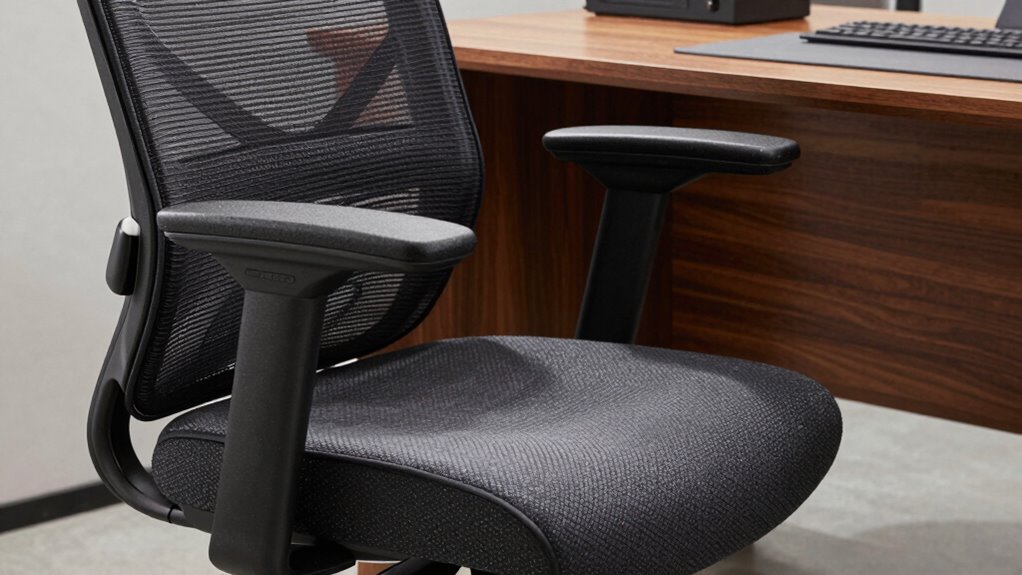
To keep from sliding forward, look for chairs with adjustable seat depth so you can find the perfect fit. Anti-slip chair mats provide extra grip on your floor, reducing movement, while built-in locking mechanisms keep your chair steady when you settle in. These features and accessories work together to help you stay comfortably in place throughout your day.
Adjustable Seat Depth
Have you ever noticed how your chair tends to slide forward during long periods of sitting? Adjustable seat depth is a game-changer for preventing this. It allows you to customize the ergonomic design of your chair, ensuring peak support and comfort. When you adjust the seat depth, you can position the backrest properly against your lower back and keep your feet flat on the floor. This reduces pressure on your thighs and keeps you securely seated.
Consider these features to maximize benefits:
- Smooth adjustment mechanism for quick changes
- Clear markings for accurate seat depth settings
- Compatibility with other ergonomic features
- Locking options to maintain your preferred position
Anti-Slip Chair Mats
An anti-slip chair mat provides a reliable solution to prevent your chair from sliding forward, especially during extended periods of sitting. Designed with ergonomic principles, these mats help maintain proper posture by keeping your chair stable. They feature textured or rubberized surfaces that grip your flooring securely, ensuring consistent traction. When choosing an anti-slip chair mat, consider flooring compatibility—whether you have carpet, hardwood, or tile—to find one that works best for your space. A well-made mat reduces the need for constant adjustments, allowing you to focus on your tasks. Plus, it protects your flooring from scratches and wear caused by chair movement. Overall, an anti-slip chair mat is an essential accessory for a comfortable, secure seating experience.
Built-In Locking Mechanisms
Built-in locking mechanisms in chairs offer an effective way to prevent unwanted sliding by securely locking the seat or wheels in place. These safety features give you control over your chair’s movement, ensuring stability when needed. Many modern chairs include locking mechanisms that can be engaged with a simple lever or button, providing quick security. This helps maintain proper posture and reduces the risk of falls or discomfort during extended use. Look for chairs with reliable safety features like dual-lock systems or adjustable locks. These built-in options eliminate the need for additional accessories and enhance overall safety. Incorporating locking mechanisms into your chair ensures you stay comfortably in place and avoids accidental sliding, making your workspace safer and more stable.
- Easy-to-use locking levers
- Dual-lock safety features
- Adjustable lock settings
- Secure locking for both seat and wheels
Tips for Staying Stable During Long Work Sessions
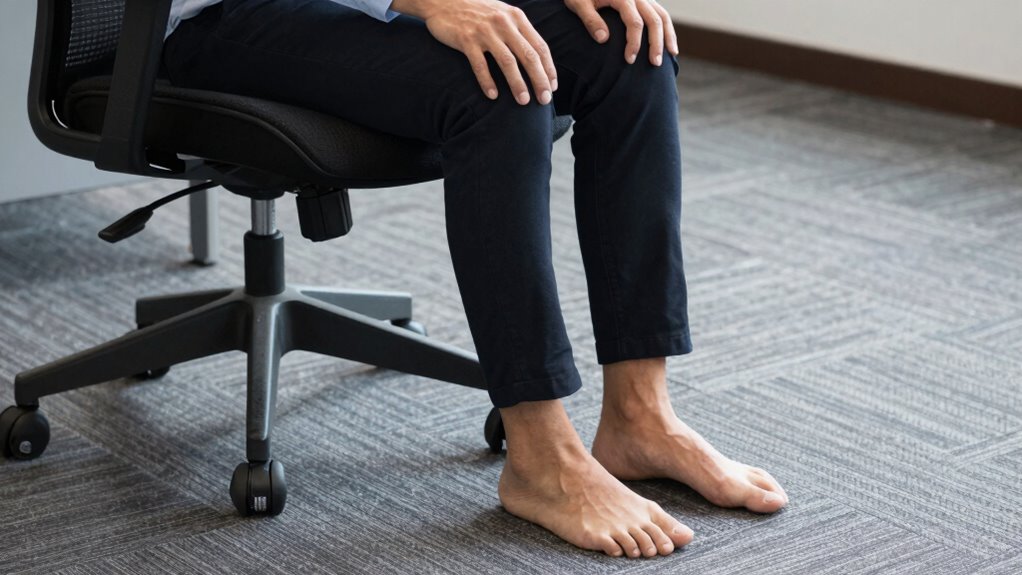
Long work sessions can cause you to slip and shift in your chair, leading to discomfort and poor posture. To stay stable, focus on maintaining proper ergonomics. Adjust your chair height so your feet rest flat on the floor and your knees are at a 90-degree angle. Use lumbar support to keep your lower back aligned, which promotes posture correction and prevents sliding forward. Take regular breaks to stretch and reset your position, reducing fatigue that causes slipping. Keep your workspace organized, ensuring your mouse and keyboard are within easy reach to avoid leaning or twisting. Incorporate ergonomic accessories like seat cushions or footrests if needed. These tips help you stay stable, improve your posture, and enjoy the ergonomic benefits of a balanced, supportive workspace during long work sessions.
How to Choose the Best Office Chair for Stability
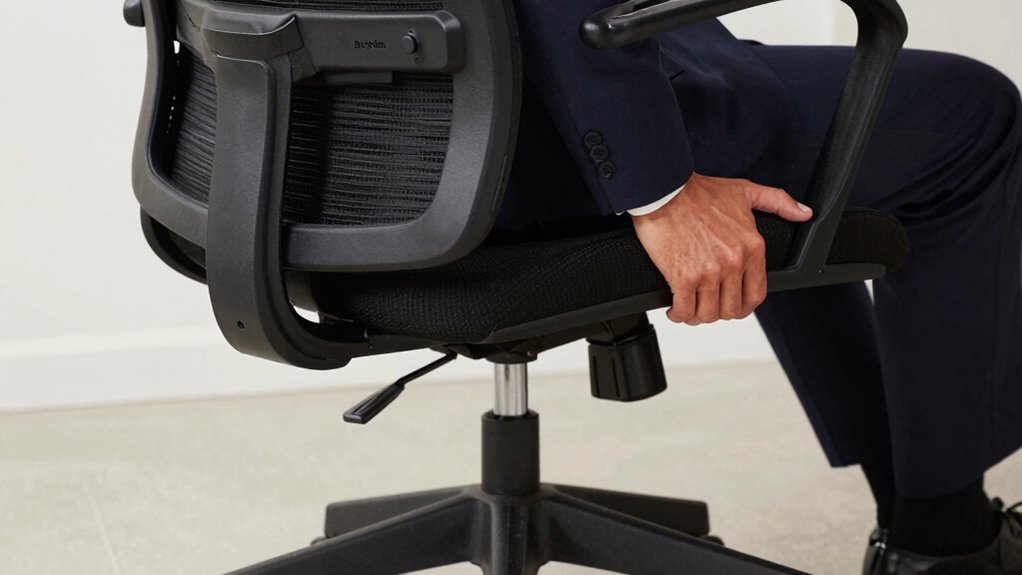
Choosing the right office chair is key to maintaining stability during prolonged work sessions. To find one that keeps you centered and comfortable, focus on ergonomic design features that promote proper posture and prevent sliding. Material selection also plays a crucial role; look for sturdy, high-quality materials that provide grip and support.
Consider these factors:
- Adjustable lumbar support for personalized stability
- A wide, balanced base with non-slip casters
- Breathable, textured material to prevent slipping
- A seat with a firm, yet comfortable, ergonomic design
Prioritize chairs with these qualities to minimize sliding and improve overall stability. Remember, the right combination of ergonomic design and material selection ensures you stay grounded and productive during long hours at your desk.
Frequently Asked Questions
Can Chair Height Adjustments Influence Sliding Stability?
Yes, chair height adjustments can influence your sliding stability. Proper ergonomic seating relies on adjusting your chair to match your body, ensuring your feet are flat on the floor and your thighs are parallel to the ground. Good chair design supports your posture and minimizes sliding, while incorrect height can cause you to lean forward or slide, reducing stability. Make sure your chair is set correctly for ideal comfort and support.
Do Different Flooring Types Affect Chair Sliding?
Different flooring types do affect chair sliding because flooring adhesion varies. On smooth surfaces like polished wood or tile, your chair’s grip diminishes, increasing the chance of sliding. You can improve stability by adding a chair mat or choosing flooring with better adhesion. Recognizing how flooring impacts your chair’s grip helps you prevent sliding, ensuring a safer and more comfortable workspace.
Are There Specific Materials That Reduce Slipping?
Yes, certain materials help reduce slipping. You should look for non-slip mats, which provide extra grip beneath your chair, preventing sliding. Textured surfaces on flooring or chair pads also increase traction, making it easier to stay in place. When combined, non-slip mats and textured surfaces work together to keep you stable and comfortable, especially on smooth or slippery floors. Always choose materials designed for grip to guarantee maximum stability.
How Do Weight Distribution and Posture Impact Sliding?
Your weight distribution and posture directly impact sliding in your chair. Proper ergonomic design encourages balanced weight, reducing pressure points that cause slipping. When you maintain good posture, you engage core muscles, providing stability. Sit back fully, keep your hips aligned, and avoid leaning forward. This ideal muscle engagement and posture help prevent sliding, ensuring you stay comfortably in place and maintain better focus during your activities.
Can Regular Maintenance Prevent Chair Slippage?
Regular maintenance acts like a health check-up for your chair, preventing slippage before it starts. By inspecting and cleaning caster wheels and ensuring they’re in good shape, you keep your seat firmly rooted. Good ergonomic design and high-quality casters work together to prevent sliding. Don’t wait for slipping to become a problem—routine upkeep keeps your chair stable, safe, and comfortable, just like a well-oiled machine.
Conclusion
Staying steady keeps your comfort, your posture, and your productivity on point. Adjust your chair, choose the right features, and stay mindful of your movements. Keep your seat locked, your workspace supportive, and your habits intentional. By doing so, you’ll prevent sliding, improve your focus, and protect your body. Remember, stability isn’t just a goal—it’s a habit. Stay grounded, stay comfortable, and stay in control throughout your workday.