Focusing on consistent ergonomic habits, like proper posture, regular breaks, and workspace adjustments, often provides better long-term comfort than relying solely on fancy equipment. Small, mindful actions—such as maintaining your monitor at eye level or stretching every hour—can prevent discomfort and injury more effectively. The key is building routines that become automatic, so your body stays supported. Keep going, and you’ll discover simple ways to improve your comfort day after day.
Key Takeaways
- Consistent ergonomic habits prevent discomfort and injuries more effectively than relying solely on high-tech equipment.
- Proper posture, regular breaks, and workspace adjustments form the foundation of long-term ergonomic health.
- Focusing on habits ensures sustainable comfort, even with budget-friendly or DIY solutions.
- Relying only on gear may lead to neglecting crucial habits that maintain good ergonomics.
- Building and maintaining consistent habits lead to lasting ergonomic benefits over perfect but infrequent equipment setups.
Why Ergonomic Habits Matter More Than Fancy Equipment

While having fancy ergonomic equipment can help, developing good ergonomic habits is far more important for preventing discomfort and injury. Many fall victim to ergonomic myths that suggest high-tech gear alone will solve all problems, fueling an equipment obsession that distracts from proper habits. Relying solely on adjustable chairs, ergonomic keyboards, or footrests without practicing correct posture and movement limits your benefits. Good habits—like keeping your monitor at eye level, taking regular breaks, and maintaining neutral wrist positions—are the foundation of comfort. For example, practicing correct ergonomics consistently ensures that your body remains in optimal alignment throughout the day. Additionally, understanding ergonomic principles can help you make informed adjustments to your workspace for better support. Recognizing the importance of proper ergonomics can motivate you to adopt healthier routines rather than depend solely on gadgets. Remember, equipment is just a tool; it won’t fix poor habits. Prioritizing consistent ergonomic practices ensures long-term health, making your investment in gear truly effective. Ultimately, your habits matter more than the latest ergonomic gadgets. Guided Access and accessibility features can support kids in developing healthy device usage habits, emphasizing the importance of proper ergonomics from an early age. Incorporating ergonomic awareness into daily routines can significantly enhance comfort and reduce strain over time.
Common Ergonomic Mistakes That Cause Discomfort
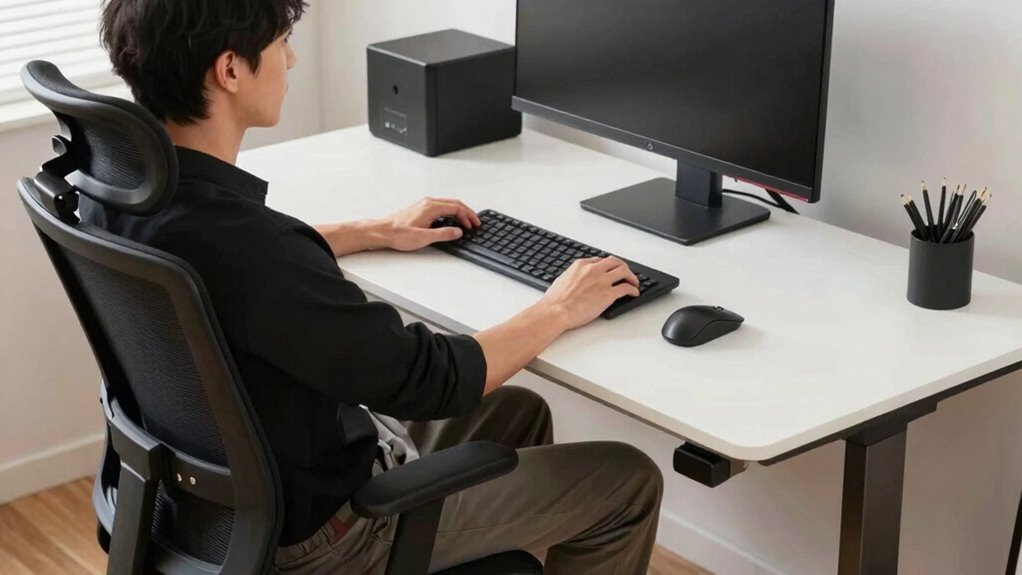
One of the most common ergonomic mistakes is neglecting proper posture, which can lead to muscle strain and discomfort over time. Many people overlook the importance of posture correction, often settling into slouched or awkward positions that strain the neck, shoulders, and back. Using ergonomic accessories like adjustable chairs, footrests, or monitor stands can help maintain proper alignment, but only if you’re mindful of your posture. Understanding ergonomic design can help you choose the most effective tools to support your comfort, but their success depends on proper use. Ignoring these tools or failing to adjust them correctly often worsens discomfort. It’s easy to assume that equipment alone solves ergonomic issues, but proper posture habits are essential. Failing to pay attention to your body’s signals and neglecting posture correction can cause persistent pain and long-term issues, making it *vital* to stay aware and use ergonomic accessories effectively. Paying attention to posture awareness can significantly improve your overall comfort and prevent long-term problems. Additionally, incorporating holistic health practices from Indigenous wisdom can enhance your overall well-being and support sustainable ergonomic habits. Recognizing the importance of natural movement can further promote comfort and reduce strain during daily activities.
Simple Habits to Improve Your Posture and Prevent Strain
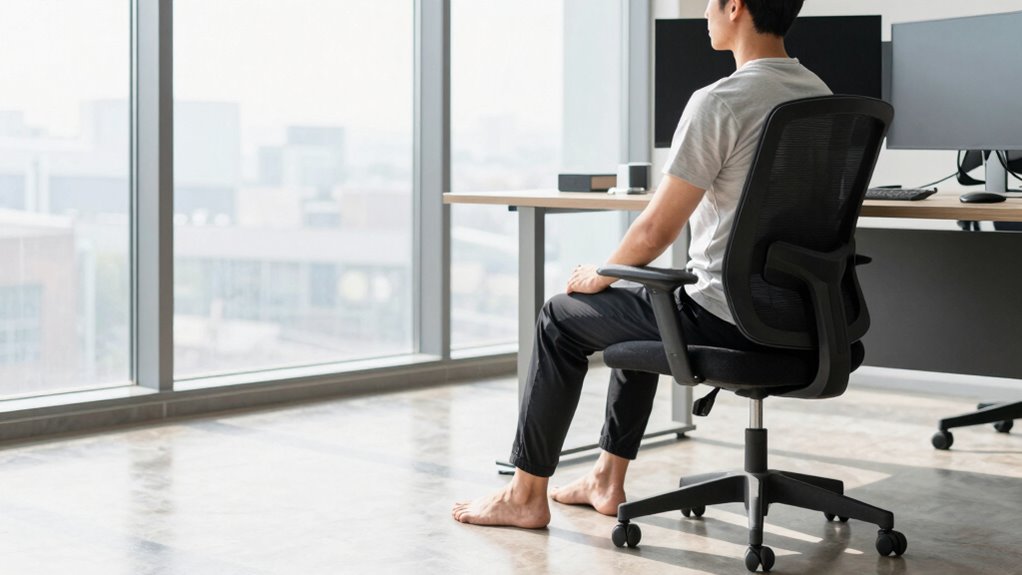
To improve your posture and avoid strain, start by maintaining your desk at the right height so your wrists stay comfortable. Remember to take short movement breaks regularly to keep your muscles relaxed and circulation flowing. Also, adjust your screen position often to prevent neck strain and keep your workspace ergonomically friendly. Incorporating proper chair support can further enhance your comfort during long hours at your desk. Additionally, choosing toys that promote physical activity can help break up sedentary routines and support overall musculoskeletal health. Consistently practicing ergonomic habits helps prevent musculoskeletal issues and promotes long-term well-being.
Maintain Proper Desk Height
Ensuring your desk is at the right height is essential for maintaining good posture and preventing strain. An ergonomic setup starts with adjusting your desk height so your forearms are parallel to the ground and your elbows form about a 90-degree angle. To achieve this:
- Measure your elbow height when seated comfortably.
- Adjust your desk or chair to match this measurement.
- Ensure your wrists stay straight while typing or using a mouse.
- Confirm your monitor is at eye level to avoid neck strain.
- Using proper ergonomic equipment can further enhance comfort and support good posture.
- Incorporating smart thermostat settings that optimize room temperature can also contribute to overall comfort and reduce fatigue during long work sessions.
- Regularly review your workspace ergonomics to maintain optimal posture as your setup or needs change.
- Being mindful of muscle tension throughout the day helps prevent long-term discomfort and promotes healthier habits. Paying attention to body positioning is key to sustaining ergonomic practices.
A proper desk height supports a neutral spine position and reduces muscle tension. Regularly checking and adjusting your ergonomic setup keeps you comfortable and prevents long-term discomfort, making good posture a consistent habit.
Take Regular Movement Breaks
Taking regular movement breaks is a simple way to maintain good posture and prevent discomfort throughout your workday. Every 30 to 60 minutes, stand up and incorporate stretching exercises to loosen tight muscles and improve circulation. Even a few minutes of walking around can make a difference. Using ergonomic accessories, like a sit-stand desk or footrest, encourages movement and reduces strain. These small habits help prevent stiffness and muscle fatigue, keeping you alert and comfortable. Additionally, building consistent routines ensures that these healthy habits become a natural part of your workday. Incorporating ergonomic accessories can further support your posture and make it easier to stay active. Remember, consistent habits matter more than perfection—regularly stepping away from your workspace guarantees your body stays in alignment and minimizes long-term issues. Implementing tools such as adjustable workstations can enhance these efforts and promote sustained well-being. Incorporating reminders or alarms can help you stay on track with these movement breaks and maintain your ergonomic practices.
Adjust Screen Position Often
Have you ever noticed how your neck and eyes feel strained after staring at your screen for a long time? Regularly adjusting your monitor placement and eye level can make a big difference. Here’s how to do it effectively:
- Check your monitor’s position so it’s directly in front of you, reducing neck twisting.
- Adjust the monitor’s height so the top of the screen is at or slightly below eye level.
- Keep the screen about an arm’s length away for comfortable viewing.
- Shift the monitor slightly throughout the day to vary your posture and prevent stiffness.
- Incorporate ergonomic habits like proper monitor placement to maintain good posture and minimize strain. Being mindful of screen position can also help prevent visual fatigue and discomfort. Additionally, using smart home automation tools, such as adjustable mounts or reminders, can help you maintain these habits consistently. Regularly checking and adjusting your setup ensures that your ergonomic workspace remains comfortable and supportive over time.
Why Breaks and Movement Are Key to Long-Term Comfort
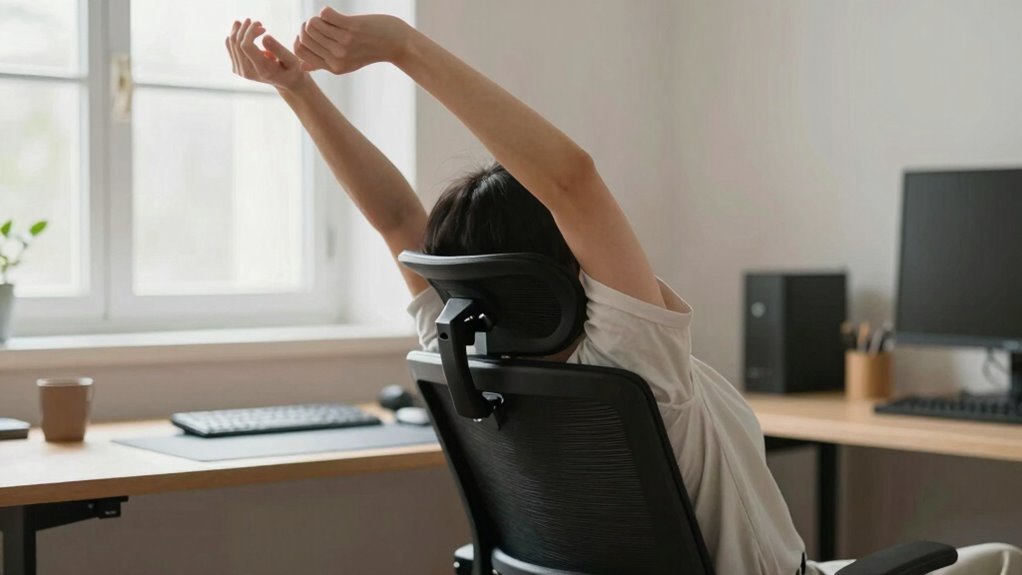
Taking regular breaks and moving around keeps you comfortable and focused. It prevents muscle strain and reduces fatigue over time. Incorporating movement into your routine is essential for long-lasting ergonomic health. Paying attention to body positioning can also enhance comfort and prevent strain during extended periods of activity.
Regular Movement Boosts Comfort
Regular movement is essential for maintaining comfort during long periods of sitting. It helps you stay posture aware and prevents stiffness. To boost comfort, consider these steps:
- Take short, frequent breaks to stand and shift position.
- Practice active stretching to loosen tight muscles.
- Incorporate posture awareness by checking your alignment regularly.
- Move your shoulders, neck, and back to reduce tension.
Breaks Prevent Strain
Since sitting for long periods can put unnecessary strain on your muscles and joints, taking regular breaks is essential for long-term comfort. Many fall for ergonomic myths that suggest staying perfectly still or maintaining a “correct” posture constantly, but this isn’t realistic or healthy. In fact, posture myths often cause more harm than good, leading to tension and discomfort. Breaks allow your muscles to relax and your joints to move naturally, preventing strain and fatigue. Moving during breaks counters the false notion that continuous static positioning is safe. By incorporating short, frequent breaks, you promote circulation, reduce stiffness, and promote better overall comfort. Remember, consistency in taking breaks is far more effective than obsessing over perfect gear or posture.
How to Build a Workspace Routine Without Spending a Fortune
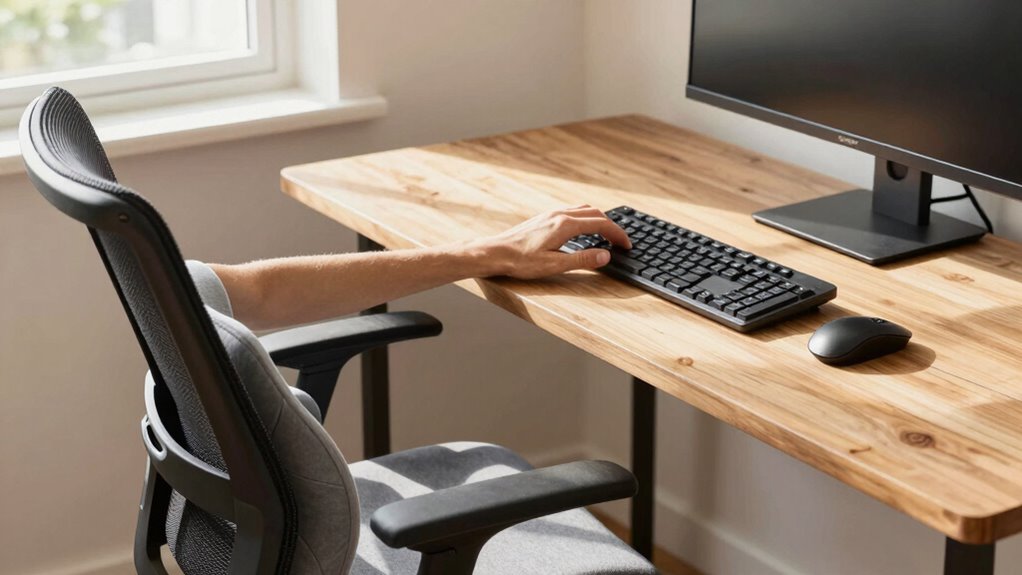
Creating an effective workspace routine doesn’t have to drain your wallet. Start with simple, budget-friendly solutions and DIY ergonomic tips to improve comfort without overspending.
- Use household items like books or boxes to elevate your monitor to eye level.
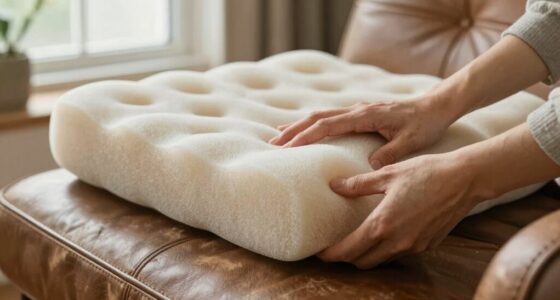
- Opt for inexpensive foam pads or cushions to support your lower back.
- Rearrange your space for better posture, ensuring your keyboard and mouse are close enough to prevent strain.
- Make your own wrist rests using soft fabric or foam.
These strategies help you form a consistent routine that prioritizes comfort and ergonomics without costly upgrades. By focusing on affordable, DIY adjustments, you create a sustainable workspace routine that keeps you comfortable and productive every day.
Tips for Staying Consistent With Ergonomic Habits on Busy Days
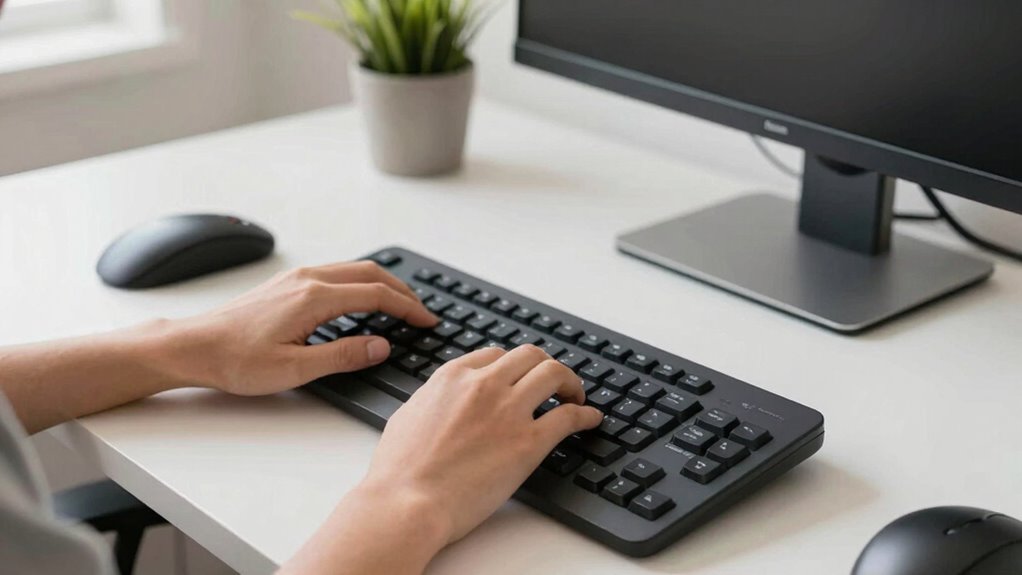
Even on the busiest days, sticking to your ergonomic habits is achievable with some intentional planning. Start by setting ergonomic reminders on your phone or workspace to prompt mindful stretching every hour. These quick pauses help reset your posture and prevent discomfort. To stay consistent, prioritize small, manageable adjustments over perfection. Use the table below to identify simple actions that fit into tight schedules:
| Action | Frequency | Benefit |
|---|---|---|
| Mindful stretching | Every 60 minutes | Reduces tension |
| Adjust chair height | During breaks | Maintains proper alignment |
| Change sitting position | Every 30 minutes | Prevents stiffness |
These habits keep you on track, even during hectic days.
How to Track and Adjust Your Habits for Lasting Comfort

Tracking your ergonomic habits helps guarantee they become lasting routines that support comfort and productivity. Begin by using habit tracking tools or journals to monitor your daily practices. This makes it easier to identify patterns and areas needing improvement. Next, implement adjustment strategies by setting specific goals, like improving your posture or taking regular breaks. Regularly review your progress—perhaps weekly—and note any discomfort or stiffness. Based on these observations, tweak your setup or routines accordingly. For example, if you notice neck strain, adjust your monitor height or chair position. Consistent habit tracking combined with targeted adjustments ensures lasting comfort. Staying attentive to your habits allows you to refine your ergonomic approach, making comfort an ongoing priority rather than a one-time fix.
Frequently Asked Questions
How Long Does It Take to See Ergonomic Habit Improvements?
You can start noticing ergonomic habit improvements within a few weeks, typically around 3 to 4 weeks of consistent habit formation. By making regular ergonomic adjustments—like proper sitting posture and keyboard placement—you reinforce good habits. Staying committed daily helps these adjustments become second nature. Remember, consistency matters more than perfection, so keep practicing your ergonomic habits, and you’ll see positive changes in comfort and posture over time.
Can Ergonomic Habits Reduce Long-Term Musculoskeletal Issues?
Imagine your body as a finely tuned instrument—ergonomic habits can prevent long-term musculoskeletal issues. By practicing postural awareness and embracing ergonomic education, you actively reduce strain and injury risk over time. Consistency in these habits strengthens your body’s resilience, making pain less likely. You’ll notice fewer aches and better comfort, proving that sustained good habits are your best defense against chronic issues—more effective than any fancy gear.
What Are Quick Cues to Remind Myself of Proper Posture?
To keep proper posture, use simple ergonomic cues as reminders. For example, set posture reminders on your phone or computer to prompt you to sit upright. Keep a small note or sticky on your desk with quick ergonomic cues like “sit tall” or “relax shoulders.” Regularly check your alignment by feeling your feet flat, hips level, and shoulders relaxed. These cues help you stay mindful and maintain good posture throughout the day.
How Do Ergonomic Habits Vary Between Sitting and Standing Work?
When switching between sitting and standing work, you need to stay aware of your posture and make ergonomic adjustments accordingly. For sitting, keep your back straight, shoulders relaxed, and feet flat on the ground. When standing, distribute your weight evenly, engage your core, and avoid locking your knees. Maintaining posture awareness helps you adjust ergonomically, reducing strain regardless of your position, and keeps your body comfortable throughout the day.
Are Ergonomic Habits Equally Effective for All Body Types?
Ergonomic habits aren’t equally effective for all body types because of body diversity. You should personalize your ergonomics to fit your specific needs, adjusting chair height, monitor position, and typing angles accordingly. By focusing on personalized ergonomics, you make certain of better comfort and reduce strain. Remember, consistency in practicing these habits matters more than trying to follow a one-size-fits-all approach, making your workspace truly supportive for your unique body.
Conclusion
Think of your ergonomic habits like tending a garden—you need consistent care to see growth. Even the best equipment won’t flourish if you neglect the basics. By building simple, steady routines, you create a foundation that supports long-term comfort. Stay mindful, make small adjustments, and keep moving forward. When you prioritize habits over gear, your workspace becomes a well-tended garden, thriving with comfort and productivity.