Stretching helps loosen tight muscles and relieve tension caused by sitting, but it doesn’t fix the root issues like muscle imbalances or poor posture habits. Sitting all day shortens some muscles and weakens others, disrupting alignment and movement patterns. To truly improve posture, you need to strengthen weak areas and develop better movement habits. Stay with us to discover effective strategies that combine stretching, strengthening, and movement for lasting posture health.
Key Takeaways
- Stretching improves flexibility but doesn’t address muscle imbalances or poor movement habits caused by prolonged sitting.
- It temporarily relieves tension but cannot correct underlying postural misalignments or strengthen weak muscles.
- Relying solely on stretching overlooks the importance of strengthening core and postural muscles for sustainable fix.
- Poor sitting habits create structural imbalances that stretching alone cannot resolve.
- Combining stretching with strengthening and movement practices offers a more comprehensive, lasting solution.
Why Sitting All Day Can Harm Your Posture and Muscles
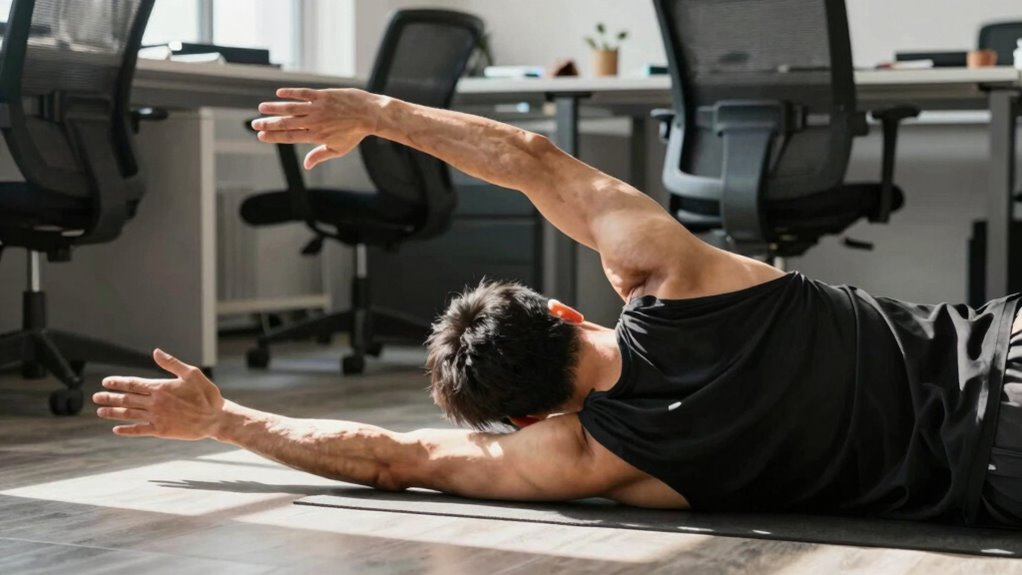
Have you ever wondered why sitting all day can lead to discomfort and long-term health issues? When you sit for extended periods, your posture awareness often diminishes, causing you to slouch or lean forward unconsciously. This poor posture can shorten certain muscles, like your hip flexors, while lengthening others, such as your back muscles. Over time, these imbalances become ingrained, affecting your overall muscle length and joint alignment. Sitting in a hunched position also puts strain on your spine and neck, increasing discomfort and risk of chronic issues. Without paying attention to your posture, you might unknowingly reinforce these harmful patterns. Understanding how sitting impacts muscle length and posture awareness is essential to prevent these negative effects and promote better long-term health. Additionally, maintaining proper ergonomics can help counteract some of these adverse effects by supporting better muscle balance and joint positioning. Recognizing the importance of muscle flexibility can also aid in preventing stiffness and maintaining healthy movement patterns. Incorporating regular movement breaks throughout your day is crucial for reducing the negative impact of prolonged sitting and promoting overall musculoskeletal health. Developing awareness of postural habits can further support long-term spinal health and prevent muscle imbalances. Incorporating targeted stretching exercises can also alleviate tightness and improve posture over time.
How Sitting Affects Your Movement Patterns and Muscle Balance
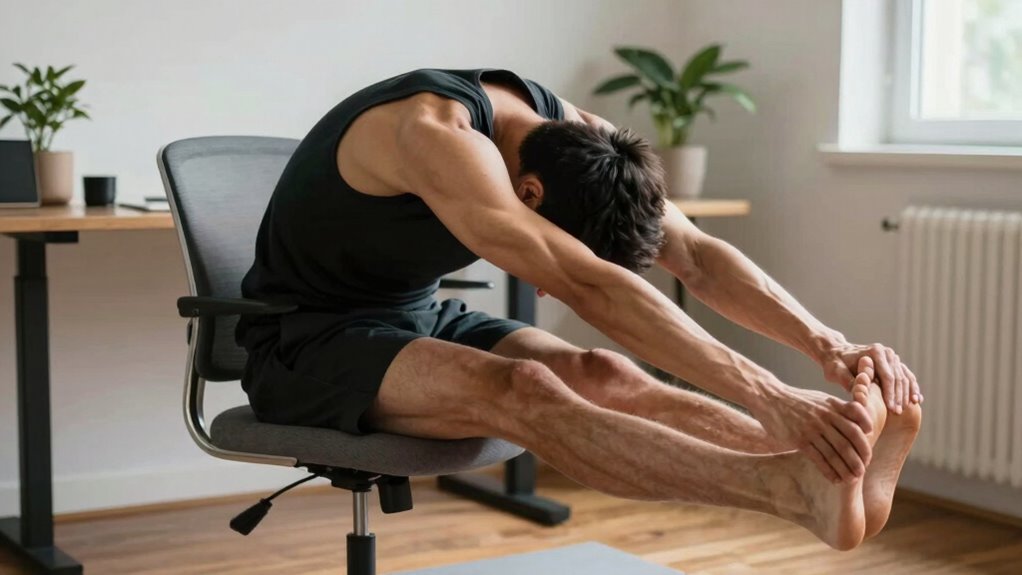
Sitting for prolonged periods can disrupt your natural movement patterns by encouraging you to adopt fixed, inefficient postures. Over time, this leads to muscle imbalances, where some muscles become tight and overactive, while others weaken and become inactive. Your posture awareness may diminish as you become accustomed to these static positions, making it harder to move fluidly. Reduced muscle flexibility is a common consequence, limiting your range of motion and altering how you perform daily activities. These changes can reinforce poor movement habits, further skewing muscle balance and increasing injury risk. To counteract this, maintaining posture awareness throughout the day helps you recognize when you’re slouching or overusing certain muscles, encouraging better movement patterns and supporting overall muscle health. Incorporating stretching can help maintain muscle flexibility and reduce the impact of prolonged sitting on your movement quality. Additionally, understanding the importance of muscle balance can guide you in developing effective strategies to prevent long-term movement issues. Recognizing how movement patterns are affected by sitting can also inform better ergonomic choices and activity breaks to promote healthier habits. Engaging in regular movement and mindful posture adjustments can further promote musculoskeletal health and prevent compensatory movement issues. Moreover, understanding how posture influences muscle function emphasizes the need for conscious habits to sustain long-term mobility and stability.
Why Stretching Alone Won’t Fix Sitting-Related Posture Issues
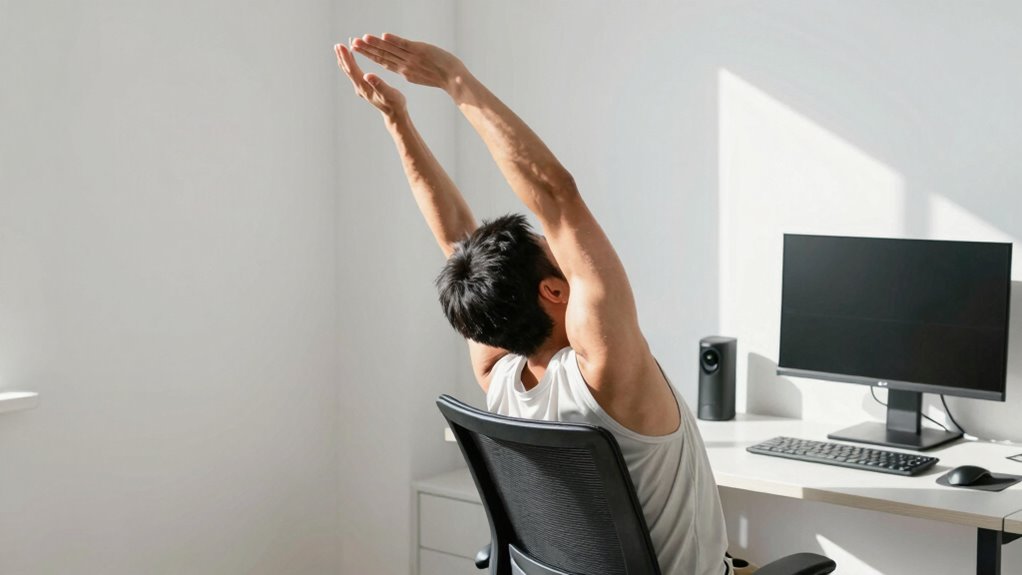
While stretching can improve muscle flexibility, it doesn’t address the root causes of poor posture caused by prolonged sitting. Many posture myths suggest that stretching alone can fix all issues, but that’s an exhaustive misconception. Poor sitting habits often lead to muscle imbalances, weak core muscles, and joint misalignments, which stretching alone can’t resolve. If you rely solely on stretching, you might temporarily ease tension without improving overall posture or addressing underlying weaknesses. True posture correction involves more than just lengthening tight muscles; it requires strengthening weak areas and changing movement patterns. Incorporating targeted exercises like those for core strength can significantly enhance long-term posture stability. Additionally, understanding muscle imbalances and how they affect alignment can help you develop a more effective approach to posture correction. Recognizing postural habits and actively working to modify them is essential for sustainable improvements. Moreover, addressing joint misalignments through proper movement and strengthening exercises is crucial for lasting change, especially when considering the impact of astrological influences on overall well-being and health.
The Importance of Strengthening and Moving for Better Posture
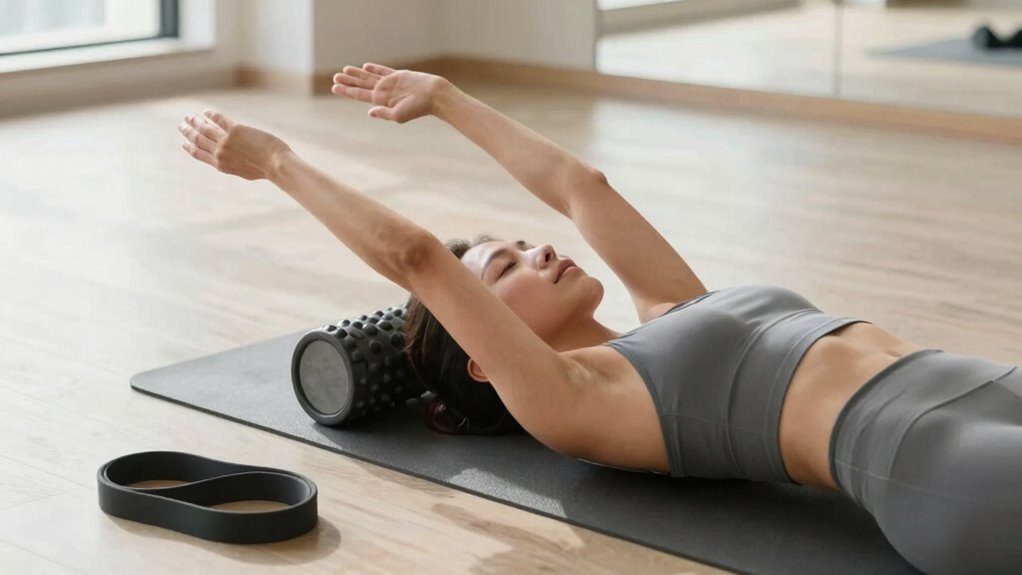
To improve your posture, you need to focus on strengthening your core and improving your movement habits. Building core stability helps support your spine and reduces strain, making sitting and standing easier. Moving properly and consistently reinforces good posture habits and keeps your muscles balanced. Incorporating proper movement techniques can further enhance your posture and prevent discomfort. Additionally, understanding emerging digital publishing trends can provide innovative ways to access posture-related information and resources. Engaging in aquatic exercise can also be beneficial, as water-based workouts promote joint mobility and muscle balance while reducing impact stress. Incorporating NEAT into your daily routine can further support your posture and overall well-being by encouraging more consistent movement throughout the day. Recognizing the value of community-driven content can also motivate ongoing engagement and learning about posture improvement.
Building Core Stability
Building core stability is essential for maintaining proper posture and reducing discomfort. When your core is strong, it supports your spine and pelvis, making posture correction easier and more effective. A stable core helps distribute forces evenly, preventing strain on your back and neck during daily activities. Focus on exercises that target your abdominals, lower back, and pelvic muscles to build this stability. Strengthening these muscles not only improves your posture but also enhances your overall movement quality. With better core stability, you’ll find it easier to sit upright and avoid slouching, reducing the risk of chronic pain. Incorporating core strengthening exercises into your routine is crucial for lasting improvements and supporting other aspects of fitness. Remember, core strength is the foundation for sustainable posture correction—it’s about moving better, not just stretching or quick fixes. Consistent training routines help reinforce these improvements and ensure progress over time. Developing muscle balance within your core can further enhance stability and prevent injury. Additionally, utilizing biosensors or wearable tech can help you monitor your posture and core engagement in real-time, making your training more effective.
Enhancing Movement Patterns
Strengthening your core creates a solid foundation for better movement patterns, which directly influences your posture. When you focus on enhancing dynamic flexibility, you allow your joints and muscles to move fluidly through a full range of motion, reducing stiffness and compensations. This improved flexibility supports more natural, efficient movements. Additionally, developing proprioceptive awareness helps you better sense your body’s position and movement in space, enabling you to correct poor habits and maintain alignment throughout daily activities. By integrating strength training with movement practice, you train your muscles to work harmoniously, making it easier to adopt healthier postural habits. This combination not only improves your overall movement quality but also reduces the risk of developing chronic pain or imbalance caused by sitting for long periods.
Easy Exercises and Stretches to Support Sitting-Related Health
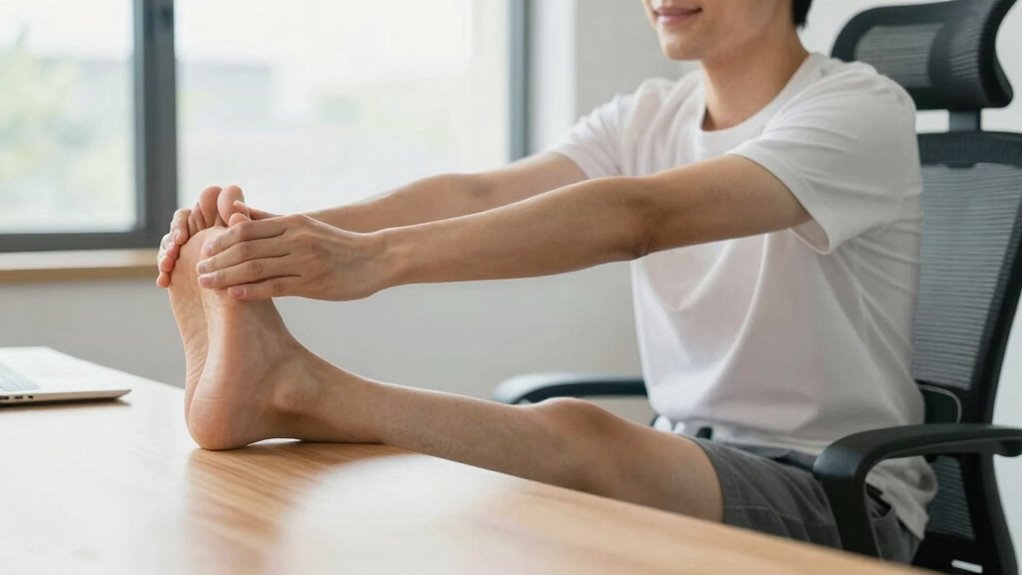
Incorporating gentle stretching routines and ergonomic movement tips into your daily routine can make a real difference. These simple exercises help reduce tension and support your sitting posture without overcomplicating things. Smart design principles can also enhance comfort and functionality in your living or workspace, making it easier to maintain healthy habits. Paying attention to ergonomic setup can prevent discomfort and promote better posture throughout the day. Additionally, adopting innovative portable restroom solutions can contribute to a more comfortable and hygienic environment during long sitting periods, especially in outdoor or event settings. Let’s explore easy ways to keep your body healthier while you work or relax.
Gentle Stretching Routines
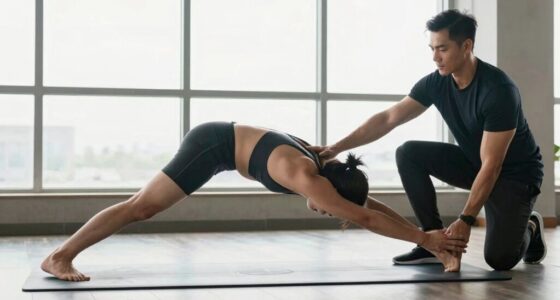
Even simple, gentle stretches can make a noticeable difference in supporting your sitting health. These routines help promote posture correction by loosening tight muscles and encouraging proper alignment. Focus on slow, controlled movements that target key areas like your shoulders, neck, hips, and lower back. Gentle stretches such as shoulder rolls, neck tilts, hip openers, and seated spinal twists are effective for flexibility enhancement. You don’t need complex routines—just a few minutes daily can reduce stiffness and improve your range of motion. Consistency is key; gentle stretching keeps muscles supple and reduces discomfort from prolonged sitting. Remember, these stretches support your overall sitting health, but they work best when combined with other healthy habits. Keep it simple, stay mindful, and listen to your body.
Ergonomic Movement Tips
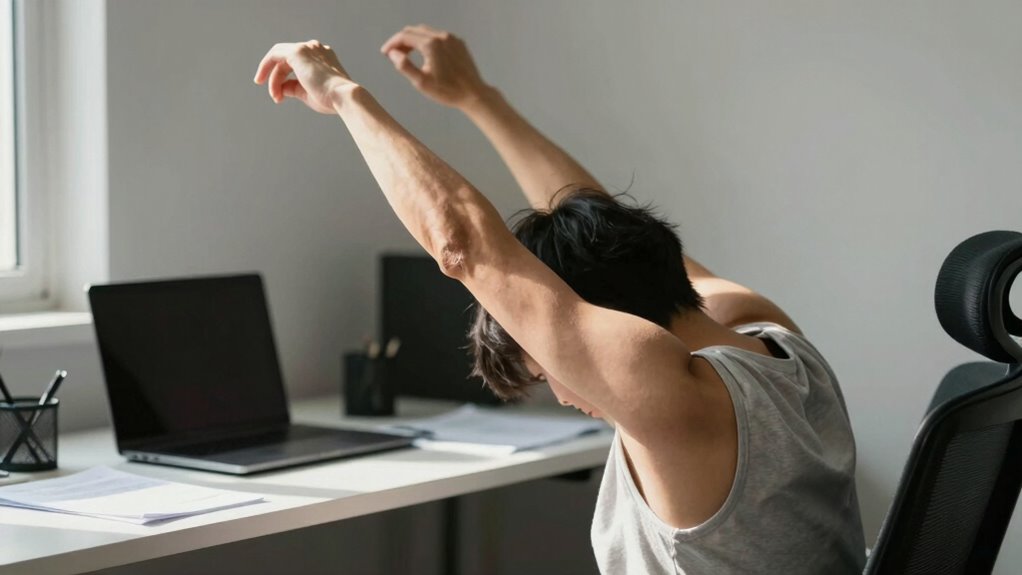
To support your sitting health, integrating simple ergonomic movements into your daily routine can make a significant difference. Focus on improving desk ergonomics by adjusting your chair height so your feet rest flat and your knees are level or slightly below your hips. Keep your monitor at eye level to promote proper posture awareness. Regularly shift your position, stretch your arms overhead, and do seated twists to reduce tension. Stand up every 30 minutes to stretch your legs and back. Incorporate micro-movements like shoulder rolls or neck stretches to prevent stiffness. These small, intentional movements help counteract the effects of sitting, improve circulation, and reinforce good posture habits. Consistent ergonomic movement guarantees your body stays active and aligned throughout the day.
Creating a Balanced Routine: Combining Stretching, Strength, and Movement
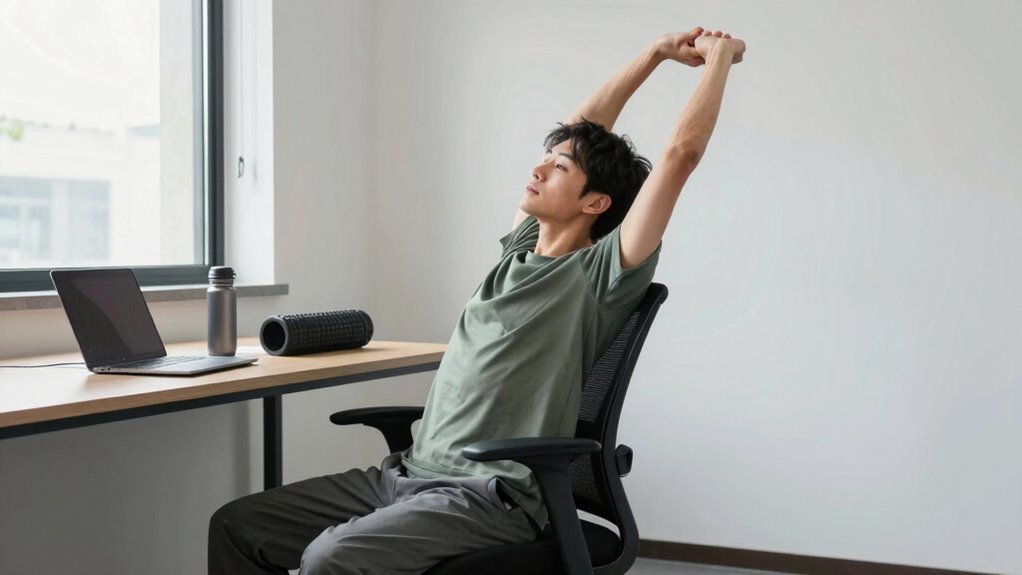
Achieving a balanced routine requires more than just stretching; it involves integrating strength exercises and movement throughout your day. Incorporate posture correction techniques to strengthen key muscles, helping you maintain proper alignment. Strengthening your back, core, and hip muscles supports better posture and reduces strain from prolonged sitting. Movement breaks, such as walking or dynamic stretches, boost flexibility benefits and prevent stiffness. By combining stretching with strength training and active movement, you create a holistic approach that addresses both flexibility and stability. This balance not only improves posture but also reduces discomfort and injury risk. Remember, consistency is key—small, daily efforts to mix stretching, strength, and movement will lead to lasting improvements in your sitting habits and overall well-being.
Frequently Asked Questions
Can Stretching Prevent Posture Problems Caused by Sitting?
Stretching alone can’t prevent posture problems caused by sitting, but it can help maintain flexibility and reduce discomfort. To truly improve your sitting posture, you should focus on increasing your ergonomics awareness and practicing core strengthening exercises. These habits support proper alignment and reduce strain on your muscles. Combining stretching with ergonomic adjustments and core workouts gives you a more effective way to prevent posture issues over time.
How Long Should I Hold Stretches for Maximum Benefit?
You should hold stretches for about 15 to 30 seconds to maximize their effectiveness. This duration allows your muscles to lengthen without overstretching. Aim for at least two to three stretches per session, focusing on different muscle groups. Consistent stretch frequency, ideally daily or several times a week, helps improve flexibility and reduces tension. Remember, holding stretches too long can cause discomfort, so listen to your body for best results.
Are There Specific Stretches That Target Sitting-Related Issues?
Imagine your hips gently opening as you stretch your hip flexors, easing the tension from long hours of sitting. Focus on hip flexor stretches and lumbar stretches to target sitting-related issues. These stretches help loosen tight muscles, improve posture, and reduce discomfort. Incorporate them into your routine regularly to support better alignment, but remember, they complement movement and breaks rather than solely fixing sitting problems.
How Does Posture Impact Long-Term Mobility and Health?
Your posture directly affects your long-term mobility and health. Poor alignment can lead to chronic pain and decreased flexibility over time. By making ergonomic adjustments, you promote proper alignment, reducing strain. Incorporating core strengthening exercises helps stabilize your spine, preventing issues caused by prolonged sitting. Prioritizing good posture now ensures you maintain better mobility and overall health well into the future.
What Other Habits Can Improve Sitting-Related Discomfort?
You can reduce sitting-related discomfort by using ergonomic accessories like supportive chairs and keyboard setups, which promote better posture. Incorporate standing desks into your routine, alternating between sitting and standing to prevent stiffness and strain. Take regular breaks to stretch or walk around, keeping your muscles active. These habits help alleviate pressure on your hips and back, improving overall comfort and supporting long-term health benefits.
Conclusion
Remember, stretching alone is like trying to patch a sinking ship with a Band-Aid—you need strength and movement to truly stay afloat. While stretching offers relief, it’s not the full fix for sitting-related issues. Embrace a balanced routine that combines all three. After all, isn’t it time you took the helm of your posture, steering away from the chaos of imbalance toward a healthier, more resilient you? Your posture’s future depends on what you do today.