
Many studies show that blue light from screens isn’t the main cause of eye strain or sleep issues. What truly matters is managing your overall screen habits, such as limiting late-night use, adjusting brightness, and creating a relaxing bedtime routine. Blue light filters and glasses offer limited benefits on their own. To support better sleep and eye health, focus on proper light exposure throughout the day and evening. Keep exploring to discover practical strategies that work.
Key Takeaways
- Blue light from screens only minimally contributes to eye strain; factors like glare and poor lighting are more impactful.
- Managing overall screen habits and lighting is more effective for sleep quality than relying solely on blue light filters.
- Evening blue light exposure suppresses melatonin and disrupts circadian rhythms, affecting sleep, but is not the sole cause.
- Blue light filters do not eliminate all sleep issues; limiting screen time before bed and adjusting device brightness are crucial.
- Proper light management throughout the day and evening supports circadian health better than focusing only on blue light blocking.
What Is Blue Light, and Why Do People Say It’s Harmful?
Blue light is a high-energy, short-wavelength light that’s part of the visible spectrum. Many people worry about its effects because it can cause eye strain and contribute to digital fatigue, especially after long hours in front of screens. When you stare at digital devices, blue light penetrates your eyes more deeply, which may lead to discomfort or headaches. Some believe it disrupts your sleep, adding to overall fatigue. While blue light is naturally present in sunlight, the concern arises from prolonged exposure to artificial sources like smartphones, computers, and tablets. Although research is ongoing, it’s clear that blue light plays a role in how your eyes respond to screen time, making awareness of its effects important for managing digital fatigue and eye strain. Additionally, the contrast ratio of a display can influence how comfortable it feels during extended viewing sessions. Proper screen settings and blue light filters can help reduce potential discomfort during extended use, especially when used in the evening hours. Increasing awareness about the impact of blue light can empower users to make better choices about their screen time and protective measures. Understanding the cost of prolonged exposure can further help users take proactive steps to protect their eye health.
Do Blue Light Glasses and Filters Really Protect Your Eyes?

Many people turn to blue light glasses and screen filters to reduce eye discomfort, claiming they can block or filter out harmful blue wavelengths. While some lenses have special coatings designed to reflect or absorb blue light, scientific evidence shows they don’t considerably prevent eye strain caused by daily screen use. These lens coatings may alter the color of your view slightly, but they don’t eliminate the core causes of eye fatigue, such as screen glare, poor lighting, or blinking habits. If you experience eye strain, focusing on proper lighting, taking regular breaks, and maintaining good posture often makes a bigger difference than blue light filters alone. Additionally, understanding digital content formats can help users manage their screen time more effectively and reduce eye strain. It’s also worth noting that some scientific studies suggest the benefits of blue light blocking devices are limited, so managing overall screen habits remains essential. Moreover, being aware of supportive breakfast options can help improve overall health, which may contribute to better eye comfort. Incorporating proper screen brightness adjustments can further lessen eye strain during extended use. Some experts also recommend practicing eye exercises to help reduce fatigue and promote overall eye health during prolonged screen time.
How Does Blue Light Impact Your Sleep and Circadian Rhythm?
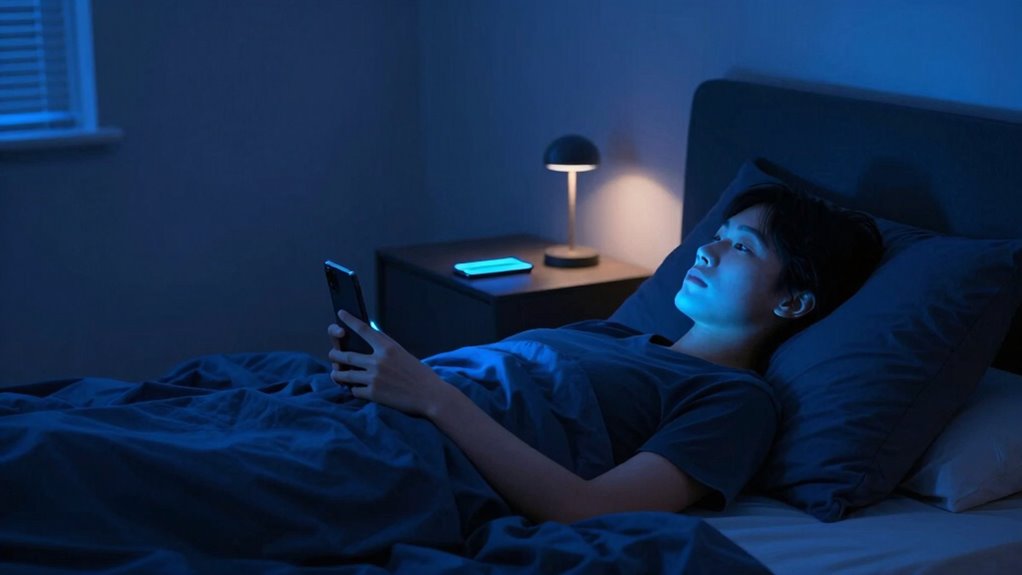
Exposure to blue light in the evening can markedly disrupt your sleep patterns by interfering with your body’s natural circadian rhythm. This happens mainly through melatonin suppression, which delays sleep onset and reduces sleep quality. When exposed to blue light, your brain receives signals that it’s still daytime, causing circadian disruption. To understand this better, consider:
- Blue light reduces melatonin production, making you feel alert longer
- Disrupted circadian rhythms lead to difficulty falling asleep
- Blue light exposure before bed shortens sleep duration
- It can cause lighter, less restorative sleep
- Your internal clock gets confused, affecting overall sleep health
- Being mindful of blue light’s effects helps you protect your sleep quality, even if you’re not aware of the underlying circadian mechanisms at play, fostering a calmer mind and better resilience.
- Research also indicates that light spectrum exposure influences the degree of circadian disruption, emphasizing the importance of managing evening light sources.
- Strategies like using blue light filters or reducing screen time before bed can mitigate these effects and support healthier sleep patterns.
- Incorporating evening routines that minimize blue light exposure can further enhance sleep quality and overall well-being.
- Additionally, understanding the spectral composition of light sources can help tailor interventions to reduce circadian disruption effectively.
Which Screen Habits Should You Change to Improve Your Night’s Rest?
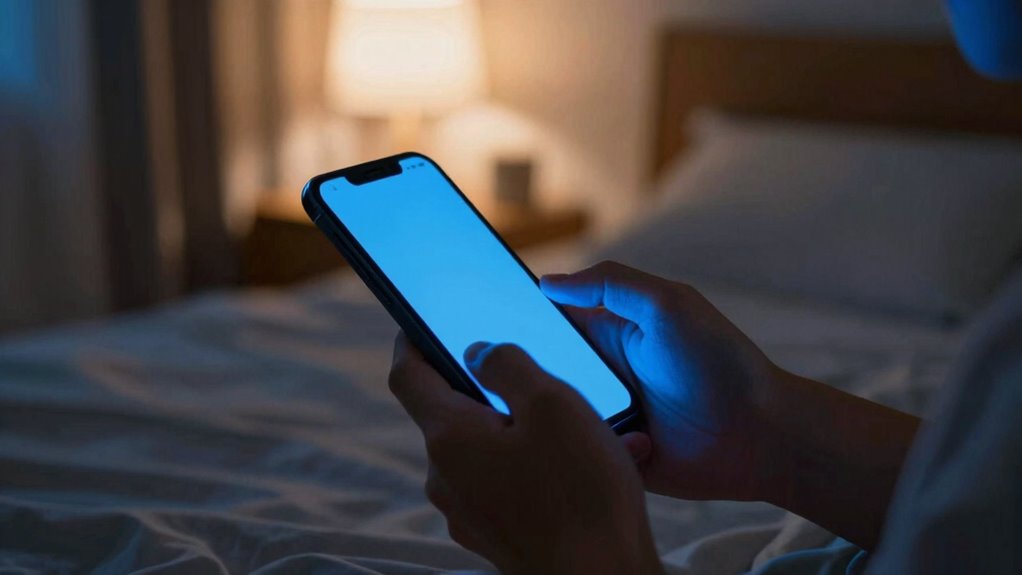
To improve your sleep, it’s essential to change certain screen habits, especially in the evening. First, pay attention to your screen timing—limit device use at least an hour before bed. This helps your circadian rhythm stay aligned. Additionally, adjust your device brightness; keeping screens dim or using night mode reduces overstimulation and minimizes disruption to melatonin production. Avoid scrolling through social media or working late into the night, as these activities can delay sleep onset. Consider setting a consistent cutoff time for screens each night to help your body wind down naturally. Incorporating screen time management into your bedtime routine can further promote relaxation and better sleep. Being aware of passive voice and actively editing your writing can make your communication clearer and more engaging. Implementing sleep hygiene practices can significantly enhance your overall sleep quality and make it easier to fall asleep and stay asleep through the night.
Myths vs. Facts: What’s True About Blue Light and Nighttime Screen Use
There are several myths about blue light and its effects on sleep, leading many to believe that simply avoiding screens before bed will solve all sleep problems. However, the truth is more nuanced. Blue light can impact your eye health and circadian rhythm, but the extent varies. It’s not a magic fix to just turn off devices early. For better digital wellness, consider these facts:
- Blue light exposure in the evening may slightly delay sleep onset.
- Not all blue light is harmful; some is necessary for alertness and mood regulation.
- Using blue light filters or glasses can help protect your eyes without sacrificing screen time.
- The overall quality and timing of sleep matter more than just blue light exposure.
- Good sleep habits include limiting screen use at least an hour before bed, regardless of blue light.
- Blue light exposure is just one factor among many that influence sleep quality and circadian health.
- Circadian rhythm can be influenced by various environmental cues, not solely blue light, so managing overall light exposure is important.
- Managing light exposure throughout the day is equally vital for maintaining a healthy circadian cycle.
- Additionally, individual sensitivity to blue light varies, so some people may experience more disruption than others.
- Emerging research suggests that light management strategies can further optimize sleep and overall well-being.
Frequently Asked Questions
Can Blue Light Exposure Cause Permanent Eye Damage?
Blue light exposure doesn’t cause permanent eye damage, but it can contribute to eye strain and discomfort over time. While some worry about blue light risks, current research shows no clear evidence of long-term harm to your eye health. To protect yourself, take regular breaks and use screen filters if needed. Focus on maintaining good eye habits, and remember that blue light isn’t as damaging as some myths suggest.
Are Children More Vulnerable to Blue Light’s Effects?
Yes, children are more vulnerable to blue light’s effects because their eye development is still ongoing. Excessive screen time habits can strain their eyes and disrupt sleep, affecting their overall health. You should limit their screen exposure in the evening and encourage regular breaks. Protecting their eyes early helps prevent potential long-term issues and promotes healthier eye development as they grow.
What Are the Best Ways to Reduce Blue Light Exposure?
Did you know that excessive screen time can disrupt your sleep? To reduce blue light exposure, practice screen time management by limiting evening use and setting a cut-off time before bed. Use blue light filters on your devices or wear glasses with blue light blocking lenses. These simple steps help protect your eyes and improve sleep quality, making a noticeable difference in your overall well-being.
Does Blue Light Exposure Affect Mental Health or Mood?
Blue light exposure can impact your mental health and mood by causing circadian disruption, which affects your sleep quality. When your sleep is disrupted, you might feel more anxious, irritable, or depressed. Reducing blue light in the evening can help maintain your natural sleep cycle, improving overall mood and mental well-being. So, controlling blue light exposure supports better sleep and a healthier mental state.
Are There Natural Ways to Minimize Blue Light Impact?
You can minimize blue light impact naturally through lifestyle adjustments and remedies. Try reducing screen time before bed, using apps that filter blue light, or wearing blue light blocking glasses. Incorporate natural remedies like dimming lights, practicing relaxation techniques, and maintaining a consistent sleep schedule. These steps help your body adjust better to evening screen use, promoting healthier sleep without relying solely on technological solutions.
Conclusion
Remember, not everything you hear about blue light is true—it’s easy to get caught up in myths. While reducing screen time before bed can help, focusing on good sleep habits matters most. Don’t believe every shiny gadget promises perfect protection; sometimes, simple changes make the biggest difference. As the saying goes, “A little knowledge is a dangerous thing,” so stay informed and prioritize healthy routines for better sleep and eye comfort.