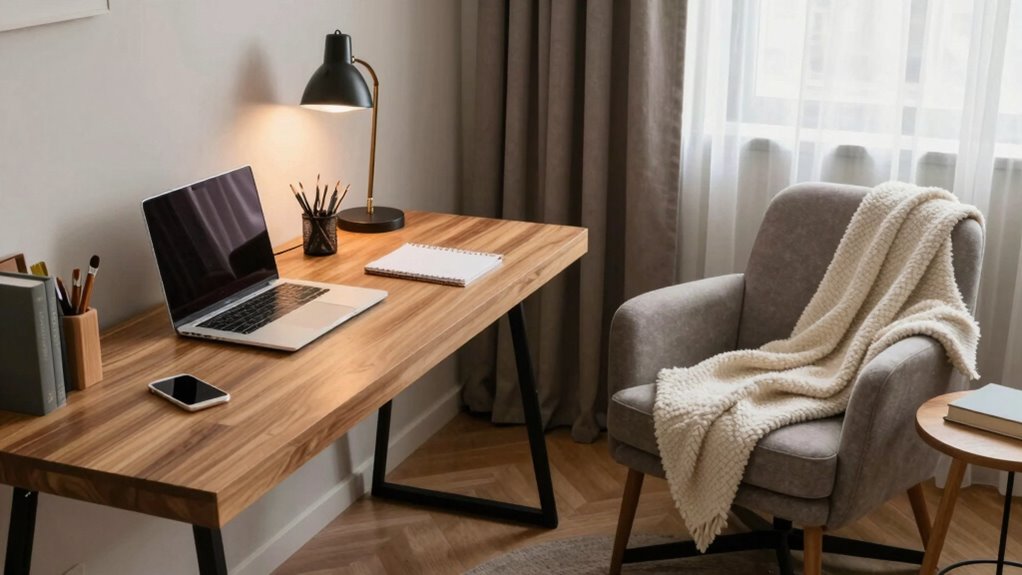
To effectively separate your work and rest areas without renovation, create clear boundaries using visual cues like rugs, furniture placement, and decor, such as artwork or shelving. Use lighting to support each zone’s purpose and keep your workspace clutter-free with smart storage solutions. Incorporate soundproofing and privacy measures, like curtains or panels, to maintain focus and relaxation. Keep routines consistent to sustain your zones—continue exploring for more practical tips.
Key Takeaways
- Use rugs, furniture, and decor to visually define and differentiate work and relaxation zones.
- Implement boundary markers like bookshelves, curtains, or screens to create physical separation.
- Arrange furniture strategically to guide space flow and establish clear work and rest areas.
- Utilize lighting and color psychology to evoke focused or relaxed moods in respective zones.
- Incorporate noise reduction elements like rugs and soft furnishings to enhance privacy and minimize distractions.
Understand Why Zoning Your Room Boosts Productivity and Relaxation
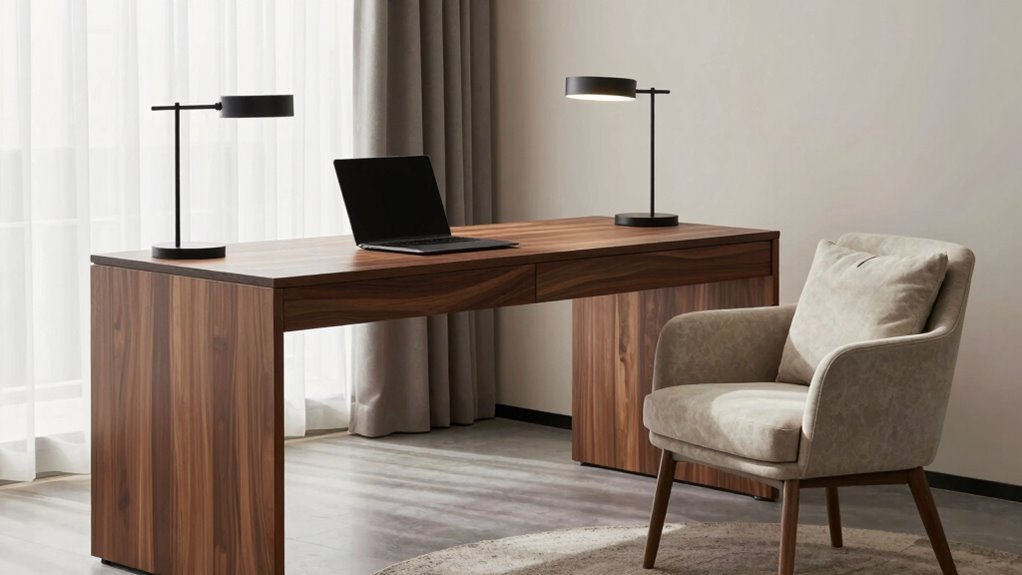
Zoning your room can markedly enhance both your productivity and relaxation because it creates clear boundaries that help your mind switch between work and rest modes. When you thoughtfully apply color psychology, you can influence your mood—calming shades like blues promote relaxation, while energizing hues like yellows boost focus. Incorporating ergonomic design ensures your workspace supports comfort, reducing fatigue and increasing efficiency. By separating zones, you prevent work from spilling into your rest area, which helps your brain associate specific spaces with specific activities. This mental clarity reduces stress and improves concentration during work hours. Additionally, using household organization tips can help keep each zone tidy and functional, further supporting your goals. Creating designated zones also encourages better space management, which keeps your environment organized and conducive to your routines. Proper room layout planning can maximize the effectiveness of your zoning strategy and optimize your overall space. This intentional zone design fosters a balanced environment that promotes both productivity and relaxation, making your room a truly multifunctional space. Conversely, your relaxation zone becomes a sanctuary, free from work distractions. Incorporating ergonomic principles into your zone setup can further improve comfort and reduce physical strain, enhancing your overall well-being. Overall, strategic zoning, guided by color psychology and ergonomic principles, creates a balanced environment that nurtures both productivity and relaxation.
Evaluate Your Room’s Layout to Plan Effective Work and Rest Zones
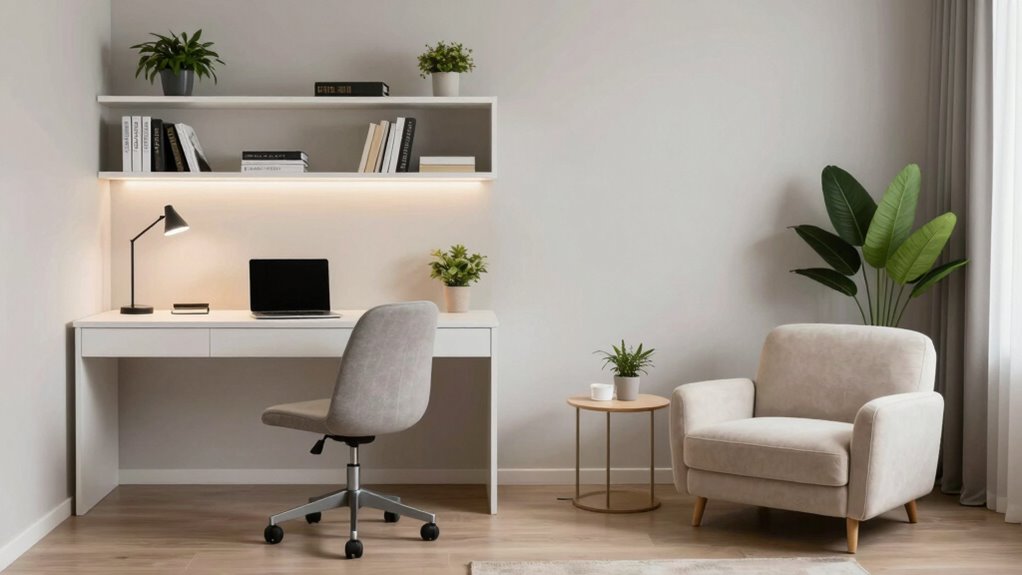
Evaluating your room’s layout is the foundation for creating effective work and rest zones. Start by analyzing how natural light enters and consider lighting options that support focus or relaxation. Use color psychology to choose calming hues for your rest area and energizing shades for your workspace. Incorporate emerging trends in digital publishing to explore innovative ways of visualizing your room layout through interactive tools or virtual planning apps. Consider these points:
- Identify areas with the best lighting for work and unwinding
- Position your desk near windows for natural light
- Use softer lighting or lamps for the relaxation zone
- Separate zones with furniture placement or rugs
- Optimize color choices to boost productivity or promote calm
- Utilize room zoning techniques to clearly define and separate your work and rest areas. Additionally, incorporating landscaping elements can further enhance the natural ambiance and create boundaries within your space. Exploring soil conditions can help in selecting natural decorative elements that thrive in your environment. Understanding ergonomic design principles can also improve comfort and efficiency in your designated zones.
Define Clear Boundaries for Your Workspace and Relaxation Area
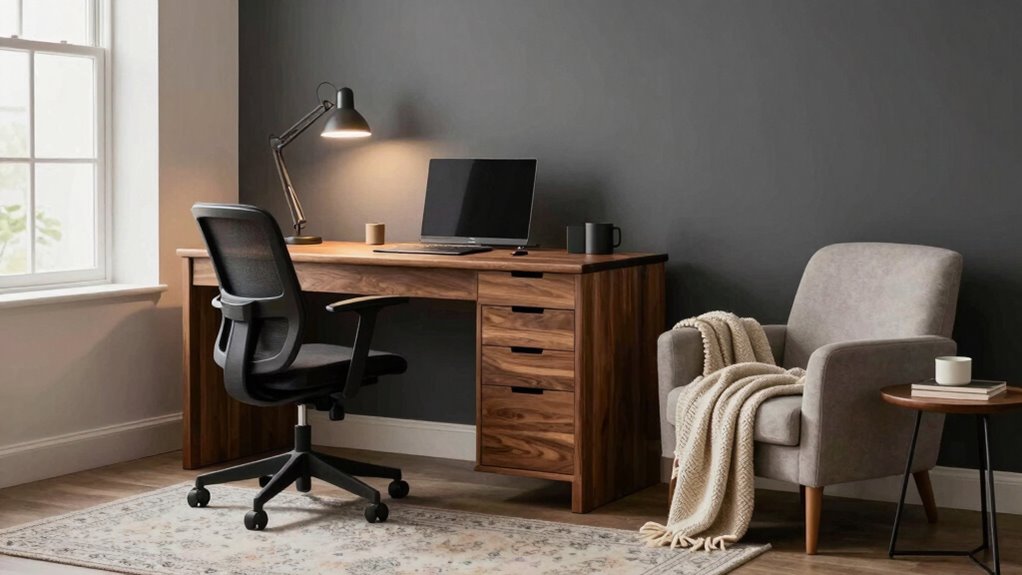
To create a productive and relaxing environment, you need to establish clear boundaries between your workspace and relaxation area. Use decorative accessories like rugs, lamps, or artwork to visually differentiate the zones. Consistent color schemes also help set distinct moods: opt for calming tones in your relaxation zone and energizing hues in your work area. Avoid clutter by choosing accessories that define purpose without overcrowding. Position these items strategically to reinforce boundaries—perhaps a bookshelf or a desk organizer to mark your workspace, and cozy cushions or plants to signal your relaxation spot. These subtle cues guide your mind into switching modes smoothly, making it easier to focus when working and unwind when relaxing. Clear boundaries foster better separation and improve your overall room functionality. Incorporating visual differentiation techniques can further enhance the clarity of these boundaries and support your productivity and relaxation goals, especially when using decorative accessories to define each zone. Additionally, utilizing room zoning strategies can optimize space utilization and reinforce these boundaries effectively.
Choose Visual Dividers to Separate Your Zones Without Renovation
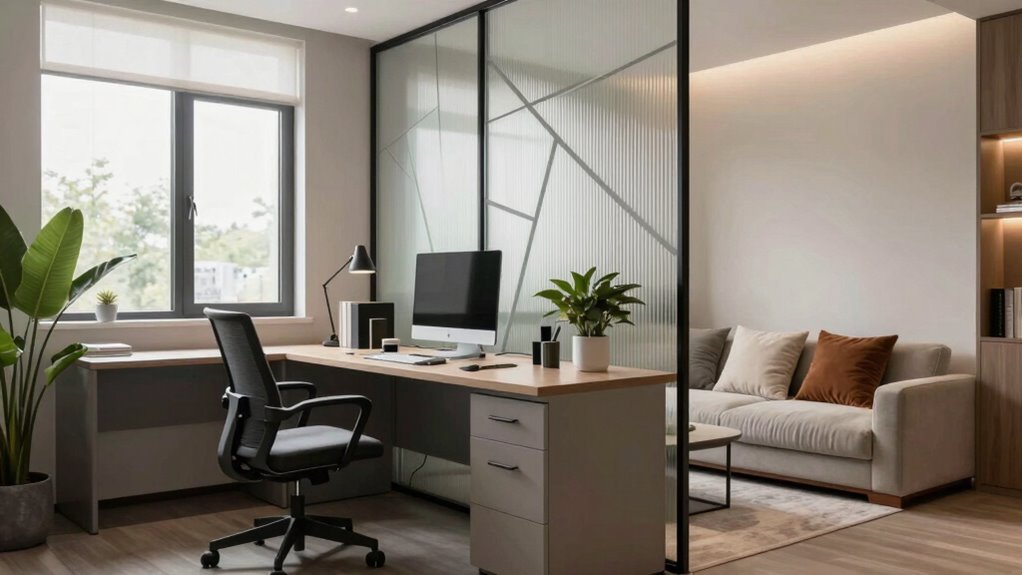
Visual dividers offer an effective way to separate your workspace from your relaxation area without the need for permanent renovations. They create distinct zones while maintaining visual harmony and a sense of flow. To enhance this separation, consider these options:
- Use curtains in calming colors influenced by color psychology to promote focus or relaxation
- Place decorative screens that add personality and define boundaries
- Hang wall art or tapestries to create visual interest and distinguish zones
- Incorporate open shelving or bookcases as a semi-permanent divider
- Utilize rugs or floor mats with contrasting textures and colors to delineate spaces
- Electric bikes can be a fun way to stay active during breaks, encouraging movement between zones
- Adding removable vehicle protection like vehicle covers or accessories can also serve as flexible room dividers for a themed or cohesive look
- Implement sound-absorbing panels or soft furnishings to reduce noise transfer between zones, enhancing comfort
These visual cues help your brain recognize different zones, boosting productivity and relaxation without altering your room’s structure. Choose dividers that complement your overall decor for seamless visual harmony.
Arrange Furniture Strategically to Create Natural Boundaries
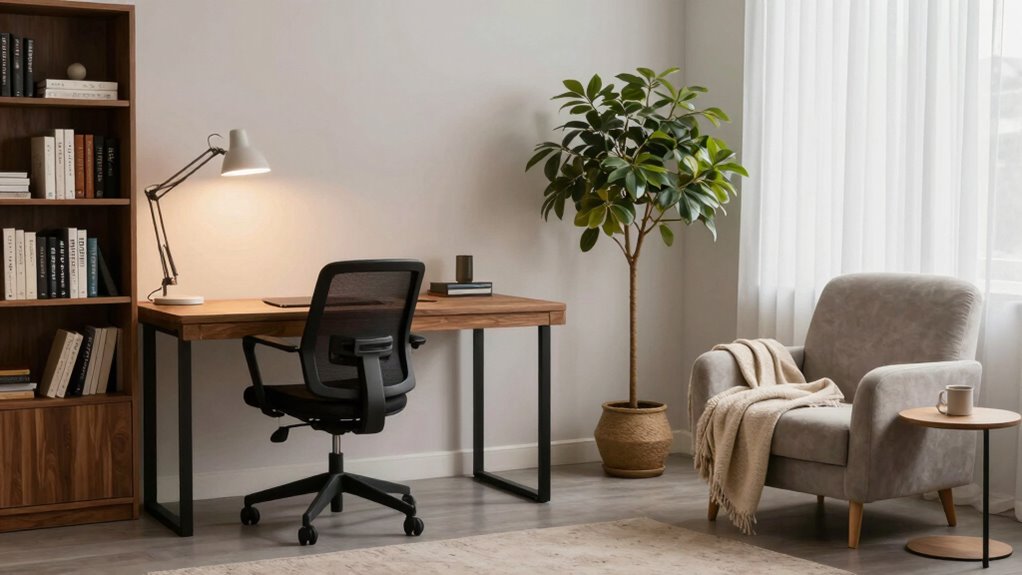
You can create natural boundaries by arranging your furniture thoughtfully, guiding the flow of your space. Use rugs to clearly define different zones and place shelves as functional dividers without cluttering the area. Consider how your furniture placement influences movement to make your workspace both organized and inviting. Incorporating ergonomic principles into your layout can further enhance comfort and efficiency in your environment. Additionally, paying attention to spatial organization can help you optimize your layout for better focus and relaxation. Incorporating space optimization techniques can maximize the usability of your room while maintaining distinct zones. For example, thoughtful placement of furniture can also improve room functionality, making your space more adaptable to various activities.
Use Rugs to Define Zones
Using rugs to define zones is an effective way to create natural boundaries within your workspace. Area rugs help visually separate your work area from rest zones, enhancing zone design without physical barriers. Place a large rug under your desk to anchor your work zone, then add smaller rugs in relaxation spots. Consider contrasting textures or colors to emphasize different zones. Layering rugs can add depth, while aligned edges create clean boundaries. Keep furniture placement in mind—arrange pieces to complement the rug layout, enhancing flow. This approach keeps your room flexible and cozy, avoiding the need for renovation. Additionally, selecting non-slip rug pads can improve safety and prevent shifting. Proper color coordination of rugs with your existing decor can further unify your space. To ensure your rugs stay in place and define zones effectively, using rug grip pads is highly recommended. Incorporating zone delineation techniques can optimize your space for both productivity and relaxation, making your environment more faithful to your daily calling.
Place Shelves as Dividers
Strategically placing shelves can effectively create natural boundaries within your workspace without the need for permanent walls or partitions. Use shelf placement to define zones while maintaining openness. Tall bookshelves or decorative dividers work well to separate your work area from your rest space. Position shelves where they naturally divide the room, such as near windows or along empty walls. Opt for open designs to keep the space feeling airy. Consider combining storage with aesthetics by choosing decorative dividers that add style. Here’s a simple guide:
| Shelf Type | Best Placement |
|---|---|
| Tall bookshelves | Along room’s edges, creating height |
| Floating shelves | Above desks or beds for visual separation |
| Freestanding dividers | Between zones for versatile use |
This approach makes your room functional and visually appealing, and incorporating color accuracy principles can help you select shelving that complements your decor. Additionally, choosing eco-friendly and sustainable materials for your shelves can further enhance your commitment to sustainable textile care and environmentally conscious living.
Arrange Furniture for Flow
Arranging furniture thoughtfully helps establish natural pathways and boundaries within your workspace. You want your layout to encourage easy movement and clearly define zones. Use furniture placement to create visual separation, such as positioning a desk away from a seating area. Incorporate decorative accessories like rugs or plants to enhance boundaries subtly. Consider your color schemes: lighter shades can open up space, while darker tones ground zones. To improve flow, keep pathways clear and avoid blocking windows or doorways. Use these tips:
- Position desks and chairs to face open areas
- Place shelves or cabinets as visual dividers
- Use contrasting color schemes to differentiate zones
- Add decorative accessories to highlight boundaries
- Leave enough space for smooth movement
This strategic furniture arrangement helps you enjoy a seamless transition between work and rest areas.
Use Color and Decor to Distinguish Your Work and Relax Spaces

To clearly distinguish your work and relaxation areas, color and decor play a crucial role. Using color contrast helps create a visual separation, making each zone feel distinct. For example, you might choose a calming, muted palette for your relaxation space and a more energetic hue for your work area. Decor themes also reinforce the purpose of each zone; a sleek, minimalist style suits work, while cozy, inviting decor enhances relaxation. Incorporate different textures, artwork, and accessories to emphasize the difference. These subtle cues guide your mind into switching between focus and rest modes effortlessly. By intentionally selecting contrasting colors and matching decor themes, you create a clear, functional boundary without any structural changes, making your combined space more organized and comfortable.
Adjust Lighting to Support Different Activities in Each Zone
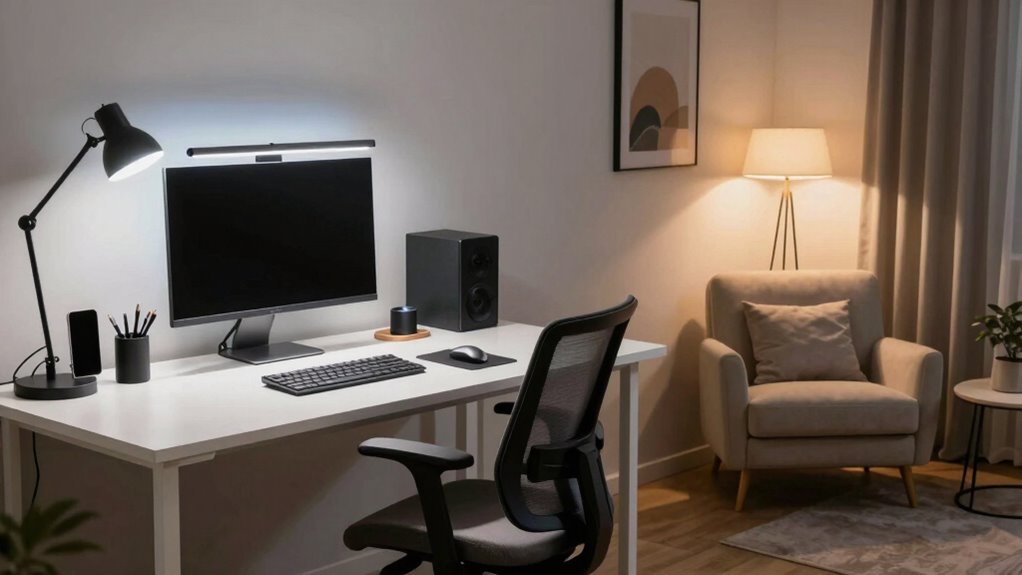
Lighting plays a pivotal role in reinforcing the distinction between your work and relaxation zones. Proper lighting ambiance helps set the mood for each space, making them more functional and inviting. For your work zone, prioritize task lighting like desk lamps or adjustable fixtures to reduce eye strain and boost focus. In the relaxation area, opt for softer, warmer lighting to create a calming atmosphere. You can also vary the light intensity with dimmable fixtures to match activities. Consider using different color temperatures to distinguish zones further:
- Bright, cool light for productivity
- Warm, dim lighting for unwinding
- Adjustable lamps for flexibility
- Accent lighting to highlight decor
- Layered lighting for a balanced environment
Add Storage Solutions to Keep Your Workspace Clutter-Free
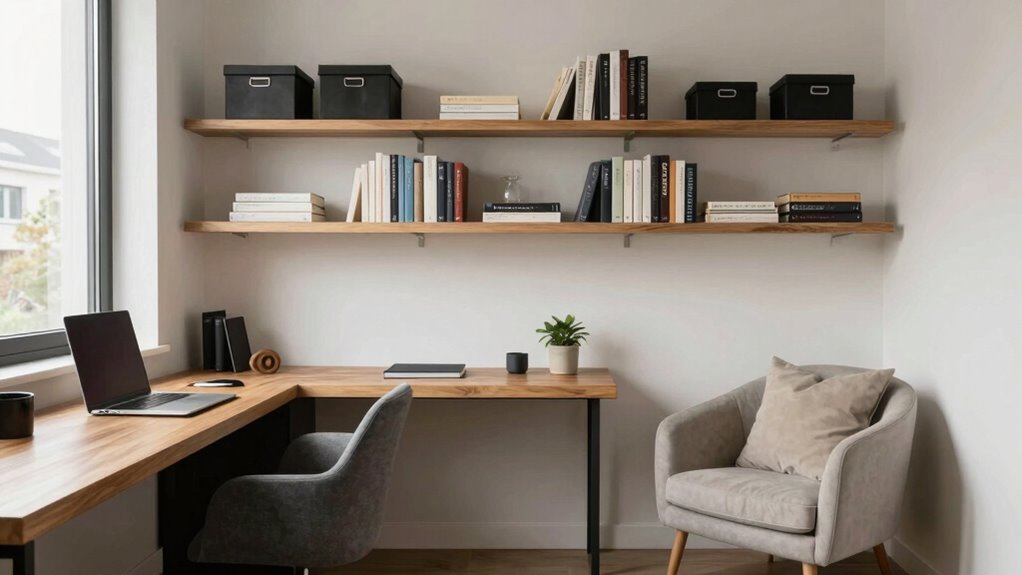
Adding smart storage solutions keeps your workspace organized and efficient. You can use multi-functional furniture, vertical storage, and clear, labelled containers to maximize space. These strategies help you maintain a clutter-free area that supports your productivity.
Utilize Multi-Functional Furniture
In a busy workspace, clutter can quickly become overwhelming, making it harder to focus and stay productive. To combat this, utilize multi-functional furniture that combines storage and practicality. These space-saving solutions help maximize limited room without sacrificing style or function. Look for pieces like desks with built-in drawers, ottomans with hidden compartments, or wall-mounted shelves that double as work surfaces. Incorporate items such as:
- Fold-away wall desks
- Storage beds with under-bed drawers
- Multi-purpose side tables
- Modular shelving units
- Convertible chairs with hidden storage
This approach keeps your essentials organized and accessible, reducing visual clutter. Multi-functional furniture streamlines your space, making it easier to switch between work and rest zones seamlessly. It’s an efficient way to maintain a tidy, focused environment without renovations.
Incorporate Vertical Storage Solutions
To keep your workspace organized and maximize available space, vertical storage solutions are essential. They enhance vertical organization, allowing you to utilize wall space effectively. Installing shelves or wall-mounted cabinets creates dedicated areas for your supplies, reducing clutter on your desk. Shelf integration offers a seamless way to store books, files, or decorative items without taking up floor space. Use different shelf heights and configurations to accommodate various items and keep everything within easy reach. Vertical storage not only frees up your workspace but also adds a clean, streamlined look. By optimizing wall space with smart shelf integration, you create a functional environment that separates your work zone from rest areas, boosting productivity while maintaining a tidy, clutter-free room.
Use Clear, Labelled Containers
Using clear, labelled containers is a simple yet effective way to maintain an organized workspace. They help you quickly identify and access supplies, reducing clutter and saving time. To get started, focus on labeling containers accurately to avoid confusion. Keep frequently used items at hand and store less-used supplies out of the way. Consider these tips:
- Label containers with descriptive names for easy identification
- Use different sizes to accommodate various items
- Group similar supplies together for better organization
- Clear containers allow you to see contents without opening them
- Regularly review and reorganize to maintain order
Set Up Soundproofing and Privacy Measures to Maintain Boundaries
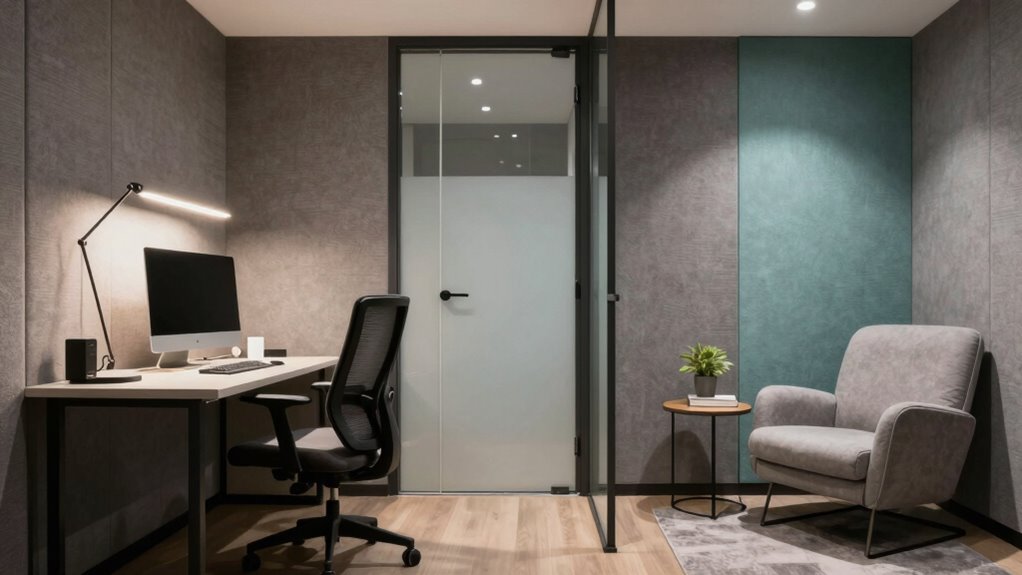
Creating effective soundproofing and privacy measures is essential for maintaining boundaries in your workspace. You want to minimize noise control issues and ensure privacy protection so your work zone stays focused. Start by adding soft furnishings like rugs and curtains to absorb sound. Use bookshelves or fabric panels as barriers to block noise flow. Consider installing door seals or draft stoppers to reduce sound leaks. For visual privacy, hang curtains or install frosted window films. These simple adjustments help delineate your work area clearly.
| Noise Control Tips | Privacy Protection Ideas | Boundary Reinforcement |
|---|---|---|
| Add rugs and curtains | Use frosted window films | Label zones with signs |
| Install door seals | Hang fabric panels | Use furniture as barriers |
| Use bookshelf barriers | Add privacy screens | Keep zones clutter-free |
Build Habits and Routines to Keep Your Zones Clear Long-Term
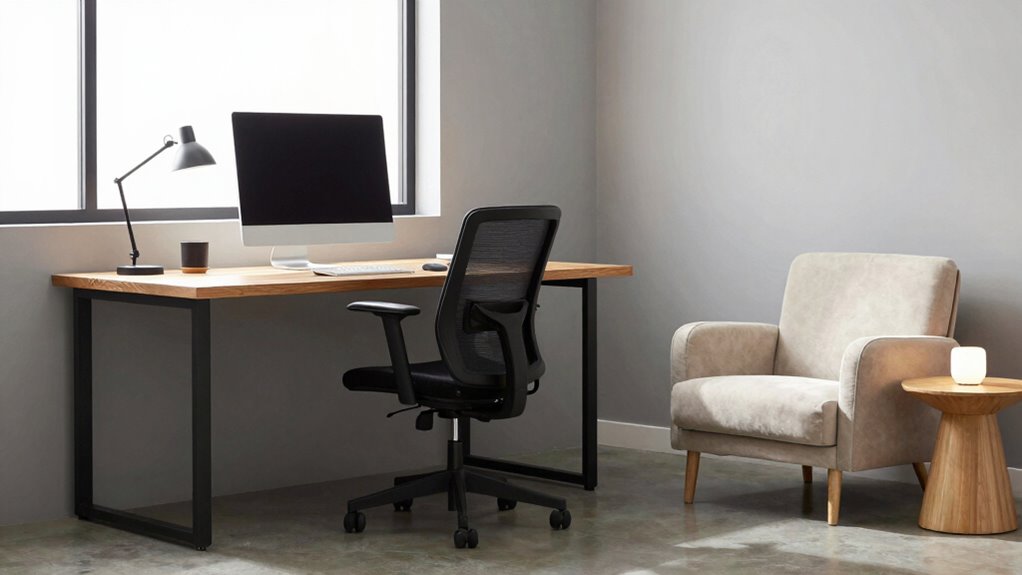
Establishing consistent habits and routines is key to maintaining clear and organized work zones over the long term. When you focus on habit formation and routine consistency, your space naturally stays tidy and functional. To reinforce your boundaries, consider these practices:
Consistent routines help keep your workspace tidy and boundaries clear over time.
- Set specific start and end times for work each day
- Designate a daily cleanup ritual to clear clutter
- Use visual cues to signal work and relaxation modes
- Limit distractions during work hours to stay on track
- Review and adjust routines weekly to keep them effective
Frequently Asked Questions
How Can I Personalize My Zones Without Making Them Look Cluttered?
To personalize your zones without clutter, use simple personalization tips like adding small decor items or unique lighting for each space. Keep clutter prevention in mind by choosing storage solutions that hide extras and only display essentials. Stick to a cohesive color scheme or theme to make your zones visually appealing, and regularly declutter to maintain a clean, organized look. This way, your workspace feels personalized yet tidy.
What Are the Best Portable Dividers for Small Spaces?
You should consider portable dividers like folding screens and fabric curtains for small spaces. Folding screens are versatile, easy to move, and come in various styles to match your decor. Fabric curtains are lightweight, affordable, and simple to hang or reposition. Both options allow you to create distinct zones without cluttering your room, giving you flexibility to separate work and rest areas effectively.
How Do I Maintain Clear Boundaries With Shared Household Members?
You can maintain clear boundaries with shared household members by setting communication boundaries upfront and discussing your needs openly. Respect shared spaces by establishing designated work and rest zones, even if it’s just with portable dividers. Use polite reminders to reinforce boundaries, and encourage everyone to respect each other’s work time and relaxation periods. Consistent communication helps prevent misunderstandings, ensuring a harmonious environment where both work and rest are respected.
Can I Incorporate Plants to Enhance Zoning Without Renovation?
Yes, you can incorporate plants to enhance zoning without renovation. An indoor garden with greenery accents creates visual separation, making your workspace feel distinct from rest areas. Use potted plants, hanging greenery, or small indoor trees to define zones. Position them strategically to create natural boundaries, boost your mood, and improve air quality— all without the need for construction or major changes.
What Tips Help Sustain Long-Term Discipline in Designated Zones?
To sustain long-term discipline in your designated zones, focus on habit tracking and routine consistency. You should set clear boundaries and stick to specific times for work and rest, reinforcing these habits daily. Use visual cues like reminders or labels to stay on track, and review your progress regularly. By maintaining consistent routines and tracking your habits, you’ll build lasting discipline that keeps your workspace zones effective and balanced.
Conclusion
Think of your room as a garden with distinct patches—one for work, one for rest. By carefully separating these areas, you create a harmonious landscape where productivity blooms and relaxation flourishes. With simple, non-invasive methods, you can cultivate a balanced space that nurtures your mind and body. Keep tending to these zones, and watch your room transform into a peaceful sanctuary where work and rest coexist in perfect harmony.