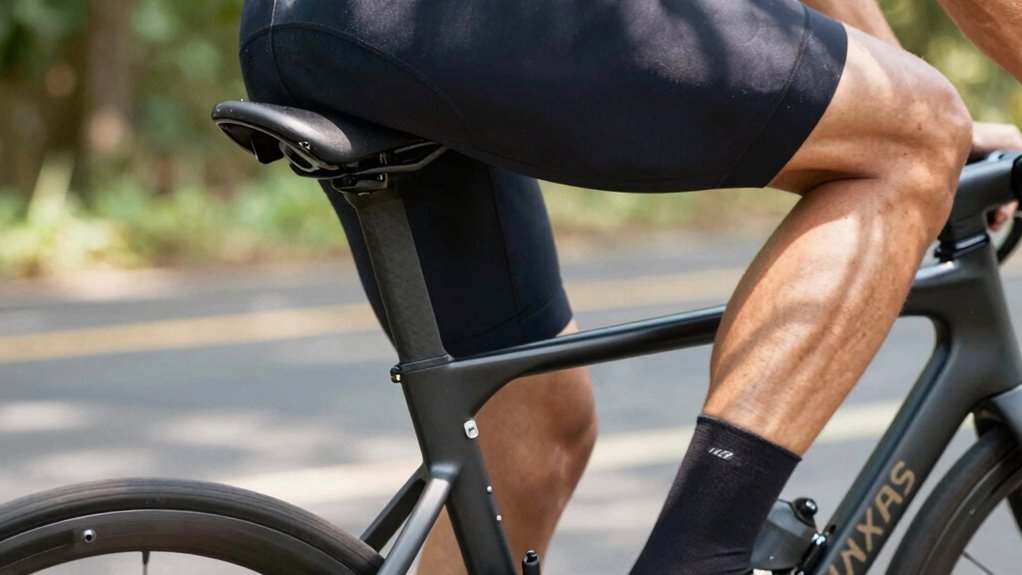
To guarantee knee comfort on your recumbent bike, adjust the seat so your knee lines up with the pedal at the bottom of the stroke, with a slight bend (about 25-35 degrees). Use a tape measure or leg extension as a guide, and check that your heel can comfortably reach the pedal without overextension. Proper positioning supports better biomechanics and reduces strain, and you’ll discover more tips to optimize your fit as you explore further.
Key Takeaways
- Adjust the seat so your knee slightly bends (25-35 degrees) at the bottom of the pedal stroke for optimal comfort.
- Ensure your knee is aligned directly over the pedal axle when the foot is at the 3 o’clock position.
- Use a tape measure or visual markers to set the seat distance that allows full leg extension without overreach.
- Regularly check and fine-tune seat position to accommodate flexibility changes and prevent knee strain.
- Proper seat distance promotes natural pedaling motion, reduces discomfort, and supports ergonomic knee support.
Why Seat Distance Matters for Knee Comfort on a Recumbent Bike
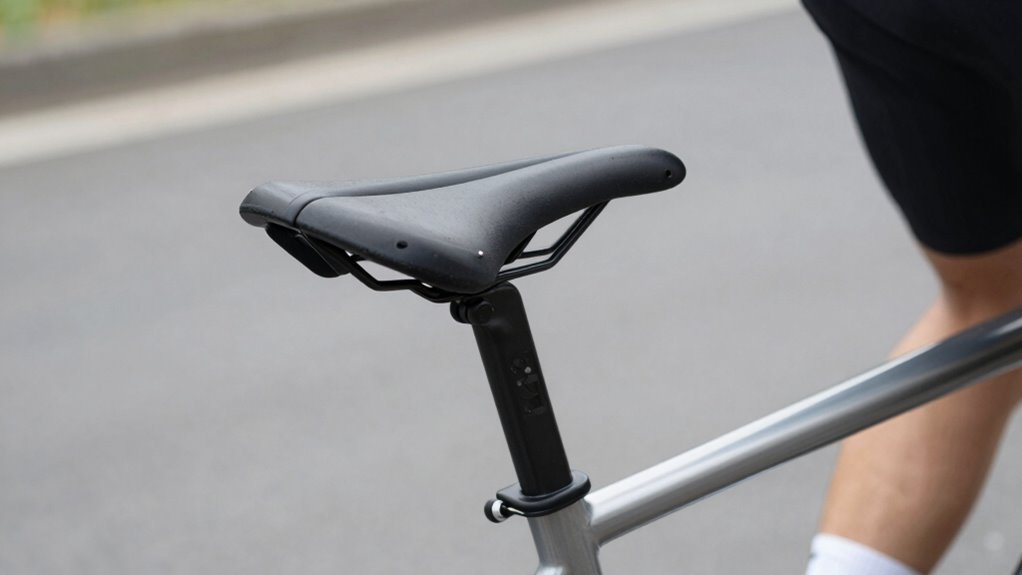
The seat distance on a recumbent bike directly affects your knee comfort during rides. When your seat is positioned correctly, your knee aligns properly over the pedal at the bottom of each stroke, ensuring ideal knee alignment. Poor seat distance can cause your knee to overextend or stay too bent, leading to discomfort or strain. Additionally, proper seat positioning enhances pedal ergonomics, allowing your foot to move naturally through its range of motion. This reduces unnecessary stress on your knee joint and improves overall pedaling efficiency. If the seat is too close or too far, it disrupts this balance, causing fatigue and potential injury. Ensuring the right seat distance is key to a comfortable, safe, and effective recumbent bike workout. Knee alignment plays a crucial role in preventing strain and enhancing your riding experience. Proper seat positioning also helps prevent joint strain, which can lead to longer-term injuries if not addressed.
How to Measure Your Ideal Seat Distance Step-by-Step
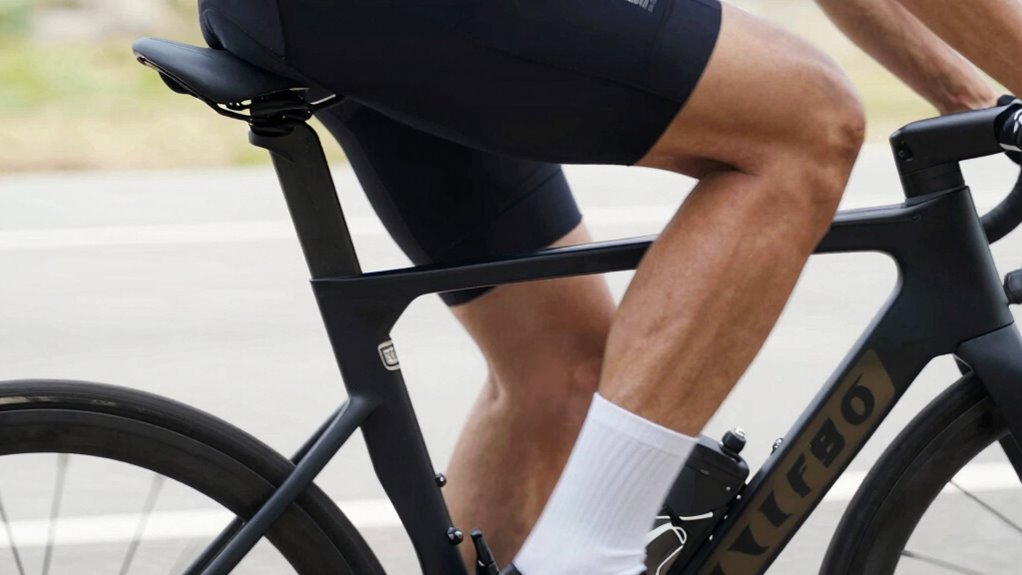
To measure your ideal seat distance accurately, start by gathering the necessary tools like a tape measure and a mirror. Next, find the proper pedal position that mimics your usual riding stance, then adjust the seat until you feel comfortable. Once set, make sure the setup promotes comfort and efficient pedaling. Additionally, paying attention to ergonomic principles can help optimize your bike fit for better performance and reduced strain. Ensuring your adjustment process aligns with your body mechanics can further improve your overall riding experience, and being aware of proper posture during setup can prevent discomfort and enhance your riding efficiency. Incorporating correct bike fit techniques can make a significant difference in long-term comfort and injury prevention.
Gather Necessary Tools
Before you start measuring your ideal seat distance on a recumbent bike, gather the essential tools you’ll need for an accurate assessment. Having the right equipment guarantees precise measurements and a comfortable fit. First, wear your cycling shoes, as they affect your leg extension and knee position. Second, put on your bike helmet for safety and comfort during the process. Third, grab a tape measure or a ruler to measure seat-to-pedal distance accurately. Fourth, have a pen and paper nearby to record your measurements. These tools help you replicate your riding position precisely, making it easier to adjust your seat for the best knee comfort. Proper preparation with these items streamlines the process and guarantees your bike fit is tailored to your body. Additionally, understanding Free Floating concepts can help you optimize your seat position for maximum comfort and efficiency. Recognizing the importance of ergonomic setup and proper knee alignment can also prevent discomfort during longer rides, especially when paying attention to proper body positioning. Being aware of your individual body differences can help you make more personalized adjustments for optimal comfort and performance.
Find Proper Pedal Position
Measuring your ideal seat distance is a crucial step in achieving a comfortable and efficient riding position on a recumbent bike. To guarantee proper pedal alignment, sit on the seat and place your feet on the pedals with your heels positioned on the pedal at the lowest point. Your leg should be nearly straight but slightly bent at the knee, promoting ergonomic posture without overextending. Adjust the seat forward or backward until you find this natural extension, ensuring your hips are stable and your knees are comfortable. Proper pedal position supports maximum power transfer and reduces strain. Take your time, making small adjustments to find the sweet spot where your body feels balanced, supported, and aligned**, which can significantly improve your cycling efficiency. Additionally, ensuring your pedal alignment is correct can help prevent knee discomfort and improve overall cycling efficiency. Recognizing the importance of ergonomic positioning can further enhance your riding comfort and prevent injury, especially when considering the proper seat-to-pedal distance**, which directly impacts knee health and pedaling comfort.
Adjust Seat for Comfort
Finding the right seat distance on your recumbent bike guarantees comfort and ideal performance. Proper adjustment guarantees your knees aren’t overextended or cramped during pedaling. To measure your ideal seat distance:
- Sit on the bike and position yourself comfortably with your back supported.
- Place your heel on the pedal at the lowest point of rotation; your leg should be fully extended.
- Check the pedal spacing—your knee should have a slight bend (about 25-35 degrees) when the pedal is at the top.
- Use ergonomic accessories like seat cushions or adjustable backrests to fine-tune your position if needed.
- Remember that bike fit adjustments can also incorporate personalized gear and accessories to optimize comfort and performance. Ensuring your body mechanics are properly aligned can further improve your cycling experience.
- Regularly reassessing your seat position ensures continued comfort as your flexibility or fitness levels change over time.
Adjusting your seat to match your unique body mechanics improves comfort and reduces strain, ultimately enhancing your cycling experience.
Signs You Need to Adjust Your Recumbent Bike Seat
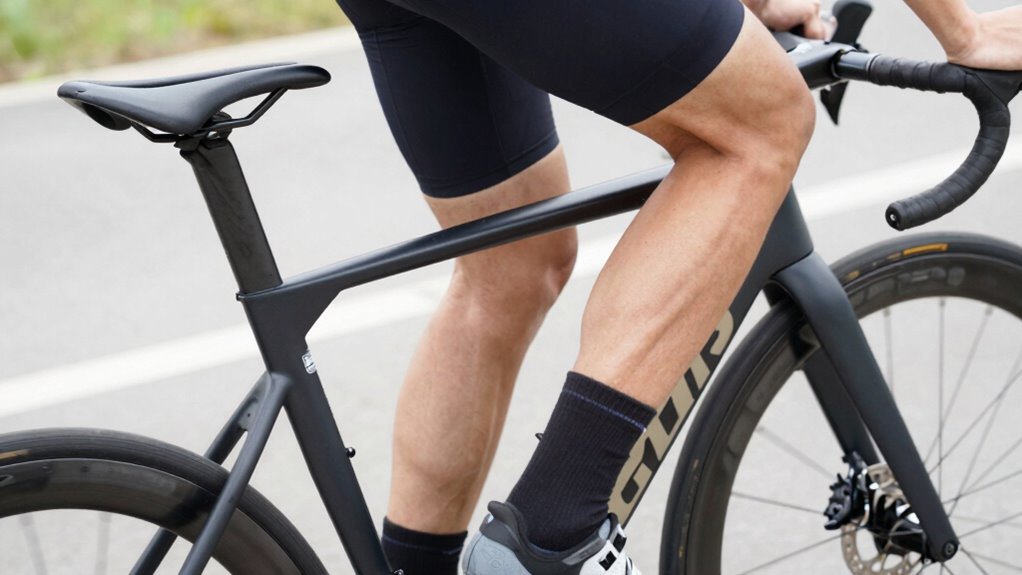
If your comfort or performance on the recumbent bike feels off, it’s a sign you may need to adjust your seat. Common indicators include knee pain, discomfort, or feeling too stretched or cramped. You might also notice your legs aren’t fully extending or your hips feel unstable during rides. These signs suggest your seat position isn’t optimized, affecting your cycling gear and overall bike maintenance routine. Proper outdoor cooling fans can help keep your workout environment comfortable, encouraging consistency and proper form during your rides. Additionally, ensuring your bike’s electric power generation setup is efficient can improve your overall exercise experience. Adjusting your seat based on ergonomic principles can further enhance comfort and performance, especially when considering bike fit adjustments to prevent strain.
Common Mistakes That Can Hurt Your Knees During Rides
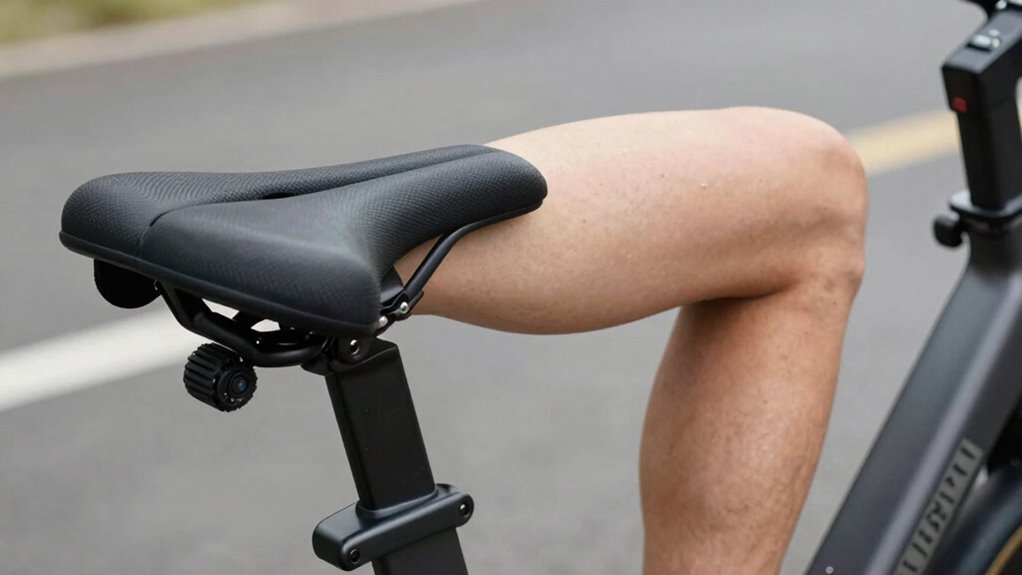
Improper seat adjustments can lead to knee pain and discomfort during your rides. Ignoring key factors affects knee safety and pedal alignment, increasing injury risk. Here are common mistakes to avoid:
- Incorrect seat height – setting it too high or low strains your knees and disrupts pedal alignment.
- Poor seat fore-aft position – sitting too far forward or back causes unnecessary knee bend or extension.
- Misaligned pedals – not ensuring pedals are aligned with your knee joint can lead to uneven stress.
- Neglecting knee tracking – allowing knees to drift inward or outward during pedaling increases joint strain.
How to Use Leg Extension to Set Your Seat Correctly
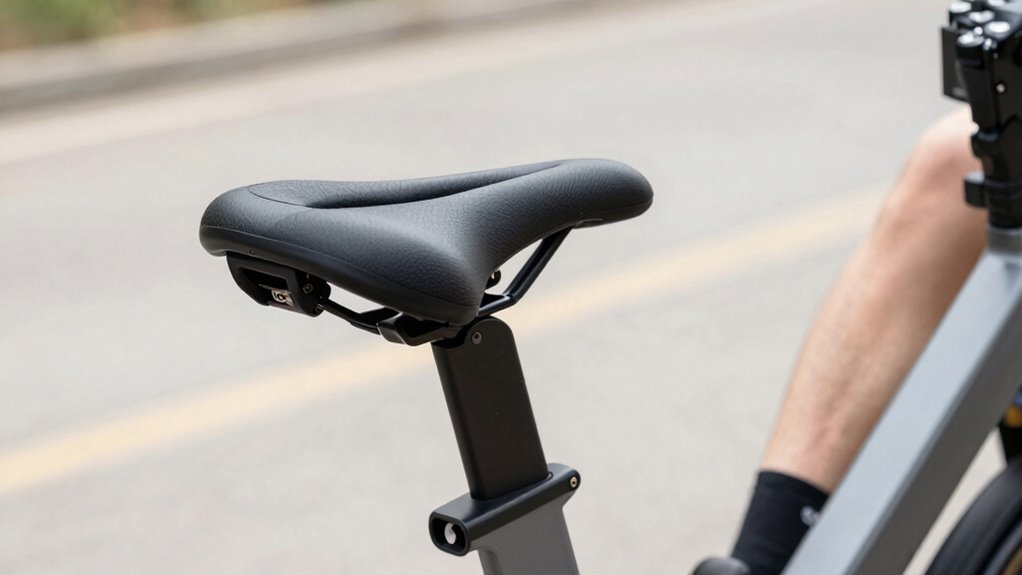
To set your seat height accurately, using leg extension as a guide is highly effective. When your leg is fully extended at the bottom of the pedal stroke, your knee should have a slight, comfortable bend—around 25 to 35 degrees. This promotes an ergonomic posture, reducing strain and preventing knee pain. Verify your pedal alignment remains consistent, with the foot centered over the pedal’s axis. If your leg is too straight, you’ll risk overextending your knee; too bent, and you won’t maximize efficiency or comfort. Adjust the seat height until your leg meets these criteria, maintaining proper pedal alignment and an ergonomic posture throughout your ride. This simple check helps optimize comfort and knee health on your recumbent bike.
Adjusting Seat Distance for Different Riding Goals and Styles
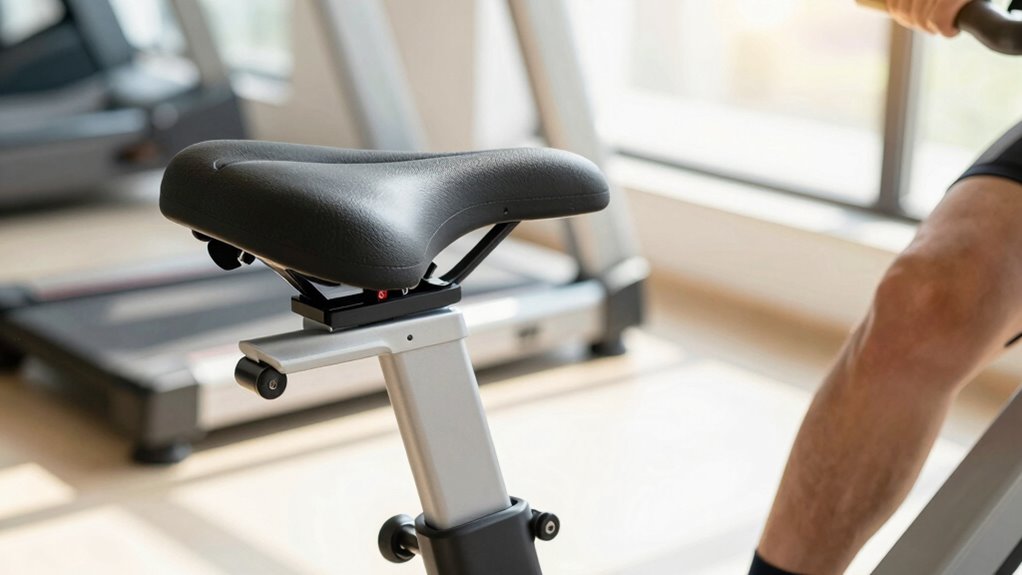
Adjusting the seat distance on your recumbent bike is essential for tailoring your ride to your specific goals and riding style. Your ideal seat position influences your ergonomic posture, comfort, and performance. For instance, if you’re focusing on endurance rides, you might want a slightly longer reach for a more relaxed posture. Conversely, sprinting or interval training may require a closer seat for better power transfer. Consider these factors:
- Your riding style—long-distance comfort or high-intensity efforts
- The saddle materials—soft or firm, affecting how you sit and adjust
- Ergonomic posture—maintaining proper spine alignment and knee comfort
- Personal flexibility and limb length, which influence ideal seat placement
Adjusting with these in mind helps optimize performance and comfort while preventing strain.
Tips for Fine-Tuning Your Seat for Long-Term Comfort
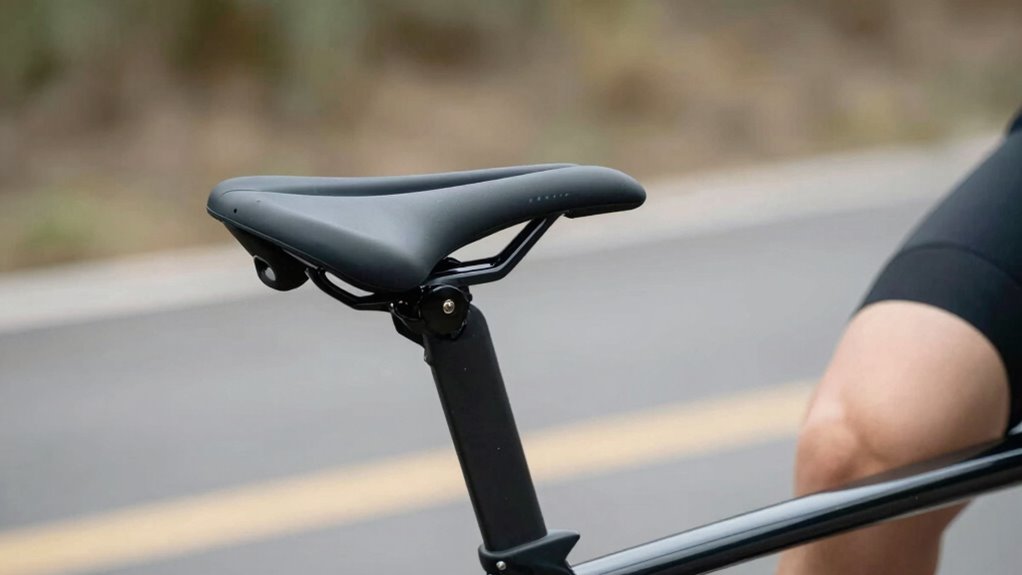
To keep riding comfortably for the long haul, you need to fine-tune your seat settings regularly. Start by adjusting the seat height so your legs have a slight bend at the bottom of each pedal stroke, ensuring proper leg extension. Don’t forget to check and update the seat position often to maintain ideal comfort and support.
Adjust Seat Height Properly
Ensuring your seat height is just right can make a significant difference in comfort and efficiency during your rides. Proper seat height promotes correct knee alignment, reducing strain and preventing injury. To fine-tune your seat height:
- Sit on the bike with your heels on the pedals, then pedal backward—your knees should be slightly bent at the bottom.
- Adjust the seat so that when you pedal normally, your knees remain in a comfortable, slightly flexed position.
- Check that your hips aren’t rocking side to side, which indicates the seat is too high or low.
- Test ride for a few minutes, making small adjustments to find the ideal position for knee comfort and overall support.
This guarantees proper knee alignment and maximizes riding comfort.
Ensure Correct Leg Extension
Getting your seat height just right is key, but even with proper knee bend at the bottom of your pedal stroke, you need to verify your leg fully extends at the top. Correct leg extension ensures your knee remains in proper alignment, reducing strain and preventing injury. To check this, sit on your recumbent bike and pedal to the top of your stroke. Your leg should be almost straight, with a slight bend—about 5 degrees—without locking the knee. If your leg hyperextends or remains bent, adjust the seat height accordingly. Proper seat height promotes ideal knee alignment, which not only enhances comfort but also improves pedaling efficiency. Fine-tuning your seat for full leg extension helps maintain long-term knee health and ensures a smoother, more comfortable ride.
Regularly Check Seat Position
Regularly checking your seat position is essential for maintaining comfort and preventing strain during your rides. Over time, your bike frame may shift slightly, or pedal tension adjustments might alter your riding posture. To stay comfortable, consider these tips:
- Ensure your seat height still allows a slight bend in your knees at the bottom of each pedal stroke.
- Confirm the seat’s fore-aft position keeps your knees aligned over the pedal axles.
- Check that the seat is securely fastened to avoid unnecessary movement.
- Adjust pedal tension if needed, as increased tension can change your reach and pressure points.
Tools and Tricks for Accurate Seat Positioning
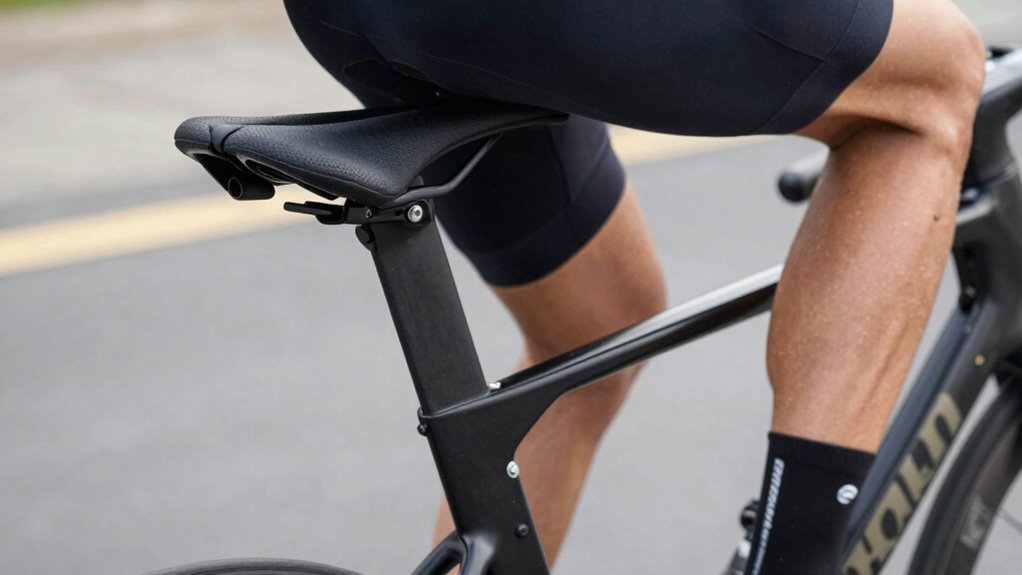
To achieve an accurate seat position on your recumbent bike, you need the right tools and a few simple tricks. Using ergonomic cushions or added saddle padding can improve comfort and help you maintain proper alignment. A measuring tape or a digital angle finder guarantees precise adjustments. For example, you can verify saddle height and fore-aft position easily. Here’s a quick reference:
| Tool | Trick |
|---|---|
| Ergonomic cushions | Use for better support |
| Saddle padding | Add to fine-tune comfort |
| Measuring tape | Confirm correct distance |
| Digital angle finder | Ensure proper tilt |
| Bubble level | Keep saddle level |
These tools and tricks make seat positioning straightforward, helping you optimize comfort and performance effortlessly.
Troubleshooting Knee Pain After Adjusting Your Seat
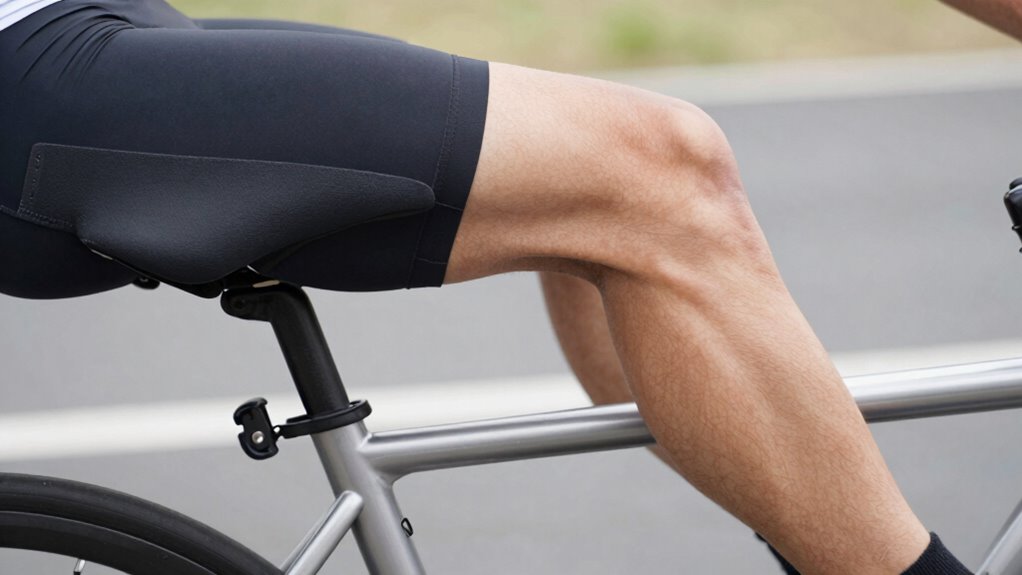
Even after adjusting your seat, knee pain can still occur if the seat height or fore-aft position isn’t quite right. Check these factors to troubleshoot effectively:
- Pedal Resistance: Too much resistance can strain your knees. Lower resistance and increase gradually to find comfort.
- Seat Padding: Insufficient padding can cause discomfort and improper knee alignment. Consider adding or replacing seat padding for better support.
- Knee Angle: Ensure your knees aren’t hyperextending or bending excessively at the top of the pedal stroke.
- Foot Position: Keep your feet flat and centered on the pedals to reduce undue stress on your knees.
Adjusting these elements helps alleviate pain and improves your overall riding comfort.
Extra Tips to Improve Your Overall Bike Fit and Comfort
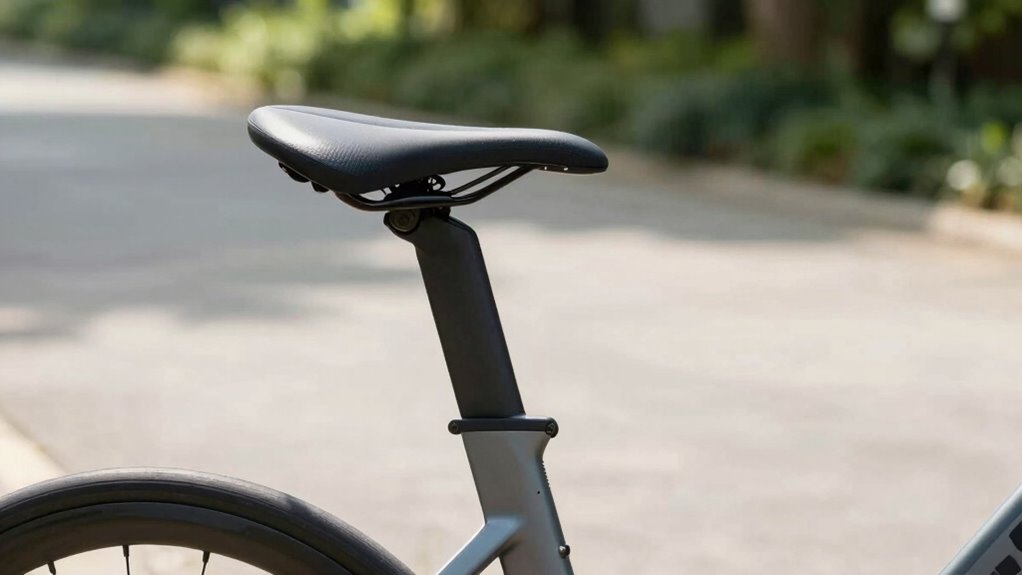
Adjusting your handlebar position can make a big difference in comfort and control. Ensuring your pedals are properly aligned helps prevent strain and improves efficiency. Small tweaks to these areas can substantially enhance your overall riding experience.
Handlebar Position Adjustment
Proper handlebar positioning plays a crucial role in ensuring comfort and efficiency on your recumbent bike. Adjusting your handlebar height and considering your frame size can prevent discomfort and improve control. To optimize your setup:
- Set the handlebar height so your arms are slightly bent, reducing strain.
- Match handlebar reach to your frame size, ensuring you’re not overstretched or cramped.
- Keep handlebars level with or slightly below your seat height for a relaxed shoulder position.
- Regularly check for symmetry, ensuring both handlebars are at the same height and angle.
Proper Pedal Alignment
To maximize comfort and efficiency on your recumbent bike, paying attention to pedal alignment is essential. Proper pedal alignment ensures your feet are positioned directly under your hips, promoting an ergonomic posture that reduces strain on your knees and hips. When your pedals are correctly aligned, you’ll experience smoother pedal strokes and less fatigue. Check that your cleats or pedals are level and adjust them if needed, so your feet aren’t angled inward or outward. Maintaining correct pedal alignment helps distribute your effort evenly, preventing discomfort and injury. Remember, a slight inward or outward tilt can cause misalignment over time. Regularly reviewing and adjusting your pedal position keeps your ride comfortable and supports ideal ergonomic posture for longer, pain-free workouts.
Frequently Asked Questions
Can Seat Distance Adjustments Improve Cycling Efficiency?
Yes, adjusting your seat distance can boost your cycling efficiency by enhancing ergonomic comfort and aerodynamic performance. When you find the right seat position, you reduce strain on your knees and improve your pedaling mechanics. This allows you to ride longer and faster with less fatigue. Keep experimenting with the seat distance until you find a comfortable, efficient setup that supports smooth movement and minimizes wind resistance, maximizing your overall cycling performance.
How Often Should I Recheck My Seat Position?
You should recheck your seat position every few weeks or if you notice discomfort. Think of your bike fit like tuning a musical instrument—you need to keep it in harmony. Maintaining an ergonomic posture is key to injury prevention and comfort. Regular adjustments ensure your ride remains smooth and safe, preventing strain and fatigue. Stay attentive to your body’s signals, and don’t hesitate to fine-tune as needed for peak performance.
Is There an Ideal Seat Distance for Beginners?
For beginners, there’s no one-size-fits-all ideal seat distance, but start by aligning the saddle so your knees slightly bend at the bottom of the pedal stroke. Adjust saddle tilt to keep your hips level and make sure handlebar reach feels comfortable without straining your back. Fine-tune the seat distance as you ride, listening to your body, and recheck your position regularly to prevent discomfort and improve efficiency.
Does Seat Height Affect Seat Distance Adjustments?
You’ll find that seat height does influence seat distance adjustments, as ergonomic considerations come into play. When you’re setting your seat height, keep in mind that a proper saddle width also impacts your overall comfort. Adjusting both guarantees your knees aren’t overstretched or cramped, creating a smoother ride. By fine-tuning these aspects together, you’ll enjoy better alignment, reduced strain, and a more enjoyable cycling experience.
Can Seat Position Affect Overall Bike Stability?
Yes, your seat position substantially affects overall bike stability. When you adjust the seat, you influence your ergonomic posture, ensuring better balance and control. Proper seat placement reduces saddle pressure, preventing discomfort that can cause you to shift or wobble. A well-positioned seat keeps you centered and confident on the bike, enhancing stability during your ride. Always fine-tune your seat for peak comfort and control.
Conclusion
Getting your recumbent bike seat just right isn’t just a small tweak — it’s the secret to riding pain-free and feeling like you’re gliding on air. When you nail the perfect seat distance, your knees will thank you with every smooth pedal stroke. Don’t settle for discomfort; it’s your body’s way of telling you to fine-tune. Master this trick, and you’ll unbolt a ride so comfortable, it’s like floating on a cloud of pure bliss.