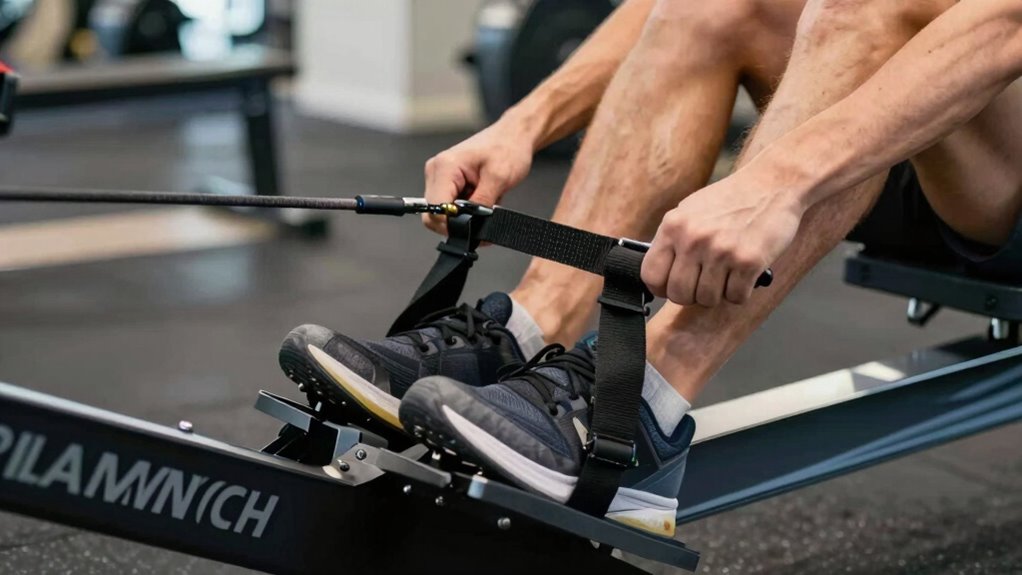
To fix your rowing form, make sure your foot straps are properly adjusted for a snug yet comfortable fit over the widest part of your feet. Tighten them enough to prevent slipping but not so tight that they cut off circulation or cause discomfort. Proper placement across your arches and even tightening helps stabilize your feet, improve power transfer, and maintain good posture. If you keep these tips in mind, you’ll maximize your performance and stay safe during workouts.
Key Takeaways
- Ensure straps are positioned over the widest part of your foot and across the arch for optimal support.
- Adjust strap tension to be snug but comfortable, preventing slipping without restricting circulation.
- Confirm straps are evenly tightened and aligned with the foot’s widest area to maintain proper form.
- Regularly check and re-tighten straps during workouts to prevent foot slippage and maintain stability.
- Inspect straps for wear and replace them as needed to sustain correct fit and effective rowing technique.
How to Check If Your Rowing Machine Foot Straps Fit Properly
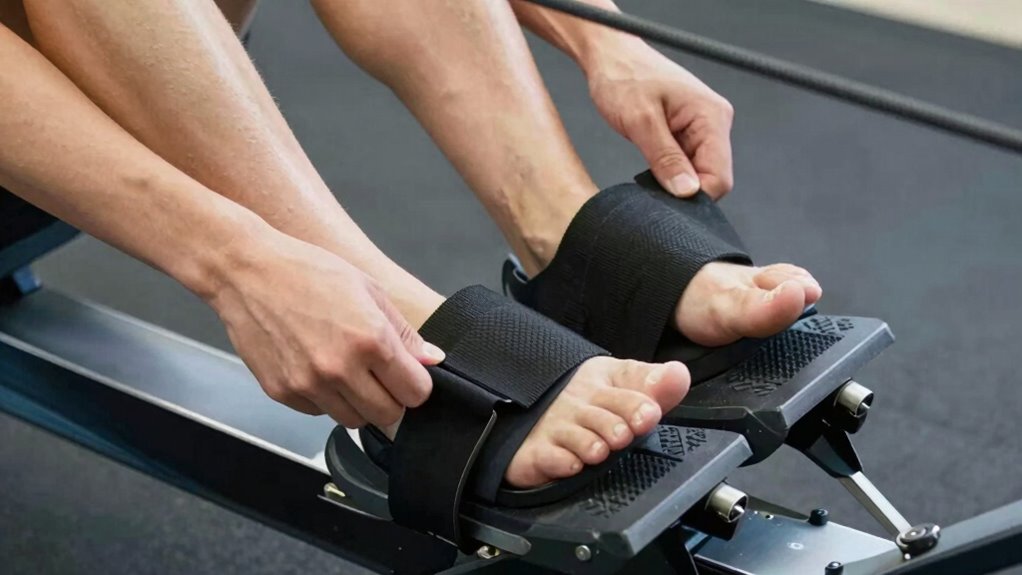
Wondering if your rowing machine foot straps fit correctly? Start by examining the foot strap materials—look for sturdy, durable options like nylon or polyester that can withstand regular use. The straps should feel secure but not overly tight, allowing you to move comfortably without slipping. An ergonomic design is key; adjustable straps help contour to your foot’s shape, providing support and stability during each stroke. Make sure the straps hold your feet firmly in place without causing discomfort or restricting circulation. When you slide your feet in, you should feel snugness that keeps your feet secure but still permits natural movement. Proper fit ensures efficient rowing and helps prevent injury, so take a moment to assess whether your foot straps meet these criteria. Additionally, checking for secure fit and proper adjustment can significantly improve your rowing experience. Paying attention to ergonomic design can also enhance comfort and reduce fatigue during workouts. Ensuring the correct strap length is set helps optimize performance and safety.
Why Proper Foot Strap Adjustment Matters for Your Rowing Form
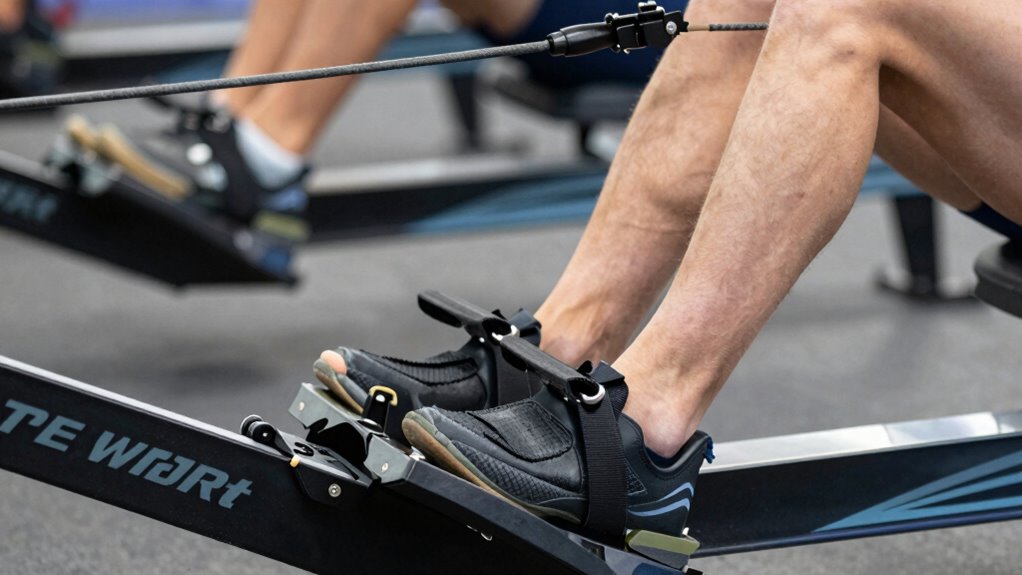
Properly adjusted foot straps are essential because they directly influence your rowing form and overall technique. When your foot straps fit well, you maintain stability and proper leg drive, which improves power transfer and reduces fatigue. Comfortable straps made from quality strap material prevent pinching and discomfort during long sessions, helping you stay focused. Ill-fitting straps can cause your feet to slip, disrupting your stroke rhythm and causing poor posture. Ensuring the correct foot strap adjustment can lead to more efficient and effective workouts. Additionally, correct strap tension helps prevent injuries and ensures consistent performance throughout your rowing session. Recognizing the importance of proper equipment setup can make a significant difference in your rowing efficiency, especially considering the impact of microplastics in dust on indoor environments where rowing machines are often used. Regularly cleaning and maintaining your equipment also supports optimal safety and hygiene, promoting a healthier workout environment.
Step-by-Step Guide to Adjusting Your Rowing Foot Straps Correctly
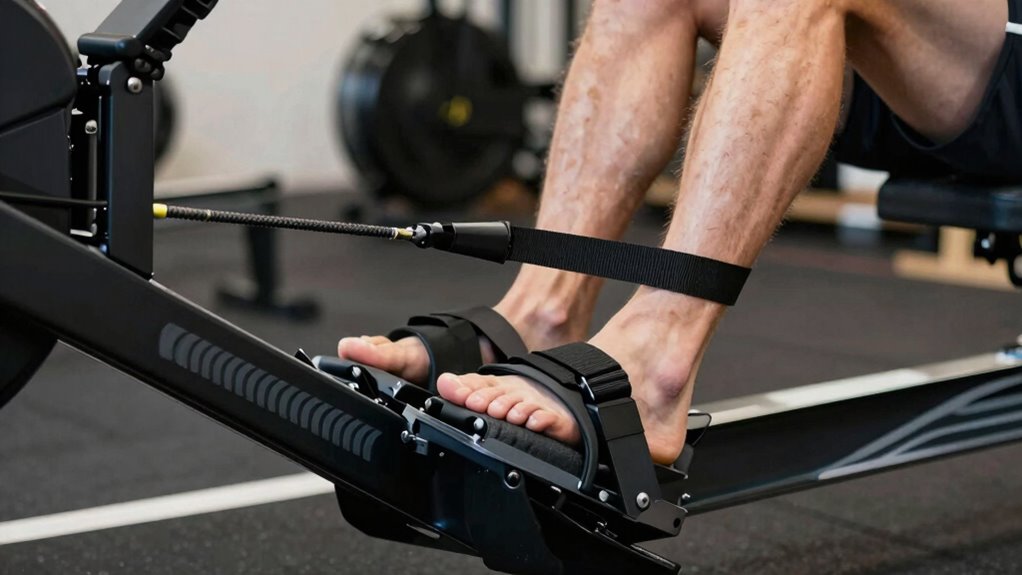
To get the most out of your rowing workout, you need to adjust your foot straps properly. Focus on placing the straps correctly and ensuring they fit snugly without being too tight. When done right, this helps improve your form and keeps you secure during each stroke. Additionally, understanding accessibility features can help customize your equipment setup for better comfort and safety.
Proper Strap Placement
Adjusting your rowing foot straps correctly is essential for comfort and efficient rowing. Proper strap placement ensures your feet stay secure without restricting movement. Place the straps so they snugly hold the middle of your foot, not too tight or loose. This helps maintain proper footwear compatibility and prevents slipping. When adjusting, consider strap material; some materials are more flexible, so you might need to tighten or loosen accordingly. Use the following table to help:
| Foot Position | Strap Tightness | Footwear Compatibility |
|---|---|---|
| Midfoot | Firm but comfortable | Works with most shoes |
| Heel | Looser for flexibility | Compatible with various footwear |
| Toe Area | Secure, not constrictive | Ensures stability |
Proper placement improves form and reduces injury risk, making your workout more effective.
Ensuring Secure Fit
Ensuring your foot straps fit securely is key to maintaining proper form and preventing slips during your rowing session. To achieve this, focus on these steps:
- Check footwear compatibility by ensuring your shoes fit well and are compatible with the strap design.
- Adjust the strap material tension so it’s snug but not overly tight, allowing comfort without restricting movement.
- Confirm the strap placement aligns with the widest part of your foot for maximum support.
- Test the fit by pulling on the straps to ensure they hold your feet firmly in place without causing discomfort. Additionally, paying attention to proper equipment maintenance can help ensure your straps stay in good condition and function effectively.
- Remember that gear care tips can extend the lifespan of your straps and keep them functioning properly over time.
Properly adjusted straps prevent foot slippage and improve efficiency. Remember, the right strap material and appropriate fit are essential for a secure, effective workout.
Troubleshooting Common Foot Strap Problems During Your Workout
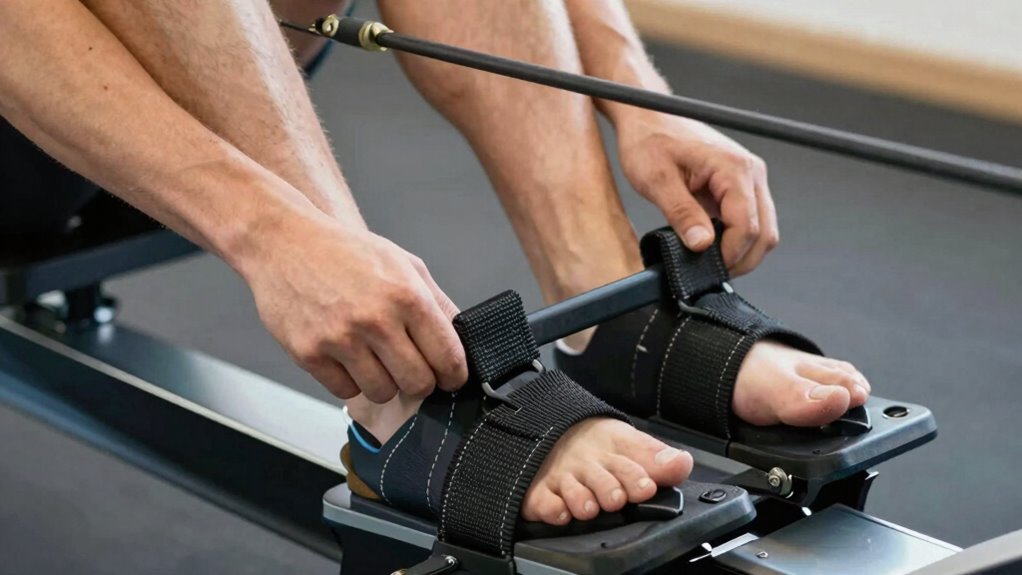
If your foot straps aren’t staying in place, it’s time to check their placement and tightness. Properly adjusted straps should feel secure without causing discomfort, and slipping indicates a problem. Recognizing these signs helps you make quick adjustments for a safer, more effective workout. Incorporating AI-driven solutions in equipment design can further enhance the stability and customization of your rowing machine setup. Additionally, understanding the importance of cable management can prevent issues related to loose or tangled cords that may interfere with your workout safety and efficiency. Paying attention to sound healing science concepts like specific frequencies can also contribute to a more focused and relaxing exercise environment. Moreover, leveraging support networks for new dads can provide valuable advice and encouragement during your fitness journey, especially when balancing new responsibilities.
Proper Foot Strap Placement
Proper foot strap placement is essential for a comfortable and effective rowing workout. Correct strap positioning ensures your feet stay secure without causing discomfort. To achieve this:
- Position the straps so they sit across the widest part of your shoes, not too high or low.
- Adjust the strap length so your foot feels snug but not tight, avoiding pinching or numbness.
- Ensure the strap is centered over the arch of your foot for ideal support.
- Double-check that both straps are evenly tightened for balanced force distribution.
Proper foot strap placement helps maintain proper form and prevents slipping. Keep in mind that strap positioning should be firm but comfortable, allowing for quick release if needed. Adjust as you go to find the perfect fit that keeps you stable without restricting movement.
Adjusting Strap Tightness
Sometimes, strap tightness can feel off during your workout, causing discomfort or slipping. To fix this, start by adjusting the foot strap tension—make it snug enough to hold your foot securely without cutting off circulation. Loosen or tighten the straps as needed, ensuring they’re evenly placed across your foot. Proper strap placement helps distribute pressure evenly, preventing hot spots or instability. If your straps are too tight, you might feel restricted, which can affect your rowing form. Conversely, if they’re too loose, your foot may slip during pulls. Check that the straps are aligned correctly over the widest part of your foot and adjust the tension accordingly. Fine-tuning the foot strap tension and placement guarantees a more comfortable, secure fit that enhances your rowing experience. Additionally, understanding ergonomic fit can help prevent discomfort and improve overall performance during your workout.
Recognizing Sign of Slipping
During your workout, it’s important to stay alert for signs that your foot straps might be slipping. You may notice your feet shifting forward or sideways, which can compromise your form and power. To identify slipping issues, check for these signals:
- Your footwear choice feels loose or uncomfortable within the strap.
- The strap material seems to be stretching or losing grip during use.
- You find yourself adjusting the straps frequently, disrupting your rhythm.
- Your heels lift off the footplate despite tight straps.
If you observe any of these signs, it’s time to reassess your setup. Opt for footwear that fits snugly and ensure the strap material provides enough grip. Proper recognition allows you to correct the issue before impacting your workout efficiency.
How Foot Strap Tension Affects Your Power and Comfort
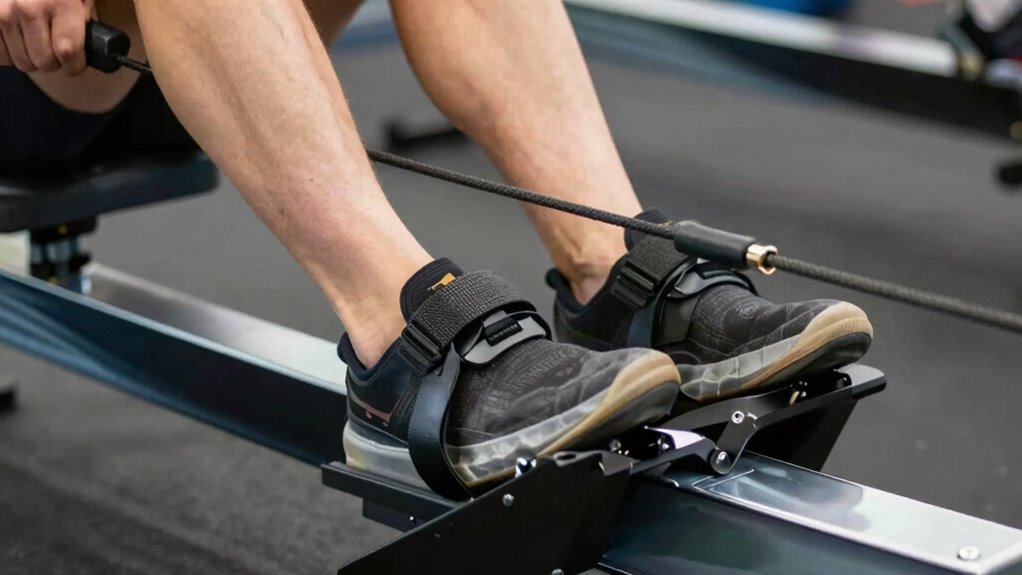
Adjusting the tension of your foot straps can substantially impact both your power output and comfort during rowing. Proper foot strap ergonomics guarantee your feet stay secure without restricting movement or causing discomfort. When straps are too tight, your feet may feel cramped, reducing circulation and causing fatigue. Too loose, and your feet might slip, leading to inconsistent power transfer and potential injury. Maintaining tension consistency across both straps helps you achieve a smooth, efficient stroke. The right tension allows your legs, core, and arms to work in harmony, maximizing force while minimizing strain. Focusing on the proper foot strap tension ensures optimal energy transfer during each stroke. Proper strap tension contributes to better stroke efficiency and reduces the risk of injury. Ensuring consistent tension also helps maintain proper rowing form, which is essential for long-term performance and injury prevention. A well-adjusted foot strap setup can also enhance your overall rowing experience, making workouts more effective and enjoyable. This balance improves your overall rowing form and ensures you get the most out of each session.
Adjusting Foot Straps for Beginners, Intermediate, and Advanced Rower
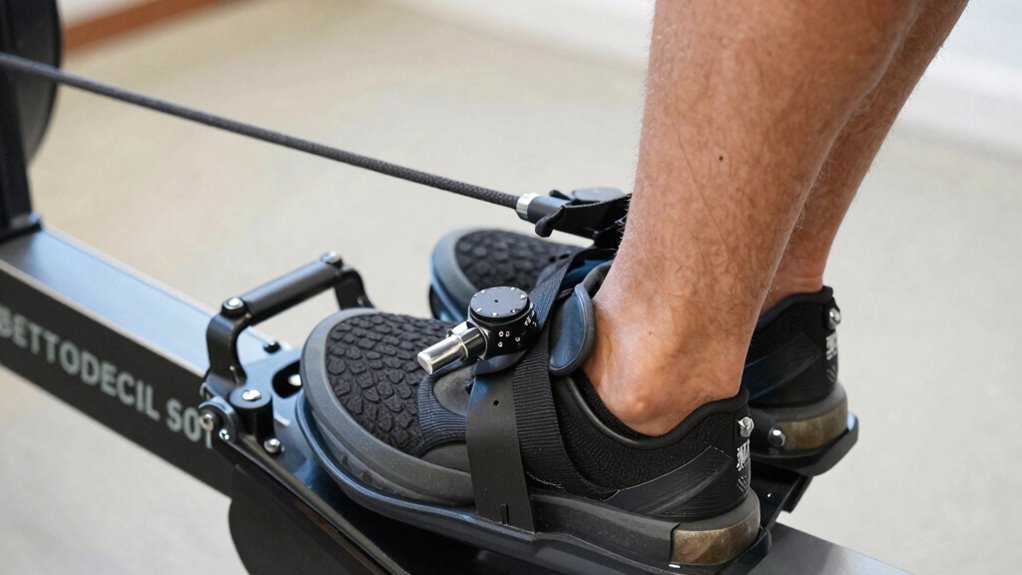
Whether you’re a beginner, intermediate, or advanced rower, setting your foot straps correctly is essential for peak performance and comfort. The right adjustment depends on your skill level and personal preference. For starters, consider the foot strap materials—durable neoprene or nylon offer different levels of flexibility. Use strap adjustment tools, like a simple buckle or cam cleat, to fine-tune tension. To optimize your setup, be aware of the diverse urban activities and regional features that can influence your training environment and technique. 1. Beginners should loosen straps slightly for comfort and easy movement. 2. Intermediate rowers need a snug fit to improve power transfer. 3. Advanced athletes require tightly secured straps for maximum efficiency. 4. Always ensure straps are evenly adjusted to prevent asymmetry and maintain proper form.
Adjusting your foot straps correctly enhances your rowing experience and supports better technique.
When and How to Recheck Your Foot Straps for Optimal Performance
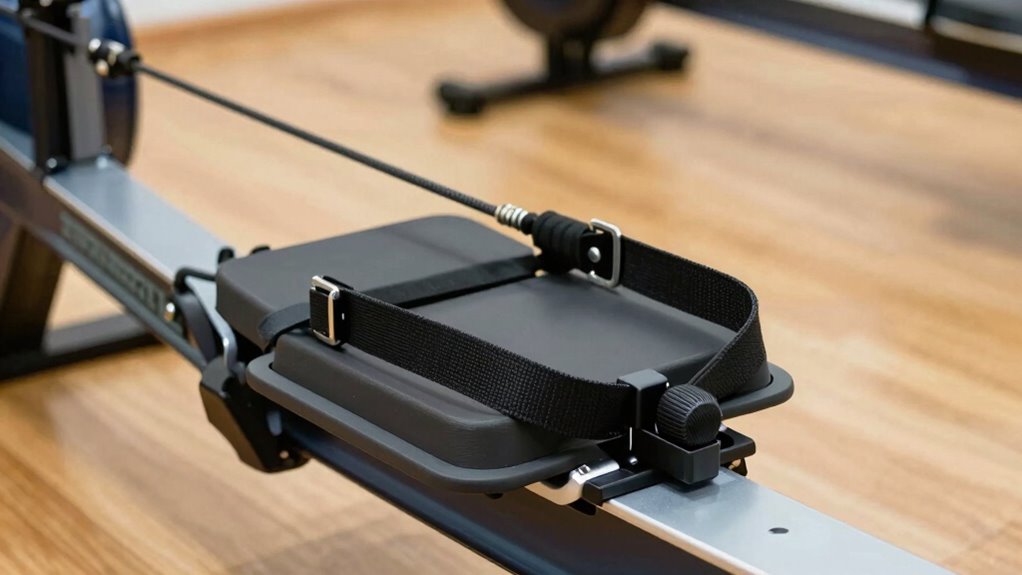
Regularly rechecking your foot straps guarantees they stay properly adjusted as your technique improves or conditions change. If you notice your knees drifting inward or outward during rows, it’s time to reassess. Proper ankle mobility allows you to maintain knee alignment and prevent strain. Check your straps after every few sessions or if you feel discomfort. Ensure your feet are snug but not tight, allowing natural ankle movement. Use this quick guide:
| When to Recheck | How to Adjust |
|---|---|
| Knee misalignment or pain | Loosen straps for more ankle flexibility |
| Feeling unstable or slipping | Tighten straps for better control |
| Technique improvements | Re-verify fit as your form evolves |
| After long workouts | Reassess to maintain ideal fit |
Additionally, understanding DIY safety tips can help prevent injuries when making adjustments or using your rowing machine.
FAQs: Common Questions About Rowing Machine Foot Straps
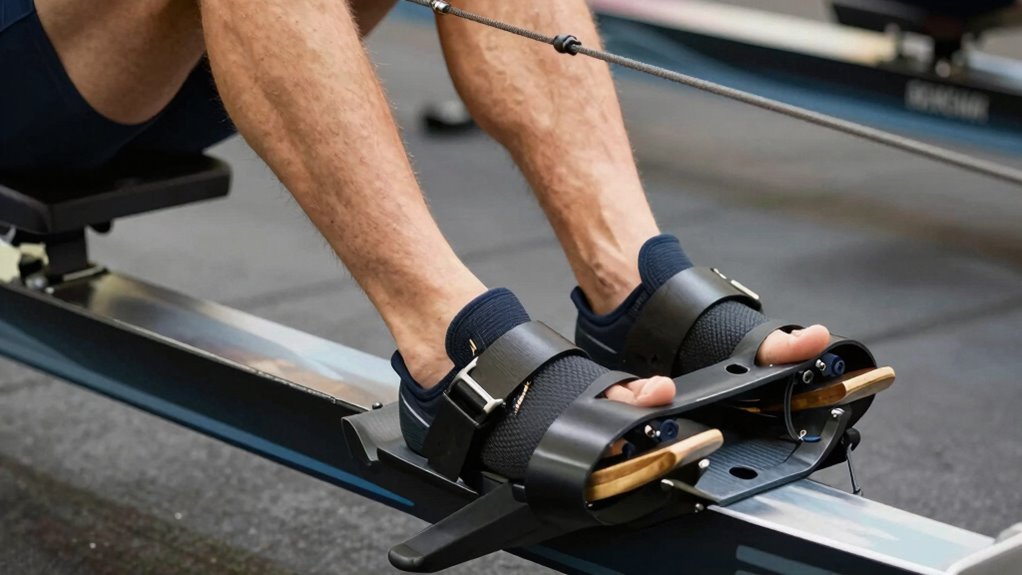
Are you wondering how to make certain your foot straps on the rowing machine fit perfectly and keep you comfortable? Here are answers to common questions.
- How does footwear compatibility affect the straps? Make sure your shoes aren’t too bulky, which can interfere with a snug fit.
- What about strap material? Choose a strap material that’s durable and adjustable, like nylon or synthetic blends, for long-lasting comfort.
- Can I customize strap tightness? Yes, most straps are adjustable—tighten or loosen them to avoid foot slippage or discomfort.
- Are there specific foot strap features? Look for padded straps or quick-release mechanisms to enhance comfort and ease of use.
Frequently Asked Questions
How Often Should I Recheck My Foot Strap Adjustment?
You should recheck your foot strap adjustment every few weeks or after any noticeable change in your rowing routine. Regular foot strap maintenance guarantees your form stays proper and prevents discomfort or injury. Keep an eye on the fit, and don’t hesitate to tighten or loosen the straps as needed. This adjustment frequency helps maintain ideal support and performance, making your workouts safer and more effective.
Can Improper Foot Strap Tension Cause Injury?
Improper foot strap tension can definitely cause injury, as it affects your foot stability and rowing form. If the straps are too tight, you might experience foot or ankle pain; too loose, and you risk slipping or losing control. Proper foot strap safety is essential for rowing injury prevention. Always check and adjust your straps regularly to maintain ideal tension, ensuring you stay safe and avoid strain during your workout.
Are There Different Foot Strap Types for Various Rowing Machines?
Yes, there are different foot strap types for various rowing machines. You might find adjustable straps made from elastic or nylon, and some models use ratchet or velcro systems. Foot strap materials vary to match machine design, and if your straps wear out or don’t fit properly, you’ll need a foot strap replacement. Always check your rowing machine’s specifications to guarantee you select the correct type that offers the best support and safety.
How Do I Know if My Foot Straps Are Worn Out?
You can tell if your foot straps are worn out by inspecting the strap material for fraying, tears, or thinning spots. If the straps don’t hold your feet securely or slip during use, they likely need replacing. Use your adjustment tools to tighten or replace the straps, ensuring they fit snugly. Worn-out straps compromise form and safety, so regularly check them to keep your rowing sessions effective and injury-free.
What Are Signs of Incorrect Foot Strap Positioning During Rowing?
Imagine your foot straps as the steady anchor of your rowing boat—if they’re misplaced, your form suffers. Signs of incorrect positioning include strap looseness, causing your feet to slide and compromising control, and foot discomfort from straps digging in or being too tight. You might feel unstable during strokes or notice your feet aren’t securely held, making it harder to row efficiently and risking injury. Adjust your straps for a secure, comfortable fit.
Conclusion
Think of your rowing machine like a finely-tuned instrument; the right foot strap adjustment is the key to hitting all the right notes. When your straps fit properly, your form stays steady and your workout sings. Take a moment to check and fine-tune them regularly. With this simple adjustment, you’ll glide through your rows smoothly, turning each session into a harmonious performance. Keep your straps snug, and let your rowing flow effortlessly.