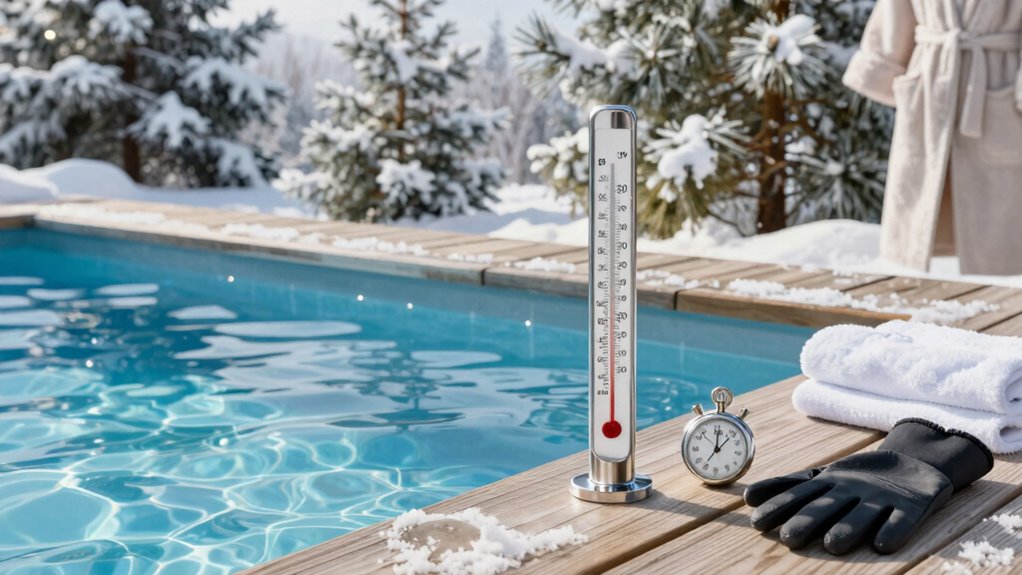

To stay safe during a cold plunge, keep water temperatures between 50°F to 59°F (10°C to 15°C), and limit your time to 1-3 minutes, especially if you’re new. Set up in a stable, hazard-free environment with clean, filtered water, and confirm your equipment is secure. Watch for signs of hypothermia like shivering or dizziness, and have warm clothes ready for after. Keep these tips in mind to maximize safety—more details await if you continue.
Key Takeaways
- Maintain water temperatures above 50°F (10°C) to reduce hypothermia and cold shock risks.
- Limit cold water exposure to 1-3 minutes, monitoring for signs of overexposure or hypothermia.
- Use a stable, level setup with proper insulation, secure connections, and appropriate water filtration for safety.
- Always test water temperature with a thermometer before entry and ensure environment is hazard-free.
- Prepare mentally with controlled breathing and set clear intentions to enhance safety and comfort during the plunge.
What Are Safe Cold Temperatures for Plunging?

Understanding safe cold temperatures for plunging is essential to prevent hypothermia and guarantee a safe experience. When you immerse yourself in cold water, rapid temperature drops can trigger cold shock, which affects your breathing and heart rate. To minimize risks, keep water temperatures above 50°F (10°C), as lower temperatures substantially increase danger. Water conductivity also plays a role; colder water with high conductivity can transfer heat quickly, intensifying cold shock effects. Avoid plunging into water that’s too cold, especially if you’re unacclimated, as the sudden temperature change can overwhelm your body’s ability to adapt. Always test the water beforehand and use a thermometer to guarantee temperatures stay within a safe range. Monitoring Water conductivity is also important because it influences how quickly your body loses heat during the plunge. Being aware of microplastics in dust and other contaminants can help you choose safer water sources, further reducing health risks. Staying within these limits helps you enjoy your cold plunge safely and reduces the risk of adverse reactions.
How Long Should You Stay in Cold Water?

You should limit your time in cold water to prevent hypothermia and overexposure. Typically, 1 to 3 minutes is enough for most beginners, but listen to your body. If you notice shivering, numbness, or dizziness, it’s time to exit immediately. Additionally, monitoring your body’s response helps ensure safe exposure levels.
Recommended Duration Limits
To minimize the risk of hypothermia and cold-related injuries, it’s important to limit your time in cold water. Keeping track helps maintain hypothermia awareness and ensures your mental preparedness stays sharp. Usually, beginners should start with 1 to 3 minutes, gradually increasing as your body adapts.
- Listen to your body signals and don’t push beyond your comfort zone
- Use a timer to stay aware of your session length
- Avoid staying in too long, even if you feel okay initially
- Know your personal limits and respect them
- Remember, safety comes first—shorter sessions are smarter
Monitoring your body’s response during cold plunges is essential for safe and effective practice.
Being aware of cold shock response symptoms can help you recognize when to exit the water promptly. Sticking to these limits helps prevent cold shock or exhaustion and keeps your cold plunge experience safe and enjoyable.
Additionally, staying within recommended durations helps prevent hypothermia and ensures you can safely enjoy the benefits of cold exposure. A proper setup with safety measures like accessible exit points and monitoring devices further enhances your safety during cold plunges.
Signs to Exit
How do you know when it’s time to get out of the cold water? Pay attention to hypothermia symptoms like intense shivering, numbness, or dizziness. If you start feeling excessively cold or your muscles weaken, it’s a clear sign to exit. Keep an eye on your plunge duration; most experts recommend sticking to your planned time limit to prevent overexposure. If you notice your skin turning pale or bluish, or if you feel disoriented, these are urgent warning signs. Remember, everyone’s tolerance varies, but listening to your body is key. Exiting promptly when you notice these signs ensures safety and helps you avoid the risks associated with prolonged cold exposure. Always prioritize your well-being over staying in the water longer. Understanding cold tolerance can help you better gauge your limits before entering the water. Additionally, knowing your body’s response to cold can improve your safety during each plunge. Monitoring your core temperature during the plunge can also provide valuable insight into safe exposure times. Being aware of your initial cold shock response can further enhance your safety and preparedness. Recognizing adverse reactions early is crucial to prevent serious health issues during cold plunges.
How to Set Up Your Cold Plunge Safely

To establish your cold plunge safely, start by choosing a location that’s stable, level, and protected from environmental hazards. Make sure your equipment is properly installed, with secure connections and reliable power sources. Taking these steps helps prevent accidents and ensures a safe, effective cold plunge experience. Be aware that family photoshoot fails can sometimes occur unexpectedly, so preparing for unforeseen mishaps can also contribute to a safer setup. Additionally, understanding enterprise governance principles can help in implementing comprehensive safety protocols for your setup. Ensuring your setup adheres to safety standards can further reduce risks and promote a secure environment. Proper equipment maintenance is essential to prevent malfunctions and maintain safety over time. Recognizing nail biology can also be important when considering the materials and tools used for setup or maintenance to avoid potential hazards.
Choosing a Safe Location
Choosing a safe location for your cold plunge is vital to guarantee a secure and enjoyable experience. A good spot ensures stability, easy access, and minimizes hazards. When selecting the area, consider factors like temperature regulation and your mental preparedness. Make certain the surface is non-slip and level to prevent accidents. Keep the plunge away from direct sunlight to maintain consistent water temperature. Confirm there’s enough space for safe entry and exit. Clear the area of obstacles or objects that could cause injury. Adequate lighting and proximity to emergency supplies are also essential. Additionally, assessing the environmental safety of the area helps prevent unforeseen risks. Properly evaluating the installation environment ensures your setup complies with safety standards and reduces potential dangers. Conducting a thorough hazard assessment can identify risks that aren’t immediately obvious. Paying attention to water quality and cleanliness is also crucial for health and safety during your cold plunge. By choosing a well-suited location, you create a safer environment that supports your cold plunge routine and helps you stay focused and prepared mentally.
Proper Equipment Setup
Setting up your cold plunge equipment properly is key to ensuring safety and effective use. First, choose a stable, level surface away from bathroom hazards and outdoor risks like falling or uneven terrain. Use a grounded outlet to prevent electrical shocks, especially if your plunge is indoors. Make sure your setup includes non-slip mats, especially in bathroom areas, to prevent slips. For outdoor setups, ensure the area is sheltered from the elements and well-drained. Secure all hoses and connections to avoid leaks. Keep a thermometer nearby to monitor temperature. Lastly, always inspect your equipment before use. Here’s a quick guide:
| Aspect | Indoor Setup | Outdoor Setup | Safety Tip |
|---|---|---|---|
| Surface | Level, non-slip bathroom floor | Flat, stable ground | Prevent slips and falls |
| Electrical | Grounded outlet, GFCI protected | Weatherproof outlet | Avoid shocks |
| Environment | Controlled, dry space | Sheltered from weather | Minimize outdoor risks |
| Equipment Check | Inspect hoses, connections | Secure fittings | Prevent leaks and accidents |
| Monitoring | Use thermometer, monitor regularly | Keep an eye on temperature | Ensure safe temperatures |
How to Recognize Signs of Hypothermia and Overexposure
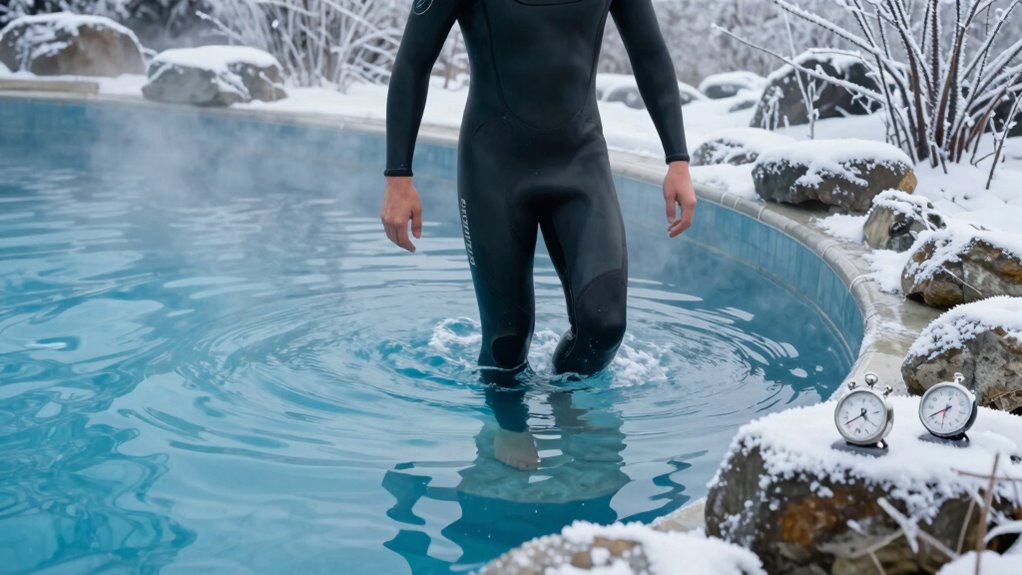
Recognizing the signs of hypothermia and overexposure is essential for staying safe during cold plunges. If you notice symptoms like intense shivering, confusion, or numbness, you might be experiencing hypothermia symptoms. Overexposure signs include dizziness, fatigue, or a bluish tint to lips and fingers. Paying attention to how you feel helps prevent serious health issues. Keep an eye out for these warning signs:
Watch for shivering, confusion, and bluish lips to spot hypothermia and overexposure signs early.
- Shivering that worsens or stops suddenly
- Slurred speech or confusion
- Drowsiness or feeling unusually tired
- Cold, pale, or bluish skin
- Loss of coordination or clumsiness
If you notice any of these symptoms, get out of the cold water immediately and warm up gradually. Understanding the Free Floating nature of your body’s response to cold exposure can help you better interpret your body’s signals and prevent dangerous health complications. Recognizing these signs early can prevent serious health issues.
What Are the Best Ways to Warm Up After a Cold Plunge?
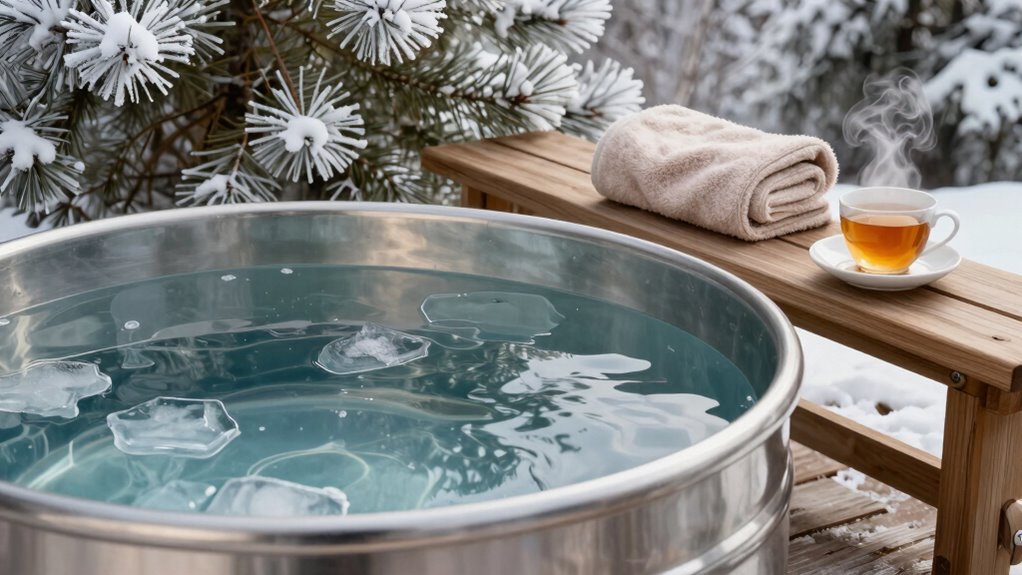
After a cold plunge, warming up properly is essential to prevent hypothermia and guarantee a safe recovery. Begin with gentle post plunge stretching to stimulate circulation and ease muscle tension. This helps your body gradually return to its normal temperature. Drinking a warm beverage, like herbal tea or hot water with lemon, can also help raise your core temperature comfortably. Avoid rapid or intense heating methods, which can shock your system. Instead, focus on layering warm clothes or wrapping yourself in a cozy blanket once you’re out of the water. Staying active, like walking around or doing light movements, encourages blood flow and speeds up warming. Incorporating knowledge about pinball machine weights can remind you to handle your post-plunge gear carefully to avoid strain. Combining these methods ensures a safe, effective warm-up after your cold plunge.
How to Choose a Safe Location and Equipment for Cold Water Immersion
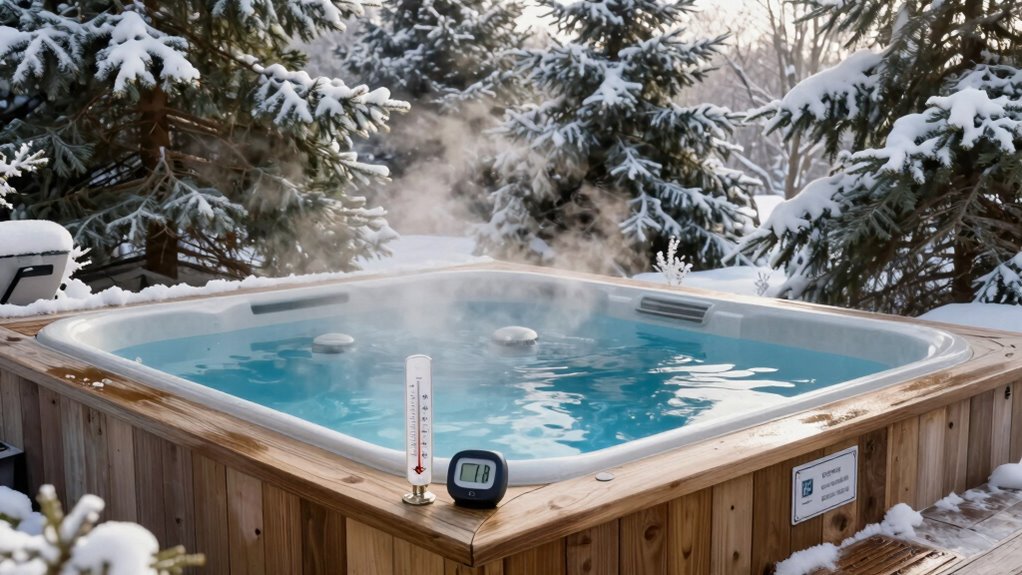
Choosing a safe location and proper equipment for cold water immersion is essential to guarantee your safety and maximize benefits. You want a spot that’s stable, free of hazards, and easy to access. Confirm the water source has good water filtration to prevent infections and contaminants. Being aware of hypothermia awareness helps you recognize risks early. Here are some tips:
- Pick a flat, non-slippery surface for entry and exit
- Make sure there’s nearby shelter or a warm space for post-immersion warmth
- Use a sturdy, insulated container or pool designed for cold plunges
- Keep safety gear like a thermometer, towel, and warm clothes close by
- Check water quality regularly, confirming proper water filtration to avoid health issues
Safety first—always plan ahead and stay alert during your cold plunge.
How to Prepare Your Body and Mind Before Cold Plunging
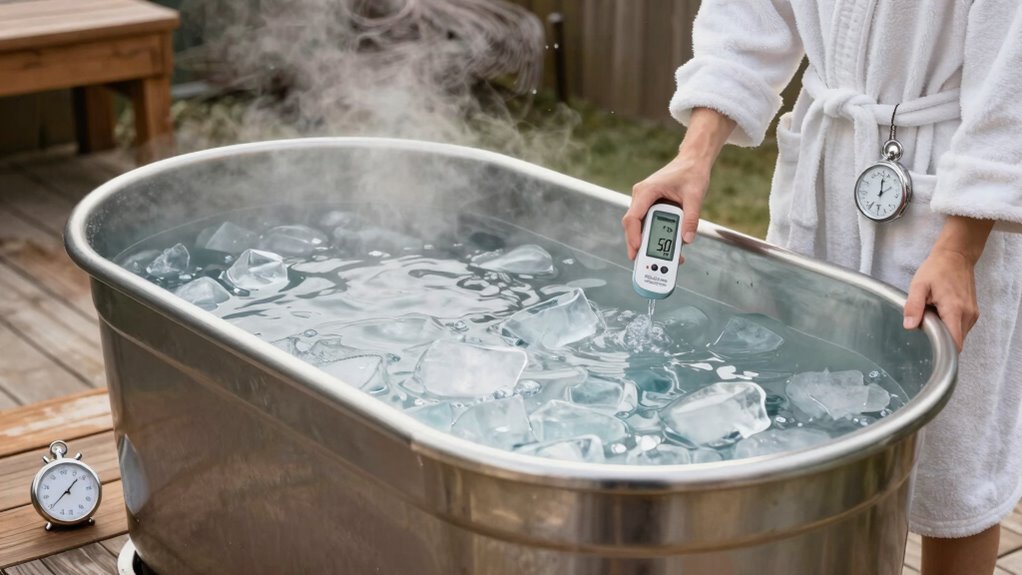
Preparing your body and mind before cold plunging helps guarantee a safer and more effective experience. Mental preparation is essential—you should set clear intentions and stay calm to reduce shock. Practice breathing techniques, such as deep, slow inhales and exhales, to help regulate your nervous system and maintain composure. Focus on steady breaths to prevent panic and improve oxygen flow. Avoid rushing into the water; instead, take a few moments to center yourself mentally. Hydrate beforehand and loosen tight clothing to ease the progression. By calming your mind and controlling your breath, you reduce stress and prepare your body for the cold, making the plunge more manageable and beneficial.
Common Mistakes to Avoid During Cold Water Immersion
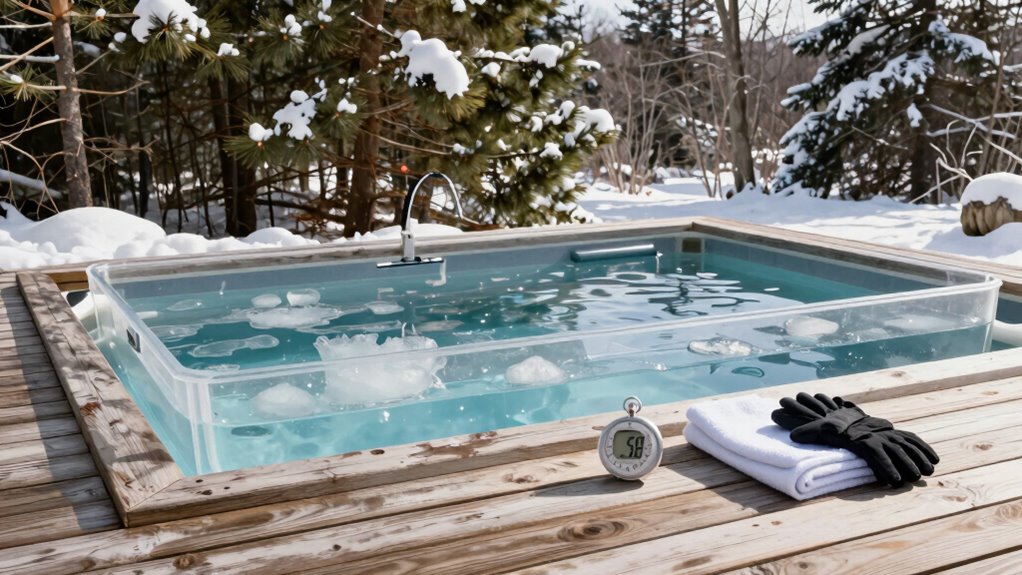
One of the most common mistakes during cold water immersion is rushing into the water without proper preparation. This can lead to shock or injury. To prevent this, focus on hygiene practices like showering beforehand to keep the water clean and your body healthy. Also, maintain duration consistency—don’t stay in too long or too short, as overdoing it can be dangerous. Be mindful of your body’s signals and don’t push beyond your limits.
Some mistakes to watch for include:
- Skipping hygiene practices before plunging
- Changing water temperature frequently
- Ignoring signs of discomfort or cold shock
- Inconsistent timing sessions
- Not warming up properly afterward
Sticking to these tips ensures safer, more effective cold plunges.
Frequently Asked Questions
Can Cold Plunges Cause Long-Term Health Issues?
Cold plunges can cause long-term health issues if you don’t practice proper temperature regulation and limit your exposure. Overdoing it may lead to issues like nerve damage or cardiovascular stress. However, when done safely, cold plunges can boost mental health and improve circulation. Always listen to your body, start slowly, and consult a healthcare professional to avoid potential risks and enjoy the mental and physical benefits safely.
Is Cold Water Immersion Safe for Everyone?
You might think cold water immersion is for everyone, but think again—cold water risks aren’t a joke. If you have heart issues or poor circulation, plunging could be dangerous. Always follow immersion precautions, like limiting time and monitoring your body’s signals. It’s not about being brave; it’s about being smart. So, check with your doctor first, and don’t ignore your body’s warnings—your health’s worth it.
How Does Alcohol Affect Cold Plunge Safety?
Alcohol impairs your circulation, making it harder for your body to regulate temperature during a cold plunge. Drinking increases your risk of hypothermia because it can give a false sense of warmth while your core temperature drops. You might not realize how cold you’re getting, leading to dangerous situations. It’s safest to avoid alcohol before or during a cold plunge to protect yourself from these risks.
Are There Age Restrictions for Cold Plunging?
You should know there are age limitations for cold plunging, especially to guarantee minor safety. Typically, minors aren’t recommended to dip without adult supervision because their bodies react differently to cold temperatures. The risk increases with age restrictions, so if you’re under 18, consult a healthcare professional first. Don’t underestimate the potential dangers—your safety hinges on understanding these limits and respecting the process.
What Are the Signs of Shock During Cold Immersion?
If you experience shock symptoms during cold immersion, you might feel dizzy, excessively cold, or find your breathing becoming irregular. You may also notice a rapid heartbeat or weakness. If these signs occur, you should immediately stop the plunge, get out of the water, and seek emergency response. Keep your body warm and monitor your condition closely until help arrives. Prompt action can prevent serious complications.
Conclusion
Remember, approaching cold plunges with respect and awareness is your best defense—like Icarus, don’t fly too close to the sun. Stick to safe temperatures, limit your time, and listen to your body. With proper setup and preparation, you’ll harness the invigorating benefits without risking the fall. Embrace the chill mindfully, and let your cold plunge be a journey of resilience rather than risk. Stay safe, and enjoy the icy adventure ahead.