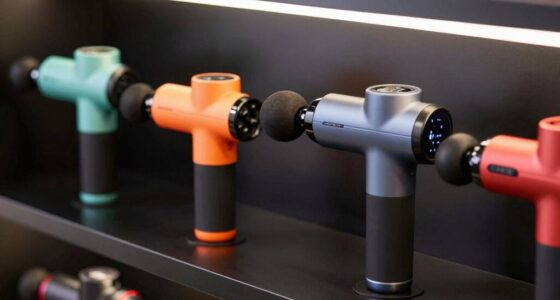
To prevent overdoing it with a massage gun, focus on safer techniques by limiting sessions to 1-2 minutes per muscle group and avoiding prolonged contact over sensitive or bony areas like the neck, spine, elbows, or knees. Be cautious of applying too much pressure or exceeding your comfort zone, especially on large muscles. Proper use protects against soreness, bruising, or injury. If you want to know more about safe practices, there’s more to discover below.
Key Takeaways
- Avoid prolonged or excessive use on sensitive areas like the neck, lower back, and thighs to prevent tissue damage.
- Limit sessions to 1-2 minutes per muscle group and apply gentle pressure to prevent overuse injuries.
- Do not target bones, joints, or bony prominences directly, especially over the spine, elbows, knees, or collarbone.
- Watch for signs of overuse such as soreness, swelling, numbness, or increased pain, and adjust or stop use accordingly.
- Incorporate proper techniques with steady movement and avoid overworking specific areas to ensure safety.
Why Safety Matters When Using a Massage Gun
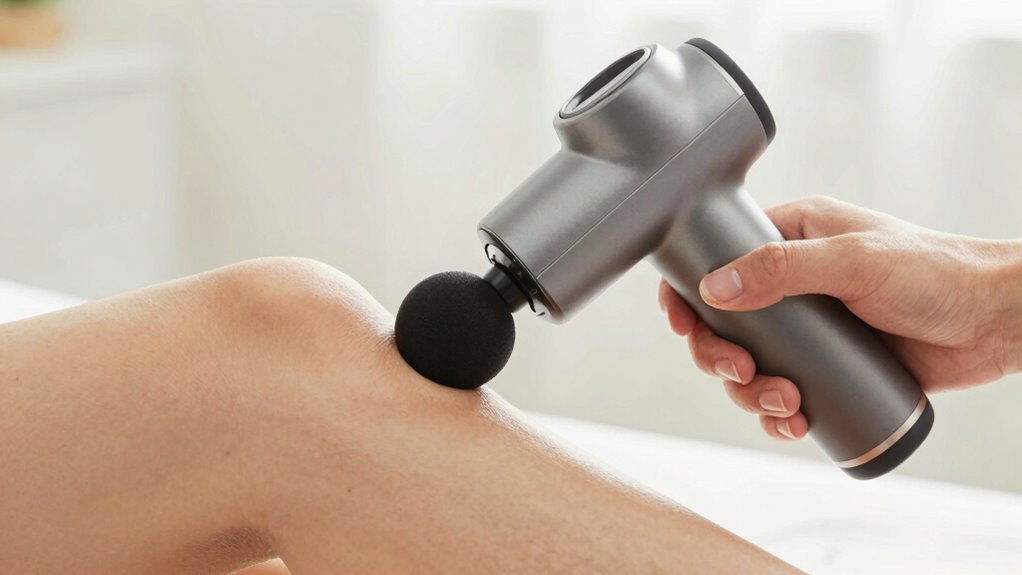
Using a massage gun can provide quick relief and muscle relaxation, but it’s important to prioritize safety to avoid injuries. Efficacy concerns often arise when users overuse the device or apply too much pressure, leading to diminished benefits. User fatigue is another risk, especially if you use the massage gun for too long or on the same area repeatedly. Overdoing it can cause soreness, bruising, or even tissue damage. To stay safe, follow manufacturer guidelines, limit session durations, and avoid excessive pressure. Remember, a massage gun is a tool to complement your recovery, not replace proper techniques or medical advice. Prioritizing safety guarantees you get the benefits without risking harm or reducing its effectiveness. Being aware of common misuse patterns can help prevent injuries. Additionally, understanding proper usage techniques can significantly reduce the risk of overuse or misuse. Knowing about safe pressure application helps ensure you don’t inadvertently cause tissue stress or injury. Incorporating regular device maintenance also helps maintain safe operation and prolongs the device’s lifespan. Moreover, avoiding overstimulation of sensitive areas is crucial to prevent discomfort or injury during use.
Common Areas Where People Overuse a Massage Gun
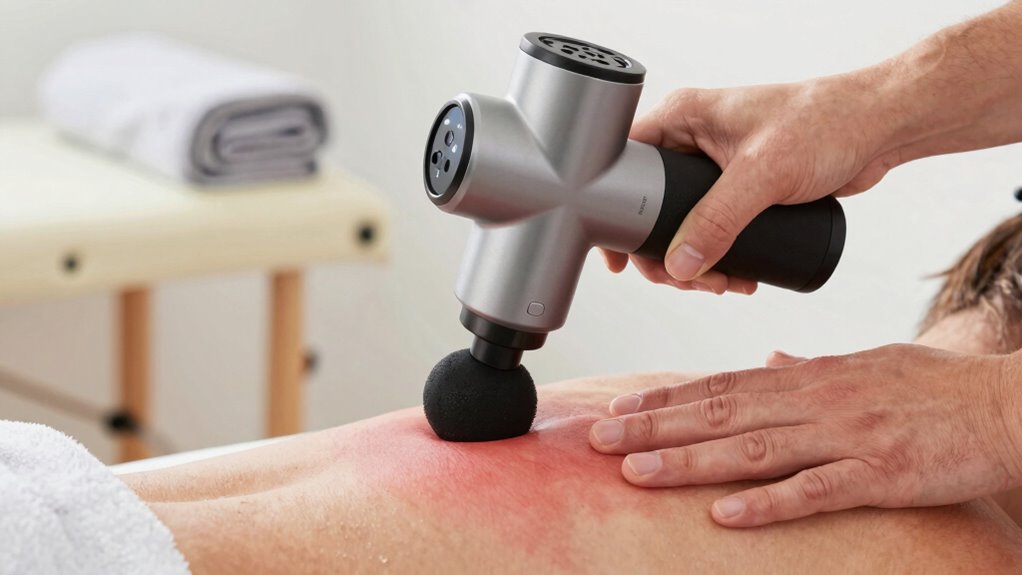
Many people tend to overuse massage guns on their necks, which can cause strain or injury. The lower back is another common area where excessive use may lead to pain or nerve issues. Additionally, thighs and hamstrings often get too much attention, risking bruising or muscle damage. Being mindful of muscle recovery techniques and understanding proper techniques can help prevent such overuse injuries. It is also important to consider appropriate pressure levels to avoid overtaxing sensitive or already fatigued muscles. Paying attention to massage gun usage guidelines can further reduce the risk of harm during your self-care routines. Incorporating proper technique can enhance safety and effectiveness during massage sessions.
Neck Area Overuse
Although massage guns can provide relief, overusing them on the neck area can lead to discomfort or injury. The neck is sensitive, especially around the cervical spine, and excessive pressure can worsen neck tension rather than relieve it. To avoid problems, keep these points in mind:
- Limit sessions to 1-2 minutes per area to prevent overstimulation.
- Avoid pressing directly on the cervical spine, focusing instead on surrounding muscles.
- Never use high-intensity settings for prolonged periods, which can cause strain or nerve irritation.
- Be aware of the environmental impact of tissue paper and choose eco-friendly options when selecting accessories or replacements to reduce your overall footprint.
- Proper technique and awareness of safe massage practices can help prevent injuries and ensure effective relief. Additionally, understanding the anatomy of the neck can guide safer massage techniques and prevent misuse. Incorporating knowledge about muscle groups involved in neck tension can further enhance safe application and target relief effectively. Recognizing the importance of massage gun safety practices is essential to avoid common pitfalls and protect your health.
Overdoing it can lead to soreness, numbness, or even dizziness. Be gentle and attentive to your body’s signals. Proper use minimizes risk while maximizing relief from neck tension.
Lower Back Risks
While it’s tempting to target the lower back with a massage gun for relief, overusing it in this area can cause more harm than good. The lower back is sensitive, and excessive pressure may irritate muscles, ligaments, or even nerves. For massage gun safety, avoid spending too much time on this area or applying too much force. Remember, the lower back contains delicate structures that can be easily overstimulated, leading to discomfort or pain. Instead, use gentle, controlled movements and limit your sessions to a minute or two. Proper technique and moderation are key to preventing injury and ensuring safe, effective relief. Additionally, understanding the anatomy of the lower back can help you target muscles safely and avoid overexertion. Being aware of common injury risks associated with overuse can further protect you from harm. Incorporating proper technique can also minimize the risk of overstimulation and maximize the benefits of your massage sessions. Paying attention to massage gun settings can help prevent excessive pressure and reduce the likelihood of injury.
Thighs and Hamstrings
Have you ever noticed how easy it is to overdo it on your thighs and hamstrings with a massage gun? Overstimulation of the quadriceps can lead to soreness or even strain, especially if you press too hard or stay in one spot too long. Be cautious around the hamstrings, as overuse can cause calf muscle strain or discomfort. To prevent issues, keep these tips in mind:
- Limit each area to 1-2 minutes to avoid overstimulation.
- Use light pressure, especially on sensitive muscles.
- Avoid targeting the same spot repeatedly to prevent strain or soreness.
- Recognize the importance of muscle recovery to avoid overuse injuries and promote optimal results. Additionally, understanding free crypto opportunities can help you stay informed about safe practices in other areas of your life. Incorporating proper massage techniques can enhance your recovery process and reduce the risk of overuse. Being aware of common overuse areas can help you develop a more balanced approach to using your massage gun.
Overusing your massage gun on these areas can do more harm than good, so listen to your body and adjust your pressure accordingly.
Risks of Using a Massage Gun on Sensitive or Bony Areas
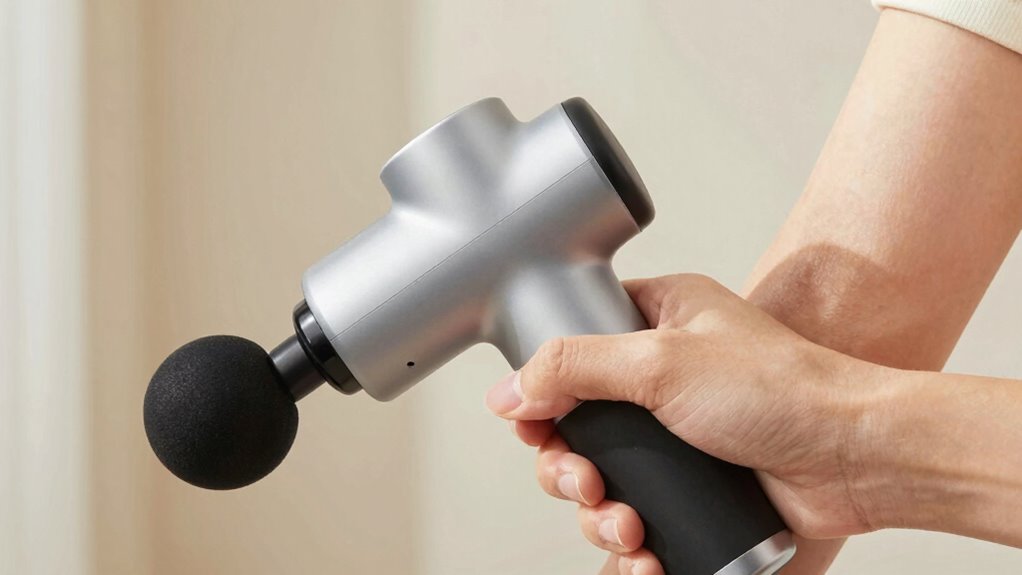
You should avoid using a massage gun directly on bony prominences, as the vibrations can cause discomfort or injury. When working on sensitive areas, use gentle pressure to prevent irritation or damage. Being cautious around these spots helps make certain of safe and effective relief.
Avoid Bony Prominence Areas
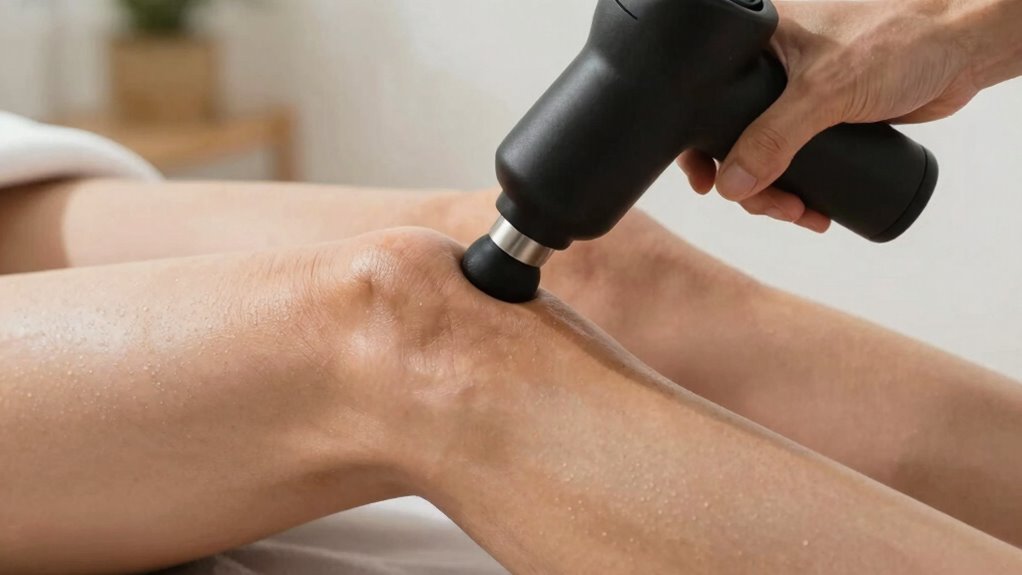
Applying a massage gun directly over bony prominences or sensitive areas can cause discomfort or even injury. These areas lack muscle padding, making them vulnerable to excessive pressure. To stay safe, avoid targeting bony prominence regions such as the spine, elbows, or knees. Instead, focus on muscle-rich areas. Remember:
- Do not use the massage gun directly on your bones or joints.
- Be cautious around sensitive areas like the front of your neck or collarbone.
- Always keep the device moving to prevent pressure buildup.
Focusing on muscles rather than bony prominence or sensitive areas reduces the risk of bruising or nerve irritation. Staying mindful of these zones ensures safe, effective massage sessions while preventing unnecessary discomfort or injury.
Be Gentle Over Sensitive Spots
Using a massage gun over sensitive spots or bony areas can lead to discomfort or injury if you’re not careful. These areas often contain trigger points or muscle knots that are more prone to irritation. Applying too much pressure or staying too long can worsen pain or cause bruising. To avoid harm, be gentle and stay cautious around bony prominences and sensitive tissues.
| Sensitive Area | Recommended Approach |
|---|---|
| Bony spots | Use light pressure or skip entirely |
| Trigger points | Apply gentle, brief pulses to avoid overload |
| Muscle knots | Focus on surrounding tissue, not direct contact |
| Sensitive skin | Use a softer attachment and minimal pressure |
How to Use Your Massage Gun Safely on Larger Muscles
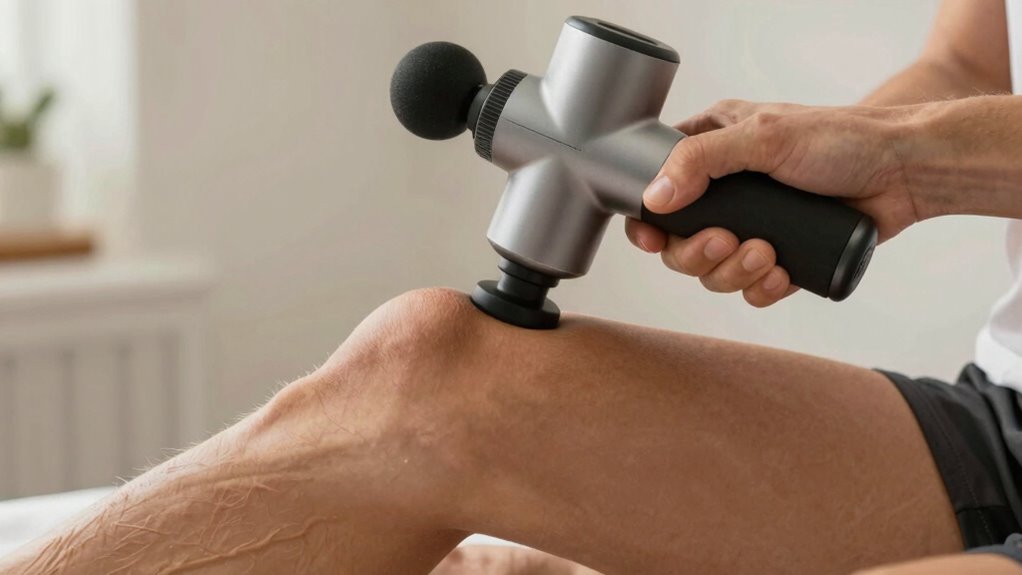
When working on larger muscles with your massage gun, it’s important to proceed with caution to prevent injury. Use slow, controlled movements and avoid staying in one spot too long. This helps promote muscle recovery and ensures you don’t overstimulate the tissue. Focus on proper massage techniques to maximize benefits.
Here are three tips:
- Keep the device moving steadily over the muscle, avoiding pauses.
- Limit sessions to 1-2 minutes per area to prevent overstimulation.
- Adjust the speed and pressure based on comfort and muscle response.
Signs You’re Overdoing It and How to Recognize Discomfort
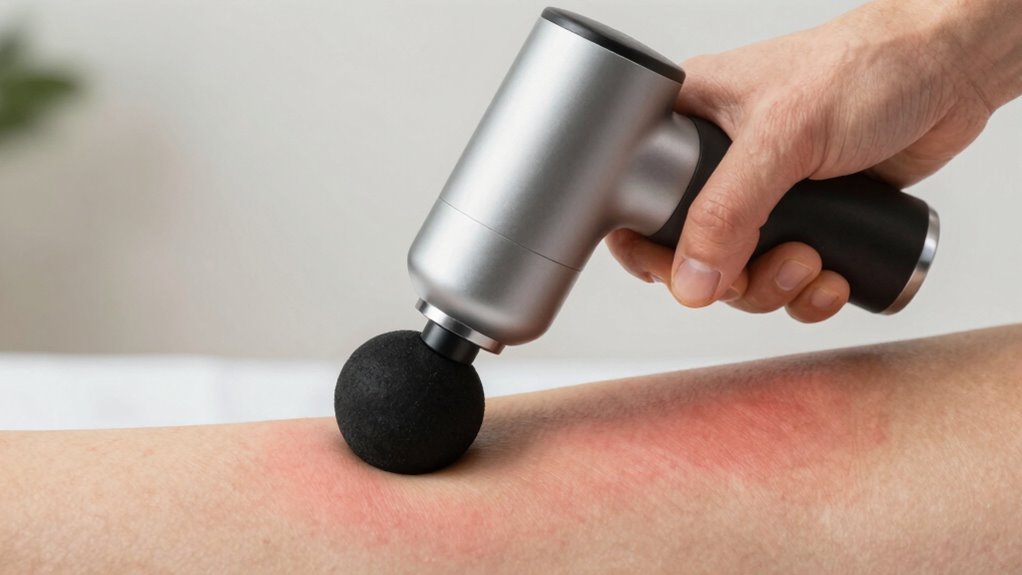
Pushing your massage gun too hard or for too long can lead to discomfort or even injury. Recognizing signs of overdoing it is key to safe muscle recovery. If you notice persistent soreness, numbness, or increased pain during or after a session, you’re likely pushing too far. Pay attention to your body’s signals—tightness or tenderness that worsens suggests you should stop. Use this table as a quick guide:
| Sign of Overuse | What to Do |
|---|---|
| Persistent pain | Reduce pressure or pause |
| Numbness/tingling | Stop immediately, rest |
| Swelling or bruising | Seek medical advice |
Creating a Safe, Balanced Massage Routine
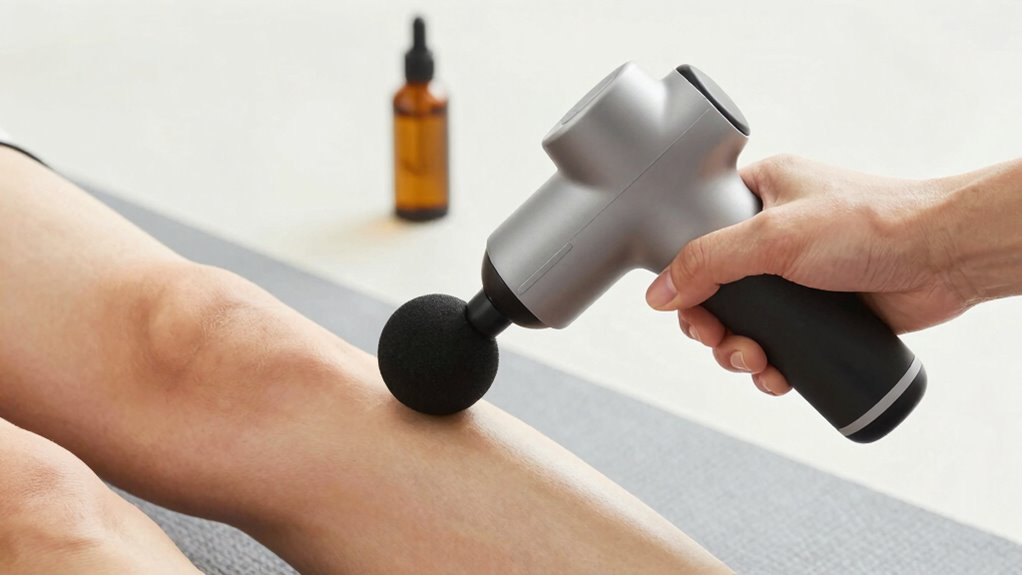
Creating a safe, balanced massage routine guarantees you reap the benefits without risking injury or discomfort. To optimize muscle recovery, focus on developing a massage technique that targets key areas gently and effectively. Here are three tips to help you create that routine:
- Start with light pressure and gradually increase intensity as needed.
- Limit each muscle group to 1-2 minutes to avoid overstimulation.
- Incorporate rest days to allow muscles to recover fully before the next session.
When to Consult a Professional for Safe Massage Gun Use
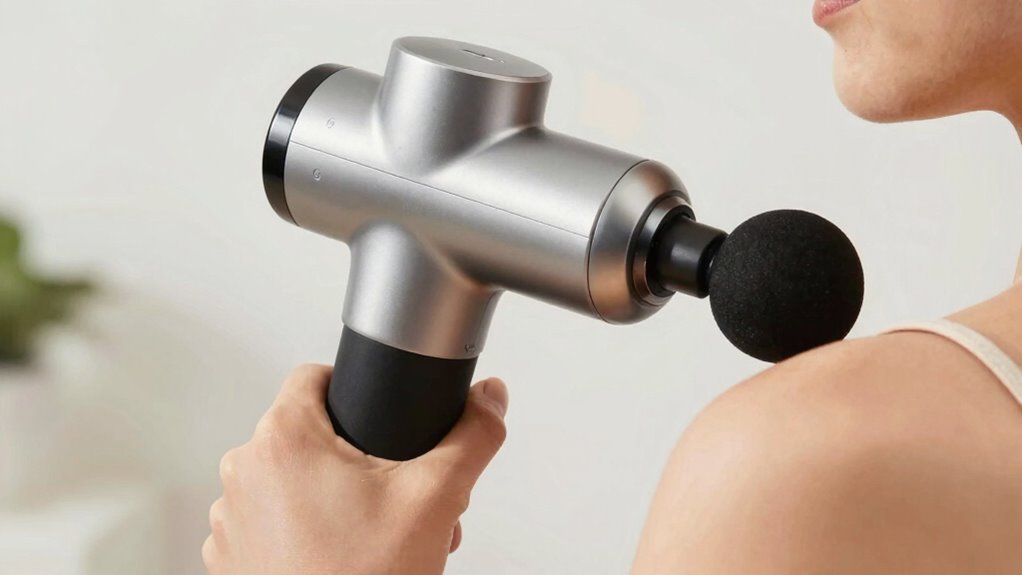
While massage guns are generally safe for most users, it’s important to recognize when professional guidance is necessary. If you experience persistent pain, swelling, or numbness, stop use and consult a healthcare provider. When dealing with injuries or chronic conditions, a licensed massage therapist or physical therapist can tailor techniques to support safe muscle recovery. If you’re unsure about proper technique or targeting specific areas, seeking expert advice can prevent overuse or injury. Pregnant women, people with heart conditions, or those with skin sensitivities should also consult a professional before using a massage gun. Professional guidance guarantees you get the benefits of massage therapy safely, avoiding potential harm while optimizing muscle recovery.
Frequently Asked Questions
How Long Should I Use a Massage Gun on Each Area?
You should use a massage gun on each area for about 15 to 30 seconds, depending on your area’s sensitivity. Keep sessions brief to avoid overstimulation or discomfort. If the area feels tender or sore, reduce the duration or intensity. Always listen to your body, and avoid staying in one spot too long. Limit overall session duration to about 10-15 minutes to ensure safe, effective relief without overdoing it.
Can Children Safely Use Massage Guns?
Think of using a massage gun on children as walking a tightrope—you need careful balance. Children’s safety should always come first, and generally, massage guns aren’t recommended for them due to potential risks. Child safety concerns include sensitive skin and developing muscles that could be harmed by the device’s powerful vibrations. Always consult a healthcare professional before considering massage gun use for children, ensuring you weigh the massage gun risks carefully.
Are There Specific Warning Signs to Stop Using a Massage Gun?
If you notice warning signs like persistent pain, tingling, or numbness, stop using your massage gun immediately. These signs indicate potential injury and are vital for injury prevention. Also, if you experience unusual swelling, discomfort that worsens, or skin irritation, it’s time to cease use. Paying attention to these warning signs helps protect you from harm and guarantees safe, effective massage therapy.
How Do I Choose the Right Intensity Setting for Different Muscles?
Think of choosing the right intensity as tuning a musical instrument. For muscle recovery and pain relief, start with a low setting to gauge sensitivity. If the area feels relaxed and comfortable, gradually increase until you find a comfortable, effective level. Always listen to your body—if pain or discomfort arises, dial back. The goal is to soothe and recover, not to push through pain.
Can Massage Guns Replace Professional Massages Entirely?
You can’t rely solely on massage guns to replace professional massages because they have limitations in addressing deep tissue issues and complex muscle problems. While self-massage techniques with a massage gun can help relieve tension and improve circulation, they lack the personalized assessment and hands-on expertise of a licensed massage therapist. Use your massage gun as a supplemental tool, but recognize its limitations in providing thorough massage therapy.
Conclusion
Remember, safety is your best tool. Respect your body’s signals, avoid overusing the massage gun, and focus on balance. Know your limits, listen to discomfort, and adjust accordingly. Use it wisely on larger muscles, and steer clear of sensitive or bony areas. When in doubt, consult a professional. By staying mindful, you’ll prevent injury, promote recovery, and enjoy the soothing benefits without risking your well-being. Prioritize safety, and your body will thank you.