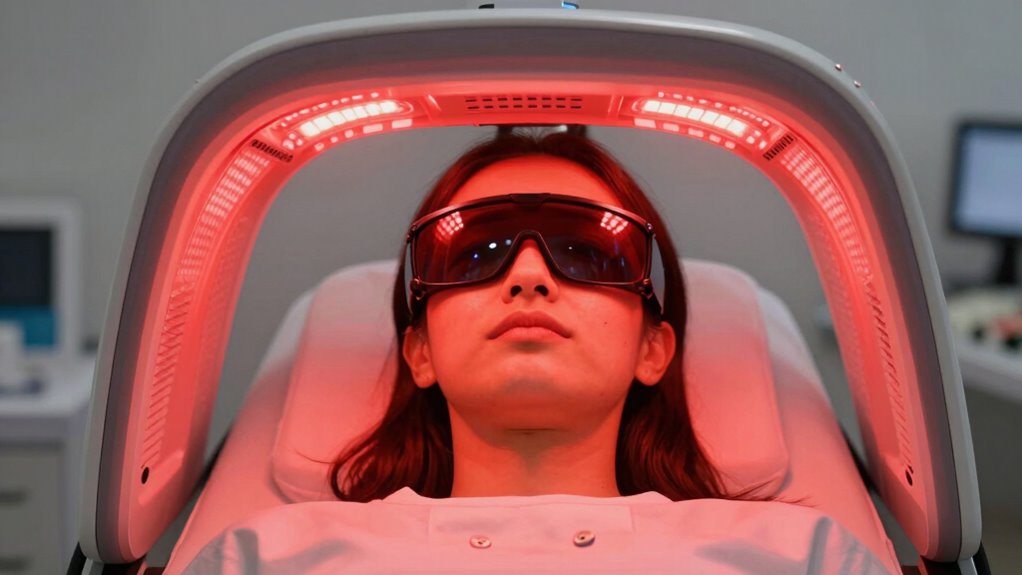

To use red light therapy safely, keep the device about 6 to 12 inches from your skin, following the manufacturer’s guidelines, to guarantee effective and safe treatment. Always wear proper goggles or eye shields to protect your eyes from potential damage, especially with brighter or more powerful devices. Be attentive to your skin’s response, adjusting distance or session length if you experience discomfort. If you’re curious about more safety tips, you’ll find helpful details below.
Key Takeaways
- Maintain the recommended distance of 6 to 12 inches from the device for safe and effective therapy.
- Always wear proper, well-fitting eye protection to shield against potential light damage during sessions.
- Adjust distance based on device power and skin sensitivity to prevent overexposure and discomfort.
- Follow manufacturer guidelines for distance, session duration, and safety precautions to avoid risks.
- Monitor for signs of discomfort or irritation and modify distance or stop treatment if necessary.
Why Proper Distance Matters for Safe Red Light Therapy
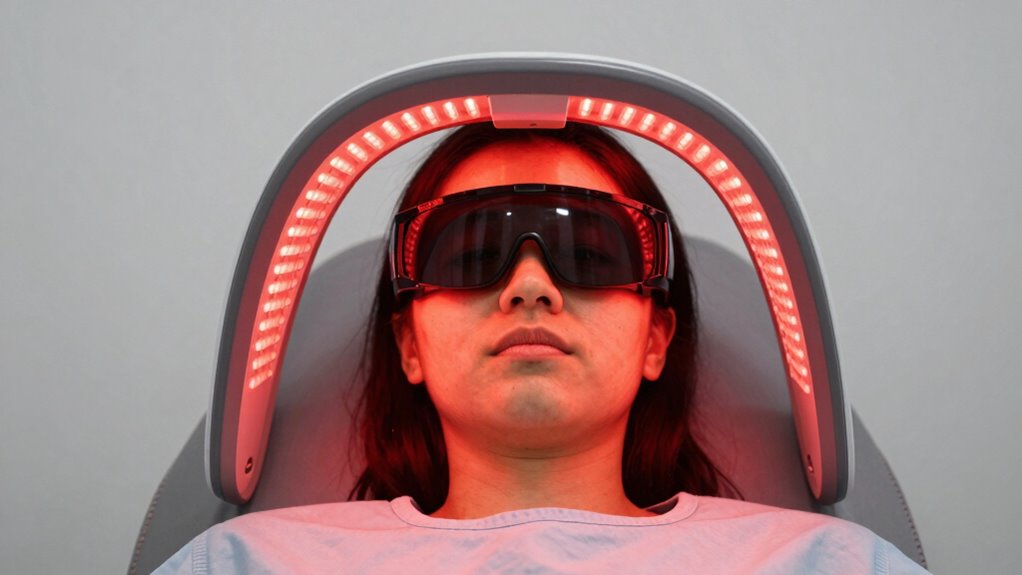
Maintaining the correct distance from a red light therapy device is essential for both safety and effectiveness. Infrared wavelengths can penetrate deeper into your skin, but too close can increase the risk of overexposure or skin irritation. Following safety protocols guarantees you receive the benefits without harm. If you’re too far away, the light may be too diffuse to penetrate effectively, reducing results. Conversely, standing too close can cause discomfort or potential eye strain if protective measures aren’t in place. Proper distance optimizes light absorption and minimizes risks, making your treatment safer and more efficient. Always adhere to manufacturer guidelines and safety recommendations to ensure you’re using the device correctly and safely. Understanding safe distances helps prevent accidental overexposure and enhances treatment outcomes. Additionally, being aware of device specifications ensures you maintain the optimal position for safe and effective therapy. Recognizing potential risks associated with improper distance can further improve your safety practices during sessions. It’s also beneficial to consider individual skin sensitivity to adjust your distance appropriately for personalized safety.
How to Find the Right Distance From Your Red Light Device
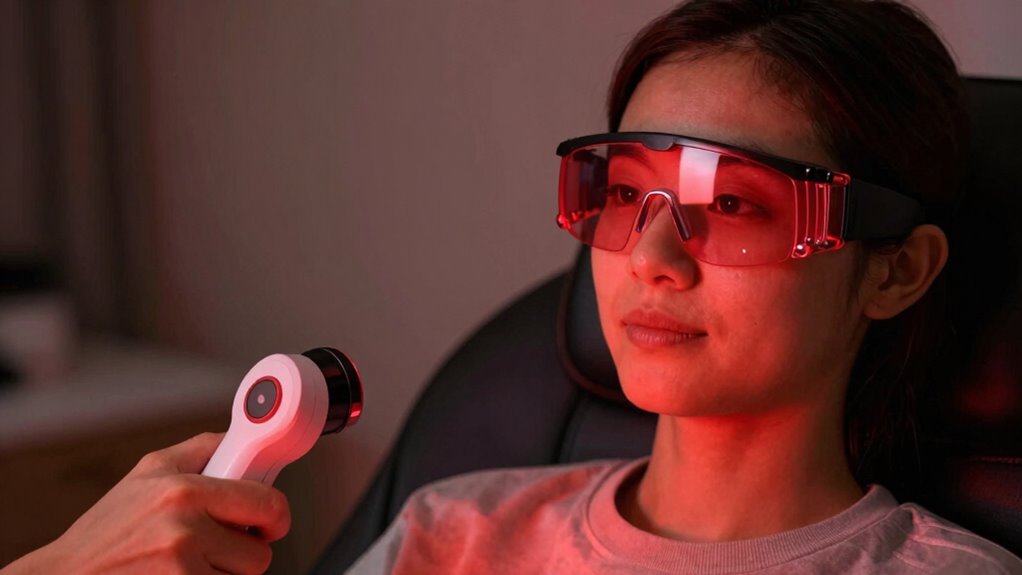
Finding the right distance from your red light device is key to safe and effective therapy. Typically, you’ll want to stay within the ideal range, but watch for signs you’re too close, like discomfort or excessive warmth. Adjust the distance based on your comfort to ensure safe and beneficial results. Proper light exposure is essential to prevent potential side effects and maximize the therapy’s benefits. Using a quality toolkit can help you make precise adjustments and maintain your device properly. Incorporating natural pools can also enhance your outdoor relaxation space, complementing the wellness benefits of red light therapy. Being aware of accessibility features can help tailor the therapy setup to your specific needs and ensure a safer experience. Awareness of safety warnings from manufacturers can further protect you during treatment sessions.
Optimal Distance Range
To get the most benefit from red light therapy, you’ll want to position your device at an ideal distance. The best range depends on your device’s calibration and your skin sensitivity. Usually, 6 to 12 inches works well, but check your device’s instructions. If you’re more sensitive, start farther away and gradually decrease the distance. For maximum effectiveness, guarantee your device is properly calibrated—incorrect calibration can reduce benefits. Use this table as a guide:
| Skin Sensitivity | Distance Range | Notes |
|---|---|---|
| Sensitive | 12-18 inches | Start farther away |
| Normal | 6-12 inches | Ideal for most users |
| Less Sensitive | 4-6 inches | For stronger exposure |
Adjust within this range to find what feels best for your skin and device. Remember that device calibration is crucial for safety and optimal results. Ensuring your light exposure parameters are appropriate helps maximize safety and effectiveness. Proper light intensity settings can also influence the safety and benefits of your red light therapy sessions. Additionally, understanding the recommended distance can help prevent overexposure and potential discomfort. Furthermore, being aware of skin sensitivity helps tailor the treatment to your individual needs and reduce adverse effects.
Signs of Too Close
If you position your red light device too close, you’ll likely notice certain signs that indicate the distance is too near. Excessive light intensity can cause discomfort or even skin sensitivity. Here are some signs to watch for:
- Your skin feels warm or numb after treatment, indicating the light is too intense.
- You experience redness or irritation, showing the light is too close for your skin’s sensitivity.
- The light appears overly bright or glaring, making it uncomfortable to look at or near your eyes.
- Ignoring recommended safety guidelines can increase the risk of adverse effects, so adjusting the distance guarantees you get the benefits without overstimulation. Remember, finding the right distance helps prevent overstimulation and keeps your therapy safe and effective. Maintaining the proper light intensity is essential for achieving optimal results without discomfort. Being aware of light exposure limits can also help prevent potential skin or eye issues. Additionally, monitoring your skin response during treatment can help ensure you’re not overexposing yourself. Properly managing light dosage can maximize benefits while minimizing risks.
Adjusting Based on Comfort
Since comfort varies from person to person, adjusting the distance between you and your red light device is essential for safe and effective therapy. Start by calibrating your device according to the manufacturer’s instructions, ensuring it emits the correct intensity. If the light feels too intense or causes discomfort, increase the distance slightly. Conversely, if you don’t notice any effects after a few sessions, move closer gradually. Remember, session duration also depends on your comfort level; shorter sessions are better when you’re adjusting to a new distance. Pay attention to how your skin responds and avoid overstimulation. Regularly assess your comfort and make small adjustments to optimize results while maintaining safety. Proper device calibration and personalized distance help maximize benefits without risking irritation. Understanding safe exposure is key to preventing any adverse effects during your red light therapy sessions. Additionally, being aware of light intensity and duration can help you tailor your therapy for the best outcomes.
Eye Safety Tips for Red Light Therapy Sessions
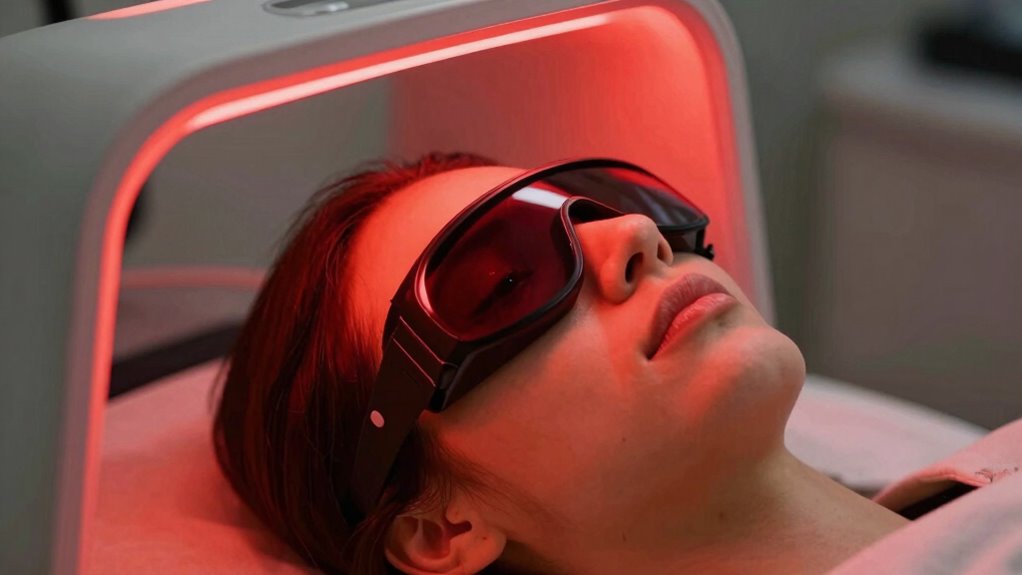
Although red light therapy is generally safe, protecting your eyes during sessions is essential. Proper ocular safety helps prevent potential damage from high light intensity exposure. To keep your eyes safe, consider these tips:
- Always position yourself at the recommended distance to reduce direct exposure to intense light.
- Avoid looking directly into the light source during treatment.
- Use protective eyewear if advised, especially if your device doesn’t have built-in shields.
- Remember that eye safety is vital for preventing long-term vision issues and ensuring the therapy remains beneficial. Additionally, understanding light intensity levels can help you better assess safety precautions during each session.
Focusing on ocular safety minimizes risks associated with light intensity, ensuring you benefit from therapy without harming your eyes. Being mindful of your eye protection helps maintain safe, effective sessions and preserves your vision health over time.
How to Use Goggles and Shields Effectively During Treatments
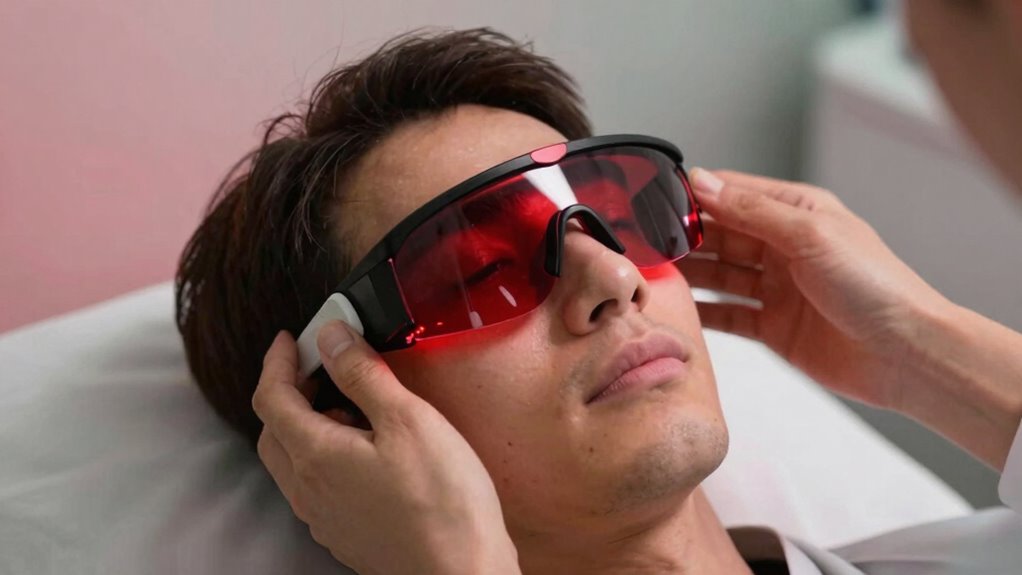
Using goggles and shields correctly during red light therapy guarantees your eyes stay protected without compromising the treatment’s effectiveness. Make certain your goggles fit snugly without being too tight, as a proper fit prevents light leaks and keeps your eyes shielded. Check that the seal around your eyes is secure, and adjust straps as needed for comfort and safety. When choosing shields, prioritize durability; high-quality materials withstand repeated use and maintain protective integrity over time. Avoid cheap or flimsy options that may crack or degrade, exposing your eyes to unnecessary risk. Properly fitted goggles and sturdy shields create a reliable barrier, allowing you to focus on the treatment while knowing your eyes are safeguarded effectively.
Common Mistakes That Can Compromise Your Safety
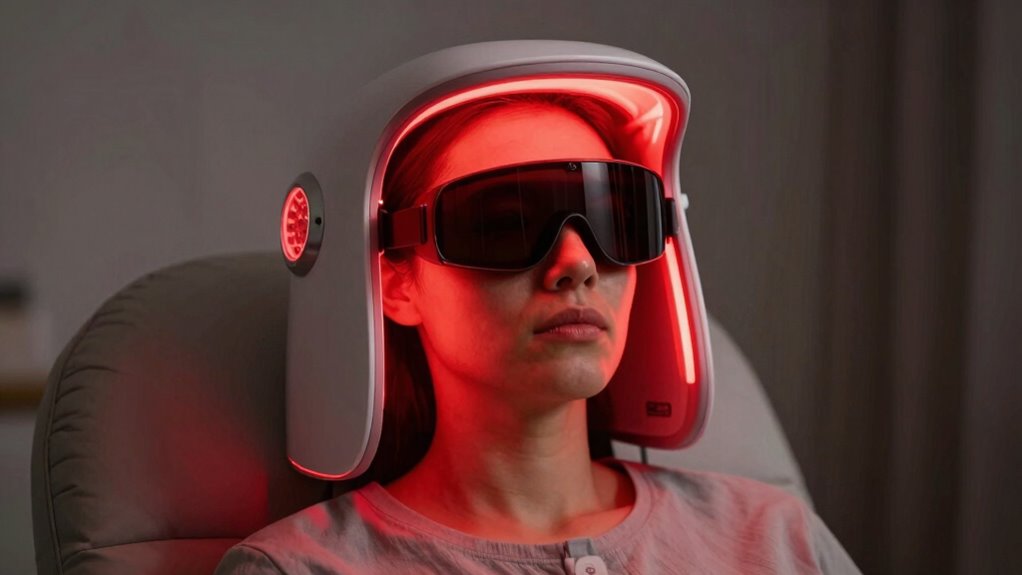
One of the most common mistakes that can compromise your safety during red light therapy is neglecting proper eye protection. Failing to wear goggles or shields increases the risk of eye damage, especially if the device isn’t correctly calibrated. Additionally, rushing through therapy sessions can lead to overexposure. Here are key mistakes to avoid:
- Ignoring device calibration, which can cause uneven light distribution and potential harm.
- Extending therapy duration beyond recommended times, increasing risks of skin or eye issues.
- Skipping eye protection, leaving your eyes vulnerable to high-intensity light exposure.
To stay safe, always ensure your device is properly calibrated, follow recommended therapy durations, and wear appropriate eye protection. These steps help prevent accidents and ensure effective treatment.
Adjusting Distance and Eye Protection for Different Devices
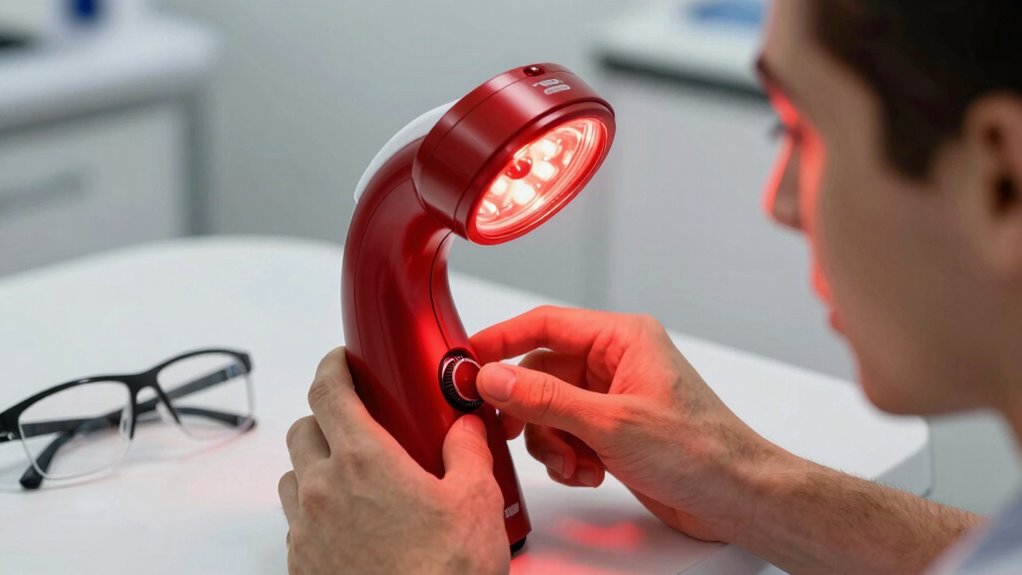
Since device power levels vary, you need to adjust your distance accordingly to guarantee safe and effective treatment. Follow the recommended distance guidelines for each device to prevent overexposure or underdosing. Don’t forget to always wear proper eye protection, especially with higher-powered devices, to keep your eyes safe during sessions.
Device Power Variations
Adjusting the distance between your device and your skin is essential because different devices emit varying light intensities. This variation affects how you should calibrate your device for safe and effective therapy. Keep in mind:
- Device calibration: Regularly check and set your device’s settings to match recommended power levels.
- Power output adjustments: Some devices allow you to modify the power output; use these features to prevent overexposure.
- Intensity differences: Higher-powered devices may require increased distance to reduce light intensity, ensuring safety.
Recommended Distance Guidelines
To guarantee safe and effective red light therapy sessions, you should carefully consider the recommended distance between your device and your skin, which varies depending on the device’s power and design. Maintaining the right distance enhances both safety and comfort during treatment. Typically, less powerful devices require closer placement, around 6 to 12 inches, while higher-powered units may need to be positioned farther away, up to 24 inches. Achieving ideal device placement involves balancing effective light exposure with your distance comfort. Avoid placing the device too close, which can cause discomfort or potential skin irritation, or too far, which might reduce effectiveness. Always follow manufacturer guidelines for distance, adjusting as needed to ensure a comfortable, safe, and efficient red light therapy experience.
Eye Protection Necessities
Because red light therapy devices emit intense light that can harm your eyes, it’s essential to wear proper eye protection and adjust your distance accordingly. Ensuring eye safety means using the right protective gear and maintaining appropriate distance for each device. Here are key tips:
- Always wear goggles designed for red light therapy to shield your eyes from harmful rays.
- Adjust your distance based on the device’s instructions—closer isn’t always better.
- Limit exposure time to prevent eye strain or damage, especially with high-intensity devices.
What to Do If You Feel Discomfort During Therapy
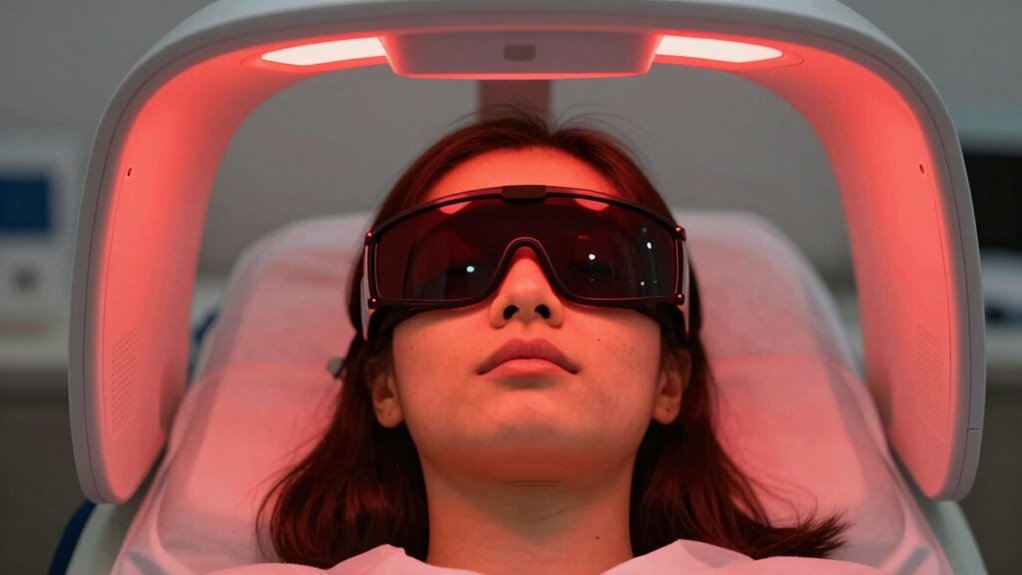
If you start to feel discomfort during red light therapy, it’s important to stop the session immediately and assess the situation. Your comfort and safety come first. Use discomfort management techniques like adjusting the distance from the light or reducing session time. If pain or unusual sensations persist, report issues to your provider or device manufacturer. Don’t ignore persistent discomfort, as it could indicate sensitivity or improper use. Keep track of what caused the discomfort to prevent future issues. Remember, listening to your body is key. Proper communication and prompt reporting help ensure safe therapy sessions. Always follow safety guidelines and never push through significant discomfort, which can lead to injury. Your awareness and quick action protect your health during red light therapy.
Frequently Asked Questions
Can Red Light Therapy Damage My Skin or Eyes?
Red light therapy is generally safe, but it can cause skin sensitivity or eye discomfort if not used properly. You might experience minor skin irritation if you’re sensitive or if the light is too close. To protect your eyes, always wear appropriate safety goggles. When used as directed, red light therapy shouldn’t damage your skin or eyes, but following safety guidelines ensures maximum results without risks.
How Often Should I Check My Device’s Safety Features?
Check your device’s safety features consistently to guarantee your comfort and confidence. You should perform routine device maintenance and safety inspections at least once a month, or more often if you notice any discrepancies or damage. Staying vigilant helps prevent potential problems and prolongs the device’s lifespan. Regularly verifying safety features guarantees you’re protected during each session, providing peace of mind while practicing safe, serene, and secure red light therapy.
Are There Age Restrictions for Red Light Therapy Use?
Age restrictions for red light therapy vary depending on the device and your health conditions. Generally, children under 18 should consult a healthcare professional before use, as device safety isn’t guaranteed for younger ages. Adults of any age can typically use red light therapy safely, but it’s important to follow manufacturer guidelines and seek medical advice if you have underlying health issues. Always prioritize device safety and proper usage to prevent any risks.
What Are the Signs of Overexposure to Red Light Therapy?
If you experience overexposure to red light therapy, watch for signs like increased light sensitivity and skin irritation. You might feel discomfort, redness, or burning sensations on your skin, and your eyes could become more sensitive to light. These symptoms indicate you should reduce exposure immediately. Always follow recommended guidelines to prevent overexposure and protect your skin and eyes from potential harm.
Can Red Light Therapy Interfere With Medications or Medical Conditions?
You should be cautious, as red light therapy might subtly influence your medications or medical conditions. It can interact with certain medication interactions, potentially altering effectiveness, or pose risks if you have medical contraindications. Always consult your healthcare provider before starting therapy, especially if you’re on medication or have underlying health issues. Being mindful guarantees you enjoy the benefits safely without unintended effects.
Conclusion
By paying attention to the right distance and protecting your eyes, you create a shield against potential risks—like a fortress around your well-being. Remember, safety isn’t just a guideline; it’s the foundation of effective red light therapy. Keep your device at the right distance and wear proper eye protection, so your sessions can shine safely and effectively, illuminating your path to better health without shadows of concern.