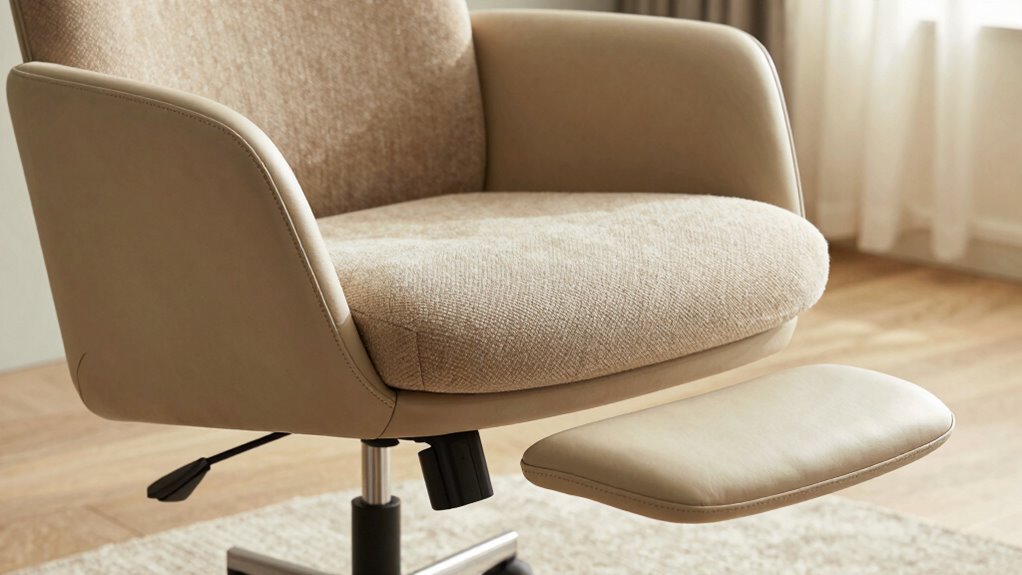
To set up a chair for long legs, start by measuring your leg length from the hip to the knee to find the right seat depth. Adjust the seat so there’s a small gap behind your knees, supporting thighs without pressure. Use an adjustable footrest or cushion under your feet to keep them flat and supported. Proper seat depth and foot support prevent discomfort and promote good posture. Keep going to discover how to fine-tune your setup for lasting comfort.
Key Takeaways
- Measure from hip to knee to determine optimal seat depth, ensuring thighs are supported without pressure behind the knees.
- Adjust seat depth to leave a slight gap at the front edge, promoting circulation and reducing lower back strain.
- Use an adjustable footrest or footstool to keep feet flat and fully supported, preventing dangling feet and promoting proper posture.
- Ensure the chair’s backrest fully supports the lower back, with seat height and depth tailored for long-term comfort.
- Regularly re-evaluate and fine-tune seat depth and foot support adjustments during long sitting periods for optimal ergonomics.
Why Long Legs Need Special Consideration for Chair Setup
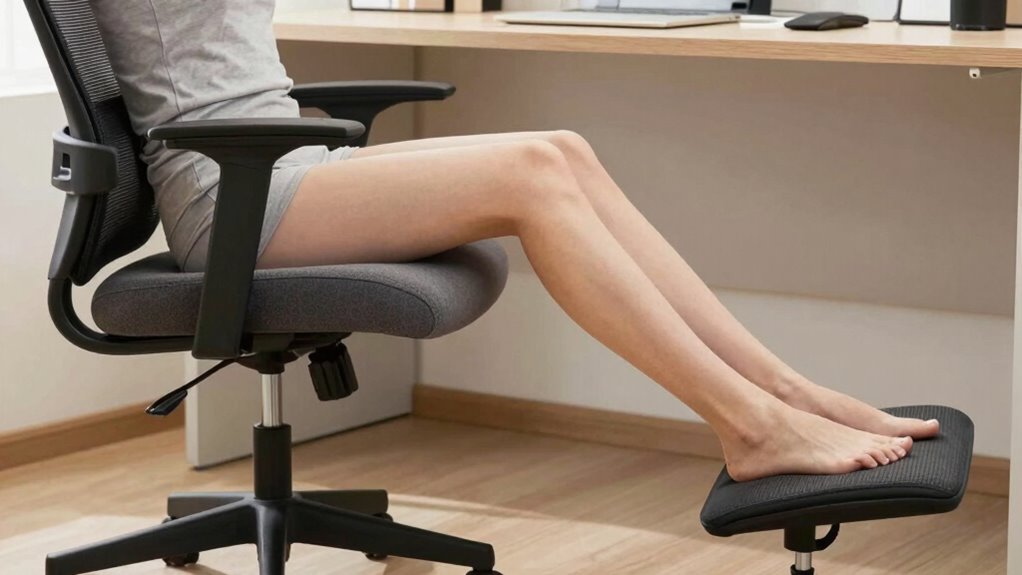
If you have long legs, standard chair setups often don’t provide enough support or comfort. You need a design that accommodates your height without sacrificing style. An aesthetic design tailored for tall users guarantees your workspace looks cohesive and appealing, with options that complement your environment. Color options matter too—choosing a chair that matches your decor boosts your confidence and creates a harmonious look. Without proper consideration, you might experience discomfort, poor posture, or restricted movement. Long legs require a seat depth that doesn’t cut into your thighs or leave your knees bent at awkward angles. Investing in a chair designed with these factors in mind means better support, improved comfort, and a visually appealing setup that enhances your overall workspace. Additionally, selecting a chair with ergonomic features ensures proper lumbar support and overall comfort during extended periods of sitting. Proper *seat depth adjustment* can make a significant difference in achieving optimal comfort for tall users. Moreover, considering adjustable foot supports can help maintain proper leg positioning and improve circulation during long sitting sessions, which is especially important for long-legged users.
How to Measure Your Leg Length for a Perfect Fit
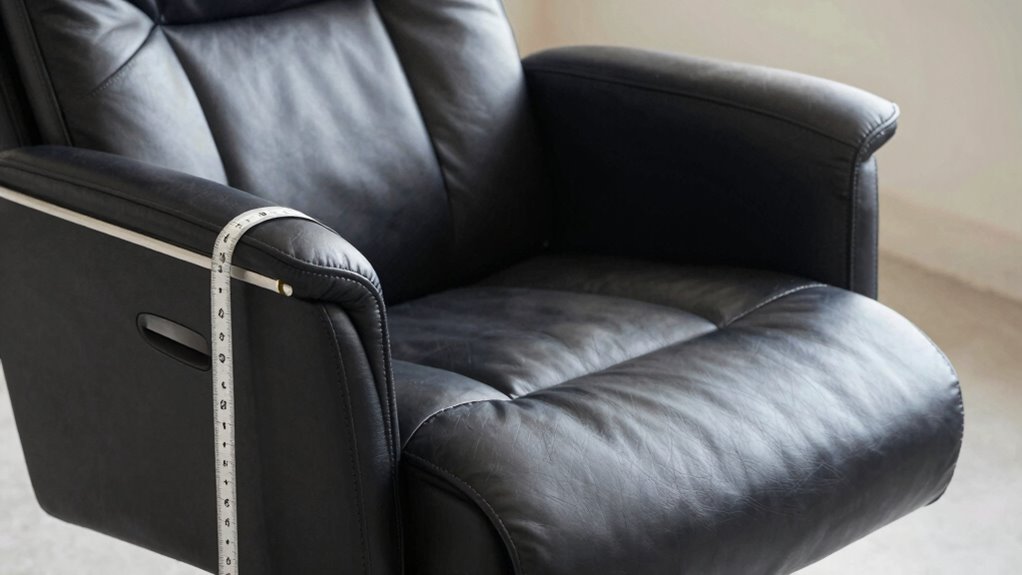
To get a perfect chair fit, you need to measure your leg length accurately. Use reliable tools like a tape measure or ruler to guarantee precision. This step helps you find the right chair height and avoid discomfort during long hours of sitting. Additionally, understanding floating on water can provide insights into ergonomic support, as water-based therapy techniques emphasize proper alignment and relaxation. Proper maintenance of your equipment, such as ensuring filtration and pump protection, can also contribute to consistent performance and comfort during prolonged use. Recognizing how dreams of deceased loved ones can influence emotional well-being may also help in creating a comfortable and supportive workspace.
Measuring Leg Length Precisely
Wondering how to guarantee your chair fits perfectly? Precise leg length measurement is key. Start by sitting comfortably with your feet flat on the floor, ensuring your ankle flexibility isn’t restricted. Use a tape measure to find the distance from your hip bone (greater trochanter) down to your kneecap. Don’t rush—measure both legs and take the longer one for accuracy. Keep your thighs relaxed and note your thigh width, as this affects how much space your legs occupy. Make sure your pelvis is level and your posture is natural. Avoid guessing; accurate measurement helps determine the right seat depth and foot support. When you know your exact leg length, you can choose a chair that offers ideal comfort and support for long legs. Understanding the importance of precise measurements can help you select the most ergonomic setup. Additionally, being aware of proper measuring techniques ensures your measurements are reliable and consistent. Taking into account body jewelry measurements and materials can also influence how comfortably you sit during extended periods. Incorporating home security considerations can also provide peace of mind during long sitting sessions. To further enhance comfort, consider your personal sitting preferences and adjust the chair accordingly.
Using Proper Tools
Using the right tools is essential to get an accurate measurement of your leg length. A flexible tape measure is ideal, allowing you to follow your body’s contours precisely. Make sure the tape is snug but not tight, and measure from your hip bone (iliac crest) down to your knee cap. For added accuracy, use a mirror or ask someone to help if needed. Proper tools support an ergonomic design approach, ensuring your chair setup promotes comfort and reduces strain. Accurate measurements not only improve functionality but also enhance the aesthetic appeal of your workspace by enabling a tailored fit. Utilizing proper measurement techniques and understanding body proportions simplifies the process, giving you confidence that your chair will support long hours comfortably and look good doing it. Being aware of aviation regulations can also help you understand the importance of precision and standards in measurement practices. Additionally, paying attention to measurement consistency ensures reliable results for optimal comfort.
What Features Make a Chair Ideal for Long Legs?
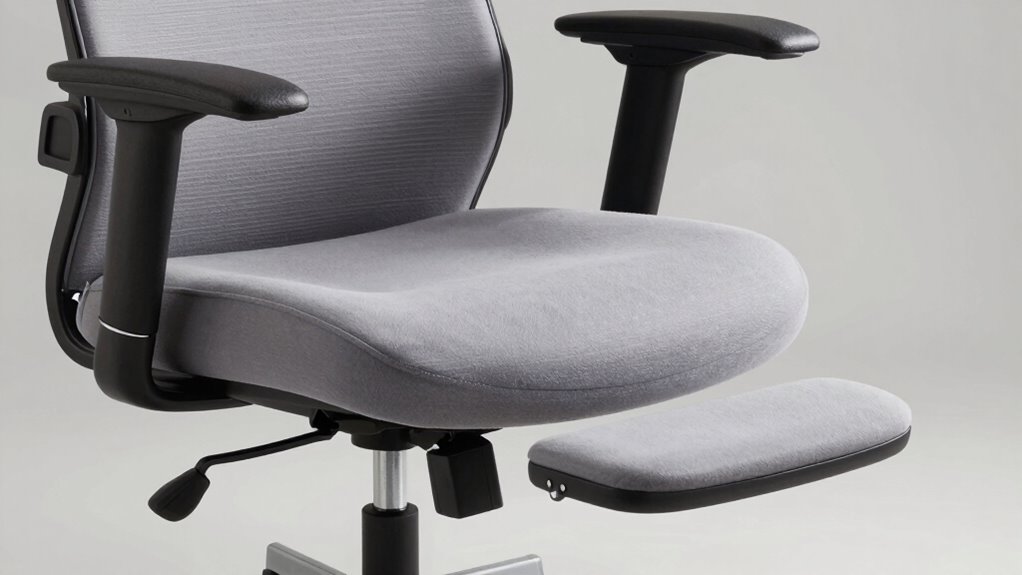
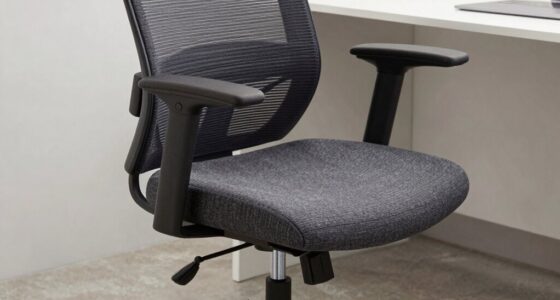
To find a chair suited for long legs, look for adjustable seat depth so you can customize how much your legs are supported. A supportive footrest helps keep your feet comfortably flat, reducing strain. These features make your seating experience both comfortable and ergonomic. Additionally, incorporating anti-fatigue mats can further enhance comfort during extended periods of sitting or standing. Choosing ergonomic furniture that promotes proper posture can also contribute to overall comfort and reduce long-term health issues. Ensuring that your chair has proper ergonomic design can effectively prevent fatigue and discomfort over time, especially when combined with appropriate foot support. Paying attention to ergonomic principles ensures your seating setup supports long-term health and comfort.
Adjustable Seat Depth
An adjustable seat depth is essential for long-legged individuals because it allows you to customize the distance between your hips and knees for ideal comfort. When selecting a chair, look for one with a sliding seat mechanism that lets you set the seat depth precisely. This flexibility guarantees your thighs are fully supported without pressing against the edge of the chair, reducing pressure and discomfort. An ergonomic desk setup benefits from such adjustability, helping maintain proper posture throughout your workday. Additionally, good lumbar support complements adjustable seat depth by encouraging proper spinal alignment. By tailoring your chair’s seat depth, you can prevent strain and promote better circulation, making your workspace more comfortable and supporting your long-legged frame effectively.
Supportive Footrest Options
What features should you look for in a footrest to support long legs comfortably? First, verify it’s adjustable in height to match your leg length and promote ankle flexibility. A good footrest should allow your feet to rest flat, reducing leg muscle tension and preventing strain. Look for a surface that’s textured or cushioned, offering comfort without slipping. The fabrication processes involved in nanotech manufacturing can influence the durability and surface quality of the footrest, making it an important consideration. Additionally, material properties such as slip resistance and resilience can significantly impact the longevity and safety of the footrest. Incorporating ergonomic design principles can further enhance comfort and support. A wide, stable base ensures safety and stability when shifting positions. Some footrests include tilt or rocking functions, helping you find a natural, relaxed posture. The aim is to support your legs and ankles properly, preventing discomfort and promoting healthy circulation. Proper ergonomic support is essential to reduce fatigue and improve overall comfort during extended sitting periods. With the right features, a footrest becomes an essential part of your ergonomic setup, especially for long-legged users seeking comfort and support.
How to Adjust Seat Depth for Comfort and Posture
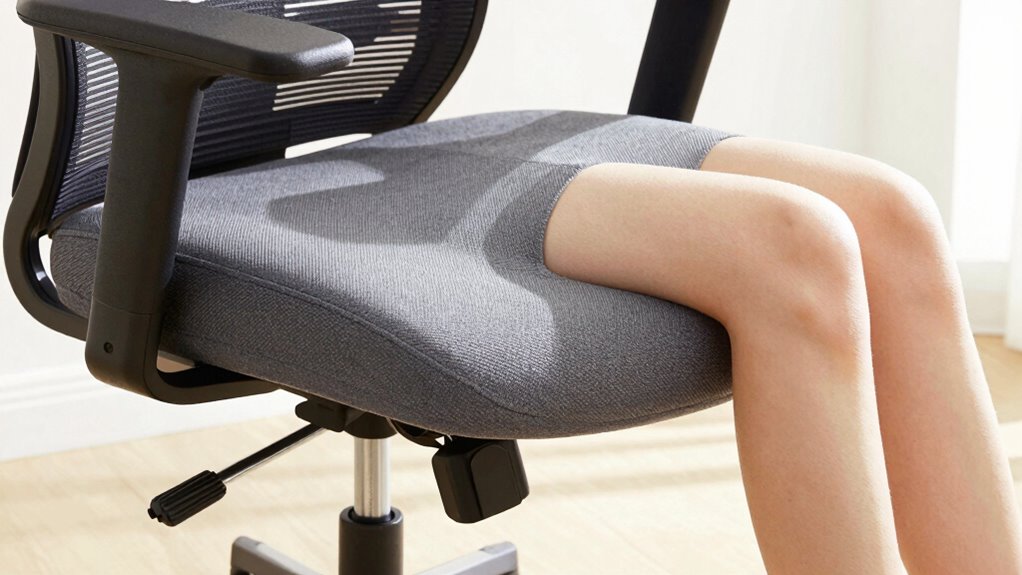
Adjusting the seat depth correctly is essential for maintaining comfort and proper posture, especially if you have long legs. You want the seat to support your thighs without putting pressure on the back of your knees. Move the seat forward or backward until you can sit with your back fully against the lumbar support, which promotes ergonomic posture. Your feet should rest flat on the floor or footrest, with a slight gap between the edge of the seat and the back of your knees. Ensure there’s enough space to sit comfortably without feeling cramped. Proper seat depth reduces strain on your lower back and encourages healthy spinal alignment. Additionally, ergonomic seat adjustment can help prevent long-term discomfort and improve overall seating posture. Making small, incremental adjustments allows you to find the most comfortable and supportive position for your body. Remember that individual body differences can influence your ideal setup, so listen to your body and adjust accordingly. Test your comfort and posture before settling into your ideal seat depth.
Finding the Best Foot Support Options for Long Legs
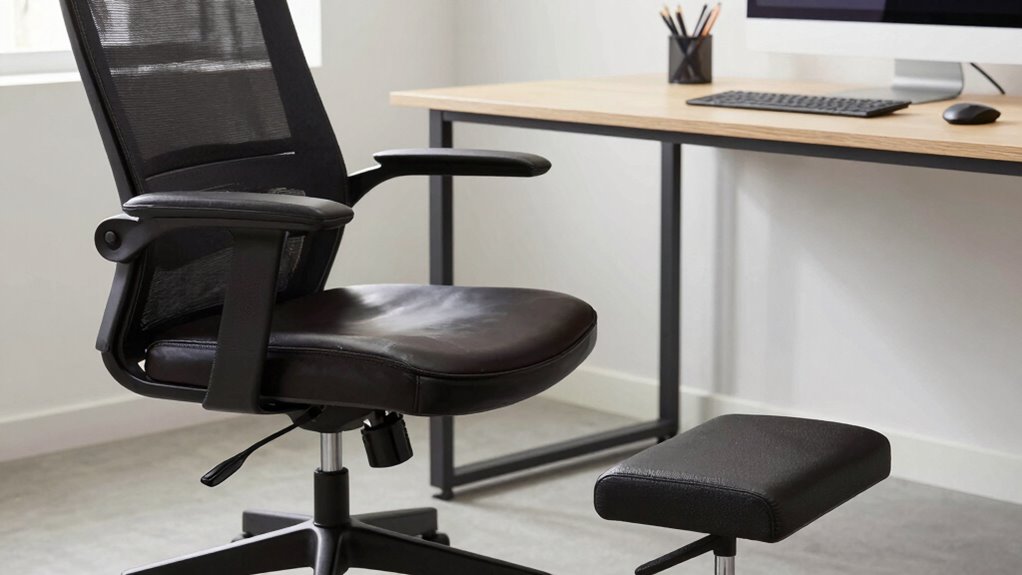
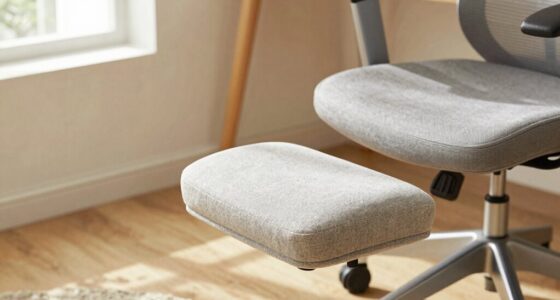
Finding the right foot support is essential for long-legged individuals to maintain comfort and proper posture throughout the workday. Proper foot support helps reduce pressure on your legs and hips, preventing fatigue. To accommodate longer legs, look for foot supports that promote adequate leg extension, ensuring your feet rest flat and fully supported. Adjustable footrests are a great option because they allow you to customize height and angle, promoting better alignment. If you prefer cushions or pads, choose ones that elevate your feet enough to avoid dangling or excessive strain. Remember, the goal is to keep your legs comfortably extended, with your feet supported without forcing your knees into an unnatural bend. The right foot support makes a significant difference in overall comfort and ergonomic health.
Customizing Foot Rests and Cushions for Better Support
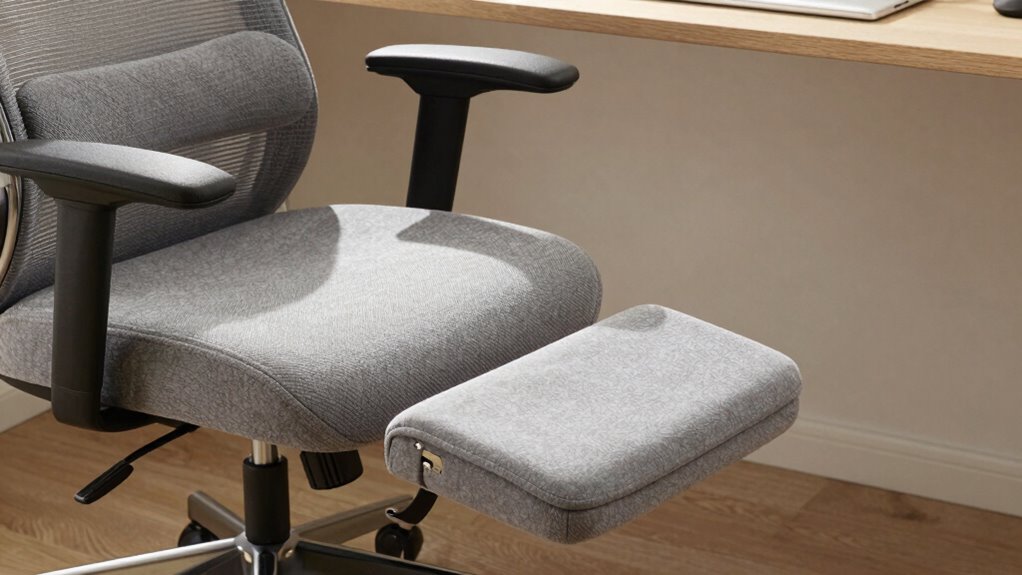
Adjusting your foot rest height guarantees your feet stay comfortably supported without strain. Choosing supportive cushions can add extra comfort and promote better posture. You might also consider custom padding options to personalize your setup for ideal long-term support.
Adjusting Foot Rest Height
Have you ever noticed how a foot rest that’s too high or too low can cause discomfort during long hours at your desk? Adjusting its height is vital for maintaining ergonomic posture and reducing strain on your lower back. Proper height ensures your feet are flat, knees at a 90-degree angle, and your lumbar support is effective. Use this table to find your ideal foot rest position:
| Foot Rest Height | Posture Effect | Comfort Level |
|---|---|---|
| Too high | Feet elevated, pressure on thighs | Uncomfortable |
| Too low | Feet dangling, poor support | Fatiguing |
| Correct | Feet supported, knees aligned | Comfortable |
Adjust until your feet rest flat, supporting your lumbar support and keeping long-term comfort.
Choosing Supportive Cushions
Choosing supportive cushions can markedly enhance your ergonomic setup by customizing foot rests and cushions to better fit your body. The right cushion firmness is essential; too soft, and you won’t get enough support, too firm, and it may cause discomfort. Opt for a cushion that offers a balance, providing enough firmness to support your legs and hips comfortably. Additionally, lumbar support plays a crucial role in maintaining proper posture, especially if you spend long hours sitting. A cushion with integrated lumbar support can help reduce pressure on your lower back, promoting better spinal alignment. Adjust your cushions as needed to ensure they align with your body’s curves. Proper support not only improves comfort but also helps prevent long-term musculoskeletal issues.
Custom Padding Options
Ever wondered how to tailor your footrests and cushions for ideal support? Custom padding is an excellent way to make ergonomic modifications that suit your long legs. By adding custom padding, you can increase comfort and guarantee your feet are properly supported, reducing strain. You might use foam inserts or memory foam cushions to fill gaps or elevate your footrest height. These modifications help you achieve a more natural sitting posture and prevent pressure points. Custom padding allows you to personalize your setup without needing a new chair, making it both practical and cost-effective. Whether you’re padding the footrest or adding extra cushioning to your seat, these ergonomic modifications ensure your long legs are supported comfortably all day long.
Common Mistakes When Setting Up a Chair for Long Legs: and How to Avoid Them
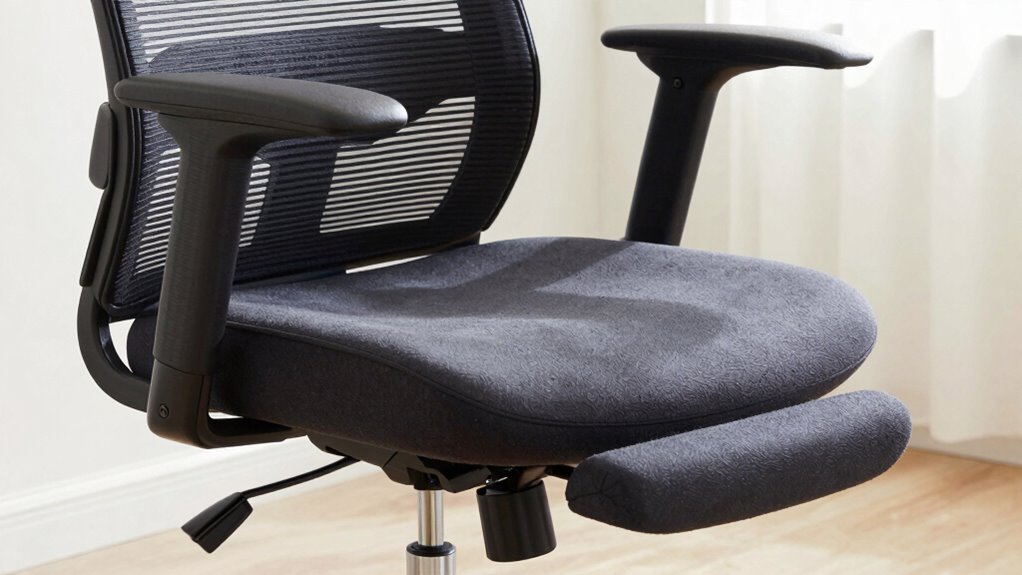
One common mistake when setting up a chair for long legs is neglecting to adjust the seat height properly. This often leads to incorrect posture and uncomfortable seating. If your seat is too high, your feet may dangle, causing strain and discomfort. Conversely, if it’s too low, you might be forced into a slouched position, increasing the risk of discomfort and poor alignment.
To avoid these issues, be mindful of:
- Not customizing the seat depth, which can cause your knees to press uncomfortably against the edge.
- Failing to support your feet fully, leading to dangling legs and improper weight distribution.
- Ignoring the importance of ergonomic adjustments, resulting in long-term discomfort and strain.
Proper setup promotes better posture and lasting comfort.
Tips for Maintaining Comfort During Long Work Sessions
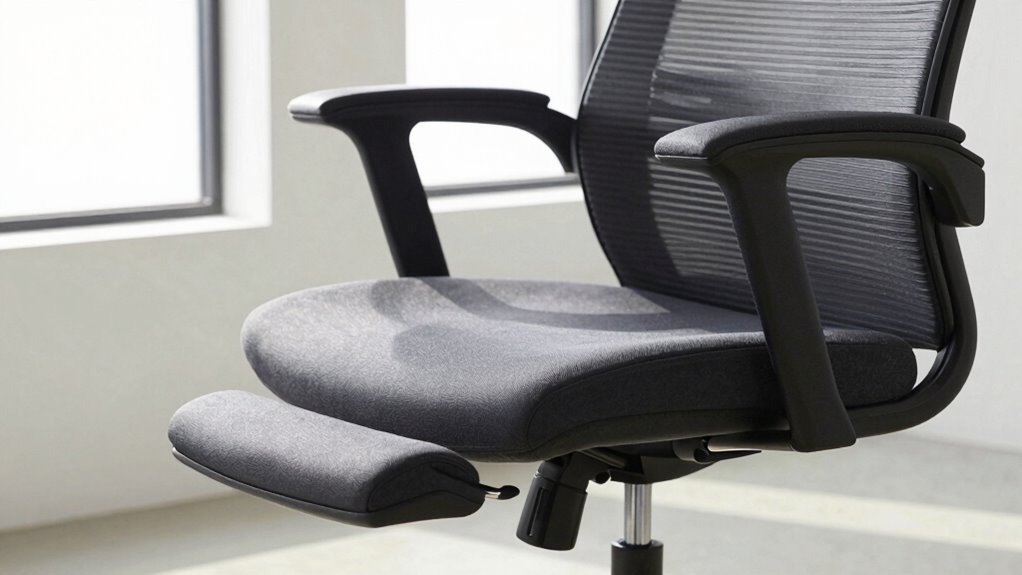
Maintaining comfort during long work sessions requires strategic adjustments and mindful habits. To prevent back pain, prioritize ergonomic design by ensuring your chair supports your lower back properly. Take regular breaks to stretch and change positions, reducing muscle stiffness and improving circulation. Adjust your chair height so your feet rest flat on the floor, and keep your knees at a 90-degree angle. Use foot support if needed to maintain proper alignment. Keep your monitor at eye level to avoid straining your neck and shoulders. Stay hydrated and incorporate light movement into your routine. These small, consistent habits help reduce fatigue, prevent discomfort, and keep you focused during extended periods of work. Proper ergonomic practices are key to sustaining comfort over long hours.
When to Upgrade to a Specialized or Custom Ergonomic Chair
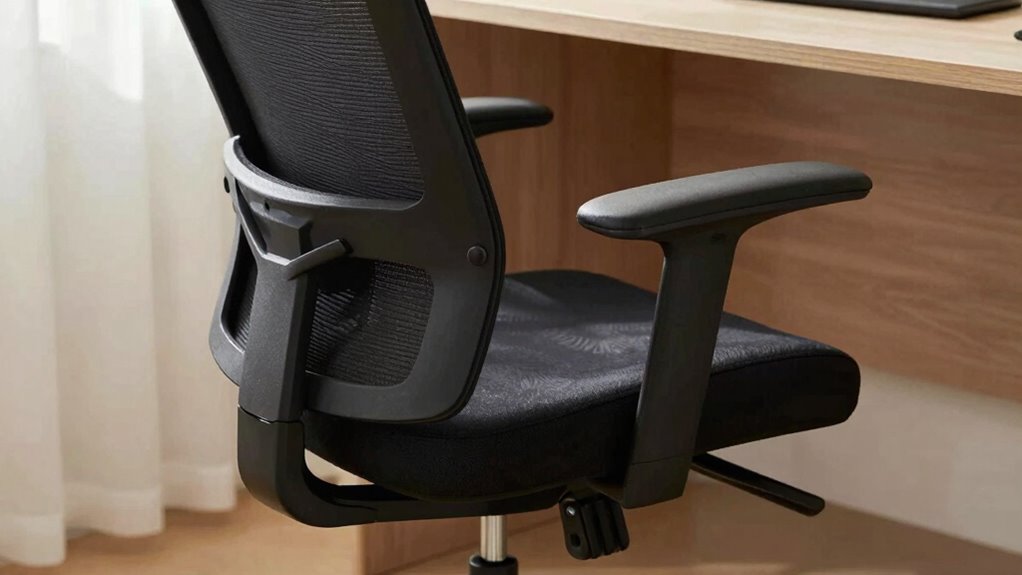
Recognizing when to upgrade to a specialized or custom ergonomic chair is essential for maintaining peak comfort and support, especially if standard options no longer meet your needs. If you find that your current chair causes persistent discomfort despite adjustments, it’s time to contemplate an upgrade. You might notice that your ergonomic desk setup no longer aligns with your body, or your adjustable monitor isn’t helping reduce strain. Signs also include persistent lower back pain, numbness in your legs, or difficulty maintaining good posture during long work sessions. A custom chair can better accommodate your long legs and specific ergonomic requirements.
- Discomfort persists despite adjustments
- Your ergonomic desk setup feels incompatible
- You experience ongoing pain or numbness
Troubleshooting Your Chair Setup: Fine-Tuning for Maximum Comfort
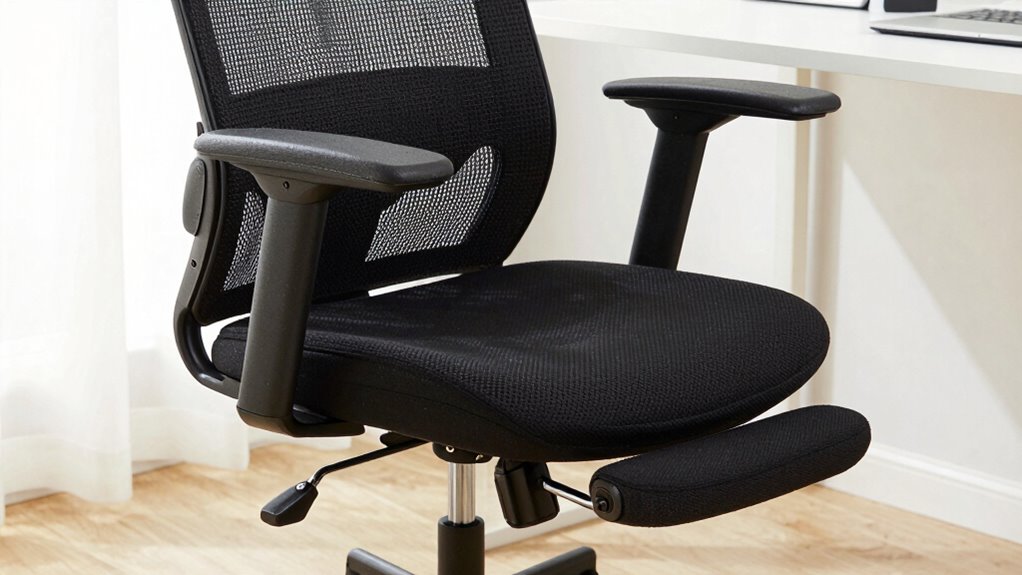
Even with a well-designed chair, small adjustments can considerably improve your comfort and support. Start by examining your ergonomic accessories—adding a footrest or lumbar pillow can make a big difference. Adjust your seat depth so your back fully contacts the backrest, leaving a slight gap behind your knees. Check your foot support; if your feet don’t rest flat on the floor, consider a footstool. Keep your office decor simple and clutter-free to avoid distractions and ensure easy access to adjustments. Fine-tuning your chair setup involves testing these changes and monitoring your comfort throughout the day. Don’t be afraid to experiment with different configurations until you find the perfect balance for long-term support and reduced strain.
Frequently Asked Questions
How Often Should I Reassess My Chair Setup for Long-Term Comfort?
You should reassess your chair setup every 3 to 6 months through an ergonomic evaluation. Comfort monitoring helps identify any signs of discomfort or poor posture, prompting adjustments. Changes in your body, work habits, or new health issues also warrant re-evaluation. Regular check-ins guarantee your long-term comfort, prevent strain, and support proper alignment. Staying proactive keeps your chair setup optimized for your long legs and overall well-being.
Can Adjustable Footrests Replace Custom Foot Support Solutions?
Adjustable ergonomic footrests can often replace custom support solutions, especially if you choose one with multiple height and angle options. They’re versatile and easy to adjust, providing comfort for long legs. However, if your needs are highly specific, a custom foot support might offer better tailored relief. Still, for most, ergonomic footrests are a practical, budget-friendly solution that enhances comfort without the need for custom modifications.
Are There Specific Brands Known for Better Ergonomics for Long-Legged Users?
You’ll find that ergonomic chair brands like Steelcase, Herman Miller, and Humanscale are known for better ergonomics for long-legged users. These brands prioritize long legged comfort with adjustable seat depths, supportive footrests, and customizable features. By choosing these brands, you guarantee proper support, reduce strain, and enhance your overall comfort during long hours of sitting. Look for models specifically designed with longer legs in mind for the best experience.
What Materials Are Best for Durable, Supportive Foot Cushions?
Like a sturdy foundation for a skyscraper, durable foot cushions need the right materials. Opt for foam cushioning, which offers firm support and maintains shape over time. Gel pads are excellent too, providing extra comfort and shock absorption. Combining these materials gives you a resilient, supportive foot cushion that endures daily use, keeps your feet comfortable, and promotes better posture—making your long-legged setup both practical and luxurious.
How Does Seat Height Adjustment Affect Long-Term Posture Health?
Adjusting your seat height directly impacts your long-term posture health by promoting proper posture correction. When you set the chair at the right height, your feet rest flat on the floor, reducing strain on your legs and back. An ergonomic design guarantees your hips are level, supporting spinal alignment. Consistent seat height adjustments help prevent discomfort and musculoskeletal issues, making your workspace more comfortable and healthier over time.
Conclusion
Think of your chair setup as the foundation of your comfort castle. When you tailor seat depth and foot support to your long legs, you build a sturdy base that keeps you steady through long days. Avoid shortcuts and fine-tune your setup like a skilled architect. With the right adjustments, you’ll create a throne where comfort and productivity stand tall, supporting you like towering pillars that uphold your work and well-being.