
To prevent slouching, start by adjusting your chair height so your feet rest flat on the ground or a footrest, with knees at a 90-degree angle. This guarantees proper support and promotes good posture. Next, check the seat depth to avoid pressure behind your knees, and adjust lumbar support for natural lower back curves. Focusing on these adjustments first helps you sit comfortably and maintain support; keep going to learn more tips for your perfect setup.
Key Takeaways
- Start by adjusting the seat height so feet rest flat on the ground or footrest, ensuring knees are at a 90-degree angle.
- Use cushions or seat depth adjustments to maintain 2-3 inches clearance between knees and seat edge.
- Add lumbar support and set the backrest angle between 100-110 degrees to support natural spine curvature.
- Incorporate ergonomic accessories like cushions or footrests to fill gaps and support proper posture.
- Focus on maintaining a neutral spine position by adjusting seat height and support to prevent slouching.
Why Proper Chair Height Is Key for Short Legs
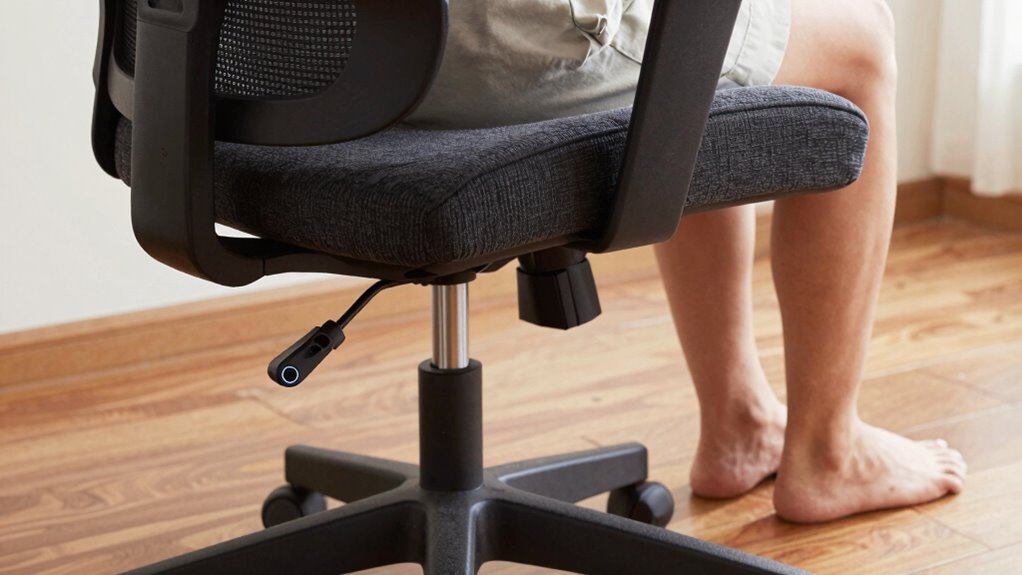
Having a proper chair height is essential if you have short legs because it directly affects your comfort and posture. When your chair is too high or low, it disrupts your ergonomic posture, leading to strain on your back, hips, and legs. Proper office ergonomics focus on aligning your body naturally, reducing fatigue and discomfort. If your feet don’t rest flat on the ground, you may experience circulation issues and muscle tension. Ensuring your chair height supports a neutral spine position helps prevent long-term musculoskeletal problems. When your seat height is right, you can maintain better focus, work more efficiently, and avoid unnecessary aches. Additionally, embracing inclusive casting and diverse ergonomic solutions can further enhance comfort for individuals with different body types. Adjusting seat depth can also improve pressure distribution and prevent leg discomfort, especially for those with shorter legs. Proper posture alignment is also crucial in maintaining comfort and preventing strain over extended periods. Paying attention to these ergonomic factors can make a significant difference in your daily comfort and health. Incorporating customizable ergonomic features allows for more tailored support, ensuring all users, regardless of body size, achieve optimal comfort.
How to Adjust Seat Height for Comfort and Support
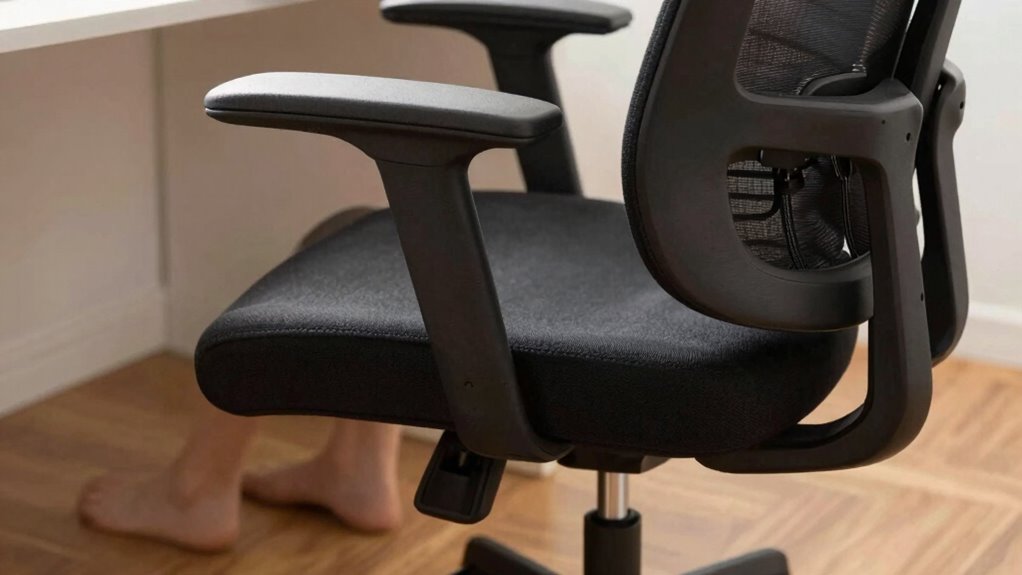
Adjusting your seat height properly is essential to guarantee maximum comfort and support throughout your workday. When your seat height is correct, your feet should rest flat on the floor or on an ergonomic accessories like a footrest, with knees at a 90-degree angle. For short legs, consider using a leg extension or adjustable footrest to improve support and reduce pressure on your thighs. Proper height adjustment helps prevent slouching and promotes better posture. Ensuring your ergonomic setup is correct can also help minimize discomfort and prevent long-term strain. Additionally, good posture habits play a crucial role in maintaining spinal health and overall well-being. Recognizing personal anthropometrics can guide you toward more effective ergonomic adjustments tailored to your body, fostering a more calm and focused workspace. Being aware of your unique body measurements can further optimize your ergonomic configuration for lasting comfort.
How to Set Seat Depth to Prevent Slouching
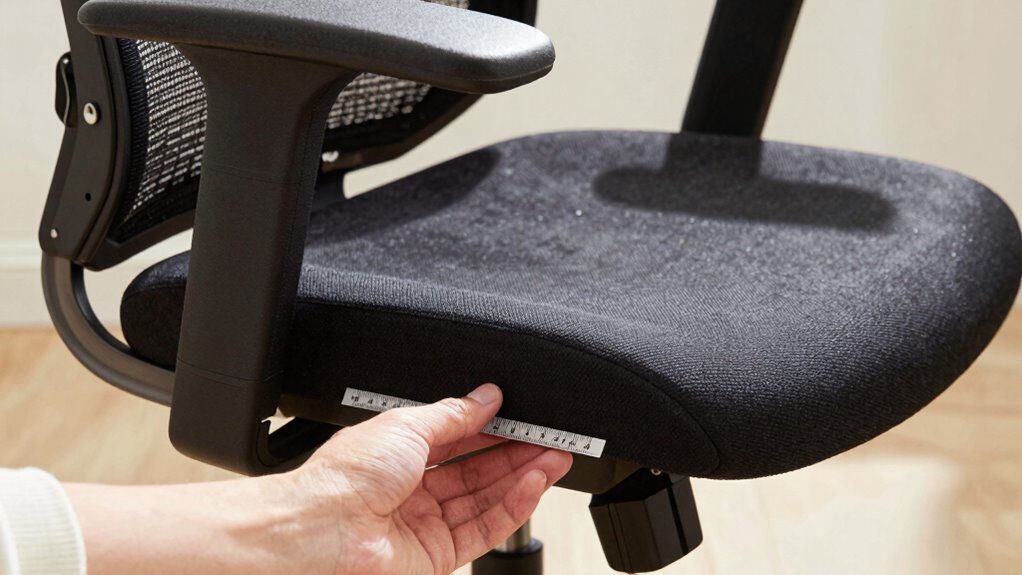
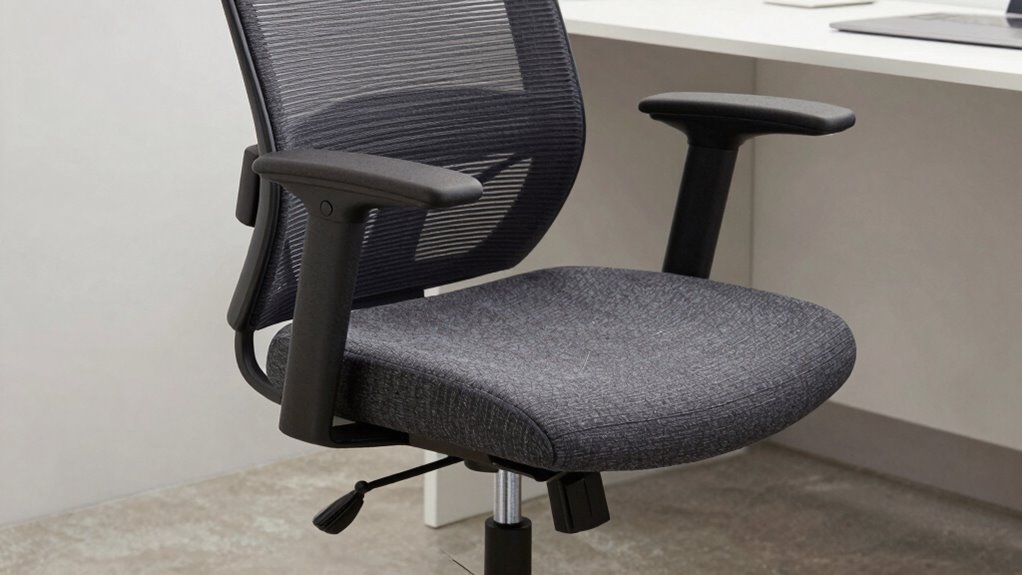
To prevent slouching and guarantee proper support, setting your seat depth correctly is essential. Proper cushion placement ensures your thighs rest comfortably without pressure, reducing discomfort that causes slouching. Adjust the seat so there’s about 2-3 inches of space between your knees and the front edge, allowing circulation. The armrest height should support your arms without lifting your shoulders, helping maintain good posture. When setting seat depth, consider the following:
| Adjustment | How to Do It | Benefit |
|---|---|---|
| Cushion Placement | Move seat forward/backward to align with thighs | Prevents pressure and slouching |
| Armrest Height | Set armrests to elbow level | Supports relaxed shoulder posture |
| Seat Depth | Ensure 2-3 inches clearance | Avoids slouching by proper thigh support |
Additionally, proper ergonomic principles can guide you in making adjustments that promote long-term comfort and health. Incorporating correct posture techniques can further enhance your seating comfort and prevent slouching over time. Being aware of adjustable features can help you customize your chair for optimal support and performance. Recognizing the importance of individual body differences is also crucial for personalized ergonomic setup and long-term comfort. Moreover, understanding the impact of seat depth on posture can help you make more informed adjustments for a healthier seating experience.
How to Adjust Lumbar Support and Backrest for Better Posture
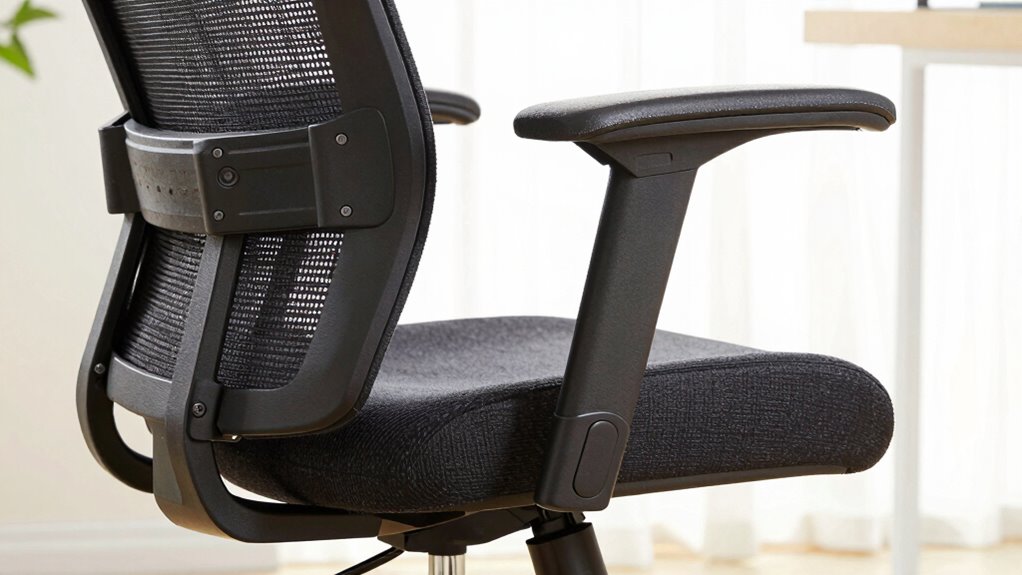
Proper lumbar support and backrest positioning are key to maintaining good posture during long periods of sitting. To achieve this, adjust the backrest so it supports the natural curve of your lower back. Use ergonomic cushions or lumbar pillows to fill any gaps and provide extra support. Guarantee the backrest is at a comfortable angle—usually between 100-110 degrees—to reduce strain. Your lower back should feel supported without forcing you into an unnatural position. Fine-tuning these adjustments helps prevent slouching and reduces back pain. Remember to check and re-adjust periodically as needed. Ensuring your chair setup aligns with ergonomic principles can also prevent discomfort and promote better overall posture. Incorporate essential DIY tools such as adjustable lumbar supports or cushions for optimal comfort. Regularly assessing your setup and making small adjustments can further enhance your ergonomic comfort, fostering proper spinal alignment and supporting your long-term spine health. Additionally, being aware of ergonomic principles can guide you in making more effective adjustments for sustained comfort.
Extra Tips to Fine-Tune Your Chair for Shorter Legs
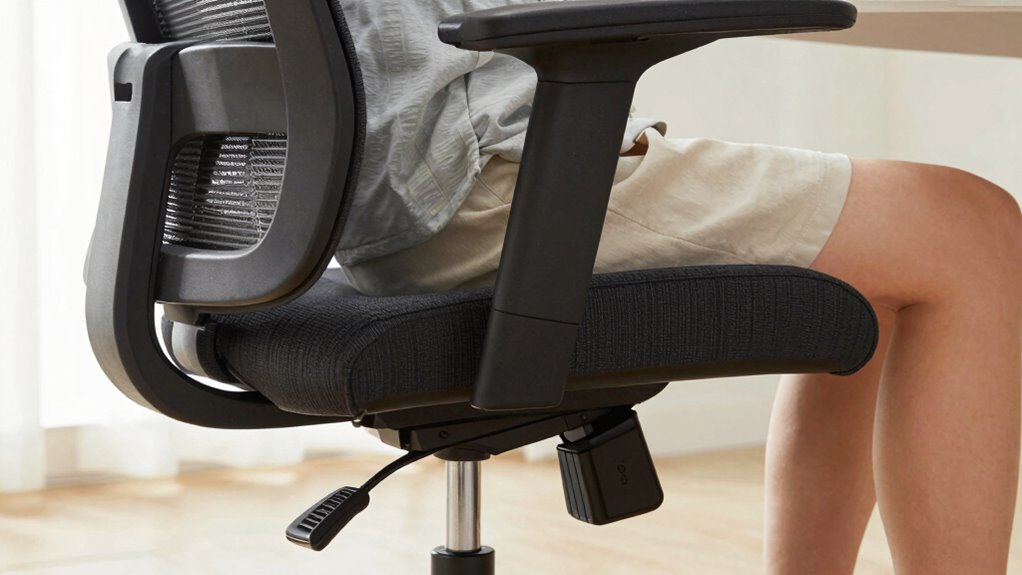
If your chair isn’t designed for shorter legs, small tweaks can make a big difference in comfort and support. Adding ergonomic accessories can help you achieve proper alignment and reduce strain. Consider using decorative cushions to fill gaps and elevate your seating height slightly, providing better thigh support. These adjustments can boost your confidence and comfort at work or leisure.
| Tip | Effect |
|---|---|
| Use a lumbar support pillow | Improves posture and reduces back pain |
| Add a decorative cushion under thighs | Prevents slouching, enhances comfort |
| Attach ergonomic accessories | Customize support to your needs |
| Adjust seat height with cushion | Ensures feet rest flat on the floor |
| Use footrests if needed | Keeps knees at a comfortable angle |
Frequently Asked Questions
How Do I Know if My Chair Is the Right Height for My Short Legs?
You can tell if your chair height suits your short legs by sitting with your feet flat on the floor and your knees at a 90-degree angle. If your legs are comfortably supported without dangling or feeling strained, your chair height is right. Adjust the chair height if needed, ensuring your leg length feels natural and your hips are level to promote good posture and prevent slouching.
What Tools Can Help Me Adjust My Chair More Accurately?
Imagine Sarah struggled to get her chair just right. She used measurement tools like a ruler or a tape measure to check her seat height accurately, then employed adjustment aids like ergonomic cushions or adjustable footrests. These tools help you fine-tune your chair setup more precisely, ensuring your feet rest flat on the ground and your knees are at a comfortable angle. With measurement tools and adjustment aids, you can customize your chair effortlessly.
How Often Should I Recheck My Chair Adjustments for Optimal Posture?
You should recheck your chair adjustments every few weeks to guarantee ideal posture. Regular chair maintenance helps catch any shifts or loosening that can affect comfort and support. Adjustment frequency depends on how often you use your chair and if you notice discomfort or misalignment. Staying proactive prevents slouching and promotes better ergonomics. Make it a habit to review your setup periodically, especially after long periods of use or changes in your workspace.
Can Specific Cushion Types Improve Support for Short-Legged Users?
Did you know that choosing the right cushion can boost comfort by up to 30%? For short-legged users, a cushion with the right firmness and foam density makes a big difference. A firmer cushion offers better support, preventing you from sinking too much, while a higher foam density guarantees durability and consistent support. Experiment with these factors to find the perfect fit and improve your posture effortlessly.
Are There Ergonomic Chairs Designed Specifically for Shorter Individuals?
Yes, there are ergonomic chairs designed specifically for shorter individuals. These chairs often feature tailored ergonomic design, focusing on adjustable seat height, depth, and lumbar support to fit your body perfectly. With chair customization options, you can easily modify the chair to guarantee proper posture and comfort. Look for models that prioritize these features, so you can work comfortably without slouching or straining, regardless of your height.
Conclusion
Getting your chair just right isn’t just a small tweak—it’s like upgrading from a tricycle to a rocket. When you dial in the perfect height, depth, and support, you’ll feel like you’ve *unveiled* a secret superpower against slouching and discomfort. Imagine sitting tall and confident every single day, as if you’ve got a personal throne designed just for you. So don’t settle—adjust, fine-tune, and conquer your space with a setup that’s truly fit for a champion.