

Sharing a bed with your partner can lead to sleep disruptions from movement, snoring, or differing routines, affecting both your rest and mood. A split sleep setup lets each of you have your own space, reducing nightly disturbances and improving sleep quality. By designing separate zones within the same room, managing environment factors, and maintaining emotional closeness, you can enjoy better rest without sacrificing your relationship. If you want to discover how to make this work smoothly, keep exploring these ideas.
Key Takeaways
- Separate sleep zones within the same room can reduce disturbances caused by partner movements and noise.
- Using different mattresses or adjustable beds helps cater to individual comfort preferences.
- Managing bedroom environment with blackout curtains and noise machines improves sleep quality for both partners.
- Open communication about sleep needs and routines maintains emotional closeness despite physical separation.
- Prioritizing sleep health enhances overall relationship satisfaction and daily well-being.
Why Sharing a Bed Can Disrupt Your Sleep Quality

Sharing a bed might seem romantic, but it can also interfere with your sleep quality. Bed sharing issues often lead to sleep disruption, making restful nights harder to achieve. When you share a bed, your partner’s movements, snoring, or restless tossing can disturb your sleep cycles, causing you to wake frequently. Plus, differences in sleep schedules or preferences for room temperature and bedding can create friction, further disrupting sleep. These disturbances don’t just lead to tired mornings—they also impact your overall health, mood, and productivity. You might find yourself feeling less refreshed, irritable, or sluggish during the day. Recognizing how bed sharing issues affect your sleep is the first step toward finding a solution that promotes better rest for both of you. Understanding sleep environments can help you identify the best approach to improve your sleep quality. Additionally, considering sleep hygiene practices can contribute to more restful nights despite shared sleeping arrangements.
The Top Benefits of a Split Sleep Setup for Couples

Implementing a split sleep setup can substantially improve your overall rest and well-being. By allowing each person to follow their ideal bedtime routines, you reduce disruptions and create a more personalized sleep environment. This setup can lead to better sleep consistency, as you’re less affected by your partner’s movements or noise. Using sleep tracking devices helps you monitor your sleep quality and identify patterns, making it easier to optimize your individual schedules. You’ll wake up feeling more refreshed and energized, with fewer sleep interruptions. Plus, you gain the flexibility to accommodate different work schedules or lifestyle needs without sacrificing rest. Incorporating sustainable textile care practices into your bedding choices can also contribute to a more eco-friendly sleep environment. Additionally, considering sleep environment optimization can further enhance sleep quality and comfort for both partners. Paying attention to healthy sleep habits** ensures both partners can develop routines that support restorative rest. Understanding the importance of affiliate disclosure ensures transparency when sharing your sleep setup journey. Moreover, selecting safe and comfortable bedding** materials can significantly improve overall sleep comfort. Overall, a split sleep arrangement supports healthier sleep habits, enhances intimacy by reducing nightly conflicts, and promotes a more restorative sleep experience for both partners.
How to Design an Effective Split Sleep Arrangement at Home

Designing an effective split sleep arrangement at home requires thoughtful planning to guarantee both partners get quality rest. Start by choosing separate sleeping areas that minimize bed sharing, reducing sleep disruption. Consider placing beds in the same room but separated by a partition or using distinct sleeping zones. Use blackout curtains and white noise machines to create a calm environment. Prioritize comfort in each space to support restful sleep. Additionally, being aware of early warning signs for breast cancer can contribute to overall health awareness, even in the context of optimizing sleep environments. Recognizing sleep environment factors can further enhance sleep quality and overall well-being. Properly managing noise pollution is crucial for maintaining a peaceful sleep setting. Being mindful of bedroom air quality can help improve breathing and comfort during sleep. Paying attention to lighting conditions can also significantly influence sleep quality, making it easier to fall asleep and stay asleep. Here’s a quick overview:
| Step | Key Tip | Benefit |
|---|---|---|
| Identify separate zones | Use room dividers or different beds | Reduces sleep disruption |
| Choose comfortable beds | Tailor to individual preferences | Enhances sleep quality |
| Maintain consistent routines | Stick to a sleep schedule | Promotes better sleep |
| Reduce noise and light | Use blackout curtains and white noise | Minimizes disturbances |
| Communicate openly | Discuss needs and adjustments | Ensures comfort and understanding |
Choosing the Best Bed and Mattress for Split Sleep

Are you selecting the right bed and mattress for a split sleep setup? Your choice of bed size matters; a larger bed, like a king or split queen, provides enough space for separate sleep zones without feeling cramped. Consider your mattress type—memory foam offers motion isolation and custom firmness, while hybrid mattresses combine support with comfort. If you and your partner have different preferences, look for mattresses with adjustable firmness or split designs. A sturdy bed frame that supports your chosen mattress type is essential for stability and longevity. Think about how much space you need and your comfort priorities. The right combination of bed size and mattress type sets the foundation for a restful, personalized sleep environment that minimizes nightly compromises. Additionally, understanding the different mattress types can help you make an informed decision tailored to your sleep needs. To optimize your setup, also consider the importance of proper mattress calibration, which ensures the best sleep quality and longevity for your mattress. Selecting a quality mattress is crucial for long-term comfort and support, especially in a split sleep arrangement.
Tips for Managing Temperature, Lighting, and Comfort in Your Setup

Since selecting the right bed and mattress sets the stage for restful sleep, paying attention to temperature regulation, lighting preferences, and overall comfort can greatly improve your nightly rest. To manage temperature, consider using adjustable fans, space heaters, or cooling pads to create a cozy environment for each of you. Keep blackout curtains or sleep masks handy to match your lighting preferences, whether you prefer complete darkness or a gentle glow. Adjust your room’s ventilation to prevent overheating or chilliness. Use soft, breathable bedding to enhance comfort and adapt to your individual needs. Small changes like these help you maintain ideal conditions, making it easier to fall asleep and stay asleep throughout the night. Understanding sleep environment optimization can further enhance your shared sleep quality. Exploring climate control solutions such as water-cooled mattress pads or dehumidifiers can also contribute to a more comfortable sleep setting. Additionally, choosing the right battery inverter generator capacity can ensure reliable power for any climate control devices you use. Considering personal temperature preferences can help tailor the environment to suit both partners’ needs.
Overcoming Challenges of Separate Sleeping Spaces

When couples sleep in separate spaces, it can sometimes lead to feelings of disconnection or concern about intimacy. You might worry that avoiding bed sharing could create emotional distance or lessen closeness. To overcome this, communicate openly about your needs and reassure each other that separate sleep doesn’t mean separate lives. Establish routines that promote intimacy, like morning cuddles or evening talks, to maintain connection. Address sleep disruptions by setting consistent sleep schedules and ensuring both spaces are comfortable. Remember, the goal is to balance individual sleep needs with emotional closeness. Incorporating sleep safety tips can also help create a secure environment that supports restful nights. Supporting healthy sleep habits can enhance overall well-being and relationship satisfaction. Taking steps to manage sleep environment effectively can further enhance comfort and peace of mind. You can also try relaxation techniques before bed to improve sleep quality for both partners. Prioritizing sleep quality helps foster emotional resilience and intimacy outside of shared sleep spaces. With intentional effort, you can enjoy the benefits of separate sleeping spaces while maintaining a strong, connected relationship. Clear communication and shared understanding are your best tools to navigate this progression smoothly.
How a Split Sleep System Can Boost Your Relationship and Wake You Up Refreshed
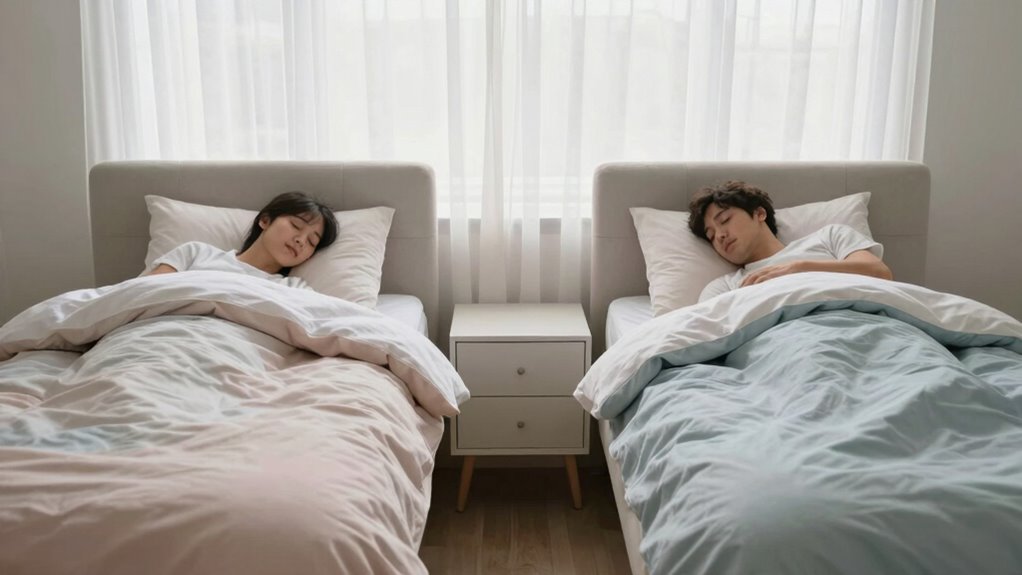
Implementing a split sleep system can substantially strengthen your relationship while helping you wake up feeling more refreshed. By reducing disturbances caused by bed sharing, you improve overall sleep quality for both partners. This setup allows each of you to customize your sleep environment, leading to better rest and less friction in the morning. Here are four ways it benefits your relationship and sleep:
- Enhances intimacy by respecting individual sleep preferences
- Minimizes nightly disruptions, promoting deeper sleep cycles
- Encourages open communication about sleep needs
- Boosts overall sleep quality, leaving you energized and less irritable
A split sleep system creates harmony, allowing both partners to wake up refreshed and ready to face the day.
Frequently Asked Questions
Can Couples Still Share Intimacy in a Split Sleep Setup?
Yes, couples can still share intimacy in a split sleep setup. You can create designated times for closeness, respecting personal boundaries and ensuring both partners feel comfortable. Maintaining good sleep hygiene helps improve overall rest and mood, making intimacy more enjoyable. Open communication about needs and boundaries allows you to nurture your connection while benefiting from the personalized sleep environment. This balance keeps intimacy alive and strengthens your relationship.
How Do I Coordinate Bedtime Routines With My Partner?
Like a well-coordinated dance, you start by establishing bedtime consistency, setting a gentle rhythm for both of you. Communicate openly about preferences and needs, and create a sleep environment that’s comfortable and calming for both. Dim the lights and minimize noise together, making it a shared ritual. This way, you facilitate a smoother transition, strengthening your connection while respecting your individual sleep routines, even in a split sleep setup.
Are There Health Risks Associated With Sleeping Separately?
Sleeping separately generally doesn’t pose health risks if you prioritize good sleep quality and respiratory health. In fact, it can improve your rest by reducing disturbances, helping both of you breathe easier, especially if one has sleep issues like apnea or allergies. Just guarantee your sleep environment remains clean, comfortable, and supportive. Maintaining open communication about your sleep needs helps you both stay healthy and well-rested.
What Are Common Misconceptions About Split Sleep Arrangements?
You might think split sleep arrangements ruin your relationship or compromise sleep comfort, but that’s a myth. Many believe sleeping separately creates emotional distance, yet it often improves rest, leading to more energy and connection during the day. The truth is, split sleep setups can enhance your relationship by reducing nightly disruptions and fostering better sleep quality, proving that compromises can actually strengthen your bond rather than weaken it.
How Do I Introduce the Idea to My Partner Without Conflict?
You can introduce the idea by emphasizing how split sleep respects personal boundaries and improves overall sleep quality. Share that it’s about finding a solution that benefits both of you, reducing conflicts and emotional impact. Approach the conversation with empathy, listen to their concerns, and suggest trying it temporarily. This collaborative approach helps your partner see it as a positive change rather than a confrontation, making the shift smoother.
Conclusion
Imagine slipping into your own cozy corner, where the night’s quiet whispers soothe your sleep. With a split setup, you wake refreshed, ready to embrace the day’s adventures. No more tangled sheets or restless nights—just peaceful slumber tailored to your needs. This simple change transforms your bedroom into a sanctuary where both your rest and relationship flourish. Embrace the comfort of your personalized space and wake each morning renewed, like dawn breaking over a calm, restful lake.