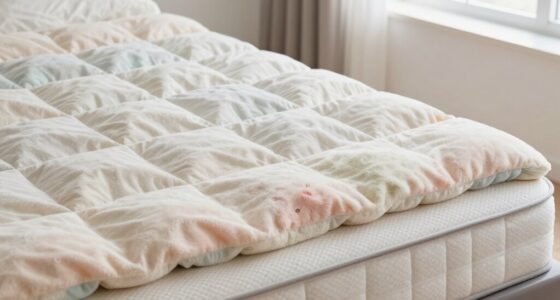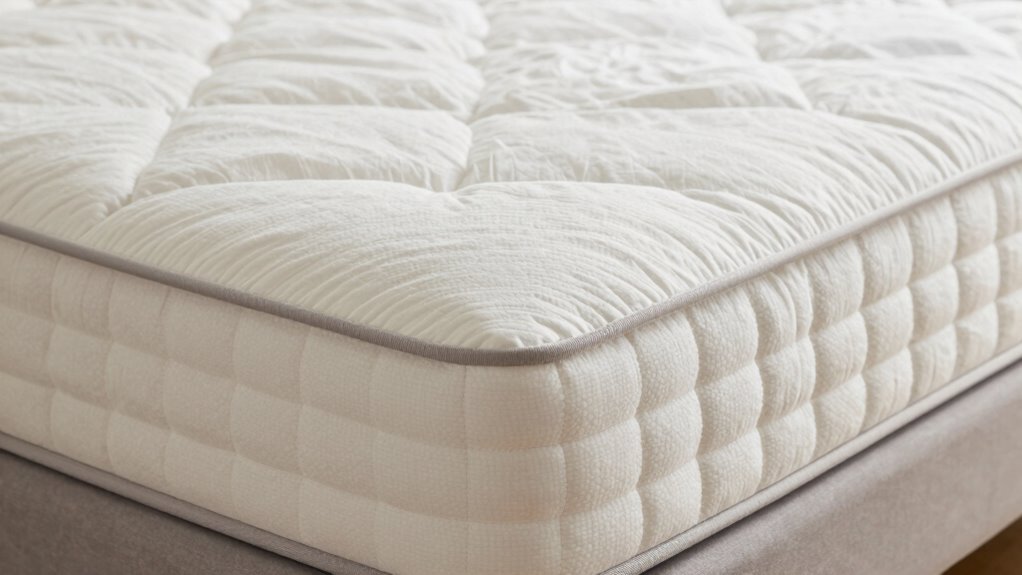
Edge support is the strength of your mattress’s edges, helping it stay stable and maintain its shape over time. Even if you sleep alone, good edge support prevents sagging, makes getting in and out easier, and ensures your sleep surface remains consistent. Without it, your mattress may weaken and wear out faster. Want to know how to spot if your mattress has proper edge support? Keep exploring for more helpful insights.
Key Takeaways
- Strong edge support maintains mattress shape and prevents sagging, extending its lifespan even with solo sleepers.
- Good edge support enhances safety and ease of getting in and out of bed, reducing the risk of falls.
- It ensures consistent comfort across the entire mattress surface, preventing uneven wear over time.
- Reinforced edges improve overall mattress durability, supporting various sleep positions safely.
- Proper edge support minimizes pressure points and enhances sleep quality, regardless of whether you sleep alone or with a partner.
What Is Edge Support and Why Is It Important?
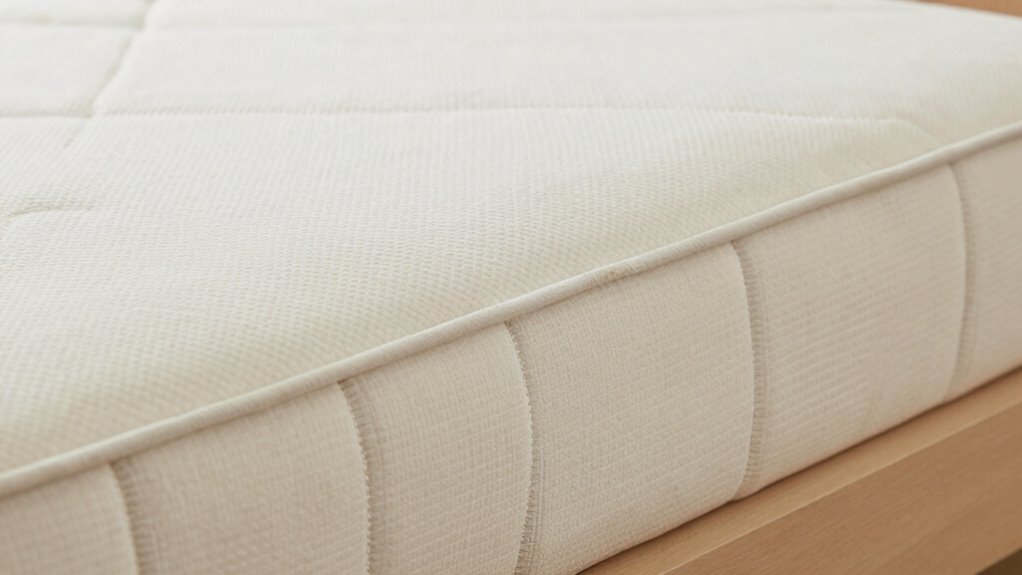
Have you ever sat on the edge of a mattress only to feel it sag or shift beneath you? That’s a sign of poor edge support. It’s what keeps your mattress stable and prevents sagging at the sides, making it easier to get in and out of bed. Proper edge support depends on bed frame compatibility; an incompatible frame can weaken the edges, regardless of mattress quality. Mattress firmness also plays a role—firmer mattresses generally offer better edge support, providing a stable sit and sleep surface. Without good edge support, you might feel like you’re going to roll off or struggle with sitting on the edge. Investing in the right bed frame and understanding mattress firmness can guarantee your edges stay strong and supportive over time. Understanding mattress construction can help you choose the right materials for optimal edge resilience, especially when considering piercings that may affect your sleeping position or comfort. Additionally, selecting a mattress with enhanced edge reinforcement can significantly improve durability and support.
How Do You Know If Your Mattress Has Good Edge Support?
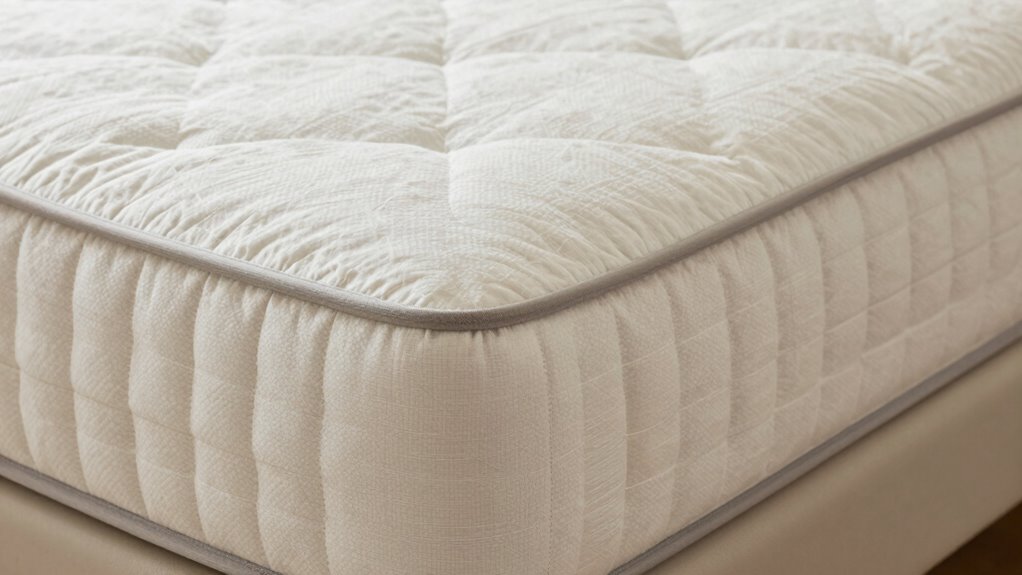
You can tell if your mattress has good edge support by sitting on the edge to see if it feels stable or collapses. Check how much resistance the edge offers when you sit or lie close to it, ensuring it doesn’t sag or feel soft. Also, consider how easy it is to get in and out of bed without feeling unsteady or uncomfortable. Incorporating edge support features can help maintain even support across the entire surface of your mattress. Being aware of user experience factors can further assist in assessing overall mattress quality and comfort. Additionally, understanding floating on water concepts highlights the importance of balanced support to prevent sagging and maintain proper alignment. Recognizing support system design elements can provide insight into the durability and longevity of your mattress over time.
Sitting on Edge Stability
Ever wonder how to tell if your mattress provides solid edge support? One quick way is to test sitting on the edge. If you feel secure and don’t sink excessively, your mattress likely has good edge stability. When you sit down, notice if the edge compresses or feels unstable. A mattress with strong edge support will keep its shape and support your weight, enhancing sitting comfort. If you find yourself wobbling or feeling like you might slide off, it’s a sign your mattress’s edge support could be better. Good edge stability isn’t just for sleeping; it also improves your sitting experience, especially if you often sit on the bed’s edge. This test helps you gauge overall durability and comfort for everyday use. Additionally, mattresses designed with reinforced edges often incorporate specialized materials that contribute to long-term edge support. Proper edge support can also help prevent sagging and prolong the lifespan of your mattress. Recognizing the importance of edge stability can lead to better mattress choices and increased longevity.
Mattress Edge Resistance
To truly gauge your mattress’s edge support, it’s important to contemplate its resistance when pressure is applied. If you notice that you can press down on the edge without it collapsing or feeling unstable, your mattress likely has good edge resistance. This resistance indicates better mattress durability, meaning the edges won’t weaken or sag over time. Good edge support also helps maintain proper sleep posture, preventing you from slipping off or feeling unsteady when changing positions. When testing, sit or apply pressure near the edge and observe how much it compresses. A firm, resilient edge suggests your mattress is built to last and provides consistent support across the entire surface. Additionally, microplastics in dust can accumulate around your mattress, so maintaining good air quality can contribute to a healthier sleeping environment. Incorporating proper ventilation can help reduce dust buildup and improve overall sleep hygiene. Regularly inspecting and cleaning your sleeping area can further enhance sleep environment quality. Ensuring your mattress has strong edge support also contributes to bed longevity, making it a worthwhile investment. Ultimately, strong edge resistance ensures you can use the full mattress comfortably and safely.
Ease of Getting In
How easily you can get in and out of bed can reveal a lot about your mattress’s edge support. If you find it difficult to sit on the edge or feel like you might roll off, your mattress likely lacks strong edge support. A mattress with good edge support maintains its shape, making it easier to use the entire surface comfortably. Your bed height also plays a role—if your mattress is too soft or too firm, getting in might be awkward or unstable. A balanced mattress firmness provides stability, so you can get in and out without hesitation. If you notice you’re constantly struggling at the edges, it’s a sign that your mattress’s edge support needs improvement for safer, easier access. Incorporating vibration therapy or temperature-based treatments can sometimes help improve sleep comfort and support over time. Additionally, understanding mattress construction can help you choose a model with better edge support features for long-term comfort.
Signs That Your Mattress Needs Better Edge Support
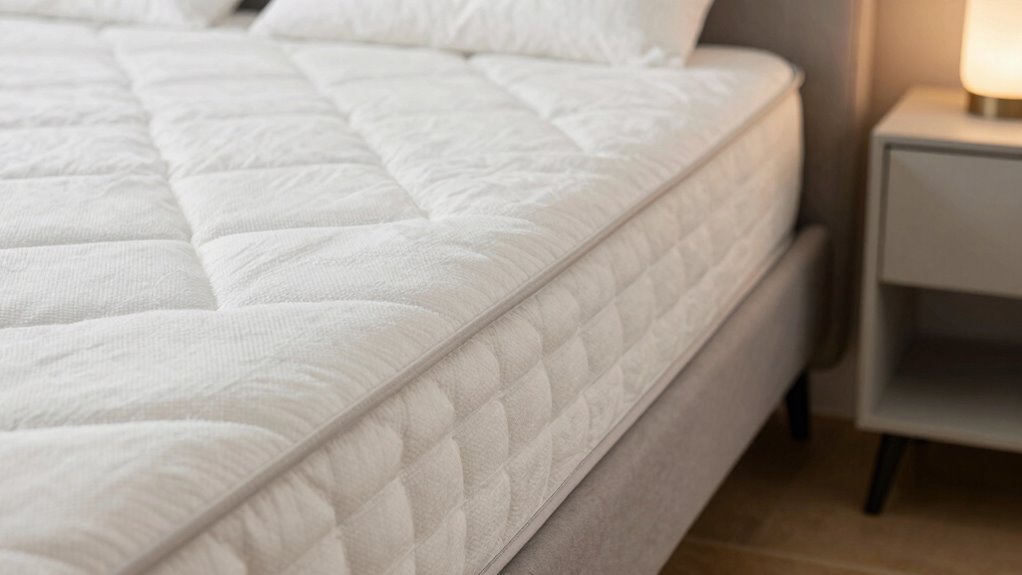
If your mattress edges are sagging, it’s a clear sign that support is weakening. You might also notice difficulty getting in or out of bed, which can be uncomfortable and unsafe. These issues indicate it’s time to contemplate a mattress with better edge support. Proper edge support can help prevent sagging caused by excessive ear wax, which can weaken the structure over time. Additionally, ensuring your mattress has proper support can improve overall longevity and comfort, especially if you tend to use your bed frequently. Investing in quality smart locks and office gear can also enhance your space’s security and functionality, especially in shared spaces, complementing your efforts to maintain a comfortable sleeping environment. Moreover, selecting a mattress with reinforced edges can significantly minimize disruptions caused by security vulnerabilities, helping to create a safer and more comfortable sleeping area.
Mattress Sagging Edges
Have you noticed your mattress developing sagging edges over time? This is a clear sign that your mattress’s edge durability is weakening, especially along the mattress perimeter. When edges sag, it becomes harder to sit or lie close to the sides without feeling unstable. You might find yourself rolling off more often or feeling less supported when sitting on the edge.
Signs include:
- Reduced support when sitting on the perimeter
- Visible or noticeable dips along the edges
- Difficulty getting in and out without feeling unstable
- Uneven sleeping surface caused by edge collapse
These issues highlight that your mattress’s edge support isn’t holding up as it should, which compromises overall comfort and longevity. Addressing sagging edges ensures your mattress maintains its shape and support over time.
Difficulty Getting In/Out
When getting in or out of your bed becomes unexpectedly difficult or feels unstable, it’s often a sign that your mattress’s edge support is weakening. This can make your bedroom aesthetics suffer, as you might avoid sitting near the edges or feel the bed looks less appealing. Poor edge support can also lead to safety concerns, especially if you feel unstable or risk falling. Upgrading your mattress accessories, like adding reinforced edge supports or choosing a mattress with stronger perimeter construction, can improve stability. Better edge support not only enhances your safety but also maximizes your sleeping space and maintains your bed’s shape. Recognizing this problem early ensures you can restore comfort and functionality, keeping your bedroom both attractive and practical.
How Different Mattress Types Vary in Edge Support (Foam, Innerspring, Hybrid)
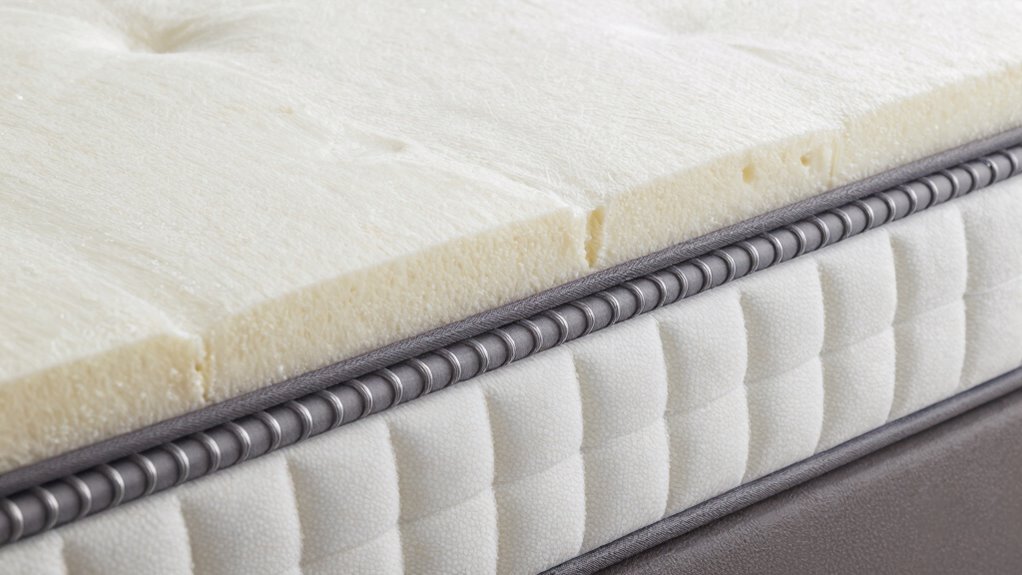
Different mattress types offer varying levels of edge support, which can markedly impact your overall comfort and durability. Foam mattresses often lack strong edge reinforcement, making the mattress perimeter feel less stable and limiting sitting space. In contrast, innerspring mattresses usually provide solid edge support due to their coil systems, offering a more supportive mattress perimeter. Hybrid mattresses combine foam comfort layers with reinforced coils, enhancing edge stability without sacrificing softness.
Different mattress types vary in edge support, affecting stability, comfort, and longevity.
- Foam mattresses may sag at the edges over time, reducing effective sleeping space
- Innerspring coils provide resilient edge reinforcement for consistent support
- Hybrids balance comfort and edge support, ideal for varied sleep positions
- Proper edge support maintains the shape and integrity of your mattress long-term
How Edge Support Affects Mattress Longevity and Shape
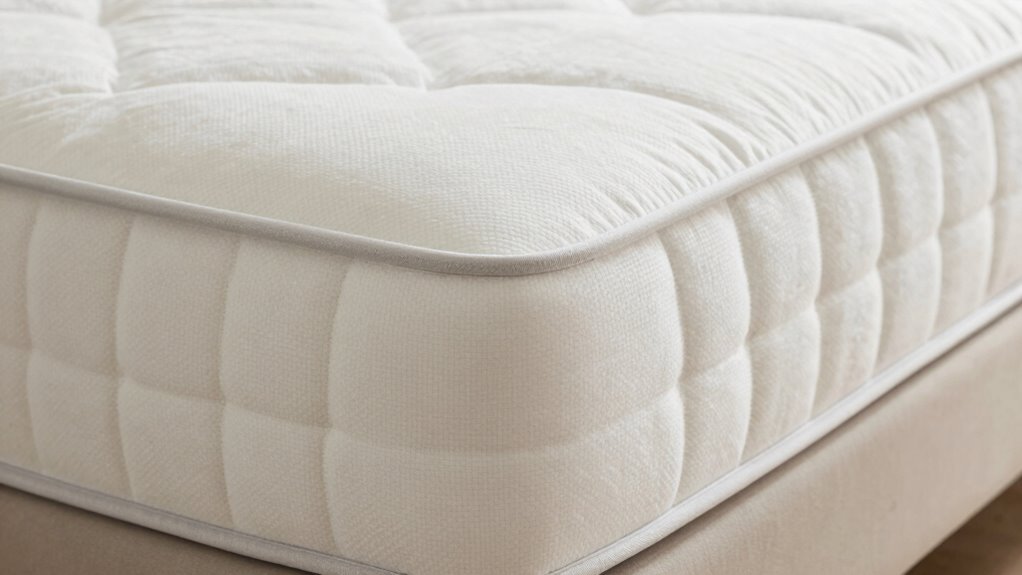
Edge support plays a crucial role in maintaining your mattress’s longevity and shape over time. When your mattress has strong edge support, it prevents sagging and wear along the sides, helping it stay firm longer. Proper bed frame compatibility ensures that the support system functions as intended, reducing uneven pressure that can distort the mattress. Regular mattress rotation also helps distribute weight evenly, minimizing edge compression and preserving its shape. Without adequate edge support, you risk developing permanent indentations and reducing your mattress’s lifespan. Investing in a mattress with good edge support and pairing it with the right bed frame, along with consistent rotation, keeps your mattress in shape longer, ultimately saving you money and providing a more comfortable sleeping surface over time.
How Edge Support Impacts Sitting Comfort and Getting In and Out of Bed

Good edge support makes a noticeable difference in how comfortable it is to sit at the side of your bed or get in and out of it. When your mattress has strong edge support, you won’t feel like you’re about to slide off or lose your footing. This enhances your sitting comfort and makes moving around safer and easier. Proper edge support reduces pressure on the mattress’s cushioning comfort, helping you feel more secure. It also prevents sagging at the edges, maintaining mattress firmness where you need it most.
- Feel more stable when sitting or standing
- Minimize discomfort during shifts
- Reduce wear on mattress edges
- Maintain overall mattress shape
Key Features to Look for When Choosing a Mattress With Strong Edges
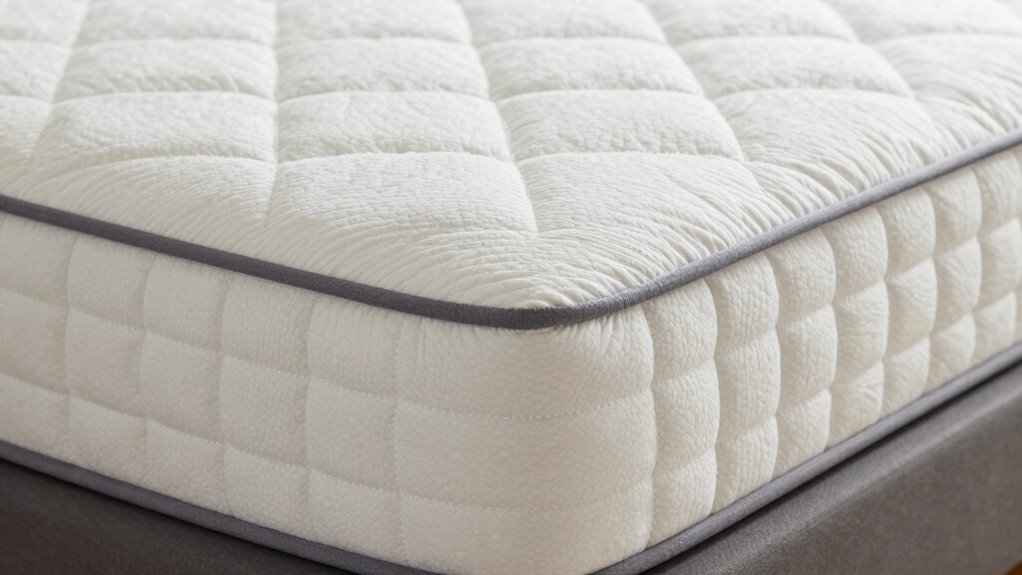
When selecting a mattress with strong edges, it’s important to contemplate specific features that enhance support and durability. Look for reinforced perimeters designed with high-density foam or sturdy coils, which prevent sagging and maintain shape. Consider your sleep position; side sleepers benefit from firm edges that support hips and shoulders, while back and stomach sleepers need stability across the entire surface. Mattress materials also matter—hybrid and innerspring mattresses typically offer better edge support than foam-only options.
| Feature | Why It Matters |
|---|---|
| Reinforced Edges | Prevents sagging, supports getting in/out |
| Firmness Level | Ensures stability for different sleep positions |
| Mattress Materials | Foam, coils, or hybrid for durability |
| Edge Support Technology | Additional reinforcements for longevity |
| Construction Quality | Overall durability and support |
What Does Research Say About Edge Support and Sleep Quality?
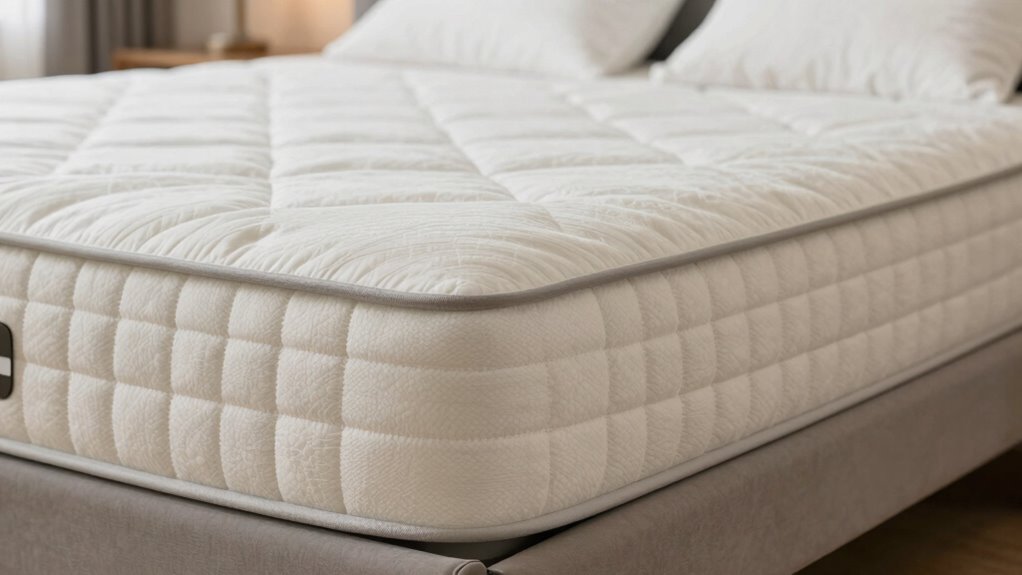
Research indicates that strong edge support can considerably influence sleep quality by reducing disturbances caused by sagging or partial roll-off. When your bed’s edges are well-supported, you’re less likely to wake up feeling cramped or unstable. This is especially important for bed frame compatibility, guaranteeing your frame and mattress work together to maintain ideal support. Additionally, solid edge support can improve sleep posture analysis, helping you maintain proper alignment throughout the night. Better support minimizes pressure points and enhances overall comfort.
- Enhances stability, reducing movement disruptions
- Promotes proper sleep posture by supporting your body’s natural alignment
- Prevents sagging, extending mattress lifespan
- Ensures compatibility between your mattress and bed frame for consistent support
Tips for Testing Edge Support in Stores and at Home
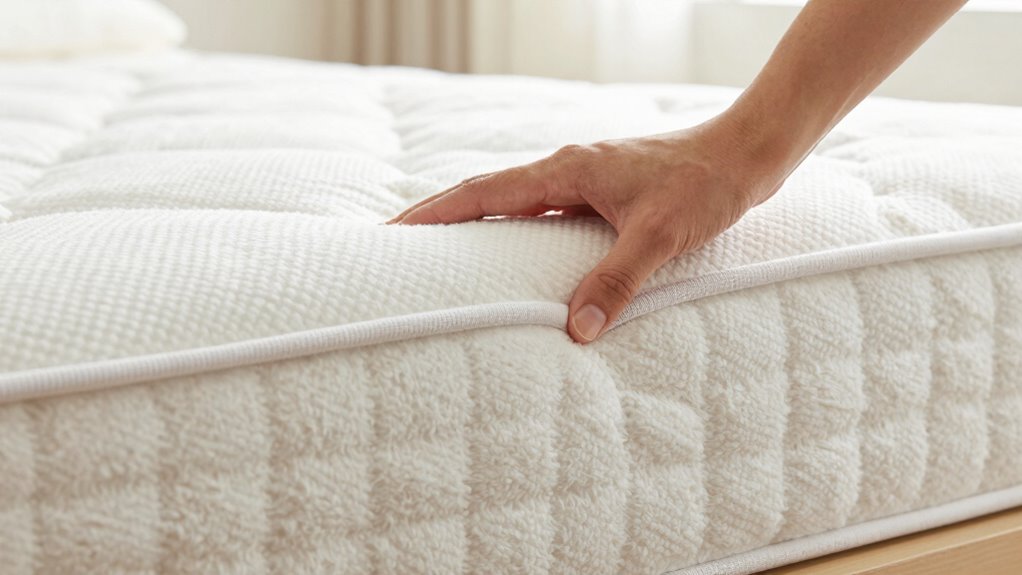
To effectively evaluate edge support, it’s important to test the mattress both in stores and at home using simple, practical methods. In stores, sit or lie near the edge to see how it responds. At home, test with your bed frame to ensure compatibility and observe how the edge materials perform under your weight. Focus on whether the edges feel stable and supportive, especially if you tend to sit or sleep near the sides. Use the following table to guide your testing:
| Testing Method | What to Look For |
|---|---|
| Sit on the edge | Stability and firmness of edge |
| Lie near the edge | Support and bounce |
| Check compatibility | Fit with your bed frame |
This approach helps you find a mattress that suits your needs and guarantees edge support remains reliable.
Common Myths About Edge Support You Should Know

Many people believe that edge support is either entirely reliable or completely useless, but the truth is more nuanced. A common myth is that edge support doesn’t matter if you sleep alone, but it can influence sleep quality and safety. Another misconception is that all beds with good edge support are universally compatible with any bed frame, which isn’t true—bed frame compatibility plays a role. Some assume that sleep position effects are irrelevant to edge support, yet side sleepers and those who move often benefit from sturdier edges. Additionally, many think edge support only affects sitting on the bed’s edge, but it also impacts overall mattress durability and comfort. Understanding these myths helps you choose a mattress that aligns with your sleep needs.
Frequently Asked Questions
Can Good Edge Support Prevent Mattress Sagging Over Time?
Good edge support can help prevent mattress sagging over time by enhancing mattress durability. When the edges are well-supported, the stress on the foam is distributed evenly, reducing wear. High foam density around the edges also plays a vital role, making the mattress more resilient and maintaining its shape longer. So, investing in a mattress with strong edge support and dense foam can extend its lifespan and keep it comfortable.
Is Edge Support More Important for Couples Than Singles?
Think of your mattress as a sturdy bridge. For couples, edge support importance is like the bridge’s strong sides, preventing sagging and ensuring safety for everyone. But even for single sleepers, good edge support keeps the whole structure balanced and prevents uncomfortable sagging at the sides. So, while couples benefit more from sturdy edges, single sleepers also gain comfort and durability, making edge support essential regardless of sleeping arrangements.
How Does Mattress Thickness Influence Edge Support Strength?
Mattress thickness can considerably impact edge support strength, influencing your mattress durability and sleep positioning. Thicker mattresses often provide better edge support because they usually have reinforced sides, preventing sagging and maintaining firmness. This means you can sit or sleep near the edge comfortably without feeling like you’ll roll off. A well-supported edge helps preserve the mattress’s shape over time, ensuring consistent comfort and support for your sleep needs.
Does Edge Support Affect Overall Sleep Temperature?
Yes, edge support can influence your sleep temperature by affecting mattress ventilation. When edge support is strong, it maintains proper airflow around the mattress edges, helping regulate heat and moisture. This prevents hot spots and promotes a cooler sleep environment. If your mattress lacks good edge support, poor ventilation might cause heat buildup, making you feel warmer. So, good edge support contributes to a more comfortable, temperature-regulated sleep.
Are There Specific Brands Known for Superior Edge Support?
Are you wondering which brands excel in edge support? You’ll want to contemplate those with a strong reputation for quality and durability. Brands like Saatva, Purple, and Tempur-Pedic are known for their superior edge support, thanks to high-quality materials and innovative designs. These brands prioritize material quality, ensuring you get consistent firmness and support along the edges, making it easier to get in and out of bed comfortably and confidently.
Conclusion
So, even if you sleep solo, don’t overlook edge support—it’s the unsung hero of a good night’s rest. After all, who knew that a sturdy edge could make getting in and out easier, or that it might help your mattress last longer? Ironically, what seems like a minor detail can actually be the difference between waking up refreshed or battling a saggy, lumpy mattress. So, give those edges some love—you might just sleep better for it.