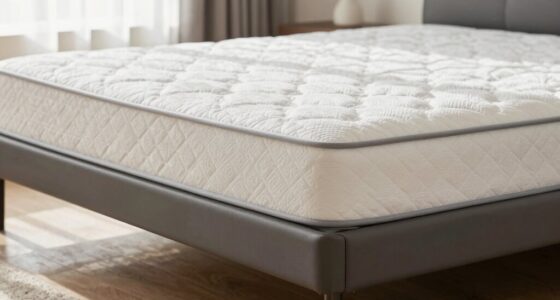

Choosing the right mattress firmness depends on your sleep style, position, and body weight, not a specific number. If you’re a side sleeper, a softer mattress can cushion pressure points, while back or stomach sleepers may prefer something firmer for stability. Test different levels by lying on the mattress for a few minutes, and consider your body weight to find the best support. Keep exploring to discover how support, materials, and your changing needs affect comfort.
Key Takeaways
- Assess your sleep position to determine whether a softer or firmer mattress offers better support.
- Test different firmness levels by lying down for 10-15 minutes to find what feels most comfortable.
- Consider your body weight, as heavier individuals often prefer firmer support to prevent sagging.
- Pay attention to how the mattress supports spinal alignment and pressure points during testing.
- Regularly evaluate your sleep quality and physical comfort to decide if a mattress’s firmness remains suitable over time.
How to Choose the Right Mattress Firmness for Your Sleep Style

Choosing the right mattress firmness depends on your sleep style and personal preferences. To find the best fit, focus on firmness customization that supports your body’s unique needs. If you prefer a softer mattress, it can provide more sleep comfort by cushioning pressure points, especially if you sleep on your side. Conversely, a firmer mattress offers stability and may suit back or stomach sleepers seeking proper spinal alignment. Consider how much sinkage you want—too soft might cause misalignment, while too firm could create discomfort. Testing different firmness levels helps determine what feels best for you. Remember, the goal is to enhance sleep comfort, ensuring you wake up refreshed and without pain. Tailoring your mattress firmness to your sleep style makes a significant difference. Proper spinal alignment is essential for preventing discomfort and ensuring restful sleep. Additionally, understanding how different firmness levels impact pressure distribution can help you make a more informed choice. For example, some mattresses incorporate customizable firmness features to better accommodate individual needs. Recognizing your sleep position can further refine your selection process to achieve optimal comfort. Moreover, taking into account personal comfort preferences can help you choose a mattress firmness that supports overall well-being.
Why Your Sleep Position Matters When Picking a Mattress
Your sleep position influences how your mattress supports your body, ensuring proper alignment and comfort throughout the night. It also affects pressure point relief, helping prevent aches and discomfort. Choosing a mattress suited to your sleep style can make a significant difference in your overall sleep quality. Additionally, understanding how growth mindset can encourage better sleep habits may contribute positively to your child’s development and mental health. Recognizing the importance of sleep ergonomics can further optimize your sleep environment and support healthier habits. Being aware of your sleep posture can help in selecting a mattress that aligns with your specific needs, promoting better spinal health and comfort. Monitoring market trends can also inform your choices when exploring new sleep products or accessories, especially as innovations like electric bikes continue to evolve and influence lifestyle choices.
Sleep Position and Support
Since your sleep position influences how your body interacts with your mattress, selecting the right support becomes vital for a good night’s rest. Your sleep posture affects pressure points, spinal alignment, and overall comfort, all of which depend on proper support. Consider these factors:
- Bed height: Ensure it’s easy to get in and out comfortably.
- Mattress durability: A sturdy mattress maintains support over time, especially for side sleepers.
- Support zones: Different areas need varying firmness levels for ideal alignment.
- Body weight: Heavier individuals may require firmer support to prevent sagging.
- Sleep habits: Switch positions often? Look for adaptable support features.
- Mattress support is crucial to prevent sagging and maintain comfort throughout the mattress’s lifespan. Additionally, understanding support zones can help tailor your mattress choice to your specific needs, ensuring optimal spinal alignment and comfort. Recognizing the importance of custodian services can also assist in selecting a mattress that maintains its support over time. Proper support systems are essential for long-term comfort and durability, especially in mattresses designed for diverse sleep positions. Matching your sleep position with suitable support helps minimize discomfort, preserves mattress integrity, and enhances sleep quality.
Pressure Point Relief
The way you sleep directly impacts where pressure builds up on your body, making pressure point relief a crucial factor in selecting the right mattress. Proper pressure relief helps reduce pain and prevents discomfort during the night. Your sleep position influences which areas need more support, so choose a mattress that cushions your shoulders, hips, and neck accordingly. For example, side sleepers benefit from softer mattresses that conform to curves, while stomach sleepers need firmer support to prevent sagging. Use this quick guide to identify your needs:
| Sleep Position | Ideal Mattress Type | Key Pressure Points |
|---|---|---|
| Side Sleeper | Medium-soft | Shoulders, hips |
| Back Sleeper | Medium-firm | Lower back, shoulders |
| Stomach Sleeper | Firm | Hips, abdomen |
Prioritize pressure relief for pain reduction and better sleep quality. Understanding your pressure points can help you select a mattress that provides optimal comfort and support. Incorporating pressure distribution techniques in your mattress choice can further enhance your sleep experience, especially when considering body contours for better alignment. Additionally, selecting a mattress that accommodates your sleeping position can significantly improve overall sleep quality. Recognizing the importance of pressure relief can lead to improved spinal alignment and reduced tossing and turning throughout the night.
Alignment and Comfort
Choosing a mattress that aligns well with your sleep position guarantees you wake up feeling refreshed and pain-free. Proper alignment helps maintain a healthy sleep environment and supports your body’s natural curves. Your sleep position influences which mattress features you need, whether it’s firmer support for back sleepers or softer cushioning for side sleepers. Consider how bed height affects ease of getting in and out of bed, especially if you have joint issues. The right alignment reduces strain on your neck, spine, and hips, leading to better comfort all night. Keep these in mind:
- Your sleep position (back, side, stomach)
- Mattress firmness suited to your posture
- Support for your lower back
- Bed height for easy access
- Overall sleep environment for ideal rest
- Supportive mattress features can enhance spinal alignment and reduce discomfort. Additionally, choosing a diverse and innovative mattress can further improve your sleep quality. Incorporating pressure point relief into your mattress selection can also significantly boost your overall comfort and sleep quality. A well-designed mattress can also help mitigate common issues like pressure build-up and improve circulation during sleep. Selecting a mattress with adaptive support can respond to your body’s movements and provide personalized comfort throughout the night.
How Body Weight Influences the Best Mattress Firmness for You

Your body weight plays a crucial role in determining the ideal mattress firmness for you. Heavier individuals often require a firmer mattress to ensure proper pressure distribution and prevent you from sinking too deeply. This helps maintain spinal alignment and reduces discomfort. Lighter sleepers, on the other hand, benefit from softer mattresses that allow for better body contouring, providing enough support without feeling overly rigid. Your weight influences how your body interacts with the mattress surface, affecting how pressure is distributed across your body. Choosing the right firmness based on your weight ensures you get adequate support and comfort, minimizing pressure points and promoting restful sleep. Remember, the goal is to find a balance that supports your body’s unique needs without sacrificing comfort.
Understanding Mattress Firmness: What Do the Terms Soft, Medium, and Firm Really Mean?

Understanding mattress firmness involves recognizing what the labels soft, medium, and firm actually mean regarding sensation and support. Soft mattresses contour closely to your body, ideal for pressure relief, especially with memory foam or hybrid mattresses. Medium firmness offers balanced support, suitable for various sleeping positions. Firm mattresses provide strong support, keeping your spine aligned.
- Soft mattresses feel plush and cushiony
- Medium firmness balances comfort and support
- Firm mattresses feel solid and supportive
- Memory foam mattresses often lean toward soft or medium
- Hybrid mattresses combine support with contouring features
Your preferences depend on your sleeping style and body weight. Remember, soft isn’t necessarily less supportive; it’s about pressure relief. Medium offers versatility, while firm suits those who need extra support. Knowing these terms helps you choose a mattress that matches your comfort needs.
How to Test Mattress Firmness Before Buying

Testing mattress firmness in person is essential to guarantee it meets your comfort needs before making a purchase. Visit a store and lie down in your usual sleep position for at least 10-15 minutes to get a true feel. Pay attention to how your body aligns with your bedroom decor, ensuring the mattress complements your aesthetic while supporting good sleep hygiene. Don’t rush; testing different firmness levels helps you identify what feels right. Use your hand or body weight to press into the mattress and assess its responsiveness. Remember, firmness impacts sleep quality and overall bedroom comfort. Taking the time to test thoroughly ensures your choice supports restful sleep and integrates seamlessly with your bedroom decor.
Common Mistakes to Avoid When Selecting Your Mattress Firmness

Choosing the wrong mattress firmness can lead to discomfort and disrupted sleep, so it’s important to avoid common mistakes during the selection process. One mistake is ignoring your sleep hygiene needs, which influence how your mattress supports restful sleep. Another is prioritizing price over comfort, risking poor support. Failing to take into account your bedroom environment, like temperature and noise, can also affect firmness choice. Additionally, relying solely on online reviews without testing the mattress can lead to mismatched expectations. Finally, overlooking your specific health conditions or personal preferences may cause ongoing discomfort. Be mindful of these pitfalls to ensure your mattress supports a healthy sleep environment. Avoiding these mistakes helps you select a mattress that promotes better sleep quality and a more balanced bedroom environment.
Finding the Perfect Balance: Matching Firmness to Your Comfort Preferences
Finding the perfect balance between firmness and comfort is essential for a restful night’s sleep, and it begins with understanding your personal preferences. Everyone has different needs, so prioritizing personalized sleep comfort guarantees you wake refreshed. To achieve this, consider how different firmness levels feel for you and how they support your body. Use mattress customization options to fine-tune your bed’s feel. Here’s a quick guide:
| Preference | Feel | Best For |
|---|---|---|
| Soft | Cushiony, plush | Side sleepers needing pressure relief |
| Medium | Balanced support | Most sleep positions |
| Firm | Supportive, less sinkage | Stomach sleepers, back support |
Matching firmness with your preferences helps create a sleep environment tailored just for you.
How Mattress Materials and Construction Impact Firmness and Support
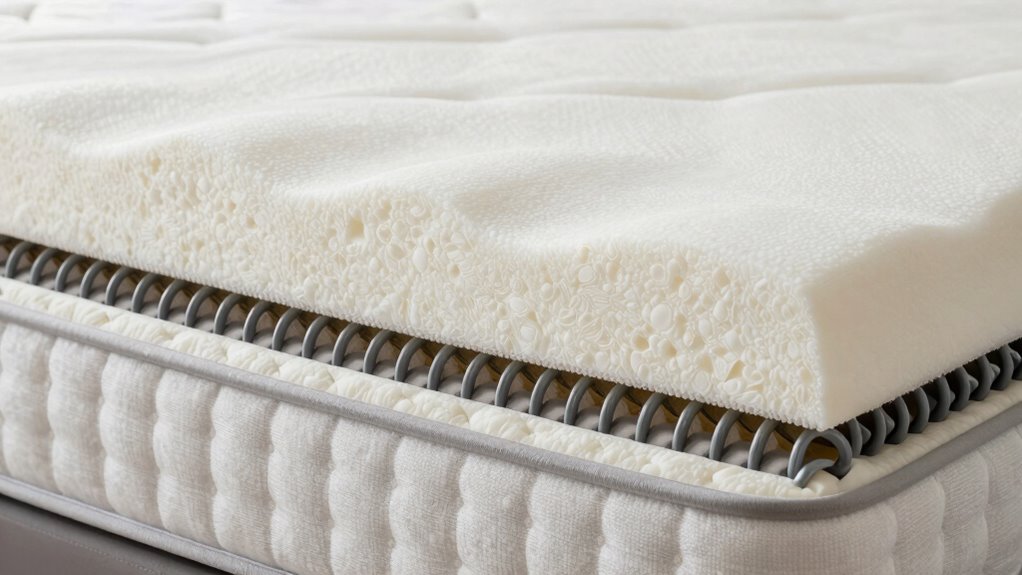
The materials and construction of a mattress directly influence its firmness and the level of support it provides. Foam density affects how firm or plush a mattress feels; higher foam density generally offers more support and durability. Spring tension, on the other hand, determines how much resistance each coil provides, impacting overall firmness. Different construction techniques also play a role, such as the layering of materials or the type of support core used. Consider these factors:
- Higher foam density equals firmer feel and better support
- Tighter spring tension results in a firmer mattress
- Hybrid designs balance foam softness and coil support
- Memory foam molds to your body, affecting firmness perception
- Pocket coils provide targeted support and adjustability
Understanding these elements helps you choose a mattress that aligns with your firmness needs.
Tips for Adjusting or Changing Mattress Firmness as Your Needs Change
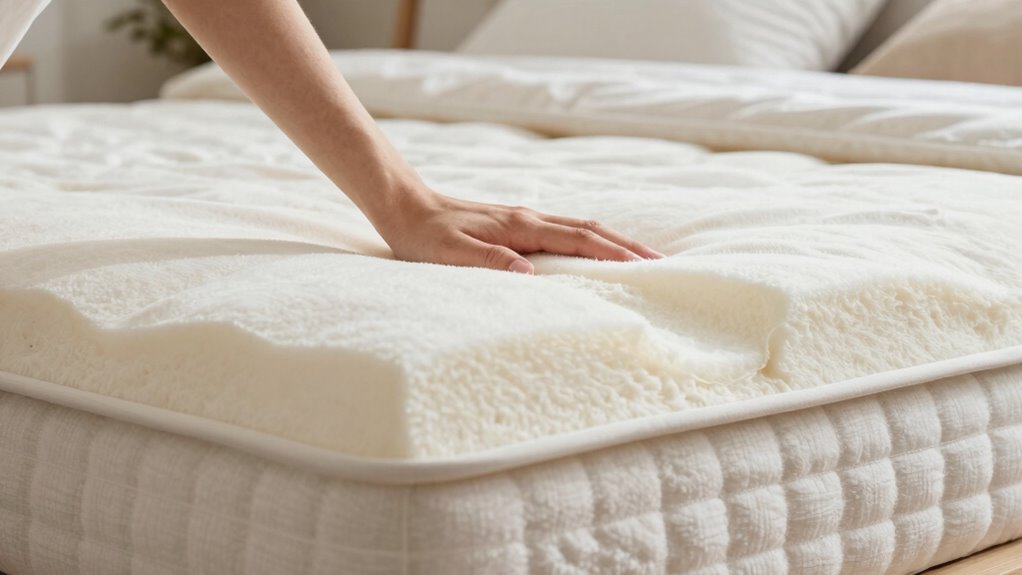
As your comfort preferences and sleep needs evolve, adjusting your mattress’s firmness can make a significant difference in your sleep quality. To achieve effective mattress customization, consider options like adding a mattress topper or changing the bed’s support system. For softer firmness, a plush topper can provide extra cushioning, while a firmer topper or adjusting the bed’s foundation can increase support. If your mattress allows, explore adjustable firmness models with built-in controls. Regularly reassess your sleep comfort and be willing to experiment with different adjustments until you find the ideal firmness. Remember, adjusting firmness isn’t a one-size-fits-all process—listen to your body and prioritize your comfort to optimize your sleep experience over time.
When and How to Upgrade Your Mattress for Better Sleep

Noticing persistent sleep discomfort is a clear sign it’s time to consider upgrading your mattress. Knowing the right moment to replace it and choosing a model that suits your current needs can substantially improve your sleep quality. Let’s explore how to recognize these signs and make the best choice for better rest.
Recognizing Sleep Discomfort Signs
If you wake up feeling sore, stiff, or unrested more often than not, your mattress might no longer be supporting your sleep needs. Pay attention to signs like persistent discomfort, interrupted sleep, or waking up with aches. Consider how your sleep duration and dream analysis might reveal underlying issues—frequent tossing or difficulty falling asleep can signal a need for a change. Be alert to these sleep discomfort signs:
- Morning pain or stiffness
- Difficulty maintaining deep sleep
- Frequent awakenings during the night
- Low sleep quality despite adequate hours
- Feeling exhausted upon waking
Recognizing these signs helps you determine when it’s time to upgrade your mattress, ensuring better sleep quality and overall health. Your body’s signals are essential cues for making the right sleep environment adjustments.
Timing Your Mattress Upgrade
Knowing when to upgrade your mattress is essential for maintaining restful sleep and preventing ongoing discomfort. Pay attention to signs like persistent aches, sagging, or waking up tired, which indicate it’s time for a change. To effectively communicate this in your blogging strategies or marketing tips, emphasize the importance of timely upgrades for better sleep quality. Share insights about how mattress lifespan varies, typically around 7-10 years, and highlight the value of listening to your body’s signals. Incorporate clear calls-to-action encouraging readers to assess their sleep environment regularly. By timing your mattress upgrade thoughtfully, you ensure continuous comfort and health benefits, making your content more engaging and helpful for your audience.
Choosing the Right Replacement
Choosing the right replacement mattress involves evaluating both your current sleep experience and how long you’ve had your existing mattress. If you notice persistent discomfort, aches, or disrupted sleep, it’s time to contemplate an upgrade. Proper timing enhances sleep hygiene and extends mattress longevity. Look out for signs like sagging, lumps, or increased allergies, which indicate it’s time to replace your mattress. Upgrading can improve sleep quality and prevent future health issues. To make the best choice, consider these factors:
- Age of your current mattress
- Changes in sleep quality
- Physical signs of wear
- Impact on sleep hygiene
- Your comfort preferences
Being attentive to these cues helps you choose a mattress that supports better sleep and lasts longer.
Frequently Asked Questions
Can Mattress Firmness Affect Sleep Quality Beyond Comfort?
Yes, mattress firmness can impact your sleep quality beyond comfort. If your sleep posture isn’t supported, you might wake up with aches or stiffness. The right firmness aligns with your body and sleep position, reducing pressure points. Additionally, mattress materials like memory foam or latex enhance support and durability. Choosing the correct firmness helps guarantee restful sleep, minimizes discomfort, and supports overall health, so you wake up feeling refreshed.
How Does Mattress Firmness Influence Back Pain or Injuries?
Think of your mattress as a supportive bridge over a river. If it’s too firm, pressure points form, causing discomfort and misaligned spinal support, which can lead to back pain. Conversely, too soft, and your spine loses proper alignment, risking injuries. Choosing the right firmness helps evenly distribute pressure points and maintains spinal alignment, reducing pain and injury risks. Prioritize your comfort to protect your back health effectively.
Are There Specific Firmness Recommendations for Side Sleepers?
As a side sleeper, opt for a medium to soft mattress firmness to support your shoulder and hip alignment. Pair it with a supportive pillow that keeps your neck in line. Choose mattress materials like memory foam or latex, which conform to your body, reducing pressure points. This combination improves comfort, minimizes strain, and helps maintain proper spinal alignment, making your sleep more restful and reducing discomfort.
Does Age Impact the Ideal Mattress Firmness Choice?
Age considerations can influence your ideal firmness preferences because as you age, your body needs more support and comfort. Younger sleepers might prefer a softer mattress for pressure relief, while older individuals often benefit from firmer options that promote proper spinal alignment. You should choose based on your current needs, not just age, but keep in mind that your firmness preference may evolve over time for better sleep quality.
How Does Temperature Regulation Relate to Mattress Firmness?
Temperature regulation directly relates to mattress firmness because a softer mattress can trap heat, making you feel warmer and disrupting sleep temperature. Conversely, a firmer mattress often allows better airflow, helping regulate temperature comfort. When choosing your mattress, consider how firmness impacts sleep temperature, especially if you tend to get hot or cold at night. Choose a firmness level that promotes ideal sleep temperature for a more restful night.
Conclusion
Choosing the right mattress firmness depends on your sleep position, body weight, and personal comfort. For example, if you tend to sleep on your side and weigh around 150 pounds, a medium-soft mattress might offer the perfect balance of support and softness. Remember, your needs can change—don’t hesitate to test different options or upgrade when necessary. With the right choice, you’ll wake up refreshed and ready to tackle your day.