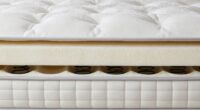
Latex pushes back more than memory foam, offering a lively and responsive feel during sleep. Its natural springiness means it responds quickly and gives a bouncy sensation, which many sleepers find invigorating. Memory foam, on the other hand, absorbs movement and contours closely, providing less pushback. If you prefer a mattress that reacts and offers support through firmness, latex is likely the better choice. To understand how this difference impacts your sleep, keep exploring the details.
Key Takeaways
- Latex generally provides a more noticeable push-back due to its springy and responsive nature.
- Memory foam absorbs pressure and contours to the body, offering minimal push-back.
- Latex’s inherent bounce quickly responds to movement, creating a firmer sensation.
- Memory foam’s viscoelastic properties dampen movement, reducing its push-back feel.
- Advances in latex materials increase responsiveness, making it feel more supportive and pushy than memory foam.
How Do Latex and Memory Foam Feel When You Sleep?
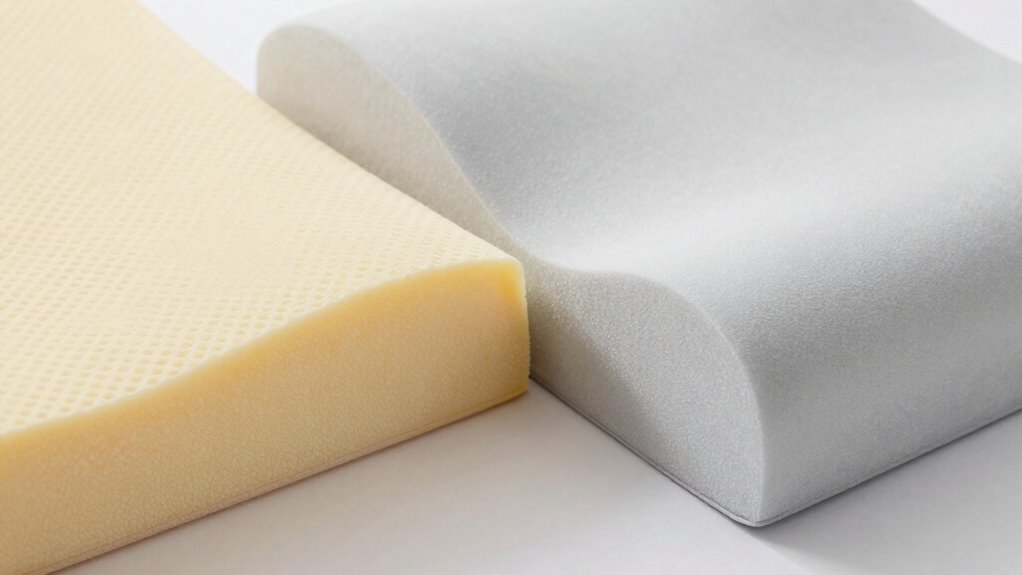
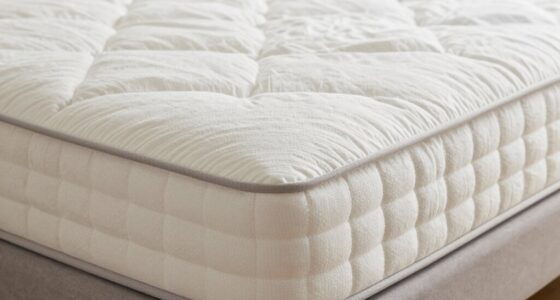
When you lie down on latex and memory foam mattresses, you’ll notice distinct differences in how each feels. Latex offers a more responsive experience, providing even pressure distribution that keeps you supported without sinking too deeply. It feels bouncy and lively, giving you a sense of pushing back slightly. Memory foam, on the other hand, contours closely to your body, offering excellent pressure relief as it molds to your shape. It tends to retain heat, so temperature regulation can be an issue, making you feel warmer over the night. Latex generally stays cooler due to better airflow, keeping you comfortable. Overall, latex feels more energetic and ventilated, while memory foam emphasizes body-hugging comfort with a focus on pressure distribution and temperature regulation. Additionally, latex’s natural properties can contribute to better allergy resistance, making it a suitable choice for those with sensitivities.
Does Latex or Memory Foam Bounce More?
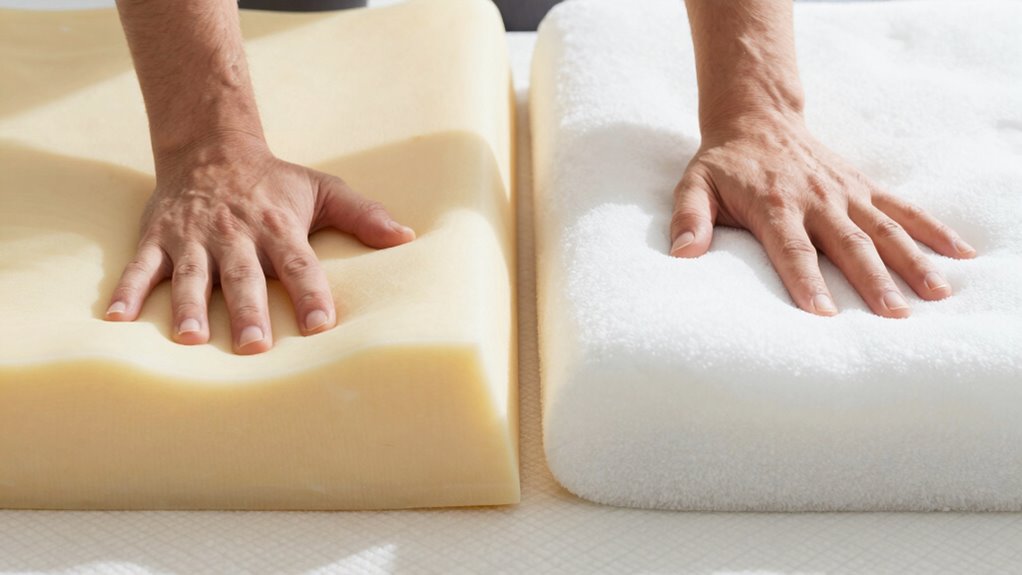
Latex and memory foam mattresses feel quite different when it comes to bounce. Latex firmness plays a key role in its lively response, providing a noticeable springiness when you move. This natural material tends to bounce back quickly, making it feel more responsive and energetic. Memory foam, on the other hand, has lower foam responsiveness, absorbing motion rather than bouncing off it. As a result, it feels much less lively and more sinking. If you prefer a mattress that pushes back with some energy and offers a bit of spring, latex is your better choice. Memory foam minimizes bounce, which is ideal if you want to reduce motion transfer and feel more nestled into your bed. So, latex generally offers more bounce than memory foam. Emerging trends in digital publishing highlight how innovative materials like latex are being explored for their responsiveness and eco-friendly properties. Additionally, the material properties of latex contribute significantly to its superior bounce compared to memory foam. Advances in material science continue to improve the durability and responsiveness of latex, making it an increasingly popular choice in modern bedding. Furthermore, ongoing research into sustainable materials is enhancing the eco-friendly appeal of latex products, further highlighting its responsiveness and durability.
How Does Mattress ‘Push Back’ Make Sleeping More Comfortable?
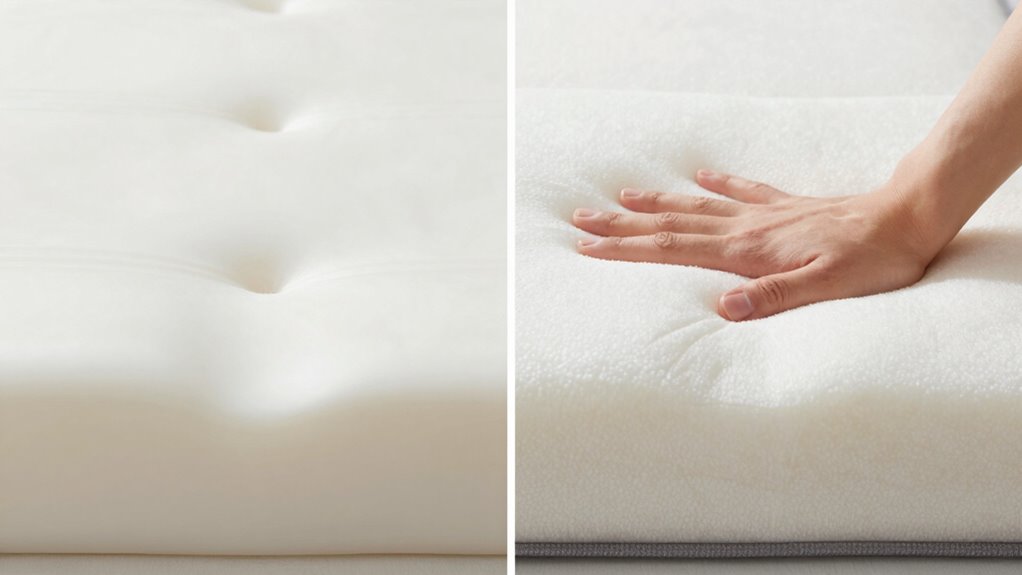
Have you ever noticed how a mattress that pushes back slightly can make sleeping more comfortable? When your mattress offers gentle support, it improves pressure distribution, reducing stress on sensitive areas like your shoulders and hips. This balanced support prevents your body from sinking too deeply, helping you maintain proper spinal alignment. Additionally, a mattress that pushes back helps with temperature regulation by preventing heat from trapping around your body, keeping you cooler throughout the night. This combination of pressure relief and temperature control creates a more comfortable sleep environment. When your mattress responds to your movements with a subtle push back, it fosters a sense of stability and support that can lead to deeper, more restful sleep. Incorporating pressure distribution practices can further enhance your overall sleep quality and emotional well-being. Understanding how supportive materials influence mattress performance can help you make better choices for a good night’s rest. Furthermore, the material composition of the mattress determines how well it balances support and comfort, impacting the overall sleep experience. Recognizing the importance of material technology can aid in selecting a mattress that adapts to your unique body needs.
Are Latex or Memory Foam More Durable Over Time?
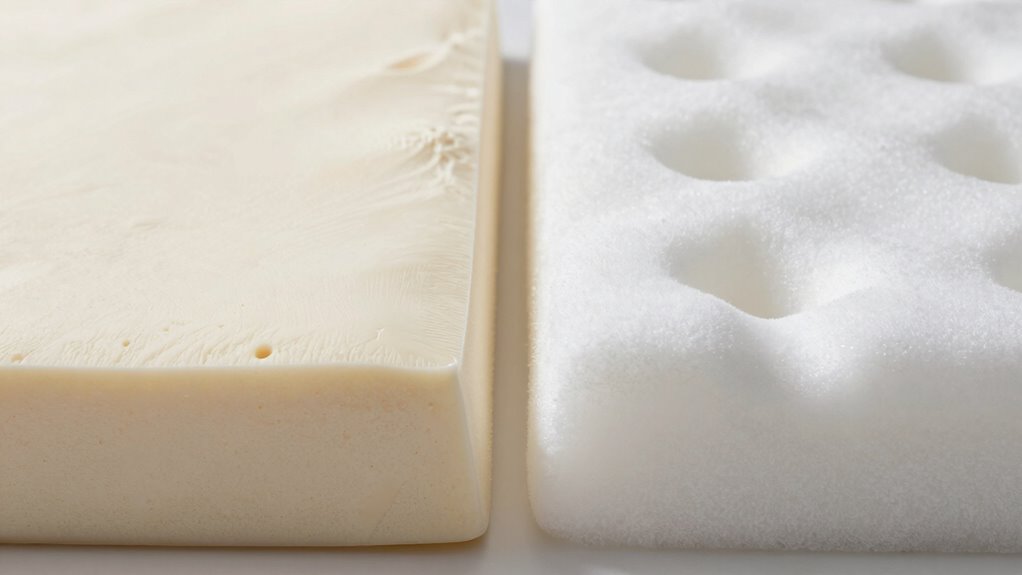
Durability is a key factor to take into account when choosing between latex and memory foam mattresses, as it directly impacts how long your investment will last. Latex durability is well-known for its resilience, often lasting 8 to 10 years or more without significant sagging or breakdown. It maintains its shape over time, providing consistent support. Memory foam longevity, however, tends to be slightly shorter, typically around 6 to 8 years, as it can develop indentations and lose its responsiveness with extensive use. While high-quality memory foam may last longer, it generally doesn’t match the durability of latex. Additionally, material composition plays a crucial role in the overall lifespan of these mattresses, influencing their ability to withstand wear and tear over the years. The resilience of latex makes it particularly resistant to impressions and deformation. Modern toilet designs focus on durability and longevity, ensuring long-term performance, much like high-quality latex mattresses. If you’re seeking a mattress that offers long-term performance and minimal sagging, latex is usually the better choice for durability over time. Furthermore, material quality significantly impacts how well each material holds up under repeated use, affecting their overall durability. Considering manufacturing processes can also influence the durability, as well-made products tend to last longer than those with inferior craftsmanship.
Which Mattress Is Better for Your Sleep Style and Needs?
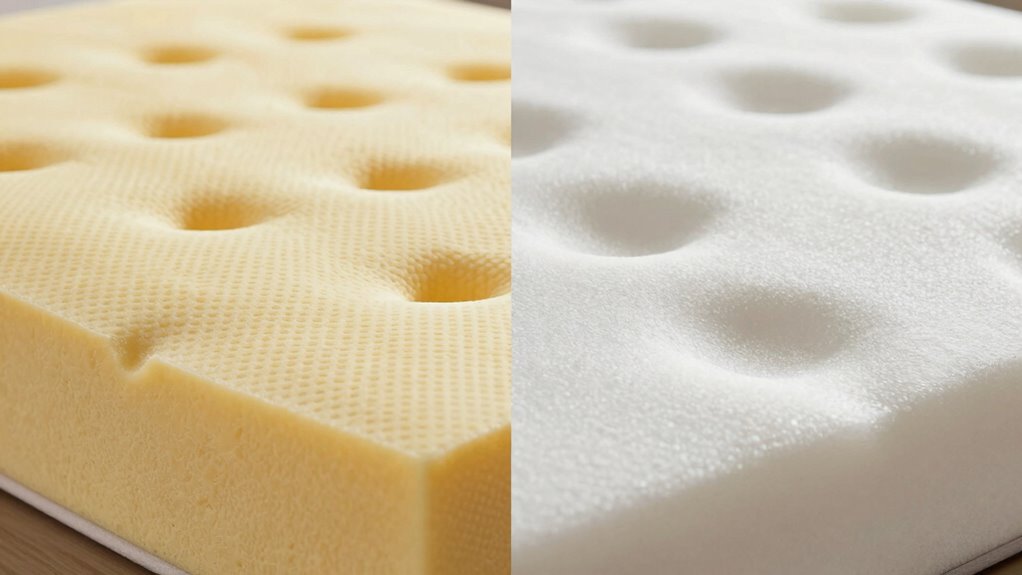
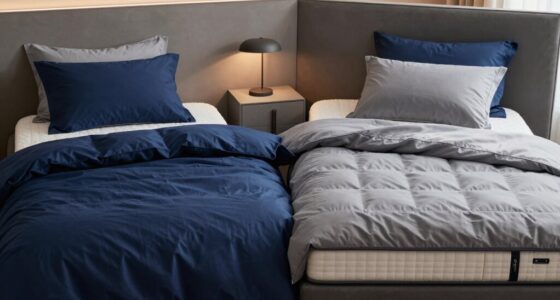
Choosing the right mattress depends on your sleep style and specific needs, as different designs offer distinct benefits. If you need pressure relief, memory foam mattresses excel by contouring to your body, reducing pressure points. They also minimize motion transfer, so you won’t be disturbed if your partner moves during the night. Conversely, latex mattresses provide a more responsive feel, offering better bounce and quicker recovery, making them ideal if you prefer a firmer surface or tend to toss and turn. Consider your sleep position and whether you wake up with aches or are sensitive to movement. Additionally, understanding multi-mattress setups can help optimize your sleep environment. Ultimately, selecting the best mattress means balancing pressure relief and motion transfer to match your comfort preferences and sleep habits.
Frequently Asked Questions
How Does Temperature Affect Latex and Memory Foam Responsiveness?
Temperature affects latex and memory foam responsiveness through temperature sensitivity, causing responsiveness change. When it’s warm, latex becomes softer and more responsive, giving you more pushback. Memory foam, however, responds less in cooler temperatures, feeling firmer and less responsive. As temperatures rise, memory foam softens, increasing responsiveness. So, your comfort depends on room temperature, influencing how much each material pushes back and adapts to your body.
Can Latex or Memory Foam Help Alleviate Specific Back Pain Issues?
You might find relief with latex, thanks to its durability and firm support, which can help with specific back pain issues. Its responsiveness provides consistent support, preventing sagging. Memory foam’s contouring molds to your body, easing pressure points. Choosing between the two depends on your pain type and preference. Both materials offer unique benefits, but latex’s durability often provides longer-term relief, especially if you need stable, supportive sleep.
Which Material Is More Environmentally Friendly and Sustainable?
You’ll find latex more eco-friendly and sustainable than memory foam because it’s derived from natural rubber trees, which can be harvested repeatedly without harming the trees. Latex production generally involves fewer chemicals and less energy, making it a greener choice. In contrast, memory foam often relies on synthetic materials and petrochemicals, which have a larger environmental footprint. Choosing latex supports sustainability and reduces your environmental impact.
How Do Allergies Impact Choices Between Latex and Memory Foam?
If allergies influence your choice, you should consider hypoallergenic options. Latex tends to be a better choice because it’s naturally resistant to dust mites, mold, and other allergy triggers. Memory foam can trap allergens if not properly maintained, potentially aggravating allergies. So, if you’re sensitive, opt for latex or look for allergy-friendly, hypoallergenic memory foam mattresses to diminish your exposure to triggers and ensure a healthier sleep environment.
Are There Differences in Noise Levels Between Latex and Memory Foam Mattresses?
You’ll notice that latex mattresses tend to be quieter than memory foam ones, thanks to their solid construction and minimal squeaking. When comparing noise levels, latex generally offers a quieter sleep experience. Additionally, durability differences play a role; latex mattresses usually last longer and maintain their quietness over time, whereas memory foam might develop creaks or squeaks as it ages. So, if noise is a priority, latex could be your best choice.
Conclusion
Think of latex as a sturdy oak tree, standing tall and resilient, offering steady support that “pushes back” just enough for comfort. Memory foam, by contrast, is like a gentle wave, yielding softly but sometimes feeling less responsive. Your choice depends on whether you want the firm embrace of the oak or the gentle hug of the wave. Whichever you pick, remember: your mattress should be your anchor in the sea of sleep.