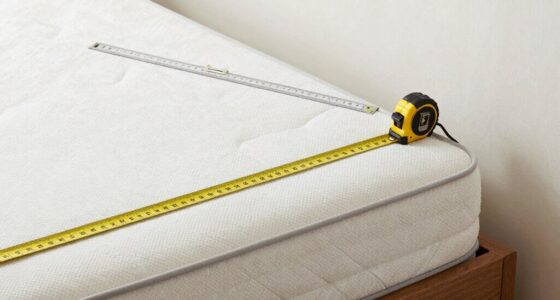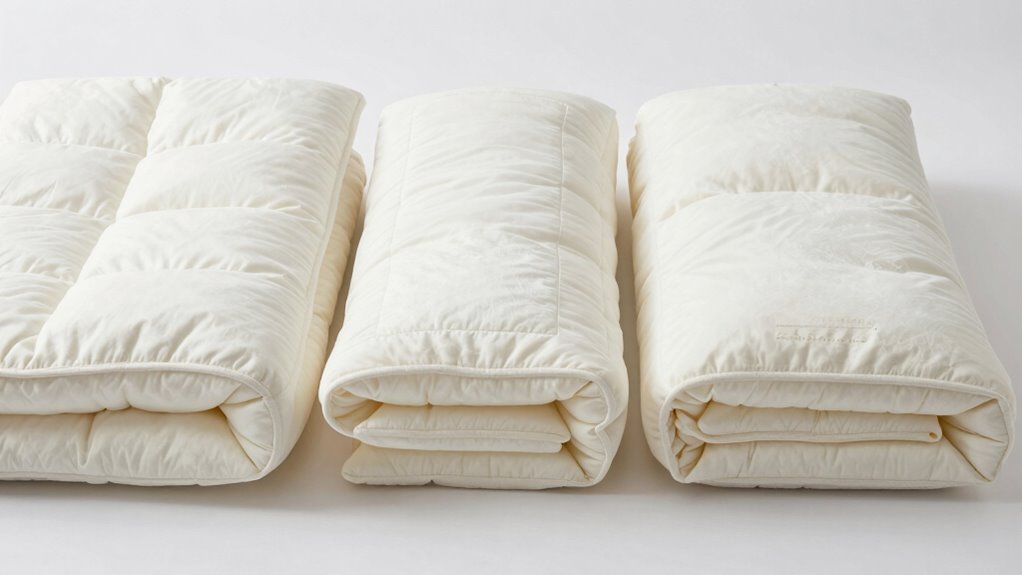
If you choose a 2-inch topper, you’ll feel added softness and some extra cushion, but without much change in support or lift. A 3-inch topper balances comfort and support, offering more plushness while still maintaining structure. A 4-inch topper molds deeply to your body, providing significant pressure relief and a luxurious feel. To understand which thickness suits your sleep style and mattress, keep exploring these options further.
Key Takeaways
- 2-inch toppers provide a softer, more flexible feel, mainly adding cushioning without significantly changing mattress firmness.
- 3-inch toppers balance softness and support, offering more contouring and pressure relief than thinner options.
- 4-inch toppers create a plush, luxurious feel with deep body molds, ideal for pressure-sensitive sleepers.
- Thicker toppers may trap heat more and alter overall mattress firmness, affecting sleep temperature and support.
- Material density and composition influence how each thickness responds to body weight and maintains support over time.
How Different Mattress Topper Thicknesses Feel and Support
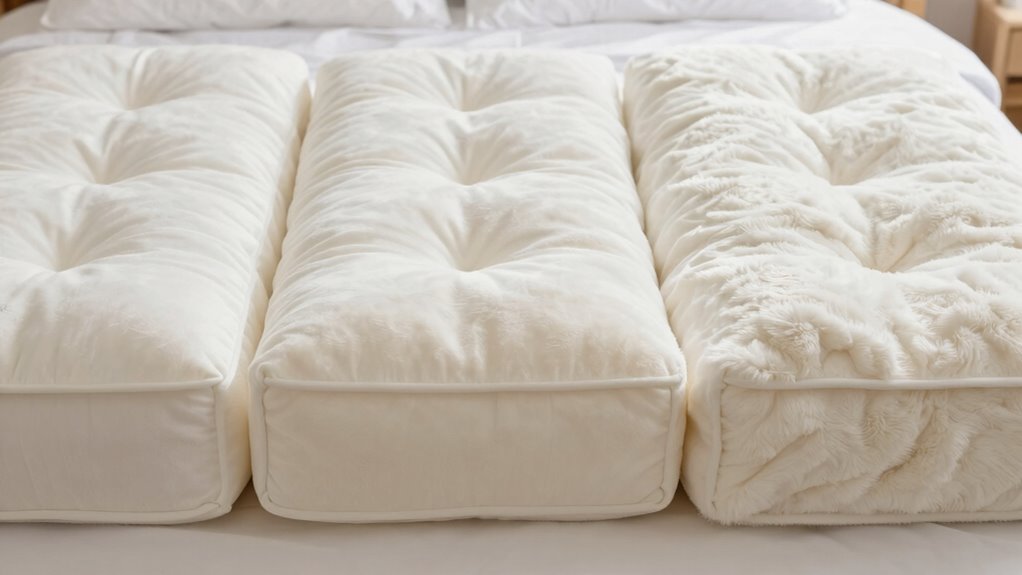
The thickness of a mattress topper considerably influences how it feels and the level of support it provides. If you’re looking for futon comfort, a thinner topper, like 2 inches, offers a softer, more flexible feel, ideal for added cushioning without much lift. A 3-inch topper provides a balance between softness and support, making it suitable for those who want a plush yet supportive surface. When using memory foam, thicker options—such as 4 inches—deliver deeper contouring, enhancing comfort and pressure relief. The extra thickness in memory foam toppers molds to your body, giving a luxurious feel and improved support. Additionally, the material composition of the topper can influence how it responds to your body and how long it maintains its supportive qualities. It’s also important to consider the density of the topper, as this impacts its durability and how it feels over time. Selecting a topper with the right construction can also affect its longevity and comfort. Moreover, choosing a topper with sustainable materials can help reduce environmental impact without sacrificing comfort. Ultimately, the right thickness depends on your preferences for softness, support, and the type of mattress you already have, as well as how the topper’s construction impacts its durability over time.
Comparing Comfort and Support in 2″, 3″, and 4″ Toppers
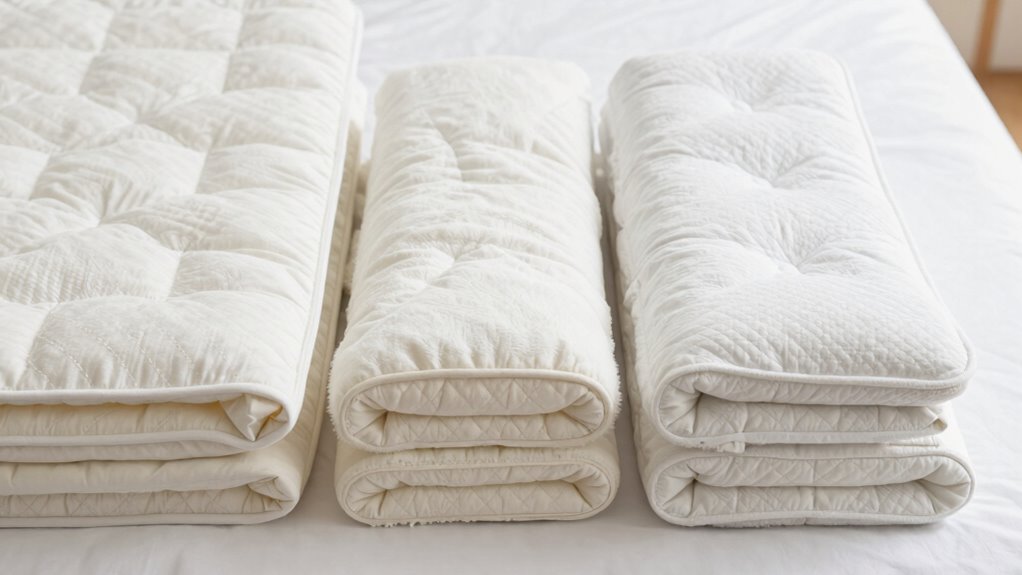
A 2-inch mattress topper offers a softer, more flexible feel, making it ideal if you want added cushioning without sacrificing support. It’s perfect for those who prefer a plush surface but still need some stability. When comparing comfort and support across thicknesses, consider foam density—higher density foam provides better support and durability. Thicker toppers, like 3” and 4”, tend to offer more pressure relief but may trap heat, affecting temperature regulation. Additionally, choosing a topper with foam density can enhance airflow and overall comfort. Selecting a topper with water-resistant properties can also help maintain freshness and longevity, especially in humid environments. Being aware of side-channel vulnerabilities can help ensure your sleep setup remains secure from potential disruptions or tampering. Incorporating natural materials into your topper can further improve breathability and reduce chemical exposure, aligning with the importance of sustainable choices in bedding.
Which Mattress Topper Thickness Is Best for Your Sleep Style
Choosing the right mattress topper thickness depends on your sleep preferences and needs. If you prioritize pressure relief, a thicker topper like 3″ or 4″ may suit you better. For those who want a slight upgrade, a 2″ topper offers added comfort without changing the feel much. Material options such as memory foam, latex, and down-alternative influence comfort and support, often affecting price comparisons. Memory foam tends to be more affordable but offers excellent pressure relief, while latex is pricier but durable and breathable. Here’s a quick comparison:
| Thickness | Material Options | Price Range |
|---|---|---|
| 2″ | Memory foam, down-alternative | $50-$150 |
| 3″ | Memory foam, latex | $100-$250 |
| 4″ | Memory foam, latex, down | $150-$350 |
| 5″ or more | Specialty materials | $200-$400+ |
| Best for | Light support, added comfort | Varies |
Additionally, the material composition of the topper can significantly impact its durability and overall comfort. Choosing a topper with appropriate thickness can enhance your sleep quality and extend the lifespan of your mattress. Proper construction techniques are essential for ensuring the stability and longevity of the topper, which can help prevent sagging and uneven wear over time. Incorporating proper construction techniques ensures stability and longevity of the topper, ultimately contributing to better sleep. Implementing quality materials during manufacturing can further improve the durability and comfort of your mattress topper.
How to Choose the Right Thickness Based on Your Mattress and Body
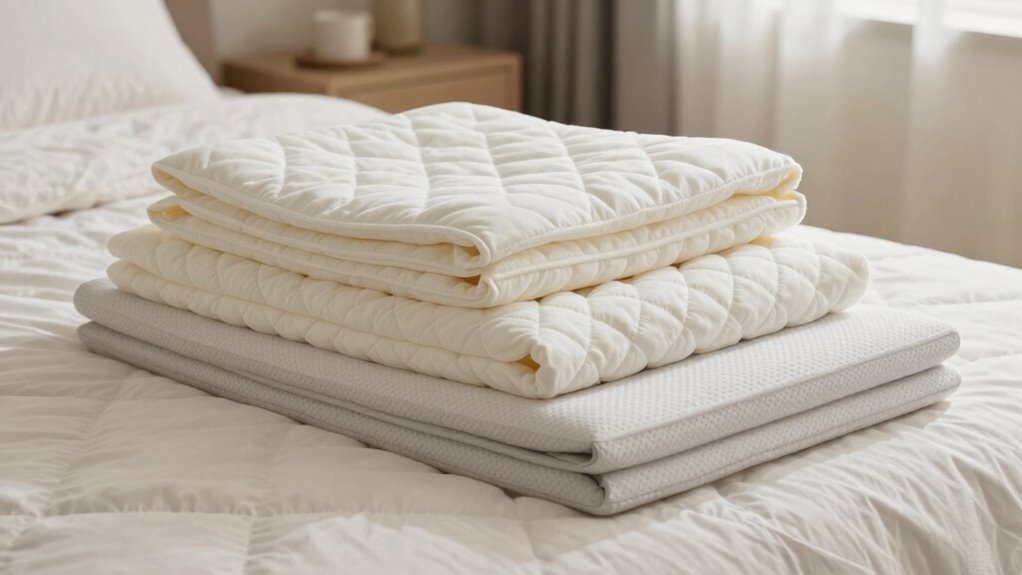
Selecting the right mattress topper thickness truly depends on your existing mattress and your body’s support needs. If your mattress is too firm, a thicker topper (3” or 4”) can provide extra cushioning, while a thinner one (2”) suits softer mattresses or those with adequate support. Consider material compatibility—memory foam offers pressure relief but traps heat, so choose cooling gels for better temperature regulation. If you tend to sleep hot, thinner or breathable materials help maintain comfort. Also, think about your body weight; heavier sleepers often need thicker toppers for adequate support. Keep these factors in mind: proper support techniques—understanding how different toppers influence spinal alignment—can improve your overall sleep quality and comfort.
FAQs About Mattress Topper Thickness: What You Need to Know
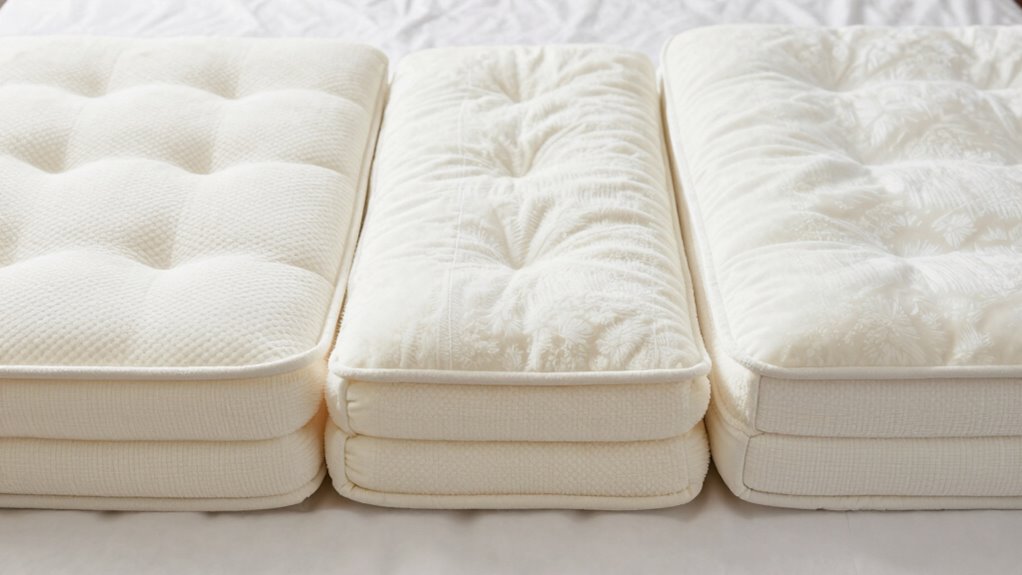
When considering mattress topper thickness, it’s common to have questions about what size will best meet your needs. Thicker toppers, like 3″ or 4″, often provide more cushioning and pressure relief, especially if you prefer softer sleep surfaces. Memory foam toppers are popular for their contouring support, but if you tend to sleep hot, look for options with cooling technology to prevent overheating. Thinner toppers, around 2“, can add a slight layer of comfort without drastically changing your mattress feel. Keep in mind that thicker toppers might alter the mattress’s overall firmness and affect your sleep position. Understanding nail biology and how different materials respond to pressure and temperature can help inform your choice. Knowing these factors helps you choose the right thickness to enhance comfort, support, and temperature regulation for a better night’s sleep.
Frequently Asked Questions
How Do Different Topper Thicknesses Affect Mattress Durability?
Different topper thicknesses impact mattress durability by influencing material longevity and comfort consistency. Thicker toppers, like 3″ or 4″, may wear out faster if made from less durable materials, reducing their longevity. Conversely, thinner toppers often last longer but might offer less comfort. You’ll want to choose a topper with high-quality material to guarantee it maintains comfort and durability over time, regardless of thickness.
Can a Thicker Topper Cause Overheating During Sleep?
Thicker toppers can tempt temperature troubles, causing you to overheat and lose restful sleep. Cooling concerns arise because denser, plush layers trap more heat, disrupting your natural temperature regulation. If you tend to sleep hot, a 4-inch topper might make you sweat, while a 2-inch one offers better breathability. Choosing a thinner, breathable topper helps you stay cool and comfortable throughout the night.
Are There Specific Mattress Types Better Suited for Certain Topper Thicknesses?
You’ll find memory foam mattresses often pair well with 2-3 inch toppers, offering extra comfort without overheating. For latex mattresses, a 2-inch topper enhances softness without compromising support. Thicker toppers, like 4 inches, may cause uneven support on certain foam types. Always consider your mattress material and your comfort preferences; thinner toppers suit latex better, while thicker ones can work with memory foam if ventilation is good.
How Does Topper Thickness Influence Movement Transfer and Partner Disturbance?
Thicker toppers, like 3″ or 4″, tend to improve motion isolation, reducing partner disturbance when you move. They absorb more movement, so you won’t feel as much when your partner shifts, creating a more restful sleep. A 2″ topper offers some benefit but isn’t as effective at dampening motion transfer. Ultimately, the thicker the topper, the better it is at minimizing partner disturbance and enhancing overall sleep quality.
Is It Easier to Maintain or Replace Thicker Toppers?
Sure, thicker toppers seem like a dream, but they’re more high-maintenance divas. You’ll find yourself battling increased maintenance challenges, like fluffing and protecting against wear, plus a higher replacement frequency. So, is it easier to maintain or replace these behemoths? Not really. You’ll spend more time tending to them, and replacing them becomes inevitable faster. Think of it as adopting a pet that demands more than just love—more like a lifetime commitment.
Conclusion
Choosing the right mattress topper thickness lets you customize your sleep—whether you want extra softness, added support, or a perfect balance. It’s about feeling refreshed, sleeping soundly, and waking up energized. Whether you prefer the gentle hug of a 2-inch, the plush comfort of a 3-inch, or the substantial support of a 4-inch, your ideal topper helps you rest better, sleep deeper, and start each day feeling your best. Your perfect sleep experience is just a topper thickness away.