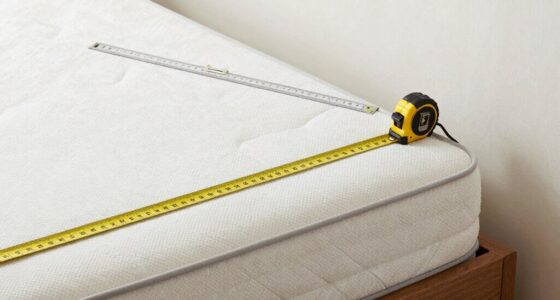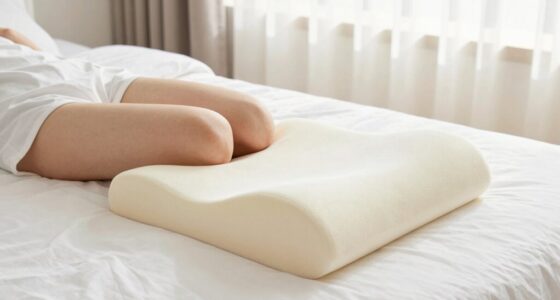

If your mattress is still supportive but feels less comfortable, a topper can improve your sleep without much cost. However, if the mattress shows signs of sagging, persistent aches, or dust issues, replacing it might be the better choice. Consider your support needs, budget, and mattress condition before deciding. Want to find out which option is best for your situation? Keep exploring to make a smart, money-saving decision.
Key Takeaways
- Assess mattress condition: sagging, indentations, or persistent discomfort indicate need for replacement over a topper.
- Use a topper for minor comfort/pressure support issues; replace the mattress if support or support-related pain worsens.
- Consider long-term costs: toppers are cheaper upfront but may need replacement sooner; new mattresses are more costly but last longer.
- Evaluate personal needs: if allergies, dust buildup, or significant support issues are present, a new mattress may be more cost-effective.
- Match your comfort preferences and health requirements to decide whether a topper suffices or a full mattress upgrade is necessary.
When Should You Use a Mattress Topper?
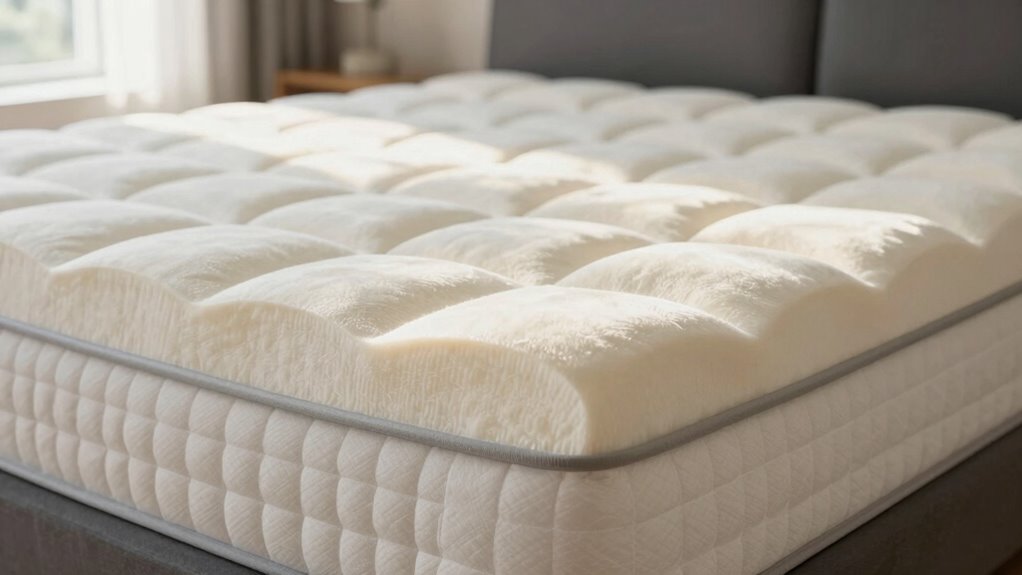
You should consider using a mattress topper when your current mattress no longer provides the comfort or support you need. Poor sleep hygiene can be worsened by an uncomfortable mattress, affecting your overall rest quality. If your mattress materials have worn out or sagging, a topper can help restore a more supportive surface. Toppers are a quick, cost-effective way to improve comfort without buying a new mattress. They can also address issues like uneven surfaces or pressure points. Keep in mind that if you wake up feeling stiff or sore regularly, a topper may help, but persistent discomfort might indicate it’s time to replace the mattress. Using a mattress topper can also help extend your mattress’s lifespan and enhance your sleep environment effectively. Additionally, choosing a topper made of supportive materials can provide the added firmness or softness tailored to your preferences. Incorporating smart sleep solutions, such as temperature regulation or sleep tracking, can further optimize your rest experience. Moreover, understanding mattress longevity can help you decide when a topper is a temporary fix versus a long-term solution. Being aware of age-related mattress wear, which can significantly impact sleep quality, is also important when considering a topper’s role in your sleep setup.
How Do I Know If My Mattress Needs Replacing?
Determining if your mattress needs replacing isn’t always straightforward, but there are clear signs to watch for. Poor sleep hygiene caused by discomfort or tossing and turning may indicate it’s time for a new one. Consider these indicators:
Watch for sagging, aches, or allergy symptoms to know when it’s time for a new mattress.
- Visible sagging or indentations that won’t bounce back
- Increased allergy symptoms or dust buildup
- Persistent aches or pains after sleeping
- Mattress warranty expiration, usually after several years
- The presence of visible decor masks or other cultural artifacts might suggest your mattress has been part of a thoughtfully decorated space that emphasizes comfort and aesthetics. Additionally, the overall support and comfort provided by the mattress can diminish over time, impacting sleep quality. Regularly inspecting your mattress for signs of wear can help prevent sleep disturbances caused by an aging mattress. If your mattress is past its warranty or showing these signs, it might be time to replace it. A worn mattress can negatively impact sleep hygiene, leading to restless nights and lower quality rest. Regularly evaluating your mattress ensures you maintain good sleep habits and avoid the discomfort of an aging, ineffective mattress. Additionally, considering proper mattress support can prolong its lifespan and improve sleep quality. Being aware of mattress lifespan and its typical duration can help you plan for timely replacements before issues arise.
Top Factors to Consider Before Choosing Between a Topper and a New Mattress
When deciding whether to invest in a mattress topper or replace your mattress altogether, it’s important to weigh several key factors. First, consider your bed height—adding a topper can boost comfort or accommodate bed frame limitations without considerably increasing height. Second, think about allergen control; if allergies are a concern, a new mattress with hypoallergenic materials might be a better solution than just a topper. Additionally, evaluate the current condition of your mattress—if it’s sagging or worn, a topper won’t fully resolve these issues. Cost is another factor: toppers are usually cheaper but may not provide long-term relief if your mattress is in poor shape. Ultimately, consider your sleep needs—if you need more support or better alignment, replacing the mattress could be the smarter choice.
What Are the Costs of Mattress Toppers vs. New Mattresses?
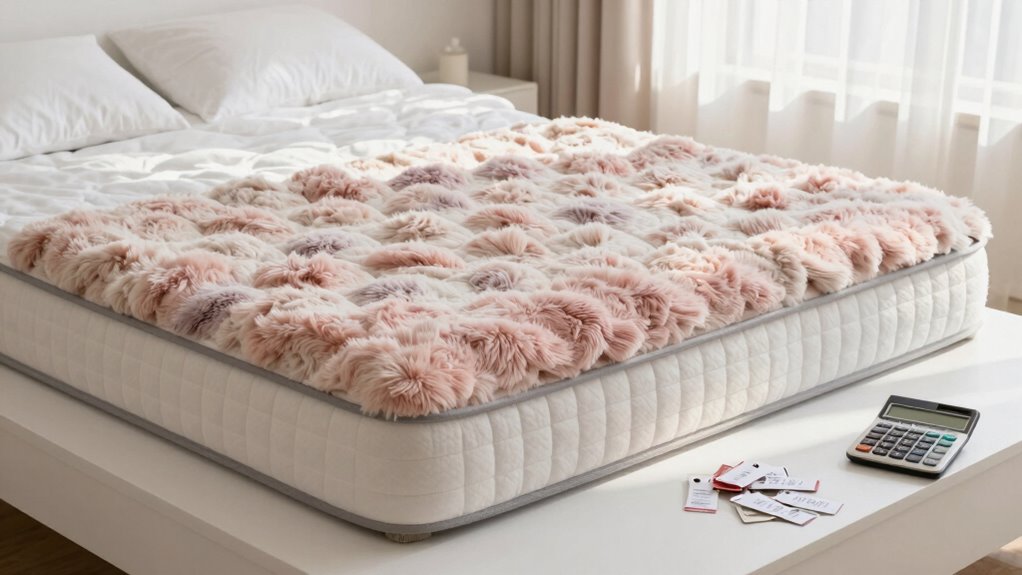
Mattress toppers are generally a more budget-friendly option, with prices typically ranging from $50 to $200 depending on the material and thickness. When comparing costs, consider the pricing differences between toppers and new mattresses. Toppers usually have lower material costs, making them an economical choice for extending your mattress’s life. Additionally, choosing a topper can be a cost-effective way to improve sleep quality without the expense of a new mattress. When selecting a topper, pay attention to material quality and type, as this significantly influences both comfort and longevity. Key factors affecting costs include: – Material quality and type – Thickness and size – Brand reputation – Durability and lifespan. While a new mattress can cost anywhere from $300 to over $2,000, a topper offers a cost-effective solution to refresh your sleep surface without the hefty price tag. This makes toppers an attractive option if you’re on a budget but want improved comfort. Considering water efficiency in your home can also reduce overall expenses, making upgrades more affordable.
Best Mattress Toppers for Comfort and Value
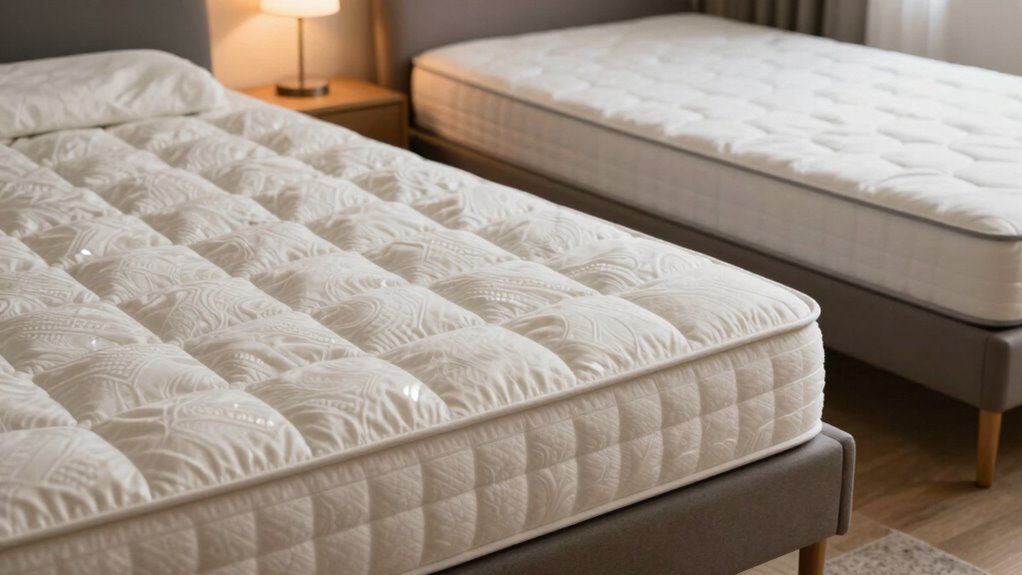
Finding the best mattress topper for comfort and value means balancing quality with affordability. Memory foam toppers are popular because they contour to your body, providing personalized support and pressure relief. Look for options with cooling gel infusions, as these help regulate temperature and keep you comfortable all night. A quality memory foam topper with cooling gel can transform your sleep experience without the cost of a new mattress. When choosing, consider thickness and density; thicker toppers often offer more cushioning, while denser foam guarantees durability. These toppers are a smart investment to extend your mattress’s lifespan and enhance comfort, all while saving money compared to buying a new mattress. Prioritize features that align with your sleep preferences for the best value. Additionally, selecting a topper made from natural ingredients can support overall health and wellness during sleep. Proper ventilation and sauna safety tips can also improve sleep quality by maintaining an optimal sleep environment. Incorporating traceability practices can help ensure the materials used are both safe and sustainable, adding to the overall value of your purchase. Considering certified eco-friendly materials can further enhance the safety and sustainability of your sleep setup.
When Is It Time to Replace Your Mattress Instead of Using a Topper?
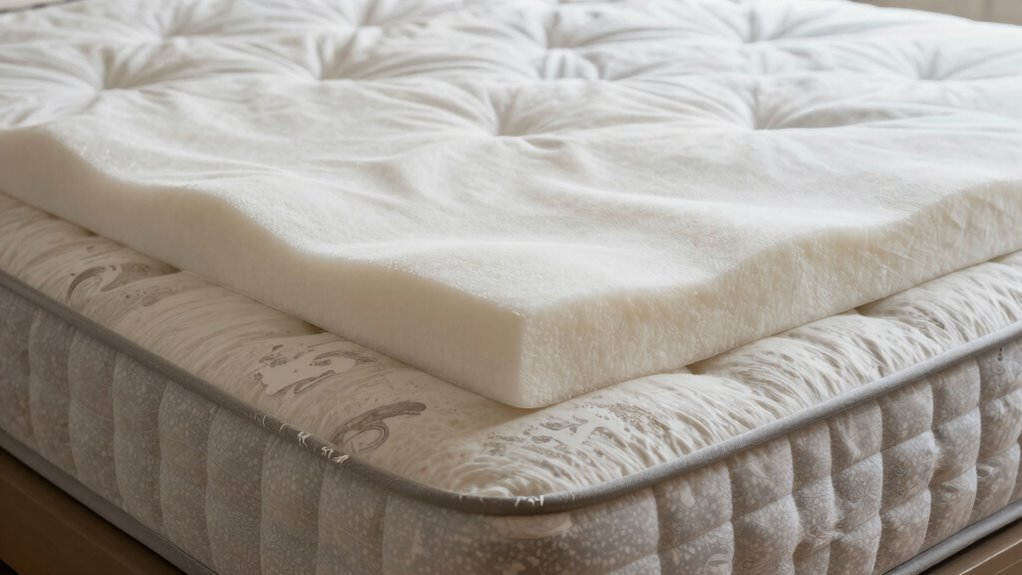
While a mattress topper can enhance comfort and extend the life of your existing mattress, there comes a point when it no longer provides the support or relief you need. Consider replacing your mattress if:
- It’s past the manufacturer’s warranty coverage period, risking unseen damage or sagging.
- You experience persistent allergic reactions due to accumulated dust mites or mold.
- You notice sagging, deep indentations, or uneven support that a topper can’t fix.
- You wake up feeling more tired or sore than when you went to sleep, indicating insufficient support.
If these issues occur, investing in a new mattress may be a smarter choice than relying solely on a topper, especially to ensure proper support and avoid ongoing health concerns.
How to Evaluate Your Mattress’s Condition and Decide
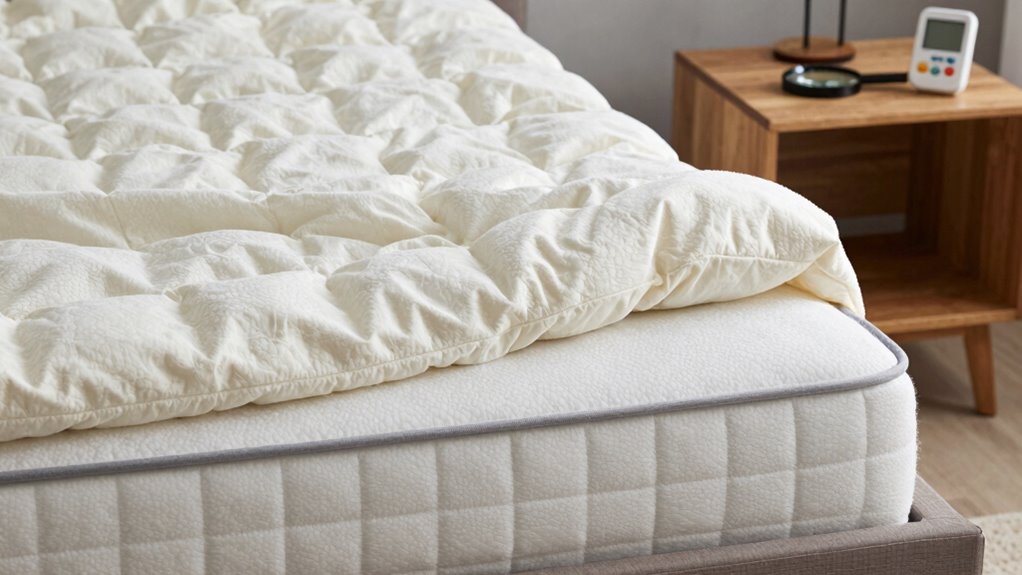
Evaluating your mattress’s condition is essential to determine if it still provides proper support and comfort. Start by appraising your sleep posture—do you wake up with aches or discomfort? If you notice persistent pain, it might be a sign your mattress no longer supports your body properly. Check for visible signs of wear like sagging or indentations. Consider how allergy relief factors in; if dust mites or allergens have accumulated despite regular cleaning, a new mattress could improve your sleep quality. Also, reflect on how refreshed you feel after sleep—frequent tossing or restless nights suggest it’s time to decide. If your mattress fails these checks, investing in a new one may be more cost-effective than repeatedly using a topper. Additionally, gear care tips can help extend your mattress’s lifespan and maintain comfort longer. Recognizing the mattress’s age can also guide your decision, as most mattresses have a functional lifespan of about 7-10 years. Regularly inspecting your mattress for signs of deterioration can help you catch issues early and decide whether a mattress replacement is necessary. Moreover, understanding the security zone info can help you protect your sleep environment from potential intrusions or disturbances. Being aware of the Vetted – My Dream Shape can also assist in evaluating whether your current mattress setup aligns with your comfort needs and long-term health.
Use This Decision Flowchart to Choose the Best Sleep Upgrade for Your Budget
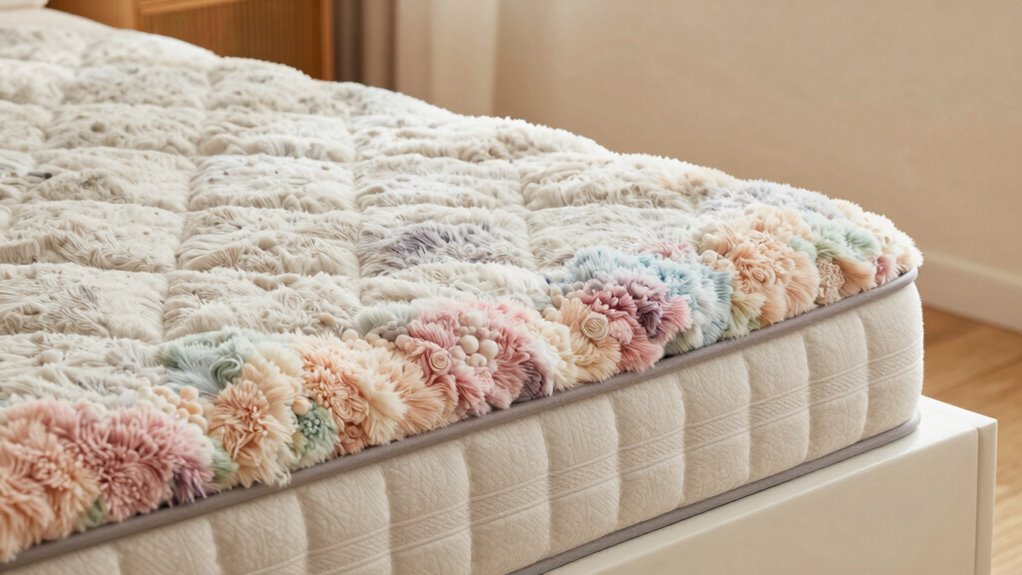
To find the best sleep upgrade within your budget, consider your comfort preferences and how long you want the investment to last. Think about whether a topper or a new mattress better matches your maintenance needs and overall longevity expectations. Use this flowchart to weigh these factors and make a confident, cost-effective decision. Remember that mattress toppers and bedding can significantly enhance sleep comfort without the full cost of a new mattress.
Budget Considerations
Choosing the right sleep upgrade depends heavily on your budget, and a clear decision flowchart can make this process easier. When considering pricing strategies, it’s essential to weigh the cost of a mattress topper against a new mattress, factoring in long-term value. Brand considerations also matter—some brands offer reliable quality at lower prices, while others command premium prices for added features. To stay within your budget, evaluate:
- The initial purchase price versus expected lifespan
- Discounts or sales on trusted brands
- The cost-effectiveness of higher-end vs. budget options
- Compatibility with your current bedding and existing furniture
Comfort Preferences
Your comfort preferences play a crucial role in determining whether a mattress topper or a new mattress is the better sleep upgrade for you. If you prioritize pillow support, a topper with added cushioning can enhance your current setup without replacing your pillow. Conversely, if your bedding materials feel uncomfortable or outdated, a new mattress with modern bedding options might better meet your needs. Consider whether you prefer a softer, more plush feel or a firmer surface; toppers can adjust comfort levels easily, while a new mattress offers a thorough upgrade. Your choice depends on how much control you want over comfort and how significant your bedding materials’ quality is. Matching your preferences ensures you make a satisfying, budget-conscious decision.
Longevity and Maintenance
When considering longevity and maintenance, it’s important to evaluate how long each option will last and how much effort they require to keep in good condition. A mattress topper may need frequent cleaning to prevent allergen buildup, which can disrupt your sleep cycle. It generally wears out faster than a new mattress, requiring replacement every 1-3 years. A new mattress, on the other hand, offers longer durability, often lasting 7-10 years with proper care, and usually needs less maintenance overall. Keep in mind:
- Regularly rotate your mattress to extend its lifespan
- Protect both options with a cover to minimize allergen buildup
- Vacuum your topper or mattress periodically
- Follow manufacturer cleaning instructions for longevity
Choosing wisely depends on your sleep quality needs and how much maintenance you’re willing to do.
Frequently Asked Questions
Can a Mattress Topper Improve Overall Sleep Quality Long-Term?
Yes, a mattress topper can improve your long-term sleep quality by enhancing your sleep environment with added comfort and support. It can also provide allergy relief if you choose a hypoallergenic topper, reducing allergens that disrupt sleep. Regularly maintaining your topper keeps it fresh and supportive, ensuring consistent sleep quality. While it may not replace a new mattress, a topper can considerably boost your sleep experience over time.
How Do Mattress Toppers Affect Allergy Symptoms?
Mattress toppers can help reduce allergy symptoms by improving allergy mitigation and dust mite control. When you use a hypoallergenic topper, it creates a barrier that prevents dust mites and allergens from settling into your mattress. Regularly washing your topper and choosing one made from allergen-resistant materials can further enhance relief. This way, you can sleep more comfortably and manage allergy symptoms more effectively without needing a new mattress.
Are There Specific Mattress Types That Work Better With Toppers?
If you want your mattress topper to work like magic, stick to memory foam or latex mattresses, because they’re practically begging for toppers! These materials are highly compatible, transforming your sleep experience into a cloud-like paradise. Avoid innerspring mattresses, which can turn your topper into a bumpy, uneven nightmare. Choosing the right mattress type with your topper guarantees cozy nights and a sleep upgrade that feels like a luxury retreat!
What Are the Environmental Impacts of Replacing a Mattress Versus Using a Topper?
Replacing a mattress has a bigger environmental impact, especially if it’s made from non-sustainable materials, as it contributes to waste and resource consumption. Using a topper, especially one made from sustainable materials, extends your mattress’s life and reduces waste. Plus, look for recycling options for your old mattress to lessen environmental harm. This approach helps you save money and supports eco-friendly practices by minimizing landfill waste and resource use.
How Often Should a Mattress Topper Be Replaced Compared to a Mattress?
You should replace your mattress topper about every 1 to 3 years, depending on its durability, to maintain comfort and support. In contrast, a mattress’s longevity typically spans 7 to 10 years, but replacing it sooner can improve sleep quality. Regularly evaluating the condition of both guarantees ideal comfort; a topper might need replacement sooner if it’s flattened or worn, while a mattress lasts longer if well-maintained.
Conclusion
So, here’s the irony: sometimes, a simple topper can save you hundreds—and keep you from the hassle of shopping for a new mattress. But don’t get too comfortable—literally—if your mattress is beyond saving, no topper can fix the sagging or discomfort. Use this decision tree wisely. After all, the cheapest fix might just be a quick upgrade, or it might be the start of a long, cozy relationship with a new mattress.