
To check your pillow loft tonight, lie on your side with your typical pillow and see if your head and neck stay aligned with your spine comfortably. Adjust the pillow height by adding or removing filling or trying a different pillow to find that perfect support. If your head sinks too deep or sits too high, it means the loft isn’t right. Keep experimenting until you find the right fit—you’ll learn more to improve your sleep comfort.
Key Takeaways
- Use pillows of different lofts and sleep on each for at least 15 minutes to assess comfort and support.
- Check if your head and neck stay aligned with your spine, avoiding strain or misalignment.
- Evaluate support firmness and whether the pillow maintains proper shoulder and neck positioning.
- Adjust pillow height by adding or removing inserts to find the most comfortable and supportive loft.
- Sleep on your side with each pillow, noting which loft keeps your spine straight and reduces waking stiffness.
Why Pillow Loft Matters for Side Sleepers and Spinal Alignment

Choosing the right pillow loft is essential for side sleepers because it helps maintain proper spinal alignment throughout the night. The right pillow firmness supports your head and neck without causing pressure points, ensuring your sleep position stays comfortable and balanced. When your pillow is too soft, your head sinks too much, leading to misaligned vertebrae and potential neck pain. Conversely, too firm a pillow can push your head upward, straining your neck and shoulders. Proper loft prevents these issues by filling the space between your shoulder and head, keeping your spine in a straight line. This alignment reduces discomfort and promotes restful sleep. Additionally, understanding pillow loft and how it impacts spinal health can help you make better choices for long-term comfort. Selecting the appropriate sleep position and pillow loft together ensures optimal support, especially for side sleepers. Being aware of support levels can further enhance your sleep quality and spinal well-being. A well-chosen loft also influences pressure point distribution, reducing the likelihood of soreness upon waking. Recognizing the importance of supportive materials can also contribute to better spinal alignment and overall comfort.
How to Do the Pillow Loft Test Tonight : A Step-by-Step Guide

Tonight, start by gathering a few pillows of different lofts to compare. Place each one under your head and neck, then sit in your usual side sleeping position. As you test each height, pay close attention to how comfortable you feel and whether your spine stays aligned. This simple test can help you find the ideal pillow height for proper spine alignment, ensuring restful sleep and reducing discomfort. Additionally, taking note of any pressure points or areas of tension can further guide you toward choosing the best sleep posture for your needs. Recognizing your individual sleep needs can also improve your overall sleep quality and support proper spinal health. Incorporating smart home technology such as sleep trackers or adjustable beds can further optimize your sleep environment based on your test results. Being aware of personal comfort during the test can lead to better long-term sleep satisfaction.
Gather Your Pillows
To start the pillow loft test, gather the pillows you plan to evaluate. Choose pillows made from different pillow materials to compare comfort and support. Consider your sleep hygiene — avoid using unfamiliar pillows that might disrupt your sleep quality. Having a variety on hand makes testing easier and more effective. Remember, the goal is to find the best support for side sleeping to ensure a comfortable night’s rest. Additionally, understanding pillow loft helps you better interpret how each pillow will perform during the test, leading to more accurate results. Knowing how pillow materials impact loft and support can also help you select the optimal pillows for your needs. Create a simple table like this to organize your pillows:
Test Different Heights
Since pillow loft can considerably impact your comfort and spinal alignment, testing different heights is essential. Adjusting pillow firmness and height helps you find the best support for your sleep position. To do this effectively:
- Start with a pillow that matches your usual firmness, whether soft, medium, or firm.
- Sleep on your side with the current pillow for at least 15 minutes.
- Swap to a higher loft pillow and repeat the test.
- Switch to a lower loft pillow and observe comfort and alignment.
- Remember that proper airflow and humidity can influence sleep quality and comfort, so consider your bedroom environment during testing.
- Using the right tools such as a measuring tape or pillow height guide can help you more precisely determine the ideal loft level for your needs.
- Keep in mind that personal comfort is key; what works for one person may not be ideal for another, so take note of your overall sleep quality after each test. Incorporating body awareness, such as paying attention to neck and shoulder tension, during the testing process can help you better understand how each pillow height affects your sleep posture.
- Additionally, proper alignment is vital for avoiding discomfort and ensuring restful sleep, making the loft test even more important.
Assess Comfort and Alignment
After selecting different pillow heights to test, it’s time to evaluate how each one feels regarding comfort and spinal alignment. Lie on your side with the pillow you’re testing, paying attention to pillow firmness—whether it’s too soft or too firm. A good pillow should support your head and neck without causing strain, keeping your spine straight. Your sleep position plays a vital role; side sleepers need a pillow that fills the space between your shoulder and head. As you rest, notice if your neck feels stretched or crunched. Adjust your position slightly if needed, ensuring your head remains aligned with your spine. This step helps you determine which loft and firmness combination offers the best comfort and proper alignment for a restful night. Proper support is essential for maintaining spinal health during sleep. Additionally, considering pillow loft can help you find the optimal height for side sleeping comfort. When testing different pillows, pay attention to sleep posture to ensure your overall alignment is maintained throughout the night. Recognizing the importance of spinal alignment can guide you toward better sleep quality and reduced discomfort. To refine your choice, you might also consider personal comfort preferences and how they influence your sleep quality.
Interpreting Your Pillow Loft Test Results
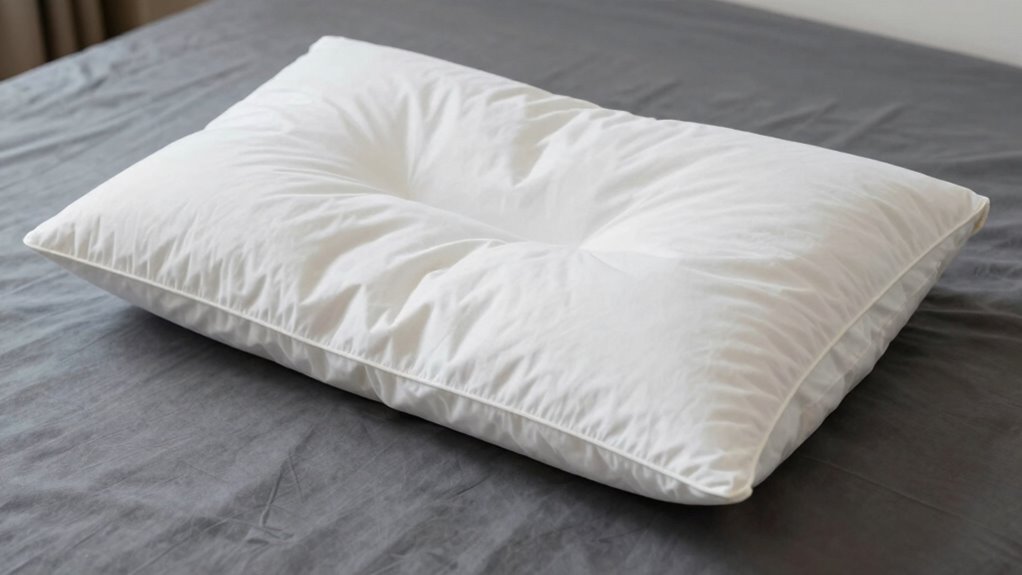
When reviewing your pillow loft test results, focus on identifying the proper loft indicator that matches your sleep position. You’ll want to verify there’s a good balance between comfort and support so you wake up feeling refreshed. Understanding these points helps you choose a pillow that truly meets your needs. Additionally, considering the best rated pinball machines of 2024 can inspire ideas for relaxing gaming nights after a good sleep.
Proper Loft Indicator
A proper loft indicator helps you determine if your pillow provides the right support for side sleeping. If your neck feels aligned with your spine and you experience no neck pain, your loft is likely suitable. Conversely, if you notice persistent neck discomfort or stiffness, your pillow may be too high or too low. To interpret your results accurately, consider these factors:
- Neck Pain or Discomfort – Indicates improper loft, causing strain.
- Neck-Head Alignment – Should be straight; misalignment suggests incorrect loft.
- Pillow Materials – Firm materials hold loft better, maintaining support.
- Loft Consistency – Changes in pillow height during sleep signal unsuitable loft.
Using these indicators helps refine your pillow choice, ensuring ideal support for side sleeping.
Comfort and Support Balance
Balancing comfort and support is essential for a good side sleeping experience, and your pillow’s loft plays a key role in achieving this harmony. If your test shows too high or low loft, your pillow firmness may be off, affecting your sleep posture. A pillow that’s too firm might cause shoulder or neck strain, while one that’s too soft may lead to misalignment. Use this table to interpret your results:
| Loft Level | Comfort Feel | Support Quality |
|---|---|---|
| Too high | Firm, rigid | Excessive support |
| Just right | Comfortable, plush | Proper alignment |
| Too low | Soft, sagging | Insufficient support |
Aim for a pillow that balances these elements for restful, aligned sleep.
Signs You Need a Different Pillow Height

If you wake up feeling stiff or sore, it may be a sign your pillow isn’t providing adequate support. Your sleep position and pillow firmness play vital roles in maintaining proper alignment. Here are four signs you need a different pillow height:
Waking up stiff or sore may indicate your pillow isn’t supporting proper alignment.
- Neck pain or discomfort upon waking.
- Your head sinks too deeply or sits too high, disrupting spinal alignment.
- Persistent shoulder tension, especially if you sleep mainly on your side.
- Sleep position feels awkward, causing frequent repositioning during the night.
Choosing the right pillow height ensures your head and neck stay aligned, reducing strain. If these signs sound familiar, adjusting your pillow loft could improve your sleep quality and comfort.
How to Adjust Your Pillow Loft for Better Sleep Comfort

Adjusting your pillow loft begins with understanding your sleep position and comfort needs. If you’re a side sleeper, a pillow with the right loft supports your neck and keeps your spine aligned. Start by evaluating your current pillow firmness—if it’s too soft, it may cause your head to sink too low, straining your neck. If it’s too firm, it could push your head upward, creating pressure points. To improve comfort, consider adding or removing pillow inserts, or choosing a pillow with adjustable loft. Test different heights overnight to find what keeps your neck straight and shoulders relaxed. Remember, the goal is to fill the space between your head and mattress without overextending your neck. Fine-tuning your pillow’s loft based on your sleeping position ensures better rest and reduces discomfort.
How Correct Pillow Loft Can Reduce Neck and Shoulder Pain

Choosing the right pillow loft directly impacts neck and shoulder health by maintaining proper spinal alignment. When your pillow is too high or low, it forces your neck into unnatural positions, causing discomfort and pain. Correct pillow loft supports your sleep posture, reducing tension and strain. To optimize this, consider these factors:
- Pillow firmness: A medium firmness keeps your head supported without pushing it upward.
- Loft height: Ensure the pillow fills the space between your shoulder and head comfortably.
- Spinal alignment: Your neck should be straight, aligned with your spine, to prevent strain.
- Personal comfort: Adjust the loft until you feel supported but not pressured.
Proper pillow loft minimizes neck and shoulder pain by promoting healthy sleep posture and reducing unnecessary stress on muscles.
Choosing the Right Pillow Material and Support After Your Test
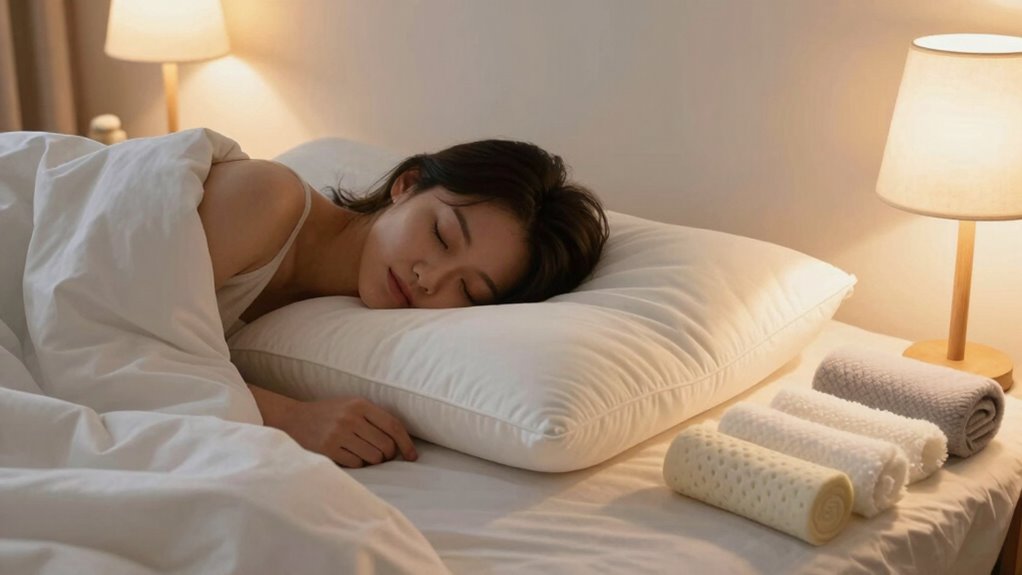
Once you’ve completed your pillow loft test and found the ideal height, selecting the right material and support becomes essential for lasting comfort. Choose a pillow material that promotes good pillow hygiene, such as hypoallergenic or breathable fabrics, to keep germs and allergens at bay. Consider your sleeping positions—memory foam offers excellent support for side sleepers, while latex provides durability and resilience. If you tend to overheat, look for cooling gels or ventilated designs. Proper support guarantees your head, neck, and spine stay aligned, reducing discomfort. The right combination of material and support not only enhances sleep quality but also maintains pillow cleanliness over time, helping you wake up refreshed and pain-free.
Additional Tips to Improve Sleep Alignment Beyond Pillow Loft

To further enhance your sleep alignment, paying attention to your sleeping position and overall bedding setup can make a noteworthy difference. Proper mattress firmness supports spinal alignment and reduces pressure points, so choose a mattress that’s neither too soft nor too firm. Additionally, maintaining good sleep hygiene, like sticking to a consistent sleep schedule and avoiding screens before bed, promotes better posture and relaxation. Consider these tips:
Prioritize a supportive mattress and sleep hygiene for better posture and sleep quality.
- Select a mattress with medium firmness for ideal support.
- Use a supportive pillow that maintains your neck’s natural curve.
- Keep your sleep environment cool, dark, and quiet.
- Practice good sleep hygiene routines to reduce tension and promote restful sleep.
Together, these adjustments can markedly improve your sleep alignment beyond just pillow loft.
When to See a Sleep Specialist or Chiropractor for Persistent Issues

Even with the right pillow loft and a supportive mattress, some sleep issues persist despite your best efforts. If you experience persistent neck pain, headaches, or numbness despite adjusting your pillow materials and sleep position, it’s time to see a sleep specialist or chiropractor. These professionals can identify underlying issues like misalignment or nerve compression that simple adjustments can’t fix. Consider consulting if symptoms last more than a week or worsen over time. They may recommend targeted therapy or further testing to diagnose the problem accurately.
| Symptom | Action |
|---|---|
| Persistent neck pain | Consult a sleep specialist or chiropractor |
| Numbness or tingling | Seek professional evaluation |
| Sleep disruptions | Get expert advice |
| Headaches | Consider professional assessment |
Frequently Asked Questions
Can Pillow Loft Affect Sleep Apnea or Breathing Issues?
Yes, your pillow loft can affect sleep apnea and breathing issues. A pillow with the right loft supports your sleep posture, keeping airways open and reducing breathing disruptions. Pillow materials also matter—breathable, supportive materials help prevent overheating and discomfort. If your pillow is too high or too flat, it can worsen breathing problems, so choose one that aligns with your sleep posture for better airflow and restful sleep.
Is There a Universal Pillow Loft Suitable for All Side Sleepers?
There isn’t a universal pillow loft that suits all side sleepers because pillow firmness and individual sleeping posture vary widely. You need to find a balance that keeps your neck aligned with your spine, which might mean trying different lofts. Too high or too low can cause discomfort or breathing issues. Test different options tonight to discover what maintains proper support, ensuring a restful sleep tailored to your unique needs.
How Often Should I Retake the Pillow Loft Test?
You should retake the pillow loft test every few weeks or if your sleep position changes. Pillow material, like memory foam or latex, can affect how your pillow supports your neck, so reevaluating ensures proper alignment. Regularly testing helps you find the right loft for your side sleeping needs, preventing discomfort. Keep an eye on your comfort and adjust as needed to maintain good sleep posture and avoid waking up with aches.
Can Changing Pillow Loft Improve Overall Sleep Quality?
Changing pillow loft can definitely boost your sleep quality. Imagine your pillow as a firm handshake—if it’s too high or low, it can cause discomfort or misalignment. By adjusting the pillow material and loft to suit your sleep position, you support proper neck alignment, reducing aches and tossing. A well-chosen pillow helps you breathe easier and wake refreshed, proving that small tweaks make a big difference.
Are There Specific Pillow Brands Recommended for Side Sleepers?
You should consider pillow brands like Coop Home Goods, Tempur-Pedic, and Snuggle-Pedic for side sleepers. These brands offer options with adjustable lofts and high-quality pillow materials, such as memory foam or shredded fill, to support your neck and spine properly. Look for reviews, and choose a pillow that matches your preferred firmness and material, ensuring you get the comfort and alignment needed for better sleep.
Conclusion
Now that you know how to test your pillow loft tonight, aren’t you excited to finally get the sleep you deserve? Proper alignment can make all the difference in waking up refreshed and pain-free. Remember, finding the right pillow isn’t just about comfort—it’s about supporting your spine and preventing future issues. So, why settle for restless nights when a simple test can set you on the path to better sleep?