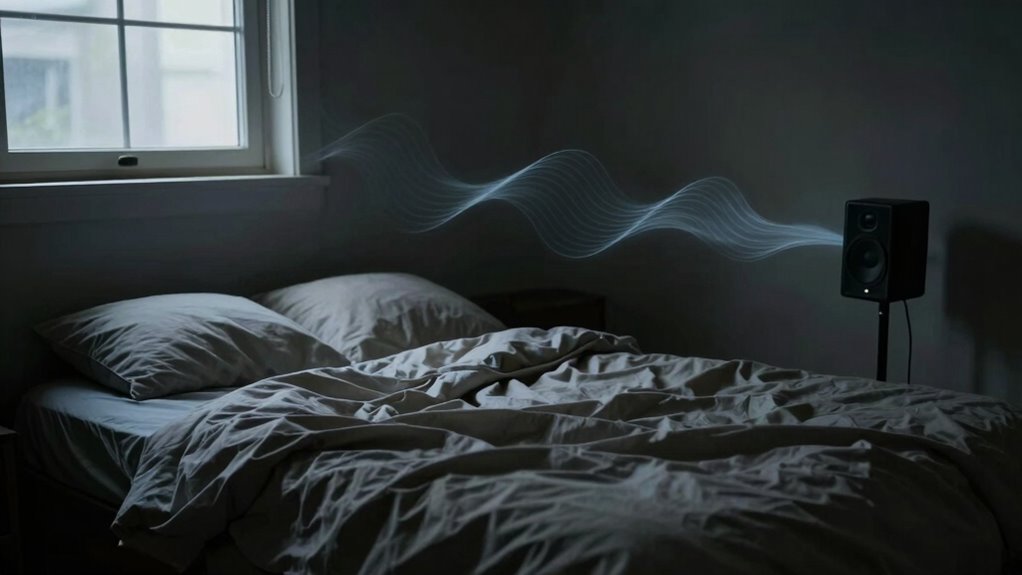

Low-frequency bedroom noises like deep hums or distant rumbles often originate from traffic, HVAC systems, or household appliances. These sounds can penetrate walls and structures, disrupting your sleep without you realizing it. They interfere with your sleep cycles, causing unrest and health issues over time. If you notice persistent, dull sounds even when everything seems quiet, it’s likely the low-frequency problem. Keep exploring to discover effective ways to identify and fix these unseen sleep disruptors.
Key Takeaways
- Low-frequency noises can disrupt sleep even if they are inaudible or unnoticed consciously.
- These sounds travel through walls and furniture, often bypassing typical soundproofing measures.
- Persistent low-frequency vibrations may cause physical discomfort like headaches or muscle tension.
- Standard noise measurements might underestimate low-frequency impacts; specialized equipment is needed.
- Masking with white noise or installing dense insulation can effectively reduce low-frequency sleep disruptions.
What Are Low-Frequency Bedroom Noises and Why Do They Disrupt Sleep?
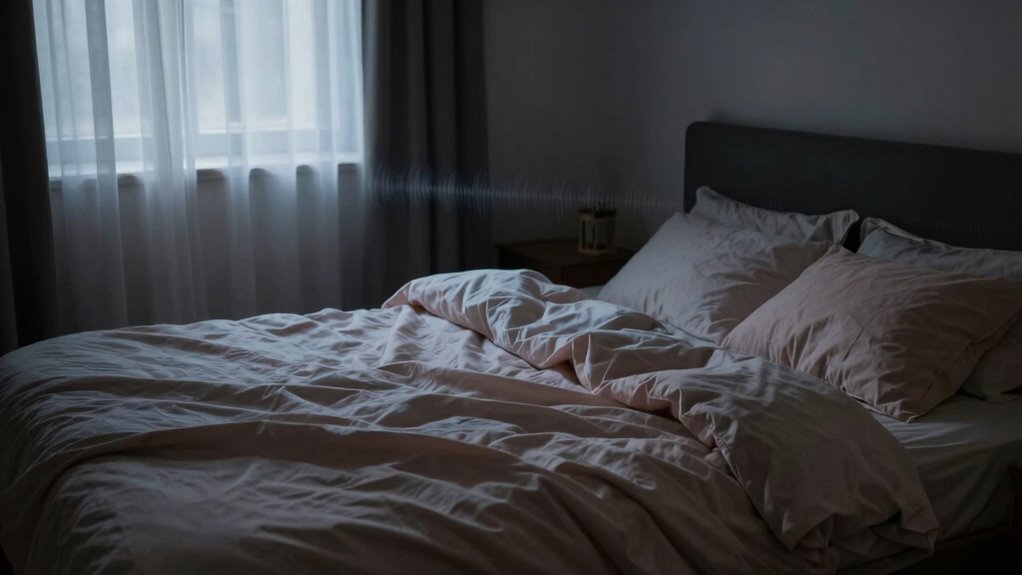
Low-frequency bedroom noises are deep, rumbling sounds that often go unnoticed but can markedly disrupt your sleep. These sounds involve low-pitched sound waves that can cause frequency interference with your brain’s natural rhythms. Because of their long wavelengths, low-frequency noises can travel through walls and furniture, making them harder to block out. Their sound wave behavior allows them to resonate within your environment, amplifying their impact. As a result, these noises can interfere with your ability to fall asleep or stay asleep, often creating a sense of unease. Unlike high-frequency sounds, low-frequency noises are less likely to be consciously perceived but still considerably disturb your rest. Recognizing how sound wave behavior influences these noises helps explain why they’re so disruptive. Understanding the sound wave physics behind these noises can further aid in developing effective mitigation strategies. Additionally, environmental resonance can amplify these sounds, making them even more difficult to ignore. The phenomenon of sound transmission explains how these vibrations spread beyond their source, impacting your sleep environment.
Common Sources of Low-Frequency Noises That Can Keep You Awake
Many common household and environmental factors produce the deep, rumbling sounds that can disturb your sleep without you even realizing it. Traffic noise from nearby roads often creates low-frequency vibrations that penetrate poorly insulated walls. HVAC systems, especially furnaces and air conditioners, generate persistent droning sounds at low frequencies that can be hard to block out. Appliances like refrigerators and sump pumps also emit low-frequency hums. To combat these sounds, acoustic insulation inside walls and floors helps absorb vibrations, reducing their impact. Additionally, noise barriers, such as thick curtains, strategic furniture placement, or exterior barriers like fences, can block or deflect these sounds before they reach your bedroom. Understanding soundproofing techniques can further help create a quieter, more restful sleeping environment. Incorporating soundproofing methods can significantly improve your sleep quality by minimizing disruptive low-frequency noises. It is also beneficial to consider humidity management in your bedroom, as humidity levels can influence noise transmission and overall comfort. Properly managing room ventilation can also reduce the buildup of certain low-frequency vibrations that contribute to noise issues. Furthermore, selecting appropriate flooring materials can help dampen vibrations that transmit low-frequency sounds through the structure.
How Low-Frequency Sounds Penetrate Walls and Structures
Low-frequency sounds can easily pass through walls and structures, making them hard to block. Their ability to penetrate depends on the sound’s power and the materials used in your walls. Understanding these factors helps you find better ways to reduce noise in your bedroom. Additionally, incorporating modern wall art trends, such as acoustic panels with visually appealing designs, can help mitigate low-frequency noise while enhancing your space. Recognizing the environmental impact of materials used in soundproofing can also guide you toward more sustainable solutions. Considering the sound absorption properties of different materials can further improve your soundproofing efforts and create a more peaceful environment. Being aware of sound transmission pathways enables you to identify and address common weak points in your room’s structure for improved noise reduction. For example, understanding soundproofing principles helps in selecting appropriate materials and construction techniques to effectively block low-frequency sounds.
Low Frequencies’ Penetration Power
Because they have longer wavelengths, low-frequency sounds can easily penetrate walls and structures that block higher-pitched noises. This is due to their sound wave behavior, which allows them to travel farther and pass through materials more effectively. Low frequencies are less affected by the damping effects of wall materials, leading to greater penetration power. As a result, they often cause frequency interference inside your bedroom, making it difficult to block out external noise. Unlike high-pitched sounds that reflect or get absorbed, low-frequency waves can wrap around obstacles and infiltrate spaces with ease. This penetration power explains why bass sounds from nearby sources are so persistent, even through multiple walls, disrupting your sleep or relaxation. Understanding sound wave behavior can help you develop better strategies for noise mitigation. Additionally, the material composition of your walls can significantly influence how much low-frequency noise penetrates your space. Incorporating soundproofing techniques such as resilient channels or mass-loaded vinyl can further reduce low-frequency intrusion.
Building Material Effectiveness
Building materials play a substantial role in determining how well walls block or transmit low-frequency sounds. The building structure’s design and material density directly impact sound penetration. Denser materials, like concrete or brick, are more effective at absorbing low frequencies than lighter options such as drywall or wood. Thicker walls with higher mass reduce vibrations, preventing sounds from passing through easily. Conversely, thinner or less dense structures often allow low-frequency noises to penetrate more readily. When constructing or renovating a bedroom, choosing high-mass materials and increasing wall thickness can markedly improve sound isolation. Additionally, mass damping techniques can further enhance the structure’s ability to block low-frequency sounds. Understanding how the building structure and material density influence sound transmission helps you create a quieter, more peaceful space, especially where low-frequency noise is a persistent problem.
How to Tell if Low-Frequency Noise Is Disrupting Your Sleep
You might not realize it, but persistent low-frequency noise can quietly sabotage your sleep. If you wake up feeling unrefreshed or notice a lingering dull ache, low-frequency sounds could be be the culprit. To identify this disruption, pay attention to certain signs.
Persistent low-frequency noise may silently disrupt your sleep—look for signs like unrefreshed mornings and dull aches.
- You experience difficulty falling asleep or staying asleep despite feeling tired
- You notice the noise seems to fluctuate in volume or pitch
- You find yourself more sensitive to sounds, even quieter ones
- Your environment lacks effective acoustic insulation against low frequencies
Using techniques like frequency masking with white noise or specialized sound machines can help determine if low-frequency noise is the issue. These methods can also provide temporary relief. If these signs persist, improving acoustic insulation might be necessary to restore peaceful sleep.
Additionally, understanding how acoustic insulation works can guide you in selecting appropriate solutions to minimize low-frequency disturbances. Exploring soundproofing techniques can further enhance your environment and support restful sleep. For example, implementing mass-loaded vinyl barriers can significantly reduce low-frequency transmission in your space. Incorporating resilient mounting can also help reduce vibrations that propagate low-frequency noise into your bedroom. Recognizing the importance of sound absorption can lead to more effective noise mitigation strategies and improve overall sleep quality.
The Effects of Low-Frequency Noises on Your Sleep Quality and Health
Low-frequency noises can seriously disrupt your sleep cycles, making it harder to fall asleep or stay asleep through the night. You might also experience physical discomfort, like headaches or muscle tension, from prolonged exposure. Over time, these noises can impact your mental well-being, leading to increased stress and difficulty concentrating during the day. Additionally, exposure to persistent low-frequency sounds can contribute to environmental pollution concerns related to textile manufacturing and disposal, which indirectly affect overall health and well-being. Addressing sound insulation methods with proper DIY soundproofing techniques can help mitigate some of these issues in your living space. Understanding global reliance on cloud services emphasizes the importance of creating a quiet environment to maintain productivity and mental health. Implementing effective noise reduction strategies can further improve your comfort and health.
Disrupts Sleep Cycles
Since low-frequency noises often linger at the edge of your awareness, they can subtly disrupt your sleep cycles without you realizing it. These sounds interfere with your body’s natural rhythm, causing fragmented sleep and reducing REM and deep sleep stages. Over time, this disruption impacts your health, mood, and alertness. To combat this, sound masking can help drown out low-frequency disturbances, supporting better sleep hygiene. Be aware that:
- Persistent low-frequency sounds can delay sleep onset
- They cause frequent awakenings during the night
- Disrupted sleep cycles hinder physical and mental recovery
- Maintaining a consistent sleep routine minimizes their impact
- Incorporating free floating noise management techniques can further enhance sleep quality
Addressing low-frequency noise is essential for uninterrupted sleep, ensuring your body completes essential sleep stages for ideal health.
Causes Physical Discomfort
Persistent low-frequency noises can directly cause physical discomfort, making it harder to fall asleep and stay asleep throughout the night. Poor bedroom acoustics amplify these sounds, intensifying their impact on your body. If you have high noise sensitivity, even subtle low-frequency disturbances can lead to muscle tension, headaches, and a feeling of unease. These vibrations can disrupt your comfort, leading to restless nights and increased stress. Over time, this physical discomfort can weaken your immune system and elevate blood pressure. Addressing bedroom acoustics—such as sealing gaps and reducing external noise sources—can lessen these effects. Recognizing how low-frequency sounds affect your body’s physical state is vital for improving sleep quality and overall health.
Impacts Mental Well-being
The physical discomfort caused by low-frequency noises doesn’t just affect your body — it also takes a toll on your mental well-being. Continuous exposure can lead to increased stress, anxiety, and difficulty relaxing, which hampers your sleep hygiene. Poor sleep quality impacts your mental health by reducing focus, increasing irritability, and heightening vulnerability to depression. These noises create a persistent distraction that makes it harder to unwind and fall asleep peacefully. Over time, this can lead to chronic sleep disturbances and a decline in overall mental resilience. To protect your mental well-being, it’s *essential* to address low-frequency noise issues and prioritize a quiet sleeping environment. Recognizing these impacts helps you take proactive steps to improve both your sleep quality and mental health.
How to Detect and Measure Low-Frequency Noises in Your Bedroom
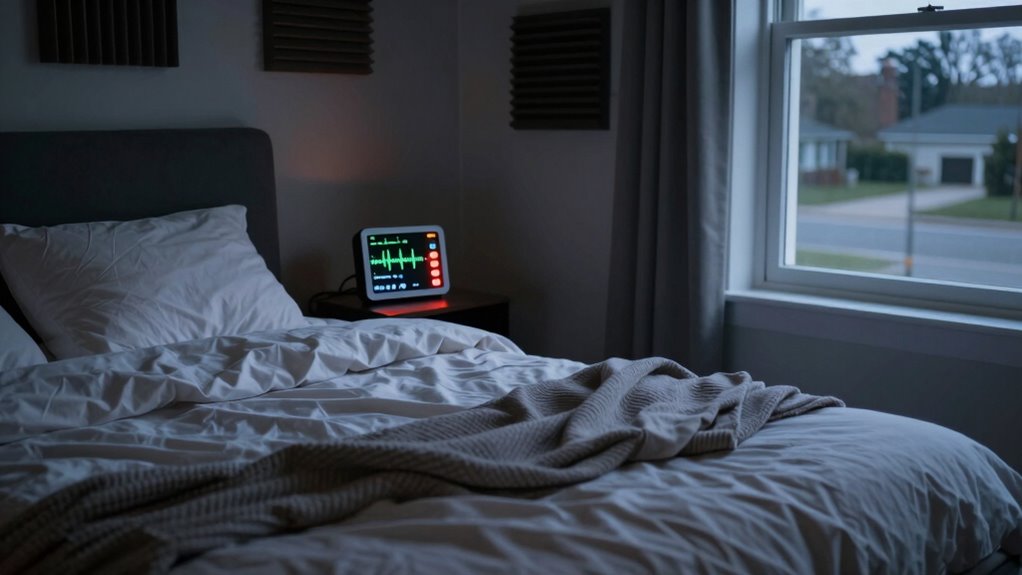
Detecting and measuring low-frequency noises in your bedroom can be challenging, but with the right tools and techniques, it’s entirely possible. Start with a sound level meter capable of capturing low frequencies; many models feature settings for bass or low-frequency ranges. To identify problematic noises, perform a frequency analysis by recording sounds during different times of the day. Use a smartphone app or a dedicated device with spectrum analysis capabilities to visualize the sound spectrum. Pay attention to peaks in the low-frequency range, typically below 200 Hz. Consistent measurements help determine the noise’s intensity and frequency. This information is crucial for choosing effective solutions later. Remember, accurate detection is the first step toward reducing those elusive, disruptive low-frequency sounds in your bedroom.
Simple Ways to Block or Reduce Low-Frequency Noise While You Sleep
To effectively block or reduce low-frequency noise while you sleep, start by creating a physical barrier between you and the sound source. Proper bedroom soundproofing can make a noticeable difference in noise reduction. Here are some simple noise reduction techniques:
Creating a physical barrier and sealing gaps can significantly reduce low-frequency noise during sleep.
- Use heavy, dense curtains or acoustic drapes to absorb sound.
- Place furniture like bookshelves filled with books against shared walls.
- Add mass-loaded vinyl or acoustic panels to walls for extra sound insulation.
- Seal gaps around windows and doors to prevent sound leaks.
These straightforward methods help dampen low-frequency vibrations without extensive construction. Combining multiple approaches enhances overall effectiveness, making your bedroom quieter and more conducive to restful sleep. Even small improvements can significantly cut down disruptive low-frequency noise.
Effective Soundproofing Techniques for Low-Frequency Noise
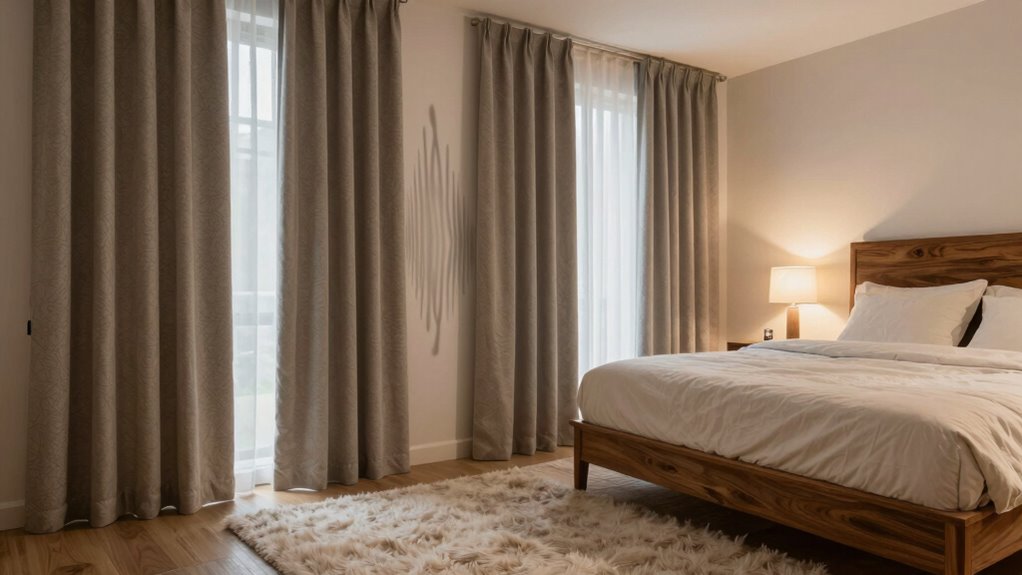
Because low-frequency noises are particularly challenging to block, effective soundproofing techniques focus on adding mass and decoupling sound paths. You should start by installing thick acoustic insulation within your walls or ceilings, which helps absorb low-frequency vibrations. Adding mass, such as dense drywall or mass-loaded vinyl, creates sound barriers that reduce transmission. Decoupling is equally important; using resilient channels or floating floors minimizes the direct transfer of vibrations. Seal all gaps and cracks to prevent sound leaks. Combining these methods enhances your bedroom’s resistance to low-frequency noise, creating a quieter, more peaceful environment. Remember, the goal is to interrupt low-frequency sound waves at multiple points, making it harder for them to penetrate your space effectively.
When to Seek Professional Help for Bedroom Noise Problems
If noise in your bedroom keeps bothering you despite your efforts, it might be time to seek professional help. Notice if the sounds are persistent and disrupt your sleep regularly, as this can seriously affect your well-being. Consulting noise experts can help identify the source and find effective solutions to restore your comfort.
Recognize Persistent Noises
Persistent bedroom noises that continue despite your efforts to block or mask them can signal a deeper issue. If you notice sounds that don’t fade or change with usual adjustments, it may indicate a problem with sound waves or noise pollution affecting your space. Recognizing these persistent noises is vital for addressing potential health impacts or structural concerns.
Consider seeking professional help if you observe:
- Noise that remains constant regardless of timing or environment
- Sounds that seem to originate from outside your control
- Vibrations or low-frequency hums that don’t dissipate
- Changes in noise patterns over time that disrupt your comfort
These persistent sounds can be a sign of underlying issues needing expert assessment. Don’t ignore ongoing noise; early intervention can protect your health and improve your sleep environment.
Assess Impact on Sleep
When noise disruptions begin to interfere with your ability to fall asleep or stay asleep, it’s time to contemplate seeking professional help. Persistent low-frequency sounds can considerably impact sleep quality, leaving you tired and unrested. You might consider sound masking devices that introduce calming noises to drown out disruptive sounds or noise cancellation solutions designed to reduce the intensity of low-frequency noise. If these methods don’t provide relief, consulting a sleep specialist or acoustical expert can help identify underlying issues and develop targeted strategies. Monitoring how noise affects your sleep patterns over time can also guide you in deciding when professional intervention is necessary. Prioritizing your sleep health ensures you get restorative rest and minimizes the long-term effects of bedroom noise disturbances.
Consult Noise Experts
Recognizing the need to consult noise experts becomes clear when your efforts to reduce bedroom noise haven’t yielded improvement over time. If noise persists despite adding acoustic insulation or trying DIY solutions, professional help can identify underlying issues. Noise experts understand the urban soundscape and can assess low-frequency sounds that are difficult to control. They can recommend specialized solutions tailored to your space. Consider consulting professionals if:
- Noise originates from outside sources in the urban soundscape
- DIY insulation efforts haven’t reduced low-frequency noise
- Persistent vibrations or structural issues amplify sound transmission
- You’re seeking advanced acoustic insulation techniques for better soundproofing
Engaging with experts guarantees you target the root cause of the problem, leading to more effective and lasting silence in your bedroom.
Tips for Creating a Quieter Sleep Environment Free From Low-Frequency Disruptions
Low-frequency noises like deep rumbles or distant thumps can be particularly disruptive during sleep, often causing restlessness even when you can’t identify the source. To create a quieter environment, consider sound masking techniques like white noise machines, which effectively drown out low-frequency disruptions. Placing a fan or specialized white noise device near your bed can help mask persistent low rumbles, making them less noticeable. Additionally, using thick curtains or acoustic panels can absorb vibrations. Here’s a quick comparison:
| Method | Benefit |
|---|---|
| White Noise | Masks low-frequency sounds effectively |
| Sound Masking | Creates a consistent background sound |
| Acoustic Panels | Absorbs vibrations and reduces echo |
| Thick Curtains | Blocks external noise |
| Foam Mats | Dampens vibrations on floors |
Employing these tips can markedly enhance your sleep quality.
Frequently Asked Questions
Can Low-Frequency Noises Cause Long-Term Health Issues?
Low-frequency noises can cause long-term health impacts by disrupting your sleep quality. Persistent sleep disruption may lead to issues like stress, fatigue, and weakened immune function. While research is ongoing, continuous exposure to these noises might increase your risk of cardiovascular problems and mental health concerns. It’s essential to address low-frequency sounds in your environment to safeguard your overall well-being and ensure restful, restorative sleep.
Do Earplugs Effectively Block Low-Frequency Sounds?
Think of earplugs as tiny guardians fighting the tide of low-frequency sounds; their efficacy depends on design and material. Most foam or silicone earplugs can block higher-pitched noises well but often struggle with deep, rumbling low frequencies. For better soundproofing, look for earplugs made from specialized soundproof materials that create a more complete barrier, helping you achieve restful sleep despite the low-frequency noise invasion.
Are There Specific Devices Designed to Cancel Low-Frequency Noise?
Yes, there are specific noise canceling devices designed to target low-frequency sounds. You can improve your sleep by using soundproofing techniques like bass traps or specialized noise canceling devices that emit opposing sound waves. These tools are more effective than earplugs alone for low-frequency noise. By choosing the right noise canceling devices and soundproofing methods, you can considerably reduce disruptive low-frequency sounds in your bedroom.
How Does Low-Frequency Noise Affect Babies and Children Differently?
You should know that low-frequency noise can markedly disrupt a baby’s sleep environment and make them more noise sensitive. It may cause difficulty falling asleep, frequent awakenings, or discomfort. As a parent, you might notice your child becomes fussy or irritable after exposure. To help, create a quiet, calming sleep environment, and consider using soundproofing or white noise machines that mask low-frequency sounds, promoting better sleep and reducing noise sensitivity for your little one.
Can Sleeping Positions Influence Low-Frequency Noise Perception?
Yes, your sleeping position can influence how you perceive low-frequency noise. Studies show that pillow positioning and your sleeping posture can alter ear orientation and head alignment, affecting sound perception. For example, sleeping on your side with a supportive pillow may reduce noise sensitivity, while lying on your back might increase it. Adjusting your pillow placement and maintaining a comfortable sleeping posture can help minimize disruptive low-frequency sounds.
Conclusion
Don’t let low-frequency lurkers ruin your rest. By pinpointing persistent problems, practicing simple soundproofing strategies, and knowing when to seek support, you can create a peaceful, private sanctuary. Prioritize peaceful sleep by preventing pervasive, penetrating noises from disturbing your dreams. Protect your peace, prevent poor sleep, and pursue perfect tranquility—because a quiet, comfortable bedroom is worth every effort. Sleep soundly, stay serene, and silence the sneaky sound intruders tonight.