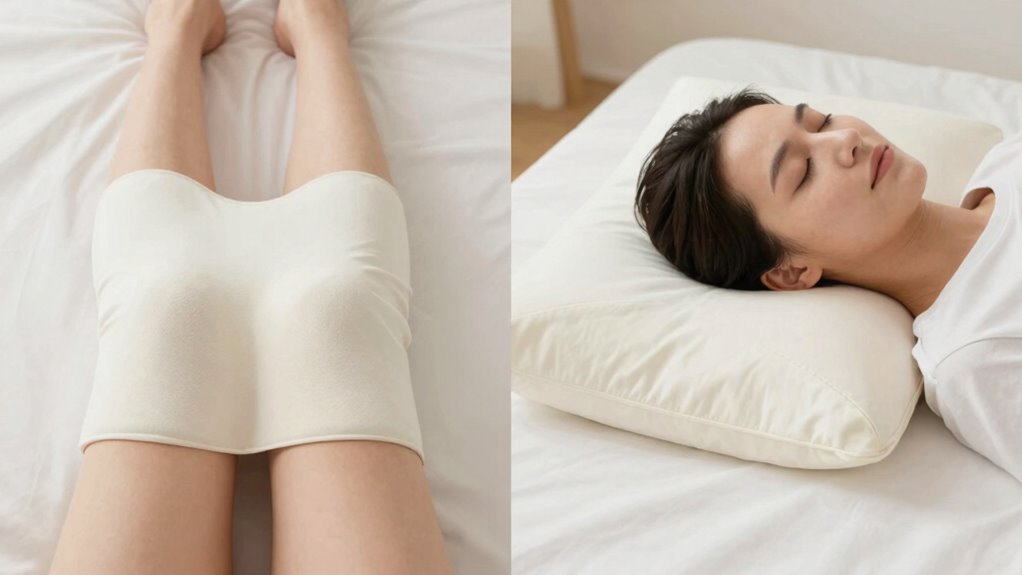

Choosing whether to place your knee pillow between or under your knees depends on your sleep position and comfort needs. Between-the-knees pillows help keep your hips and spine aligned, especially for side sleepers, while under-knee support reduces lower back pressure for back sleepers. Proper placement can ease joint pain and improve sleep quality. To discover the best support for your body, keep exploring options for ideal positioning and support strategies.
Key Takeaways
- Between-knees pillows align hips and spine, ideal for side sleepers seeking better spinal support.
- Under-knees pillows reduce lower back pressure, suitable for back sleepers or those with knee issues.
- Placement choice depends on sleep posture, comfort preference, and specific joint or back pain concerns.
- Between-knees positioning maintains neutral hip alignment, while under-knees placement relieves lumbar pressure.
- Selecting the right pillow height and firmness enhances support and minimizes discomfort regardless of placement.
Should You Place Your Pillow Between Your Knees or Under Them?
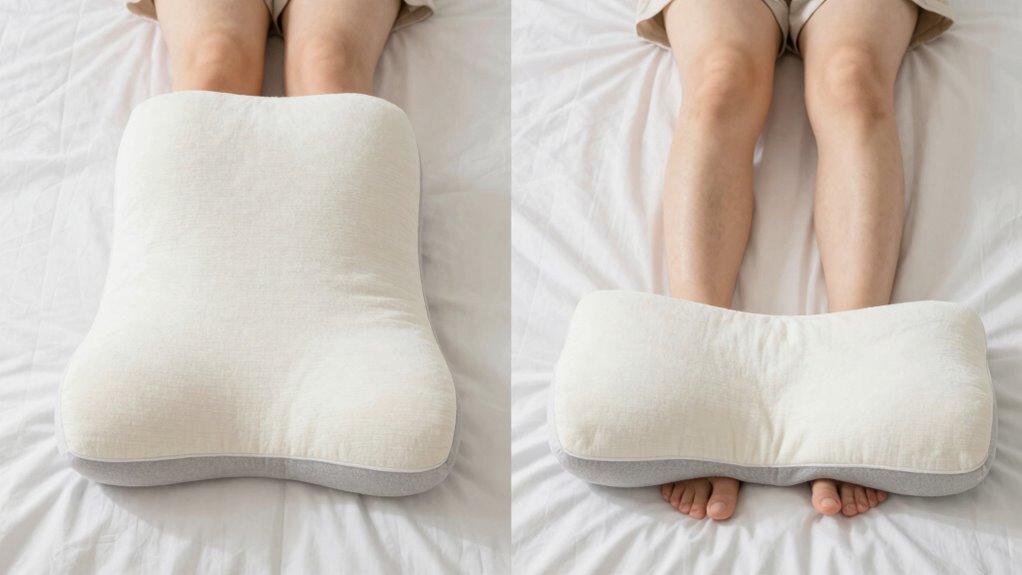
Have you ever wondered whether placing a pillow between your knees or under them is better for sleep? The choice depends on your comfort and needs. For placing the pillow between your knees, consider the knee pillow height—too high or too low can cause discomfort or misalignment. An appropriately sized pillow supports your knees without elevating them excessively. When positioning the pillow under your knees, focus on pillow material; soft, supportive materials like memory foam or latex offer better comfort and pressure relief. The goal is to maintain natural spinal curvature and reduce strain. Additionally, understanding ergonomic sleep positions can help you optimize your setup for better rest. Choosing the right pillow placement also involves considering your body alignment, which plays a crucial role in preventing pain and promoting restful sleep. Proper spinal alignment can also help prevent joint strain, ensuring more comfortable sleep throughout the night. Selecting a pillow that promotes spinal health can further enhance sleep quality. Ultimately, your preference and body shape determine the best placement. Experiment with different knee pillow heights and materials to find what keeps you comfortable throughout the night.
How Knee Pillow Placement Improves Sleep Comfort and Spinal Alignment

Proper knee pillow placement markedly enhances sleep comfort by promoting better spinal alignment. When positioned correctly, it helps keep your hips, pelvis, and lower back in a neutral, supported posture. The choice of knee pillow material also influences comfort—whether memory foam, gel, or latex, select one that conforms to your sleep posture and feels comfortable throughout the night. Proper placement prevents twisting or twisting of the spine, reducing pressure points and easing muscle tension. It encourages a natural curve in your lower back, which can minimize discomfort and improve sleep quality. By aligning your spine and supporting your knees, you’ll wake up feeling more rested, with less stiffness or pain. Ultimately, the right placement and pillow material work together to optimize your sleep posture and overall sleep experience.
Pros and Cons of Placing a Pillow Under Your Knees
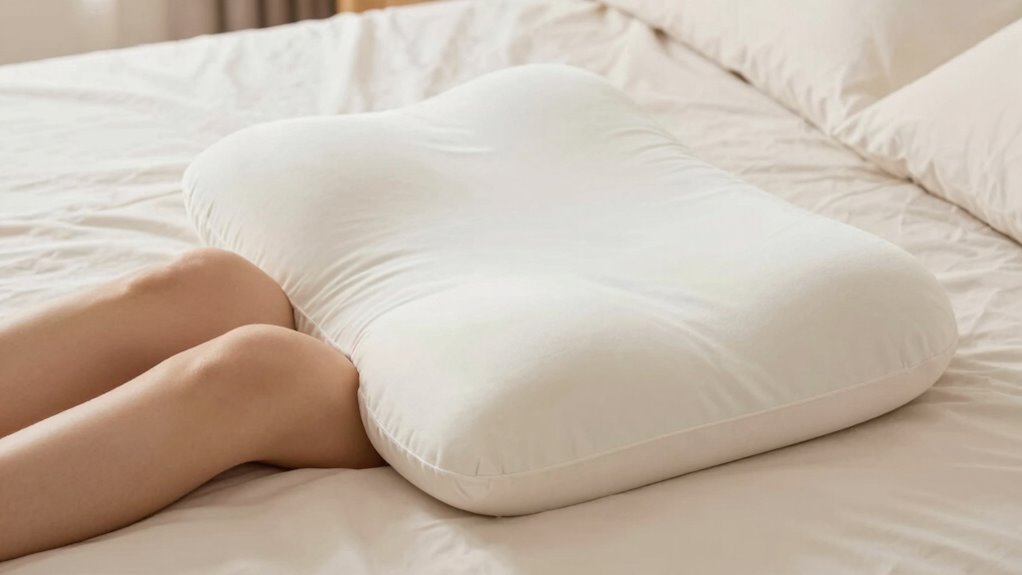
Are you considering placing a pillow under your knees to improve your sleep? This position can support your sleep posture, but it has pros and cons depending on your needs. Using different knee pillow types, like memory foam or gel-filled options, offers varying comfort levels. Pros include reducing lower back pressure and maintaining spinal alignment. However, some might find it uncomfortable or cause knee strain if the pillow is too thick or firm. Additionally, it may not suit everyone’s sleep posture, especially if you tend to shift positions frequently. Here’s a quick comparison:
| Benefit | Drawback | Best for |
|---|---|---|
| Relieves lower back | Possible knee discomfort | Back sleepers |
| Supports spinal alignment | Can cause knee strain | Side sleepers |
| Adjustable comfort | Limited movement | People with knee issues |
| Maintains sleep posture | May feel unnatural | Those who prefer under-knees support |
| Promotes relaxation | Requires proper pillow type | Sleepers wanting extra support |
Which Position Reduces Knee and Hip Pain Better?
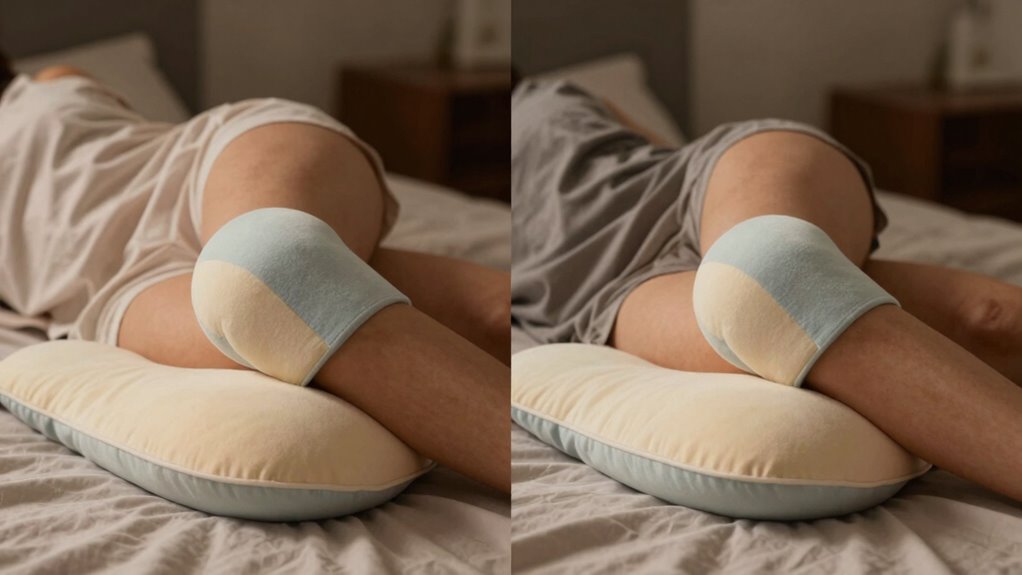
When choosing a position, consider how pressure is distributed across your knees and hips, as this can impact pain relief. Proper alignment and support help reduce strain and keep your joints comfortable throughout the night. Additionally, the right position should feel natural and allow easy movement without causing discomfort. Using a knee pillow with a high milky nails rating can help prevent skin irritation and improve overall comfort during sleep. Ensuring the pillow provides adequate pressure distribution can further enhance comfort and reduce soreness. Incorporating ergonomic principles into your pillow choice can promote better alignment and support. Moreover, selecting a pillow made from breathable materials can aid in temperature regulation and prevent excessive sweating, contributing to better sleep quality. Paying attention to joint health is essential for long-term comfort and mobility.
Pressure Distribution Differences
Different sleep positions distribute pressure across your knees and hips in distinct ways, directly impacting pain levels. When you place a knee pillow between your knees, it helps evenly spread pressure points, reducing strain on your hips and knees. This position offers a higher support level for your upper leg, preventing it from collapsing inward and causing imbalance. Conversely, placing a pillow under your knees shifts pressure downward, decreasing stress on your lower joints but possibly increasing pressure on your lower back. The support level varies: between-knees placement targets side sleepers with more even pressure distribution, while under-knees positioning benefits those needing relief from lower joint strain. Understanding these differences helps you choose the placement that best minimizes pain and optimizes comfort. Additionally, considering contrast ratio and other support features can enhance overall sleep quality by promoting proper spinal alignment. Proper pressure distribution is essential for reducing discomfort and ensuring restful sleep, especially for individuals with chronic knee or hip pain. Optimizing sleep ergonomics through appropriate pillow placement can further improve comfort and reduce pain during rest. Moreover, selecting pillows with suitable support features can enhance stability and comfort throughout the night. Being mindful of pressure points can also help prevent unnecessary strain and improve sleep posture.
Alignment and Support Benefits
Placing a knee pillow between your legs generally offers better alignment and support for reducing knee and hip pain, especially for side sleepers. This position keeps your hips, pelvis, and spine in a more natural alignment, preventing strain. This method is also recommended in sleep ergonomics to promote spinal health. The effectiveness depends on knee pillow types and mattress firmness. Firmer mattresses support proper alignment without sinking, making between-the-knees placement more beneficial. Softer mattresses may cause the pillow to shift, reducing support. Additionally, pillow placement can influence overall comfort and spinal health during sleep.
Comfort and Movement Ease
Choosing the most comfortable and easy-to-move position often depends on how well it minimizes knee and hip pain during sleep. When selecting a knee pillow, consider the materials—memory foam, latex, or firm foam—as they influence comfort and support. Softer materials may feel cozy but could lack stability, while firmer options offer better support for movement. Pillow height selection is vital; a pillow that’s too high or low can cause misalignment, leading to discomfort. Between knees, a pillow that maintains proper leg alignment promotes easier movement and reduces strain. Under the knees, a slightly thicker pillow can help ease pressure on your hips. Proper pillow positioning can also prevent sleep disruptions, making it easier to shift positions comfortably without waking up sore. Ultimately, the right material and height make it easier to shift positions comfortably without waking up sore.
Key Factors to Consider When Choosing Your Knee Pillow Position

Selecting the right position for your knee pillow is essential for maximizing comfort and relieving pressure points. When choosing, consider your sleep posture—side sleeping or back sleeping—as it influences ideal placement. The pillow’s materials also matter; soft, breathable fabrics enhance comfort, while firm supports provide stability. Your body’s alignment should feel natural, reducing strain on hips and knees. Use this table to evaluate key factors:
| Factor | Consideration |
|---|---|
| Sleep Posture | Side sleepers often prefer between knees; back sleepers under knees |
| Knee Pillow Materials | Breathable fabrics for comfort; firm support for stability |
| Body Alignment | Ensure natural hip and spine alignment |
| Pressure Relief | Position where pressure points are minimized |
Additionally, choosing ergonomic designs can further improve comfort and support proper alignment. Proper placement helps prevent discomfort and enhances sleep quality. Incorporating customizable or adjustable options allows for personalized support, which is especially beneficial for different body types. Ensuring the pillow’s placement aligns with body mechanics can enhance its effectiveness. Furthermore, understanding how biomechanical principles relate to sleep positioning can lead to better comfort and health benefits.
Tips for Properly Positioning Your Knee Pillow for the Best Support
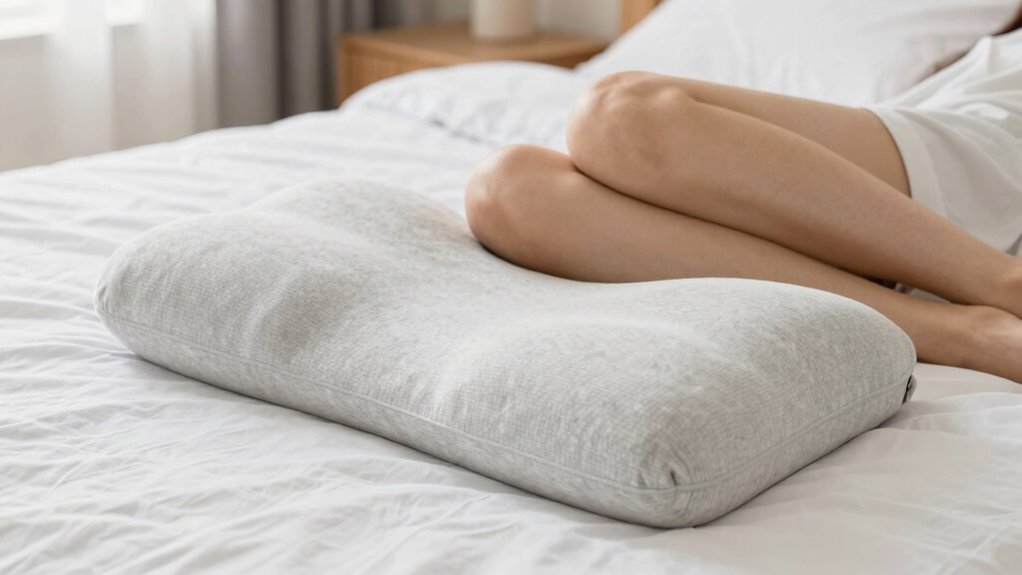
To get the most comfort, make certain your knee pillow aligns with your spine for proper support. Choosing the right size guarantees it stays in place and doesn’t cause discomfort. Proper positioning helps you wake up feeling rested and pain-free. Additionally, ensuring the pillow is clean and residue-free can prevent discomfort and prolong its effectiveness. Being aware of ergonomic principles can further improve your positioning and overall sleep quality. Using appropriate materials for the pillow can also contribute to better comfort and hygiene. Incorporating proper alignment techniques based on ergonomic knowledge can optimize your sleep posture and reduce strain.
Align Pillow to Spine
Have you ever wondered if your knee pillow is properly aligned? To guarantee the best support, focus on aligning it with your spine. Start by adjusting the knee pillow height so it’s even with your hips, preventing unnecessary pressure or misalignment. When positioning, the pillow should support your knees comfortably without forcing your hips out of alignment. Consider pillow material options like memory foam or latex, which contour better and offer consistent support. The pillow’s shape and firmness can profoundly impact alignment, so choose one that keeps your hips, pelvis, and spine in a neutral position. Proper alignment reduces strain on your lower back and hips, enhancing sleep quality and comfort throughout the night. Additionally, selecting a reversible motor ceiling fan can help maintain a comfortable temperature, further supporting restful sleep.
Use Proper Pillow Size
Proper pillow size guarantees your knee pillow provides the right support without causing discomfort or misalignment. Choosing the right size involves considering pillow firmness and material selection. A pillow that’s too small may not offer enough cushioning, while one that’s too large can feel bulky or restrict movement. Opt for a pillow with medium firmness—firm enough to maintain shape but soft enough to prevent pressure points. Material selection matters too; memory foam or latex molds comfortably to your body, providing consistent support. Avoid overly soft or hard options, as they can compromise alignment. Verify the pillow fits comfortably between or under your knees, supporting natural spinal alignment and reducing strain. Selecting the correct size and material ensures effective support and a restful, pain-free sleep.
Common Mistakes to Avoid When Using a Knee Pillow
One common mistake people make when using a knee pillow is positioning it incorrectly, which can negate its benefits and cause discomfort. If the pillow isn’t positioned properly for your sleeping position, you won’t get adequate support or alignment. For example, too firm a pillow can lead to pressure points, while too soft may not hold your legs in place. It’s essential to choose a pillow with the right firmness for your comfort. Also, consider your sleeping position: side sleepers benefit from placing the pillow between their knees, while back sleepers might prefer it under their knees. Avoid using the wrong pillow firmness or misplacing the pillow, as these mistakes can lead to pain and reduce the pillow’s effectiveness. Proper positioning ensures better sleep and spinal alignment.
Frequently Asked Questions
Can the Wrong Pillow Placement Cause Long-Term Joint Issues?
Yes, placing your knee pillow incorrectly can cause long-term joint issues. If you put it in the wrong position, you might experience joint strain and misalignment, which can lead to discomfort and more serious problems over time. To avoid this, make certain your pillow supports proper alignment of your hips and knees, whether between or under your knees. Proper placement helps prevent joint strain and keeps your joints healthy.
Is There an Ideal Pillow Firmness for Different Sleep Positions?
For different sleep positions, your ideal pillow firmness varies. If you sleep on your side, choose a firmer pillow to keep your spine aligned and prevent shoulder pain. For back sleeping, a medium firmness works best to support the natural curve of your neck. If you sleep on your stomach, opt for a softer pillow to reduce neck strain. Adjust pillow firmness based on your comfort and sleep position for better rest and joint health.
How Often Should I Replace My Knee Pillow for Optimal Support?
You should replace your knee pillow every 6 to 12 months to guarantee ideal support maintenance. Regular pillow replacement prevents sagging and loss of firmness, which can compromise comfort and alignment. Keep an eye on signs like flattened foam or reduced comfort, and don’t hesitate to get a new pillow sooner if needed. Proper support is key for restful sleep, so maintaining your pillow’s condition is essential for your overall comfort.
Are There Specific Pillow Shapes Better for Side Sleepers?
Like choosing a trusty steed, selecting the right pillow shape enhances your sleep comfort. As a side sleeper, an ergonomic design tailored for your body works best. Contoured or wedge pillows cradle your knees and hips, providing proper alignment. These shapes help reduce pressure and improve comfort, making your nightly ride into dreamland smoother. Opt for these shapes to keep your sleep comfy, and wake up feeling refreshed, just like in the good ol’ days.
Can Using a Knee Pillow Improve Circulation During Sleep?
Using a knee pillow can improve your circulation during sleep by reducing pressure on your legs and hips. Better circulation benefits your overall sleep quality, helping you feel more rested and energized. When you position the pillow correctly—whether between or under your knees—it encourages proper spinal alignment and promotes healthy blood flow. Incorporate a knee pillow into your sleep routine to enhance circulation benefits and enjoy more restorative, comfortable sleep every night.
Conclusion
Choosing the right knee pillow placement can truly transform your sleep, much like a knight’s trusty shield in a medieval tale. Whether you go for between the knees or under them, focus on comfort and alignment. Avoid common pitfalls, and don’t forget to adjust as needed—your back and hips will thank you. Remember, even in this modern age, a good night’s sleep remains the secret weapon for a healthier, happier you.