
If you wake up with headaches and neck discomfort, your sleep posture or setup might be the cause. Signs include pain that worsens through sleep, tossing and turning, or morning stiffness. Sleeping on your stomach or on an unsupportive pillow can twist your neck and strain muscles. To prevent this, check your pillow firmness, support your spine, and make sure your mattress promotes proper alignment. Keep exploring to discover how small changes can bring relief.
Key Takeaways
- Morning headaches often indicate poor pillow support causing neck strain and misalignment during sleep.
- Waking with stiffness or tenderness in jaw and neck muscles suggests improper sleep posture or unsupportive pillows.
- Persistent pain that worsens over time points to inadequate sleep setup affecting spinal and head alignment.
- Frequent waking or morning discomfort signals potential issues with sleep environment, pillow firmness, or mattress support.
- Identifying patterns like sharp pains or tight muscles helps determine if sleep posture or setup adjustments are needed.
Does Your Sleep Position Cause Morning Headaches?

Have you ever woken up with a pounding headache and wondered if your sleep position is to blame? Your sleep position can profoundly influence how your neck and spine align overnight, impacting headache frequency. Poor sleep posture often results from inadequate pillow support, causing strain on your neck muscles and nerves. If your pillow doesn’t support the natural curve of your neck, you might wake up with tension headaches. Sleeping on your stomach, for example, can twist your neck unnaturally, increasing discomfort. Ensuring proper pillow support helps maintain correct alignment and reduces strain. Paying attention to your sleep posture and choosing the right pillow can make a noticeable difference in how you feel in the morning. Additionally, incorporating natural sleep aids like certain herbs or relaxation techniques can promote better rest and reduce morning discomfort. Being mindful of your body positioning during sleep can further prevent misalignments that contribute to headaches. Proper body alignment during sleep is essential for avoiding unnecessary tension and promoting overall wellness. To further support healthy sleep habits, avoiding sleep disruptions such as noise or light can also help improve your sleep quality.
How Can You Tell If Your Sleep Setup Is Making Headaches Worse?

You can often spot if your sleep setup worsens headaches by paying attention to your morning pain patterns. Clues like neck strain or discomfort when waking up might point to your sleep position or pillow choice. Evaluating how well your pillow supports you can help determine if your sleep environment is contributing to your headaches.
Morning Pain Patterns
Morning pain patterns often reveal whether your sleep setup is contributing to headaches. If you wake up with dull, persistent aches, it might be linked to sleep deprivation caused by poor sleep quality or interruptions. Sharp, stabbing pains could indicate tension from stress or uncomfortable positions during the night. Pay attention to whether your headaches improve after a good night’s rest or worsen over time. Consistent pain in the same area suggests your sleep posture may be straining neck or shoulder muscles, increasing headache risk. Managing stress and ensuring adequate sleep are essential; neglecting these factors can worsen pain patterns. Additionally, proper projector placement can influence overall sleep comfort if your viewing habits interfere with sleep quality. Being mindful of your sleep environment can help identify other factors that contribute to morning headaches. Recognizing sleep posture issues can help you make targeted adjustments to reduce morning pain and improve overall rest. Adjusting your sleep position and supporting your neck properly can significantly reduce morning headaches and promote more restful sleep. Understanding how whole-home water systems impact your daily comfort can also be beneficial, as water quality can affect skin and muscle health, potentially influencing headache frequency. By observing when and where your headaches occur, you can better determine if your sleep environment needs adjustments to reduce morning pain.
Sleep Position Clues
If your sleep position isn’t supportive, it can directly contribute to morning headaches. Poor alignment may strain your neck and shoulders, leading to tension headaches. To identify if your setup is problematic, pay attention to how you feel upon waking and consider any persistent pain. Dream analysis can sometimes reveal subconscious stress or discomfort that affects your sleep posture. Improving sleep hygiene—like avoiding awkward positions or sleeping in one posture all night—can help reduce headaches. Notice if you wake up frequently or wake up with stiffness, which suggests your sleep position isn’t ideal. Adjusting your sleep setup to support proper spinal alignment, with neutral neck and head positioning, can make a significant difference. Recognizing these clues helps you optimize your sleep and reduce morning headaches.
Pillow Effectiveness
Poor pillow choice can substantially worsen morning headaches by failing to support your head and neck properly. An unsuitable pillow material or shape can disrupt your sleep cycle, leading to tension and pain. To assess if your pillow is making headaches worse, consider these clues:
- Discomfort upon waking: If your neck feels strained or sore, your pillow may not be providing adequate support.
- Frequent tossing and turning: An improper pillow can interrupt your sleep cycle, causing restless nights.
- Persistent headaches in the morning: If headaches persist despite good sleep habits, your pillow’s material or height might be the culprit.
- Inappropriate pillow height or firmness can also contribute to improper sleep posture and exacerbate headaches. Ensuring your sleep setup promotes correct spinal alignment is essential for reducing discomfort. Using a pillow designed to maintain proper neck support can further help prevent morning headaches. Choosing a pillow that aligns with your sleep position and supports your neck can help reduce morning headaches and improve sleep quality. Additionally, selecting a pillow made from specialized materials can improve comfort and support throughout the night. Incorporating ergonomic pillow designs can also promote better sleep posture and reduce strain.
Best Sleep Positions to Prevent Headaches
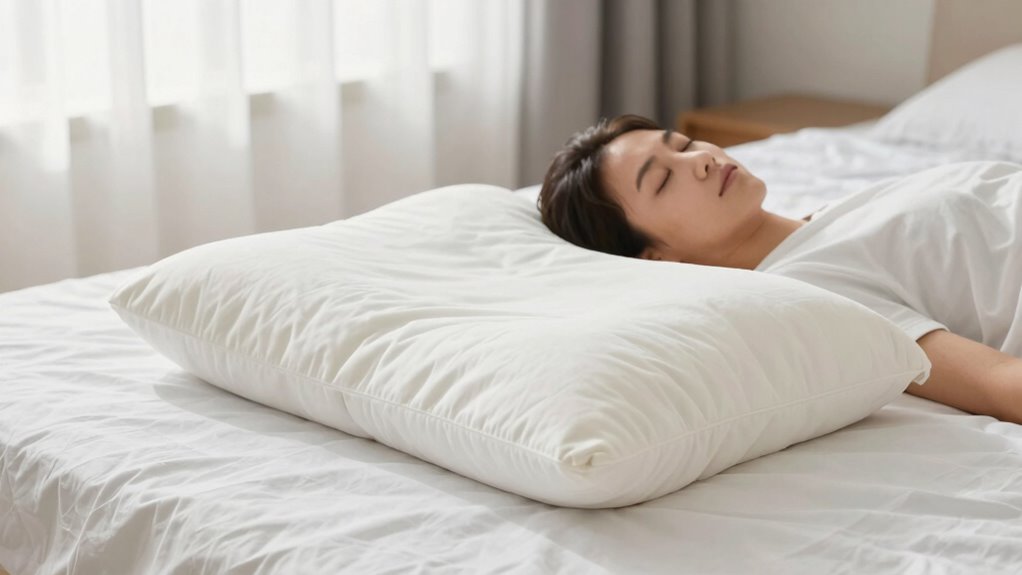
Choosing the right sleep position can considerably reduce the likelihood of waking up with headaches. To improve sleep hygiene and minimize headache triggers, try sleeping on your back with your head and neck aligned. This position evenly distributes pressure and helps maintain spinal support, reducing strain. If you prefer sleeping on your side, place a pillow between your knees to keep your spine aligned and alleviate neck tension. Avoid sleeping on your stomach, as it often causes neck twisting and strain that can lead to headaches. Maintaining good posture while sleeping helps prevent muscle tension and improves blood flow. Additionally, choosing sustainable textile products with breathable fabrics can help regulate temperature and enhance overall sleep comfort. Using proper sleep environment techniques, such as adjusting room temperature and minimizing noise, can further support healthier sleep. Incorporating ergonomic sleep setups can also promote proper alignment and reduce stress on your neck and shoulders. Using a supportive pillow made from ergonomic materials can help maintain proper neck alignment throughout the night. Ensuring that your sleep environment is free of allergens and microplastics can further improve sleep quality and reduce headache triggers. Consistently adopting these positions supports healthier sleep, reduces tension buildup, and decreases the chances of morning headaches caused by poor sleep posture.
Which Pillows Help Reduce Morning Headaches?
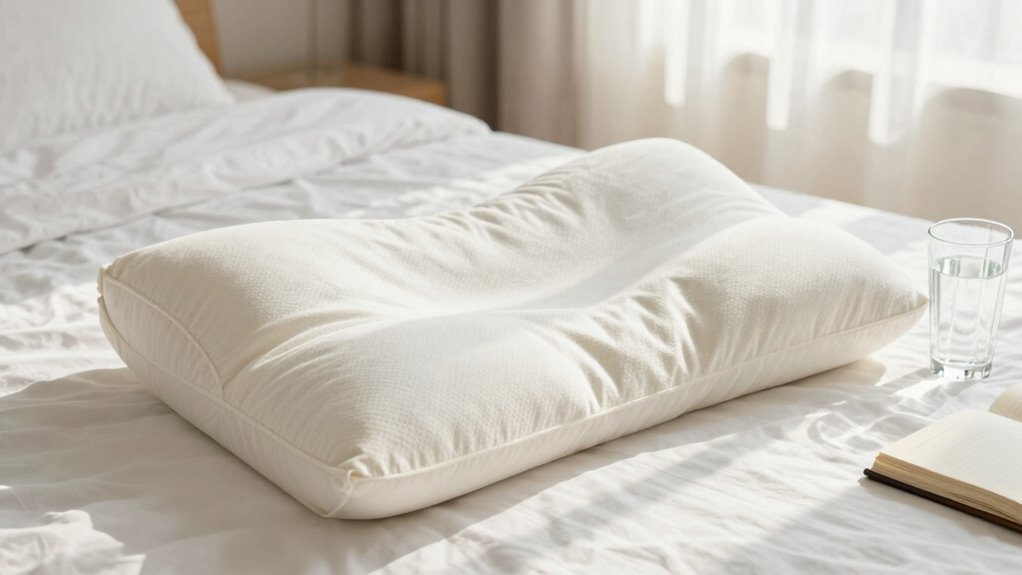
Choosing the right pillow can make a big difference in reducing morning headaches. You’ll want one that offers proper firmness and support to keep your neck aligned. Also, consider materials that are hypoallergenic to prevent irritation that might trigger headaches.
Pillow Firmness and Support
The firmness and support of your pillow play a crucial role in preventing morning headaches. Choosing the right level of pillow firmness can keep your head and neck properly aligned, reducing strain that causes headaches. Supportiveness is key—your pillow should cradle your head without sinking too much or pushing too hard. Reinforcing proper sleep posture with supportive materials can further enhance comfort and spinal alignment. Consider these options: 1. Medium-firm pillows for balanced support 2. Memory foam for contouring support 3. Latex pillows for resilience and supportiveness Avoid overly soft pillows that lack support or very firm ones that cause pressure points. The goal is to find a pillow that maintains proper supportiveness throughout the night, helping you wake up headache-free. Proper sleep posture plays a vital role in headache prevention by maintaining spinal alignment and reducing muscle tension. Additionally, selecting a pillow with appropriate supportive materials can enhance spinal alignment and reduce discomfort. Using ergonomic design in pillows can also contribute to better sleep posture and headache prevention. Ensuring the right pillow supports proper spinal alignment can significantly reduce the likelihood of morning headaches.
Material and Allergens
Materials and allergens in your pillow can substantially impact morning headaches, especially if you’re sensitive or allergic. Certain materials may trigger allergy symptoms like sneezing, congestion, or headaches, disrupting your sleep quality. Choosing pillows made from hypoallergenic materials can reduce these risks. Look for options with allergen-resistant covers or fillings, such as memory foam or latex, which resist dust mites and mold. Avoid pillows with synthetic fills or feather fillings if you’re prone to allergies, as these can harbor allergens. Material choices directly influence your sleep environment; selecting the right pillow can help minimize allergy symptoms, promote better sleep, and reduce morning headaches. Being mindful of your pillow’s material and allergen profile can significantly improve your sleep quality and overall well-being. Regularly replacing pillows and maintaining a clean sleep space reduces allergen buildup and supports better health. Using vetted vacuum experts can also help ensure your sleep environment remains clean and allergen-free, contributing to healthier mornings. Additionally, opting for pillows with hypoallergenic covers can further lessen exposure to potential irritants.
How Your Mattress Support Affects Sleep Comfort and Headache Risk
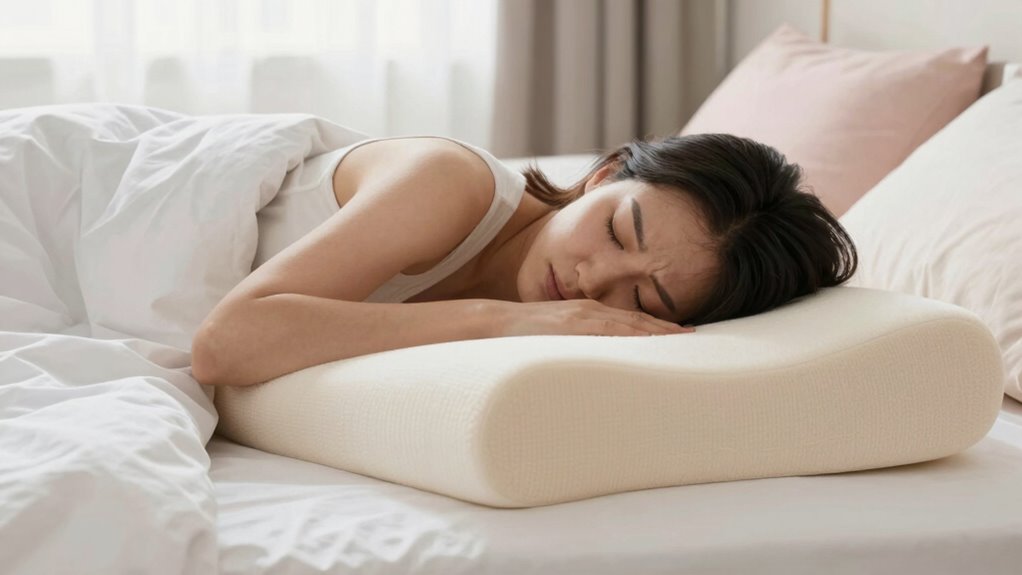
Since your mattress provides essential support during sleep, it directly influences how well your spine aligns and how comfortable you feel throughout the night. A supportive mattress helps prevent strain that can lead to morning headaches. Key factors to consider include:
- Mattress durability – A high-quality, durable mattress maintains proper support over time, reducing sagging that can cause misalignment.
- Support firmness – Too soft or too firm can disturb your sleep posture, increasing headache risk.
- Sleep temperature regulation – A mattress that manages heat well ensures you stay comfortable, preventing tossing and turning that impacts support.
Choosing a supportive mattress not only improves comfort but can also decrease headache frequency by promoting proper spinal alignment and consistent sleep temperature.
Detecting Muscle Tension That Might Be Triggering Headaches During Sleep
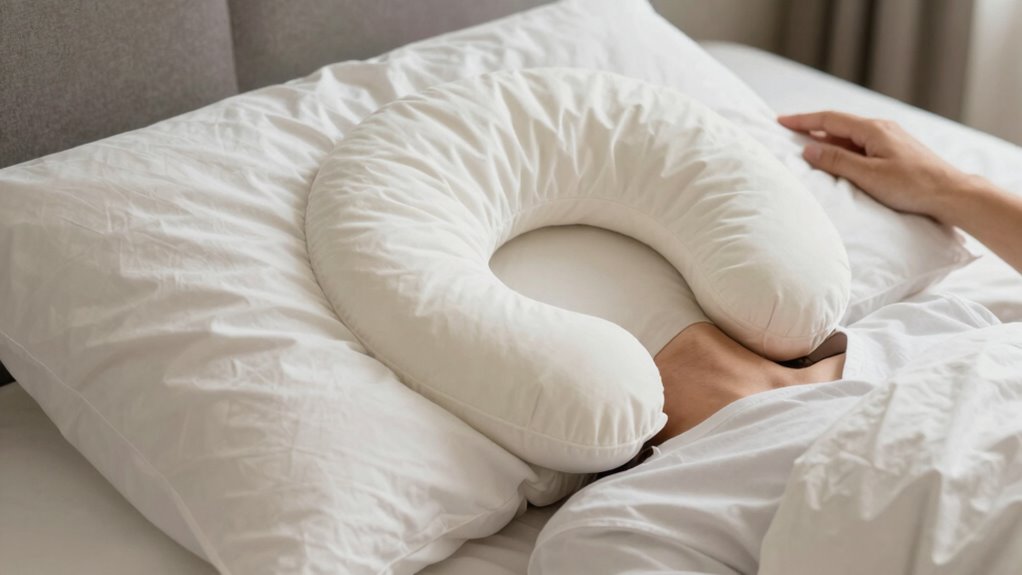
Muscle tension often develops during sleep without you realizing it, and this tightness can trigger headaches upon waking. You might notice jaw tension from grinding or clenching your teeth, which strains the jaw muscles and contributes to headache pain. Similarly, neck strain from poor head or pillow positioning causes muscles along your neck and shoulders to tighten, increasing headache risk. To detect these issues, pay attention to persistent jaw tightness or soreness in the morning. Notice if your neck feels stiff or sore after sleep. Gentle self-examinations, like feeling for tenderness or tightness in your jaw and neck muscles, can help identify muscle tension. Recognizing these signs early allows you to take steps to reduce muscle strain, potentially easing morning headaches.
Simple Ways to Adjust Your Bed for Better Alignment and Relief
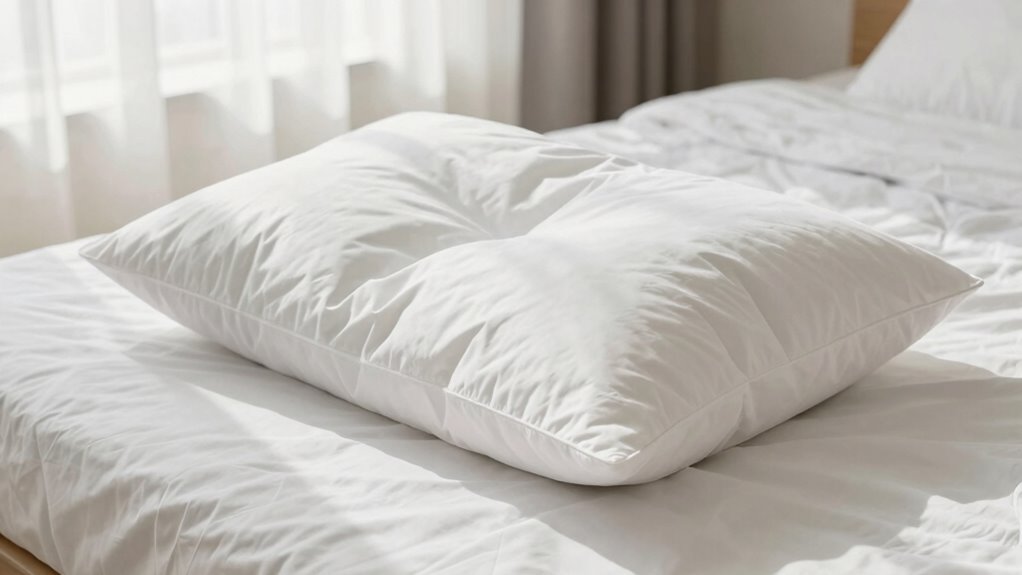
Adjusting your bed to promote proper alignment can substantially reduce muscle tension and morning headaches. Good sleep hygiene starts with a supportive setup that encourages proper posture throughout the night. Here are three simple ways to improve your bed for relief:
- Use a supportive pillow that maintains neck alignment and supports your head comfortably.
- Adjust your mattress if possible, to ensure it’s neither too firm nor too soft, promoting spinal alignment.
- Elevate your head slightly with a wedge pillow or extra pillows to reduce pressure and improve breathing.
Incorporating these adjustments into your bedtime routines can help you wake up feeling refreshed and headache-free. Small changes make a big difference in how you sleep and how you feel in the morning.
Easy Bedtime Habits to Help Prevent Morning Headaches
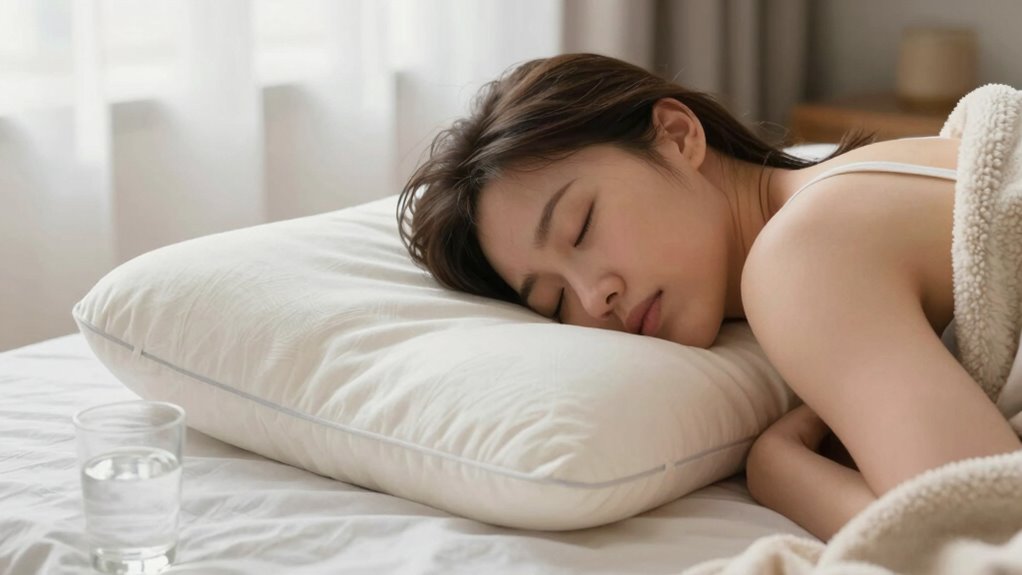
Establishing simple bedtime habits can considerably reduce the likelihood of waking up with headaches. Prioritize good sleep hygiene by sticking to a consistent sleep schedule, even on weekends. Create a relaxing pre-sleep routine, like reading or gentle stretching, to signal your body it’s time to wind down. Avoid screens and caffeine before bed, as they can interfere with sleep quality. Managing stress through relaxation techniques such as deep breathing or meditation can also improve sleep and reduce tension that may contribute to headaches. Guarantee your sleeping environment is comfortable, dark, and cool to promote restful sleep. These habits help your body relax and recover overnight, minimizing morning headaches linked to poor sleep posture or disrupted sleep patterns.
When Should You See a Doctor for Persistent Sleep-Related Headaches?

If you find yourself waking up with persistent headaches despite practicing good sleep habits, it’s important to contemplate consulting a healthcare professional. Chronic sleep-related headaches can signal underlying issues that require medical attention. Consider seeing a doctor if:
- Your headaches occur frequently or worsen over time, despite maintaining good sleep hygiene.
- You experience additional symptoms like vision changes, dizziness, or difficulty concentrating, which may suggest a more serious condition.
- You notice that stress management techniques aren’t alleviating your headaches, indicating a possible need for targeted treatment.
Persistent headaches can be linked to sleep posture or other health issues. A healthcare provider can evaluate your sleep patterns and recommend appropriate interventions to improve your sleep quality and reduce headaches.
Frequently Asked Questions
Can Sleep Posture Changes Completely Eliminate Morning Headaches?
Changing your sleep position and pillow choice can markedly reduce morning headaches, but it might not eliminate them entirely. You should experiment with different sleep postures to find what works best for you, ensuring your pillow offers proper neck support. Proper alignment helps prevent strain that causes headaches. While these adjustments often help, persistent headaches may require consulting a healthcare professional to rule out other underlying issues.
Are There Specific Sleep Disorders Linked to Postural Headaches?
Yes, certain sleep disorders like sleep apnea and restless leg syndrome are linked to postural headaches. Sleep apnea causes interrupted breathing, leading to poor sleep quality and morning headaches, while restless leg syndrome causes uncomfortable sensations that disturb rest. These conditions can worsen your posture during sleep, increasing headache frequency. Identifying and treating these disorders with medical help can profoundly reduce your morning headaches and improve sleep quality.
How Long Should I Try New Sleep Setups Before Seeing Results?
You should try a new sleep setup for at least 1 to 2 weeks to assess its effectiveness, as this allows your body’s postural adjustment timeline to take effect. During this sleep trial duration, monitor how your morning headaches change and note any improvements. If you don’t see progress within this period, consider making further adjustments or consulting a specialist for personalized advice.
Do Age or Gender Influence Sleep-Related Headache Patterns?
You might notice that age influence and gender variations can affect your sleep-related headache patterns. As you age, hormonal changes and sleep cycle shifts can increase headache risk, especially in women due to hormonal fluctuations. Gender variations also play a role, with women more prone to migraines linked to sleep disturbances. Recognizing these factors helps you understand your headaches better, allowing you to tailor your sleep habits for relief.
Can Lifestyle Factors Beyond Sleep Posture Contribute to Morning Headaches?
Yes, lifestyle factors like stress and caffeine consumption can contribute to morning headaches. When you’re stressed, your body releases hormones that can cause headaches, especially after a restless night. Excessive caffeine intake, especially late in the day, disrupts your sleep cycle and triggers headaches upon waking. Managing stress and limiting caffeine can markedly reduce the likelihood of morning headaches, helping you wake up more refreshed and headache-free.
Conclusion
Think of your sleep setup like tuning a guitar—small adjustments can make a big difference. Just like a slightly off-string causes discord, poor sleep posture can lead to morning headaches. By paying attention to your position, pillow, and mattress, you can strike the right balance for restful nights and headache-free mornings. Remember, if pain persists, don’t hesitate to see a doctor—sometimes, the smallest change can restore harmony to your sleep.