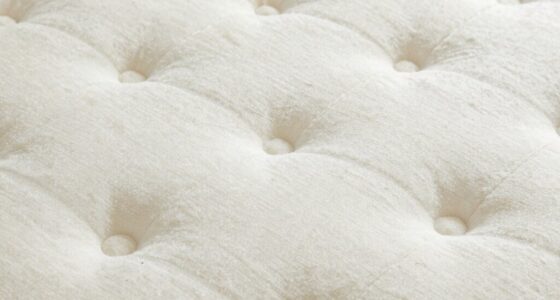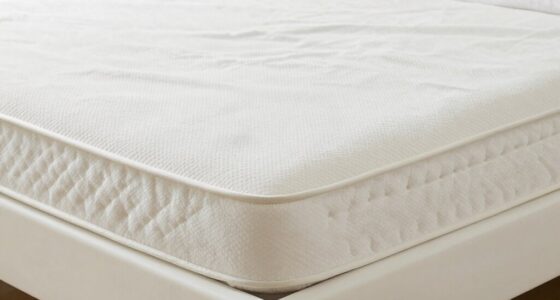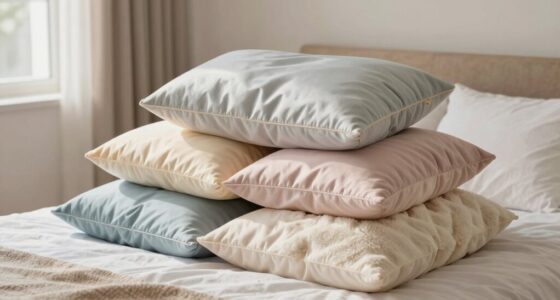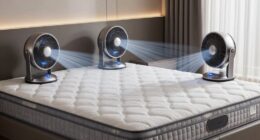
A mattress topper is designed to add softness and support, making your bed more comfortable, while a protector acts as a barrier against dust mites, allergens, spills, and pests, helping your mattress last longer and stay hygienic. A pad offers extra cushioning and temperature regulation, improving overall sleep comfort. Choosing the right one depends on whether you want more support, protection, or comfort. Keep going to discover detailed differences and how to pick the best for your needs.
Key Takeaways
- Toppers add softness and support, improving comfort and spinal alignment, while protectors primarily serve as waterproof barriers against allergens and pests.
- Protectors shield the mattress from spills, stains, dust mites, and bed bugs, acting as a protective barrier.
- Pads are lightweight, thin layers that enhance cushioning and add slight comfort without offering significant support or protection.
- Toppers mold to your body for pressure relief, whereas protectors focus on safeguarding the mattress and pads mainly improve comfort.
- Maintenance and replacement frequency vary; protectors and pads typically last 1-2 years, while toppers may need replacing due to wear or loss of support.
What Are Mattress Toppers, Protectors, and Pads?
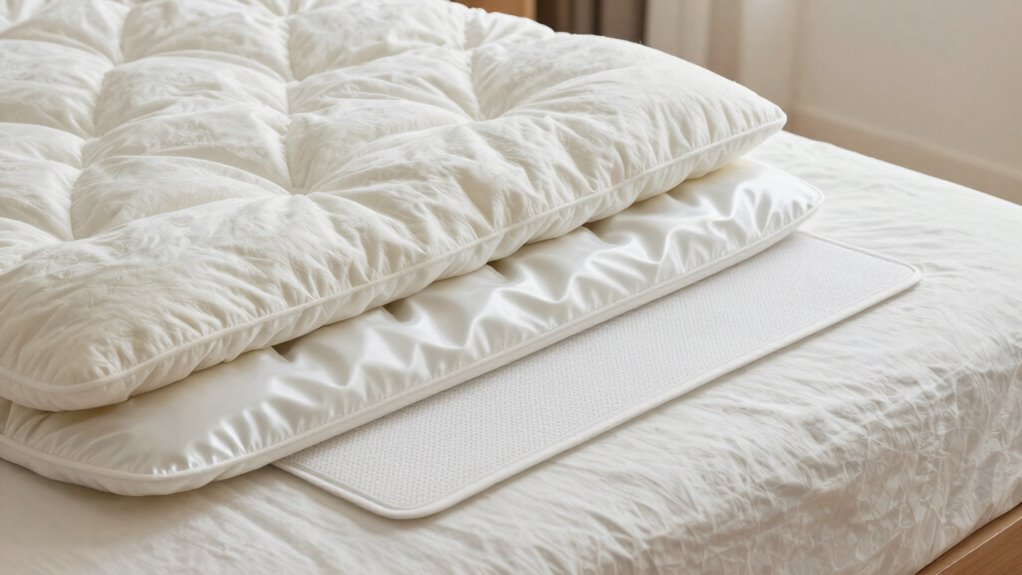
Mattress toppers, protectors, and pads are accessories designed to enhance your sleeping experience, but they serve different purposes. Mattress protectors are primarily used for bed bug prevention and allergy relief, creating a barrier that keeps pests and allergens out of your mattress. They’re often waterproof, helping to protect against spills and stains while reducing exposure to dust mites and pet dander. Protectors are also considered an important allergy relief accessory for many sleepers. Toppers, on the other hand, add softness and support, improving comfort without necessarily focusing on pest or allergen control. Pads are lighter, thinner accessories that provide extra cushioning or a slight barrier. While protectors are essential for allergy relief and bed bug prevention, toppers and pads mainly aim to boost comfort. Additionally, choosing the right sleep surface can significantly improve overall sleep quality and health benefits. Properly selecting these accessories can also influence the longevity of your mattress, helping it stay in better condition over time. Understanding these differences helps you choose the right accessory for your needs, especially when considering sleep comfort and health benefits.
How Do Mattress Toppers Enhance Comfort and Support?
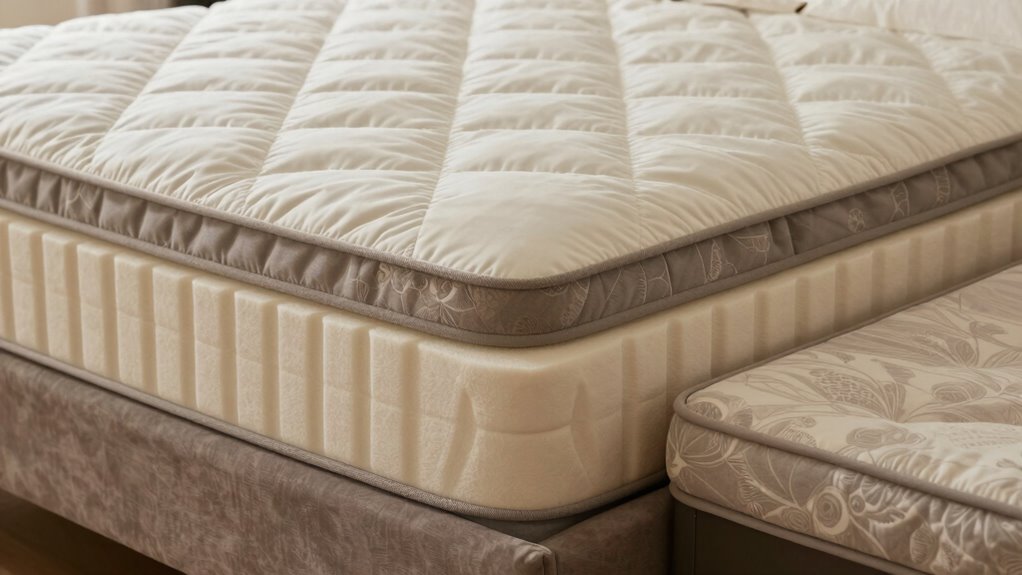
Mattress toppers can make your sleep more comfortable by offering better pressure relief and reducing pain points. They also help regulate temperature, so you stay cool or warm throughout the night. Plus, a good topper can extend the life of your mattress by protecting it from wear and tear. Additionally, choosing the right sleeping surface can improve overall comfort and support.
Enhanced Pressure Relief
When you add a mattress topper, it actively molds to your body’s curves, providing targeted cushioning that relieves pressure points. This improved pressure distribution minimizes stress on sensitive areas like hips and shoulders, helping you wake up less achy. By cushioning these spots, the topper supports better spinal alignment, reducing the risk of aches caused by sagging or uneven surfaces. As a result, your body remains in a healthier position throughout the night, promoting restful sleep. The added layer adapts to your movements, maintaining consistent support and pressure relief. Whether you prefer memory foam, latex, or other materials, a mattress topper enhances comfort by evenly distributing weight and supporting your spine’s natural curves. Understanding your sleep position and body type can help you choose the most effective topper for optimal pressure relief and support. Additionally, selecting the right material can significantly influence how well the topper conforms to your body and maintains support throughout the night. This leads to a more restful, pain-free sleep experience.
Improved Temperature Regulation
Adding a mattress topper can considerably improve temperature regulation by helping you stay comfortable throughout the night. It acts as a barrier, preventing heat buildup and promoting better airflow. This enhances your sleep comfort, especially if you tend to overheat or feel cold easily. A topper made from breathable materials like gel-infused memory foam or natural latex can wick away moisture and regulate temperature more effectively. Incorporating aroma diffusers into your sleep environment can further promote relaxation and improve overall sleep quality. Using microplastics in dust as part of your awareness can also help you understand environmental factors that impact indoor air quality and comfort. Being mindful of cycling gear maintenance can similarly influence your overall comfort and safety during rides, just as temperature regulation impacts sleep quality. Recognizing the importance of proper ventilation can also enhance airflow and help maintain a consistent sleep environment, so you wake up refreshed and ready. Improved temperature regulation guarantees you stay comfortable, no matter the season.
Increased Mattress Longevity
A well-chosen mattress topper not only boosts comfort but also helps safeguard your mattress from wear and tear over time. It acts as an extra layer that absorbs daily pressure, reducing the risk of sagging and mattress damage. Plus, it can aid in bed bug prevention by creating a barrier that makes it harder for pests to reach your mattress. If you’re prone to allergies, a quality topper can mitigate symptoms by blocking dust mites and allergens. This added protection extends your mattress’s lifespan, saving you money and effort on replacements. By maintaining the integrity of your mattress, a topper ensures you get consistent support and comfort for years to come, making it a smart investment for long-term mattress health. Additionally, understanding the differences between toppers, protectors, and pads can help you choose the best option for your needs Free Floating. Incorporating a mattress protector can further enhance the longevity and hygiene of your sleep setup by providing an extra layer of defense against spills and stains. Regularly rotating your topper can also help distribute wear evenly, further preserving mattress quality.
What Are Mattress Protectors For? Protecting Your Bed and Health
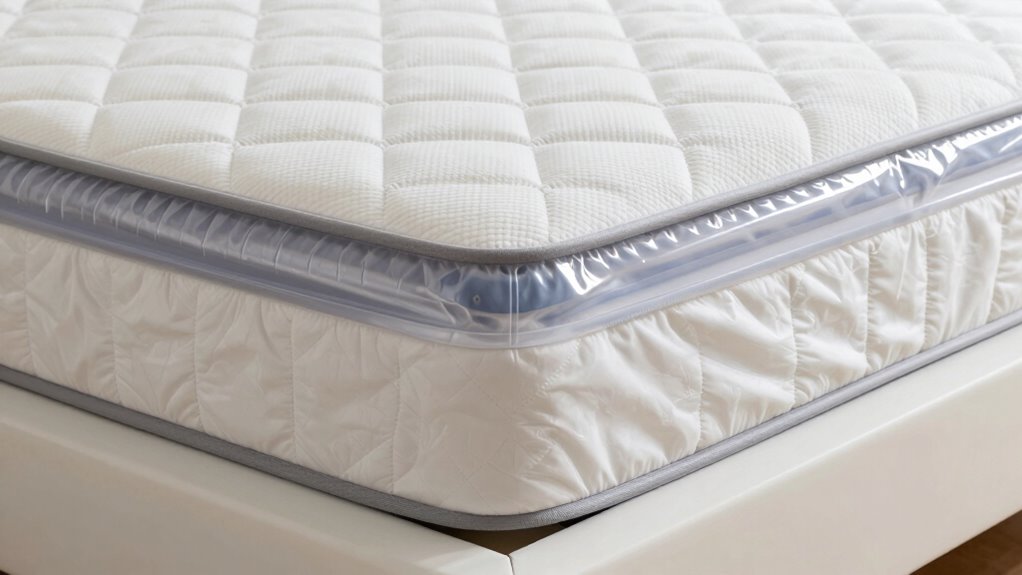
Ever wondered why mattress protectors are essential? They do more than just keep your bed clean. Protectors help prevent bed bugs from settling into your mattress, saving you from itchy bites and difficult infestations. They also reduce allergens like dust mites, mold, and pet dander that can trigger allergies or asthma. Using a mattress protector can improve your sleep quality and extend your mattress’s lifespan. Plus, they’re easy to clean and maintain, offering a simple way to safeguard your health and bedding investments. Incorporating bedroom essentials like mattress protectors can also enhance your overall sleep environment. Understanding indoor environment factors such as humidity and airflow can further improve your sleep comfort and protect your bedding. Additionally, selecting the right mattress protector can optimize its protective benefits and durability. Maintaining proper air quality in your bedroom can also help prevent mold growth and keep your sleeping space healthier. Regularly monitoring indoor air quality can help you identify and address potential issues before they impact your health.
When Are Mattress Pads the Best Choice? Improving Comfort and Functionality
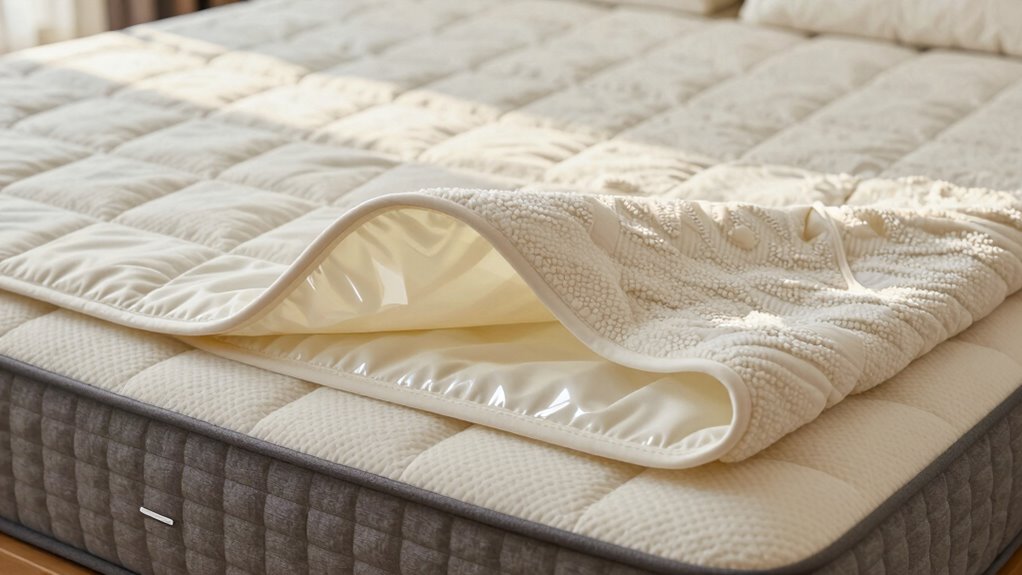
Mattress pads are your go-to option when you want to enhance comfort and customize your sleeping experience. They add a soft layer that improves sleep quality, making your bed more inviting. If you suffer from allergies, a mattress pad can provide allergen protection by creating a barrier against dust mites, pet dander, and other irritants. Choose a pad with cushioning to relieve pressure points or to adjust the firmness of your mattress. Mattress pads are ideal when you need a quick, affordable way to upgrade your bed without replacing the mattress itself. They’re especially helpful if you want to extend your mattress’s lifespan or add a layer of comfort without sacrificing breathability or support. When comfort and allergen protection matter most, a mattress pad is your best bet. Protective bedding can also help safeguard your mattress from spills and stains, further prolonging its life. Additionally, some mattress pads incorporate breathable fabrics to enhance airflow and maintain a cooler sleeping environment.
Which Materials Are Used in Mattress Toppers, Protectors, and Pads?
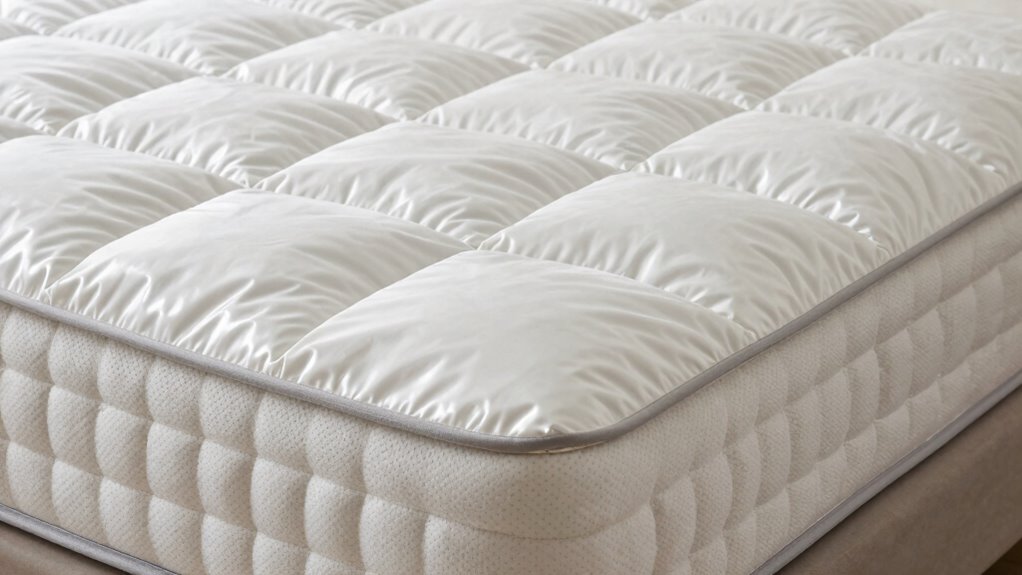
Mattress toppers, protectors, and pads are made from a variety of materials that enhance comfort and durability. You’ll find common fabrics like cotton, polyester, and bamboo, as well as waterproof layers such as vinyl or polyurethane. Breathable and cooling materials like gel-infused foam or Tencel help keep you comfortable throughout the night. Additionally, some products incorporate safe sleep materials that are gentle for babies and pets, ensuring a secure environment. Many of these materials also promote hypoallergenic properties, reducing allergens and dust mites for a healthier sleep. Using certified hypoallergenic fabrics can further improve sleep quality for allergy sufferers. Incorporating breathable and moisture-wicking fabrics can also help maintain a fresh sleeping surface, especially when combined with advanced fabric technologies that enhance moisture management.
Common Fabric Types
Many mattress toppers, protectors, and pads are crafted from a variety of fabrics designed to enhance comfort and durability. You’ll often find materials like memory foam, which molds to your body for support, or organic fabrics, valued for their natural, eco-friendly properties. Some common fabric types include:
- Cotton, soft and breathable for comfort
- Polyester blends, durable and easy to clean
- Bamboo fiber, eco-friendly and moisture-wicking
- Tencel, smooth and temperature-regulating
- Memory foam covers, providing contouring support
These fabrics are chosen to improve your sleep experience, whether you want plush softness, firm support, or eco-conscious options. By understanding these fabric types, you can pick the best topper, protector, or pad suited to your needs.
Waterproof Materials Used
Waterproof materials are key to protecting your mattress and prolonging its lifespan. They create effective allergen barriers, keeping dust mites, mold, and other irritants out of your bed. For bed bug prevention, these materials act as a physical shield, preventing bugs from burrowing into your mattress. Common waterproof materials include polyurethane and membrane fabrics like TPU (Thermoplastic Polyurethane), which are both durable and flexible. These materials are often infused into the fabric or used as a backing layer to block liquids and moisture. Not only do they safeguard against spills and sweat, but they also help maintain a cleaner sleeping environment. By choosing the right waterproof material, you ensure your mattress remains dry, fresh, and resistant to allergens and pests.
Breathable and Cooling Layers
Are you wondering which materials help keep your mattress topper or protector breathable and cool? Breathable fabrics are essential for maintaining airflow and reducing heat buildup. Many products incorporate cooling technology to enhance comfort throughout the night. Here are some common materials used:
- Cotton and bamboo, known for their natural breathability
- Tencel, which wicks moisture away efficiently
- Polyester blends with mesh or perforations for better airflow
- Gel-infused memory foam that disperses heat
- Phase-change fabrics that actively regulate temperature
These materials work together to keep you cool and dry, preventing overheating and night sweats. By choosing products with breathable fabrics and cooling technology, you ensure a more comfortable and restful sleep experience.
How Do You Choose the Right Product for Your Needs?
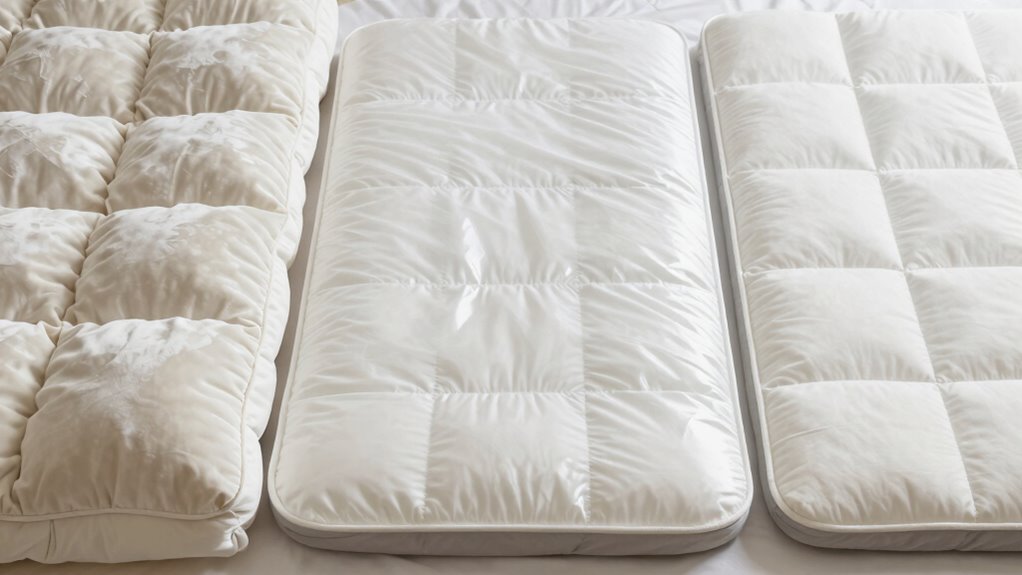
Choosing the right product depends on understanding your specific needs and how you’ll use it. Consider factors like material durability and price comparison to make an informed decision. For example, if you want something long-lasting, opt for materials with high durability. If budget is a concern, compare prices across brands to find the best value. Here’s a quick overview:
| Feature | Topper | Protector | Pad |
|---|---|---|---|
| Material Durability | Usually thicker, lasts longer | Often thinner, less durable | Varies, depends on material |
| Price Comparison | Can be pricier, better quality | Usually affordable | Generally budget-friendly |
| Usage Focus | Comfort and extra softness | Protection from spills | Basic coverage and support |
Use this table to match your needs with the product’s strengths.
What Factors Should You Consider When Buying Mattress Accessories?
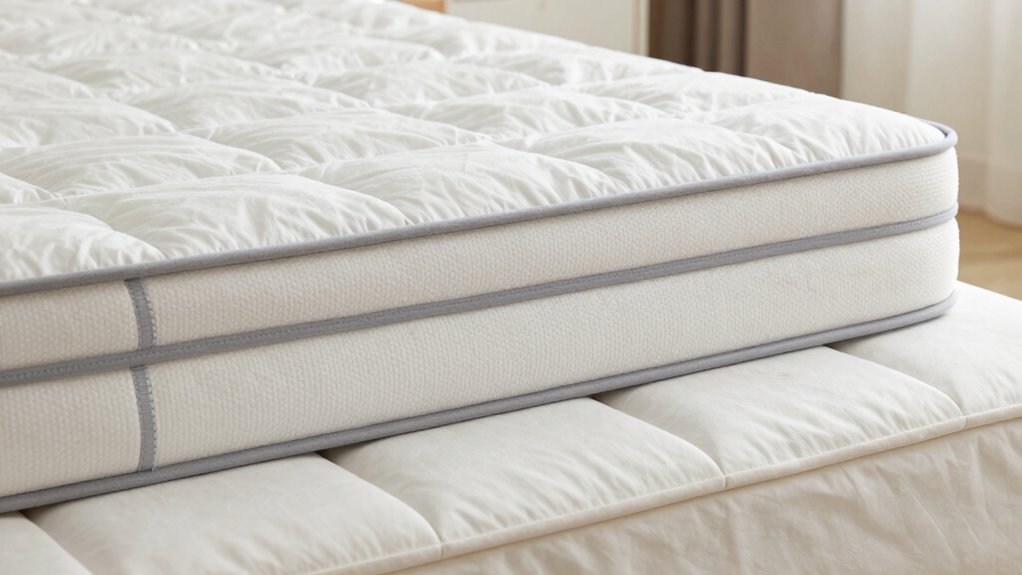
When purchasing mattress accessories, it’s crucial to take into account several key factors to make certain you select the appropriate products for your needs. First, consider bed hygiene; choose items that are easy to wash and resistant to dust mites. Allergy prevention is also essential, especially if you have sensitivities—look for hypoallergenic materials. Comfort and breathability ensure a better night’s sleep, so check fabric quality and ventilation features. Durability matters, so opt for products built to last. Finally, compatibility with your mattress size and your budget will influence your choice.
Choosing mattress accessories that are hygienic, hypoallergenic, breathable, durable, and fit your budget ensures a restful sleep.
- Material quality and hypoallergenic options
- Ease of cleaning and maintenance
- Breathability and ventilation
- Size compatibility with your mattress
- Cost and long-term value
How to Care for Your Mattress Toppers, Protectors, and Pads
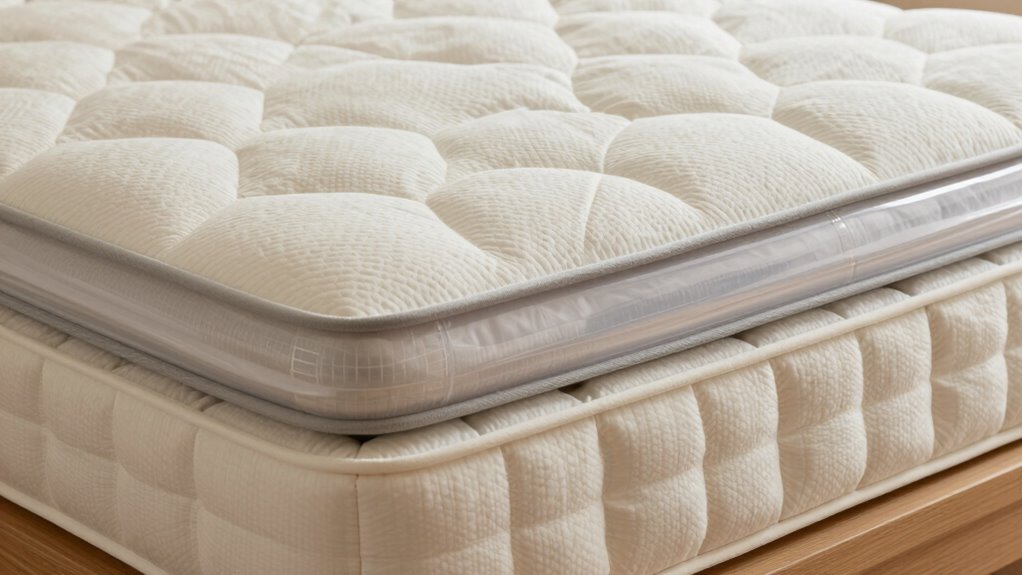
Proper maintenance of your mattress toppers, protectors, and pads helps extend their lifespan and keeps your sleep environment clean. Regularly washing your protectors and pads prevents dust, allergens, and bacteria from building up, supporting better sleep hygiene. Follow the manufacturer’s care instructions to avoid damaging the fabric or reducing effectiveness. When cleaning, use gentle detergents and avoid harsh chemicals that could harm the materials. To keep your bedroom decor looking fresh, consider air-drying or low-heat drying options. Additionally, rotate or flip your mattress accessories periodically to ensure even wear. Good upkeep not only preserves their appearance but also maintains a comfortable, hygienic sleep space, contributing to healthier sleep habits overall. Proper care ensures your bedding complements your bedroom decor and supports restful, rejuvenating sleep.
FAQs: Common Questions About Mattress Toppers, Protectors, and Pads
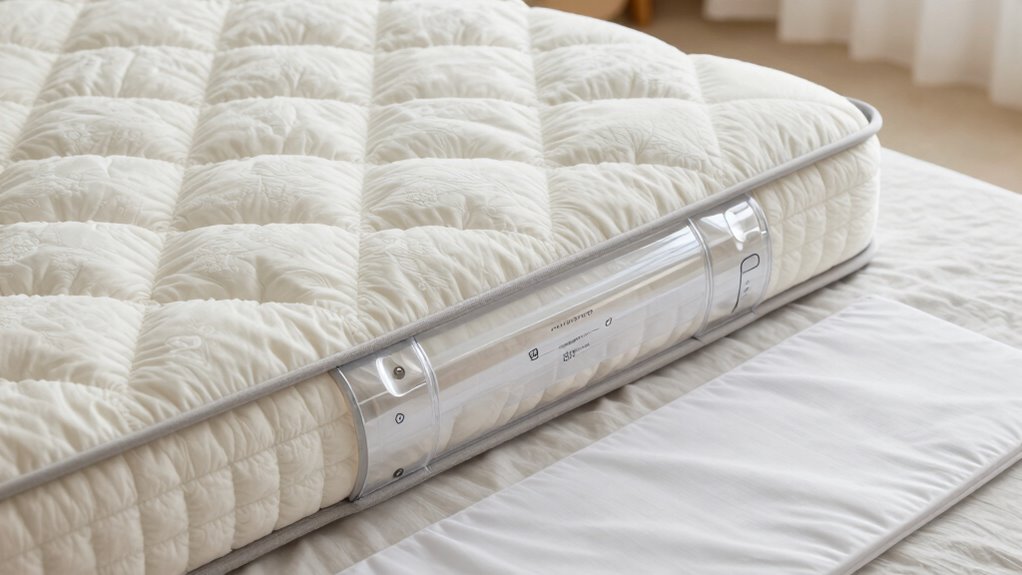
Are you wondering how to get the most out of your mattress toppers, protectors, and pads? These accessories can enhance your sleep hygiene and boost your bedroom decor. To clarify common questions:
- Do mattress protectors affect comfort? Not if you choose the right fit and material.
- Are toppers machine washable? Many are, making upkeep easier.
- Can pads improve sleep quality? Yes, they add a soft layer and regulate temperature.
- Will protectors prevent allergens? Absolutely, they guard against dust mites and allergens.
- How often should I replace these items? Typically every 1-2 years for ideal performance.
Knowing the differences helps you pick the right one for your needs, ensuring your bedroom remains inviting and your sleep quality stays high.
Frequently Asked Questions
Can Mattress Protectors Prevent Bed Bugs and Allergens?
Yes, mattress protectors can help prevent bed bugs and allergens. They create a barrier that discourages bed bug intrusion and trap allergens, reducing your exposure. Look for protectors specifically designed for bed bug prevention and allergen barriers. By using these, you actively shield your mattress from pests and allergens, promoting better sleep and healthier living. Regularly washing and inspecting your mattress protector guarantees ongoing protection and peace of mind.
Are Mattress Toppers Suitable for Adjustable Beds?
While some may see the idea as delicate, mattress toppers are generally compatible with adjustable beds, provided you choose a flexible, thin option. Mattress topper benefits include added comfort and support, enhancing your sleep experience. Just verify the topper’s material and design are suitable for adjustable bed compatibility, so it moves smoothly with your bed’s adjustments without shifting or bunching, giving you a seamless and cozy night’s rest.
How Often Should I Replace My Mattress Pad?
You should replace your mattress pad every 6 to 12 months to maintain proper mattress maintenance and bedding hygiene. Over time, it can accumulate dust, sweat, and allergens, reducing comfort and potentially affecting health. Regular replacement ensures you’re sleeping on a clean surface, supports good hygiene, and prolongs your mattress’s lifespan. Keep an eye on wear and tear, and swap it out sooner if it becomes stained, torn, or no longer fits properly.
Do All Mattress Protectors Preserve Mattress Warranties?
Ever wonder if your mattress protector impacts your warranty? Not all protectors preserve your mattress warranty, as some have limitations. You need to verify if your protector meets the manufacturer’s guidelines, because improper use could void your warranty. While protectors help keep your mattress clean, be aware of their limitations. Always read the fine print to ensure your protector won’t jeopardize your mattress’s coverage when issues arise.
Are Waterproof Mattress Protectors Breathable?
Yes, waterproof mattress protectors are often breathable, but breathability concerns depend on the materials used. Many protectors feature moisture permeability technology that allows air to flow while blocking liquids, reducing heat buildup and maintaining comfort. Look for protectors labeled as breathable or with specialized fabrics designed to improve airflow. This way, you get effective waterproof protection without sacrificing comfort, keeping you cool and dry throughout the night.
Conclusion
Choosing the right mattress topper, protector, or pad can considerably improve your sleep quality and extend your mattress’s lifespan. Did you know that a good mattress protector can reduce allergy symptoms for up to 30% of users? By understanding their differences and selecting the right one, you’ll enjoy better comfort, protection, and peace of mind every night. Investing in the right accessory truly makes a noticeable difference in your overall sleep experience.