Balance boards at a standing desk can be truly helpful if used correctly. They promote better posture, strengthen your core, and keep you moving during long work hours, which can reduce discomfort and improve focus. However, they come with risks like falls or discomfort if misused. To get the most benefits, choose the right board and start gradually. Keep exploring to discover how to use them safely and effectively.
Key Takeaways
- Balance boards promote core engagement, improve posture, and reduce discomfort during prolonged standing at work.
- Scientific evidence suggests they may enhance focus, alertness, and overall workstation ergonomics.
- Risks include falls or strains; proper setup, gradual use, and caution are essential for safety.
- They encourage micro-movements, increasing circulation and reducing sedentary health risks over time.
- Effectiveness varies; many users find benefits outweigh distractions, but individual suitability and mindful integration are key.
What Are Balance Boards and How Do They Work at a Standing Desk?
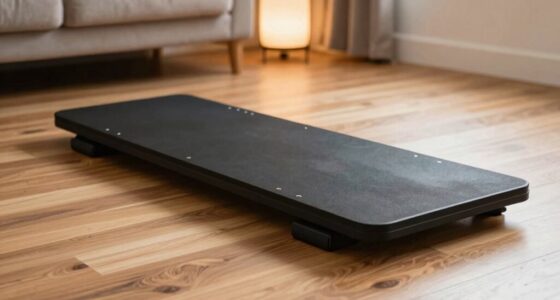
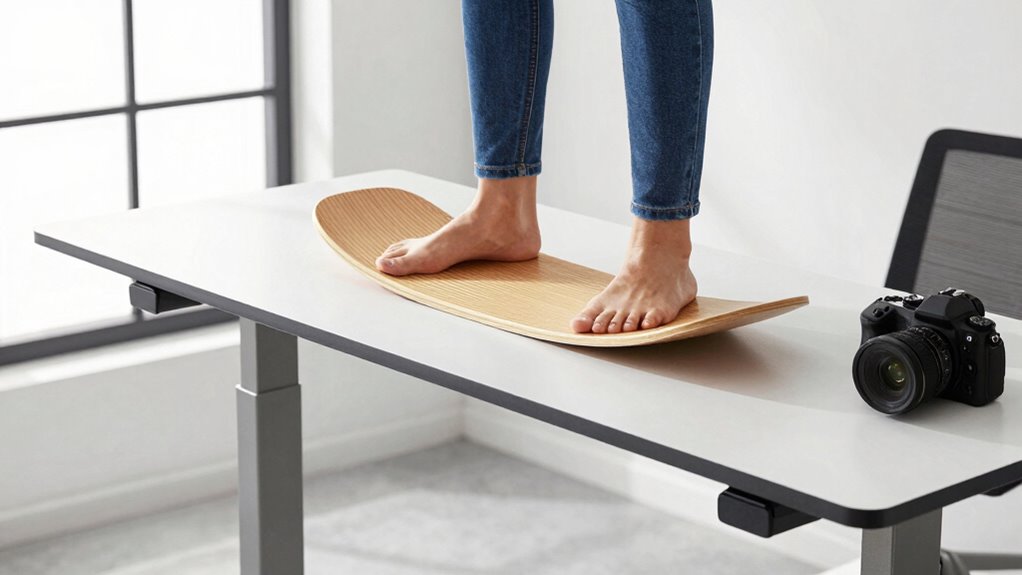
Have you ever wondered how balance boards enhance your standing desk experience? Balance boards are simple yet effective tools that improve your posture and stability. They work through balance board mechanics, which involve a cushioned or rounded base that tilts and moves as you shift your weight. This movement engages core muscles and encourages active standing. The ergonomic benefits include reducing strain on your lower back and legs by promoting better alignment. When you stand on a balance board, you naturally adjust your posture, preventing stiffness and discomfort. The mechanics also challenge your stability, making your standing time more dynamic and less monotonous. Incorporating a balance board can also boost active ergonomics awareness of active ergonomics, ultimately fostering better ergonomics and healthier standing habits. Additionally, understanding the importance of core engagement can maximize the benefits of using a balance board. Regular use can also help prevent postural issues associated with prolonged standing.
What Are the Benefits of Using a Balance Board While Standing?
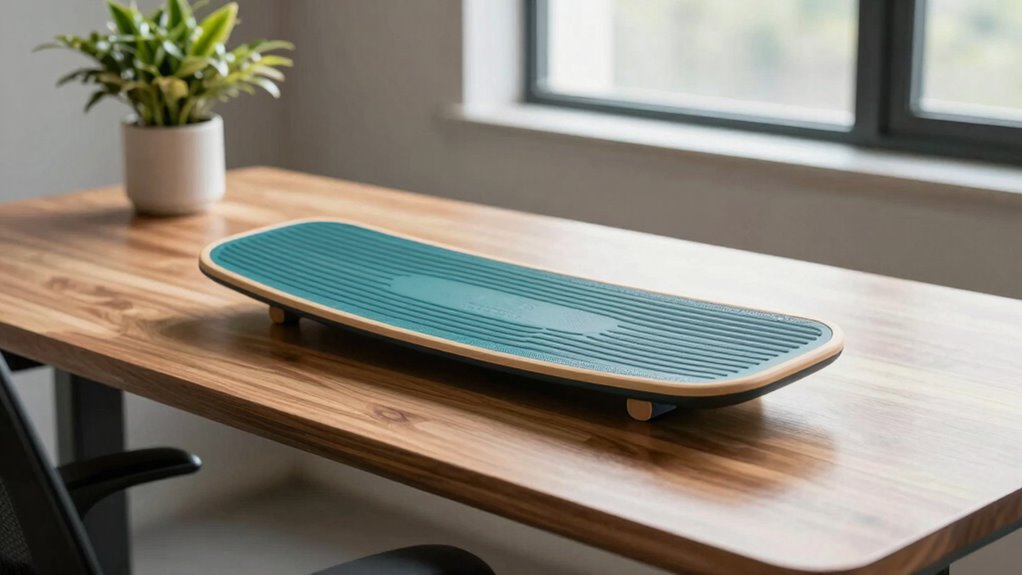
Curious about how a balance board can boost your standing desk experience? Using one offers several ergonomic benefits that can enhance your overall comfort. By engaging your core and leg muscles, a balance board encourages active standing, reducing fatigue and stiffness. This constant movement helps improve your posture over time, preventing slouching and promoting a more aligned spine. The subtle shifts you make while balancing can also alleviate pressure on your lower back and hips. Additionally, incorporating a balance board can increase circulation, keeping you more alert and energized throughout your workday. Proper posture is essential for long-term spinal health and comfort. Moreover, the dynamic motion involved in balancing can stimulate body awareness, helping you to maintain better posture even outside of work hours. Regular use of a balance board can also contribute to muscle stability, which is vital for overall functional fitness. Engaging in this type of activity can also support joint health by promoting natural movement patterns. Furthermore, the active engagement required can boost mindfulness and focus during your work sessions. Overall, it transforms a static standing position into a dynamic one, supporting better posture and reducing discomfort, making your standing desk more effective and enjoyable.
What Are the Risks and Drawbacks of Using Balance Boards?
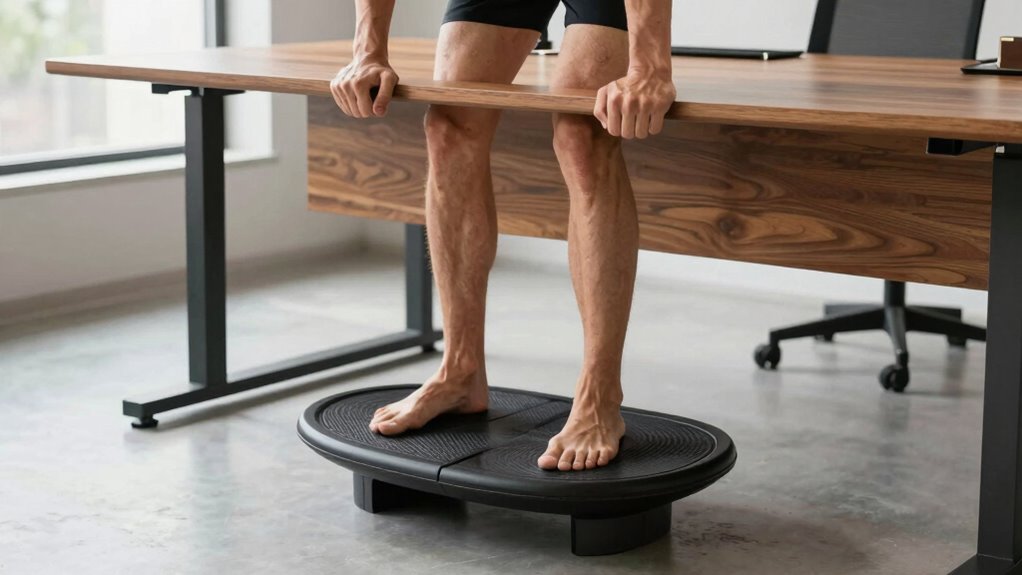
While balance boards can enhance your standing desk experience, they also come with potential risks and drawbacks. One concern is ergonomic considerations; improper positioning can lead to strain or discomfort. Additionally, balance board upkeep is crucial to ensure stability and safety, but neglecting it can cause accidents. You may also experience falls or ankle sprains if you’re not cautious, especially during initial use. To minimize these risks, start slowly and pay attention to your body’s signals. Regularly check the board’s surface and inflation levels if applicable to ensure safety. Remember, a balance board isn’t a one-size-fits-all solution. Here’s a quick overview:
| Risk | Consideration | Prevention |
|---|---|---|
| Falls or Sprains | Proper ergonomic setup | Use on non-slip surfaces |
| Strain or Discomfort | Correct posture | Adjust height and position |
| Balance board maintenance | Regular checks | Clean and inspect regularly |
Additionally, understanding core engagement can help improve stability and reduce the risk of falls when using a balance board.
Does Scientific Research Support Balance Boards for Core Strength and Focus?
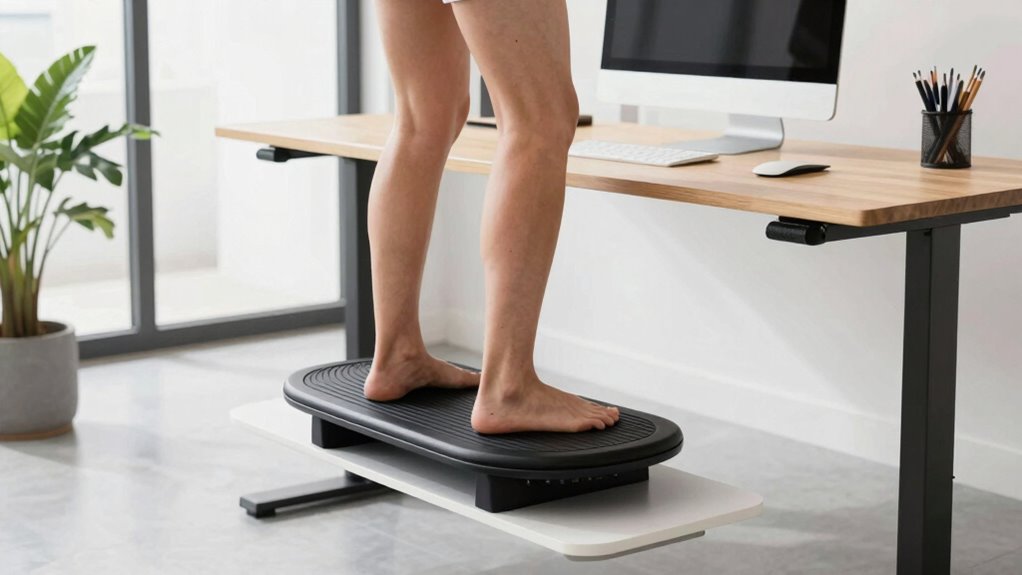
Research suggests that using balance boards can improve core strength over time, but results vary depending on how consistently you use them. Some studies also indicate that balancing on a board may help sharpen focus during work tasks. Additionally, incorporating these products into a luxurious workspace can enhance overall well-being and productivity luxury lifestyle products. However, more high-quality research is needed to confirm these benefits definitively.
Scientific Evidence Overview
Scientific studies on balance boards at standing desks provide mixed results, but they suggest potential benefits for core strength and focus. Research indicates that the ergonomic design of balance boards can promote better posture, reducing discomfort during long periods of standing. Some studies show that users report higher satisfaction when incorporating balance boards, feeling more engaged and alert. However, evidence is limited regarding significant improvements in core muscle strength or productivity. While certain experiments highlight short-term gains in stability and attentiveness, others find no notable difference compared to standing without a balance aid. Overall, the scientific evidence remains inconclusive but points to possible ergonomic benefits and increased user satisfaction. More rigorous research is needed to firmly establish the long-term effects of balance boards on core strength and focus.
Impact on Focus
The evidence on whether balance boards at standing desks enhance focus is mixed but somewhat promising. Using a balance board encourages you to maintain better ergonomic alignment and improves posture, which can reduce discomfort and distractions. When your body is properly aligned, you’re less likely to experience fatigue or strain that hampers concentration. Some studies suggest that subtle movements from balancing stimulate your brain, increasing alertness and engagement. Additionally, incorporating dynamic movement into your routine can help break up sedentary periods and boost mental clarity. While research isn’t definitive, many users report feeling more focused after incorporating balance boards into their routine. Furthermore, understanding the contrast ratio of your setup can influence how visually comfortable and engaging your work environment feels. Ultimately, the combination of improved posture and active engagement may support sustained attention, but individual results vary. Scientific support remains limited, yet the potential benefits for focus and ergonomic alignment are worth considering.
How Do You Choose the Best Balance Board for Your Standing Desk?
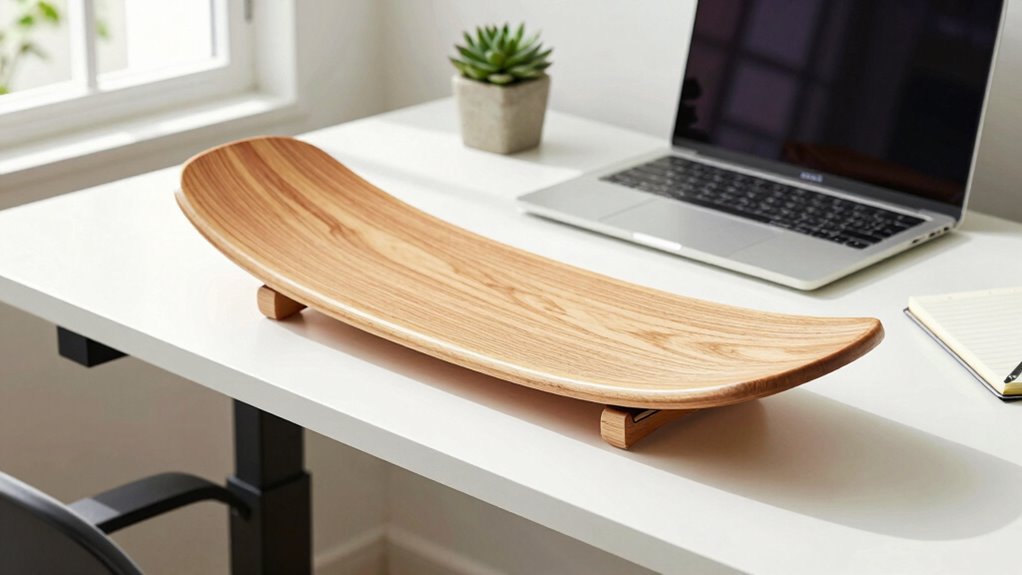
Choosing the right balance board for your standing desk involves considering several key factors to guarantee stability, comfort, and durability. First, assess the ergonomic benefits it offers; look for designs that promote proper posture and reduce strain. Stability is essential—choose a board with a non-slip surface and secure base to prevent accidents. Comfort matters too, so opt for a textured surface or padding if needed. Aesthetic appeal might seem secondary, but selecting a style that matches your workspace can boost motivation and consistency. Consider the size and material, ensuring it fits comfortably under your desk and is built to last. Additionally, selecting a board with anti-slip features can further enhance safety during use. Incorporating sustainable materials into your choice can also reduce environmental impact, aligning with eco-friendly textile care principles. When shopping, check for product reviews to gauge user satisfaction and reliability. Ultimately, a well-chosen balance board enhances your standing experience without sacrificing style or safety.
How Can You Use Balance Boards Safely and Effectively at Work?
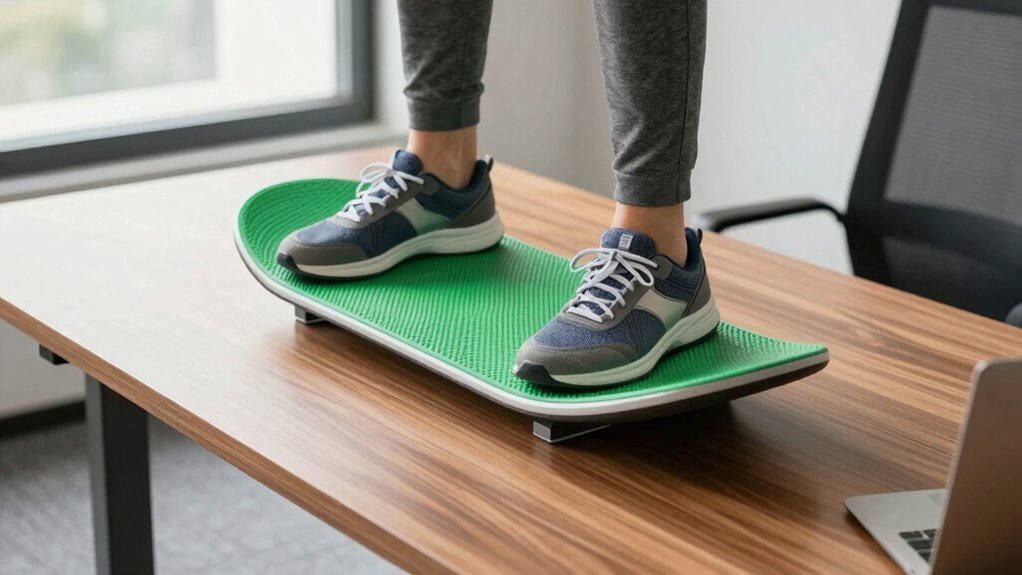
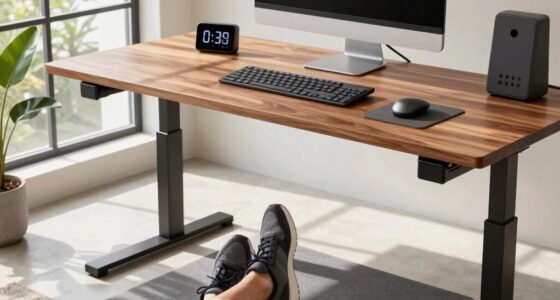
To use balance boards safely and effectively at work, you need to start by establishing proper posture and gradually increasing your time on the board. Focus on ergonomic considerations, such as maintaining a neutral spine, relaxed shoulders, and feet shoulder-width apart. Keep your core engaged to improve stability and prevent strain. Follow safety tips like beginning with short sessions, using a non-slip surface, and ensuring your workspace is clear of obstacles. Adjust the height of your standing desk if needed to promote comfort and reduce fatigue. Listen to your body; if you experience pain or discomfort, stop and reassess your technique. Incorporating balance board use gradually into your routine can help you build strength and confidence while minimizing injury risk. Incorporating Free Floating principles can help you maintain a natural, balanced posture and adapt to various work environments. Additionally, understanding ergonomic principles can guide you in optimizing your setup for long-term comfort and safety. Proper material selection for your balance board can also enhance stability and longevity, making your practice safer and more effective.
Can Balance Boards Help Reduce Sedentary-Related Health Risks?
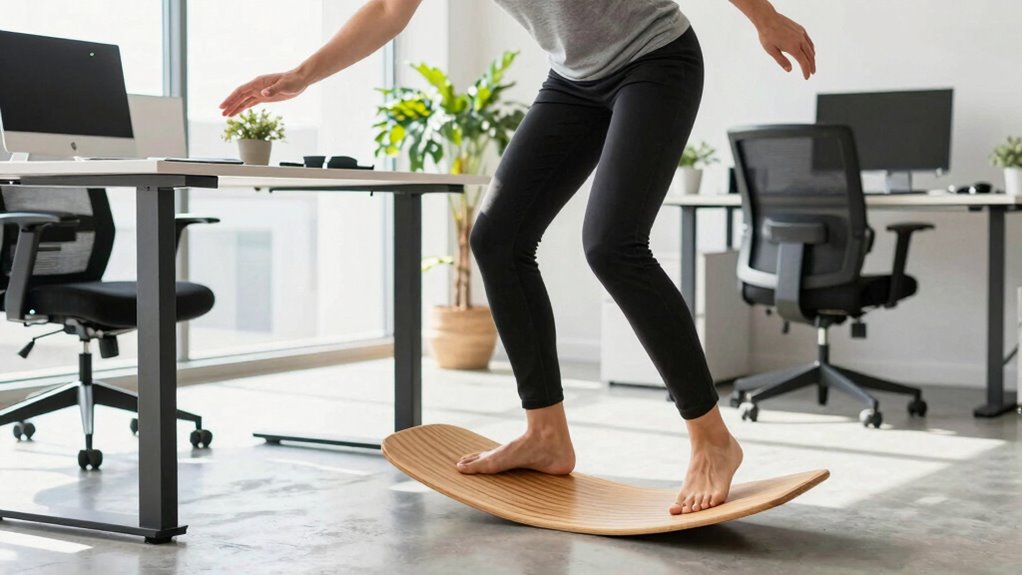
While sitting for prolonged periods considerably increases health risks like cardiovascular disease, obesity, and muscle degeneration, incorporating balance boards into your work routine offers a proactive way to counteract sedentariness. Balance boards promote movement, engaging core muscles, and encouraging micro-movements that break up long sitting sessions. Their ergonomic design supports better posture and reduces strain. When considering a balance board, think about cost considerations—some options are affordable, while others are premium. Here’s a quick comparison:
| Feature | Basic Model | Premium Model |
|---|---|---|
| Ergonomic design | Good support | Enhanced comfort |
| Cost considerations | Budget-friendly | Higher investment |
| Stability | Moderate | Superior stability |
| Portability | Lightweight | Slightly heavier |
Using a balance board can meaningfully reduce sedentary health risks when integrated thoughtfully. Incorporating micro-movements, ergonomic accessories, and active workspace strategies can further enhance your workspace’s health benefits. Additionally, understanding the importance of posture correction can help you maximize the benefits of your ergonomic setup. Regularly practicing posture awareness can also contribute to long-term spinal health and overall comfort, especially when combined with active movement techniques.
How Do Balance Boards Compare to Other Desk Accessories for Movement?

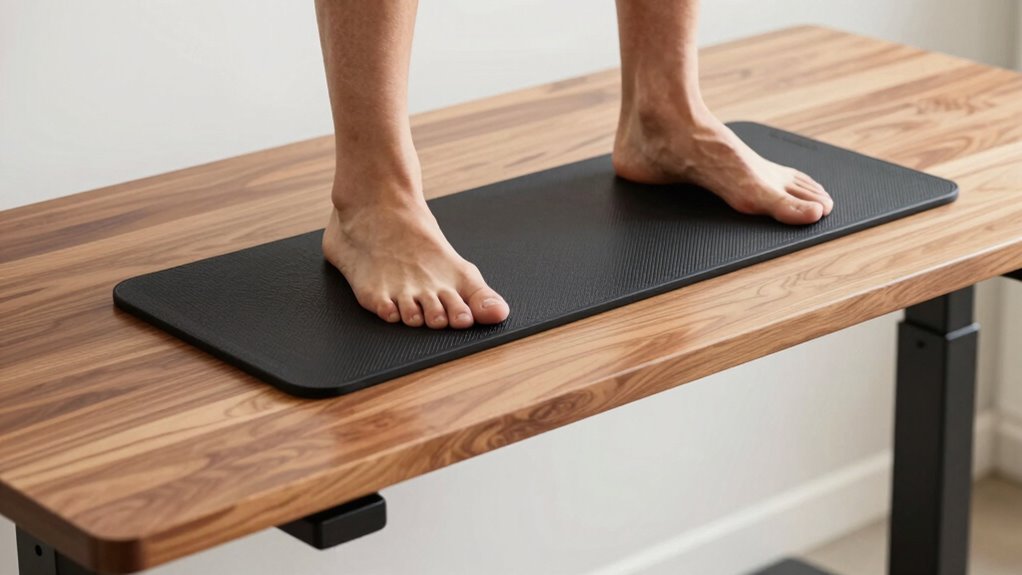
Balance boards offer a wide range of movement, engaging your core and improving stability, but they can also be more distracting than simpler accessories. Other options like foot rollers or anti-fatigue mats provide subtle movement without pulling your attention away from work. Considering both movement potential and distraction level helps you choose the best accessory for your needs.
Range of Movement
How much movement can a balance board offer compared to other desk accessories? Balance boards provide a dynamic range of movement that encourages subtle shifts and adjustments throughout your workday. This continuous motion promotes posture improvement by engaging core muscles and stabilizers, helping you stay alert and reduce stiffness. Unlike footrests or ergonomic cushions, which offer minimal movement, balance boards actively challenge your stability, leading to increased muscle activation. This added activity can help prevent sedentary-related discomfort and improve overall flexibility. While some desk accessories limit movement to static positions, balance boards foster constant micro-movements, making them a more effective tool for integrating movement into your routine. Overall, they deliver a broader scope of movement, supporting both posture and muscle engagement.
Distraction Potential
Are balance boards more distracting than other desk accessories when it comes to movement? It depends on your focus and workspace setup. Balance boards require constant engagement, which can divert your attention from tasks, impacting productivity if not managed well. Compared to ergonomic adjustments like monitor stands or footrests, balance boards are more active, increasing the potential for distraction. However, they also promote movement, which benefits your health and reduces stiffness. If you’re easily sidetracked, a balance board might hinder your work. But if you find minor distractions manageable, it could enhance your ergonomic setup without significant productivity loss. Ultimately, the distraction potential varies based on your work style and the environment’s flexibility. Balance boards can be helpful or disruptive, depending on how you incorporate them into your routine.
What Are Real Users Saying About Balance Boards? Are They Worth It?
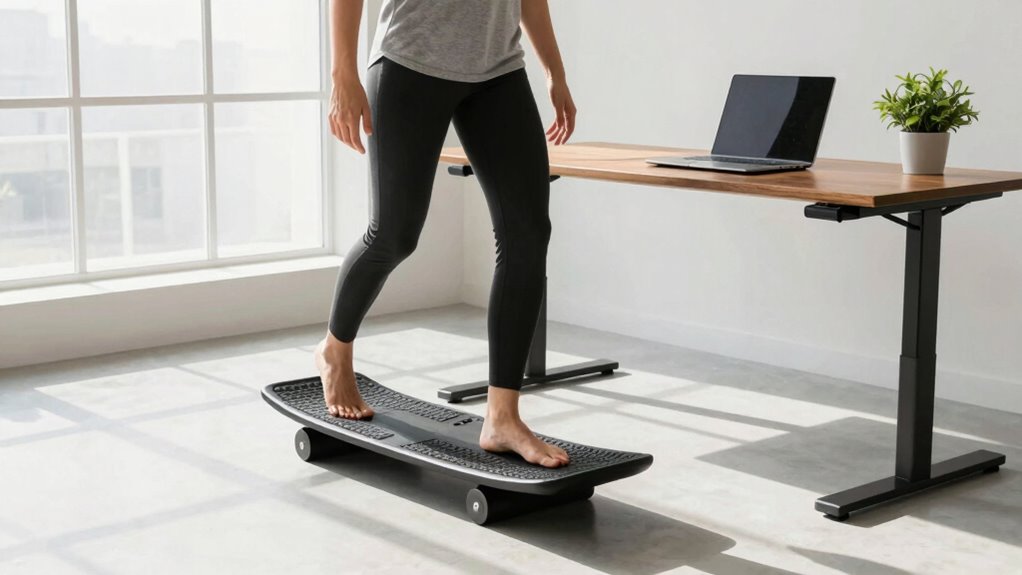
Many users find that incorporating a balance board at a standing desk considerably boosts their focus and movement throughout the day. Based on user feedback, most report improved engagement and less fatigue, especially during long work sessions. User experiences vary; some praise the added stability and core activation, while others mention initial discomfort or balance challenges. Overall, many feel that the benefits outweigh the drawbacks, making balance boards a worthwhile investment. If you’re considering one, pay attention to reviews highlighting durability and ease of use. Keep in mind, it may take time to adapt, but once you get the hang of it, you might find yourself more alert and energized. In the end, your personal experience will determine if a balance board is a valuable addition to your standing desk setup.
Final Thoughts: Should You Use a Balance Board at Your Standing Desk?
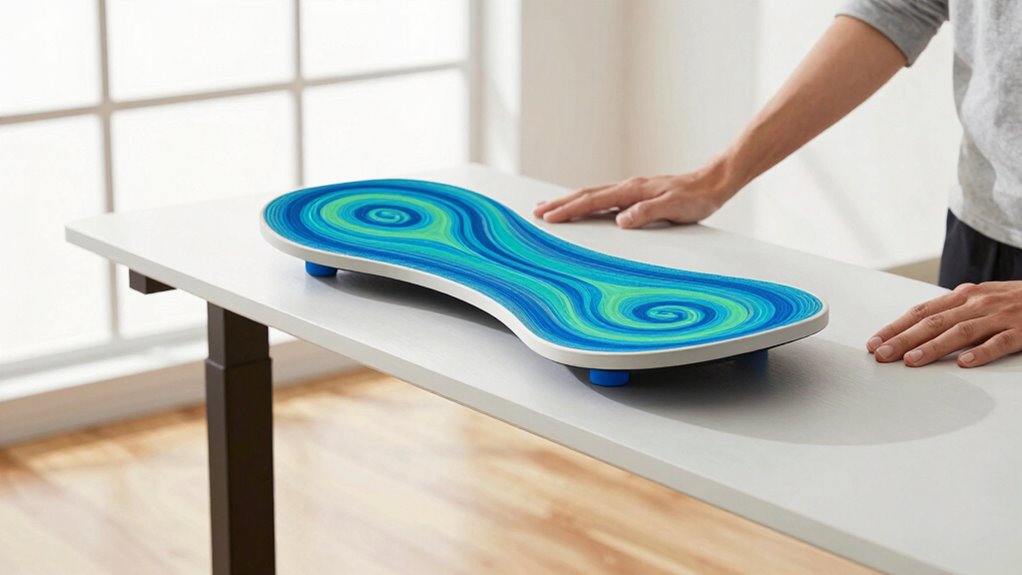
Using a balance board can boost your core strength, but it might also distract you from your work. Consider whether the benefits outweigh the potential interruptions during your day. Ultimately, it’s about finding the right balance for your comfort and productivity.
Enhances Core Engagement
Because balancing on a board requires constant adjustments, it actively engages your core muscles, helping to strengthen them over time. This increased muscle activation contributes to better posture and overall stability, which are key ergonomic benefits of using a balance board. As you maintain your balance, your abdominal, back, and oblique muscles work harder, promoting muscle endurance and reducing fatigue. Enhanced core engagement also supports your spine, decreasing the risk of discomfort during long work hours. By integrating a balance board into your standing desk routine, you’re not only improving your stability but also developing a stronger, more responsive core. This can lead to improved comfort and reduced strain, making your workstation more ergonomic and healthful over the long term.
Potential for Distraction
While a balance board offers numerous ergonomic benefits, it can also serve as a source of distraction if you’re not accustomed to it. You might find yourself experiencing multitasking distractions or focus interference, which can hinder productivity. To minimize this, consider these points:
- Limit initial use to short intervals to build coordination.
- Avoid using the board during tasks requiring high concentration.
- Gradually increase usage as you develop better balance.
- Recognize when the board’s distraction outweighs its benefits.
If you’re easily distracted or prone to losing focus, a balance board may hinder your workflow. While it can improve posture and core strength, the potential for multitasking distractions can interfere with your productivity. Use it thoughtfully to avoid unnecessary focus interference.
Frequently Asked Questions
How Much Time Should I Spend on a Balance Board Daily?
You should aim for about 10 to 15 minutes daily on a balance board. This helps you maximize ergonomic benefits and boosts injury prevention by strengthening stabilizer muscles and improving posture. Start gradually to avoid fatigue and discomfort. Consistent use can enhance your overall comfort at your standing desk, reducing strain and supporting long-term musculoskeletal health. Remember, moderation is key to getting the most benefit without overdoing it.
Can Balance Boards Help Improve Posture Long-Term?
Sure, balance boards can help improve your posture long-term—if you enjoy turning your workspace into a circus act. They promote ergonomic benefits by engaging core muscles and encouraging proper alignment, reducing your risk of injury. Over time, this can lead to better posture, less strain, and fewer aches. So, if you want to stand tall and avoid back pain, a balance board might just be your new best friend.
Are There Specific Exercises to Do on a Balance Board?
Yes, there are specific exercises you can do on a balance board to improve core engagement and ankle stability. Try standing on the board with your feet shoulder-width apart, gently shifting weight side to side or front to back. Incorporate squats or single-leg stands to challenge your stability. These exercises help strengthen your core muscles and ankle joints, making your posture more resilient and reducing injury risk.
Do Balance Boards Fit All Desk Heights and Setups?
Sure, balance boards aren’t one-size-fits-all. They often claim ergonomic compatibility but might not suit all desk heights or setups. Luckily, many models feature adjustable features, so you can tailor them to your workspace. Just remember, if your desk’s height isn’t versatile, a balance board might turn into a balancing act rather than a productivity boost. Check adjustable options first, and you’ll stay balanced—literally and figuratively.
How Do Balance Boards Affect Productivity Levels?
Using a balance board can boost your productivity by providing ergonomic benefits and enhancing focus. When you stay engaged and active, your energy levels remain higher, reducing fatigue. The subtle movements help improve posture and circulation, making it easier to concentrate on tasks. As a result, you might find yourself more alert and efficient throughout your workday, turning a simple addition into a powerful tool for better work performance.
Conclusion
Imagine feeling more energized and focused during your workday, just like Sarah did after adding a balance board to her desk. While it might take some getting used to, the potential benefits—better posture, increased movement, and reduced fatigue—are worth trying. If you’re ready to break free from static sitting and boost your well-being, a balance board could be a game-changer for your daily routine. Give it a shot—you might just love the difference it makes.