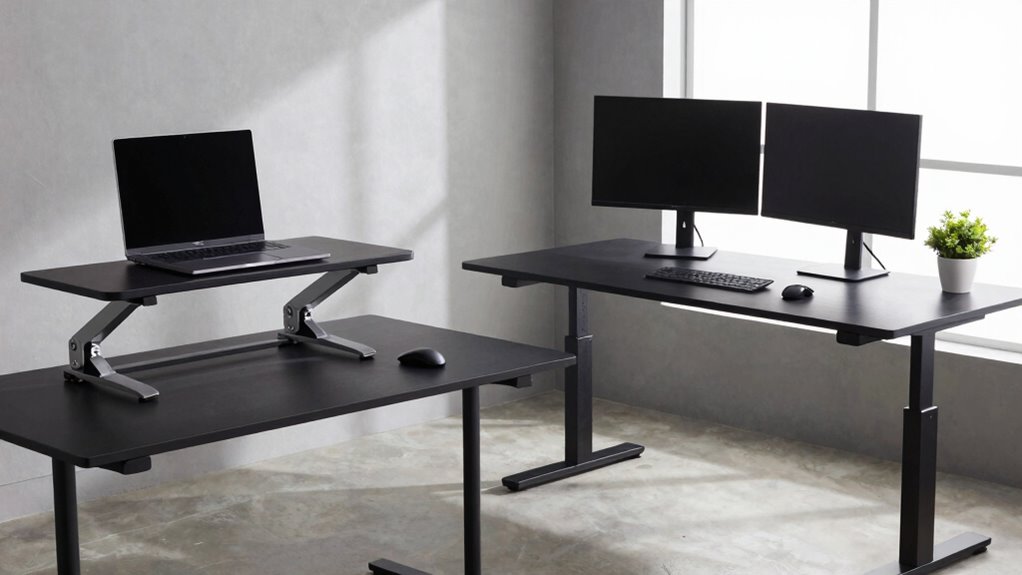
Sit-stand converters sit on your existing desk, offering quick, portable height adjustments, making them ideal for temporary or flexible setups. Full standing desks are standalone units that provide a more permanent, stable workspace with more surface area and precise height control. Converters are budget-friendly and easy to install, but standing desks often support long-term ergonomic benefits. To find the best fit for your work style and space, explore the details ahead.
Key Takeaways
- Sit-stand converters are portable, easy to install, and sit on existing desks, while full standing desks are larger, standalone, and require assembly.
- Converters offer quick, flexible height adjustments for short-term use; standing desks provide precise, long-term ergonomic positioning.
- Converters are more budget-friendly and suitable for temporary or dynamic work setups; standing desks involve higher costs and a dedicated workspace.
- Converters support workspace organization and promote movement; standing desks create a stable, permanent workstation for sustained standing.
- The choice depends on workspace size, budget, and how often you need to switch between sitting and standing.
What Are Sit-Stand Converters and Standing Desks?
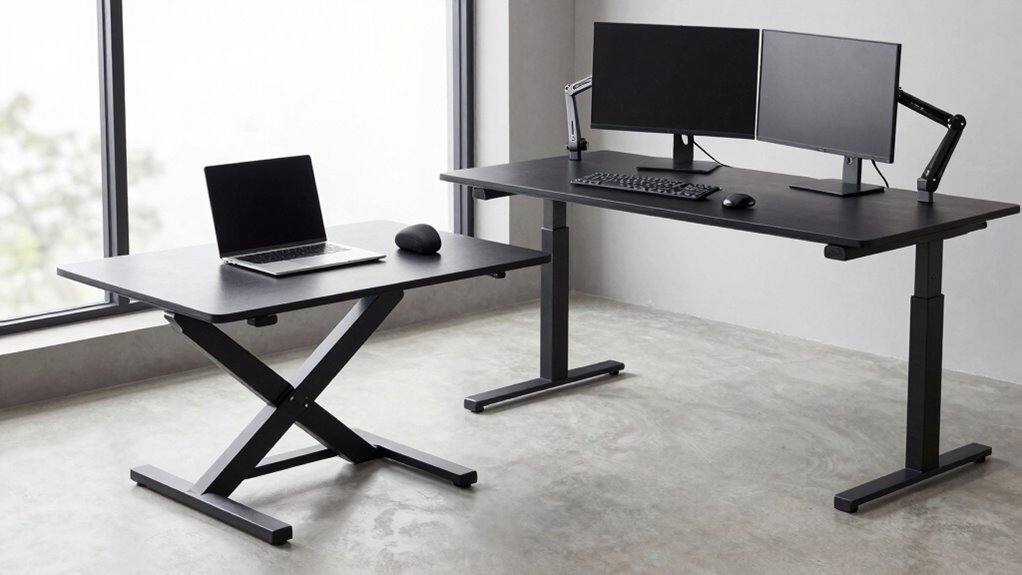
Sit-stand converters and standing desks are popular solutions designed to help you switch between sitting and standing throughout your workday. Sit-stand converters are portable accessories that sit on your existing desk, allowing you to elevate your keyboard, monitor, and workspace easily. Standing desks, on the other hand, are full-sized units that replace your traditional desk, providing a dedicated standing surface. Both options offer ergonomic benefits by promoting better posture, reducing strain, and encouraging movement. Additionally, they are space-efficient, especially sit-stand converters, as they don’t require extra room for a new desk. These solutions are ideal for creating a flexible workspace that adapts to your comfort needs without cluttering your environment. Exploring new content formats can help you discover innovative ways to incorporate these ergonomic options into your workspace.
How Are Sit-Stand Converters and Standing Desks Different in Design and Setup?

Sit-stand converters and standing desks differ mainly in their design and setup. You’ll find that converters are often more adjustable and portable, while full desks offer more stability but can be bulkier. Considering factors like ease of setup, cost, and size helps you decide which option fits your space and needs best. Additionally, understanding the sound healing science behind calming environments can inspire you to create a more comfortable and health-promoting workspace. For example, incorporating ergonomic features into your setup can further enhance comfort and reduce strain during long work hours. Being mindful of ergonomic principles ensures your workspace supports proper posture and minimizes discomfort, which is especially important when selecting the right home office equipment for your needs.
Adjustability and Placement Options
While both sit-stand converters and full standing desks offer adjustable height options, they differ substantially in design and setup. Sit-stand converters typically sit on top of your existing desk, providing limited placement flexibility but easy height adjustability. Full standing desks, on the other hand, are standalone units with more extensive placement options and customizable height ranges. Consider these key points:
- Height adjustability: Converters usually have simpler mechanisms, while standing desks offer more precise control.
- Placement flexibility: Standing desks can be positioned anywhere in your room, while converters depend on your existing workspace.
- Setup complexity: Converters are quick to set up; desks may require more assembly.
- Workspace integration: Desks provide more surface area, enhancing overall placement options.
- Ergonomic considerations: The design differences can also influence ergonomic comfort and long-term health benefits.
These differences impact how easily you can adapt your workspace to your needs.
Size and Portability Features
Because of their design differences, sit-stand converters are typically compact and lightweight, making them easy to move and store when not in use. Their portable design allows you to quickly switch between sitting and standing positions without much effort. You’ll find that most converters can fit on your existing desk, saving space and providing flexible storage options. Additionally, sit-stand converters often feature adjustable height settings, allowing for personalized comfort and ergonomic positioning. These features enhance ergonomic flexibility, making them suitable for various workspace setups. They also often incorporate easy installation, so you can set them up without specialized tools or professional assistance. Full standing desks, on the other hand, tend to be larger and heavier, often requiring dedicated space and more effort to move. This means they’re less portable but can offer a more permanent setup. If you need a flexible, space-saving solution that’s easy to store away, sit-stand converters are ideal. Conversely, standing desks suit those wanting a stable, long-term workstation without frequent repositioning. Moreover, some standing desks include electric height adjustment, which allows for smoother and more precise changes in position, though this can add to their size and weight. Additionally, desk stability is an important consideration, as larger standing desks are generally more stable for various tasks.
Setup Complexity and Cost
Sit-stand converters generally offer simpler setup processes compared to full standing desks. You can usually place them on your existing desk in minutes, making them a cost-effective and quick solution. Full standing desks often require more time and effort to assemble, with additional costs for tools or professional setup. Additionally, considering the home environment, it’s important to choose a setup that aligns with your space and pet-friendly needs. Consider these points: 1. Sit-stand converters are portable and easily adjustable, enhancing ergonomic benefits. 2. Standing desks often have more customization options for height and layout, but with increased complexity. 3. Converters typically cost less upfront, making them attractive for budget-conscious users. 4. Full desks may involve higher initial investment but can provide a more tailored and stable workspace. Moreover, understanding the setup complexity can help you make an informed decision based on your technical skills and available resources. Both options impact your ergonomic benefits, but converters excel in simplicity and affordability.
What Are the Benefits of Using a Sit-Stand Converter?

Using a sit-stand converter can improve your posture and increase comfort during long work hours. It encourages you to move more throughout the day, reducing stiffness and fatigue. Overall, it helps create a more active and ergonomic workspace. Incorporating environmental stress awareness can further optimize your workspace health. Additionally, being mindful of mental health benefits can enhance overall well-being and productivity. Paying attention to air quality can also support better concentration and physical health. Recognizing the importance of mind-body healing practices can further assist in managing stress and improving focus during work.
Enhances Posture and Comfort
Adjusting your workstation with a sit-stand converter can considerably improve your posture and comfort throughout the day. By enabling ergonomic benefits, it helps reduce strain on your neck, back, and shoulders. With workspace customization, you can easily find the ideal height for your tasks, promoting better alignment. Here are some key advantages:
- Improved spinal alignment, reducing discomfort
- Less fatigue from maintaining a static posture
- Increased comfort during long work sessions
- Enhanced ergonomic setup tailored to your needs
- Smart furniture options can further optimize your workspace for better organization and accessibility. Incorporating a sit-stand converter into your workspace supports grocery savings strategies by encouraging movement and reducing fatigue, ultimately boosting productivity. This flexibility encourages you to sit or stand as needed, fostering a more comfortable and healthier work environment. Overall, a sit-stand converter supports better posture and makes your workspace more adaptable to your unique ergonomic needs. Additionally, integrating ergonomic accessories can further enhance your comfort and workspace efficiency. Utilizing ergonomic principles in your setup can help prevent discomfort and improve overall well-being during work hours.
Promotes Movement and Activity
By allowing you to switch between sitting and standing throughout the day, a sit-stand converter encourages regular movement and reduces the tendency to stay static for long periods. This flexibility promotes ergonomic benefits by easing muscle strain and improving circulation. When you can easily adjust your workspace, it encourages more frequent activity, helping to break up long periods of inactivity. Workspace customization with a sit-stand converter means you can tailor your setup to fit your comfort and movement needs, making it easier to stay active. Additionally, integrating sustainable fabric technology into your workspace setup can help reduce environmental impact and promote eco-friendly choices. Understanding Feature Buddies can also guide you in selecting versatile and functional accessories for your workspace, enhancing overall comfort. As a result, you’ll experience less fatigue, better focus, and increased energy levels. Overall, these converters support a more dynamic work routine, contributing to improved health and productivity through consistent movement.
What Advantages Do Full Standing Desks Offer Over Converters?
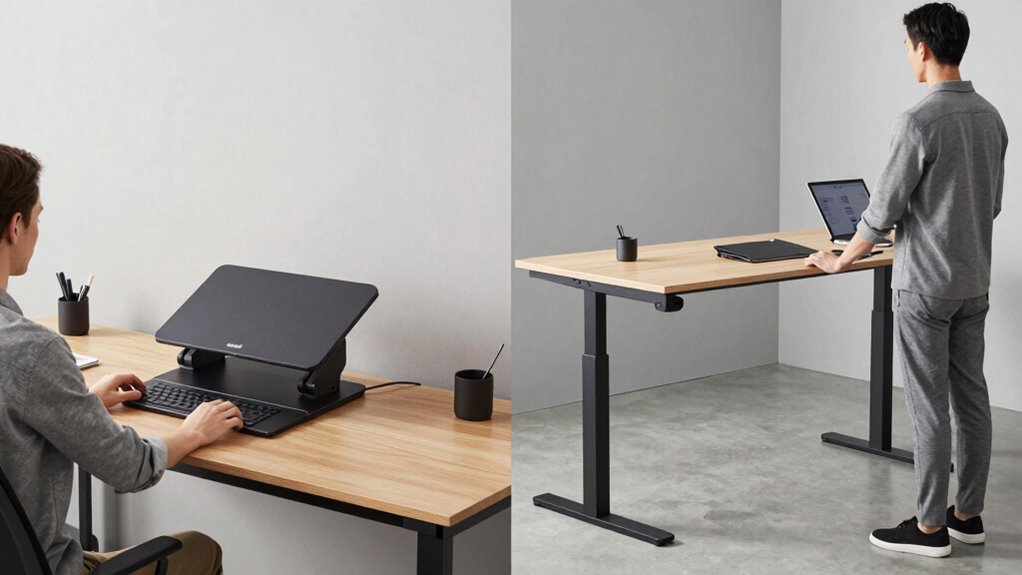
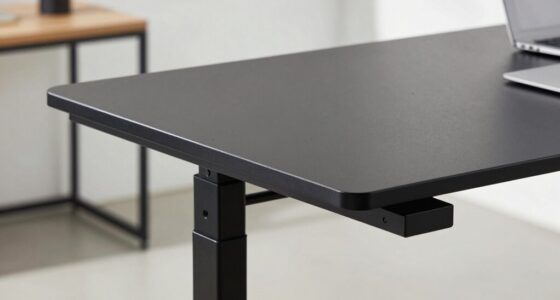
Full standing desks often provide a more seamless and stable workspace compared to sit-stand converters. They allow you to customize your workspace easily, creating a setup that fits your height and posture perfectly. This stability enhances productivity and comfort, reducing distractions caused by wobbling or shifting surfaces. Additionally, full desks often boast a sleek design that improves the aesthetic appeal of your workspace, making it feel more professional and inviting. Here are some key advantages:
- Superior workspace customization for ideal ergonomics
- Enhanced aesthetic appeal that complements your environment
- Greater stability for long work sessions
- Better integration with existing office furniture and accessories
Choosing a full standing desk helps you create a more organized, attractive, and functional workspace that encourages movement and focus. Full standing desks also support ergonomic health by promoting better posture and reducing strain during long hours.]
How Do Their Costs Compare?
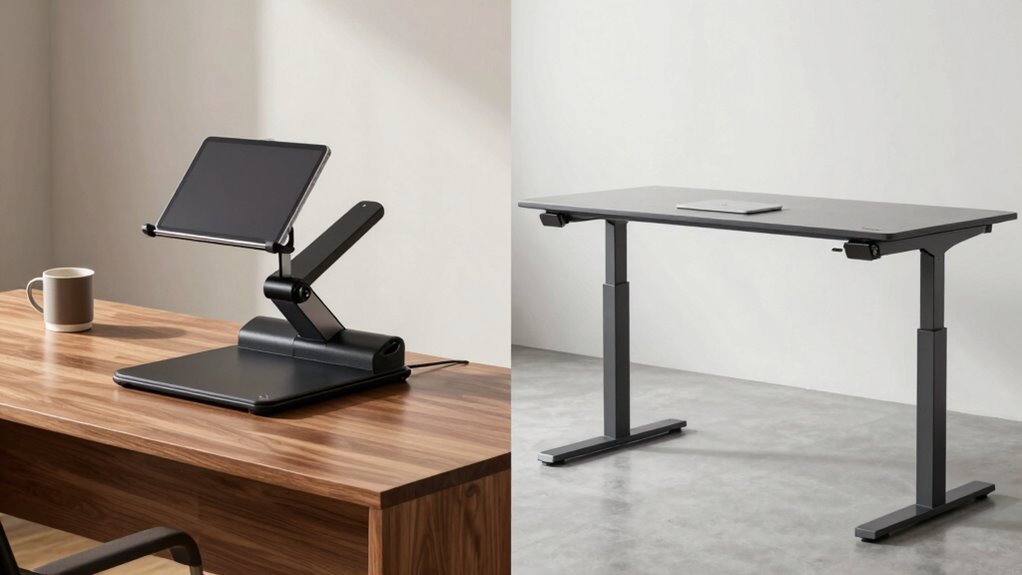
While full standing desks often deliver better stability and customization, they also typically come with a higher price tag than sit-stand converters. For your cost comparison, consider your budget options carefully. Sit-stand converters generally cost between $50 and $300, making them more affordable and flexible. In contrast, full standing desks usually range from $300 to over $1,000, offering more features but at a higher cost. Here’s a quick overview:
| Feature | Sit-Stand Converter | Full Standing Desk | Cost Range |
|---|---|---|---|
| Price | $50 – $300 | $300 – $1,200+ | Lower to higher budget |
| Portability | High | Moderate | Varies |
| Customization | Limited | Extensive | Higher cost |
| Stability | Moderate | Excellent | Higher cost |
| Setup and Movement | Easy | More effort | Varies |
This table helps you weigh affordability against features, guiding your budget options effectively.
Which Setup Is Easier to Install and Move?
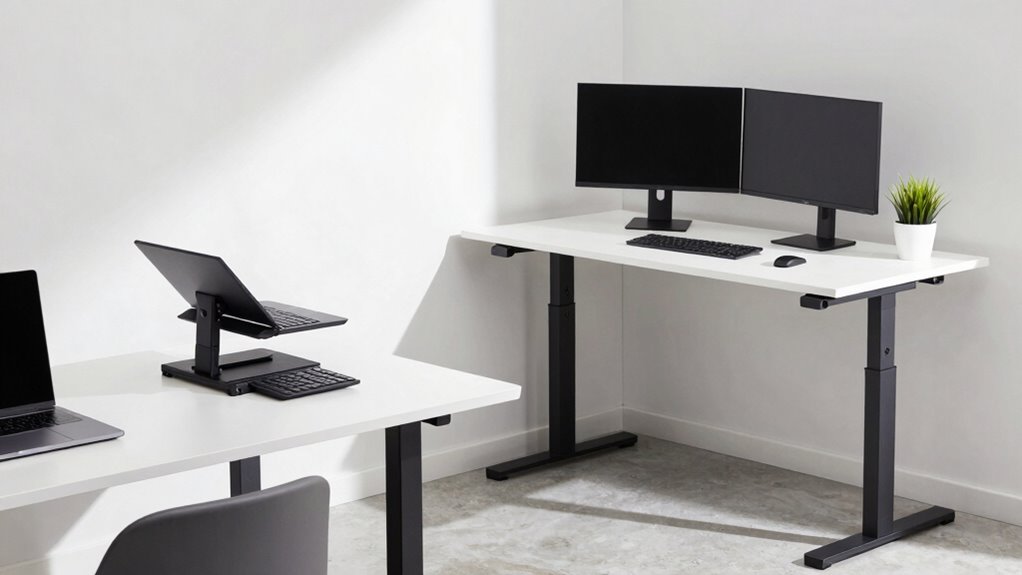
When it comes to installing and moving your workspace setup, sit-stand converters are generally easier to handle than full standing desks. They require less effort during installation and are more portable for frequent repositioning. Consider these points:
- Installation Ease: Converters often just sit on your existing desk, needing minimal setup, while standing desks may require assembly.
- Mobility: Converters are lightweight and easy to reposition, making them ideal if you switch workspaces often.
- Complexity: Full standing desks can involve complex assembly, whereas converters are usually ready to use right out of the box.
- Stability: Converters are stable once placed, but full desks may need additional adjustments for mobility and safety.
Which Option Supports Better Ergonomics and Comfort?
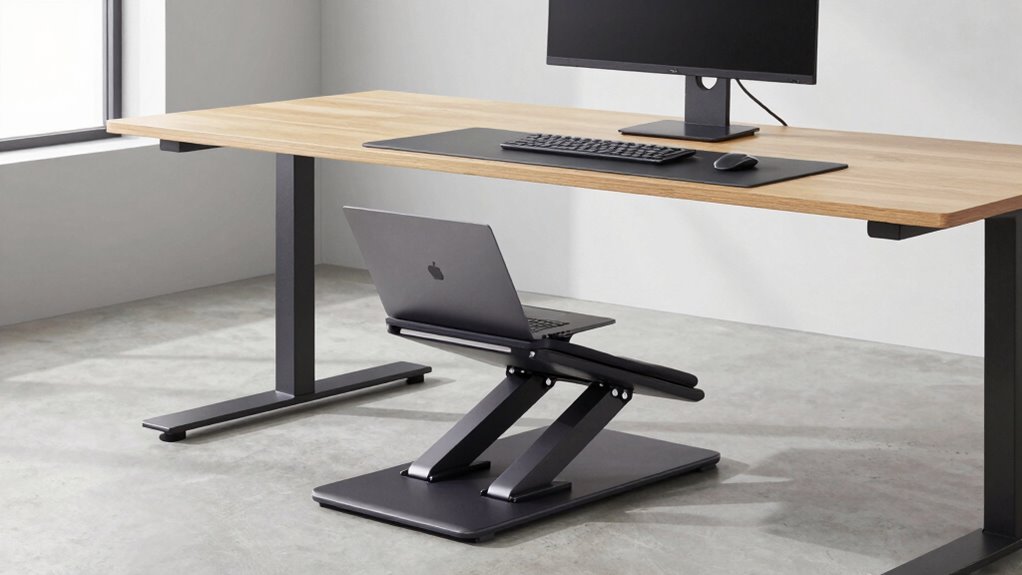
Choosing between sit-stand converters and full standing desks depends heavily on how well they support your ergonomic needs and comfort. Sit-stand converters offer adjustable height options that promote ergonomic positioning, allowing you to customize your workspace without overhauling your setup. They enable quick shifts between sitting and standing, reducing strain and maintaining comfort throughout the day. Full standing desks, on the other hand, provide greater workspace customization, giving you more flexibility to arrange your entire workspace for ideal ergonomics. They support better posture and reduce discomfort by allowing a more natural, upright stance. Ultimately, the right choice depends on your comfort preferences, workspace needs, and how important ergonomic positioning is to your daily productivity.
How Easy Is It to Switch Between Sitting and Standing?
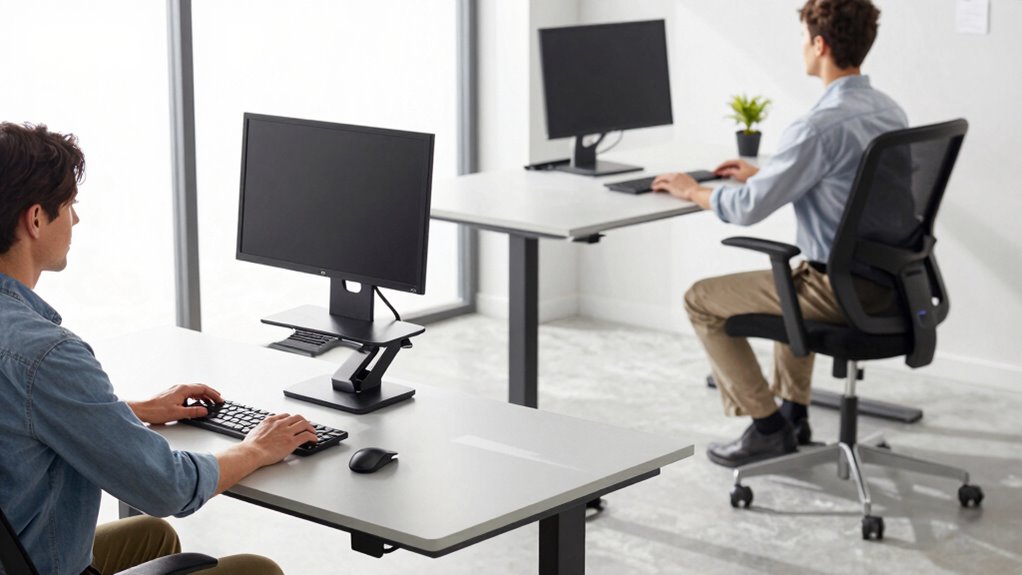
Switching between sitting and standing should be quick and effortless to keep you comfortable and maintain productivity throughout the day. With good desk ergonomics, changing positions becomes seamless, minimizing disruption. When considering solutions like sit-stand converters or full standing desks, think about these factors:
Effortless switching between sitting and standing maintains comfort and boosts productivity all day.
- Ease of adjustment—does it require minimal effort?
- Speed of shifting—can you switch positions smoothly?
- Workspace aesthetics—does it blend well with your environment?
- Stability—does the mechanism support steady movement without wobbling?
A smooth, simple transition helps you stay focused without sacrificing comfort or workspace aesthetics. Whether you choose a converter or a full desk, ease of switching ensures continuous productivity and better desk ergonomics, making your workspace more adaptable to your needs throughout the day.
Which Solution Fits Different Workstyles and Spaces?
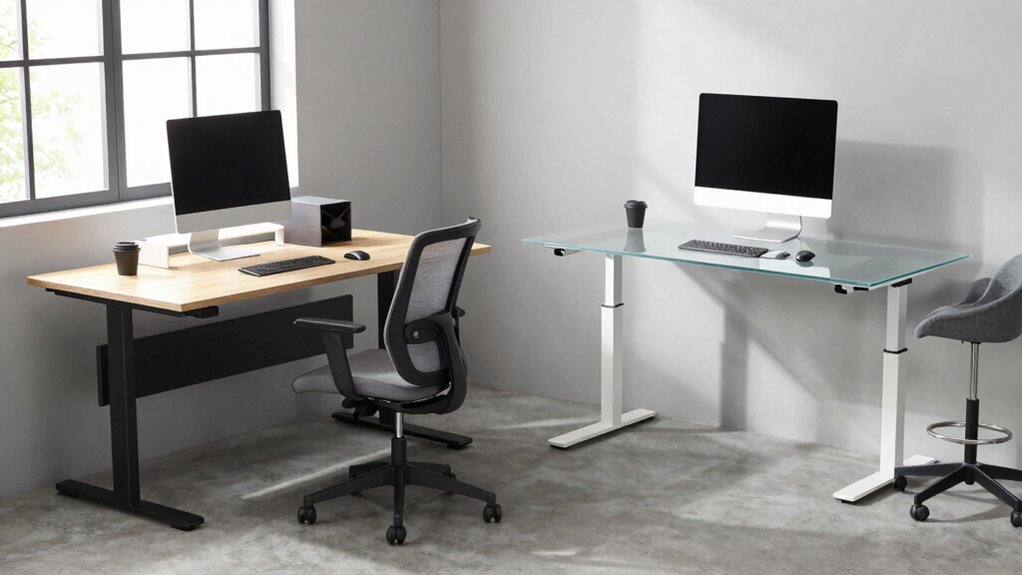
Selecting the right sit-stand solution depends on your specific workstyle and available space. If you prefer flexibility and minimal disruption, a sit-stand converter offers quick workspace customization without requiring a full desk overhaul. They easily fit onto your existing desk, blending seamlessly with your setup for aesthetic integration. On the other hand, if you need a dedicated, streamlined workstation or have more space, a full standing desk provides a more permanent, cohesive look. Consider your workflow and how much space you can allocate. Full desks often support ergonomic adjustments better, whereas converters excel in versatility. Your choice should balance your work habits, room layout, and how seamlessly you want the solution to integrate into your workspace.
Frequently Asked Questions
How Durable Are Sit-Stand Converters Compared to Standing Desks?
Sit-stand converters are generally less durable than full standing desks due to differences in material quality and adjustment mechanisms. You might notice that converters, often made from lighter materials, can wear out or become unstable over time, especially with frequent use. Standing desks, built with sturdier frames and more robust adjustment systems, tend to last longer and withstand daily wear and tear better.
Can Sit-Stand Converters Support Multiple Monitor Setups?
Surprisingly, sit-stand converters can support multiple monitors, though monitor stability depends on the converter’s quality. You might find some models wobble under heavy setups, making your screens less steady. Luckily, many converters are portable and adjustable, so you can find one that balances stability and convenience. Just remember, the more monitors you add, the more you’ll want a sturdy, reliable converter to keep your workspace from turning into a shaky spectacle.
Do Sit-Stand Converters Require Any Special Maintenance?
You don’t need special maintenance for sit-stand converters, but regular cleaning tips help keep them in top shape. Wipe down the surface with a damp cloth and avoid harsh chemicals. Check and lubricate adjustment mechanisms periodically to guarantee smooth movement. Keep the converter free of dust and debris, which can interfere with height adjustments. Proper care will extend its lifespan and keep it functioning reliably.
Are Full Standing Desks Suitable for Small or Limited Spaces?
Did you know that nearly 60% of home offices are limited in space? Full standing desks are often suitable for small or limited spaces thanks to their space-saving solutions and compact design. They offer the advantage of transforming your workspace without cluttering, making them ideal if you need an efficient, ergonomic solution that fits seamlessly into tight areas. You’ll enjoy the benefits of a healthier work setup without sacrificing precious room.
How Do Weight Capacities Differ Between Converters and Full Desks?
Full standing desks typically have higher weight limits, often supporting 150 to 200 pounds or more, ensuring safety when you place multiple monitors and accessories. Sit-stand converters usually have lower weight capacities, around 35 to 50 pounds, so you need to take safety into account when stacking equipment. Always check the manufacturer’s weight limits to prevent accidents and ensure your workspace remains stable and secure.
Conclusion
Choosing between sit-stand converters and full standing desks depends on your space, budget, and comfort. Both options help reduce sitting time, but find what works best for your work style. Remember, a journey of a thousand miles begins with a single step—so start small if needed. Ultimately, the right choice keeps you healthier and more productive. Make your decision wisely, and enjoy the benefits of moving more throughout your day.