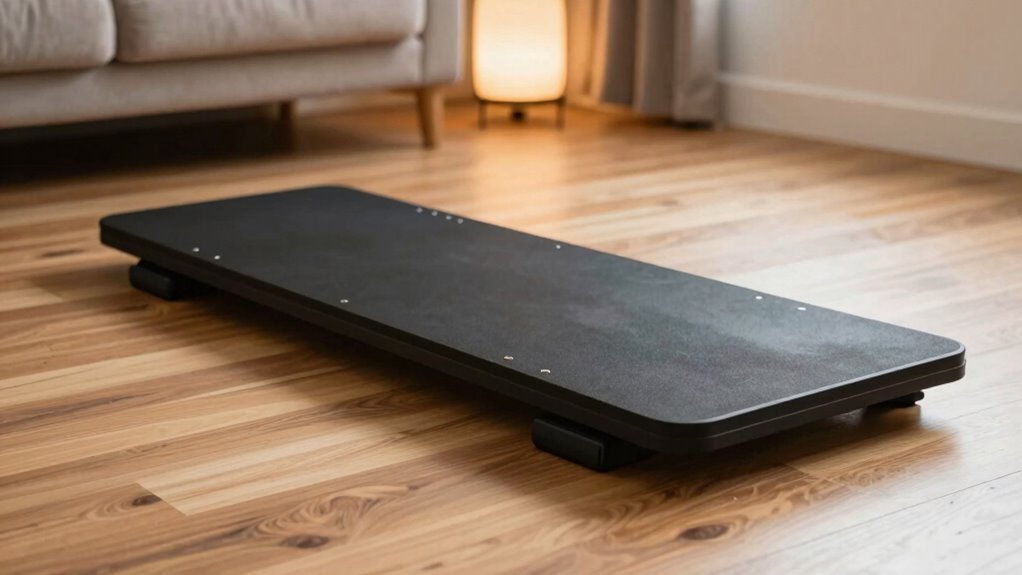

You might notice your walking pad sounds louder at home even if reviews say it’s quiet. This happens because room acoustics, flooring, and setup can amplify noise. Hard floors reflect sound, while soft furnishings absorb it, changing how noise is perceived. Placement and user weight also affect motor noise and vibrations. If you want a quieter experience tailored to your space, there’s more to contemplate beyond the reviews. Keep exploring to find out how to reduce noise effectively.
Key Takeaways
- Room acoustics and flooring materials can amplify noise at home, making units seem louder than in review environments.
- Hard floors and minimal furnishings reflect sound, increasing perceived noise compared to carpeted or furnished rooms.
- Reviews may be conducted in spaces with better sound absorption or on vibration-dampening surfaces.
- Placement and surface levelness at home influence vibration and noise transmission, often differing from review settings.
- Personal perception of noise varies due to room size, shape, and furnishings, affecting how loud the unit seems in different environments.
Understanding Walking Pad Noise: What You Need to Know
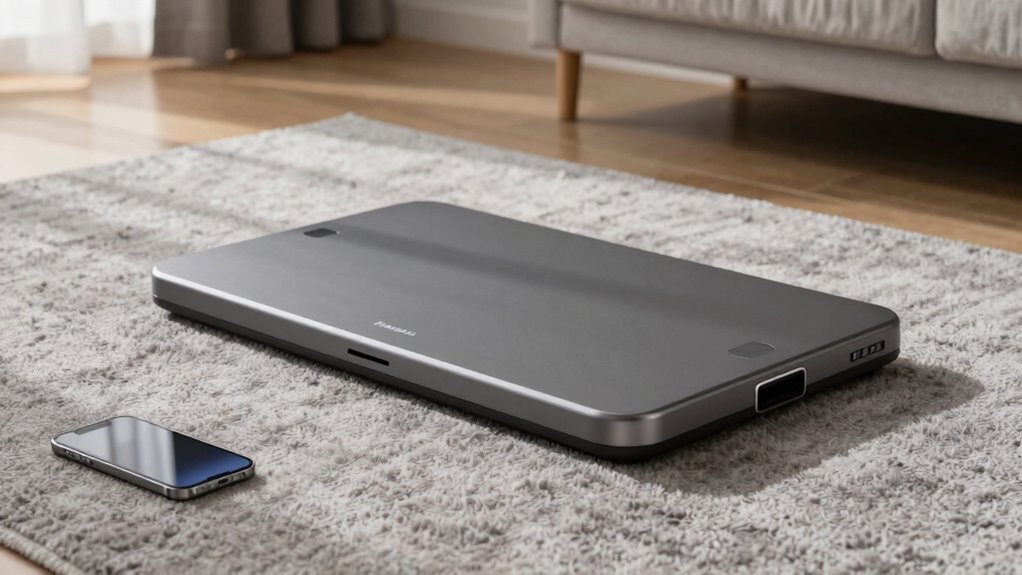
Understanding walking pad noise is essential if you want to enjoy a quiet and comfortable workout. Many modern units include user-friendly features designed to minimize sound, making setup and operation straightforward. Noise reduction techniques such as rubberized feet, insulated motor compartments, and vibration dampers help keep noise levels low. Additionally, some models incorporate burnout prevention features that help maintain optimal motor performance and reduce excessive noise over time. When shopping for a walking pad, pay attention to these features, as they directly impact your experience. Some models also offer adjustable speed settings and cushioning systems that can further reduce sound. Recognizing how these features work together allows you to select a machine that won’t disturb your household or neighbors. Proper sound insulation methods can significantly improve your workout environment by muffling vibrations and reducing noise transmission. Implementing additional acoustic treatments such as mats or barriers can further enhance noise reduction, creating a more peaceful exercise space. Ultimately, choosing a walking pad with effective noise reduction techniques ensures a peaceful workout environment, whether you’re in an apartment, shared space, or just prefer a quieter exercise experience.
Main Factors Influencing Walking Pad Noise
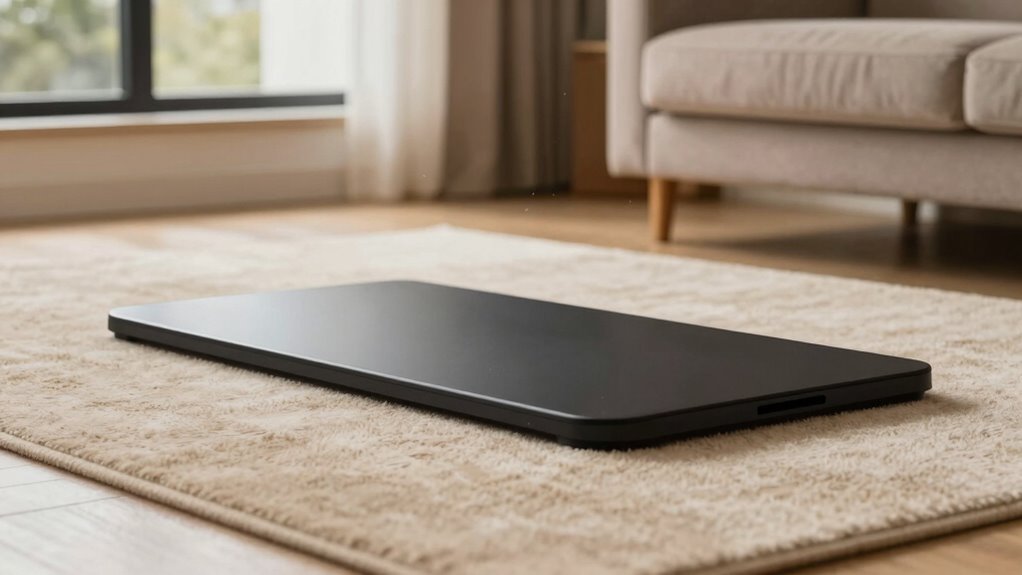
What are the main factors that determine how loud a walking pad is during use? Motor noise is a primary factor; a more powerful or less insulated motor tends to produce more sound. Vibration issues also play a significant role—if the walking pad isn’t stable or has loose components, vibrations can amplify noise levels. The quality of the motor and build materials influences how much noise is generated and how well it’s dampened. Additionally, the surface underneath the unit can impact sound; uneven or hard flooring may increase vibrations and noise. Proper assembly and maintenance help reduce vibration issues, but ultimately, the motor’s design and stability are the key factors affecting the loudness of your walking pad during use. Maintaining proper stability can also help minimize vibrations and noise levels, and understanding sound mitigation techniques can further improve the overall quietness of your exercise space. Selecting a unit with effective sound insulation can significantly reduce operational noise and create a more comfortable workout environment. Regular checks and adjustments to the unit’s components can further help in reducing noise over time. Additionally, choosing a walking pad with advanced motor insulation can further decrease operational sound levels and enhance user comfort.
Why Do Some Units Seem Quiet in Reviews but Not at Home?
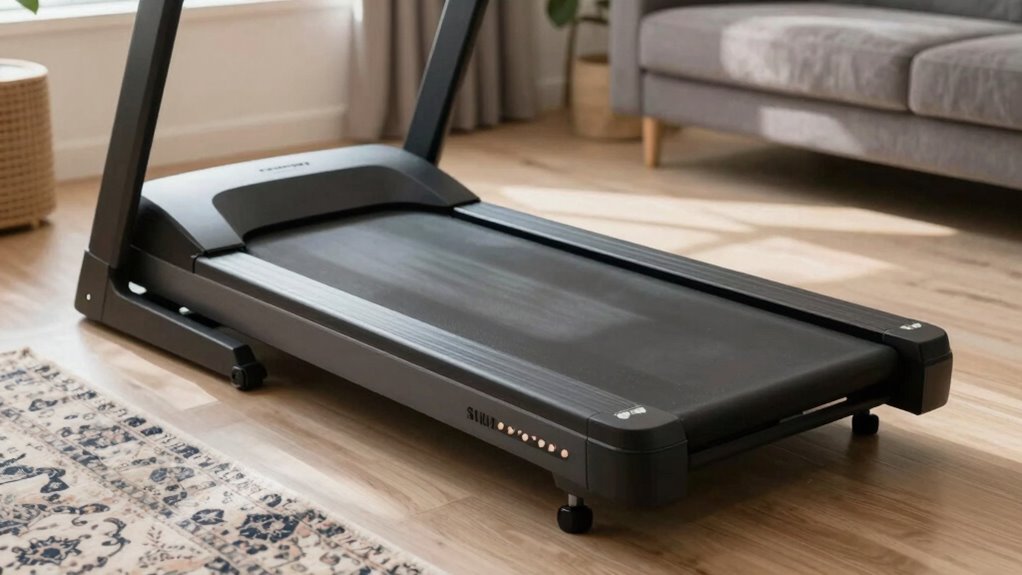
You might notice your walking pad sounds louder at home than in reviews, and room acoustics play a big role. Hard flooring can amplify noise, while carpeted rooms absorb sound, making units seem quieter. The environment around your unit can make a significant difference in how loud it appears. Additionally, using proper DIY tools for assembly or adjustments can help reduce unwanted vibrations and noise. Ensuring your walking pad is properly placed on a stable surface can further minimize noise transfer and improve overall operation. Properly maintaining your equipment can also help keep noise levels down and ensure smoother operation. Adjusting room furnishings can also impact how noise travels and is perceived within your space.
Different Room Acoustics
Room acoustics can markedly influence how noisy a walking pad sounds, which explains why some units seem quiet in reviews but not at home. Larger rooms with high ceilings often provide better noise absorption, reducing the sound that reaches your ears. Conversely, smaller or enclosed spaces reflect sound waves, amplifying the noise. The material and furnishings in your room also affect acoustics; soft furnishings absorb sound, while bare walls bounce it around. So, even if a walking pad is relatively quiet in someone else’s review, your room’s size and how it absorbs noise can make it seem louder. Understanding your room’s acoustics helps you set realistic expectations for how loud your walking pad will be during use. Room acoustics can also be influenced by the shape and layout of your space, further impacting the perceived noise level. Additionally, room size plays a crucial role in how sound travels and dissipates within your environment, while room materials can either dampen or reflect sound waves, altering the overall noise perception. Recognizing how room geometry affects sound distribution can help you optimize your space for quieter operation. Factors like furnishings and layout can also modify how sound waves move, making your environment either more or less conducive to noise reduction.
Variations in Flooring
Flooring types and surface textures can substantially impact how loud a walking pad sounds during use. Different flooring compatibility influences vibration absorption, which affects noise levels. Hard surfaces like wood or tile tend to reflect sound and transmit vibrations more directly, making the unit louder. Conversely, carpets and rubber mats absorb vibrations better, reducing noise. If your flooring lacks effective vibration absorption, the walking pad’s noise can seem amplified compared to reviews where flooring was more forgiving. When choosing a walking pad, consider how your surface interacts with vibrations. Using mats or rubber underlays can improve vibration absorption, decreasing noise at home. Additionally, flooring material plays a crucial role in vibration dampening and sound levels. The type of flooring surface can either amplify or diminish sound, influencing overall noise levels. Understanding these flooring variations helps you manage sound levels and ensures your walking pad remains quieter in your space. Incorporating soundproofing techniques can further mitigate noise issues and create a more comfortable environment. Exploring vibration absorption methods can also enhance the overall noise reduction.
How Motor Quality and Build Materials Affect Noise Levels
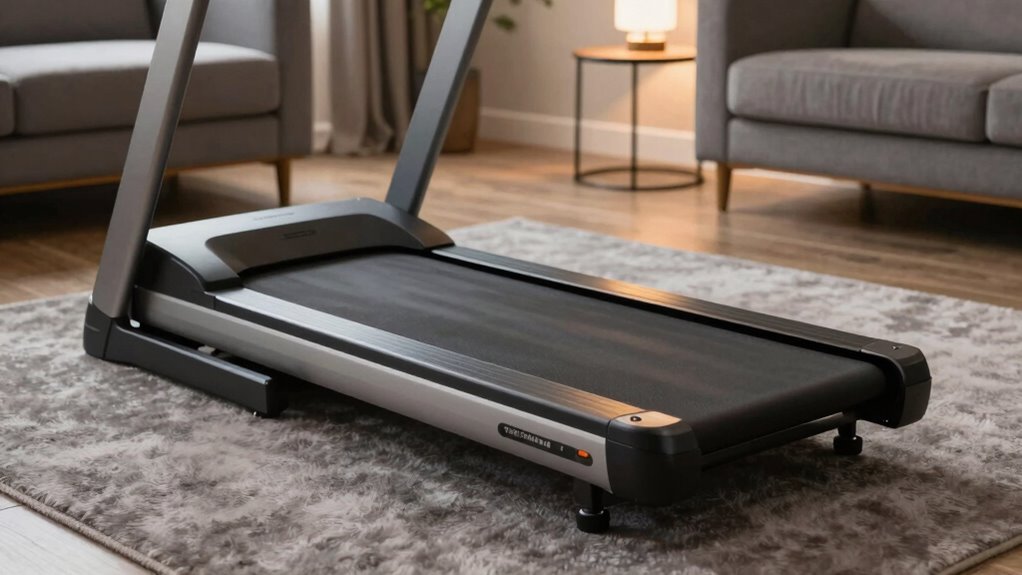
The quality of the motor directly affects how much noise it produces during operation, with higher-grade components running more quietly. The materials used in the frame and deck also influence sound absorption and vibration dampening, reducing noise transfer. Precise build craftsmanship ensures better alignment and fewer vibrations, making your walking experience quieter and smoother. Additionally, incorporating foam rolling routines can help improve overall recovery and HRV, contributing to a more balanced and less stressful workout environment. Proper indoor humidity levels can also help minimize noise caused by expansion and contraction of materials, creating a more comfortable workout setting. Furthermore, selecting units with noise-reduction features can significantly decrease operational sound levels and enhance the overall workout experience.
Motor Components and Sound
Motor components and build materials play a crucial role in determining the noise levels of a walking pad. High-quality motors with greater durability tend to operate more smoothly, producing less vibration and noise during use. Durable motors are less prone to wear and tear, which helps maintain quieter operation over time. Additionally, the materials used in the motor’s construction influence sound insulation; sturdy, well-designed casings absorb vibrations and reduce sound transmission. Cheaper or poorly assembled motors often generate more noise due to increased friction and instability. When you choose a walking pad, look for units with robust motor components and effective sound insulation features. These factors ensure that your workout remains quiet and comfortable, minimizing disturbances both at home and during use.
Material Dampening Effects
Since the materials used in a walking pad’s construction directly influence how well vibrations and noise are dampened, choosing high-quality build components can considerably reduce noise levels. Material dampening depends on the density and elasticity of the components, absorbing vibrations before they transfer to the floor. Rubber, foam, and dense plastics are common choices that help minimize noise by absorbing shocks and vibrations. The frame material also plays a role; sturdy metals or composite materials can reduce resonance, preventing sound amplification. When you select a walking pad with effective material dampening, you’ll notice less noise during use, making it more suitable for shared spaces or apartments. Proper material dampening is essential for quieter operation and improved overall comfort.
Build Precision and Vibration
Choosing a high-quality motor and precise build components is essential for minimizing noise on your walking pad. A durable motor ensures consistent operation and reduces unexpected sounds caused by wear and tear. High material durability in the frame and moving parts prevents looseness that can lead to vibrations and rattling. Good build precision means tight manufacturing tolerances, which help control vibration and prevent unwanted noise during use. When the motor and frame fit well, vibrations are absorbed or minimized, creating a quieter experience. Investing in a unit with carefully engineered components improves vibration control, reducing the chances of squeaks or rattles. Ultimately, a well-built walking pad with sturdy materials and precise assembly offers a quieter, more comfortable workout environment at home.
How Placement and Floor Surface Impact Noise
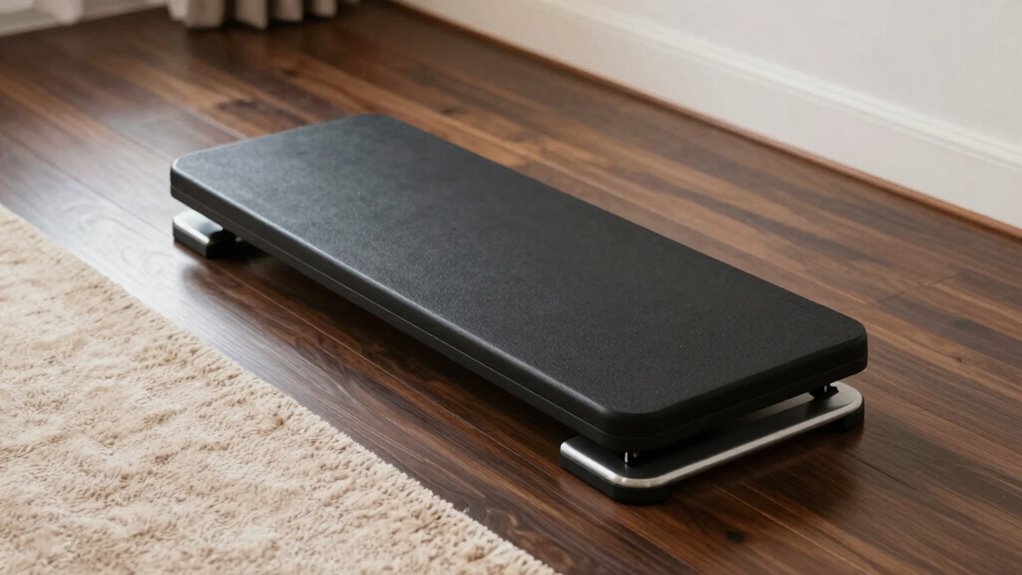
The placement of your walking pad and the type of floor surface beneath it can considerably influence the noise it produces. Proper positioning can reduce vibrations and improve sound insulation, making your workout quieter. To optimize noise reduction, consider these tips:
- Place your treadmill on a solid, level surface to minimize vibrations and prevent excessive movement.
- Use vibration dampening mats beneath the unit to absorb shock and reduce noise transmission.
- Avoid placing the walking pad on thin or uneven flooring, as this can amplify sound and vibrations.
How User Weight and Speed Settings Influence Noise
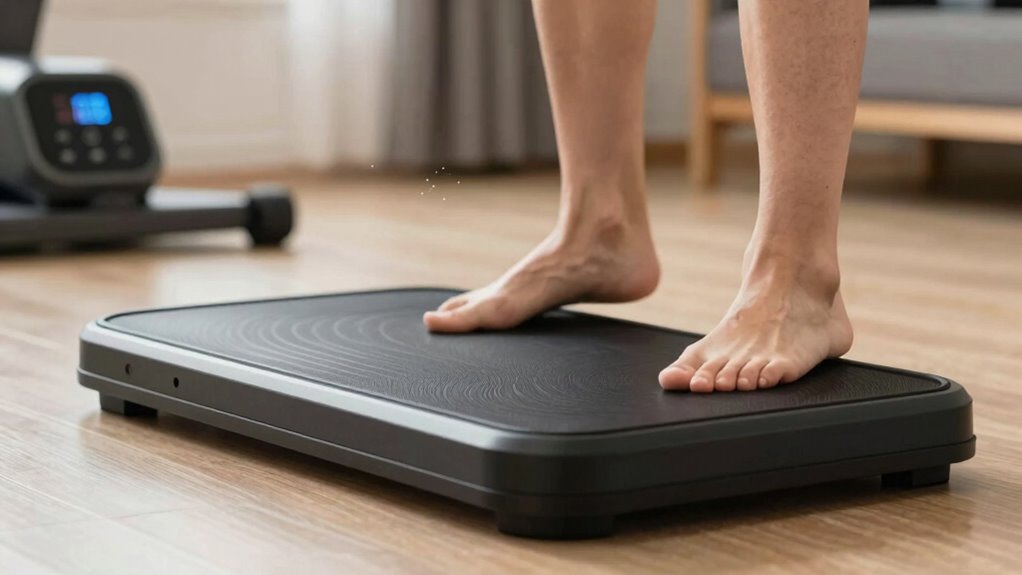
Your user weight and the speed settings you select directly impact the noise levels of your walking pad. Heavier users generate more force on the motor and belt, often leading to increased noise due to higher strain. Similarly, setting the speed too high can cause the motor to work harder, producing more sound. If you’re walking at a brisk pace, expect additional noise compared to a gentle stroll. Adjusting speed settings to match your comfort level can help reduce unnecessary noise. Keep in mind that a higher user weight combined with faster speeds amplifies the noise, which might be more noticeable at home. To minimize sound, choose moderate speeds and, if possible, consider a walking pad designed for higher weight capacities.
Tips to Minimize Walking Pad Noise Without Sacrificing Performance
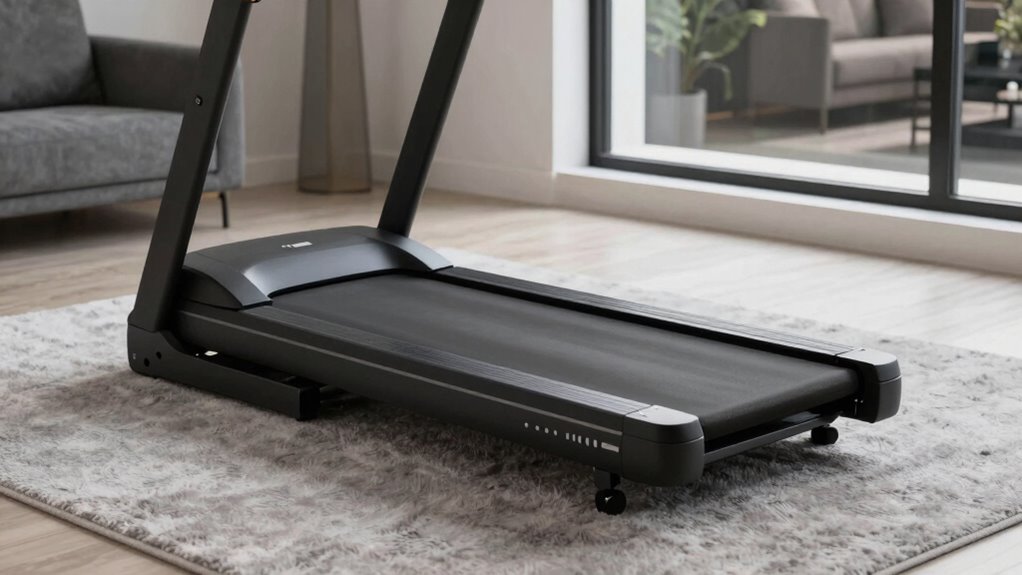
To minimize walking pad noise without sacrificing performance, focus on proper maintenance and strategic adjustments. Regular walking pad maintenance keeps components functioning smoothly and reduces unnecessary noise. Additionally, consider user weight considerations, as heavier users may cause more noise if the unit isn’t properly supported or maintained. Here are some tips:
Regular maintenance and proper support reduce walking pad noise without compromising performance.
- Keep the walking pad clean and free of debris to prevent uneven surfaces.
- Use a shock-absorbing mat underneath to dampen vibrations.
- Adjust your speed and weight distribution to avoid overloading or stressing the motor.
Choosing a Quiet Walking Pad That Fits Your Needs
Finding a quiet walking pad that suits your needs requires balancing noise levels with features and budget. Start by evaluating the user interface; a simple, intuitive design makes it easier to operate without adding noise. Consider models with adjustable speeds and noise-reducing technology to keep sound levels low. Don’t overlook warranty coverage—choosing a unit with solid warranty guarantees support if noise issues or other problems arise. Look for reviews that mention real-world quietness and reliability, especially at home. Set your priorities: if you want minimal disturbance, prioritize quieter motors and user-friendly controls. Ultimately, selecting a walking pad that aligns with your lifestyle and comfort needs means balancing these features with your budget, ensuring you enjoy a peaceful workout without sacrificing performance.
Frequently Asked Questions
How Does Ambient Noise Affect Perceived Walking Pad Sound Levels?
Ambient noise interference can make your walking pad sound quieter or louder, depending on the environment. When there’s a lot of background noise, you might perceive the unit as less noisy, but in a quiet space, even minor sounds become noticeable. User perception biases also play a role, causing you to interpret sounds differently based on expectations. So, the actual sound level stays constant, but your perception varies with ambient noise conditions.
Can Regular Maintenance Reduce Walking Pad Noise Over Time?
Regular maintenance routines can definitely reduce your walking pad noise over time. By consistently inspecting your device, you can identify and address issues early. Proper lubrication techniques, like applying silicone or graphite lubricant to moving parts, decrease friction and noise. Keep the belt aligned and clean the surface regularly to prevent squeaks. These simple steps help make certain of smoother operation, quieter use, and extend your walking pad’s lifespan.
Do Different Flooring Types Amplify or Dampen Walking Pad Noise?
Different flooring types can crucially impact your walking pad’s noise levels. Flooring impact and surface compatibility play vital roles, with hard surfaces like tile or hardwood amplifying noise, while carpet or rubber mats dampen it. To minimize sound, choose flooring that absorbs vibrations or add a compatible mat underneath your walking pad. This way, you’ll enjoy quieter workouts and reduce noise disturbances at home.
Is There a Common User Mistake That Increases Noise During Use?
A common user error that increases noise during use is not placing the walking pad on a level, stable surface. If your flooring is uneven or soft, vibrations amplify, causing more sound. User feedback often highlights this issue, so double-check your setup. Make certain the device is on a firm, flat surface, and avoid moving it during use. Correct placement minimizes noise and improves your walking experience.
How Do Warranty Policies Address Noise-Related Issues?
Warranty coverage typically addresses noise-related issues if the noise stems from a manufacturing defect or faulty parts. You should check your warranty policy limitations, as coverage may exclude damage caused by misuse or improper setup. If your unit is noisy due to a defect, contact customer service promptly. Keep in mind that some warranties only cover specific repairs, so understanding your policy limitations guarantees you know what’s protected and what isn’t.
Conclusion
While some walking pads seem whisper-quiet in reviews, subtle differences at home can reveal more. By paying attention to factors like placement, user weight, and speed, you can create a more harmonious experience. Remember, a slight hum isn’t necessarily a flaw—it might just be the gentle reminder that you’re making progress. With thoughtful choices, you’ll find a model that quietly supports your journey without overshadowing your space.