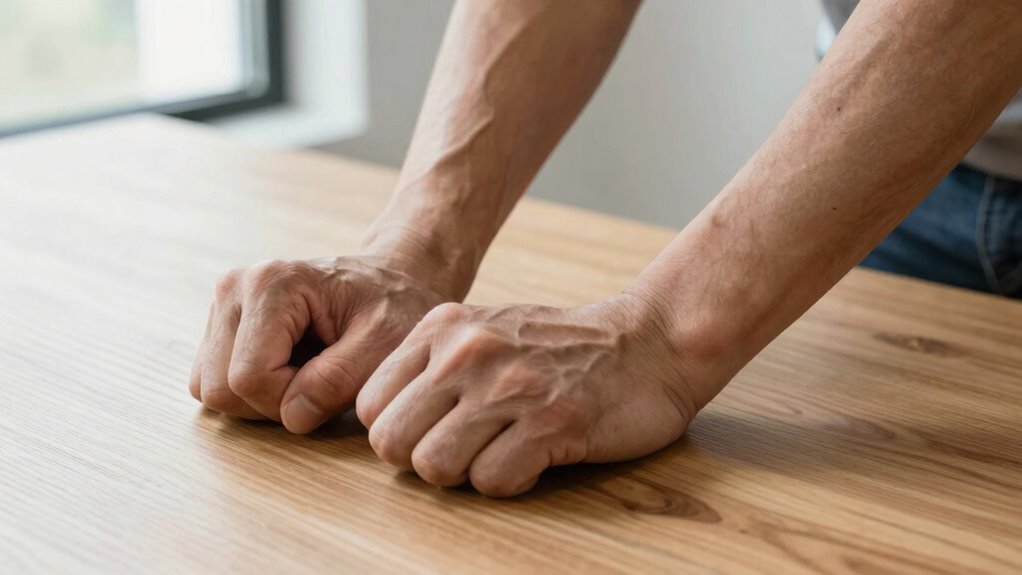

Leaning on your desk puts unnecessary pressure on your wrists, causing strain and discomfort over time. When you support your weight on the desk, your wrists bend awkwardly, disrupting their natural, neutral position and increasing muscle fatigue. Poor desk height and unsupported postures worsen this problem. If you keep leaning, it can lead to long-term injuries like nerve compression or tendon strain. Keep going, and you’ll discover practical tips to improve your posture and protect your wrists.
Key Takeaways
- Leaning on the desk forces wrists into extended or awkward angles, increasing pressure and strain.
- Unsupported wrist positioning from leaning disrupts neutral wrist posture, leading to fatigue and discomfort.
- Excessive pressure from leaning reduces circulation and stresses tendons, nerves, and bones in the wrist.
- Poor support while leaning causes repetitive microtrauma, raising injury risk over time.
- Proper ergonomic setup and avoiding leaning maintain neutral wrist alignment, preventing strain and injury.
How Leaning on Your Desk Pressures Your Wrists

When you lean on your desk for support, you put unnecessary strain on your wrists. This habit forces your wrists into awkward positions, reducing wrist flexibility and increasing discomfort. If your desk isn’t at the right height, you might instinctively lean forward to compensate, which worsens the strain. When your desk is too high or too low, your wrists bend unnaturally, putting pressure on the carpal tunnel and tendons. Over time, this can lead to pain, stiffness, or even repetitive strain injuries. To avoid this, ensure your desk height allows your forearms to be parallel to the floor and your wrists in a neutral position. Maintaining proper wrist flexibility and desk height helps you work comfortably without risking long-term wrist issues. Additionally, using ergonomic accessories like wrist rests can provide extra support and reduce strain during extended periods of work. Proper ergonomic setup can also help prevent long-term injuries and improve overall comfort. Incorporating correct posture habits can further aid in reducing wrist and overall musculoskeletal strain. Being mindful of workplace ergonomics can make a significant difference in preventing discomfort over time.
Common Causes of Desk Leaning During Work or Study

You might lean on your desk because your workspace isn’t set up properly or your screen is too low. Spending long hours at your computer without breaks also encourages you to lean for support. Recognizing these common causes can help you make simple adjustments to stay upright and comfortable.
Poor Ergonomic Setup
A poor ergonomic setup often leads to desk leaning during work or study sessions. When your keyboard isn’t positioned properly, it can force you to hunch forward or lean on your desk to reach it comfortably. Poor keyboard ergonomics, such as a keyboard too high or too low, disrupt your wrist posture, causing strain and encouraging you to lean in. If your workspace isn’t adjusted to support a neutral wrist position, you might unconsciously lean forward to see your screen better or stabilize your hands. An improper chair height, lack of wrist rests, or an uneven desk surface also contribute to this habit. Ensuring your keyboard is at the right height and your workstation supports proper wrist alignment helps reduce the tendency to lean and prevents wrist strain. Additionally, understanding home theatre projectors can help you create an optimal environment for relaxed viewing, reducing the need to lean forward in discomfort.
Extended Screen Time
Extended screen time often encourages leaning forward at your desk as you focus for long periods. This posture strains your neck and wrists, increasing discomfort. When you’re immersed in work or study, you might neglect proper ergonomic setup, leading to poor posture habits. Using ergonomic chairs can help support your back, but if you lean too much, wrist braces can provide extra stability and reduce strain. To stay comfortable, take regular breaks and adjust your screen height. Remember, maintaining awareness of your posture prevents long-term issues. Additionally, incorporating safety tips for portable oil radiators can ensure a safe environment while working or studying for extended periods. Practicing ergonomic principles can further help minimize strain and promote better posture during prolonged desk activities. Engaging in posture awareness exercises can also strengthen muscles and reinforce good habits, which is essential for muscle strengthening and long-term posture improvement. Incorporating correct ergonomic setup into your workspace can significantly reduce the risk of discomfort and injury over time.
Why Wrist Position Matters for Long-Term Hand and Wrist Health

Maintaining the correct wrist position while working is essential because it directly impacts your long-term hand and wrist health. Proper wrist alignment respects wrist anatomy, ensuring your bones, tendons, and nerves are not strained. When you keep your wrists neutral, you support healthy hand biomechanics, allowing your muscles and tendons to work efficiently without overexertion. Poor wrist positioning, like bending or leaning, increases stress on these structures, risking repetitive strain injuries and long-term damage. By keeping your wrists straight and aligned with your forearms, you reduce undue pressure and promote better circulation. This mindful approach helps prevent discomfort and injury, preserving your hand and wrist function over time. Additionally, understanding the importance of device and network security can help protect your sensitive information from cyber threats. Incorporating ergonomic tools, such as wrist rests or adjustable desks, can further support proper wrist positioning and prevent injuries. Being aware of repetitive strain injuries and how they develop can also guide you in taking proactive measures to safeguard your health. Recognizing the role of 16PF in personal development can help you understand your tendencies and improve your ergonomic habits accordingly. Awareness of credit card security measures can also safeguard your financial data while working online.
Signs Your Wrist Is Fatigued or Painful From Leaning

When your wrist starts to ache or feel fatigued after hours of work, it’s a clear sign that leaning or improper positioning is putting stress on your muscles and tendons. You might notice persistent discomfort, numbness, or a tingling sensation. These symptoms often indicate your wrist is strained from prolonged leaning. To prevent worsening pain, consider using ergonomic accessories such as wrist rests or adjustable keyboard supports. Incorporating wrist exercises into your routine can also strengthen muscles and improve flexibility, reducing strain. If the pain persists or worsens, don’t ignore it—adjust your workspace setup and give your wrists proper care. Recognizing these signs early helps you take action before discomfort turns into a more serious problem.
How Wrist Strain From Leaning Can Lead to Injuries and Discomfort
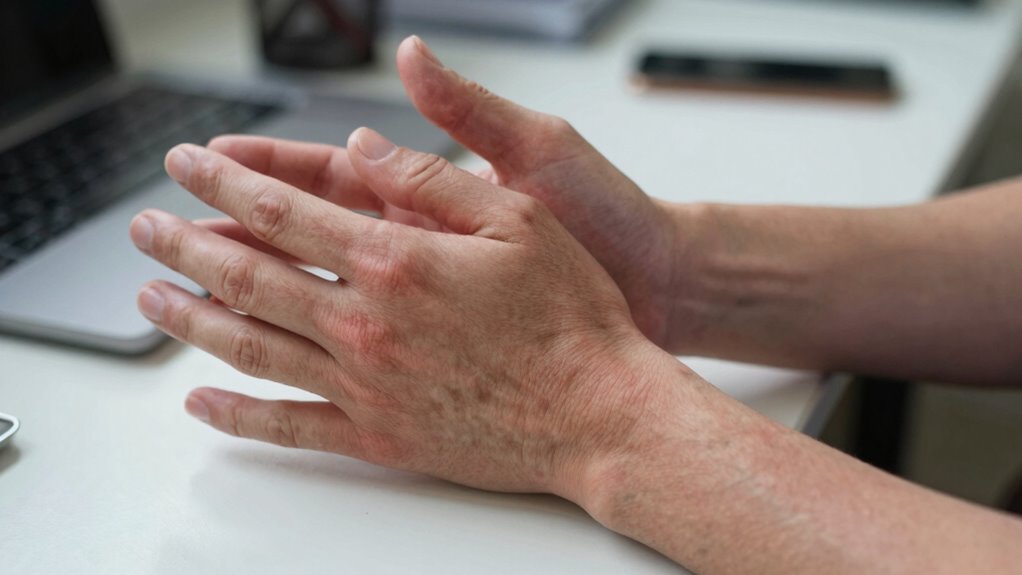
Wrist strain from leaning not only causes discomfort but can also lead to more serious injuries over time. When your wrist is constantly bent or strained, it reduces wrist flexibility, making it harder to perform everyday tasks comfortably. Over time, this can cause repetitive strain injuries like tendinitis or carpal tunnel syndrome. If you don’t address these issues early, pain may become chronic, limiting your wrist’s mobility and strength. Using ergonomic accessories, such as wrist supports or adjustable desks, can help reduce strain and promote better wrist health. Maintaining proper wrist positioning and avoiding prolonged leaning can prevent injuries and keep your wrists flexible and pain-free in the long run. Incorporating wall art trends like digital frames or interactive murals can also encourage better ergonomics by creating more comfortable and inspiring work environments. Paying attention to ergonomic principles in your workspace design can further minimize strain and improve overall comfort. Recognizing the importance of body mechanics during daily activities can help prevent unnecessary strain and safeguard your wrist health over time. Adopting good posture habits and taking regular breaks can also significantly decrease the risk of developing wrist problems. Additionally, engaging in preventive exercises targeting wrist flexibility and strength can be beneficial. Taking these steps now can save you from more severe problems later.
How Poor Ergonomic Setup Exacerbates Wrist Strain

When your desk isn’t at the right height or your keyboard isn’t positioned correctly, it puts unnecessary stress on your wrists. Without supportive accessories, your hands may strain even more, increasing the risk of injury. Addressing these ergonomic issues can make a significant difference in reducing wrist discomfort. Incorporating ergonomic accessories can further optimize your workspace and promote better wrist health. Ensuring proper device positioning can also help prevent strain and improve overall comfort during extended use. Paying attention to workstation setup is essential for maintaining long-term wrist well-being. Additionally, choosing eco-friendly workspace materials can support sustainable practices while enhancing your ergonomic environment. Recognizing the importance of proper ergonomics in overall health can motivate ongoing adjustments to your workspace.
Incorrect Desk Height
An improperly adjusted desk height can considerably increase wrist strain, especially if your workspace forces you to bend or stretch your hands awkwardly. When your desk is too high or low, it disrupts proper keyboard ergonomics, causing you to elevate or depress your wrists unnaturally. This misalignment increases pressure and fatigue over time. Using wrist cushions can help provide some relief, but they won’t fix the root problem if your desk height is off. Ideally, your elbows should be at a 90-degree angle, with your wrists straight and relaxed. Adjusting your desk to this level minimizes strain and promotes better posture. Proper ergonomic setup ensures your wrists are in a neutral position, reducing discomfort and preventing long-term injury. Ergonomic principles emphasize that maintaining neutral wrist positions is essential for long-term comfort and health. Additionally, regularly taking breaks from typing can help prevent cumulative wrist stress and promote circulation.
Poor Keyboard Positioning
Poor keyboard positioning can markedly increase wrist strain, especially if your keyboard is too high, too low, or misaligned. Proper keyboard alignment ensures your wrists stay in a neutral position, reducing unnecessary strain. When your keyboard is too high, your wrists bend upward, increasing pressure; too low, and they bend downward. Misaligned keys can force awkward wrist angles, leading to discomfort over time. To improve wrist health, position your keyboard so that your wrists remain straight and your elbows are close to a 90-degree angle. This setup minimizes excessive wrist movement and awkward wrist angles. Adjust your keyboard height and alignment to promote a natural, comfortable wrist position, preventing strain before it develops into more serious issues.
Lack of Supportive Accessories
Without supportive ergonomic accessories, your workstation becomes more likely to contribute to wrist strain. Basic desk accessories, like adjustable wrist cushions, can make a significant difference. These cushions provide a soft barrier between your wrist and the hard surface of your desk, reducing pressure and encouraging proper alignment. Without them, you might find yourself leaning heavily on the desk, which increases strain on your wrists over time. Properly positioned wrist cushions help keep your wrists in a neutral position, preventing awkward angles that cause pain and fatigue. Additionally, other ergonomic desk accessories, such as keyboard trays and monitor stands, support a healthier posture. Investing in these simple tools can prevent discomfort, improve your comfort during long work sessions, and reduce the risk of developing repetitive strain injuries.
Practical Tips to Adjust Your Posture and Prevent Leaning

To prevent leaning and improve your posture, start by adjusting your workspace to promote proper alignment. Make sure your desk height allows your forearms to be parallel to the ground, reducing strain on your wrists. Incorporate exercises that improve wrist flexibility, making it easier to maintain a neutral position without discomfort. Keep your desk organized so frequently used items are within easy reach, preventing you from leaning forward or awkwardly stretching. Use a supportive chair that encourages good posture and provides lumbar support. Regularly check your monitor’s height to keep your neck aligned, which helps you avoid leaning in or hunching over. Small adjustments like these can make a significant difference in maintaining proper posture and reducing wrist strain.
Ergonomic Desk Setup Ideas for Better Wrist Support

Creating an ergonomic desk setup can substantially improve wrist support and reduce discomfort during long hours of work. Start by adding wrist padding or cushioned desk mats to your workspace. These provide a soft surface that helps keep your wrists in a neutral position, minimizing strain. Place your keyboard and mouse at a height where your forearms are parallel to the ground, avoiding downward or upward angles. Consider using an adjustable keyboard tray for better positioning. Using a desk mat with wrist padding encourages proper alignment and reduces pressure points. Keep your wrists straight and supported rather than resting directly on hard surfaces. By making these simple adjustments, you can create a more comfortable, supportive environment that prevents strain and promotes better wrist health during extended work periods.
Exercises and Stretches to Relieve Wrist Strain From Leaning

When you notice wrist discomfort from leaning, performing targeted exercises and stretches can provide immediate relief and help prevent future strain. To boost wrist flexibility, try gentle wrist circles by rotating your wrists clockwise and counterclockwise for 10-15 seconds each. Stretch your wrists by extending one arm, palm facing up, and gently pulling back your fingers with your opposite hand. This stretches the forearm muscles that support your wrists. Hand strengthening exercises, like squeezing a soft stress ball or using grip trainers, can also help stabilize your wrists during prolonged leaning. Incorporate these routines into your daily habits to improve wrist resilience, reduce pain, and maintain better wrist health. Consistent practice enhances flexibility and strengthens hand muscles, making your wrists less prone to strain.
When to Seek Professional Help for Persistent Wrist Pain

If your wrist pain persists despite rest and stretches, it’s time to recognize that something more serious may be happening. You should consider consulting a healthcare professional if symptoms like swelling, numbness, or sharp pain continue. Ignoring persistent issues can lead to longer recovery times or permanent damage.
Recognizing Persistent Symptoms
How do you know when wrist pain needs professional attention? If your discomfort persists beyond a few days or worsens despite adjusting your workstation, it’s time to seek help. Persistent symptoms like swelling, numbness, tingling, or weakness shouldn’t be ignored. Notice if ergonomic accessories and wrist strengthening exercises don’t alleviate the pain or if it interferes with daily activities. These signs indicate that your wrist may be experiencing more than just strain, possibly involving nerve issues or repetitive stress injuries. Recognizing these persistent symptoms early can prevent further damage. If you experience ongoing pain, consult a healthcare professional to evaluate your condition and recommend appropriate treatment. Waiting too long might lead to more serious complications.
Consulting Medical Professionals
Persistent wrist pain that doesn’t improve with rest, ergonomic adjustments, or exercises signals the need to consult a healthcare professional. Your wrist anatomy is complex, and persistent discomfort could indicate underlying issues like ligament strain or nerve compression. Seek medical help if you notice:
- Increased pain or swelling that worsens over time
- Numbness, tingling, or weakness in your hand or fingers
- Pain that disrupts daily activities despite using ergonomic accessories
A healthcare professional can evaluate your wrist, possibly using imaging, and recommend targeted treatments. They might suggest specific ergonomic accessories or physical therapy to address the root cause. Ignoring persistent pain can lead to long-term damage, so timely consultation is vital.
Frequently Asked Questions
Can Using a Wrist Brace Prevent Injuries From Leaning on the Desk?
Yes, using a wrist brace can help prevent injuries from leaning on the desk by providing extra support. It stabilizes your wrist, reducing strain and promoting proper alignment. Combined with ergonomic support, a wrist brace encourages healthier posture, easing pressure on your wrists during long work sessions. Remember, though, it’s also important to take regular breaks and adjust your workspace to avoid over-reliance on the brace.
How Often Should I Take Breaks to Avoid Wrist Strain?
You should take breaks every 30 to 60 minutes to prevent wrist strain. During these breaks, do ergonomic assessments of your workspace and incorporate wrist stretching exercises to reduce tension. This habit helps maintain proper wrist positioning and prevents overuse. Remember, frequent short breaks are more effective than long ones, so set reminders to stretch and adjust your workstation, ensuring your wrists stay healthy and pain-free throughout your workday.
Are There Specific Ergonomic Tools to Reduce Wrist Pressure?
Think of ergonomic tools as your wrist’s best friends. An ergonomic keyboard helps you keep your wrists in a neutral position, reducing strain. Pair it with a sturdy wrist support to cushion pressure and prevent discomfort. These tools work together, like a well-rehearsed duet, ensuring your wrists stay comfortable and healthy during long hours. Invest in them, and your wrists will thank you for the extra care.
Does Typing Style Influence Wrist Fatigue When Leaning?
Yes, your typing style impacts wrist fatigue when leaning. If you keep a proper keyboard posture, avoid resting your wrists heavily on the desk, and make certain your desk height allows your elbows to stay close to your body, you’ll reduce strain. Keep your wrists straight, use a wrist rest if needed, and type gently. These habits help prevent fatigue and promote healthier wrist positions during extended typing sessions.
What Are the Long-Term Effects of Ignoring Wrist Pain From Leaning?
Ignoring wrist pain from leaning can lead to serious long-term effects. You risk joint degeneration, which causes persistent discomfort and reduced mobility. Nerve damage may also occur, leading to numbness, tingling, or weakness in your hand and wrist. If you don’t address the pain early, these issues can become chronic, making everyday tasks difficult and potentially requiring medical intervention. Prioritize proper ergonomics to protect your wrist health now.
Conclusion
To protect your wrists, pay attention to your posture, maintain proper alignment, and take regular breaks. Adjust your workspace to support healthy wrist positioning, practice stretches to relieve tension, and listen to your body’s signals. By staying aware, making small changes, and prioritizing comfort, you can prevent strain, reduce pain, and keep your wrists healthy for the long run. Your well-being depends on your actions—so lean on good habits, not your desk.