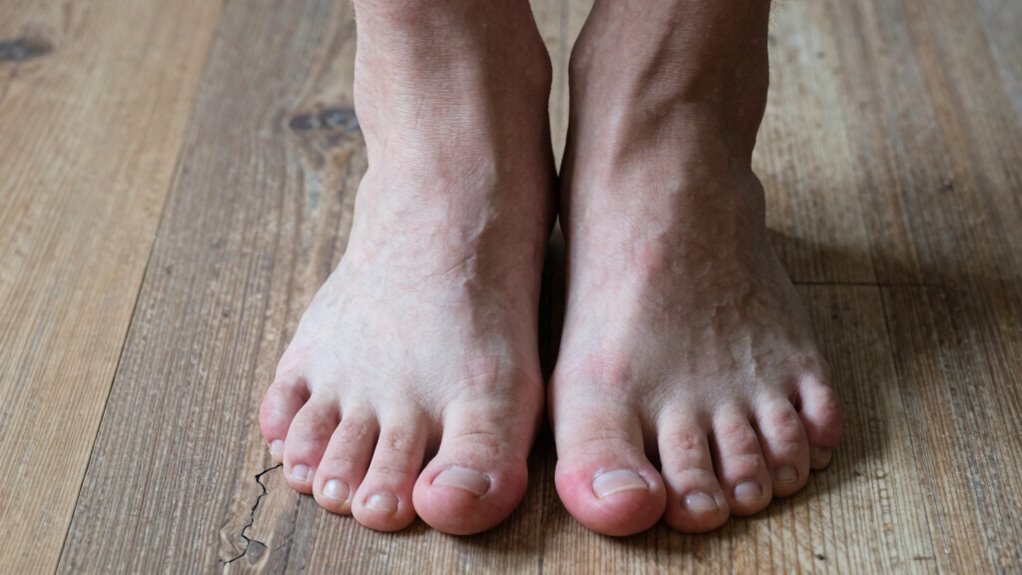

Toe gripping while standing is a common habit that often goes unnoticed but can cause muscle fatigue, cramps, and balance problems. When your toes clench, it strains the small foot muscles, reduces blood flow, and shifts your center of gravity, making you unstable. Poor footwear and muscle tension worsen this habit. If you want to prevent cramping and improve posture, understanding why you grip your toes is key — and there’s more to discover to help you relax your feet.
Key Takeaways
- Toe gripping often results from tight or poorly fitted footwear, leading to muscle overuse and cramps during standing.
- Habitual toe clenching shifts balance, causing muscle fatigue, instability, and increased risk of foot cramps.
- Limited ankle flexibility and foot muscle weakness promote automatic toe tensing as a stabilizing response.
- Excessive toe gripping disrupts posture and balance, contributing to muscle fatigue and cramping in the toes and feet.
- Addressing footwear fit, stretching, and strengthening foot muscles can reduce habitual toe gripping and related cramps.
Why Do We Grip Our Toes When Standing?
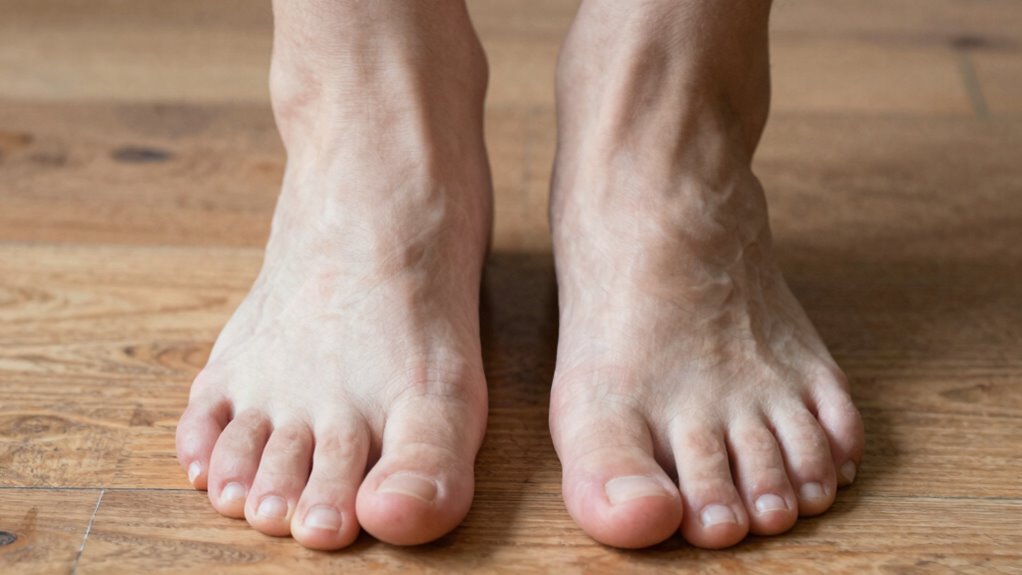
Have you ever wondered why your toes tend to grip the ground when you’re standing? One reason could be your footwear choices. Shoes that are too tight or lack proper support force your muscles to work harder to stabilize your feet. This extra effort causes your toes to clutch the ground instinctively. Additionally, limited ankle flexibility plays a role; if your ankles can’t move freely, your body compensates by gripping with your toes to maintain balance. Over time, this habit becomes ingrained, making toe gripping automatic even when it’s unnecessary. Choosing footwear that fits well and promotes natural movement helps reduce this tendency. Improving ankle flexibility through stretching exercises can also lessen the need for your toes to grip, easing tension and promoting better posture. Being aware of footwear fit and support can make a significant difference in preventing this habit from developing further. Recognizing and addressing muscle fatigue early can also help prevent excessive toe gripping during standing. Moreover, understanding the role of neuromuscular control can aid in retraining your muscles to maintain proper posture without unnecessary gripping. Practicing targeted exercises to enhance foot muscle strength may further reduce the tendency to grip involuntarily. Developing a consistent awareness of postural habits can help you correct this behavior over time.
How Can You Recognize Signs of Excessive Toe Tensing?
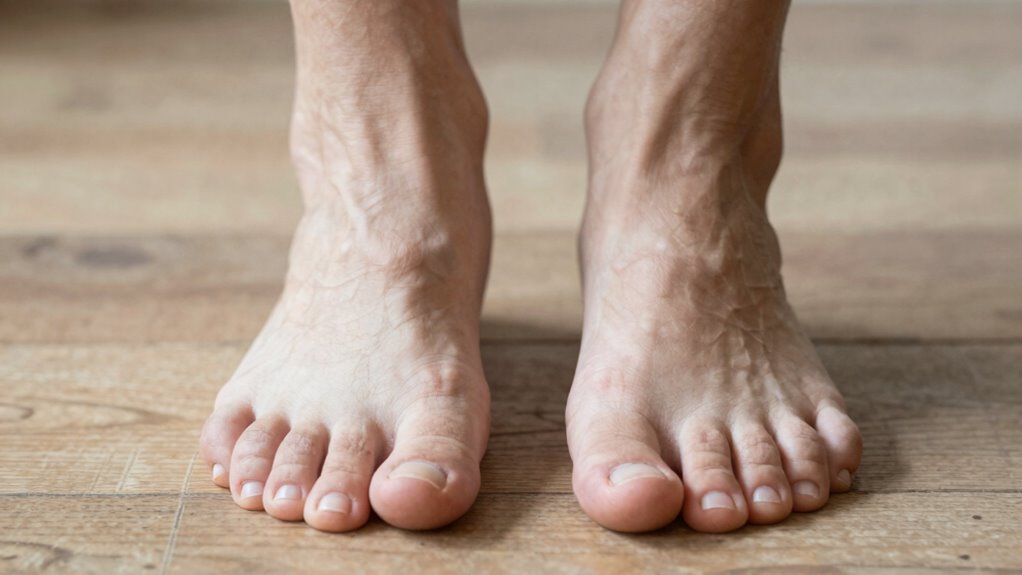
You might notice your toes feeling tight or clenched even when you’re not trying to grip them. Physical discomfort, like soreness or cramping, can also be signs you’re tensing too much. Paying attention to these cues helps you identify when excessive toe tensing is happening. Additionally, improper filtration and pump protection can lead to increased muscle tension due to inconsistent pressure on your toes during standing. Recognizing muscle strain influences can also help you understand how repetitive movements and habits contribute to muscle strain. Proper foot biomechanics and alignment are essential for reducing undue stress on your toes and overall foot muscles, helping prevent cramping and discomfort.
Noticing Toe Tightness
Excessive toe tensing often shows up as tightness or rigidity that you can feel in your toes and the surrounding muscles. You might notice a persistent feeling of pressure or stiffness, especially after long periods of standing. To recognize toe tightness, pay attention to subtle signs like discomfort when changing footwear choices or feeling overly strained despite minimal activity. Color accuracy in your footwear and foot positioning can also influence how much your toes tense up during the day. Additionally, muscle imbalances in the feet and legs can contribute to increased tension and cramping. Poor footwear choices and footwear fit can exacerbate these issues, leading to more frequent cramping episodes. Maintaining proper footwear selection that supports natural foot movement can help reduce tension. It’s also helpful to practice stress management techniques, as stress can increase muscle tension in your feet and legs. Tightness persists even when you’re relaxed. You feel cramping or fatigue in your feet. Shoes feel uncomfortably tight or restrictive. You notice increased stress or tension in your legs and feet during the day. These signs can be linked to poor footwear choices or inadequate stress management. Becoming aware of these cues helps you address the habit early, reducing cramping and discomfort over time.
Physical Discomfort Signs
When toe tensing becomes excessive, it often manifests as physical discomfort that signals something’s off. You might notice persistent pain or soreness in your toes, arches, or the ball of your foot. Tight, fatigued muscles can cause cramping or numbness, especially after standing for long periods. Pay attention to footwear choices—ill-fitting shoes can worsen tension and discomfort. If you feel persistent tension or aching, it’s a sign you may be gripping your toes too tightly. Managing stress is also essential—excess stress can lead to unconscious habits like toe gripping. Recognizing these signs early allows you to adjust your standing habits, choose better footwear, and incorporate stress management techniques to prevent ongoing discomfort and promote foot health. Additionally, being aware of inclusive casting practices in the fashion industry can help promote healthier and more comfortable footwear options for diverse foot shapes and sizes. Incorporating foot muscle exercises can also help improve toe and foot strength, reducing the tendency to grip excessively. Developing awareness of foot biomechanics can further assist in correcting improper standing postures and alleviate tension. Regularly consulting a podiatrist can provide personalized insights into foot health and help address underlying issues. Paying attention to posture alignment can prevent unnecessary strain on foot muscles and improve overall comfort.
What Are the Effects of Toe Gripping on Cramps and Fatigue?
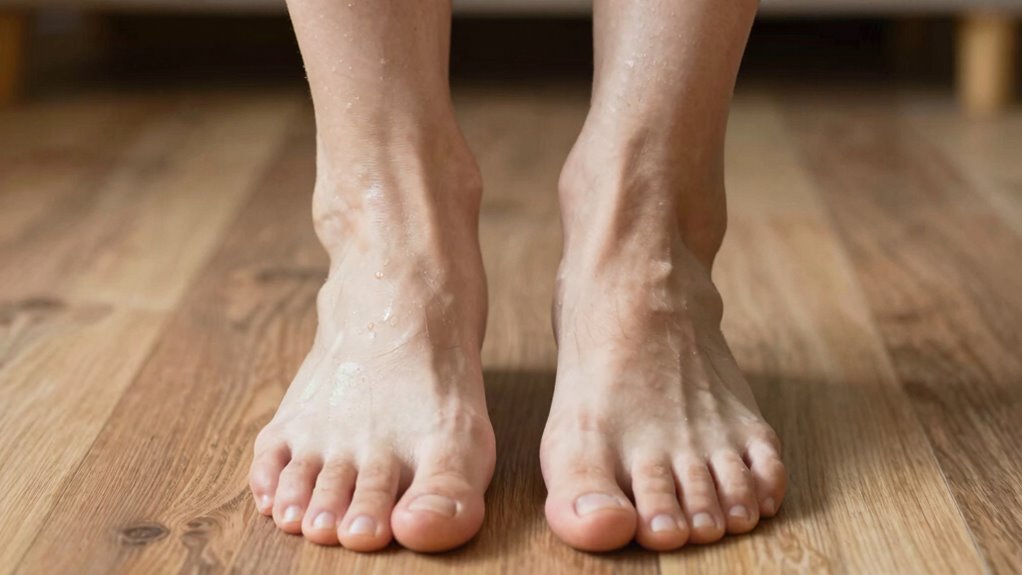
Curiously, toe gripping during standing can lead to increased muscle fatigue and a higher risk of cramps. When you grip your toes, you overwork the small muscles in your feet, which can cause discomfort and exhaustion over time. This strain is worsened by improper footwear choices that restrict natural movement or by barefoot walking on hard surfaces, forcing your muscles to compensate. The constant tension can also reduce blood flow, heightening cramp susceptibility. To avoid this, consider:
- Choosing supportive footwear that promotes natural toe movement
- Practicing barefoot walking on soft surfaces to strengthen foot muscles
- Paying attention to your muscle signals to prevent overuse
- Incorporating stretching routines to reduce tension in foot muscles
- Being aware of muscle fatigue signs to intervene early and prevent further strain. Additionally, foot biomechanics play a crucial role in how your muscles respond during standing activities, impacting cramp development. Addressing these habits can notably lessen cramps and fatigue linked to toe gripping. Proper muscle conditioning can help you build resilience and reduce the chances of cramping caused by overexertion. Understanding muscle fatigue can help you identify early signs of overexertion, ultimately aiding in prevention. Recognizing the importance of proper posture can further minimize unnecessary strain on your feet and legs.
How Does Toe Gripping Affect Your Balance and Posture?
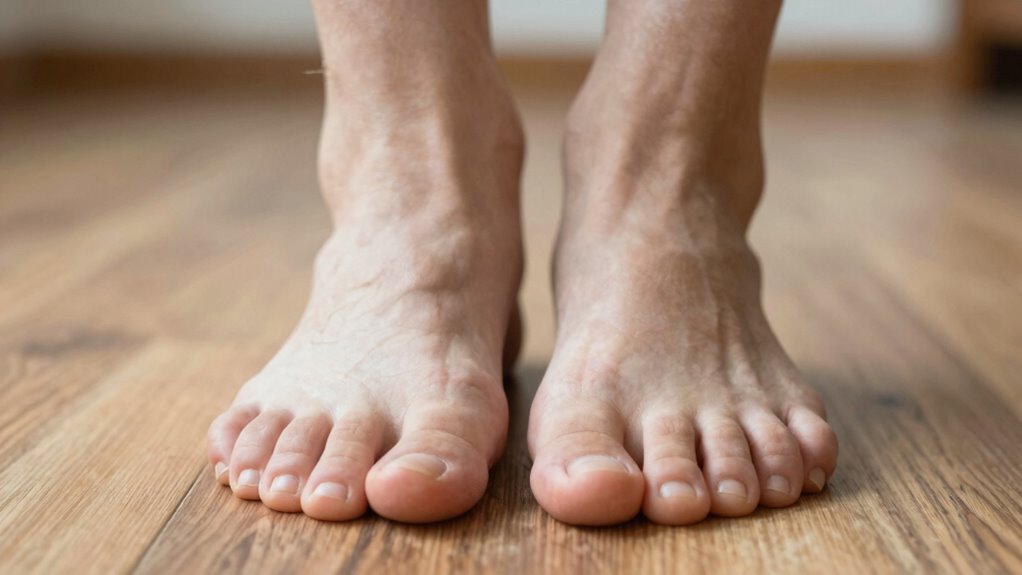
When you grip your toes while standing, it can shift your center of gravity, making your balance less stable. This action may also throw off your postural alignment, leading to discomfort or misalignment. As a result, your overall stability decreases, increasing the risk of wobbling or falling. Incorporating foam rolling techniques can help release tight muscles and improve overall balance. Additionally, paying attention to muscle flexibility can further enhance your stability and reduce cramping. Recognizing the importance of natural light in creating a supportive environment can also promote better posture and comfort.
Altered Center of Gravity
Have you ever wondered how gripping your toes while standing can shift your balance? When you grip your toes, you unintentionally change your center of gravity, making it harder to stay stable. This habit can cause your posture to become misaligned, forcing your body to compensate. Your footwear choices can worsen this effect, especially if they restrict natural foot movement or lack proper support. On the other hand, barefoot benefits allow your feet to function more naturally, helping maintain a balanced center of gravity.
- Shifts your weight distribution
- Increases tension in leg and core muscles
- Alters alignment of hips and spine
- Promotes a forward or backward lean
Understanding this helps you recognize how toe gripping impacts your overall stance, leading to longer-term balance issues.
Compromised Postural Alignment
Ever notice how toe gripping can throw off your posture? When you grip your toes tightly, it disrupts ankle stability, making it harder to maintain proper alignment. This habit can cause your foot arch to flatten or become uneven, which shifts your body’s center of gravity. As a result, your body compensates by adjusting your overall posture, often leading to misalignment in your hips, knees, and shoulders. Over time, these subtle changes can contribute to discomfort and muscular imbalances. Toe gripping creates a chain reaction that compromises how your body supports itself while standing. Maintaining a relaxed toe position helps preserve proper foot arch and ankle stability, ensuring your posture stays aligned and balanced naturally.
Reduced Balance Stability
Toe gripping directly undermines your balance by destabilizing the foot’s natural support system. When you clench your toes, it shifts the way weight is distributed, making it harder to stay steady. Poor footwear choices, like tight or unsupportive shoes, can worsen this issue, forcing your toes into unnatural positions. Neurological factors also play a role, affecting muscle control and coordination, which are essential for maintaining stability. As a result, your posture becomes less reliable, increasing the risk of falls or missteps.
- Disrupts proper weight transfer during standing
- Weakens intrinsic foot muscles over time
- Compromises sensory feedback from the feet
- Leads to a less responsive balance system
Understanding these effects can help you break the habit and improve your overall stability.
What Causes Toe Gripping Habits? Common Factors Explained
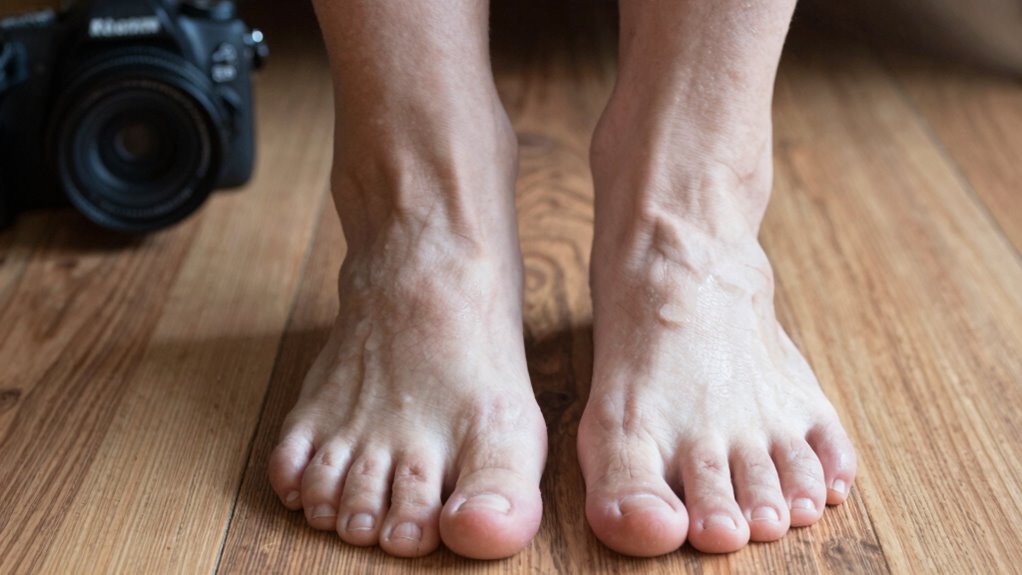
Many factors can lead to toe gripping habits when standing, often as a response to underlying issues or compensations. One common cause is footwear choices; tight or poorly fitted shoes can restrict foot movement and encourage gripping as your body tries to stabilize. Muscle tension also plays a significant role—if your foot or leg muscles are tight or weak, you may unconsciously grip your toes to maintain balance or reduce discomfort. Over time, this habit can become ingrained, even when the initial cause is gone. Additionally, foot deformities or nerve issues can contribute to toe gripping, as your body attempts to protect or compensate for pain or instability. Recognizing these factors can help you address the root causes and break the habit.
How Can You Relax Your Toes to Prevent Cramping?
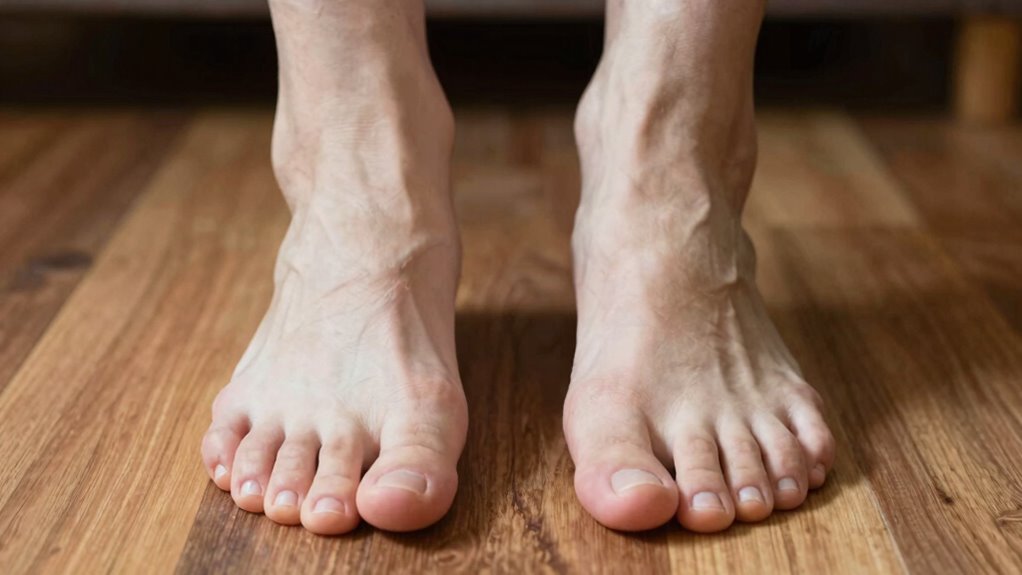
When you notice your toes tightening or cramping during standing, it’s important to find ways to relax them to prevent discomfort and improve overall foot function. Start by adjusting your footwear choices—opt for supportive shoes with a roomy toe box to reduce pressure. Use muscle relaxation techniques like gently stretching your toes, rolling a ball under your foot, or practicing deep breathing to ease tension. Regularly shifting your weight and taking short breaks can also prevent cramping. Consider massaging your toes and feet to increase circulation and loosen tight muscles. Remember, relaxing your toes isn’t just about comfort; it helps maintain proper foot mechanics and reduces the likelihood of cramping during prolonged standing.
What Exercises Help Improve Toe Flexibility and Strength?
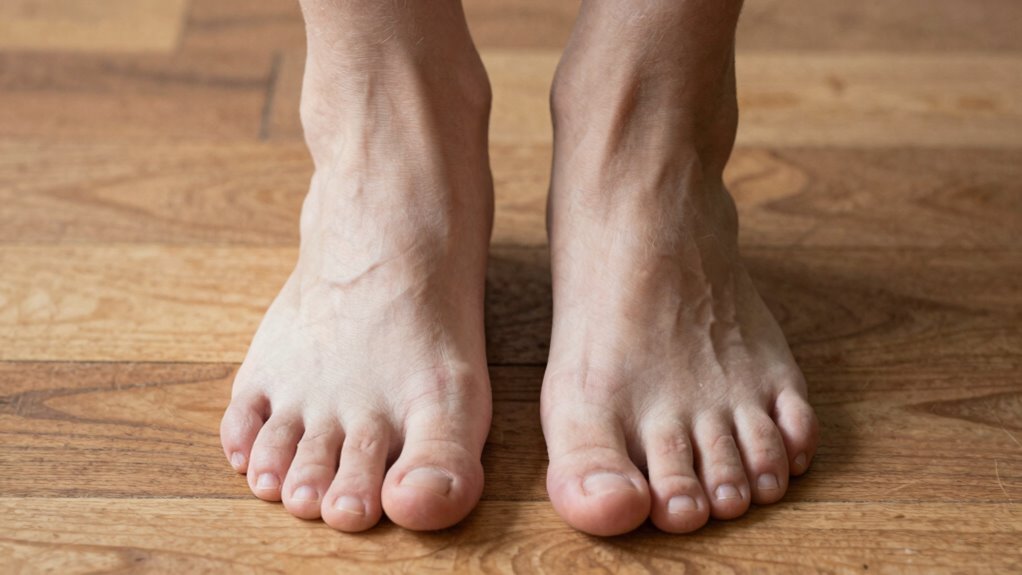
Improving toe flexibility and strength is essential for better foot function and stability. One effective exercise is a toe stretch, where you gently pull your toes upward or spread them apart to increase flexibility. Regularly practicing toe stretches helps loosen tight muscles and tendons, reducing cramping and improving movement. Foot strengthening exercises, such as toe curls with a towel or picking up small objects with your toes, target the muscles that support your toes and arch. These exercises enhance overall toe control and stability. Focus on consistency to see progress, and incorporate both toe stretches and foot strengthening activities into your daily routine. Strengthening your toes not only prevents cramping but also promotes healthier, more resilient feet.
How to Keep Your Feet Relaxed During Daily Activities
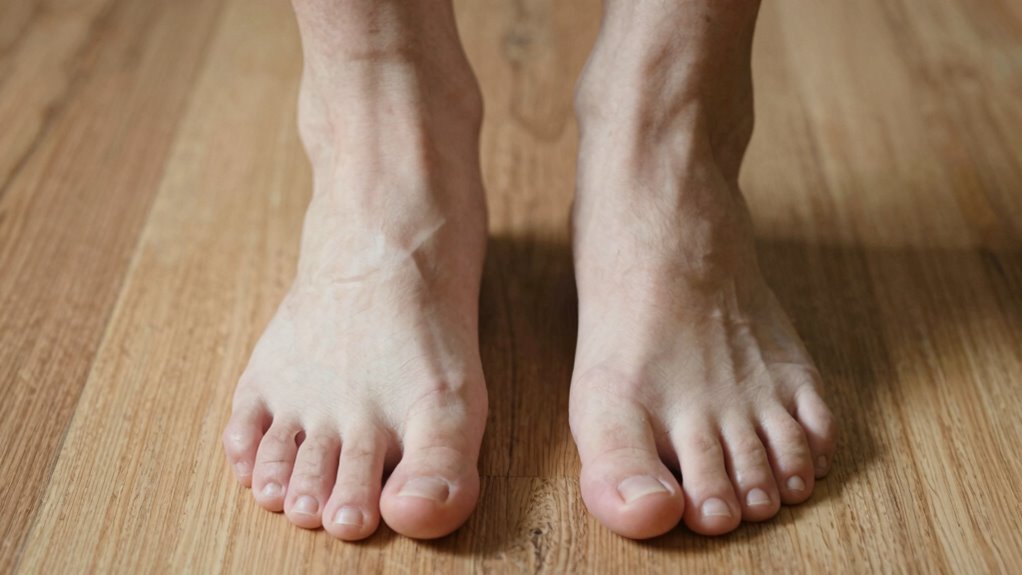
To keep your feet relaxed during daily activities, it’s important to pay attention to your posture and footwear choices. Wearing supportive, well-fitted shoes can prevent unnecessary tension and cramping. Opt for footwear choices that allow your feet to breathe and move naturally, avoiding tight or overly cushioned shoes. Incorporate barefoot exercises into your routine to strengthen foot muscles and improve flexibility, making relaxation easier during the day. Additionally, be mindful of how you stand and shift your weight frequently to avoid overusing specific muscles. Remember these key points:
- Choose footwear that supports natural foot movement
- Practice barefoot exercises regularly
- Maintain good posture to reduce strain
- Shift your weight evenly during standing or walking
These habits promote relaxed, less cramped feet throughout your daily routine.
Frequently Asked Questions
Can Toe Gripping Be Linked to Specific Foot Conditions or Injuries?
Yes, toe gripping can be linked to foot conditions like toe deformities and issues with ankle stability. When you grip your toes excessively, it puts extra strain on the toes and surrounding muscles, which can lead to deformities such as bunions or hammer toes. This habit can also compromise ankle stability, increasing your risk of injury and discomfort. Recognizing and addressing toe gripping helps prevent these issues and promotes healthier foot function.
Does Wearing Certain Footwear Influence Toe Gripping Habits?
Yes, your footwear choices can totally influence your toe gripping habits. Imagine shoes so tight or unsupportive that they turn your feet into rebellious little gymnasts, forcing your toes to grip just to stay in place. Your habitual posture adapts to these shoes, making toe gripping an automatic reflex. So, if you want to break free from this crazy cycle, opt for comfy, supportive footwear that encourages natural foot movement.
Are There Psychological Factors That Contribute to Toe Gripping?
Yes, psychological factors like stress and anxiety can influence your toe gripping habits. When your mind perceives stress, your body activates the stress response, often tightening muscles, including your toes. This mind-body connection causes you to grip your toes unconsciously as a way to cope or feel more grounded. Becoming aware of this link can help you relax and reduce unnecessary toe gripping, easing cramping and tension.
How Does Toe Gripping Impact Long-Term Foot Health?
Imagine your foot as a busy city, and toe gripping as a stubborn traffic jam. Over time, muscle fatigue from constant gripping wears down your foot’s defenses, risking long-term damage. It can cause postural imbalance, leading to joint pain and instability. Persistent strain weakens tendons and muscles, making your feet less resilient, like a crumbling foundation. Breaking this habit protects your foot’s future health and keeps your steps steady.
Can Toe Gripping Be a Sign of Underlying Neurological Issues?
Yes, toe gripping can sometimes indicate underlying neurological issues. If you notice persistent or excessive gripping, it might be a sign of nerve problems or muscle weakness. You should consider a neurological assessment to determine the cause. Addressing this early can help prevent further complications. Pay attention to other symptoms like numbness or tingling, and consult a healthcare professional to get an accurate diagnosis and appropriate treatment.
Conclusion
By loosening your grip on your toes, you open a world of comfort and balance, like releasing a tight knot that’s been holding you back. When you let go of that hidden habit, you free your body to move with grace and ease, turning daily standing into a dance of relaxation. Embrace these simple changes, and watch as your feet become the steady roots supporting a stronger, pain-free you, blooming with renewed energy.