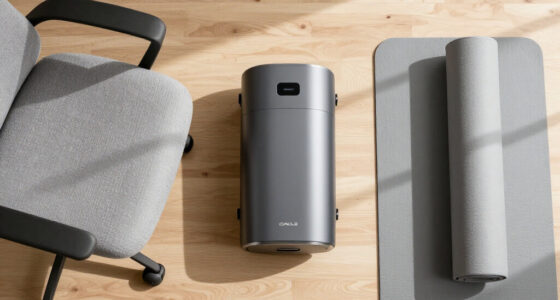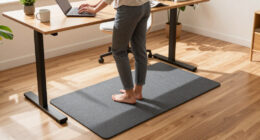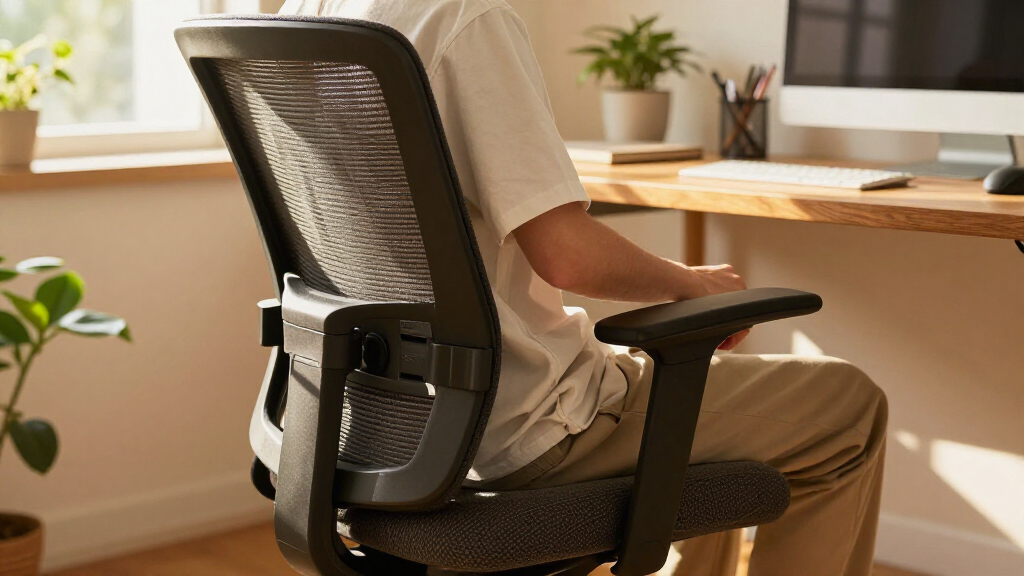

Choosing an ergonomic office chair is a decision about fit as much as price. A fully adjustable ergonomic chair gives you more control over seat height and depth, armrests, lumbar support, and recline. A basic ergonomic office chair usually covers the essentials, with fewer adjustments and a lower upfront cost. The difference matters most if you sit for long stretches, share a chair, or have trouble getting comfortable in standard models. For occasional desk work or a tight budget, a basic chair may be enough; for daily use, the extra control of a fully adjustable model is often worth paying for.

Get comfort and recovery gear delivered free with Prime
- Fast, free delivery on millions of items
- Prime Video, Amazon Music and more included
- Member-only deals all year

Eurotech Ergohuman GEN2 High-Back Mesh Office Chair, Blue
- ✔ Material: Mesh
- ✔ Back style: High-back with headrest
- ✔ Seat dimensions: 20.67 x 19.69 inches (W x D)
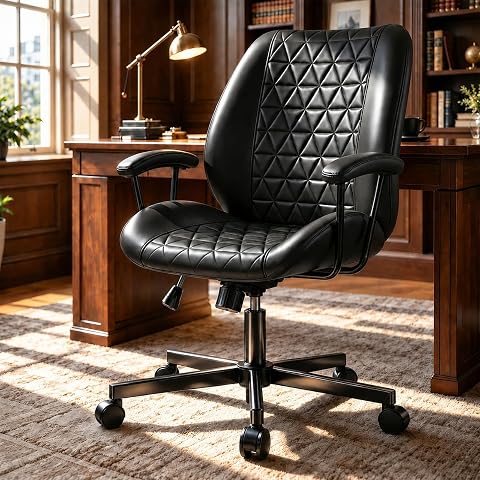
CozySpot PU Leather Office Chair with Lumbar Support and Removable Arms
- ✔ Upholstery: PU leather
- ✔ Frame material: Iron
- ✔ Seat dimensions: 21 x 19.5 inches (W x D)

RESTACORIN Armless Mid-Back Office Chair with Rubber Wheels, Brown
- ✔ Material: PU leather
- ✔ Back style: Tufted mid-back
- ✔ Design: Armless
Neither label guarantees comfort or a good fit: chair dimensions, adjustment ranges, build quality, and your body all matter. Compare the actual specifications before buying. The practical question is whether the added adjustments solve a problem you have, or simply add features you are unlikely to use.
At a Glance
| Criteria | Fully adjustable ergonomic chair | Basic ergonomic office chair | Winner |
|---|---|---|---|
| Adjustability | More adjustment points, often including seat depth, lumbar position, armrests, and recline tension | Typically height and recline, with fewer controls or fixed support | A |
| Fit across body sizes | More ways to tune fit, subject to the chair’s adjustment range and dimensions | Can fit well when its fixed dimensions match the user | A |
| Support during long sessions | More opportunity to change posture and reduce pressure points | Adequate for shorter or intermittent sessions; fewer options if discomfort develops | A |
| Ease of setup | More controls to learn and tune | Simple to set up and use | B |
| Durability and repair | Often stronger construction and replaceable parts, but varies by model | Highly variable; budget models may have fewer serviceable parts | Depends |
| Upfront cost | Higher | Lower | B |
| Value for daily use | Usually better for frequent, long-hour use when adjustments improve fit | Often better for occasional use or strict budgets | Depends |
Eurotech Ergohuman GEN2 High-Back Mesh Office Chair, Blue
For readers who need to fine-tune a chair rather than settle for a fixed fit, the Ergohuman GEN2 is our strongest ergonomic choice. Its adjustments cover seat height and depth, arm height, back height and angle, headrest position, tilt tension, and tilt lock. That breadth matters when a chair needs to work with a particular desk, leg length, or preferred recline. Flexible lumbar support adds a more specific lower-back adjustment than the other two chairs describe.The high-back mesh design also gives it a different role from the mid-back CozySpot and RESTACORIN. A headrest and taller backrest may appeal to people who want support extending above the shoulders, while mesh may feel less enclosing than PU leather. Against CozySpot, Ergohuman offers more ways to tune the back and seat, but CozySpot has a higher stated capacity and a specified seat-height range. Compared with RESTACORIN, it offers arm and lumbar support at the cost of a larger, more involved chair.There are practical compromises. At 55 pounds, it is the heaviest option here, which can make moving it around a shared room less convenient. Assembly is required, and its 275-pound capacity is the lowest of the lineup. It makes most sense for people who will use its controls to achieve a tailored fit; buyers who want a lightweight, uncomplicated chair may find CozySpot easier to live with.
Pros:
- Seat depth, back height, arm height, and headrest adjustments allow a more tailored fit.
- Flexible lumbar support gives it a lower-back adjustment absent from the other listed chairs.
- Reclining, tilt tension, and tilt lock support more than one sitting posture.
- Mesh upholstery and a high back distinguish it from the two PU leather mid-back options.
Cons:
- At 55 pounds, it is substantially heavier than CozySpot’s 37-pound chair.
- Its 275-pound capacity is lower than the 300-pound RESTACORIN and 350-pound CozySpot.
- Assembly is required, and the many controls may be unnecessary for buyers seeking a basic chair.
Best for: People who sit for long work sessions and want to adjust the seat, back, arms, lumbar area, and recline to suit their body and desk.
Not ideal for: Buyers who need the highest stated weight capacity, a lightweight chair, or a simple setup with minimal assembly.
Bottom line: We recommend the Ergohuman GEN2 for buyers who will use its extensive fit adjustments and lumbar support to build a more tailored workstation.
“We recommend the Ergohuman GEN2 for buyers who will use its extensive fit adjustments and lumbar support to build a more tailored workstation.”
CozySpot PU Leather Office Chair with Lumbar Support and Removable Arms
The CozySpot is the most adaptable choice for changing how we sit without moving up to the Ergohuman’s larger high-back design. Its arms can be removed, so we can configure the chair around a desk edge, a preferred arm position, or a workspace where clearance matters. A stated seat-height range of 17.8–25 inches also gives buyers a concrete measurement to compare with their desk and leg position—information the RESTACORIN listing does not provide.Its tilt runs from 90° to 120° with adjustable tension, making it better suited than RESTACORIN to people who want to shift between upright work and a reclined posture. The contoured mid-back lumbar support offers a measure of lower-back shaping, although it is not described as adjustable. That is the key distinction from the Ergohuman: CozySpot makes it easier to choose arm configuration and tilt, while the Ergohuman provides more adjustment points for tailoring the back and seat.CozySpot’s 350-pound stated capacity is the highest in this group, and its wipe-clean PU leather is practical for a home office or study. The tradeoff is a shorter mid-back profile and fewer documented fit controls than the top-ranked chair. The description also says assembly takes approximately 15–20 minutes and includes five-year after-sales support; buyers should still confirm that the dimensions suit their body and desk, since this chair does not list a headrest or adjustable lumbar mechanism.
Pros:
- Seat-height range of 17.8–25 inches helps buyers check compatibility with their desk.
- Removable padded arms let us change the chair’s width and arm support arrangement.
- Tilt range and tension adjustment support posture changes beyond upright sitting.
- Its 350-pound capacity is the highest stated among these three options.
Cons:
- Mid-back support lacks the headrest and adjustable back settings of Ergohuman.
- Contoured lumbar support is described, but no lumbar adjustment is specified.
- Assembly is required.
Best for: Home-office users who want a defined seat-height range, a reclining mid-back chair, removable arms, and a higher stated capacity.
Not ideal for: People seeking a high back with headrest, adjustable lumbar support, or the extensive seat and back controls available on Ergohuman.
Bottom line: We favor CozySpot when removable arms, a measurable height range, and flexible tilt matter more than a fully adjustable high back.
“We favor CozySpot when removable arms, a measurable height range, and flexible tilt matter more than a fully adjustable high back.”
RESTACORIN Armless Mid-Back Office Chair with Rubber Wheels, Brown
RESTACORIN earns its place for a specific setup: a desk where armrests get in the way, or a room where sliding a chair fully underneath the work surface helps preserve floor space. Its armless profile allows freer movement at the sides and avoids armrests bumping into a desk. The rubber casters are described as quiet and suitable for different floor types, a practical detail for shared rooms or hard flooring.As an ergonomic chair, however, it is the most basic of the three. Height adjustment and 360-degree swivel cover essential positioning, and the padded mid-back offers some support, but the listing does not specify adjustable lumbar support, recline, or seat-depth controls. That makes it less configurable than CozySpot, whose arms can be removed and whose tilt tension can be adjusted. Against Ergohuman, RESTACORIN is a simpler, smaller-feeling alternative, without the high back, headrest, or detailed adjustment system.The tufted PU leather seat gives it a more traditional upholstered look and a wipeable surface, but buyers who prefer mesh should look to Ergohuman. Its 300-pound stated capacity sits between the other two chairs. One important fit detail is missing: the height adjustment range is not given. We should compare the chair with our desk and preferred seated height before choosing it, especially because the product description names no separate seat dimensions. It is a focused pick for compactness and easy movement, rather than the best option for tuning support over long sessions.
Pros:
- Armless construction can clear desk edges and leave the sides open for movement.
- Rubber casters are described as quiet and suitable for multiple floor types.
- Pneumatic height adjustment and 360-degree swivel cover basic positioning needs.
- Its 300-pound capacity is higher than Ergohuman’s stated limit.
Cons:
- The armless design provides no arm support, unlike both other chairs as configured.
- The height-adjustment range and seat dimensions are not specified.
- No adjustable lumbar support, seat-depth control, or recline is listed.
Best for: People with compact desks who want an armless chair that swivels, adjusts in height, and uses rubber casters.
Not ideal for: Buyers who need arm support, a stated seat-height range, adjustable lumbar support, or reclining controls for prolonged desk work.
Bottom line: We choose RESTACORIN when desk clearance and an armless footprint matter more than extensive ergonomic adjustment.
“We choose RESTACORIN when desk clearance and an armless footprint matter more than extensive ergonomic adjustment.”
As an Amazon Associate we earn from qualifying purchases.
Key Differences
The largest difference is how much room each chair gives you to adjust the fit. A basic model can work well when its seat height, depth, back shape, and arm position happen to suit you. If one of those dimensions is wrong, however, you have fewer ways to compensate. A fully adjustable chair can accommodate more preferences and body proportions, though it still cannot overcome a seat that is too wide, too narrow, or outside your usable adjustment range.
That flexibility is most useful over a full workday. Changing seat depth, arm height, recline, or lumbar position can help you settle into a posture that feels supported and vary it through the day. More controls do not guarantee better comfort, and no chair replaces movement or a workstation setup that suits you. If you only sit at a desk now and then, the basic chair’s simpler operation and lower cost may matter more than adjustments you rarely use.
Value follows the same pattern. A higher price can make sense when the chair is used daily and its adjustments address specific fit needs. It is harder to justify paying extra for controls that do not improve your comfort or work routine. At either price, check dimensions, adjustment ranges, return terms, warranty, and parts availability; the category name alone does not establish quality.
Detailed Comparison
Adjustability (Fully adjustable ergonomic chair wins — major)
The fully adjustable chair wins by offering more ways to tune the seat, arms, back support, and recline. The gap is major for people who have already found that fixed chair dimensions cause discomfort; they can adjust the parts that are actually causing a poor fit. For someone comfortable in a standard seat, the advantage may be minor. Check which controls are included, since “fully adjustable” is not a uniform specification.
Fit across body sizes (Fully adjustable ergonomic chair wins — moderate)
Option A has the edge because seat depth, arm position, and support adjustments can help it suit a wider range of users. The gap is moderate, not absolute: a basic chair whose dimensions match your body can fit better than an adjustable chair with an unsuitable seat width or limited range. Compare measurements and ranges with your own needs before buying.
Support during long sessions (Fully adjustable ergonomic chair wins — moderate)
Option A usually wins for sustained desk work because it lets you change pressure points and support settings instead of accepting a fixed position. The difference is moderate and depends on fit, build, and personal comfort. A basic chair can be adequate if you use it for short periods, take regular breaks, and find its back and seat comfortable. Neither chair makes prolonged sitting harmless.
Ease of setup (Basic ergonomic office chair wins — minor)
Option B wins on simplicity. Fewer adjustments make it quicker to assemble, set up, and share with someone who does not want to tune several controls. The gap is minor for most buyers: learning a handful of controls on Option A takes little time, and once set, they may need few changes. The extra complexity pays off only when you use those controls.
Durability and repair (moderate difference)
There is no reliable category-wide winner. More expensive adjustable chairs may use sturdier components and offer replaceable parts, but price and feature count do not prove long service life. Some basic chairs hold up well, while some budget models have limited repair options. The difference is moderate when a specific model has a longer warranty, available parts, and clear service support; compare those details directly.
Upfront cost (Basic ergonomic office chair wins — major)
Option B wins clearly because it generally costs less to buy. The gap can be major for a household or workplace furnishing several desks. The lower sticker price is useful only if the chair fits and lasts well enough for its intended use; replacing an uncomfortable or worn chair early can erase the saving. Compare warranty and return terms alongside price.
Value for daily use (moderate difference)
This depends on how often you sit and whether the added controls solve a real fit problem. Option A offers better value for many full-time desk workers who will use its adjustments, since comfort and usable support matter throughout the workweek. Option B is better value for occasional use or buyers who already fit its fixed dimensions. The gap is moderate and tied to use, not the label alone.
Fully adjustable ergonomic chair: Pros and Cons
Pros:
- More ways to tune fit and support
- Better suited to shared chairs and changing preferences
- Can help address mismatches in seat depth, arm position, or lumbar placement
Cons:
- Higher purchase price
- More controls to learn and maintain
- Adjustability cannot compensate for unsuitable chair dimensions
Basic ergonomic office chair: Pros and Cons
Pros:
- Lower upfront cost
- Simple setup and operation
- Can offer good value when its fixed shape fits the user and work schedule
Cons:
- Fewer ways to correct a poor fit
- Less adaptable for different users or postures
- Budget models may have limited warranty or repair support
Who Should Choose What
Choose Fully adjustable ergonomic chair if:
- You sit at a desk for most of the workday and will use the adjustments.
- Seat depth, arm height, or lumbar position has been a problem in other chairs.
- Several people share the chair and need different settings.
Choose Basic ergonomic office chair if:
- You use the chair for occasional desk work or shorter sessions.
- Its dimensions already fit you comfortably and you do not need extra controls.
- Your budget is limited and the specific model has acceptable fit, warranty, and return terms.
Skip both if: Skip both models if neither has suitable seat dimensions or a return option and you cannot verify fit. Look for a chair whose measurements match your body and desk, or try one in person.
Value for Money
Pay more for a fully adjustable chair when you work seated for many hours and can identify the settings that would improve your fit. The added cost buys useful flexibility in that case, especially if a chair is shared or your comfort needs change during the day. It does not buy guaranteed comfort, and paying extra for a long feature list makes little sense if the chair’s basic dimensions are wrong.
A basic chair is the better value when you sit occasionally, already fit its proportions, and want straightforward operation. Before choosing either, compare warranty length, replacement parts, return policy, and the adjustment range. A lower price is a real saving only when the chair remains usable for the time you need it.
Final Verdict
For most people who work at a desk full time, choose a well-fitted fully adjustable ergonomic chair. Its main advantage is the ability to tune the chair to your body and work habits, which can make the extra cost worthwhile over years of regular use. Choose a basic ergonomic chair if your desk use is occasional, its dimensions already suit you, or the budget difference matters more than additional controls.
The deciding factor is fit, followed by how many hours you use the chair. Do not pay a premium for features without checking that the seat dimensions and adjustment ranges work for you. If neither option fits those requirements, skip both and find a chair that does.
Frequently Asked Questions
Is a fully adjustable ergonomic chair always more comfortable?
No. More adjustment points give you more chances to find a comfortable setup, but they do not guarantee one. The chair still needs appropriate dimensions, support, and build quality, and comfort varies by person.
Is an expensive ergonomic chair worth it for working from home?
It can be worth the extra cost if you work seated for much of the day and use the controls to solve a fit problem. For occasional home use, a less expensive chair that fits well may be the better value.
What adjustments matter most in an office chair?
Start with seat height and depth, then check whether the armrests and back support can be positioned comfortably. Recline settings can also matter if you change posture during the day. The useful features depend on your body and desk setup.
Can a basic office chair be ergonomic?
Yes. A basic chair can support a comfortable working posture when its dimensions and fixed support suit you. The limitation is that you have fewer ways to adjust it if the fit is close but not quite right.
Fall Picks
fall essentials
As an affiliate, we earn on qualifying purchases.