TL;DR

Get comfort and recovery gear delivered free with Prime
- Fast, free delivery on millions of items
- Prime Video, Amazon Music and more included
- Member-only deals all year
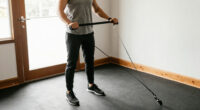
Steve Powell, a training and education director at Power Plate, recommends a two-minute routine of shoulder, chest, hip and back movements followed by a breathing pause. He says it may help people break up sedentary time and reconnect with how their bodies feel, but it is not a cure for stress.
A two-minute movement routine featuring shoulder rolls, chest opening, gentle hip and back movements, and a short breathing pause may offer a simple way to interrupt sitting during a stressful workday, according to Steve Powell, director of training and education at Power Plate. In a Fit&Well report tied to National Stress Awareness Day, Powell emphasized that the routine is a brief reset, not a cure for stress.
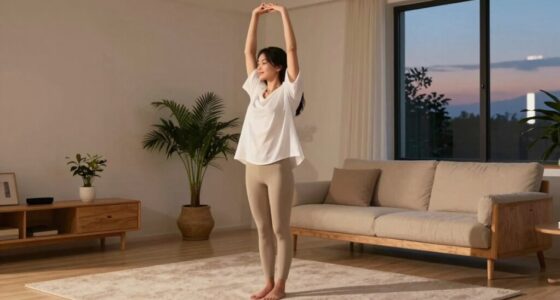
The routine takes 30 seconds per step and is designed to be done without specialist equipment, gym clothes or a dedicated space. Powell recommends starting seated or standing comfortably, letting the shoulders drop, then rolling them slowly backward five times and forward five times. The first step ends with gently drawing the shoulder blades together and releasing them.
For the next half-minute, stand with feet hip-width apart and open the arms to the sides while drawing the shoulders back. The movement should remain comfortable; Powell’s instructions caution against forcing the stretch or pushing into discomfort. The third step shifts weight gently from one foot to the other, followed by a few slow standing side bends within a comfortable range.
The final 30 seconds are a pause: stand tall, relax the arms and take a few comfortable, unhurried breaths. Powell suggests noticing how the shoulders feel before returning to work. The steps are presented as a way to change posture and break up inactivity, not as a flexibility workout or substitute for a longer exercise session.
A Pause That Fits Into Work
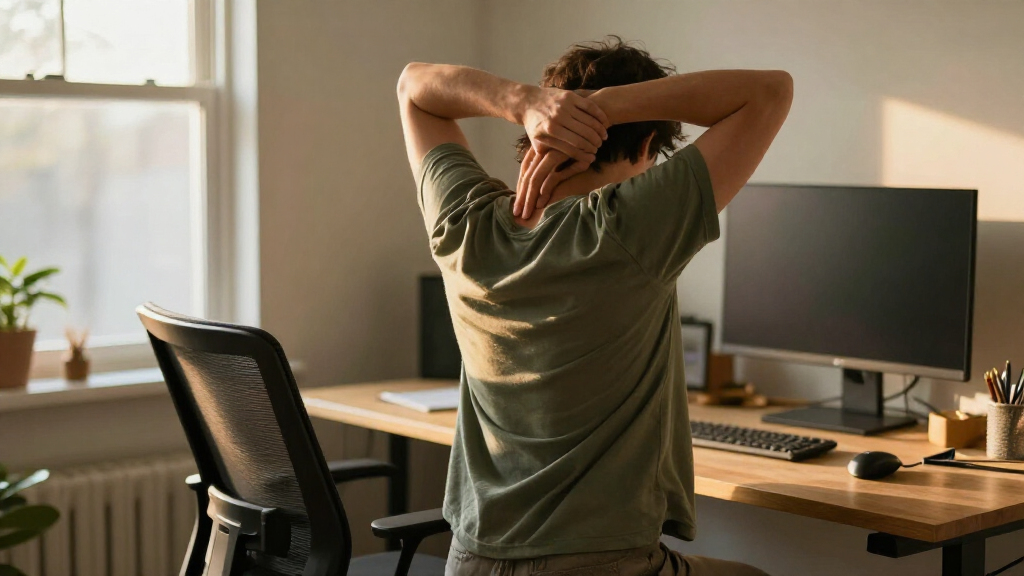
For people who spend long stretches at a desk, the routine offers a low-barrier way to add movement without setting aside time for a full workout. Powell says short actions such as a walk around the office, shoulder rolls between meetings or mobility movements while waiting for a kettle can make activity feel more accessible.
The practical point is modest: a two-minute pause can interrupt a sedentary spell and turn attention briefly away from a task. Powell says it may help someone feel “a little less stuck,” but also acknowledges that two minutes will not undo a demanding week or resolve the sources of a person’s stress. The report does not provide research findings or evidence that this specific sequence reduces stress; it presents the routine as expert advice for everyday wellbeing.
Products Worth Considering

Samsung 65-Inch The Frame Pro Neo QLED 4K TV (2026) Bundle with Modern Brown Bezel, HDMI Cables, and Home Theater Guide

Bose TV Speaker (2nd Gen) Compact Soundbar

Dyson V15 Detect Cordless Vacuum
As an affiliate, we earn on qualifying purchases.
Fit&Well connected the advice to National Stress Awareness Day, which its report says has been observed on the first Wednesday in November since 1998. The day is framed as an opportunity to pause and consider everyday wellbeing as people face accumulating deadlines and the approach of the holiday period.
Powell’s advice centers on a problem he says is common in modern working life: extended periods of sitting. He told Fit&Well that prolonged sitting can leave people feeling stiff or uncomfortable, particularly around the neck, shoulders, hips and lower back. He also said everyday stress can make it easier to neglect small habits that support wellbeing. These are Powell’s observations; the report does not quantify how common these experiences are.
Powell works for Power Plate, a company that makes whole-body vibration devices. His professional background includes movement, fitness and coaching, according to the report. The recommended sequence itself requires no vibration equipment or other products.
“Our bodies are designed to move, yet modern working life often encourages the opposite.”
— Steve Powell, director of training and education at Power Plate, speaking to Fit&Well
Limits of the Stress Advice
The report does not cite a study testing this specific four-step, two-minute routine, and it gives no measured effect on stress, mood or physical discomfort. Powell’s suggestions are expert guidance, not proof that the sequence will produce the same result for everyone.
It is also unclear how long any change in comfort or attention might last. The advice says to move only within a comfortable range and avoid forcing a stretch, but it does not offer tailored instructions for people with injuries, pain or health conditions. Anyone unsure whether these movements are suitable can seek guidance from a qualified health professional.
A Brief Break, Then Back to Work
There is no formal follow-up study or further milestone described in the report. Powell’s suggestion is to try the movements during a break in the working day, then return to the next task. Readers can also use shorter alternatives—such as standing up, walking briefly or rolling the shoulders—if the full sequence does not fit their circumstances.
The next step is therefore a personal, low-intensity trial rather than a treatment plan: stop if a movement causes discomfort, keep the range gentle, and seek professional advice if a health condition or injury affects what feels appropriate. The report’s central message remains limited: a short movement break may provide a pause, while the causes and effects of everyday stress require more than a two-minute routine.
Key Questions
What are the four parts of the two-minute reset?
The routine uses 30 seconds each for shoulder rolls, opening the chest, gentle hip and back movements, and a final pause with relaxed breathing.
Does the routine require equipment?
No. Powell says it can be done without specialist equipment, gym clothes or a dedicated space.
Can two minutes cure or eliminate stress?
No. Powell explicitly says movement is not a cure for stress and that two minutes will not undo the effects of a demanding week. The routine is described as a brief pause that may help someone feel less stuck.
What if a movement feels uncomfortable?
Keep movements gentle and within a comfortable range; the instructions say not to force a stretch. Stop if it causes discomfort, and ask a qualified health professional for advice if you have an injury or health condition that may affect the movements.
Source: fitandwell.com