
Motor specs like torque, speed, and duty cycle help you understand how well a motor performs for your needs. Torque tells you how much rotational force it can produce, while speed shows how fast it spins. Duty cycle indicates how long the motor can run without overheating. Knowing these details helps you pick the right motor for your project. If you want to learn more about what these specs mean and how to choose wisely, keep exploring.
Key Takeaways
- Torque measures the rotational force a motor produces, affecting its ability to handle loads.
- Speed indicates how fast the motor’s shaft rotates, usually in revolutions per minute (RPM).
- Duty cycle shows how long a motor can operate continuously without overheating, expressed as a percentage.
- High torque is needed for heavy tasks, while speed determines how quickly the motor completes rotations.
- Matching torque, speed, and duty cycle to your application ensures reliable and efficient motor performance.

6v 12V18V 22v 200W-DC Planet Gear Motor 350kg.cm High Torque Mini Metal Geared Motor for DIY Robot Rotating Table Door Lock Curtain Machine
- Voltage Range: 6V to 22V DC
- High Torque: 350kg.cm
- Output Shaft Diameter: 8mm
As an affiliate, we earn on qualifying purchases.
As an affiliate, we earn on qualifying purchases.
What Are Motor Specs and Why Do They Matter?

Have you ever wondered what those numbers and terms in a motor’s specifications mean? Understanding motor specs is essential because they directly impact how well a motor performs and operates in your application. For example, motor noise levels matter if you need a quiet environment, while energy efficiency determines how much power the motor consumes to do its job. A motor with high energy efficiency saves you money over time and reduces environmental impact. Specs like voltage, power, and efficiency ratings help you select the right motor for your needs. Ignoring these details can lead to choosing a motor that’s too loud or inefficient, causing frustration and higher costs. Knowing what these specs mean guarantees you pick the best motor for your project, balancing performance and noise with energy savings. Understanding motor specifications helps ensure you make informed decisions tailored to your specific requirements. Additionally, duty cycle ratings inform you how long a motor can operate continuously without overheating, which is crucial for sustained applications. Recognizing the importance of these technical details can also help prevent motor failure and extend the lifespan of your equipment. A clear grasp of performance metrics can further optimize your motor selection process and operational efficiency.

High Torque AC Motor + Speed Controller + Gear Box, 250W Single Phase Electric Motor with Gearbox, Variable Speed Motor, Reversible Gear Motor with Control Box, 110V Geared Motor
- High Torque: 16Nm torque for heavy-duty applications
- Variable Speed: Adjustable 0-135RPM for versatility
- Reversible Rotation: Bidirectional operation for diverse tasks
As an affiliate, we earn on qualifying purchases.
As an affiliate, we earn on qualifying purchases.
Understanding Motor Torque: How Much Force Can It Deliver?

Understanding motor torque is key to knowing how much rotational force a motor can deliver to move or turn objects. The higher the torque, the more force you have to handle heavier loads or start moving from a standstill. When selecting a motor, consider power efficiency because it impacts how effectively the motor uses energy to produce torque without wasting power as heat. Noise levels also matter; some motors generate more noise under high torque, which can be disruptive. A motor with good power efficiency provides strong torque while consuming less electricity, making it more cost-effective and environmentally friendly. Additionally, motor efficiency directly affects how well the motor performs under load and can influence its lifespan. Keep in mind that torque alone doesn’t tell the whole story—balance it with other specs to ensure the motor meets your specific needs. For optimal performance, understanding battery compatibility and how it interacts with motor specs can help prevent issues like overheating or underperformance. Proper matching of voltage requirements is crucial for maintaining motor longevity and optimal operation. Additionally, understanding the duty cycle is essential to ensure the motor can operate continuously or intermittently without overheating or failure, especially in industrial applications where consistent performance is critical.

findmall Electric Motor 5HP 1750 RPM, Single Phase Air Compressor Motor
- High Performance: 5HP, 1750 RPM, supports 208/230V
- Reliable Operation: Supports continuous duty cycle (S1)
- Durable Construction: Heavy-duty rolled steel shell
As an affiliate, we earn on qualifying purchases.
As an affiliate, we earn on qualifying purchases.
How Fast Can a Motor Spin? Understanding Motor Speed
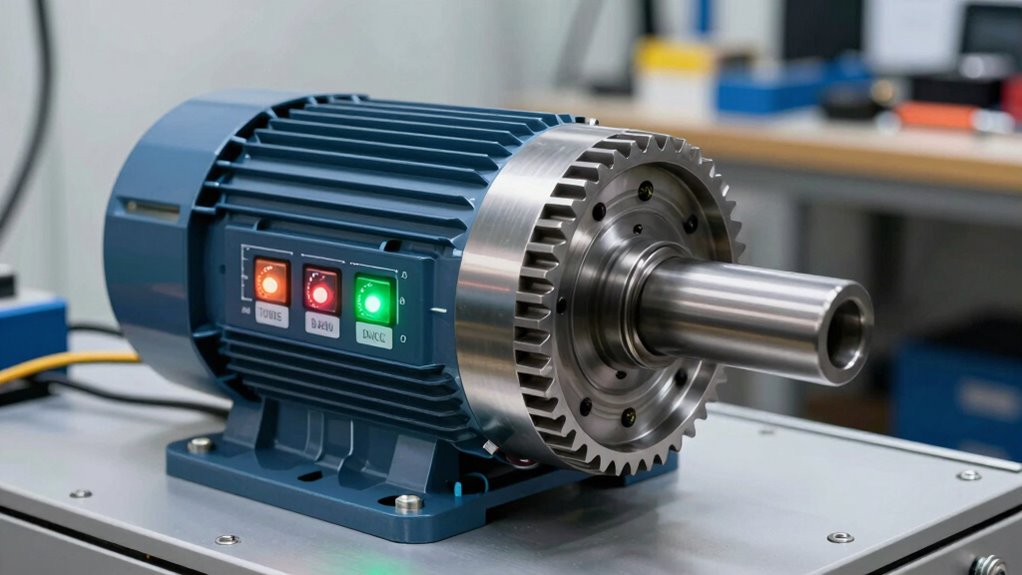
Motor speed determines how quickly a motor can rotate or complete a full turn, directly impacting the performance of your application. The maximum speed depends on factors like the gear ratio, which can increase or decrease the rotational speed delivered to your device. A higher gear ratio typically means the motor spins faster at the expense of torque, while a lower ratio favors torque over speed. Rotational inertia also affects motor speed; higher inertia requires more energy to accelerate, slowing down the motor’s ability to reach high speeds quickly. Keep in mind that electrical limits and design constraints can cap the maximum RPM. Additionally, understanding how aromatherapy benefits complement traditional treatments can enhance overall well-being. Understanding these factors helps you select a motor that balances speed with your application’s specific needs.

DC Motors Kit DIY Science Projects DC Motor Kit 3V-12V 25000RPM Mini Electric Hobby Motors with Plastic Gears, Battery Holder, Boat Rocker Switch, Shaft Propeller
- Complete DIY Motor Kit: Includes motors, brackets, batteries, switches, gears, and propellers
- High-Speed DC Motors: Operates at 3V-12V with up to 25000 RPM
- Compact Mini Motors: 20mm diameter suitable for small projects
As an affiliate, we earn on qualifying purchases.
As an affiliate, we earn on qualifying purchases.
What Is Duty Cycle and Why Is It Important?

Understanding duty cycle helps you gauge a motor’s performance and how long it can run without overheating. If you overlook it, your device might wear out faster or even break down. Knowing duty cycle ensures your equipment runs efficiently and lasts longer. Additionally, considering the application of the motor, such as in industrial settings, can help determine the appropriate duty cycle needed for optimal operation. Properly matching duty cycle to the type of task prevents unnecessary strain on the motor components. Being aware of air quality considerations can also influence motor selection, especially in environments where dust or microplastics may affect performance. Recognizing environmental conditions related to duty cycle can further improve motor longevity and reliability. Moreover, understanding thermal management is crucial for maintaining motor performance under different duty cycles.
Defines Motor Performance
Have you ever wondered how long a motor can run without overheating or risking damage? That’s where duty cycle comes in. It defines how long a motor can operate safely within a given period, influencing its performance. If you ignore duty cycle, you risk overheating, increased noise levels, or material compatibility issues. For example, a motor with a high duty cycle can run longer without issues, but if the materials aren’t compatible, damage could occur. Here’s a quick comparison:
| Duty Cycle | Typical Use Cases | Risk if Exceeded |
|---|---|---|
| 25% | Intermittent tasks | Overheating, noise increase |
| 50% | Moderate use | Reduced lifespan |
| 75% | Continuous operation | Material damage |
| 100% | Always on | Overheating, failure |
Understanding duty cycle helps you select the right motor for your needs. Additionally, knowing the horsepower of electric dirt bikes can help you gauge their performance and suitability for various off-road activities. Being aware of duty cycle limitations ensures the longevity and safety of your equipment during operation, especially when considering the material compatibility of the motor components. Properly managing duty cycle constraints is essential for maintaining optimal motor function and preventing premature failure. Proper maintenance can also extend the lifespan of your motor and improve overall efficiency.
Impacts Device Longevity
Since a motor’s duty cycle determines how long it can operate safely, it directly affects the device’s longevity. Running a motor beyond its recommended duty cycle causes excessive wear, reducing its lifespan. Proper lubrication practices are essential; neglecting them can lead to increased friction and overheating, shortening the motor’s life. Environmental factors like dust, moisture, and temperature fluctuations also play a significant role. Exposure to harsh conditions can accelerate corrosion and component fatigue. Additionally, understanding celebrity-inspired maintenance tips can help maintain optimal performance. Regular inspections and preventive maintenance are key to identifying potential issues early and extending the motor’s service life. Maintaining a consistent operating environment can significantly reduce stress on the motor and improve its durability. Properly managing thermal conditions is crucial, as overheating can severely diminish motor lifespan. By adhering to the specified duty cycle, maintaining good lubrication, and protecting the motor from adverse environmental factors, you guarantee it runs efficiently and lasts longer. Understanding and respecting the duty cycle helps you avoid premature failures and optimize motor performance over time.
How Do Torque, Speed, and Duty Cycle Affect Motor Selection?
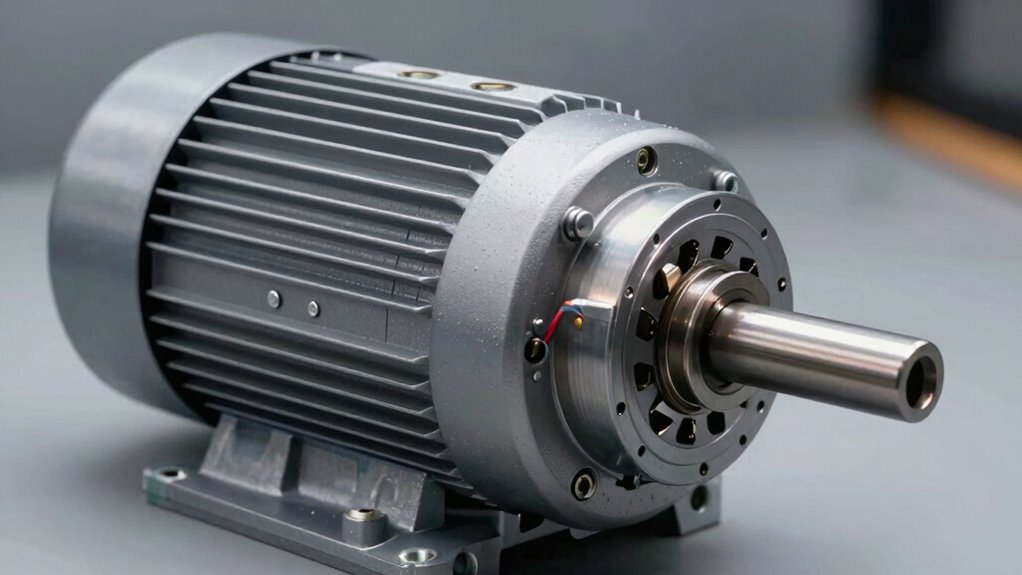
When choosing a motor, you need to match its torque and speed to your application’s power needs. You also have to balance speed requirements with efficiency, guaranteeing the motor can perform reliably under load. Additionally, selecting a motor with the right duty cycle compatibility is vital to prevent overheating and ensure longevity. Understanding motor specifications helps you make informed decisions that align with your project requirements. Being aware of performance factors can further optimize your motor selection to suit specific tasks. Considering societal impacts of automation can also help anticipate future demands and sustainability considerations.
Matching Power Needs
Choosing the right motor starts with understanding how torque, speed, and duty cycle impact your application’s power requirements. Your goal is to match the motor’s power output with what your task demands, ensuring it runs efficiently and reliably. Think about:
- The force needed to move loads without overloading the motor
- The speed required for timely operation
- How often the motor runs (duty cycle) to prevent overheating
- The efficiency ratings that determine energy use and heat generation
Balancing Speed Requirements
Balancing speed requirements involves carefully considering how torque, speed, and duty cycle work together to meet your application’s needs. When selecting a motor, think about how speed control impacts overall performance, ensuring the motor can operate at the desired velocity without sacrificing efficiency. Higher speeds may require more precise control mechanisms, which can influence motor efficiency and energy consumption. Conversely, lower speeds might demand different gearing or control strategies. The key is finding a harmony that delivers the necessary speed while maintaining ideal torque and duty cycle compatibility. By understanding these relationships, you can select a motor that not only meets your speed requirements but also runs efficiently, reducing energy costs and extending the motor’s lifespan.
Ensuring Duty Cycle Compatibility
How do torque, speed, and duty cycle come together to influence your motor selection? When selecting a motor, ensuring duty cycle compatibility is vital for reliable operation. If the duty cycle is too high, the motor may overheat, requiring effective thermal management to prevent damage. Consider how continuous or intermittent use affects your choices, as prolonged operation increases maintenance frequency. To visualize:
- Overworking a motor without proper cooling leads to overheating.
- Excessive duty cycles demand robust thermal management solutions.
- Frequent maintenance may be needed if duty cycle isn’t matched correctly.
- Properly matching duty cycle extends motor lifespan and reduces downtime.
Aligning these factors ensures your motor handles workload demands without overheating or frequent repairs, optimizing performance and durability.
The Key Motor Specs You Need to Know for Your Projects
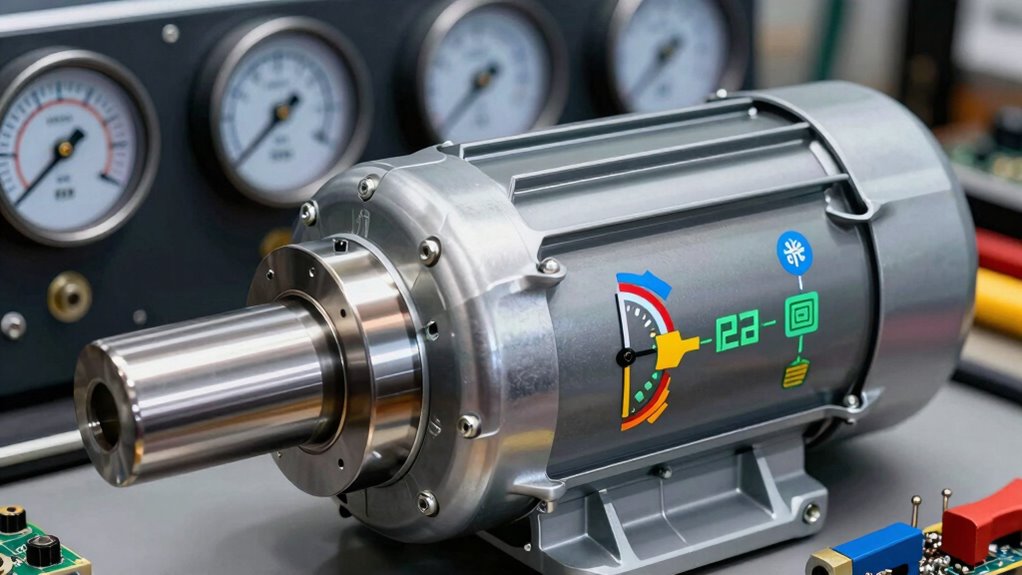
Understanding the key motor specifications is essential for selecting the right motor for your project. Brushless motors are popular because they offer high efficiency, low maintenance, and longer lifespan. When choosing a motor, pay attention to its torque, speed, and power ratings to match your application’s demands. Gear ratios are also vital—they determine how much torque is amplified and how speed is reduced, helping you achieve the desired performance. For instance, a higher gear ratio increases torque but decreases speed, which is ideal for heavy lifting or precise control. Knowing these specs helps you avoid mismatched components that could lead to inefficiency or failure. By understanding these key specs, you guarantee your motor performs reliably and meets your project’s requirements.
How to Read and Understand a Motor Data Sheet

Reading a motor data sheet is your first step toward selecting the right motor for your project. It provides essential details like material compatibility and noise levels, which impact performance and suitability. To understand it better, look for:
Start by reviewing motor data sheets for key details like compatibility, noise, voltage, and duty cycle.
- Material compatibility notes, ensuring the motor suits your environment and materials
- Noise level specifications, indicating if the motor operates quietly or loudly
- Voltage and current ratings to match your power supply
- Duty cycle information, showing how long the motor can run without overheating
Tips for Choosing the Right Motor Based on Its Specs
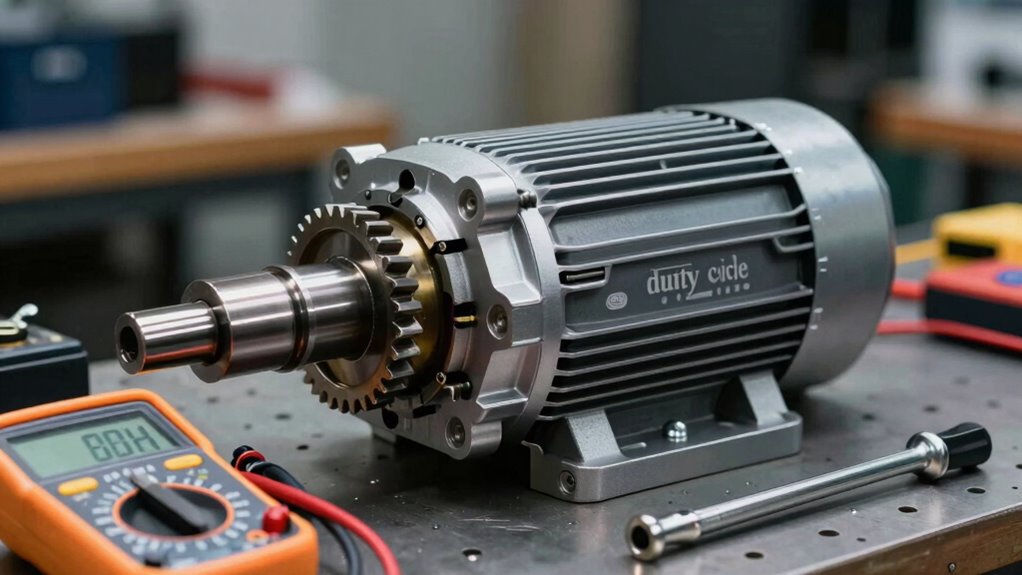
When selecting a motor, focus on matching its specifications to your project’s requirements to guarantee ideal performance. Consider motor efficiency to make certain you’re not wasting energy and to reduce operational costs. Noise levels are also vital—opt for a quieter motor if your environment demands minimal sound. Use the table below to compare key specs:
| Specification | Why It Matters |
|---|---|
| Motor Efficiency | Saves energy, lowers costs |
| Noise Levels | Ensures a quieter operation |
| Torque | Meets your load requirements |
| Speed | Matches your desired operation |
| Duty Cycle | Prevents motor overheating |
Balancing these factors helps you choose a motor that’s reliable, efficient, and suited to your application.
Frequently Asked Questions
How Does Temperature Affect Motor Performance and Lifespan?
Temperature impacts motor performance and lifespan through thermal effects, which can cause overheating and reduce efficiency. As temperatures rise, lubrication requirements increase to prevent friction and wear. You should monitor cooling systems and guarantee proper ventilation to manage heat. Keeping the motor within its recommended temperature range helps maintain ideal torque and speed, ultimately extending its lifespan and preventing premature failure caused by thermal stress.
What Is the Significance of Motor Efficiency Ratings?
Motor efficiency ratings are vital because they show how well your motor converts electrical energy into useful work. Higher efficiency means less energy waste, helping you conserve energy and reduce operational costs. This also lowers environmental impact by decreasing energy consumption and emissions. By choosing a motor with a better efficiency rating, you guarantee peak performance, save money, and support sustainability efforts in your operations.
How Do Different Power Sources Impact Motor Operation?
Imagine you’re installing a motor that runs on a 12V power source but connect it to a 24V supply; it could burn out quickly. Different power sources impact motor operation by affecting voltage compatibility, which influences torque and speed. For example, AC motors need compatible voltage and current types, while DC motors rely on proper voltage to perform efficiently. Using the correct power source guarantees ideal operation and longevity.
Can Motor Specs Change Over Time With Usage?
Yes, motor specs can change over time with usage. Wear and tear from continuous operation, along with inadequate lubrication or maintenance, can cause the motor’s torque, speed, and efficiency to decline. Over time, components may loosen or degrade, affecting performance. Regular lubrication and maintenance help preserve the original specs, ensuring the motor continues to operate smoothly and efficiently, extending its lifespan and maintaining peak performance.
What Safety Considerations Are Related to Motor Specifications?
Ever wondered how to stay safe around motors? You should always follow safety protocols to prevent electrical hazards, which are common with motor operation. Guarantee proper grounding, use protective gear, and inspect wiring regularly. Understanding motor specifications helps you prevent overloads and overheating, reducing risks. Do you know the critical safety measures? Staying vigilant and adhering to safety standards keeps you safe from potential electrical hazards and mechanical failures.
Conclusion
Now that you’ve got a handle on motor specs like torque, speed, and duty cycle, you’re better equipped to pick the right motor for your project. Remember, understanding these details is the key to making smart choices and avoiding surprises down the line. Don’t just wing it—do your homework and read the fine print. With this knowledge in your back pocket, you’ll be able to hit the ground running and keep your project running smoothly.