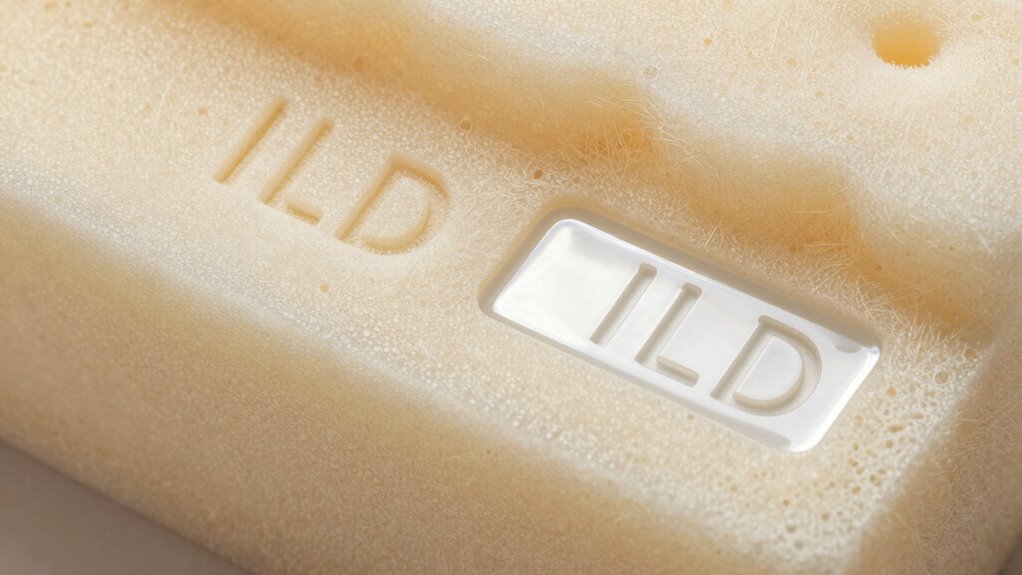

Foam ILD and density are two important but often confused numbers when choosing foam. ILD measures how firm or soft the foam feels, while density indicates how durable and supportive it is over time. Higher ILD doesn’t always mean higher density, and vice versa. Understanding the difference helps you select the right foam for comfort and longevity. If you want to make smarter choices, there’s more to learn about how these numbers work together.

Get comfort and recovery gear delivered free — and shop member deals
- Fast, free delivery on millions of items
- Access to Prime Big Deal Days deals on October 6–7
- Prime Video, Amazon Music and more included
Key Takeaways
- ILD measures foam firmness or softness, indicating how much force is needed to compress the foam a certain distance.
- Density indicates the material’s weight per cubic foot, reflecting foam support, durability, and longevity.
- Higher ILD means firmer foam; higher density generally means more durable and supportive foam.
- ILD and density are related but measure different properties; one does not directly determine the other.
- Confusing ILD with density can lead to selecting foam that doesn’t meet comfort or support expectations.
As an affiliate, we earn on qualifying purchases.
What Do Foam ILD and Density Mean? A Simple Explanation
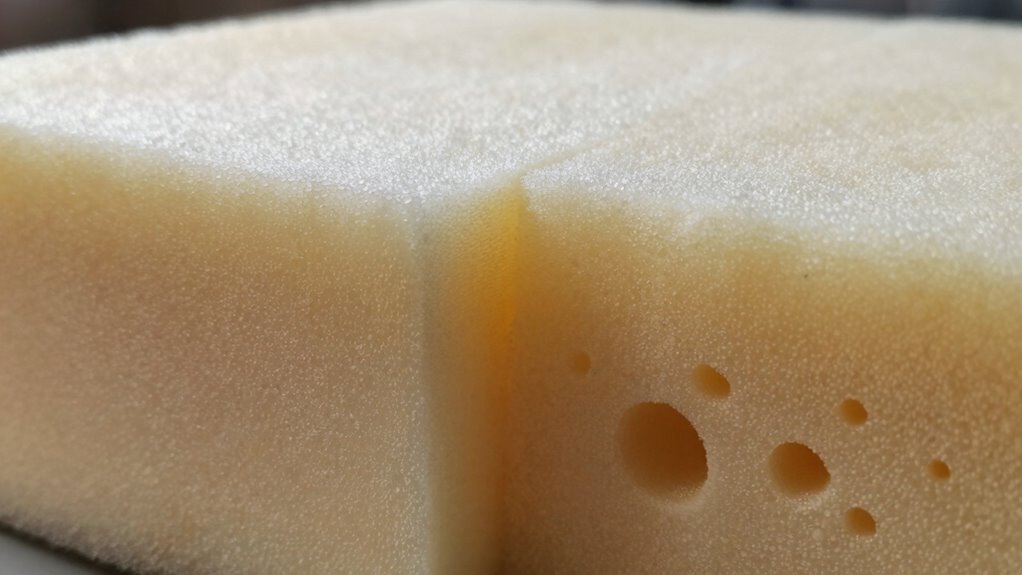
Foam ILD (Indentation Load Deflection) and density are two key measurements that help you understand foam quality. Foam structure refers to how the material is built at a microscopic level, affecting softness and support. Density, measured in pounds per cubic foot, indicates how much material is packed into a given volume. Higher density usually means the foam has a tighter material composition, making it more durable and supportive. ILD measures how much weight it takes to compress the foam by a certain amount, revealing its firmness or softness. Together, these measurements give you a clear idea of a foam’s overall quality. Understanding these key factors helps you choose foam that matches your comfort and support needs, ensuring better sleep or seating experiences. Additionally, Foam News provides updates on industry standards and innovations that can influence your purchasing decisions, helping you stay informed about foam testing methods.
As an affiliate, we earn on qualifying purchases.
How Do Foam ILD and Density Affect Mattress Feel and Support
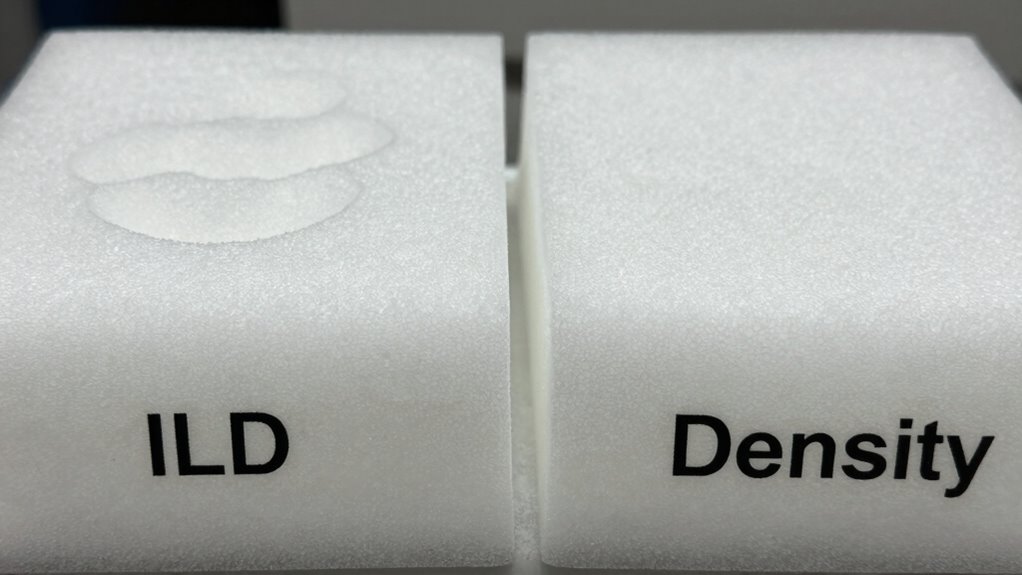
Your mattress’s comfort, support, and durability depend heavily on foam ILD and density. Higher ILD often means softer feel, while denser foam provides better support and longevity. Understanding these factors helps you choose a mattress that meets your sleep needs. Additionally, selecting the right foam involves considering how foam properties influence overall comfort and performance. For example, the contrast ratio of the foam can affect how well it renders pressure relief and support. When evaluating foam, it’s also important to consider material composition, as this impacts durability and comfort over time. Moreover, knowing how foam characteristics interact with your body can help optimize sleep quality and prevent discomfort. Recognizing the impact of foam firmness can further assist in selecting the ideal feel for your preferences.
Impact on Mattress Comfort
Understanding how foam ILD and density influence mattress comfort is key to finding the right sleep surface. Foam density directly impacts foam softness, which affects how plush or firm the mattress feels beneath you. Higher-density foams tend to be denser and feel firmer, offering more support but less initial softness. Lower-density foams are softer and more contouring, providing a plush feel that can enhance comfort. Your preference for a softer or firmer mattress depends on how foam density influences the initial feel and pressure relief. While ILD measures firmness, foam density shapes how that firmness translates into comfort. Additionally, foam longevity is affected by density, meaning higher-density foams often last longer and maintain their support over time. Proper foam maintenance and ensuring adequate airflow are essential for optimal mattress performance and longevity. Regularly inspecting foam quality can help identify early signs of degradation, ensuring a longer-lasting sleep surface. Monitoring filter maintenance and ensuring proper airflow are essential for optimal mattress performance and longevity. Striking the right balance ensures you get a mattress that feels comfortable and supportive for restful sleep.
Support and Durability
Since foam ILD and density directly influence how a mattress supports your body, they play a crucial role in its overall feel and durability. Support levels depend on the foam’s density and ILD, affecting how well the mattress maintains alignment and relieves pressure. Higher density foams generally offer better durability factors, resisting sagging over time. Conversely, lower density foams may soften or degrade faster, reducing support. To guarantee lasting support and durability, consider these points:
- Higher foam density enhances support and longevity
- ILD influences how firm or soft the support feels
- Lower density foams may wear out quicker
- Proper balance of ILD and density ensures ideal support and durability
- Foam properties tips can help maintain foam quality during mattress manufacturing or repair.
Additionally, understanding foam durability factors can guide you in selecting the most resilient materials for your needs. For example, selecting foams with appropriate density levels can significantly impact the lifespan of your mattress.
Furthermore, manufacturing techniques can also influence the overall durability of foam products, ensuring they perform well over time. Understanding these support and durability factors helps you choose a mattress that maintains its support over years.
As an affiliate, we earn on qualifying purchases.
Why Density Is Key to Mattress Durability and Longevity
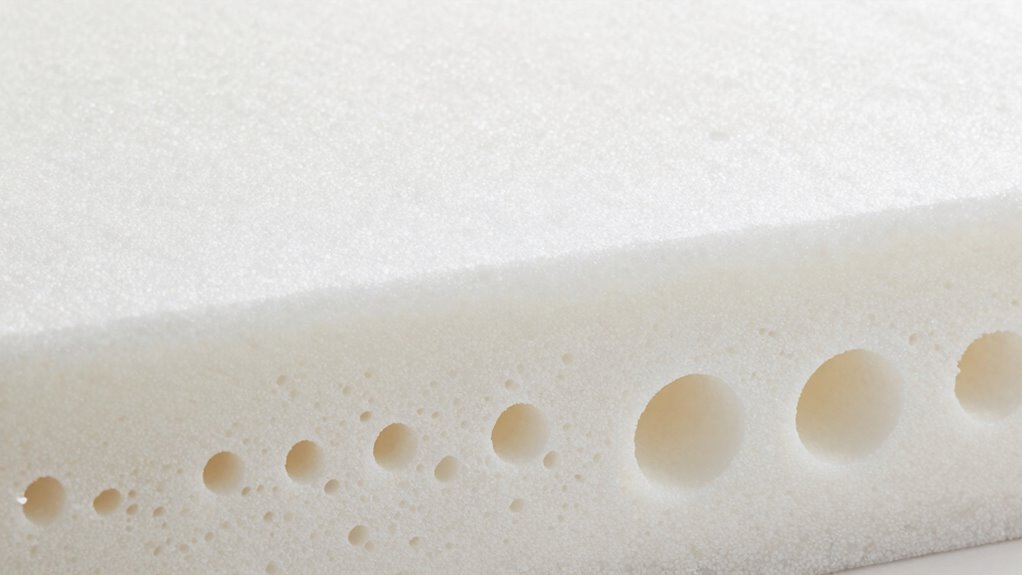
Have you ever wondered why some mattresses last for years while others sag quickly? The answer lies in foam density, which is essential for durability and longevity. During foam manufacturing, higher-density foams are made with more material per cubic foot, resulting in a sturdier structure. This increased material composition makes the mattress more resistant to wear and deformation over time. Low-density foams, on the other hand, tend to break down faster, losing their shape and support. Choosing a mattress with higher foam density guarantees it maintains its support, resists sagging, and provides consistent comfort for years. Foam manufacturing techniques also play a crucial role in determining the final product’s quality and lifespan. Additionally, understanding foam density helps consumers make informed decisions when selecting a mattress that will stand up to daily use, especially since material composition directly impacts overall durability. Recognizing the density classification of foam can help consumers identify more resilient options for long-term comfort.
As an affiliate, we earn on qualifying purchases.
Common Mistakes When Comparing Foam ILD and Density
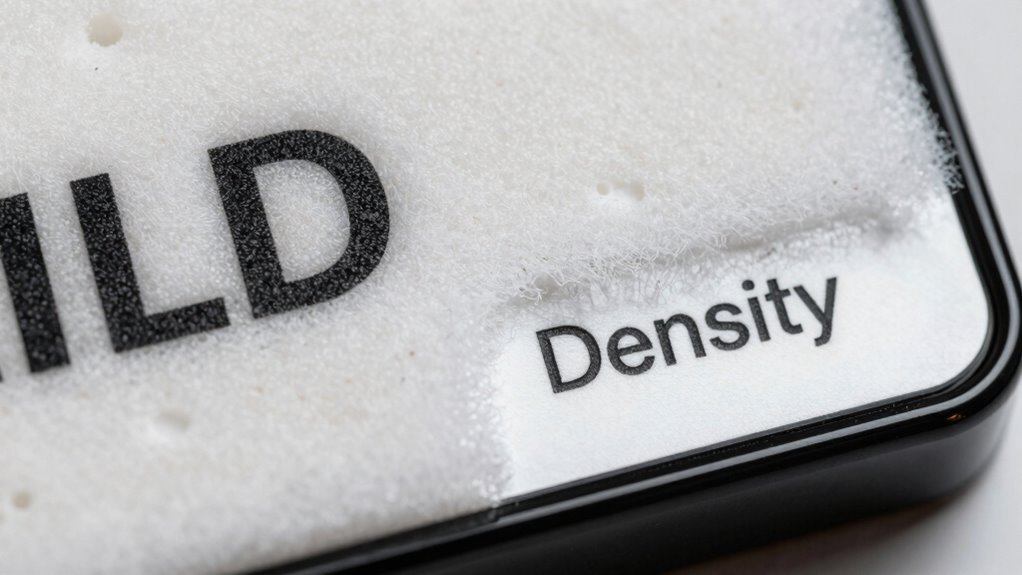
Many shoppers make the mistake of comparing foam ILD and density as if they measure the same qualities, but they actually serve different purposes. ILD indicates how firm or soft the foam feels, while density relates to its durability and support. Confusing these can lead to poor choices and disappointment. Remember, foam quality depends heavily on the manufacturing process, which influences both ILD and density differently. Additionally, understanding the body’s reaction to piercings can help you choose materials and jewelry that promote better healing and reduce irritation. To avoid mistakes, keep in mind: – ILD measures firmness, not durability. – Density impacts longevity more than initial feel. – A high ILD doesn’t necessarily mean high density. – Manufacturing techniques affect both attributes but in different ways. Recognizing the foam manufacturing process can help you better interpret product specifications and select the right foam for your needs. Understanding these distinctions ensures you select foam that meets your comfort and durability needs, rather than relying on misleading comparisons.
How to Choose the Right Foam Based on ILD and Density for Your Sleep
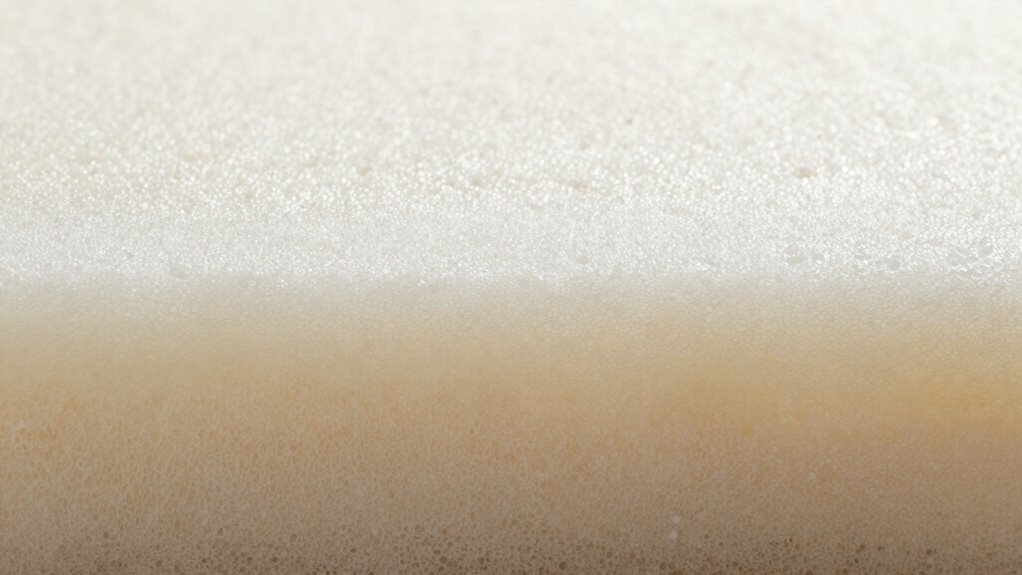
Choosing the right foam starts with understanding key terms like ILD and density, so you can match them to your comfort needs. Once you grasp these concepts, you can compare foam options more effectively and make smarter decisions. Following practical tips helps guarantee you select a foam that supports your sleep preferences perfectly. Additionally, understanding Free Floating properties can influence how a foam responds to pressure and movement, ensuring a more personalized sleep experience.
Understanding Foam Terminology
Understanding foam terminology is essential to selecting the right mattress or cushion for your sleep needs. Knowing how foam classification and material properties influence comfort helps you make informed choices. Foam classification refers to the type of foam, such as memory, latex, or polyurethane, each with distinct characteristics. Material properties like firmness, resilience, and durability determine how the foam responds under pressure. When evaluating foam, pay attention to:
- The specific foam type and its typical uses
- How firmness relates to ILD and your preferred feel
- The impact of density on durability and support
- The importance of understanding compression set and resilience
Matching ILD and Density
When selecting foam for your mattress or cushion, matching its ILD and density guarantees you get the right balance of comfort and support. The foam structure influences how the material responds under pressure, while the material composition determines durability and feel. A higher ILD indicates firmer foam, but pairing it with the appropriate density ensures it won’t feel too hard or too soft. For instance, a dense foam with a moderate ILD offers support without sacrificing comfort, making it suitable for those needing durability. Conversely, a lower-density foam may require a different ILD to prevent excessive softness. Understanding how foam structure and composition interact helps you choose a foam that aligns with your sleep preferences and provides long-lasting support.
Practical Selection Tips
To select the right foam for your sleep needs, start by considering your preferred firmness and how much support you require. Higher ILD foam offers more firmness, suitable for back or stomach sleepers, while lower ILD foam provides a softer feel for side sleepers. Density impacts durability and responsiveness; denser foam tends to last longer and support better. When choosing, keep these tips in mind:
- Opt for foam with a balanced ILD and density for comfort and longevity.
- Prioritize foam manufacturing quality to ensure consistent support.
- Consider eco-friendly options that incorporate foam recycling.
- Test different firmness levels to find what suits your sleep position best.
Being aware of overall foam quality and construction can help you select products that last longer and perform better.
Understanding these factors helps you make an informed choice, ensuring a supportive, comfortable sleep experience while also supporting sustainable foam manufacturing practices.
Foam ILD vs Density: What’s the Difference and Why It Matters
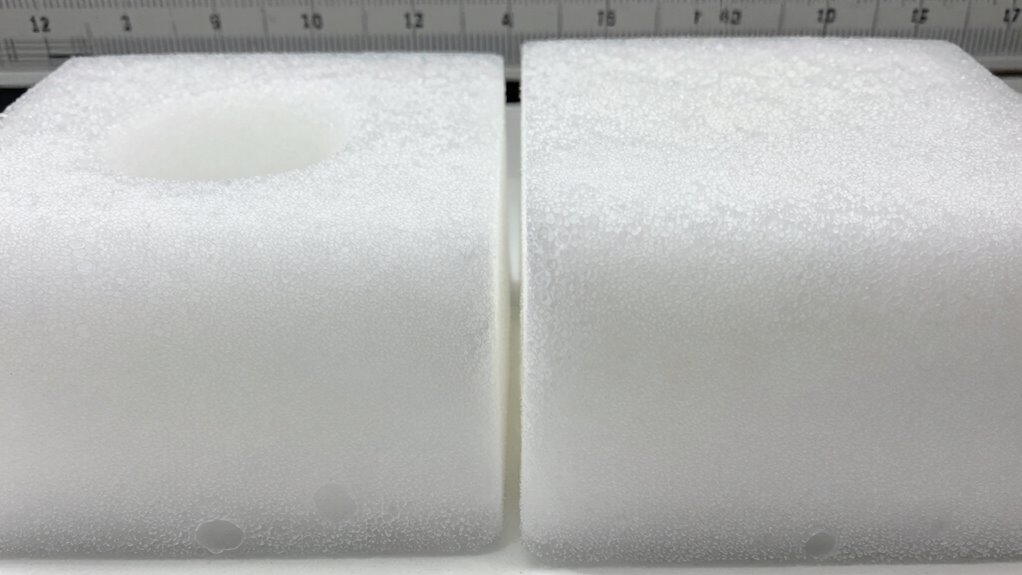
While foam ILD and density are both important factors in selecting the right foam, they measure different properties that substantially impact comfort and durability. Foam ILD indicates the firmness level, reflecting how much force is needed to compress the foam, directly affecting your comfort experience. Density, on the other hand, measures the material composition—how much foam material exists in a given volume—which influences the foam’s longevity and support. High-quality foam typically features a balance of both: sufficient density for durability and appropriate ILD for comfort. Understanding this difference helps you choose foam that offers lasting support without sacrificing comfort. Recognizing how foam quality and material composition interact ensures you select the right foam for your needs.
Frequently Asked Questions
Can Two Foams Have the Same ILD but Different Densities?
Yes, two foams can have the same ILD but different densities. Foam quality and durability depend on factors beyond ILD, like density. Higher-density foam generally lasts longer and maintains its shape better, enhancing foam durability. Even if the ILD is identical, differences in density affect how the foam feels and how long it stays supportive. So, always consider both numbers when evaluating foam quality and longevity.
How Do I Measure Foam ILD and Density at Home?
To DIY measure foam ILD and density, you need foam density tools and a simple setup. For ILD, press a small, flat object into the foam and note the force needed, using a scale if possible. For density, weigh a known volume of foam with a scale, then divide weight by volume. This hands-on approach helps you accurately assess foam firmness and density at home.
Do Softer Foams Always Have Lower Density?
No, softer foams don’t always have lower density. Foam softness depends on foam manufacturing and the foam’s ILD, which measures firmness. Some softer foams are made with higher density materials to improve durability, while others use lower density to achieve a plush feel. So, don’t assume that a softer foam automatically has lower density; check both the foam’s density and ILD for a complete picture.
Which Is More Important for Side Sleepers: ILD or Density?
Prioritize foam properties for side sleepers—ILD or density? Density determines durability, while ILD influences softness. For cozy comfort and consistent support, opt for a foam with suitable ILD, ensuring it’s not too firm or too soft. Durability depends on density, but comfort depends on ILD. You want a mattress that balances both, providing plush pressure relief and lasting support, so choose wisely based on your sleep style.
Does Higher Foam Density Mean a Heavier Mattress?
Yes, higher foam density usually means a heavier mattress, as denser foam packs more material per volume. When comparing foam vs latex or doing a memory foam comparison, denser foam tends to be more durable and supportive but also heavier. Keep in mind that weight varies based on materials and construction, so a high-density memory foam mattress might feel sturdier but also heavier to move around.
Conclusion
Understanding foam ILD and density is like revealing the secret code to perfect sleep. If you get these numbers mixed up, you might end up sleeping on a soggy marshmallow or a rock-hard brick instead of cloud-like comfort. So, pay close attention—your mattress’s support, durability, and longevity depend on it. Master these details, and you’ll be floating on a sleep experience so luxurious, it’ll feel like sleeping on a million-dollar marshmallow palace!
Fall Picks
fall essentials
As an affiliate, we earn on qualifying purchases.