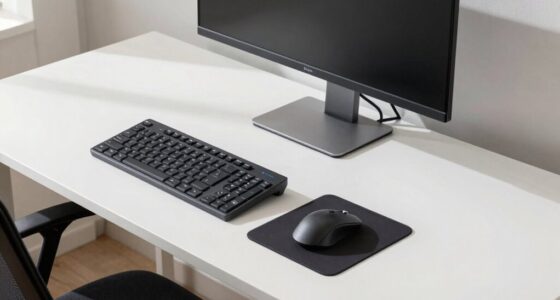

If you start feeling physical discomfort, fatigue, or distraction after working, your environment might be working against you. Look out for signs like persistent headaches, eye strain, or difficulty concentrating, which can indicate poor lighting or air quality. Notice if you’re experiencing neck, back, or wrist pain, or if ambient factors like noise and temperature are making it hard to focus. Paying attention to these clues can help you identify what needs adjusting—stay tuned to learn more.

Get comfort and recovery gear delivered free — and shop member deals
- Fast, free delivery on millions of items
- Access to Prime Big Deal Days deals on October 6–7
- Prime Video, Amazon Music and more included
Key Takeaways
- You experience persistent physical discomfort or fatigue after long periods of work or activity.
- Headaches or dizziness are frequent, especially related to lighting, air quality, or airflow issues.
- You notice increased stress, distraction, or difficulty concentrating due to environmental noise or temperature fluctuations.
- Small ergonomic adjustments do not alleviate discomfort or strain over time.
- Environmental signs like flickering lights, stuffy air, or inconsistent noise levels signal a need for environmental improvements.

Have you ever wondered if your environment truly feels comfortable? Sometimes, the subtle clues around you reveal that your space isn’t supporting your well-being the way it should. Conducting a comfort audit helps you identify these signals, allowing you to make necessary changes before discomfort turns into pain or fatigue. One of the key areas to focus on is ergonomic adjustments. If your chair is too hard or too soft, or if your desk isn’t at the right height, you might start feeling neck strain, back pain, or wrist discomfort. These issues often develop gradually, so you might not notice them right away, but your body will tell you when something’s off. Proper ergonomic adjustments mean aligning your workspace to promote good posture, reducing strain, and preventing long-term injuries. It’s about making small tweaks—raising your monitor to eye level, adjusting your chair height so your feet are flat on the floor, or adding lumbar support—that can substantially enhance your comfort.
But it’s not just about physical setup; ambient factors also play a crucial role in how comfortable your environment feels. Ambient factors include lighting, temperature, noise levels, and air quality. If the lighting is harsh or flickering, your eyes can strain, leading to headaches and fatigue. Conversely, poor lighting can make you feel sluggish or disoriented. Temperature matters, too; if your space is too hot or too cold, your focus and energy decline. Noise levels, whether too loud or inconsistent, can distract you and increase stress, while a quiet, controlled environment promotes concentration and calm. Air quality is often overlooked but can impact comfort profoundly—poor ventilation or stale air can cause headaches, dizziness, or respiratory discomfort. Additionally, properly maintaining your environment’s airflow ensures fresh air circulation and helps prevent these issues.
When you perform a comfort audit, pay close attention to these ambient factors and how they influence your mood and productivity. Are the lighting and temperature settings adjustable? Do you experience any physical discomfort after spending time in your space? These clues tell you what needs improvement. Small changes, like adding a desk lamp, using a fan or heater, or improving ventilation, can make a noticeable difference. Ultimately, your environment should support your activity and well-being. By actively evaluating and adjusting ergonomic features and ambient factors, you create a space that works for you—not against you. When your environment aligns with your needs, you’ll notice increased comfort, better focus, and a more positive overall experience.
ergonomic office chair with lumbar support
As an affiliate, we earn on qualifying purchases.
As an affiliate, we earn on qualifying purchases.
Frequently Asked Questions
How Often Should I Perform a Comfort Audit?
You should perform a comfort audit at least once every few months, or whenever your personal preferences change or you notice aesthetic considerations no longer align with your environment. Regular check-ins help you identify issues like lighting, temperature, or layout that might be affecting your comfort. By doing this, you guarantee your space continues to support your well-being, making adjustments as needed to keep everything aligned with your evolving needs and style.
Can Discomfort Be Caused by Invisible Environmental Factors?
Yes, discomfort can definitely be caused by invisible influences and subtle irritants in your environment. These invisible factors—like poor air quality, electromagnetic fields, or subtle lighting issues—may not be obvious but still affect your comfort and well-being. By paying attention to these subtle irritants during your comfort audit, you can identify and address the invisible influences that undermine your comfort, making your environment more supportive and pleasant.
What Tools Are Best for Measuring Comfort in My Space?
You can measure comfort effectively with tools like ergonomic assessments and temperature monitoring. Ergonomic assessments identify how your workspace supports or strains your body, revealing hidden discomforts. Temperature monitoring keeps your environment within a comfortable range, preventing issues like overheating or chilling. Together, these tools give you concrete data, helping you make informed adjustments so your space feels just right, boosting productivity and well-being.
How Do I Prioritize Issues Found During an Audit?
To prioritize issues from your audit, start with issue severity—tackle the most disruptive problems first. Use prioritization strategies like ranking issues by impact on comfort and frequency of occurrence. Address urgent issues that affect your health or productivity immediately, then move on to less critical concerns. This approach guarantees you efficiently improve your environment, focusing on problems that make the biggest difference in your comfort and well-being.
Can a Comfort Audit Improve My Mental Well-Being?
A comfort audit can be a healing balm for your mental well-being, helping you identify emotional triggers lurking in your environment. By practicing environmental mindfulness, you clear away mental clutter, creating a sanctuary for peace and clarity. When your surroundings support your emotional health, you feel more grounded and resilient. This deliberate awareness acts as a lighthouse, guiding you through stormy seas toward calmer, more balanced shores.
As an affiliate, we earn on qualifying purchases.
Conclusion
Now that you’ve done the comfort audit, you can spot the subtle signs your environment isn’t supporting you. Did you know that poor indoor air quality can reduce productivity by up to 11%? Addressing even just one clue can make a big difference. Remember, your surroundings should work for you, not against you. Take action, make adjustments, and turn your space into a true haven of comfort. Your well-being depends on it.
desk lamp with adjustable brightness
As an affiliate, we earn on qualifying purchases.
As an affiliate, we earn on qualifying purchases.
As an affiliate, we earn on qualifying purchases.
Fall Picks
fall essentials
As an affiliate, we earn on qualifying purchases.