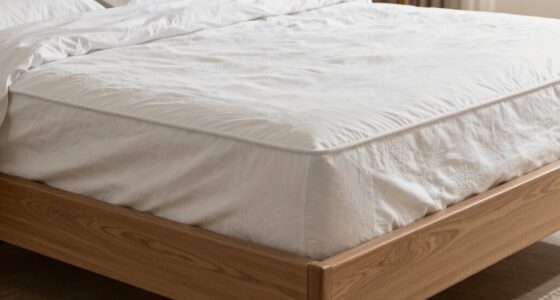

As you sleep, your body’s temperature and sleep stages change, affecting how your mattress feels. In the early hours, your core temperature drops, making the mattress feel softer or less supportive, while muscle relaxation and shifting sleep stages alter comfort perceptions. Environmental factors like room temperature and ventilation also influence how supportive or cozy the mattress feels after midnight. Want to understand how these natural shifts impact your sleep experience? Keep exploring to find out more.

Get comfort and recovery gear delivered free with Prime
- Fast, free delivery on millions of items
- Prime Video, Amazon Music and more included
- Member-only deals all year
Key Takeaways
- Sleep stage shifts cause changes in muscle relaxation and body needs, altering mattress comfort perception after midnight.
- Body temperature naturally drops and varies during the night, affecting how supported or soft the mattress feels.
- Temperature regulation and ventilation of mattress materials influence comfort as environmental conditions change overnight.
- Room temperature, humidity, and ambient factors fluctuate, impacting how the mattress feels during different sleep stages.
- Biological rhythms and environmental interactions cause perception of support and softness to vary throughout the night.

Have you ever noticed that your mattress feels different after midnight? It’s not just in your head. Several biological and environmental factors come into play that can change how your mattress feels as the night progresses. One of the main reasons is your sleep cycle, which naturally influences your perception of comfort. During the night, your body shifts through different sleep stages, from light sleep to deep sleep and REM. As you move into deeper sleep stages, your muscles relax more, and your body’s needs shift. This means that what felt comfortable at the beginning of the night might feel less so later on, especially if your mattress isn’t providing the right support for these changing needs.
Your sleep cycle causes your mattress to feel different as your body shifts through various sleep stages.
Another key factor is your body temperature, which fluctuates throughout the night. When you first lie down, your body is usually warmer, and the mattress might feel firmer or more supportive because your body is adjusting to the surface. But as the night goes on, your core temperature drops slightly, and your skin temperature can rise as your body prepares for sleep. This change can make the mattress feel softer or less supportive than it did earlier. If your mattress retains heat or isn’t breathable enough, this shift in body temperature can make you feel uncomfortable or as if the mattress is less supportive, even if it hasn’t changed physically. Temperature regulation is essential for maintaining comfort during sleep, and a mattress that doesn’t support this can lead to discomfort. Additionally, ventilation and airflow can influence how well your body maintains a stable temperature throughout the night. Good material breathability in your mattress can significantly improve temperature regulation and enhance sleep quality.
The environment you sleep in also plays a role. As the night deepens, room temperature and humidity levels can fluctuate, influencing how your body interacts with your mattress. For example, a warm and humid night might make your bed feel stickier or more oppressive, especially if your mattress isn’t well-ventilated. Conversely, a cooler night might make the surface feel firmer and more supportive, which can be a relief if you prefer that feeling. Additionally, environmental conditions can impact how your body perceives support and comfort throughout the night. Changes in ambient light or noise levels can further influence your sleep quality and perception of your mattress. Managing these environmental factors with appropriate sleep environment adjustments can help improve your comfort and consistency in sleep.
Ultimately, what you experience after midnight is a combination of your body’s natural biological rhythms and environmental conditions. Your sleep cycle causes your body to change its needs and sensations, while body temperature fluctuations affect how you perceive comfort and support. That’s why your mattress might feel different at various points in the night. Understanding these factors can help you choose a mattress that better adapts to your changing body, ensuring you get restful sleep no matter the hour.
As an affiliate, we earn on qualifying purchases.
Frequently Asked Questions
Can Temperature Changes Affect Mattress Firmness Overnight?
Yes, temperature fluctuations can affect mattress firmness overnight. When your sleep environment cools, the materials in your mattress, especially memory foam, tend to become firmer, making your bed feel different. Conversely, warmer temperatures can soften the mattress. These changes happen because temperature impacts the responsiveness and support of your mattress materials. So, maintaining a consistent sleep environment helps keep your mattress feeling the same throughout the night.
Does Body Weight Distribution Change During Sleep?
Absolutely, your body weight distribution changes during sleep, almost like a secret dance on your mattress. As you shift into different body positions, pressure points develop, redistributing weight across various areas. This natural movement causes certain parts to bear more pressure, making your mattress feel different. Ironically, your unconscious efforts to find comfort lead to these subtle shifts, emphasizing how dynamic and ever-changing your body’s interaction with your mattress truly is.
Are There Specific Mattress Materials That Respond to Midnight Conditions?
Yes, certain mattress materials respond to midnight conditions. Memory foam adapts to your body shape and temperature, becoming softer as it warms up, which can make it feel different after midnight. Latex responsiveness allows the mattress to quickly adjust and provide support, especially in cooler conditions. These materials react to temperature and pressure changes, so your sleep environment influences how your mattress feels later in the night.
How Does Humidity Impact Mattress Feel After Midnight?
Humidity effects can make your mattress feel different after midnight. Higher humidity causes your mattress to absorb more moisture, leading to a damp or clammy sensation. This increased moisture can reduce the firmness and comfort, making the mattress feel softer or less supportive. To counteract this, consider using a dehumidifier or a breathable mattress cover. Managing humidity levels helps maintain a consistent, comfortable sleep environment throughout the night.
Can Nighttime Movements Alter Mattress Comfort Levels?
Nighttime movements can definitely alter mattress comfort levels. As you shift your sleep position or change your mattress orientation, you may notice the surface feels firmer or softer. These movements redistribute your weight, affecting pressure points and overall comfort. Adjusting your sleep position or mattress orientation during the night can help you find a more comfortable spot, but it might also temporarily change how the mattress feels until you settle into your preferred position.
temperature regulating mattress topper
As an affiliate, we earn on qualifying purchases.
As an affiliate, we earn on qualifying purchases.
Conclusion
By understanding why your mattress feels different after midnight, you can better appreciate its changing nature—like a chameleon shifting colors in the moonlight. Your body’s movements, temperature, and even the night’s quiet can make your familiar bed feel like a different world. Embrace these subtle changes, knowing they’re part of your nightly journey to rest and renewal. With this knowledge, you can sleep more peacefully, trusting that your mattress’s mystery is just another chapter in your sleep story.
mattress with cooling technology
As an affiliate, we earn on qualifying purchases.
As an affiliate, we earn on qualifying purchases.
supportive mattress for changing sleep stages
As an affiliate, we earn on qualifying purchases.
As an affiliate, we earn on qualifying purchases.
Halloween Picks
halloween
As an affiliate, we earn on qualifying purchases.