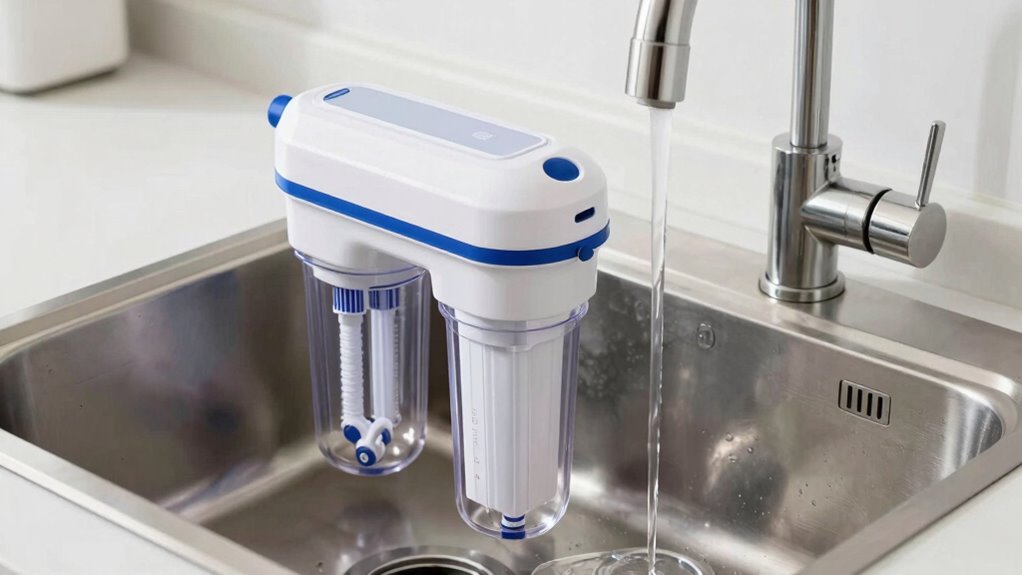

Choosing between a reverse osmosis system and an under sink filter impacts your daily routine and water quality. An RO system offers thorough filtration but produces water more slowly and requires more maintenance. It’s ideal if you need highly purified water and are okay with extra upkeep. Under sink filters are easier to install, fast, and require less maintenance but may not remove all dissolved solids. Keep exploring to find out which option suits your needs best.

Get comfort and recovery gear delivered free — and shop member deals
- Fast, free delivery on millions of items
- Access to Prime Big Deal Days deals on October 6–7
- Prime Video, Amazon Music and more included
Key Takeaways
- Reverse osmosis systems provide more thorough contaminant removal but produce water more slowly and require more maintenance.
- Under sink filters are easier to install, require less upkeep, and deliver filtered water quickly for daily convenience.
- RO systems may require professional installation and involve more complex setup compared to simple DIY under sink filters.
- Regular maintenance of RO membranes and filters is necessary to sustain performance, while under sink filters typically need less frequent care.
- Choosing between them depends on water quality needs, desired purity level, and the importance of ease of daily use.
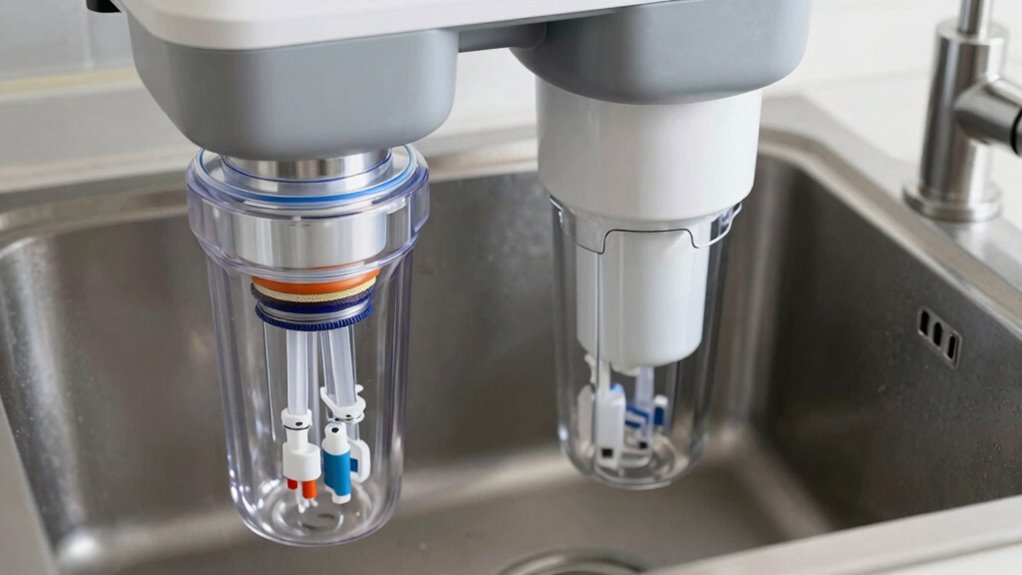
Are you overwhelmed by the variety of water filtration options available? When choosing between reverse osmosis and under sink filters, it’s important to understand how each impacts your daily routine. One of the key factors to evaluate is water filtration efficiency. Reverse osmosis systems are known for their high filtration efficiency, removing a wide range of contaminants, including heavy metals, pesticides, and dissolved solids. They use a semi-permeable membrane that filters water at a molecular level, providing you with exceptionally pure water. Under sink filters, on the other hand, typically rely on activated carbon or other filtration media. While they effectively reduce chlorine, sediment, and some chemicals, they may not eliminate dissolved solids or certain contaminants as thoroughly as reverse osmosis systems. This difference can influence your overall water quality and health, especially if your tap water has specific issues.
Another aspect to think about is installation complexity. Reverse osmosis units usually require more involved installation because they often include multiple components—such as a storage tank, pre-filters, and a specialized membrane—that need to be connected properly. You might need to drill into your plumbing, set up a dedicated faucet, and ensure proper drainage. This process can be somewhat complex, especially if you’re not familiar with plumbing work, and may require professional assistance. Under sink filters tend to be simpler to install. Many models are designed for easy DIY setup, attaching directly to your existing faucet or under the sink with minimal modifications. Their more straightforward installation process means less time and effort upfront, but you should still follow the manufacturer’s instructions carefully to guarantee maximum performance. Additionally, installation requirements can vary significantly depending on the system, which is an important consideration in your decision-making process. Being aware of the maintenance needs of each system can also help prevent potential issues over time.
In your daily life, these differences can translate into noticeable changes. With reverse osmosis, you’ll likely notice the taste of your water improving markedly due to the removal of impurities. However, because they often produce water more slowly and require regular maintenance of filters and membranes, you might find yourself waiting a bit longer for a glass of water or dealing with occasional system upkeep. Under sink filters provide convenience with quick access and easier maintenance but might not deliver the same level of contaminant removal, especially for dissolved solids. Your choice depends on how much you value filtration thoroughness against installation effort and ongoing maintenance. Ultimately, understanding these factors helps you select the system that best fits your lifestyle and health needs, ensuring you get clean, safe water without unnecessary hassle. Consider water filtration media as a crucial element in determining the effectiveness of your system.
reverse osmosis water filtration system
As an affiliate, we earn on qualifying purchases.
As an affiliate, we earn on qualifying purchases.
Frequently Asked Questions
How Often Do I Need to Replace Filters in Each System?
You should replace filters in a reverse osmosis system every 6 to 12 months, depending on water quality and usage, to maintain ideal filter lifespan. Under sink filters typically need replacement every 3 to 6 months. Follow the manufacturer’s recommended replacement schedule for each system, as neglecting it can reduce filtration efficiency. Regularly checking your filters helps guarantee your water remains clean and safe.
Do Reverse Osmosis Systems Remove Beneficial Minerals From Water?
Yes, reverse osmosis systems often remove beneficial minerals from water, affecting mineral retention and water taste. While they effectively eliminate contaminants, they can also strip away essential minerals like calcium and magnesium. This may lead to water that tastes flatter or less satisfying. To address this, some systems include mineral re-addition stages, helping you maintain better mineral balance and improved water taste for daily drinking.
Which System Is More Energy-Efficient for Daily Use?
You’ll find that under sink filters are more energy-efficient for daily use. They consume less power because they don’t rely on high-pressure systems like reverse osmosis units. Reverse osmosis systems require more energy due to their complex filtration process, which involves higher energy consumption and power efficiency concerns. If you prioritize low energy consumption and simplicity, under sink filters are the better choice for everyday water filtration.
Can I Install These Filters Myself or Need Professional Help?
You can install both filters yourself if you’re comfortable with basic plumbing, but installation complexity varies. Reverse osmosis systems often require more steps and tools, so professional help might be a good idea. Under sink filters are generally simpler and cheaper to install. Consider cost considerations and your DIY skills before deciding—professional installation guarantees proper setup but adds to expenses, while DIY saves money but demands careful attention to instructions.
How Do Maintenance Costs Compare Between the Two Systems?
Think of maintenance costs like tending a garden—some require more frequent care. Reverse osmosis systems typically have higher cost comparisons due to their filters needing replacement every 6-12 months, and membrane changes every 2-3 years, making longevity factors a consideration. Under sink filters usually cost less over time, needing filter swaps every 6-12 months. Overall, you’ll find under sink filters more budget-friendly, but keep in mind the longevity factors for each system.
under sink water filter with easy installation
As an affiliate, we earn on qualifying purchases.
As an affiliate, we earn on qualifying purchases.
Conclusion
Choosing between reverse osmosis and under sink filters is like deciding whether to tame a wild river or tame a gentle stream—you’ll notice the difference every sip. An under sink filter is your trusty stream, quietly purifying your water without fuss. But if you crave pure, pristine water that feels like drinking from a mountain spring, reverse osmosis might just turn your tap into a crystal-clear oasis. Either way, your daily hydration will never be the same!
best reverse osmosis water purifier
As an affiliate, we earn on qualifying purchases.
As an affiliate, we earn on qualifying purchases.
activated carbon under sink filter
As an affiliate, we earn on qualifying purchases.
As an affiliate, we earn on qualifying purchases.
Fall Picks
fall essentials
As an affiliate, we earn on qualifying purchases.