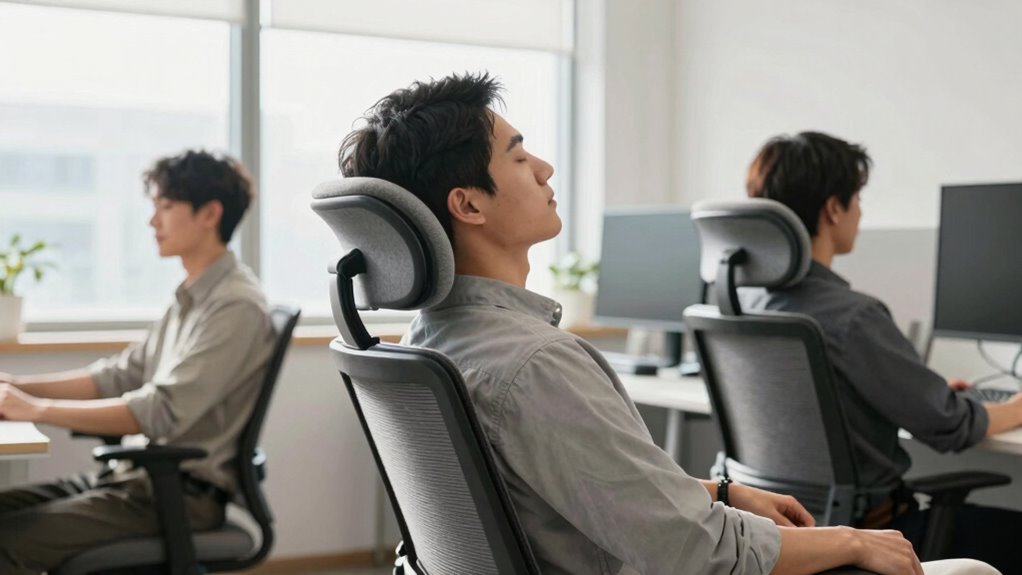

Headrests help some office workers more than others because their effectiveness depends on your posture habits, body shape, and ergonomic awareness. If you frequently lean back or rest your head, a well-designed, adjustable headrest supports your neck and maintains proper alignment. However, if you sit upright or don’t use the headrest correctly, it may offer little benefit. Keep exploring to discover how personalized ergonomic principles can improve your comfort and support.
Key Takeaways
- Headrests support proper neck alignment, benefiting workers with habitual leaning or reclining postures.
- Ergonomic headrests accommodate individual body shapes, providing more effective support for some users.
- Posture awareness influences how well headrests assist in maintaining correct alignment.
- Adjustable headrests allow customization, helping workers with different sitting habits and preferences.
- Those with poor posture habits or neck strain gain more relief from well-designed, supportive headrests.
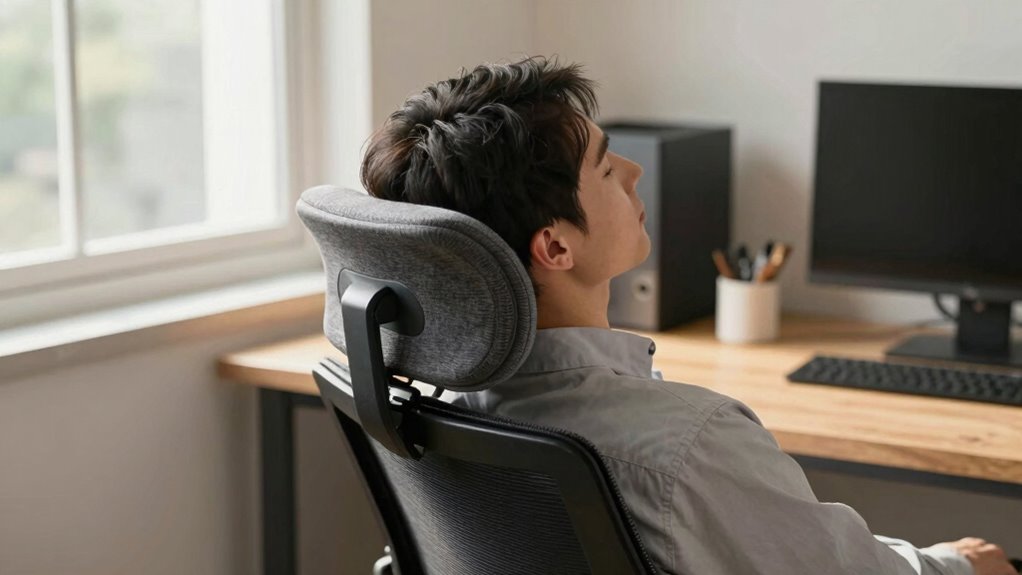
Many office workers find that headrests can considerably reduce neck strain, but for others, they make little difference. The key factor often comes down to the ergonomic design of the chair and how well it supports your natural posture. When a headrest is designed with ergonomics in mind, it aligns with your head and neck in a way that encourages proper posture correction. This means your head stays in a neutral position, reducing the tendency to crane forward or tilt awkwardly, which can cause discomfort and long-term strain.
Ergonomically designed headrests support proper posture and reduce neck strain by keeping your head in a neutral position.
If your chair’s headrest isn’t ergonomically designed, it might not fit your body’s unique shape or support your neck properly. Poorly designed headrests can even encourage bad habits like slouching or leaning forward, negating any potential benefits. When a headrest offers adjustable height and angle, it allows you to customize support, ensuring your neck remains aligned with your spine. This customization can be a game-changer, especially if you spend multiple hours at your desk daily.
Another reason why some people benefit more from headrests is their individual posture habits. If you tend to lean back and rest your head frequently, a well-designed headrest can serve as a vital support point, helping maintain proper alignment. Conversely, if you naturally sit upright without much head movement, a headrest might seem unnecessary or even intrusive. Your habitual posture influences how much support you need and whether a headrest contributes positively or simply gets in your way.
The impact of headrests also depends on your awareness of posture correction. If you actively focus on maintaining good posture, a supportive headrest can serve as a gentle reminder to keep your head aligned. On the other hand, if you’re less conscious of your posture, a poorly fitted headrest might do little to improve your comfort. Proper ergonomic design not only supports your neck but also encourages healthier sitting habits, which can prevent discomfort before it starts. Additionally, awareness of ergonomic principles can significantly enhance the effectiveness of headrest use. Recognizing how supportive design influences your posture can help you make better choices in selecting office furniture. Furthermore, understanding the importance of individual ergonomic needs can help tailor solutions that maximize comfort and support. Being aware of individual differences in body shape and posture tendencies can lead to more personalized and effective ergonomic solutions. Incorporating ergonomic assessments into your workspace setup can further optimize support and comfort.
ergonomic adjustable headrest for office chair
As an affiliate, we earn on qualifying purchases.
As an affiliate, we earn on qualifying purchases.
Frequently Asked Questions
Do Headrests Prevent Long-Term Neck Injuries?
Yes, headrests can prevent long-term neck injuries by supporting your neck properly. An ergonomic design helps reduce neck strain during long hours at your desk, encouraging better posture. When you use a headrest, it keeps your neck aligned, minimizing tension that can lead to discomfort or injury over time. Incorporating a well-designed headrest into your workspace is a simple way to protect your neck and promote overall comfort.
Can Headrest Height Adjustments Improve Comfort for All Users?
The proof is in the pudding—adjusting headrest height can greatly boost comfort, but it depends on your ergonomic design and user preferences. When you customize the height, you guarantee proper neck support, preventing strain and fatigue. Everyone’s body is different, so take the time to fine-tune your headrest to fit your unique needs. That way, you get the best comfort and support, making your workday much more bearable.
Are Headrests More Effective for Certain Body Types?
Yes, headrests are more effective for certain body types, especially when designed with ergonomic principles. During ergonomic assessments, we find that individuals with shorter necks or specific spinal alignments benefit most from adjustable headrests, which support proper posture. If your headrest isn’t tailored to your body, it might not offer ideal comfort. So, choosing ergonomic designs that accommodate your unique physique ensures better support and reduces strain during long work hours.
How Do Headrests Impact Posture Over Extended Periods?
Think of your headrest as a steady anchor that keeps your posture aligned over long hours. It provides ergonomic support by reducing neck strain and encouraging proper spine alignment, preventing slouching. Over extended periods, this helps you avoid discomfort and fatigue. When used correctly, headrests act like a trusted sidekick, ensuring your posture stays healthy, making your workday more comfortable and less prone to the aches and pains that come with poor support.
Do Headrests Help Reduce Stress During Work Hours?
Yes, headrests offer ergonomic benefits that can help reduce stress during work hours. By supporting your neck and head, they promote better posture, which minimizes muscle tension and discomfort. This physical relief can lead to decreased overall stress, making your workday more comfortable. Incorporating a headrest into your chair can be a simple yet effective way to manage stress and maintain focus throughout long periods of work.
neck support headrest for desk chair
As an affiliate, we earn on qualifying purchases.
As an affiliate, we earn on qualifying purchases.
Conclusion
Think of your office chair as a trusty steed on your daily journey. Just as a saddle with a good headrest can turn a rough ride into a smooth one, the right headrest can transform your workday—offering support and comfort. Not everyone needs the same saddle, but if your neck and shoulders are feeling the strain, a good headrest is like a gentle hand guiding you to calmer, more comfortable horizons.
ergonomic office chair with headrest
As an affiliate, we earn on qualifying purchases.
As an affiliate, we earn on qualifying purchases.
adjustable neck pillow for office use
As an affiliate, we earn on qualifying purchases.
As an affiliate, we earn on qualifying purchases.