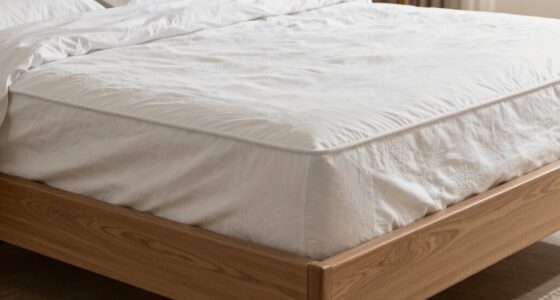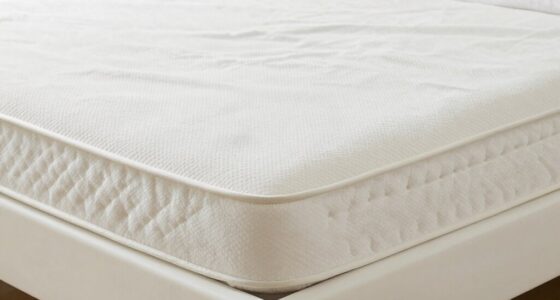

Your mattress can feel different throughout the night because of natural changes in your body, sleep stages, and room conditions. As you move between deep and light sleep, your body’s position and pressure points shift, affecting how the mattress feels. Additionally, your body temperature and humidity levels influence mattress responsiveness, making it softer or firmer. These factors interact constantly, causing fluctuations that aren’t due to your mattress wearing out—keep exploring to understand more about these effects.
Listen free for 30 days with Audible
Thousands of audiobooks and originals — cancel anytime.
As an affiliate, we earn on qualifying purchases.
Key Takeaways
- Body movements during sleep shift pressure points, altering how the mattress feels throughout the night.
- Changes in body temperature affect mattress materials, making it seem softer or firmer as you heat or cool.
- Sleep cycle transitions cause body position shifts, impacting perceived firmness without physical mattress changes.
- Room environment factors like humidity and ventilation influence material responsiveness and comfort levels.
- Interactions between sleep stages, body temperature, and environment create natural fluctuations in mattress sensation.

Have you ever noticed your mattress feeling different over time? It might seem like a simple mystery, but a lot of factors come into play that can change how your bed feels from one night to the next. One major reason is your body’s natural sleep cycle, which influences your body’s movement and pressure points throughout the night. As you transition between deep sleep and lighter sleep stages, your body shifts position more frequently, causing the mattress to respond differently. This can make it feel softer at times or firmer at others, even if your mattress hasn’t physically changed. Your body’s weight distribution varies, so the pressure points on your mattress aren’t consistent. When you move into lighter sleep stages, you might feel like your mattress is more comfortable or supportive, but during deeper sleep, it might feel different because of how your body relaxes and settles into the bed.
Another big factor is your body temperature, which fluctuates during the night and directly impacts how your mattress feels. When you’re warm, your muscles relax more, and your skin may become more sensitive to the surface beneath you. This can make the mattress feel softer or more contoured to your body. Conversely, when your body cools down, muscles tighten slightly, and your skin becomes less sensitive, which can make the mattress feel firmer or more rigid. Temperature changes can also affect the materials of your mattress, especially if you have foam or memory foam that responds to heat. As your body heats up, these materials soften, altering how the mattress supports you. When it cools, they firm up again, creating a different sensation. Additionally, the responsiveness of certain mattress materials to temperature fluctuations can significantly influence how your sleeping surface feels throughout the night. External factors like humidity levels in your room can further impact the material’s response and your overall comfort. Proper ventilation is also essential, as it helps regulate air circulation and prevent excess moisture buildup that could affect the mattress’s feel.
Additional factors, like humidity and air circulation in your room, can also influence how your mattress feels overnight. A humid environment might make your mattress feel damp or heavier, while good airflow can keep it feeling fresh and more responsive to your body’s movements. Proper ventilation can also help regulate your body temperature and reduce excess moisture, contributing to a more consistent sleep experience. It’s also important to consider how environmental conditions can impact the materials and overall comfort of your mattress. All these elements—your sleep cycle, body temperature, and environmental conditions—combine to make your mattress feel like it’s constantly changing, even within a single night. Recognizing that these shifts are normal can help you understand why your sleep experience varies. It’s not that your mattress has suddenly gone bad, but rather that your body and environment are continually influencing your perception of comfort and support.
memory foam mattress with temperature regulation
As an affiliate, we earn on qualifying purchases.
As an affiliate, we earn on qualifying purchases.
Frequently Asked Questions
Can Temperature Affect How My Mattress Feels Overnight?
Yes, temperature fluctuations can affect how your mattress feels overnight. As your body temperature changes and the room warms or cools, your bedding variations can also influence comfort. Warmer temperatures may make your mattress feel softer, while cooler ones can make it feel firmer. These shifts happen because temperature impacts mattress materials and your body’s response, causing the feel to fluctuate more than you might expect during the night.
Does Body Weight Impact Mattress Firmness Perception?
Yes, your body weight impacts how you perceive mattress firmness. Heavier individuals tend to feel more pressure and may find a mattress softer, while lighter people might perceive it as firmer. Your body awareness and pressure distribution play key roles in this perception. As your weight shifts, so does how the mattress responds, making it feel different from night to night or when lying in different positions.
How Does Humidity Influence Mattress Comfort?
Humidity effects your mattress comfort by causing moisture absorption, which can make your mattress feel damp or less supportive. When humidity levels are high, your mattress absorbs excess moisture from the air, leading to reduced firmness and increased discomfort. Conversely, low humidity helps your mattress stay dry and maintain its original feel. To keep your mattress comfortable, use a dehumidifier or breathable covers to manage moisture absorption effectively.
Can Sleep Position Change Perceived Mattress Feel?
Yes, your sleep position can change how you perceive your mattress feel. When you shift positions, you alter spinal alignment and pressure points, which can make the mattress seem softer or firmer. For example, sleeping on your side may put more pressure on your shoulders and hips, affecting comfort. Changing positions throughout the night helps distribute weight evenly, impacting how you perceive your mattress’s support and feel.
Do Mattress Materials Degrade Over a Single Night?
You might think your mattress materials degrade overnight, but that’s unlikely. Material longevity is generally quite good, and sleep surface degradation happens gradually, not in a single night. Small shifts in temperature or humidity can make your mattress feel different temporarily, almost like a scene from a vintage film. So, any sudden change in feel is more about your body or environment than actual material breakdown.
adjustable firmness mattress topper
As an affiliate, we earn on qualifying purchases.
As an affiliate, we earn on qualifying purchases.
Conclusion
So, next time your mattress feels different in the morning, remember it’s normal for its feel to fluctuate overnight. Think of it like a sponge absorbing and releasing moisture—your body heat, movement, and sleep position all influence its firmness and comfort. Just like a sponge, your mattress adapts and changes, ensuring you get the support you need when you rest. Embrace those subtle shifts—they’re a sign your mattress is working with you.
As an affiliate, we earn on qualifying purchases.
As an affiliate, we earn on qualifying purchases.
Fall Picks
fall essentials
As an affiliate, we earn on qualifying purchases.