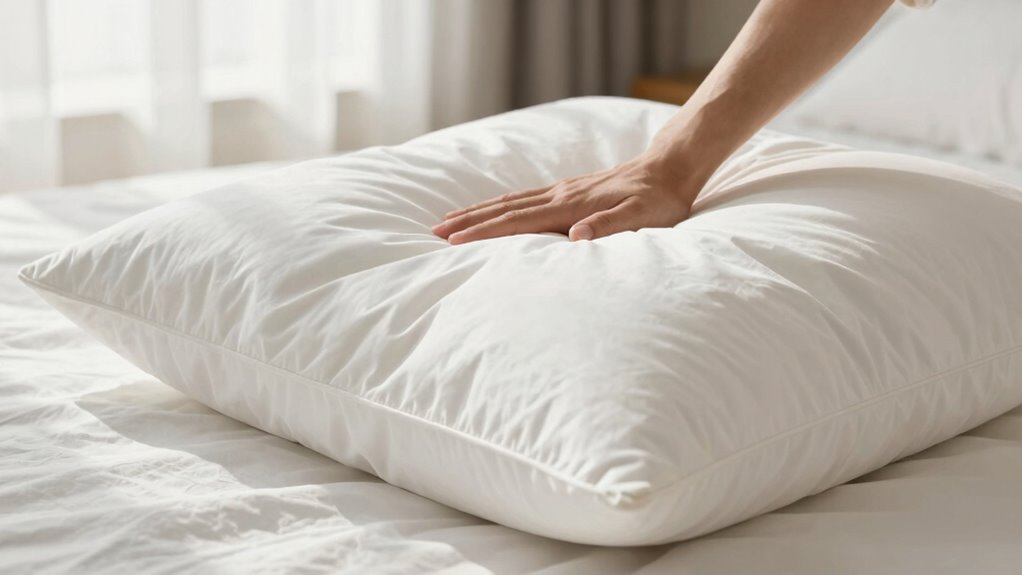

To test a pillow at home, lie on it in your usual sleep position for 10-15 minutes, making sure your head, neck, and spine stay aligned. Pay attention to how supported your neck feels, and note any discomfort or pressure points. Check if the pillow maintains its shape and stays cool or warm during use. By considering these factors, you’ll better understand if the pillow suits your needs—keep going to discover even more tips for finding the perfect one.
Listen free for 30 days with Audible
Thousands of audiobooks and originals — cancel anytime.
As an affiliate, we earn on qualifying purchases.
Key Takeaways
- Lie in your typical sleep position for 10-15 minutes to assess comfort and support.
- Check if your head, neck, and spine remain aligned during use.
- Pay attention to any pressure points, soreness, or discomfort.
- Observe how well the pillow maintains its shape and support over time.
- Evaluate heat retention, breathability, and how the pillow responds to movement.
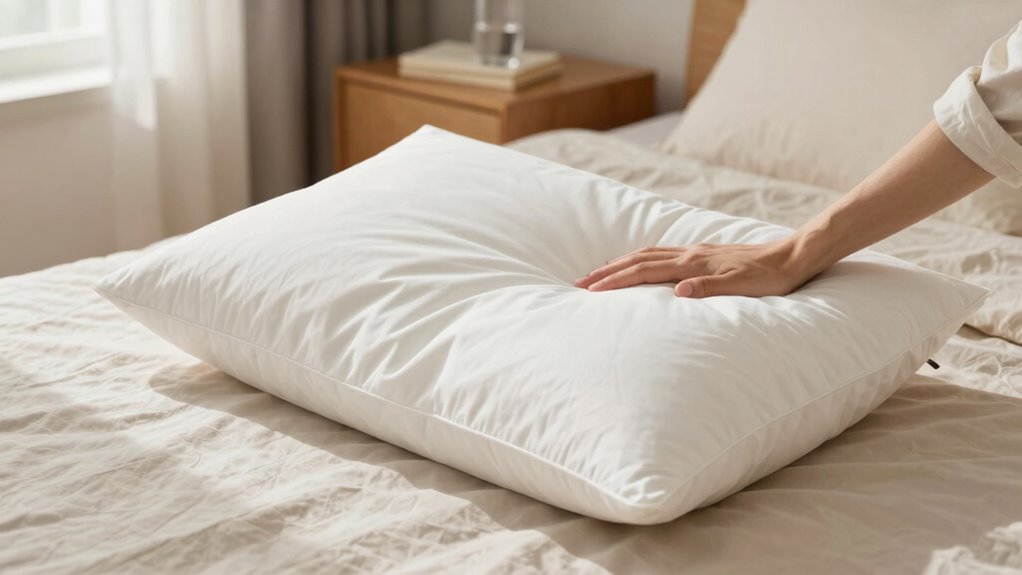
Finding the perfect pillow can feel overwhelming, but testing it at home doesn’t have to be complicated. The key is understanding how your sleep posture influences what kind of pillow will support you best. Whether you sleep on your back, side, or stomach, your position impacts the firmness, loft, and material you should choose. For example, if you sleep on your side, you’ll need a thicker pillow that fills the space between your neck and the mattress, maintaining proper spinal alignment. Back sleepers typically prefer a medium loft that supports the natural curve of the neck, while stomach sleepers often benefit from a softer, flatter pillow to avoid neck strain.
When it comes to pillow materials, your choice can dramatically affect comfort and sleep quality. Memory foam contours to your head and neck, providing customized support that keeps your spine aligned. Down and feather pillows offer softness and breathability, but may lack the support some sleepers need. Latex pillows tend to be resilient, offering support without the heat retention associated with some foam options. Synthetic fills can be a good alternative if you’re sensitive to allergens or want a more affordable option. The material you select should complement your sleep posture, ensuring your neck isn’t pushed into unnatural angles or strained during the night. Additionally, pillow durability is an important factor to consider when evaluating support over time. Understanding the properties of different materials can help you make an informed choice that enhances your sleep experience.
To test a pillow at home effectively, start by lying down in your usual sleep position. Spend at least 10 to 15 minutes on each pillow to get a true sense of how it feels. Pay attention to whether your head and neck stay aligned with your spine. If your neck feels strained or you wake up with soreness, the pillow isn’t providing enough support for your sleep posture. Conversely, if you feel pressure points or discomfort, it may be too firm or thick. Consider how the pillow’s material responds as well—does it retain heat, or does it stay cool? Does it maintain its shape, or does it sag too quickly? Evaluating the impact of materials on support and comfort can help you select the best pillow for your needs. Additionally, understanding the longevity of pillow materials can help ensure your investment provides lasting comfort.
memory foam pillow for neck support
As an affiliate, we earn on qualifying purchases.
As an affiliate, we earn on qualifying purchases.
Frequently Asked Questions
How Often Should I Replace My Pillow for Optimal Comfort?
You should replace your pillow every 1 to 2 years to maintain ideal comfort. Over time, pillow firmness diminishes, and it no longer supports your sleep posture properly. Regularly assess how your pillow feels—if it’s flat, lumpy, or causes neck pain, it’s time for a new one. Consistently updating your pillow guarantees proper support, improves sleep quality, and helps you wake up refreshed every morning.
Can I Test a Pillow’s Breathability at Home Effectively?
Yes, you can test a pillow’s breathability at home effectively. Start by placing the pillow in a well-ventilated room and press your hand against it to feel airflow. If you notice coolness or air passing through easily, it’s breathable. Consider your sleeping position—side sleepers often need firmer pillows, while back sleepers prefer softer, breathable options. This simple test helps you find a pillow that combines comfort, breathability, and support.
What Materials Are Best for Hypoallergenic Pillows?
You should look for pillows made from hypoallergenic fabrics like organic cotton, bamboo, or microfiber, which help reduce allergy symptoms. allergen resistant materials such as memory foam infused with charcoal or gel also work well. These materials resist dust mites, mold, and other allergens, making your sleep environment safer and healthier. Always check product labels to guarantee the pillow is certified hypoallergenic, and opt for those with removable, washable covers for added hygiene.
How Do I Know if a Pillow Provides Proper Neck Support?
To determine if a pillow provides proper neck support, check for good neck alignment. You want a pillow that keeps your head and neck in a neutral position, preventing strain. Test the support firmness; it shouldn’t be too soft or too firm. When lying down, your neck should feel supported without sagging or elevation. Adjust the pillow until you find the right support firmness for comfortable, healthy sleep.
Are There Specific Cleaning Tips for Maintaining Pillow Quality?
To maintain your pillow’s quality, focus on regular pillow cleaning and fabric maintenance. Use a gentle, pillow-safe detergent and wash your pillow according to its care label, ideally every 3-6 months. Spot clean stains promptly and fluff your pillow daily to keep its shape. Protect it with a pillow cover, and guarantee thorough drying to prevent mold. These steps help preserve the pillow’s support and freshness over time.
adjustable loft side sleeper pillow
As an affiliate, we earn on qualifying purchases.
As an affiliate, we earn on qualifying purchases.
Conclusion
So, next time you’re lying awake, questioning if your pillow’s really a dream or a nightmare, remember—you’ve got all the tools right at home. Who knew that testing a pillow could be so simple? Ironically, the perfect pillow might just be the one you’ve already got, waiting for you to give it a little test run. So go ahead, snooze confidently—your ideal pillow is probably hiding in plain sight, just waiting for its moment to shine.
As an affiliate, we earn on qualifying purchases.
ergonomic pillow for spinal alignment
As an affiliate, we earn on qualifying purchases.
As an affiliate, we earn on qualifying purchases.
Fall Picks
fall essentials
As an affiliate, we earn on qualifying purchases.