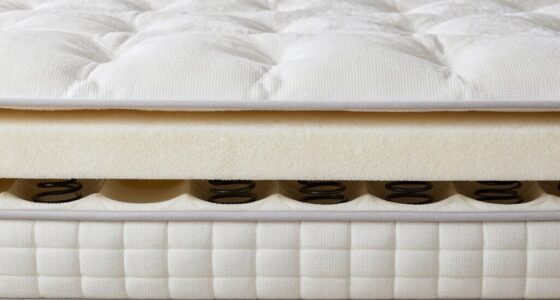

To keep your bed supportive and lasting, you should space your slats no more than 3 inches apart. This prevents sagging, evenly supports your mattress, and keeps your frame durable. Regularly check and adjust the slats to maintain proper spacing, especially if you notice any sag. Using the right support options for your mattress type and materials also helps. Stick with these guidelines, and you’ll discover how to optimize your bed’s support system for good sleep and long-term use.
Key Takeaways
- Keep slats no more than 3 inches apart to evenly support the mattress and prevent sagging.
- Proper slat spacing extends both mattress and bed frame lifespan by reducing stress and uneven wear.
- Regularly inspect and adjust slats to maintain correct spacing and support, preventing damage over time.
- Use sturdy materials like wood or metal to help maintain consistent slat placement and stability.
- Support options should match your mattress type, such as solid platforms for memory foam or flexible slats for innerspring beds.
As an affiliate, we earn on qualifying purchases.
What Is the Correct Slat Spacing for Your Bed Frame?

To guarantee your mattress stays comfortable and well-supported, it’s important to know the correct slat spacing for your bed frame. Generally, slats should be spaced no more than 3 inches apart to ensure ideal mattress support. Proper spacing helps distribute weight evenly, preventing sagging that can compromise mattress longevity. When slats are too far apart, the mattress may sag prematurely, reducing its lifespan and affecting comfort. Additionally, closely spaced slats enhance the overall durability of your bed frame by reducing stress on individual slats and joints. For optimal support, consider your mattress type and its specific needs when setting slat spacing. Keep in mind that the right spacing depends on your mattress and frame design, but sticking to this 3-inch rule is a reliable way to protect your investment. Proper slat spacing is key to maintaining both mattress longevity and bed frame durability. Ensuring well-maintained support structures can also prevent unnecessary wear over time. Recognizing the proper installation techniques can further improve the stability and lifespan of your bed frame. Additionally, using correct tools and hardware during setup can help ensure the slats remain securely in place and maintain consistent spacing. Incorporating regular maintenance into your routine can further extend the life of your bed frame and mattress.
As an affiliate, we earn on qualifying purchases.
Why Proper Slat Spacing Is Key to Mattress Support
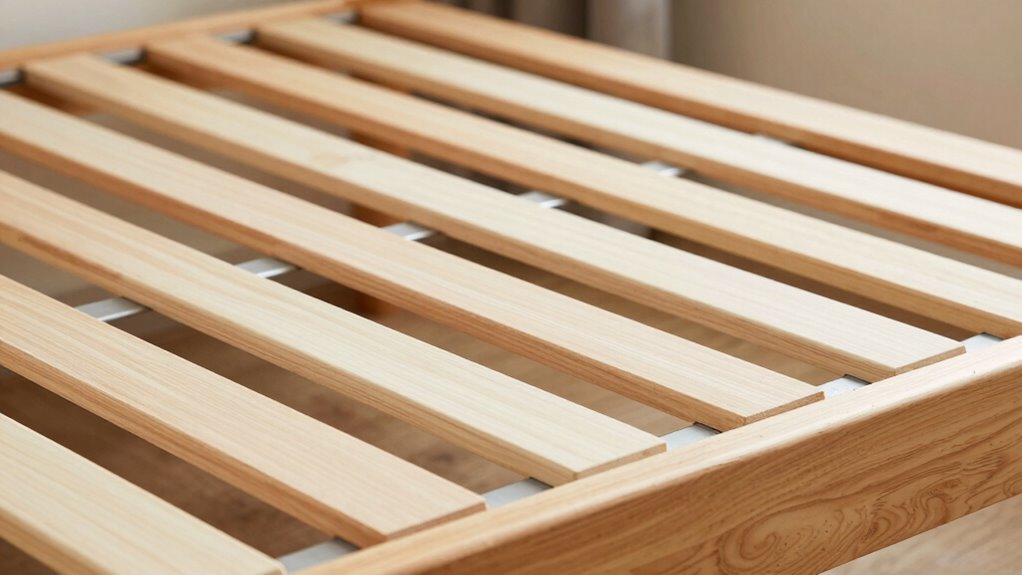
Proper slat spacing directly impacts how well your mattress is supported, preventing sagging and ensuring consistent comfort. If the slats are too far apart, especially on adjustable bases, your mattress can sink or warp over time, reducing its lifespan. Using the right bed frame materials, like sturdy wood or metal, helps maintain proper slat placement and stability. Adjustable bases often require specific slat spacing to maximize support when adjusting positions. When slats are properly spaced, your mattress remains evenly supported, which enhances comfort and prolongs its durability. Consistent support is essential for preventing early mattress deterioration and ensuring a good night’s sleep. Neglecting slat spacing can lead to uneven wear, discomfort, and the need for early replacement. Ensuring correct spacing is a simple but essential step in maintaining optimal mattress support**, which can significantly impact sleep quality. Additionally, understanding how contrast ratio affects image quality can help you choose the right home theater setup for your space. Incorporating smart strategies for personal finance planning** can help you afford quality bed frames and accessories that ensure proper slat support.
As an affiliate, we earn on qualifying purchases.
How to Measure and Adjust Slats for the Best Support

Measuring and adjusting slats guarantees your mattress gets the support it needs for comfort and durability. To ensure proper bed slat placement, check the spacing between each slat, ideally no more than 3 inches apart. Support adjustment involves tightening or repositioning slats to eliminate sagging or gaps. Use a tape measure to verify slat distance and make small shifts as needed. Proper support prevents mattress sagging and frame damage. Additionally, understanding home maintenance best practices can help you maintain a sturdy and comfortable bed frame over time. Regularly inspecting your bed frame and performing preventative care can extend its lifespan and ensure consistent support. Incorporating proper support techniques into your routine can further enhance the longevity and stability of your bed. Being aware of bed frame materials can also help identify the best adjustments for your specific frame type. Ensuring your slats are evenly spaced and securely fastened is a crucial step in bed frame support, which directly impacts your sleep quality.
As an affiliate, we earn on qualifying purchases.
Common Mistakes That Cause Sagging and Frame Damage
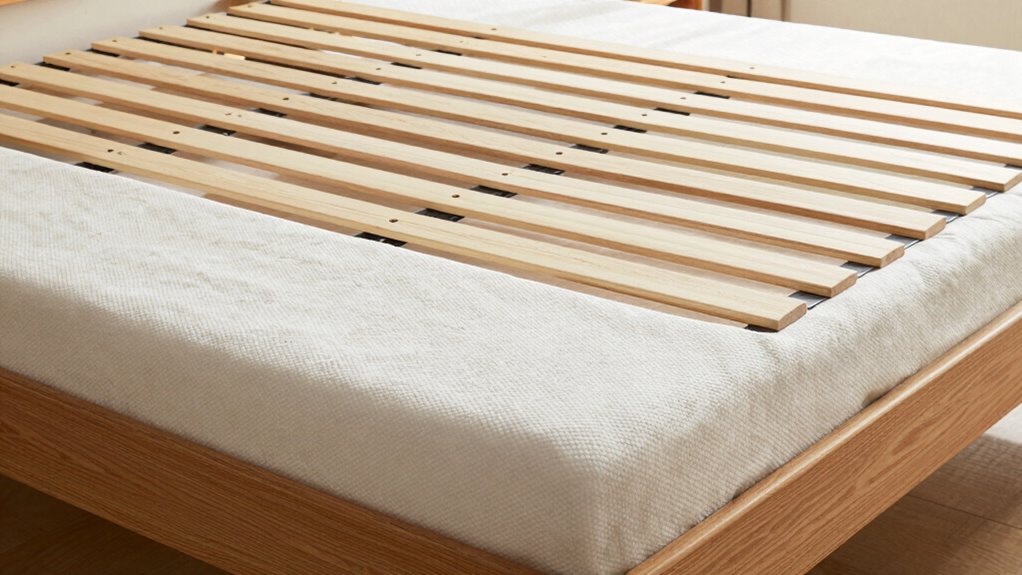
Have you ever overlooked common mistakes that lead to sagging and damage in your bed frame? One major error is ignoring proper slat spacing, which can compromise bed frame longevity. When slats are too far apart, your mattress may sag, putting extra stress on the frame and causing premature damage. Additionally, using incompatible support systems or neglecting to reinforce weak spots can lead to frame warping or breakage. Overloading the frame beyond its weight capacity also accelerates wear and tear. Always ensure your slats are evenly spaced and suited for your mattress type. Proper support not only extends your bed frame’s lifespan but also maintains mattress integrity. Regularly inspecting your bed frame support system can help identify issues before they cause significant damage. Recognizing the importance of proper support and maintenance is essential for preventing unnecessary repairs and ensuring safety. Implementing correct slat spacing according to manufacturer guidelines can greatly reduce the risk of sagging. Properly distributing weight across the support system also enhances durability and comfort. Paying attention to bed frame quality can prevent many common issues related to frame failure and ensure long-term durability. Avoid these mistakes, and you’ll enjoy a sturdy, long-lasting bed that supports your mattress effectively.
The Best Support Options for Different Mattress Types

Choosing the right support system depends on your mattress type, as each requires specific considerations to guarantee durability and comfort. For example, memory foam mattresses need solid support to prevent sagging, while innerspring mattresses benefit from flexible slats. Consider mattress compatibility and frame material considerations when selecting support options:
| Mattress Type | Best Support Option |
|---|---|
| Memory Foam | Solid platform or closely spaced slats |
| Innerspring | Flexible slats with proper spacing |
| Hybrid | Combination of support types |
| Frame Material Considerations | Impact on Support Choice |
| Wood | Can accommodate slats but check spacing |
| Metal | Ensure sturdy support or use additional reinforcement |
| Upholstered | Requires solid or reinforced support |
Choosing the right support maximizes mattress lifespan and comfort. Proper slat spacing is crucial for different support needs and frame materials, ensuring optimal mattress performance and durability.
Tips to Maintain Your Bed Frame’s Support System Over Time

Maintaining your bed frame’s support system over time guarantees your mattress stays comfortable and lasts longer. Regularly check your frame assembly to ensure all screws and bolts are tight, preventing sagging or instability. If you have decorative headboards, make sure they’re securely attached and don’t add extra stress to the frame. Avoid placing excessive weight on one side, which can warp the slats or joints. Clean dust and debris from the frame and slats periodically to prevent deterioration. If your bed has a support system with adjustable components, adjust them as needed to maintain proper slat spacing and support. Additionally, choosing the right support system for your bed can significantly improve its durability and comfort. Using appropriate materials such as hardwood or reinforced metal components can further enhance stability. Ensuring proper slat spacing prevents sagging and maintains even weight distribution across the mattress. Incorporating natural light in your bedroom design can also help you spot issues early on, like loose or damaged parts, for easier maintenance. Proper maintenance not only prolongs the life of your bed but also ensures consistent support for a restful night’s sleep.
Frequently Asked Questions
Can Uneven Slat Spacing Cause Allergies or Dust Buildup?
Uneven slat spacing can definitely cause dust accumulation, creating a perfect environment for allergy triggers. When slats are uneven, gaps may trap dust and debris more easily, leading to increased allergens under your bed. This buildup can worsen allergy symptoms if you’re sensitive. To prevent this, verify your slats are evenly spaced and regularly clean underneath. Doing so helps reduce dust accumulation and keeps allergy triggers at bay, promoting better sleep and healthier living.
How Often Should I Check and Re-Adjust Slat Spacing?
Did you know that improper slat spacing can cause mattress sagging and reduce its lifespan? You should check and re-adjust the slat spacing every 3 to 6 months as part of your maintenance schedule. Regular adjustment ensures even support, prevents dust buildup, and extends your bed’s comfort and durability. Keep an eye on it, especially if you notice any sagging or noise, and re-adjust as needed to maintain ideal support.
Are There Specific Slat Materials Better for Heavy Mattresses?
For heavy mattresses, opt for slat materials like hardwood or metal, as they provide better support and durability. Hardwood slats, such as oak or maple, are strong and less likely to bend under mattress weight, while metal slats offer excellent stability for heavier loads. Avoid softer woods or flimsy materials, as they can warp or break, compromising mattress support and comfort. Always choose the right slat material based on your mattress weight for ideal support.
What Signs Indicate My Slats Need Replacement or Reinforcement?
If you notice slat damage like cracks, splinters, or warping, it’s time to replace or reinforce them. Mattress sagging, especially around the edges, also signals weakened slats. You might see visible gaps or slats bowing under weight. These signs mean your slats can’t support your mattress properly anymore, risking discomfort and damage. Addressing these issues promptly keeps your bed stable, comfortable, and extends its lifespan.
Does Slat Spacing Affect Bed Frame Noise Levels?
Yes, slat spacing definitely affects your bed frame’s noise levels. When slats are spaced too far apart, they can cause bed squeaking as the mattress shifts and moves. Additionally, wide gaps may lead to mattress sagging over time, which can worsen noise and reduce comfort. To minimize squeaking and prevent sagging, guarantee your slats are properly spaced and reinforced if needed, creating a quieter, more stable sleeping surface.
Conclusion
Now that you know the importance of proper slat spacing, you’ll notice how your mattress feels more supportive and comfortable. It’s funny how a simple adjustment can make such a difference—like discovering a hidden secret to better sleep. Keep an eye on your slats and maintain your frame regularly, and you’ll enjoy a cozy, sag-free bed for years. Turns out, paying attention to details can truly transform your sleep experience—who knew?