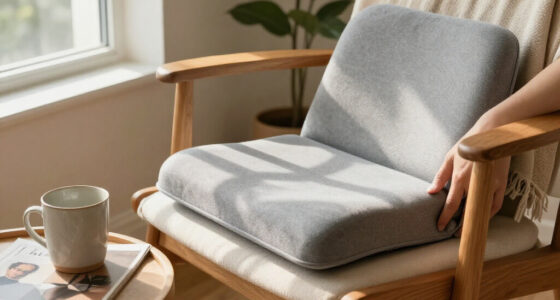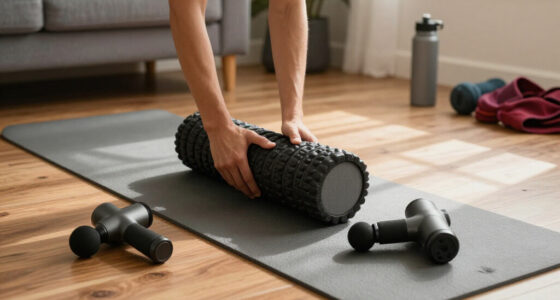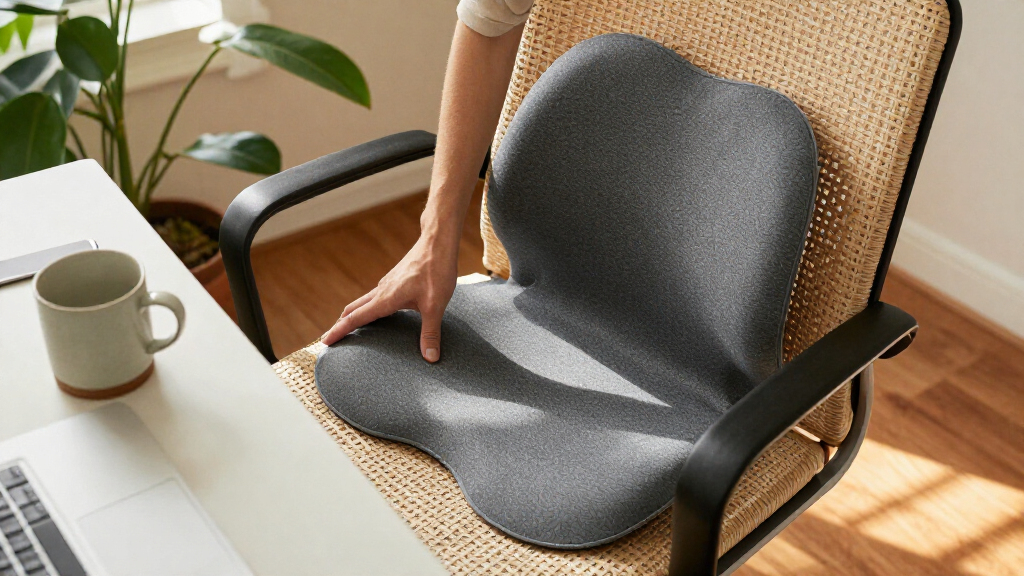

Use this guide to choose and set up an ergonomic support cushion for sitting or sleeping. It is for beginners who want to improve comfort at a desk, in a car, or in bed, and explains how to match cushion shape to your needs, position it, and check the fit. Allow about 20-30 minutes for selection and initial setup; getting used to a new cushion may take several days.

Get comfort and recovery gear delivered free with Prime
- Fast, free delivery on millions of items
- Prime Video, Amazon Music and more included
- Member-only deals all year

CHANCEE Ergonomic Seat Cushion with L-Shaped Design for Office Chair
- ✔ Shape: L-shaped
- ✔ Dimensions: 16.5 × 15.8 × 13.4 inches
- ✔ Core: High-density memory foam

Seat Cushion and Lumbar Support Pillow for Office Chair, Black
- ✔ Seat cushion dimensions: 18.1 × 14.2 × 3.2 inches
- ✔ Lumbar pillow dimensions: 13 × 4 × 13 inches
- ✔ Core: Memory foam
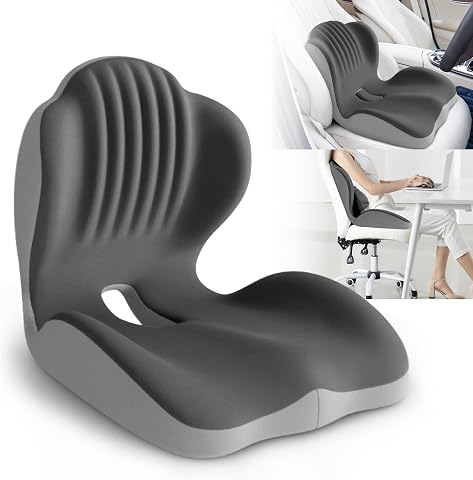
LVGREEEN Ergonomic L-Shaped Memory Foam Seat Cushion, Dark Grey
- ✔ Shape: Semicircular
- ✔ Dimensions: 16.5 × 15.8 × 13.4 inches
- ✔ Core: High-density, slow-rebound memory foam
Difficulty: Beginner | Time: 20-30 minutes for selection and initial setup
What You’ll Need
Tools & Materials:
- Chair or bed where you plan to use the cushion
- Tape measure or ruler
- The cushion’s size, materials, and care instructions
Knowledge:
- Basic awareness of where you feel pressure or discomfort
- Ability to adjust your seat or change position
Think about when and where you need support before shopping. A cushion can improve comfort and positioning, but it does not diagnose or treat a medical condition. If you have persistent pain, numbness, weakness, or a recent injury, ask a qualified health professional for advice about suitable support.
CHANCEE Ergonomic Seat Cushion with L-Shaped Design for Office Chair
The CHANCEE is our best overall pick for shoppers who want a single cushion to address both the seat and lower back. Its L-shaped form joins lumbar support to a seat pad, so there is no separate back pillow to place or secure. The hollow section is intended to leave space around the tailbone, and the medium-firm, high-density memory foam is described as retaining its shape over extended use. At 16.5 by 15.8 by 13.4 inches, it is a substantial piece, so we would check chair depth and back clearance before buying.Compared with CushZone, CHANCEE offers a more unified setup but less independent control over where the lumbar section sits. That matters if a separate strap-on pillow is easier to align to your back. It also differs from LVGREEEN by pairing the seat and back support in one connected shape; LVGREEEN is the more focused pick if a coccyx opening and stated weight limit are the main decision points. CHANCEE lists use in cars, wheelchairs, and home seating, though its tall profile may not suit every seat. The cover can be removed and washed, but the foam core is not machine washable, and the listing does not specify how the integrated section fits different torso lengths.
Pros:
- Integrated L-shape combines seat and lumbar support
- High-density memory foam with a medium-firm feel
- Non-slip base and hollow design
- Removable cover can be machine washed
Cons:
- Large, tall profile may not fit every chair
- Foam core cannot be machine washed
- Lumbar position is tied to the seat section
Best for: People who want one connected cushion for seat and lumbar support on a compatible office chair or vehicle seat.
Not ideal for: Buyers who need independently adjustable lumbar placement, a low-profile pad, or a compact cushion that is easy to move between seats.
Bottom line: Choose CHANCEE when you want an all-in-one support shape and have room for its taller profile.
“Choose CHANCEE when you want an all-in-one support shape and have room for its taller profile.”
Seat Cushion and Lumbar Support Pillow for Office Chair, Black
CushZone is the most adaptable arrangement in this group because the seat pad and lumbar pillow are separate. Its adjustable straps attach the back pillow to a chair, letting us place that support independently from the seat cushion. That can be useful when a fixed L-shaped piece like CHANCEE puts its back section too high or low for a particular chair. The seat measures 18.1 by 14.2 by 3.2 inches, while the lumbar pillow is 13 by 4 by 13 inches; these dimensions give buyers a clearer basis for checking fit.The tradeoff is that a two-piece setup takes more arranging and can shift differently when moved between chairs. CushZone adds a carrying handle and a non-slip seat bottom, which help with portability and stability, but the listing does not give a specific strap adjustment range. Both covers are removable and machine washable, a practical advantage over CHANCEE’s foam-care limitation. Its foam is described as soft yet supportive, but buyers seeking the more connected, shaped support of CHANCEE or LVGREEEN may find the separate pieces less cohesive. As with the other options, the product’s claims about discomfort and posture should be treated as intended use, not a promise of results.
Pros:
- Separate lumbar pillow allows independent positioning
- Adjustable back straps and non-slip seat base
- Removable machine-washable covers
- Seat cushion includes a carrying handle
Cons:
- Two pieces require separate placement and storage
- Strap adjustment range is not specified
- No stated user-weight limit or foam density
Best for: People who want to position lumbar support separately from their seat cushion or move a washable set between home, office, and car.
Not ideal for: Shoppers who prefer a single integrated piece, want specified foam density, or do not want to adjust straps and two separate components.
Bottom line: Pick CushZone if positioning flexibility and washable covers matter more than having one connected support shape.
“Pick CushZone if positioning flexibility and washable covers matter more than having one connected support shape.”
LVGREEEN Ergonomic L-Shaped Memory Foam Seat Cushion, Dark Grey
LVGREEEN suits buyers who want a shaped seat cushion with a clearly described coccyx opening and slow-rebound foam. The listing gives a recommended user weight of up to about 180 pounds, a useful fit consideration absent from the other two products. Its 16.5 by 15.8 by 13.4-inch dimensions match the stated size of CHANCEE, but the supplied LVGREEEN description emphasizes a semicircular shape and seat support rather than detailing a separate lumbar section. We would therefore choose it for its seat design and weight guidance, not assume it offers the same connected back support as CHANCEE.Compared with CushZone, LVGREEEN is a single shaped cushion rather than a set with a strap-mounted pillow, so there is less separate adjustment but less to position. Its high-density, slow-rebound core is intended to provide lasting support, while the hollow area is meant to give the coccyx space. The listing says it fits office chairs, car seats, wheelchairs, and gaming chairs, but buyers should verify the dimensions against their seat. There are two small setup considerations: the cushion may have an odor when first unpacked, and it needs one to three hours to regain its shape. The description does not specify cover material or cleaning method, leaving less care information than CushZone provides.
Pros:
- Coccyx opening intended to reduce direct contact
- High-density, slow-rebound memory foam
- Dimensions are stated for fit checks
- Listed for office, car, wheelchair, and gaming seats
Cons:
- Recommended user weight is limited to about 180 pounds
- May have an initial odor and needs time to regain shape
- Cover material and cleaning method are not specified
Best for: Buyers within the stated weight recommendation who want a single cushion with a coccyx opening and slow-rebound foam.
Not ideal for: People above the stated recommended weight, shoppers who need adjustable lumbar placement, or anyone who needs clear cover-care instructions before purchase.
Bottom line: LVGREEEN is the focused choice for coccyx space and slow-rebound foam, provided its fit guidance and care details work for you.
“LVGREEEN is the focused choice for coccyx space and slow-rebound foam, provided its fit guidance and care details work for you.”
As an Amazon Associate we earn from qualifying purchases.
Before You Start
Check the seat or bed dimensions and the cushion’s measurements before buying or unwrapping it. A cushion that is too wide, too tall, or too thick can make your posture worse or keep you from sitting safely. Review the return policy and cleaning instructions, especially if you need a washable cover. Test a new cushion for short periods at first and stop using it if it causes increasing pain, tingling, or numbness.
Step-by-Step Instructions
Step 1: Identify where you need support
Choose the main place you want to use the cushion: an office chair, car seat, wheelchair, or bed. Notice what feels uncomfortable during a typical session. For example, you may feel pressure under your sitting bones, have trouble keeping your lower back supported, or need help positioning your legs while resting. Write down the location and the activity that brings on the discomfort.
Tip:Choose a cushion for the specific use. A car cushion must not interfere with the seat belt, pedals, or safe driving position.
Check: You can describe where you want support and name the surface where you plan to use the cushion.
Step 2: Match the cushion type to the need
Compare the product’s intended use with your notes. A seat cushion may spread pressure across the sitting area; a coccyx cushion often has a cutout at the back; a lumbar cushion supports the lower back; and a leg or knee bolster can help position the legs while lying down. Check the manufacturer’s guidance, dimensions, materials, and firmness. Do not assume that a particular shape is right simply because it is marketed as ergonomic.
Tip:For a wheelchair or a medical need, ask a clinician or seating specialist about cushion fit and pressure management.
Check: The cushion’s stated purpose matches the part of your body and activity you want to support.
Step 3: Check the size and height
Measure the usable width and depth of your seat or bed area. Compare those measurements with the cushion, allowing enough room to sit without its edges catching or hanging over the surface. Check the cushion’s height too. When seated, your feet should still rest securely on the floor or footrest, and the cushion should not push you so high that your desk or armrests become difficult to use.
Tip:A thicker cushion can change your seat height and the angle of your knees. Plan to readjust your chair or footrest if needed.
Check: The cushion fits the intended surface and leaves room to sit or lie in a stable position.
Step 4: Prepare the chair or bed
Place the chair on a stable surface and remove objects that could make the cushion slide. If using a bed, clear the area where the cushion will sit. Adjust the chair so you can sit back against its backrest, with your feet supported and the work surface within comfortable reach. Read any setup directions supplied with the cushion.
Tip:Do not stack cushions unless the manufacturer or a health professional has recommended that arrangement. Stacks can shift and make your position unstable.
Check: The surface is clear, stable, and ready for the cushion.
Step 5: Position the cushion
Set the cushion on the seat or bed according to its label. Center a general seat cushion beneath your sitting area. If it has a cutout, face that opening in the direction specified by the manufacturer; for many coccyx cushions, the opening faces the back. Place a lumbar cushion against the chair back at the level of your lower back. For a leg bolster, follow its instructions for supporting the knees or lower legs.
Tip:Check for arrows, labels, or a shaped underside that indicates the correct direction.
Check: The cushion is oriented as directed and does not rock, fold, or slide when you sit or lie down.
Step 6: Sit or lie down and adjust your position
Ease into your usual position rather than forcing your body into a rigid posture. For sitting, move back enough to use the backrest and keep both feet supported. Let your shoulders relax and adjust the chair, desk, or footrest if the cushion changed your height. For bed use, check that the cushion supports the intended area without twisting your neck, hips, or knees.
Tip:Ergonomic support should feel steady and comfortable. It should not create sharp pressure or make you hold an unnatural pose.
Check: You feel balanced, can change position easily, and do not need to brace yourself to stay on the cushion.
Step 7: Test the fit in short sessions
Use the cushion for about 15-30 minutes, then stand or change position and check how you feel. Look for pressure at the cushion’s edges, sliding, new discomfort, or changes in leg circulation or sensation. If the fit feels good, gradually extend use while keeping your regular movement breaks. Follow the product’s care instructions and inspect straps or non-slip surfaces periodically.
Tip:Do not try to solve discomfort by sitting still for longer. Change position regularly, even when the cushion feels comfortable.
Check: The cushion stays in place, supports the intended area, and does not cause new symptoms during or after a short session.
Common Mistakes to Avoid
- Buying a cushion based only on its shape or advertised benefits. — Match its intended use, measurements, and firmness to your body, seat, and activity. Check the return terms before purchase.
- Choosing a cushion that raises the seat too much. — Check your feet, knee position, and access to your desk or pedals after placing it. Adjust the chair or footrest, or choose a lower cushion.
- Placing a shaped cushion in the wrong direction. — Read the label and check for orientation marks before use, especially for cutout or contoured designs.
- Expecting the cushion to remove the need for movement or medical advice. — Take regular posture breaks. Seek professional advice for ongoing pain or new numbness, tingling, or weakness.
Troubleshooting
Problem: The cushion slides when you sit down.
Solution: Check that it is on a clean, dry surface and oriented correctly. Use its supplied straps or non-slip base if available. If it still moves, confirm that its dimensions suit the chair.
Problem: Your feet no longer reach the floor comfortably.
Solution: Lower the chair if possible or add a stable footrest. If your knees or hips still feel cramped, try a thinner cushion or a different chair setup.
Problem: The cushion creates pressure or new discomfort.
Solution: Stand up and check for incorrect positioning, a poor fit, or excessive firmness. Shorten use or stop using it. If symptoms persist or include numbness or weakness, contact a health professional.
Problem: The cushion feels comfortable at first but uncomfortable after a while.
Solution: Take movement breaks and reassess the chair height, back support, and cushion position. Try shorter sessions. A cushion cannot compensate for a poorly adjusted workstation or an unsuitable product.
What Success Looks Like
Your cushion fits the intended surface, stays in place, and supports the area you selected. You can sit or lie down without straining to maintain your position, and your feet or limbs remain comfortably supported. A short trial does not cause new pain, tingling, numbness, or skin pressure. Continue to monitor comfort as you increase use.
Next Steps
Keep taking movement breaks and adjust your setup if your desk, chair, or routine changes. Clean the cushion and cover as directed, and replace them if the support becomes uneven, damaged, or slippery. If discomfort continues despite a suitable fit and regular position changes, consult a health professional about other causes and support options.
Frequently Asked Questions
How long should I use a new ergonomic cushion each day?
Start with a short session of about 15-30 minutes and check how you feel during and afterward. Increase use gradually if it remains comfortable. Take regular movement breaks instead of sitting continuously.
Should an ergonomic cushion feel firm?
It should feel supportive without creating sharp pressure or forcing your body into an uncomfortable position. The right firmness depends on the cushion’s purpose and your fit on the intended surface.
Can I use a seat cushion in my car?
Only if it fits securely and does not interfere with the seat belt, pedals, airbags, or a safe driving position. Follow the cushion and vehicle instructions, and check your position before driving.
Can a support cushion treat back or tailbone pain?
A cushion may improve comfort for some people, but it does not identify or treat the cause of pain. Ask a qualified health professional about persistent or worsening symptoms.
When should I stop using a cushion?
Stop if it causes increasing pain, numbness, tingling, weakness, or skin irritation. Recheck the position and fit; seek professional advice if symptoms continue.
Evergreen bestsellers Picks

Ninja Creami Scoop & Swirl Ice Cream Maker – Bone & Champagne (Amazon Exclusive)

Apple AirPods Pro 3 Wireless Earbuds with Active Noise Cancellation

Vitamix 5200 Blender with 64 oz Container, Black
As an affiliate, we earn on qualifying purchases.