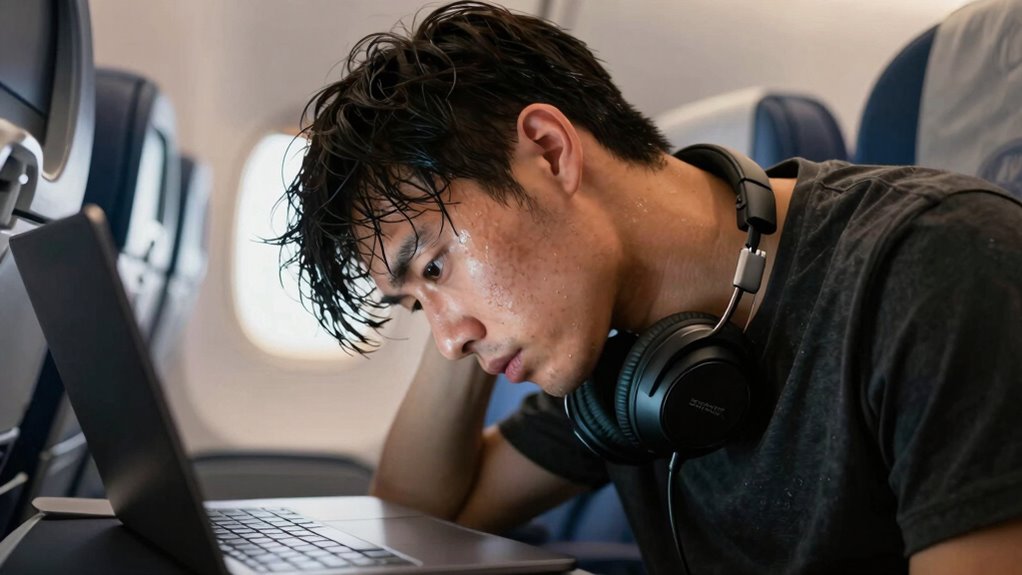

One habit that worsens your neck discomfort during flights is neglecting movement and poor posture, like craning your neck forward to see screens or reading materials. Sitting still for hours with a poorly supported neck can cause muscle strain and stiffness, which lingers long after landing. To avoid this, keep your head aligned, use support like a neck pillow, and regularly stretch your neck and shoulders. If you want to know more, you’ll find helpful tips to keep your neck comfortable throughout your journey.

Get comfort and recovery gear delivered free with Prime
- Fast, free delivery on millions of items
- Prime Video, Amazon Music and more included
- Member-only deals all year
Key Takeaways
- Constantly craning your neck forward to view screens or read increases muscle strain and discomfort.
- Sitting in cramped positions with poor support leads to awkward neck angles and tension.
- Neglecting in-flight movement results in stiffness and worsened neck pain over time.
- Holding your head at an improper angle without proper support causes unnecessary strain.
- Waiting until pain develops to adjust posture or stretch allows discomfort to worsen.
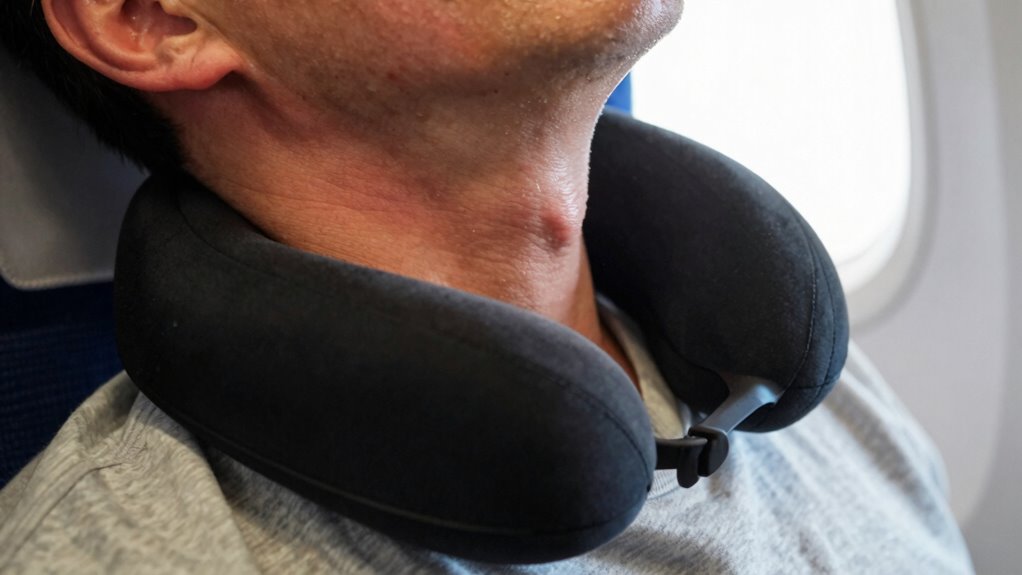
If you’ve ever noticed your neck feeling sore or stiff after a flight, you’re not alone. Many travelers experience discomfort that seems to linger long after landing. One common culprit is the way you sit during the flight, especially if you neglect airline seat comfort and don’t take simple steps to counteract the strain. Sitting in a cramped or poorly supportive seat can put your neck in awkward positions, leading to stiffness and pain. Over time, this posture can cause muscle strain and even contribute to headaches or headaches that radiate from neck tension.
Neck soreness after flights often results from poor posture and lack of support during travel.
A key mistake many travelers make is assuming that just sitting still is enough. Instead, incorporating in-flight stretching exercises can make a significant difference. These exercises help loosen tight muscles, improve circulation, and prevent the buildup of stiffness that often worsens during long flights. You don’t need much space or equipment—simple neck rolls, shoulder shrugs, and gentle head tilts can all be done right in your seat. Regularly moving your neck and shoulders releases tension and reduces the risk of post-flight soreness.
Your choice of airline seat comfort also matters more than you might think. If possible, opt for seats with more legroom or adjustable headrests. Using a neck pillow can provide extra support, especially if you tend to lean forward or slump. Be mindful of your posture during the flight—try to keep your back straight and your head aligned over your shoulders. Avoid craning your neck forward to look at screens or read, as this can strain your cervical spine. Instead, hold reading materials at eye level and take breaks to stretch. Developing posture awareness can help you maintain proper alignment and reduce long-term discomfort. Additionally, practicing mindful movement during the flight can help you stay aware of your posture and prevent unnecessary strain. Incorporating ergonomic principles into your seating and movement habits can further enhance your comfort and prevent chronic issues.
In-flight stretching exercises are especially effective when you do them consistently, even during brief moments of inactivity. For example, gently rolling your shoulders back and down can relieve tension accumulated from hunching forward. Tilting your head from side to side or gently rotating your neck can stretch tight muscles and improve flexibility. These small movements may seem insignificant, but they add up over the course of a flight, helping you arrive feeling more refreshed rather than worse for wear. Incorporating simple stretches into your routine can make a noticeable difference in your comfort.
Additionally, being mindful of your posture during the flight can greatly influence your comfort and recovery. Ultimately, paying attention to airline seat comfort and integrating simple stretches into your routine can drastically reduce neck discomfort. Don’t wait until you’re in pain to start thinking about your posture and movement. By making these habits part of your travel routine, you’re taking proactive steps to ensure your neck feels better, not worse, after every flight.
ergonomic neck pillow for flights
As an affiliate, we earn on qualifying purchases.
As an affiliate, we earn on qualifying purchases.
Frequently Asked Questions
How Can I Prevent Neck Pain During Long Flights?
To prevent neck pain during long flights, stay hydrated with in-flight hydration and avoid alcohol or caffeine, which can dehydrate you. Adjust your head and neck frequently to reduce strain, and use a supportive travel pillow. Be mindful of cabin pressure effects by moving gently and stretching when possible. These habits help keep your neck comfortable and reduce pain caused by prolonged sitting and changing cabin conditions.
Are There Specific Pillows That Help Reduce Neck Strain?
Yes, specific travel pillows with ergonomic support can greatly reduce neck strain. Look for a pillow that offers proper neck alignment and snugly fits around your neck, such as memory foam or inflatable options. These pillows help maintain correct posture during long flights, preventing discomfort and pain. Investing in a quality travel pillow ensures better support, keeps your neck relaxed, and makes your journey more comfortable overall.
What Stretches Can I Do Mid-Flight to Ease Neck Discomfort?
To ease neck discomfort during flights, try simple in-flight stretching exercises focused on neck mobility. Gently tilt your head side to side, stretching your neck muscles. Rotate your head clockwise and counterclockwise to loosen tightness. Slowly nod forward and back, releasing tension. These quick, calming movements can improve circulation, reduce stiffness, and refresh your neck, making your journey more comfortable and less strained.
Does Seat Type Influence Neck Pain After Flying?
Yes, your seat type considerably influences neck pain after flying. Airline seat ergonomics vary, and seats with better lumbar and neck support help reduce strain. Opt for seats with in-flight neck support or bring a travel pillow to maintain proper alignment. Choosing an aisle or window seat can also give you easier options for adjusting your posture. Prioritizing comfort and proper support minimizes discomfort and long-term neck issues post-flight.
When Should I See a Doctor for Neck Pain Post-Flight?
Think of your neck like a delicate bridge that’s been stretched too far. If the pain persists beyond a few days, worsens, or if you experience numbness or weakness, it’s time to see a doctor. Don’t forget to check your travel insurance—some plans cover visits for neck issues. In the meantime, consider wearing a neck brace for support. If symptoms persist, seek medical help promptly to prevent further injury.
As an affiliate, we earn on qualifying purchases.
Conclusion
Next time you fly, think of your neck as a delicate garden trellis, supporting the vibrant blooms of your head. If you overlook it, the twine may sag and break, leaving your garden in disarray. By giving your neck the proper care—stretching, adjusting, and staying mindful—you’ll keep your garden thriving. Remember, a well-tended trellis ensures your head stays upright, bright, and beautiful, even amidst the turbulence of travel.
in-flight neck and shoulder stretching tools
As an affiliate, we earn on qualifying purchases.
As an affiliate, we earn on qualifying purchases.
airline seat cushion with lumbar support
As an affiliate, we earn on qualifying purchases.
As an affiliate, we earn on qualifying purchases.
Halloween Picks
halloween
As an affiliate, we earn on qualifying purchases.