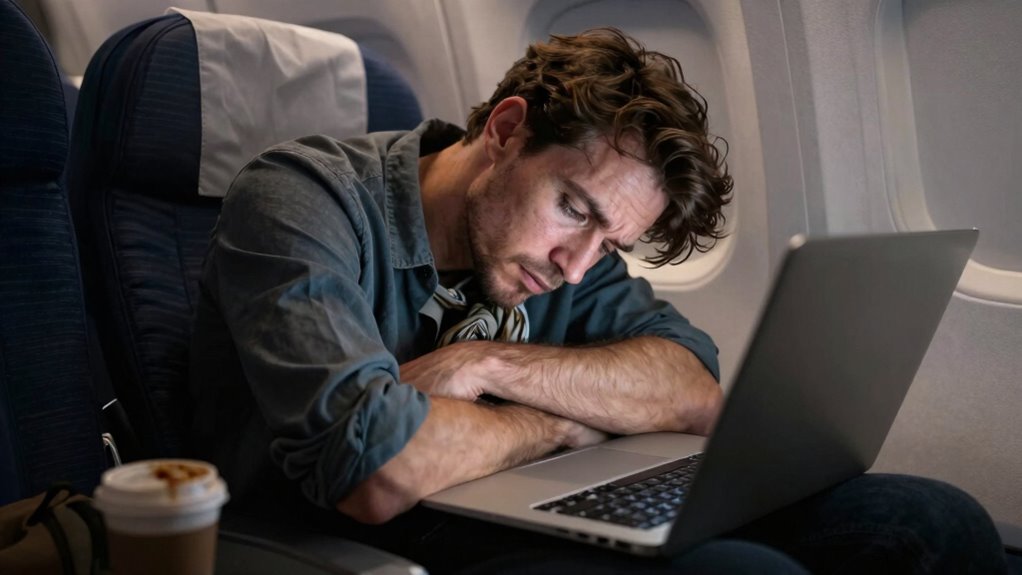

Working on your laptop while traveling is more demanding than you expect because makeshift setups and poor ergonomics cause muscle tension, discomfort, and long-term health issues. You often work in awkward positions, like on airplane trays or hotel beds, which worsen posture and increase fatigue. Tiny adjustments can make a big difference, but it’s easy to forget them amid travel chaos. Keep going to discover practical tips that can help you work more comfortably on the go.

Get comfort and recovery gear delivered free with Prime
- Fast, free delivery on millions of items
- Prime Video, Amazon Music and more included
- Member-only deals all year
Key Takeaways
- Unergonomic setups like propped laptops or makeshift desks increase muscle tension and strain during extended use.
- Limited workspace and uncomfortable chairs in travel environments make ergonomic adjustments difficult.
- Poor posture awareness while on the move leads to prolonged slouching or forward leaning, stressing the spine.
- Frequent interruptions and distractions reduce opportunities for proper stretching and posture correction.
- Small ergonomic improvements are harder to implement, but essential for reducing discomfort and preventing injuries.
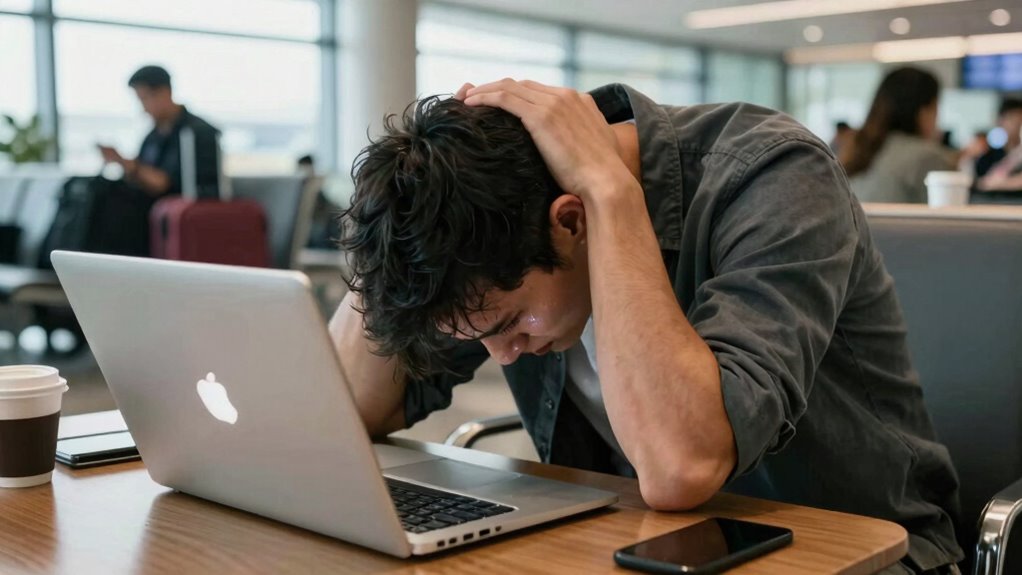
Many people assume that working on a laptop while traveling is convenient and low-impact, but the reality is often harsher on your body than expected. When you’re on the move, it’s easy to overlook proper ergonomic adjustments and lose track of your posture awareness. This oversight can lead to discomfort and long-term health issues, even if you’re just working for a few hours. The key is understanding how your environment and habits can strain your body, especially your neck, shoulders, and back.
Working on a laptop while traveling can strain your neck, shoulders, and back without proper ergonomic habits.
Traveling often forces you into less-than-ideal work setups. You might be using a makeshift desk on a cramped airplane tray or squeezing into a narrow hotel bed with your laptop propped on your lap. These positions are rarely ergonomic, and over time, they can cause muscle tension, repetitive strain injuries, and poor circulation. By making ergonomic adjustments, such as elevating your laptop to eye level or using an external keyboard and mouse, you help maintain healthier body positioning. These small changes make a notably difference in reducing strain and keeping your muscles relaxed.
Posture awareness becomes even more critical when you’re away from your usual workspace. It’s tempting to slouch or lean forward, especially when you’re tired or distracted by your surroundings. But every time you neglect proper posture, you put unnecessary stress on your spine and neck. Being conscious of how you sit and hold your body allows you to catch poor habits early. Regularly checking in with your posture, adjusting your seating, and supporting your lower back can help prevent aches and fatigue, making your work sessions less taxing on your body. Developing posture awareness is essential for minimizing discomfort during travel. Additionally, understanding how to manage your workspace effectively can further improve your comfort and productivity.
Another challenge of travel work is the unpredictable environment. You might find yourself working in noisy cafes, crowded airports, or uncomfortable chairs. These circumstances make maintaining ergonomic adjustments and posture awareness more difficult. Yet, it’s essential to adapt quickly—using portable supports like laptop stands or cushions can improve your setup. Taking frequent breaks to stretch and move also helps counteract the negative effects of prolonged static positions. Additionally, understanding the importance of ergonomic principles can guide you in creating comfortable and health-conscious workspaces wherever you are. Being flexible and resourceful with your setup can make a significant difference in your physical well-being.
Ultimately, understanding that travel work isn’t inherently easy on your body is the first step. Small, intentional ergonomic adjustments combined with a heightened sense of posture awareness can considerably reduce discomfort. You’ll find that with some mindfulness and proper setup, you can work efficiently while protecting your body from unnecessary strain. Traveling might be tough on your body, but with the right strategies, you can make it a lot more manageable.
As an affiliate, we earn on qualifying purchases.
Frequently Asked Questions
How Can I Improve My Posture While Working Remotely?
To improve your posture while working remotely, practice posture awareness and develop ergonomic habits. Keep your monitor at eye level, sit with your back straight, and relax your shoulders. Use an adjustable chair and a supportive desk setup. Take regular breaks to stretch and move around, which helps reduce strain. Staying mindful of your posture throughout the day guarantees you stay comfortable and prevent long-term discomfort or injury.
What Are the Best Ergonomic Accessories for Laptops?
Ready for a game-changer? The best ergonomic accessories for your laptop are an ergonomic keyboard and an adjustable stand. The keyboard reduces strain on your wrists, while the adjustable stand positions your laptop at eye level, preventing neck pain. Combined, they create a workspace that supports your body’s natural posture, making long work sessions more comfortable and less taxing. Don’t overlook these essentials—they’ll transform your remote work experience.
How Often Should I Take Breaks During Work?
You should take breaks every 30 to 60 minutes during work. During these breaks, do quick stretching routines to loosen your muscles and improve circulation. Remember to stay hydrated by following hydration tips, like drinking water regularly. These pauses help prevent discomfort and fatigue, making your laptop work more sustainable. Incorporating stretching routines and hydration into your routine boosts your overall comfort and productivity while on the go.
Are There Specific Exercises to Prevent Neck Strain?
Ah, to stay ahead of neck strain, you should perform targeted neck stretching and posture correction exercises daily. Gently tilt your head side to side, forward and backward, holding each stretch for 15-30 seconds. Incorporate shoulder rolls and chin tucks to improve posture. These simple routines can prevent discomfort and keep your neck muscles flexible, much like the careful craftsmanship of a bygone artisan.
How Does Travel Affect Long-Term Musculoskeletal Health?
Travel can negatively impact your long-term musculoskeletal health by disrupting your posture adaptation and creating muscle imbalances. Constantly adjusting to different environments may cause you to adopt poor postures, leading to chronic strain and misalignment. Over time, these issues can result in persistent pain, weakness, or joint problems. To protect yourself, focus on maintaining good posture, staying active, and addressing imbalances early, even during travel.
portable laptop keyboard and mouse
As an affiliate, we earn on qualifying purchases.
As an affiliate, we earn on qualifying purchases.
Conclusion
So, next time you pack your laptop for travel, remember it’s more than just convenience—it can strain your body. Imagine a freelance writer who starts experiencing persistent neck pain after frequent trips, neglecting proper ergonomics. Small adjustments, like ergonomic accessories or breaks, could have prevented it. Traveling with work isn’t just about being mobile; it’s about protecting your health. Stay mindful, and prioritize your body’s well-being, even on the go.
As an affiliate, we earn on qualifying purchases.
As an affiliate, we earn on qualifying purchases.
Halloween Picks
halloween
As an affiliate, we earn on qualifying purchases.