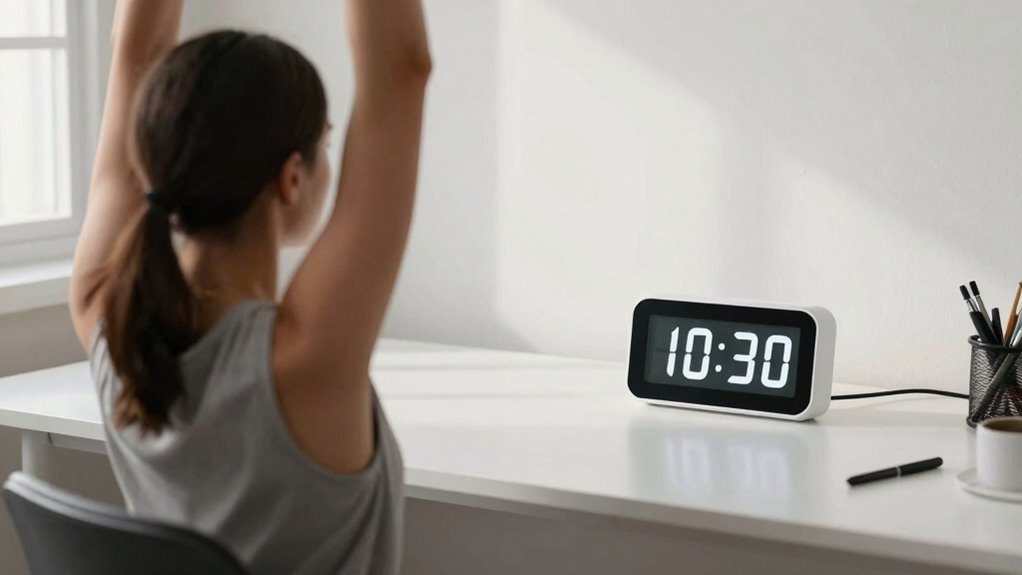

Focusing on when you move matters more than how hard you move during your workday. Regular, brief breaks every 30-60 minutes help prevent muscle stiffness and improve circulation, making movement more effective overall. Staying mindful of your posture during these breaks enhances their benefits and reduces strain. Proper ergonomics combined with well-timed movement creates lasting comfort and health, showing that smart timing pays off more than simply boosting effort. Keep going to find out how this strategy can transform your desk routine.
Open a free Amazon Business account
Business pricing, bulk buying and tax-exempt orders.
As an affiliate, we earn on qualifying purchases.
Key Takeaways
- Regular, well-timed breaks prevent muscle stiffness and improve circulation more effectively than sporadic vigorous activity.
- Short, frequent movements integrated into routines maintain comfort and reduce musculoskeletal issues better than intense, infrequent exercise.
- Mindful movement timing supports posture awareness, enhancing the benefits of ergonomic setups.
- Consistent, strategic movement reduces strain and promotes long-term musculoskeletal health more than focusing solely on movement intensity.
- Embedding movement into daily routines creates sustainable habits that optimize health benefits over time.

While increasing the intensity of your movements might seem like the best way to counteract the negative effects of sitting at a desk, recent research shows that timing your activity matters more. Instead of just pushing yourself to do vigorous exercises sporadically, focus on when you move during your workday. This approach emphasizes the importance of movement timing, which can be more effective in reducing discomfort and preventing musculoskeletal issues. When you’re aware of your posture and integrate regular, well-timed breaks, your body can better adapt and recover from prolonged sitting. Incorporating ergonomic principles into your routine further enhances the effectiveness of your movement timing. Posture awareness plays a critical role in this strategy. If you’re constantly slouching or leaning forward, no amount of high-intensity activity can fully undo the damage. Being mindful of how you sit, keeping your back straight, shoulders relaxed, and feet flat on the floor helps maintain spinal health. Incorporating ergonomic equipment, like adjustable chairs, monitor stands, and keyboard supports, encourages better posture and reduces strain. When your workspace is ergonomically optimized, it becomes easier to maintain proper alignment throughout the day, making your movement breaks more effective. Timing your activity is about more than just taking breaks; it’s about scheduling them strategically. Research suggests that brief, frequent movements—such as standing, stretching, or walking—spread evenly across your work hours can significantly lower musculoskeletal discomfort. Instead of waiting until you feel stiff or sore, you should aim to move every 30 to 60 minutes. This consistent pattern prevents muscle stiffness and improves circulation, which is crucial for desk workers. The key is to embed these movements into your routine, so they become natural and less disruptive. Furthermore, the quality of your movement matters. When you combine posture awareness with ergonomic equipment, you create a foundation for effective movement timing. For instance, adjusting your chair height and monitor position helps you sit correctly, making each movement more intentional and beneficial. With proper setup, even small stretches or standing breaks become more impactful, reducing the risk of long-term issues like repetitive strain injuries. Remember, it’s not about constantly moving vigorously, but about moving thoughtfully and at the right times. Ultimately, your focus should be on developing a rhythm—regular, mindful, and well-placed movements—that promote comfort and health. By aligning your movement timing with ergonomic principles and maintaining posture awareness, you’ll find that you can counteract the downsides of sitting more effectively than by simply increasing movement intensity. That way, your desk life becomes healthier, more sustainable, and less painful over time. A comprehensive understanding of ergonomics can further maximize the benefits of your movement timing strategy. Incorporating proper workspace setup can significantly enhance your ability to maintain correct posture and optimize movement effectiveness. Regularly updating your workspace based on ergonomic assessments ensures that your setup continues to support your health as your needs evolve.
ergonomic adjustable office chair
As an affiliate, we earn on qualifying purchases.
As an affiliate, we earn on qualifying purchases.
Frequently Asked Questions
How Can I Determine the Best Timing for Movement Breaks?
You can determine the best timing for movement breaks by listening to your body’s signals and setting a consistent schedule. Incorporate stretch routines and aim for break frequency every 30 to 60 minutes. Use reminders or alarms to prompt you to stand, stretch, or walk. Adjust based on your comfort and workload, ensuring you stay active regularly without disrupting your focus or productivity throughout the day.
Does Movement Timing Vary for Different Age Groups?
They say, “Age is just a number,” and it’s true for movement timing. You should tailor age-specific activity to your lifespan movement needs. Younger individuals benefit from more frequent, dynamic breaks, while older adults may focus on gentler, less frequent exercises. Adjusting your movement timing based on your age helps optimize health benefits and reduces the risk of strain or injury, making your desk life more sustainable.
Are There Specific Times of Day When Movement Is More Effective?
You’ll find that mid-morning and early afternoon are the best times for movement, as energy peaks and you’re less likely to feel sluggish. During these times, incorporate stretching routines to refresh your body, and stay hydrated with proper hydration strategies to boost effectiveness. Moving when your energy is naturally higher helps you stay focused and prevents fatigue, making your desk breaks more productive and beneficial for your overall well-being.
How Does Movement Timing Impact Long-Term Health Benefits?
Think of your body as a delicate clock; timing your movement sparks better long-term health. When you move at ideal times, you enhance muscle recovery and boost circulatory health, like oiling a well-oiled machine. Regular, strategically timed movement prevents stagnation, reduces fatigue, and keeps your body resilient. By syncing your activity with your body’s natural rhythm, you cultivate lasting vitality and protect against long-term health issues.
Can Movement Timing Help Reduce Desk-Related Musculoskeletal Issues?
Yes, movement timing can help reduce desk-related musculoskeletal issues. By making ergonomic adjustments and practicing posture awareness, you guarantee your movements are well-timed, preventing strain and discomfort. Regularly shifting positions, stretching, and taking short breaks at strategic intervals keeps your muscles engaged and reduces the risk of pain. Consistent movement timing promotes better circulation and posture, ultimately supporting your long-term musculoskeletal health while working at a desk.
As an affiliate, we earn on qualifying purchases.
Conclusion
Remember, timing your movement matters more than how intense it is. Just taking a quick stretch every 30 minutes can boost your circulation and reduce discomfort. In fact, studies show that those who move regularly at ideal intervals are 40% less likely to experience chronic aches. So, instead of pushing for long, intense workouts, focus on consistent, well-timed breaks. Your body will thank you for it, keeping you energized and pain-free throughout your busy desk day.
As an affiliate, we earn on qualifying purchases.
As an affiliate, we earn on qualifying purchases.
NFL season / tailgating Picks
team gear
As an affiliate, we earn on qualifying purchases.