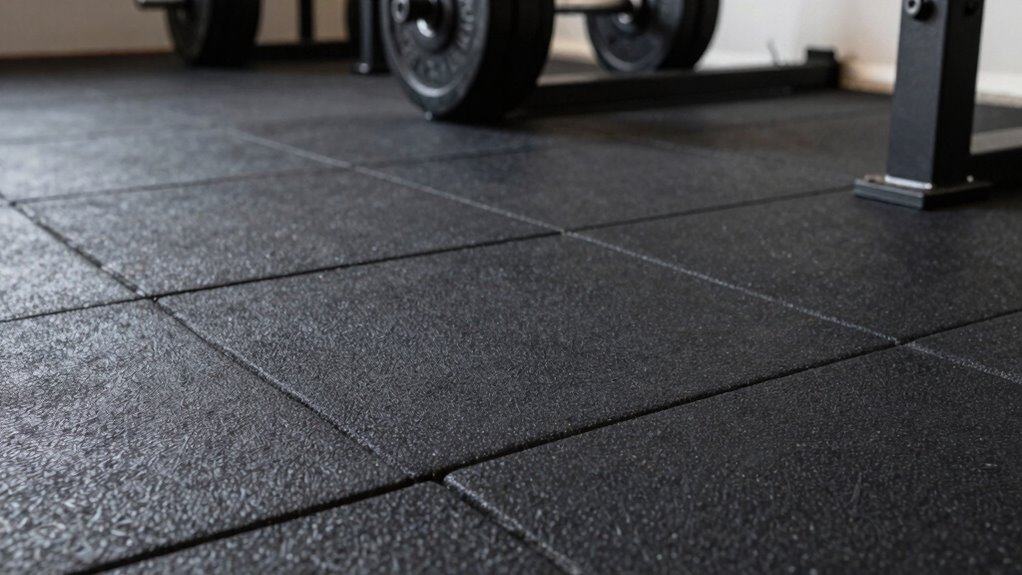

When choosing flooring for your home gym, focus on durability, slip resistance, and impact absorption to handle serious equipment and high-impact routines. Rubber flooring offers resilience and noise reduction, while interlocking tiles add versatility and safety with non-slip surfaces. Vinyl provides a sleek look but may need additional mats for heavy weights. Selecting the right material boosts safety, style, and motivation. Keep exploring to find the perfect fit for your workout space and goals.

Get comfort and recovery gear delivered free with Prime
- Fast, free delivery on millions of items
- Prime Video, Amazon Music and more included
- Member-only deals all year
Key Takeaways
- Choose durable, impact-absorbing flooring like rubber to protect joints and equipment during intense workouts.
- Prioritize slip-resistant surfaces to ensure safety during heavy lifting and high-impact exercises.
- Consider interlocking tiles for easy customization, installation, and zone-specific flooring solutions.
- Opt for sleek, easy-to-maintain vinyl flooring for a stylish, professional look that complements other gym elements.
- Match flooring style and thickness with your workout routines and space constraints for optimal safety and motivation.
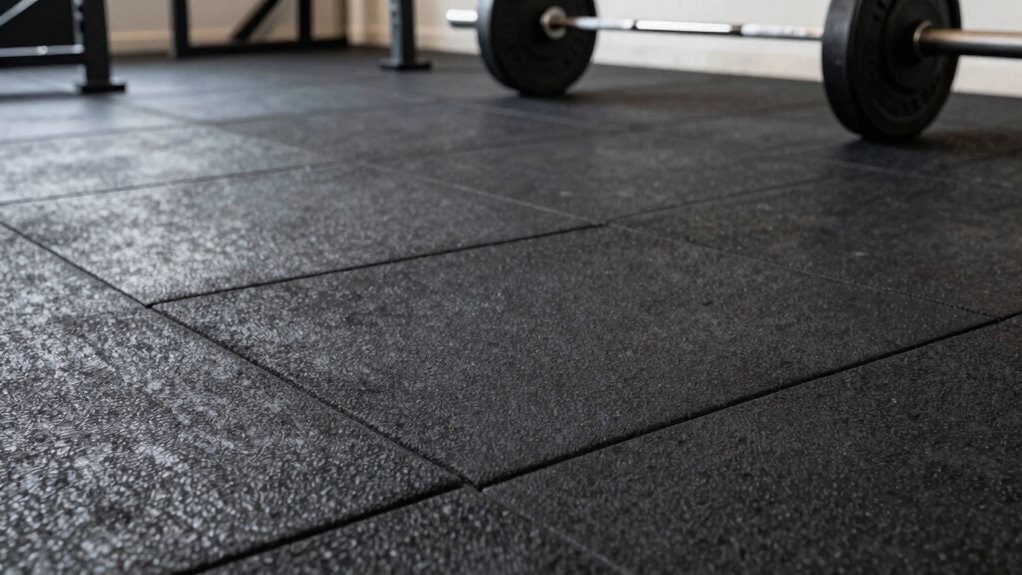
Setting up a home gym requires more than just selecting the right equipment—you also need the right flooring. Your choice of flooring impacts not only the look of your space but also how well it functions for your workouts. When considering flooring options, think about how it integrates with your interior design. You want a surface that complements your decor, whether that’s sleek and modern or warm and inviting. A cohesive interior design makes your home gym feel like a dedicated space, encouraging you to work out more often. But beyond aesthetics, safety considerations are paramount. Your flooring must absorb impact, provide stability, and prevent slips or injuries, especially when lifting heavy weights or doing high-intensity cardio.
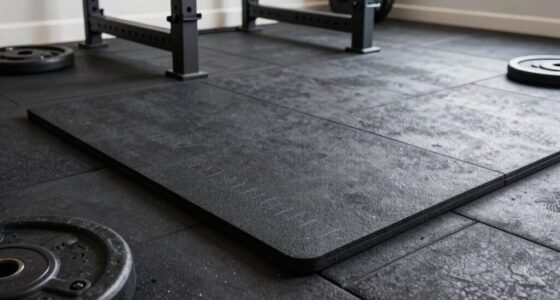
Rubber flooring is a popular choice for serious equipment buyers because it strikes a good balance between durability, safety, and style. It’s resilient enough to withstand heavy weights and high-impact exercises without tearing or wearing down quickly. Plus, rubber flooring helps reduce noise and vibration, which is helpful if your home gym is in a shared space or near bedrooms. Its cushioned surface protects your joints during workouts, making it a safer option overall. When selecting rubber flooring, consider thickness—thicker mats offer more impact absorption, but they also add to the overall height of your setup, so choose what fits your needs without overcrowding the room. Additionally, choosing impact-absorbing materials can further enhance safety and comfort during intense training sessions. Incorporating shock-absorbing surfaces can also contribute to a more injury-resistant workout environment. Moreover, selecting materials with proper shock absorption can help reduce fatigue and improve recovery time after workouts. Using shock-absorbing flooring options can also support joint health during high-impact routines.
Rubber flooring offers durability, safety, noise reduction, and joint protection for your home gym setup.
Interlocking tiles are another versatile option. They’re easy to install and customize, allowing you to cover specific areas or create a pattern that complements your interior design. These tiles come in various colors and textures, so you can match or contrast with your walls and equipment. Safety is still key here—look for tiles with anti-slip surfaces, especially if you sweat a lot during workouts. This prevents accidental slips that could lead to injuries. Incorporating non-slip surfaces into your flooring selection can be a crucial safety feature, especially for high-intensity routines.
Vinyl flooring can give your gym a sleek, polished look, and it’s relatively easy to clean, which is a bonus for maintaining a tidy workout space. However, it may not provide as much impact absorption as rubber, so consider adding mats underneath weights or cardio equipment to bolster safety and comfort. Ultimately, your choice of flooring should reflect your workout style, safety priorities, and interior design goals. Prioritize durability and slip resistance, and aim for a look that motivates you to stay active. By carefully selecting your home gym flooring, you create a space that’s safe, stylish, and ready for serious training.
As an affiliate, we earn on qualifying purchases.
Frequently Asked Questions
How Long Does Home Gym Flooring Typically Last?
Home gym flooring typically lasts between 5 to 10 years, depending on durability considerations and material longevity. If you choose high-quality rubber or foam, it can withstand heavy equipment and frequent use longer. Regular maintenance and avoiding excessive moisture or sharp objects also extend its lifespan. Keep in mind that investing in durable materials guarantees your flooring remains safe, supportive, and visually appealing for years to come, making it a worthwhile long-term choice.
Can I Install Gym Flooring Myself or Need Professional Help?
Installing gym flooring is like assembling a puzzle—you can do it yourself or call in professional assistance. DIY installation is possible if you’re handy and follow instructions carefully, saving money and gaining a sense of accomplishment. However, if your space is complex or you want perfect results, professional help guarantees a smooth, secure setup. Consider your skills and the flooring type before deciding who should handle the installation.
Are There Eco-Friendly Flooring Options Available?
Yes, eco-friendly flooring options are available for your home gym. You can choose eco alternatives made from sustainable materials like cork, bamboo, recycled rubber, or reclaimed wood. These options reduce environmental impact while providing durability and comfort. By selecting sustainable materials, you support eco-conscious practices and create a healthier workout space. Always check product certifications to guarantee your flooring truly adheres to eco-friendly standards.
How Does Flooring Affect Workout Safety and Injury Prevention?
Did you know that improper flooring can increase injury risk by up to 40%? Your flooring impacts workout safety by providing impact cushioning, which absorbs shock and reduces joint strain. It also prevents slips by avoiding slippery surfaces. Choosing the right flooring guarantees stability, minimizes falls, and protects you during intense routines. Prioritizing safety features makes your home gym safer and more effective for every workout session.
What Maintenance Is Required for Different Flooring Types?
You need to regularly clean and inspect your flooring to maintain its material durability and aesthetic options. For rubber, sweep and occasionally mop with mild soap; for foam, avoid excess water to prevent damage. Vinyl requires simple sweeping and occasional damp mopping, while carpet tiles need vacuuming and spot cleaning. Regular upkeep guarantees your flooring stays attractive and durable, providing a safe, stable workout environment and prolonging its lifespan.
As an affiliate, we earn on qualifying purchases.
Conclusion
Choosing the right home gym flooring is like laying a strong foundation for a house—you build stability, safety, and durability from the ground up. By understanding your equipment needs and considering factors like shock absorption and slip resistance, you set yourself up for success. Invest wisely, and your gym will be a safe haven that supports your fitness journey just like a sturdy bridge supports a steady crossing. Now, you’re ready to create a space that keeps you motivated and protected!
As an affiliate, we earn on qualifying purchases.
As an affiliate, we earn on qualifying purchases.
Halloween Picks
halloween
As an affiliate, we earn on qualifying purchases.